{{ 'now' | timezone: 'America/New_York' | date: '%b %d, %Y' }} |
|
|
|
Welcome to The Hidden Layer. I’m Ian Krietzberg, back in Jersey after a few days
in D.C., where I had a blast at the Motion Picture Association moderating a Q&A with the creators of the new film The A.I. Doc: Or How I Became an Apocaloptimist.
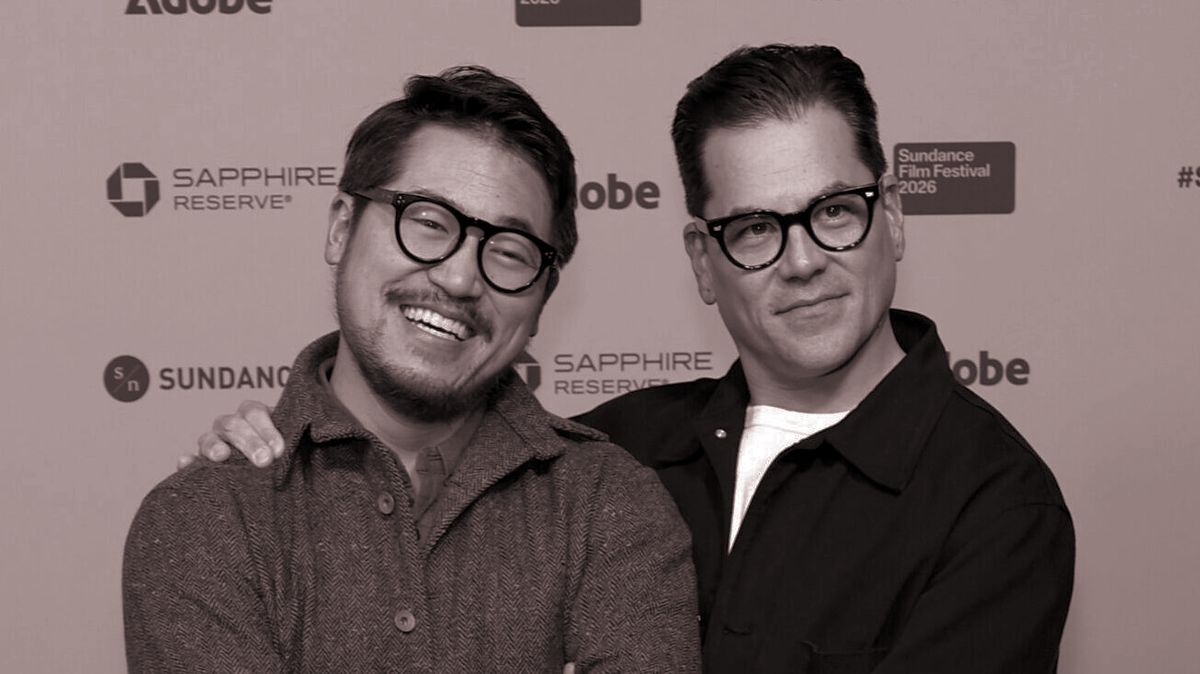
Today, a slice of my conversation with two of the folks who made the movie: Daniel Kwan and Jonathan Wang. Plus, news and notes on OpenAI’s product maneuvering, Trump’s new tech “council,” and Bernie’s A.I. legislation.
Also
discussed in this issue: Daniel Roher, Sam Altman, Dario Amodei, Donald Trump, Disney, David Sacks, Larry Ellison, and many more…
Let’s get into it… |
Three Things You
Should Know…
|
- So long, Sora: Three months ago, OpenAI announced a partnership with Disney for Sora, its TikTok-style video-generation app, which included a $1 billion investment from Disney and access to some of the company’s most sensitive I.P. On Tuesday, all of that seemingly went up in smoke, as OpenAI announced it would be killing Sora entirely, along with the app’s
A.P.I. Variety reports that the investment is dead as well. (Disney did not return a request for comment.) Disney, which had reportedly been working with OpenAI on a Sora-related project as recently as Monday evening, was blindsided by the decision.
Anyway, in true OpenAI fashion, the company spent all day Tuesday
making other headlines, starting with its charitable arm, the OpenAI Foundation—which, according to Sam Altman, will spend “at least $1 billion over the next year.” Then, OpenAI C.F.O. Sarah Friar told CNBC that the company just closed an additional $10 billion tranche of its previously announced $110 billion funding round, bringing the total to “north of $120 billion.” The most recent raise included participation from the V.C.s and Microsoft, which had not participated in the first $110 billion chunk. Is money even real
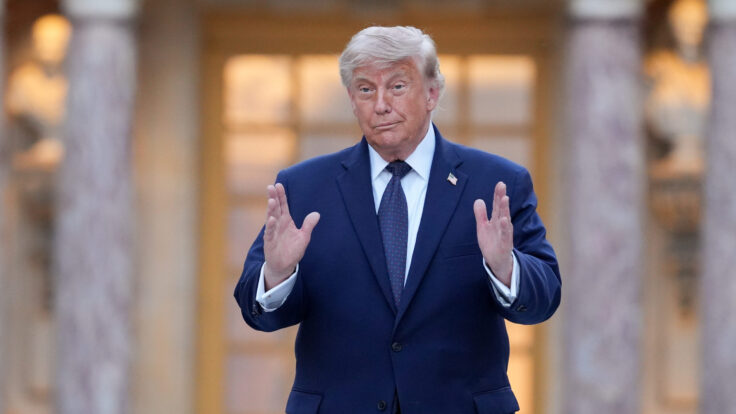
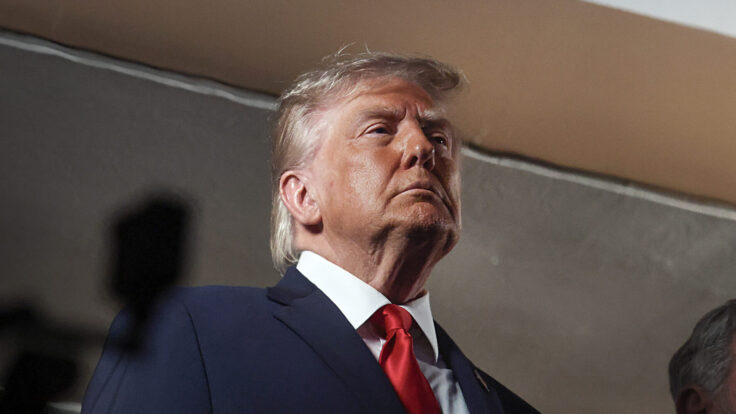
anymore? - Don’t bother trying to hide it: On Wednesday, President Trump named a who’s who of tech executives to a new body called the President’s Council of Advisors on Science and Technology (PCAST). Chaired by V.C. David Sacks and former V.C. Michael Kratsios, the council will include a16z strongman Marc Andreessen, Google co-founder Sergey Brin, Oracle
co-founder Larry Ellison, Oracle C.E.O. Safra Catz, Dell founder and C.E.O. Michael Dell, Nvidia C.E.O. Jensen Huang, AMD C.E.O. Lisa Su, Coinbase co-founder Fred Ehrsam, and Meta C.E.O. Mark Zuckerberg. It’s an unsurprising move for Trump, whose core policy stance on A.I. can be summed up as decidedly pro-business.
The council is expected to grow to 24 members, and of
the 13 members appointed so far, all but four are billionaires. Five of them—Brin, Zuckerberg, Ellison, Huang, and Dell—are among the 10 wealthiest people alive today, with a combined net worth of more than $900 billion. Only one appointee, physicist John Martinis, is an academic. - The Supreme Court’s reversal: The Supreme Court ruled on Wednesday that Cox Communications cannot be held liable for its users’ copyright
infringement—a major blow to the music industry. Sony and other record companies had sued Cox in 2018, winning a $1 billion jury verdict, whose finding of “willful contributory infringement” was upheld on appeal. The Supreme Court disagreed, finding that an I.S.P.’s knowledge that its service will be used for infringement doesn’t constitute infringement in and of
itself.
Naturally, the tech world had been watching closely. xAI even filed a brief in support of Cox, which makes sense given all the infringing material being generated by A.I. services. Now they can rest easy—though Elon has other things to worry about.
|
Quote of the Week:
Sanders & A.O.C.
|
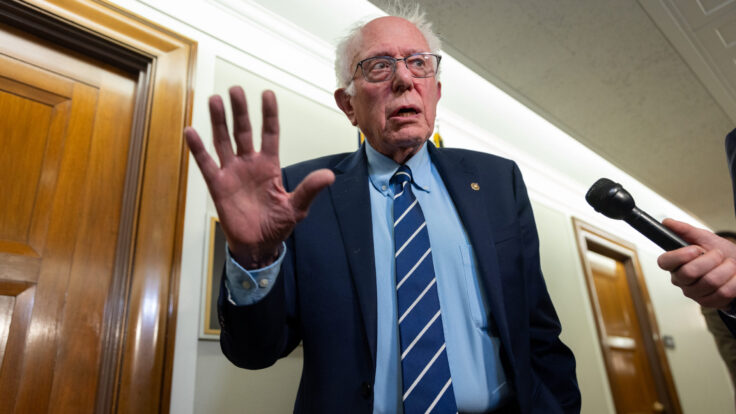
“I don’t think the Democratic Party leadership is taking this issue anywhere [as] seriously as it should. We
need to develop a sense of urgency. The economic impacts will be enormous. The impacts on our children will be enormous.”
—Sen. Bernie Sanders, justifying the (conditional) data center moratorium bill that he and Rep. Alexandria Ocasio-Cortez
introduced on Wednesday.
And now for the main event… |
|
|
|
The A.I. Doc: Or How I Became an Apocaloptimist offers an unflinching view of the
nascent industry, including its goriest and most uncertain elements. A candid chat with the producers, however, reveals an optimism often missing from the narrative. |
|
|
|
The A.I. Doc: Or How I Became an Apocaloptimist had been three years in the making, and watching it,
you can feel the weight of all that technological advancement bearing down on its director, Daniel Roher. Over the course of the film, Roher grows increasingly anxious, unsettled by interviews with dozens of big names in the field, including Yoshua Bengio, Connor Leahy, and Sam Altman. And for good reason: In addition to trying to make sense of A.I., Roher is about to become a father, and he’s terrified about the world that his
unborn son will inherit. In this regard, amid the seemingly endless fundraises and unceasing proliferation of data centers, he stands in for the vast cohort of techno-skeptics and would-be apocalyptics who look at ChatGPT, listen to Altman’s dark musings, and quietly wonder about the end of the world. The anxiety of the film also reflects the anxiety of Hollywood—an industry that finds itself squarely in the crosshairs of disruption.
The documentary gives space to A.I. doomers,
accelerationists, a handful of academics, and, of course, the key C.E.O.s: Altman, Dario Amodei, and Demis Hassabis. (Mark Zuckerberg declined to participate; Elon Musk was apparently too busy.) Watching it can feel like scaling what Roher called “anxiety mountain”—his sometimes frightening quest for answers, clarity, and a little bit of hope, all conducted against a backdrop of three years’ worth of dark predictions from the
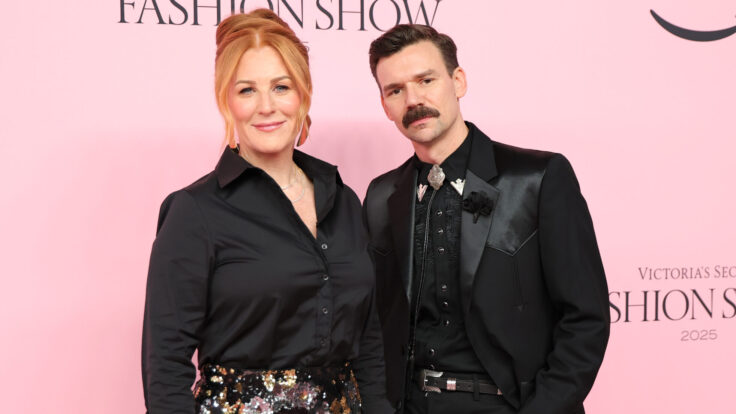
very people building the technology. Last night, I sat down at the Motion Picture Association in Washington, D.C., to moderate a post-screening conversation with two of The A.I. Doc’s producers: Daniel Kwan and Jonathan Wang, who served as a director and producer, respectively, of Everything Everywhere All At Once. We discussed the “incredibly frustrating” process of making the movie, why the hyperscalers believe they’re “building God,” and the
grounds for optimism, even as “we have to mourn the future we thought we were supposed to live in.” As always, the following excerpt of our conversation has been lightly edited for clarity. |
Ian Krietzberg: This is a heavy movie, and I know for you guys, it’s been a
heavy few years making it. I want to start with the idea of informed optimism—coming out of something that feels so dark, and finding ways to be hopeful.
Jonathan Wang: When the movie came to us, neither of us were A.I. experts, and we went from not knowing anything about it to looking straight at the problem, and then trying to understand: How do you stay optimistic in light of knowing all this stuff? Since he’s having a kid, Roher
feels as though he has to have this naive optimism, independent of the facts. The goal of this movie—and something I’ve been doing in my own introspection—is like, how do I look at the hardest problems, and in spite of knowing all this information, still see that there’s a path through this, that we actually can be optimistic?
For me, without having it sound Pollyannaish, it’s really to be able to see the beauty of our deepest humanity, and how the world these few billionaires are
building is one that feels incongruous with what really matters to me. And I go, Okay, well, there’s a path forward here. If they’re the ones who are going to build bunkers, then I’m going to be the one who builds legislation, builds coalitions, builds futures, rather than a world no one actually wants.
Daniel Kwan: This process applies to way more than just A.I. You look at the world and every crisis feels like it’s shaking the foundation of every institution, every
system, every structure that we grew up in and believed was going to be around for our kids as well. Part of the process of making this film is looking at the situation in a way that allows you to see clearly that regardless of whether the future is good or bad, we have to mourn the future we thought we were supposed to live in. We have to say goodbye to the future we thought our kids were going to grow up in.
That sounds like a negative thing, but to me, once you process and grieve that,
it opens up so much opportunity. A.I.—along with everything else happening in the world—almost forces us to imagine the end of this current world. And part of me feels like, What an opportunity. We get to build a better world for our kids. That’s really exciting. |
Asking the Awkward Questions
|
There’s a lot of hype in the A.I. industry, and capturing nuance is a difficult thing to do in a
film. I wonder what you think about that balance between overestimation, underestimation, and living in that nuance?
Kwan: One of the things I always say is that this film was made by 10 different people with 10 very different opinions on A.I. and what the movie should be. It was incredibly frustrating to make a movie that way, but I realized pretty early on that it’s the only way we could carry this thing, because we all have blind
spots. And one of the things that the film doesn’t spend time on is looking at the hype more directly. I believe there’s a lot of hype, specifically around large language models and applications to the general public. It’s important to acknowledge that a lot of people are salesmen, and a lot of these capabilities aren’t there yet—and, in fact, there are a lot of flaws, and we’re reaching a hard ceiling on large language models specifically.
But we also have to be careful not to
underestimate the capabilities of large language models, and all these other models, the other modalities and architectures that they’re starting to work on, and the fact that quantum computers are starting to take off. I struggle to imagine a world with all these incentives and ideological drivers—because that’s really what this movie is about, the ideological drivers. If you want to understand why the Egyptians built the pyramids, you have to understand their belief in the afterlife.
If you want to understand why trillions of dollars are being spent on this technology, you have to understand their belief system: They believe they’re building God. I hope this film will feel evergreen in that—even when models do end up hitting the ceiling—there’s a need for us to stay vigilant and ask the awkward questions, like, Why are we allowing a handful of people to make these massive decisions for the rest of the world?
For the film—but also for A.I. writ
large—is the story about technology or about humanity?
Wang: What is technology? It’s a tool we use to gain some sort of advantage, to help our lives in some way. But this story can’t just be one of technology. Because technology without the human spirit—what is it? There’s nothing. It’s amoral. It’s how we use it and apply it.
Kwan: Intelligence is amazing because it allows us to solve problems and achieve goals, and it
gives us power. On the flip side, wisdom is what tells us which problems to solve and how to use that power. Humanity has basically built a system that has prioritized, legitimized, and built intelligence at scale—like, that is the goal. How much power can we get? Meanwhile, we’ve decoupled intelligence from wisdom, and we’ve allowed wisdom to become fringy.
But that amount of power without wisdom is really terrifying, because now we have all this power and we don’t have the driver’s
license to drive the car right. We don’t have the ability to know when is enough, what to say no to, when to be patient, and when to listen. The thing I think about a lot is like, if you stare at this problem long enough, it moves away from technology into the problem of humanity. The three years I’ve been working on this has really forced me to figure it out: What does wisdom mean for me, and what do I want it to look like for the world? |
The film hits theaters on Friday. If you catch it, I’m very curious to hear what you think.
That’s all
for today. I’ll see you next week.
Ian |
|
|
|
Join Emmy Award-winning journalist Peter Hamby, along with the team of expert journalists at Puck, as they let you in on the
conversations insiders are having across the four corners of power in America: Wall Street, Washington, Silicon Valley, and Hollywood. Presented in partnership with Audacy, new episodes publish daily, Monday through Friday. |
|
|
|
A professional-grade rundown on the business of sports from John Ourand, the industry’s preeminent journalist, covering the
leagues, players, agencies, media deals, and the egos fueling it all. |
|
|
|
Need help? Review our
FAQ page or contact us for assistance. For brand partnerships, email ads@puck.news.
You received this email because you signed up to receive emails from Puck, or as part of your Puck account associated with {{customer.email}}. To stop receiving this newsletter and/or manage all your email preferences, click here. |
Puck is published by Heat Media LLC. 107 Greenwich St., New York, NY 10006 |
|
|
|
|