{{ 'now' | timezone: 'America/New_York' | date: '%b %d, %Y' }}
|
|
|
|
 |
Matthew Belloni |
|
Hello and welcome back to the Tuesday edition of What I’m Hearing, steered by Eriq
Gardner. Tonight, Eriq has his analysis of how the upcoming WarnerMount court hearing may go down. Plus: an update in the Endeavor shareholder litigation, and how the attorney who helped “free” Britney Spears came to represent both sides of an NDA contract issue in cases involving FKA twigs, Shia LaBeouf, and… Meta.
All yours, Eriq (and send him tips at Eriq@puck.news).
Not a Puck member yet? Never too late. Just click
here.
Discussed in this issue:
Rob Bonta, Sean Penn, Sheryl Sandberg, Axl Rose, Ari Emanuel, Mark Zuckerberg, Carl Icahn, Mathew Rosengart, Patrick Whitesell, David Ellison, Sarah Wynn-Williams, Mark Shapiro, Alan Niven, and more.
|
|
|
|
 |
Eriq Gardner |
|
- Paramount’s timely
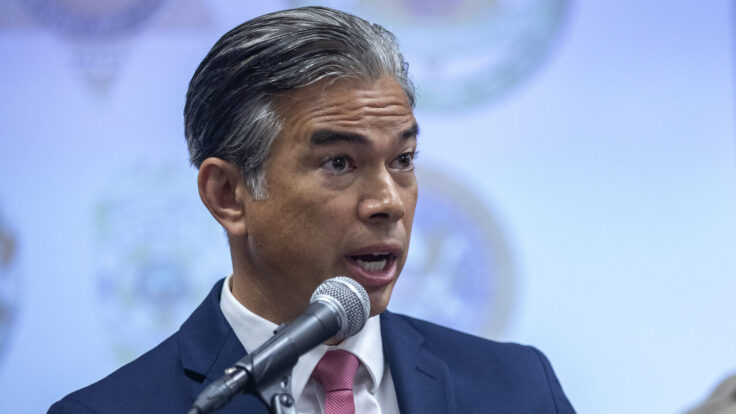
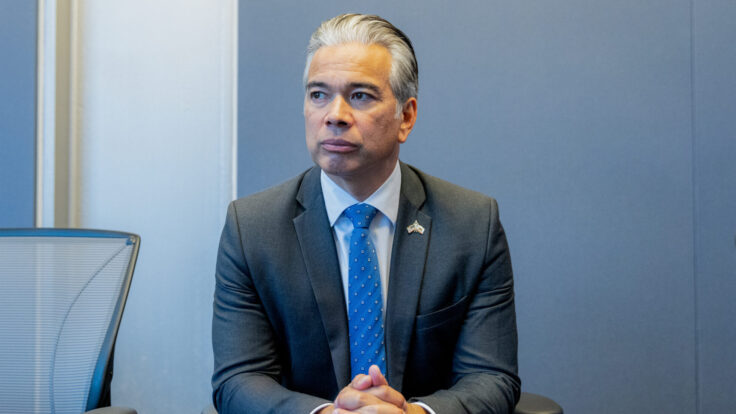
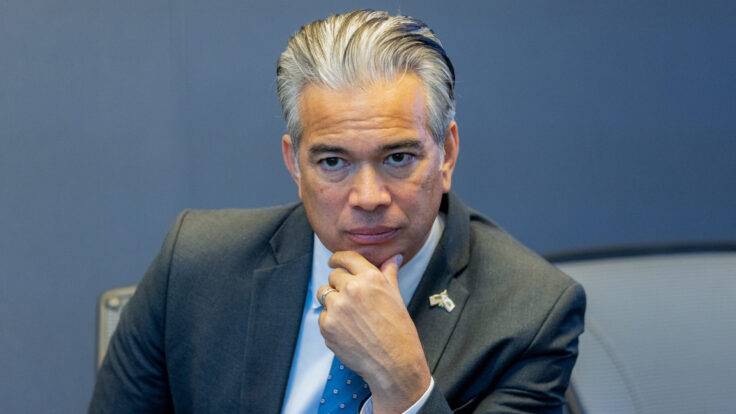
T.R.O.-down: There are split-the-baby legal rulings that leave no one satisfied, and then there is the temporary restraining order issued yesterday in the Paramount–Warner Discovery merger case by Judge Araceli Martínez-Olguín. The pause matters, obviously, but the more revealing part of the decision is that both sides can plausibly claim they got what they needed.Rob Bonta and the other state attorneys general should be thrilled that
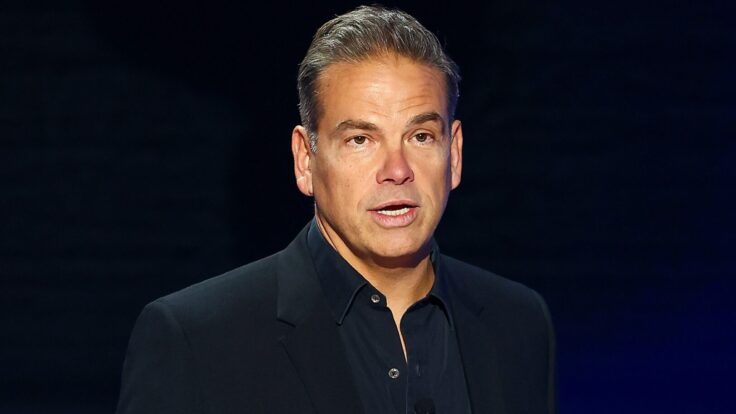
Martínez-Olguín accepted the architecture of their case: that a combined 27 percent share of wide-release theatrical films, reinforced by rising concentration, warranted serious antitrust scrutiny. Paramount’s David Ellison, however, has reason to feel encouraged, too. The judge imposed an extraordinarily aggressive timetable on the case and expressly declined to decide whether the states’ statistics accurately captured the companies’ future competitive significance. In
other words, she credited the structural case without yet foreclosing a factual rebuttal.
That truce won’t last. At the much more important preliminary injunction hearing, now set for August 3, the parties will duke it out over whether WarnerMount would really gain leverage over theaters; whether its 30-film pledge is bullshit; whether the merger would reduce output; and whether market-share stats overstate the importance of two studios operating in a rapidly changing industry that also
includes Amazon MGM, Lionsgate, and A24 (even if Bonta is acting like they don’t exist). Martínez-Olguín avoided choosing between the competing experts at the T.R.O. stage. She won’t be able to do that again.
The ruling certainly bears the imprint of a Biden-appointed judge skeptical of corporate promises. Footnote 5 is the clearest example. Paramount argued that the merger would strengthen competition in streaming. Martínez-Olguín’s answer, in essence, was: So what?
Efficiencies in one market do not excuse diminished competition in another. But don’t mistake that for a closed door. Paramount can recast the argument, positing that a large streaming platform will continue to benefit from the prestige and promotional lift of heavily marketed theatrical releases—giving the merged company a reason to make more films, not fewer.
And if those arguments ultimately fail, Paramount can still take comfort in the calendar. The accelerated timetable leaves
enough runway to seek emergency appellate review before the dreaded ticking fee begins to bite in the fourth quarter. The company has already identified the issue it wants to carry upward: whether courts should continue allowing market share—30 percent or otherwise—to trigger a presumption that a merger will substantially diminish competition, rather than requiring plaintiffs to prove likely harm through contemporary market evidence. The fact that Martínez-Olguín invoked the presumption at just
27 percent—while leaving aside, for now, the states’ allegations of still-higher shares in tentpole films and cable television distribution—gives Paramount an especially provocative vehicle to challenge modern merger doctrine.
- Endeavor wars, cont’d: Ari Emanuel, Patrick Whitesell, and Mark Shapiro are mounting a notable counteroffensive in the legal wars over Endeavor’s 2024 privatization. You’ll
recall they’re battling stockholders who were squeezed out when Silver Lake took the company private;
a separate group of former stockholders who sold before the deal closed; and Carl Icahn, who
alleges that Endeavor violated its charter by allowing insiders to roll over their equity while public Class A holders were denied the same opportunity.Now, Ari appears poised to go on offense himself. In a new court brief, he and the other defendants previewed what could be an aggressive new set of claims. For one, they allege that
certain arbitrageurs “violated federal securities laws by engaging in undisclosed group activity to buy a large portion of Endeavor’s public float to pursue profits by litigation.” According to the filing, roughly 100 hedge funds accumulated nearly 60 percent of Endeavor’s public float in pursuit of an appraisal strategy, with Icahn later acquiring nearly half of what remained. The defendants say discovery has uncovered evidence of coordinated activity, although the specifics remain under
seal—for now. But that may not last much longer. A deadline expires tonight for third-party claims in one of the parallel cases: the federal securities action being prosecuted by Susman Godfrey.
Quinn Emanuel, representing Ari and the other defendants, appears poised to test a provocative theory: that the hedge funds coordinated so extensively that they should be treated as a single “group” under federal securities laws. If so, they could face liability for allegedly failing to disclose
that coordinated ownership—omissions that Ari, Patrick, and Mark contend deprived selling shareholders of material information about the appraisal strategy, and therefore contributed to the injuries alleged in the federal securities case.
- Welcome to the courthouse jungle: Here’s a new one: If the lead singer of a band never signs the paperwork terminating the group’s manager, is the original management agreement—and its confidentiality clause—still
enforceable? Or can that manager go write a tell-all memoir? That’s the issue presented in a fight involving Guns N’ Roses, Axl Rose, and Alan Niven, who managed the band from 1986 to 1991 and now finds himself unable to publish his memoir, Sound N’ Fury, despite earning a favorable review from the Los Angeles Times.Niven has sued in California federal court, arguing not only that Rose was required—but failed—to sign the agreement ending his management relationship, but also that the confidentiality provision is unenforceable because it is unconscionable to prevent him from speaking about his own life and from responding to criticisms that Rose and other band members have made over the years. Guns N’ Roses, meanwhile—or, more
accurately, Rose—has fired back with a counterclaim, alleging that Niven has already breached the agreement by discussing the band’s finances and other confidential matters on the Appetite for Distortion podcast. The relief sought is about as sweeping as it gets: a permanent injunction preventing publication of the book.
|
|
|
|
Speaking of a tell-all book and a contract that’s gotten in the way…
|
|
|
|
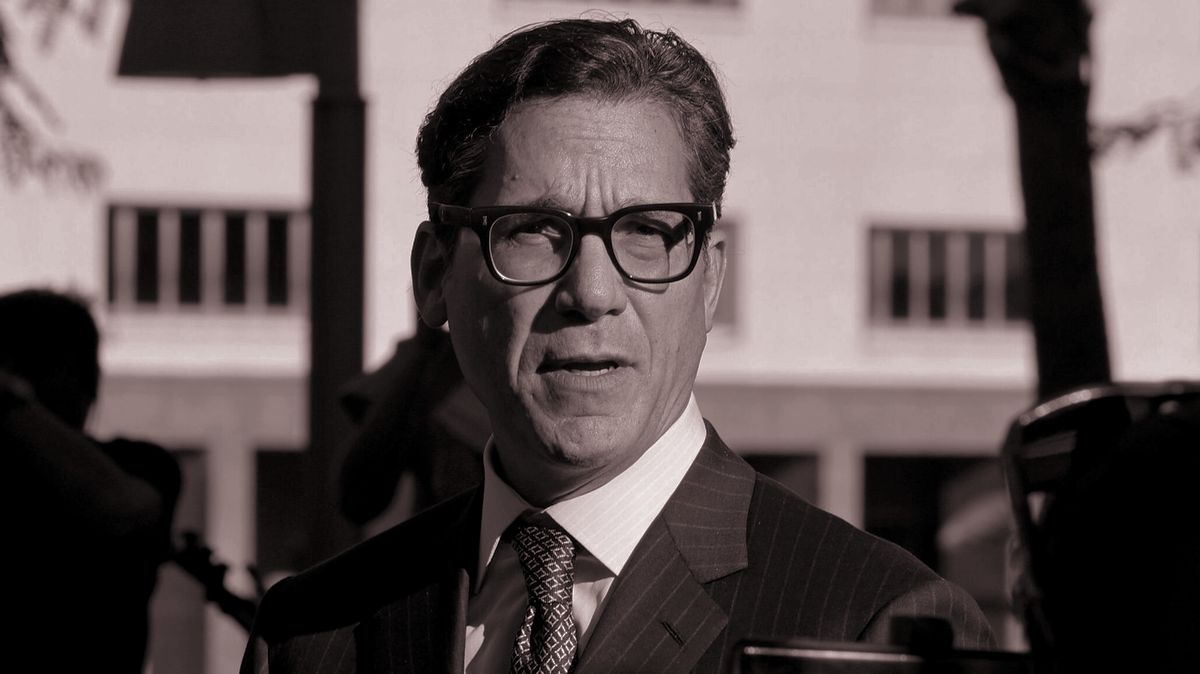
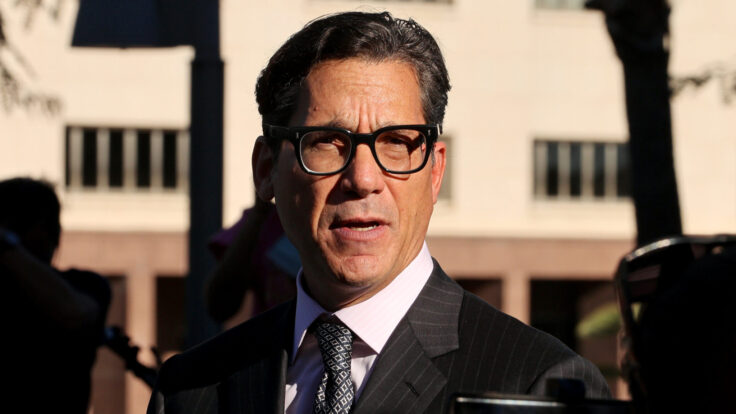
Attorney Mathew Rosengart, who “freed” Britney Spears and built his reputation fighting
“bullies,” is trying to help client FKA twigs escape an NDA he says is unlawful. He also wants Facebook to enforce a non-disparagement clause he says is totally lawful. So… who’s the bully there?
|
|
|
|
Earlier this month, just as Hollywood was leading a revolt against a now-aborted Instagram feature that would
have allowed users’ public photos to be transformed into A.I.-generated images, Meta was in court trying to keep a very different dispute out of public view—its battle with Sarah Wynn-Williams, the former Facebook public policy director who chronicled the ruthlessness and hypocrisy of Mark Zuckerberg’s social media empire in her memoir, Careless People. Wynn-Williams has been largely unable to promote the book because of a nondisparagement clause in the
severance agreement she signed in 2017, and the arbitration that Meta initiated last year. Despite those efforts to silence her, or perhaps because of them, the book became an instant bestseller.
Wynn-Williams is now suing to invalidate that severance agreement, claiming that she signed it under duress, and therefore its arbitration and nondisparagement provisions violate a host of anti-secrecy protections, including the National Labor Relations Act and the Ending Forced Arbitration Act.
Meta responded on July 6 with a simple rebuttal: Wynn-Williams signed a heavily negotiated agreement, accepted its benefits, lost a series of rulings, and cannot now run to court in search of a better outcome. As Meta put it, “It is too late for her to change course now.”
This one caught me off guard. Not because Meta’s argument is especially novel—large companies routinely defend confidentiality pacts when former employees challenge them. Instead, I was surprised by the lawyer whose name
appeared on the brief: Mathew Rosengart.
Rosengart has spent years cultivating a white-hat reputation in Hollywood, most famously by helping Britney Spears escape her conservatorship and assisting Sean Penn in various social causes. Yet here he was advancing arguments that would, as a practical matter, keep Wynn-Williams bound by a confidentiality regime she has been trying to escape. More striking still, he was doing so at almost
exactly the same moment that he was publicly condemning secret arbitration and unlawful gag orders on behalf of another celebrity client, FKA twigs—who, after settling her lawsuit against former boyfriend Shia LaBeouf last year, was accused by the latter of violating the settlement’s NDA.
Indeed, as Meta was moving to compel arbitration, LaBeouf was doing much the same, invoking familiar themes about the sanctity of contracts and the importance
of honoring agreed-upon dispute-resolution procedures. So I contacted Rosengart, whom I’ve known for many years. I wanted to understand not merely why he took the case, but how he reconciled it with his public persona.
Lawyers at major firms, of course, routinely find themselves on different sides of similar issues. But Rosengart is not merely another elite litigator for hire. He has aggressively courted positive press—though he denies that—and often speaks in overtly moral terms about
his work, describing conduct as “abuse,” “toxic,” and “cruel.” “I always hated bullies and bullying,” he once told Variety, a quote that became central to the profile’s framing of him.
If anyone was going to have an answer for the apparent tension, I figured it would be Rosengart. He told me it was “an
honor” to represent Meta and that the supposed contradiction largely evaporated once you truly understood each case—both “equally righteous,” as he put it. The Wynn-Williams matter, he insisted, was actually a “straightforward breach-of-contract case” against “a high-ranking former employee who indisputably violated her contract’s nondisparagement provision.” The FKA twigs case, by contrast, was fundamentally different because California law, in his view, rendered the challenged NDA
unenforceable. “There is no law, no statute, that invalidates the contract” at issue in the Meta dispute, he said.
|
Are these cases, as Rosengart insists, truly different? Let’s start with Wynn-Williams. Her memoir accused
Meta of everything from courting the Chinese government by dangling American user data to designing products that exploited vulnerable young women, and it offered an insider’s account of what she describes as a hostile environment for women during the Sheryl Sandberg era. Her lawsuit leans hard into that latter theme (pun intended). To wit: She says she was preparing to provide evidence of sexual harassment to human resources when Facebook fired her in 2017, and she now accuses
Meta of continuously surveilling her and interfering with her public appearances.
She’s trying to escape an arbitration where she faces the prospect of damages and sanctions for allegedly breaching the severance agreement that paid her roughly $780,000. Her principal legal theory is that Congress and various state legislatures have increasingly restricted employers’ ability to use arbitration clauses and nondisparagement provisions to silence employees about workplace
conditions—particularly after the 2022 enactments of California’s Silenced No More Act and the federal Ending Forced Arbitration Act, which carved out disputes involving sexual misconduct.
As for FKA twigs, whose legal name is Tahliah Barnett, the facts are far more visceral. In 2020, the singer sued LaBeouf, accusing him of sexual battery and emotional abuse. The case was headed toward a public jury trial last year before the parties reached a confidential settlement. Then came the
sequel. After Barnett gave an interview to The Hollywood Reporter in which she discussed her recovery and said she still didn’t feel safe, LaBeouf initiated a confidential arbitration proceeding, claiming she had violated the settlement’s nondisclosure provisions.
Barnett responded with a lawsuit seeking to invalidate those provisions under California’s STAND Act, arguing that survivors of sexual abuse cannot lawfully be silenced through NDAs. Rosengart cast the arbitration as an
effort to “bully and intimidate” his client through a secret proceeding, and framed the case as a fight not over money, but whether survivors may speak publicly about abuse—and support other victims—without fear of legal retaliation.
To many people, the resemblance is hard to miss. Both cases involve powerful parties invoking private arbitration and contractual speech restrictions against women speaking publicly about alleged misconduct. “I get the comparison,” Rosengart conceded, “but it
overlooks critical distinctions.”
In the Meta matter, he noted, a neutral arbitrator has already concluded that Wynn-Williams likely breached her agreement, and that the severance contract neither violates California public policy nor runs afoul of the Silenced No More Act. The FKA twigs case, by contrast, concerns what Rosengart argued is an NDA that was void from the outset because California law prohibits using confidentiality agreements to prevent survivors of sexual abuse
from discussing their experiences. To underscore that point, he even recently submitted a declaration from the legislator who authored the STAND Act.
In other words, Rosengart doesn’t see himself as taking opposite positions at all. He believes he is advancing the same principle in both cases: Enforce lawful contracts, but refuse to enforce unlawful ones.
|
I wouldn’t be surprised if Rosengart wins both cases—or, less likely but still entirely possible, loses both.
I don’t see any inherent contradiction in either outcome.
LaBeouf, represented by another prominent Hollywood lawyer, Shawn Holley, argues that Barnett agreed to arbitrate future disputes arising from the settlement, and that an arbitrator—not a judge—should decide whether she breached that agreement. Rosengart’s strongest response may not center on the STAND Act so much as the settlement itself, which contains a carve-out allowing either party to seek injunctive relief
in court. That provision gives him a plausible argument that this dispute belongs before a judge, at least initially.
The Meta case turns on a different question: What is the dispute actually about? Meta says it’s a straightforward contract case involving a severance agreement, a bestselling memoir, and a former employee who spent 15 months litigating in arbitration before changing course. Wynn-Williams says it’s about sexual harassment, retaliation, and a growing body of laws
limiting employers’ ability to use arbitration clauses and nondisparagement provisions to suppress discussion of workplace misconduct.
That characterization may prove decisive. The Ending Forced Arbitration Act applies only to certain sexual-misconduct disputes and only to “predispute arbitration agreements,” while the Silenced No More Act similarly limits employers’ ability to muzzle employees who speak about unlawful workplace conduct. Meta’s position is that neither statute reaches
this case, because the dispute is no longer about workplace misconduct—it’s about a severance agreement.
The irony is that Rosengart may have less trouble reconciling these cases than the rest of us. The law is full of distinctions that look dispositive to judges and invisible to everyone else. Whether courts ultimately accept the distinctions he draws is one question; whether readers will is another.
|
Thanks, Eriq. I’ll be back on Thursday.
Matt
|
|
|
|
Puck fashion correspondent Lauren Sherman and a rotating cast of industry insiders take you deep behind the scenes of this
multitrillion-dollar biz, from creative director switcheroos to M&A drama, D.T.C. downfalls, and magazine mishaps. Fashion People is an extension of Line Sheet, Lauren’s private email for Puck, where she tracks what’s happening beyond the press releases in fashion, beauty, and media. New episodes publish every Tuesday and Friday.
|
|
|
|
Unique and privileged insight into the private conversations taking place inside boardrooms and corner offices up and down Wall
Street, relayed by best-selling author, journalist, and former M&A senior banker William D. Cohan.
|
|
|
|
Need help? Review our
FAQ page or contact us for assistance. For brand partnerships, email ads@puck.news.
You received this email because you signed up to receive emails from Puck, or as part of your Puck account associated with {{customer.email}}. To stop receiving this newsletter and/or manage all your email preferences, click here.
|
Puck is published by Heat Media LLC. 107 Greenwich St., New York, NY 10006
|
|
|
|
|