Welcome back to What I’m Hearing, wishing sincere good luck to SAG-AFTRA and studio negotiators,
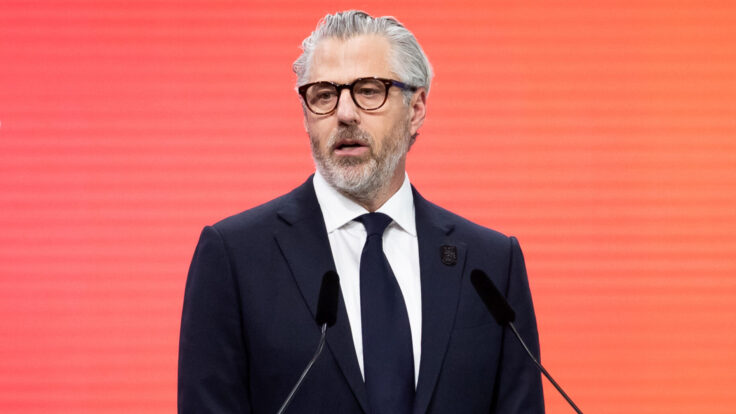
who just kicked off this year’s crucial labor talks. I was at the Directors Guild Awards on Saturday, and there was an audible gasp at my table when Chris Nolan, in his welcome speech as DGA president, noted that in 2024, employment “was down about 40 percent, and that was followed by another decline in ’25.” Yikes.
Tonight, Kim Masters is back with her no-spin assessment of the Second Reign of Bob Iger at Disney. Plus, Josh
D’Amaro reveals why he thinks he got the C.E.O. job and floats some plans for Disney’s Fortnite integration, and the Casey Wasserman email scandal gets way worse.
Programming note: This week on The Town, Lucas Shaw and I debated takeaways from the Netflix grilling in
D.C., Rich Greenfield basically begged the new Disney C.E.O. to spin off TV networks, and Adweek’s Bill Bradley explained why some
Super Bowl ads went for $10 million. Subscribe here and here.
P.S.A.: The Town is going on tour! We’re hitting top film schools for live shows in February and March,
starting at AFI on Friday with a very special guest. It’s invite-only for students and alumni, but episodes will post on the Town feed on Spotify, YouTube, and other platforms.
🏈🏈 Thanks for hundreds of Super Bowl ratings guesses. I’ll reveal the winner of the Puck merch on Thursday.
Not a Puck member yet? Just click here. Got a news tip or an idea for me? Just reply to this email,
text me, or message me on Signal at 310-804-3198.
Mentioned in this issue: Josh D’Amaro, Marty Diamond, Billie Eilish, Alan Horn, Casey Wasserman, James Gorman, Chris Hemsworth, Kareem Daniel, Peter Rice, Chris Meledandri, Bob Iger, Ted Cruz, Dana Walden,
Matthew Broderick, Alan Bergman, Michael Ovitz, Ted Sarandos, Don Lemon, Tom Staggs, Jeffrey Katzenberg, Marshawn Lynch, Ed Sheeran, Michael Eisner, Chappell Roan, Jimmy Kimmel, Bob Chapek, Jeanie Buss, Ryan Murphy, and… Scientology’s latest
“mystery sandwich.”
But first…
|
Who Won the Week: Team Bad Bunny
|
Of course. Ratings aren’t in yet, but the NFL got the global cultural moment it wanted by inviting music’s most-streamed star to the Super Bowl, even if it sparked a dumb culture war. Special honors for production designers Bruce and Shelley Rodgers, who outfitted 380 real people as Puerto Rican bushes, sparking the best videos of the night.
Runner-up: Chris Meledandri, whose Minions & Monsters spot from
Universal/Illumination drove the second-most engagement (search, website visits, app downloads) of all Super Bowl ads, behind only AI.com, according to EDO. Netflix’s The Adventures of Cliff Booth (No. 4), Universal’s Disclosure Day (No. 6), Paramount’s Scream 7 (No. 11), and Peacock’s
The Burbs (No. 18) all ranked in the top 20.
(Dis?)honorable mention: Chris Hemsworth (Alexa+), Brian Baumgartner (Ramp), Matthew Broderick (Genspark), Marshawn Lynch (Meta A.I.), and Tim Robinson (Rippling), who all took checks to appear in Super Bowl ads for A.I. services the day before their union, SAG-AFTRA, started negotiating to protect members from… A.I. services.
Instead of
naming Disney’s new C.E.O., let’s hear from him…
|
D’Amaro Wants Movie
Premieres in Fortnite
|
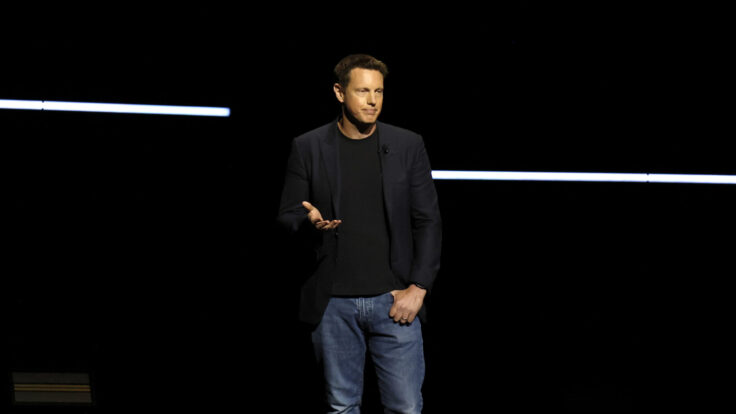
Disney’s Josh D’Amaro has declined all serious interview requests since becoming C.E.O.,
appearing (with Bob Iger) only on the company’s own ABC News and in a town hall with employees. But tellingly, D’Amaro did make time for a Q&A on Friday with selected theme park media and Disney fan bloggers. The 20-minute exchange was off the record, but a recording made its way to me, and there were a couple interesting nuggets…
On why he was chosen…
“I don’t think that I was selected because I’m the parks guy. I think that I was selected because I’ve been
here a long time, because I truly understand this brand, what it means to our fans. I tend to think expansively and aggressively about where we can go. Disney is not about a park, it is not about a movie, it is not about a streaming service, it is not about sports. It’s about The Walt Disney Company, and when all that works together in harmony, there’s nothing like it. That’s what I plan on bringing to the role.”
On Disney’s investment in Epic Games and ‘Fortnite’…
“That is
gonna be another example where Disney will show up as one. It’s not just gonna be one character. It could be a new film premiering there, it could be the place that you decide to book your next cruise vacation. You could participate in the Super Bowl in some way there.”
On staying connected to parks…
“I am not gonna disappear. You can kind of lose touch. I’m not gonna do that.”
On his stealth Disneyland tours…
“I found myself here on Christmas Day, and no
one knew I was here. It drives the security team crazy, but it’s the only way to do it, to be yourself and walk around without a posse.”
|
“I have no idea of the history of the land where we’re sitting today.”
—Ted Sarandos, the
Netflix co-C.E.O., when asked by Ted Cruz during last week’s Senate antitrust hearing about Billie Eilish’s “stolen land” comment in her Grammys speech—which aired on CBS, not Netflix.
More: What a farce. Really, Ted Cruz? You’re gonna use an antitrust inquiry to bitch about a pop star? Sarandos handled the grandstanding well, but… the Netflix share price is now down about 35 percent since October, when Puck and others first reported his interest
in Warner Bros. (To be fair, Paramount Skydance has crashed even more since its post-acquisition high in late September.) Shareholders of both companies clearly hate the uncertainty around the Warners deal. How low would Netflix need to go before the stock price impacts the strategy?
|
23 percent
Share of Super Bowl ads (15 of 66 spots) that showcased A.I.
[Adweek]
$60
billion
YouTube revenue in 2025, up about 20 percent year over year, and about 25 percent more than Netflix’s $45.4 billion in annual revenue. [Company Report]
$40.4 billion
YouTube’s ’25 ad revenue alone, which is more than all Hollywood studios’ ad revenue combined.
1.2 million
People who signed up for Paramount+ over the weekend of its first UFC event in January, 44 percent of whom were first-time subscribers
[ Ampere]
26 million
Letterboxd subscribers, up from just 1.7 million in 2020. [ N.Y. Times]
$22.4 billion
Amazon’s
total content spend across video and music in 2025, up 10 percent from 2024. [ Amazon Form 10-K]
100,000
Ex-CNNer Don Lemon’s spike in followers of his YouTube channel since he was arrested and charged with violating civil rights laws in connection with covering a protest in a Minnesota
church.
And now here’s Kim on the touchiest angle of Disney succession….
|
|
|
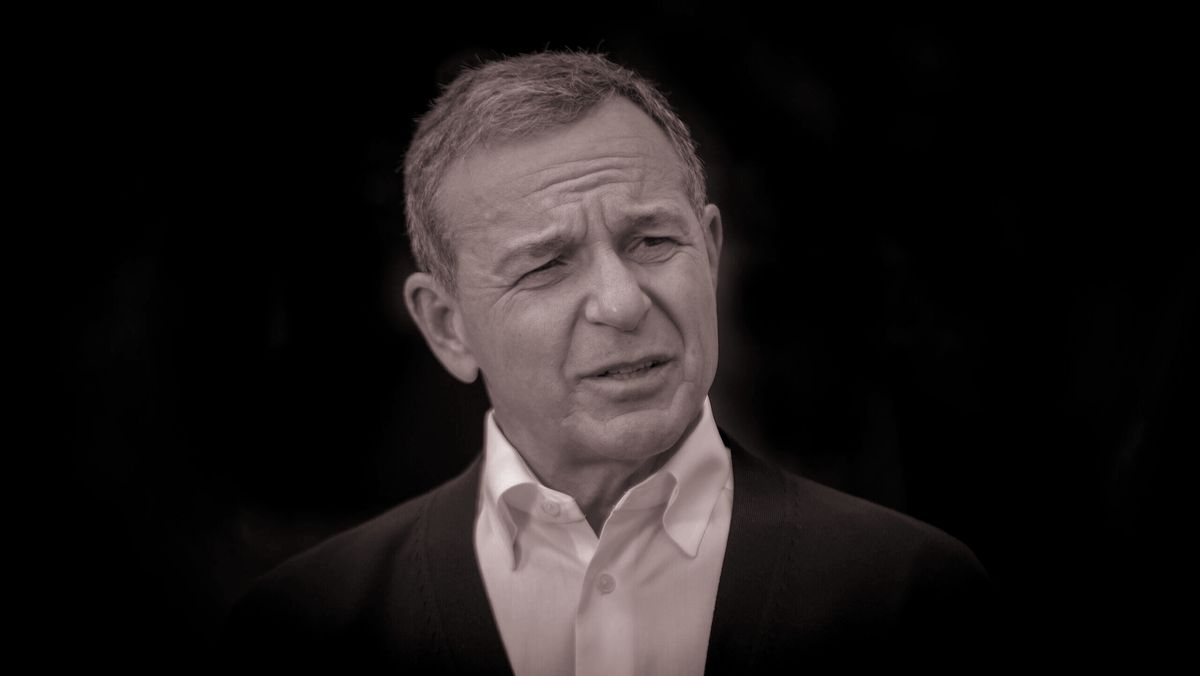
Disney insiders say the outgoing (again!) C.E.O. is leaving under far different
circumstances than after his first stint as leader. Alan Horn praises Iger as perhaps the best entertainment executive he’s ever met. For everyone else, it’s more complex.
|
|
|
It might seem a little early to take a swing at assessing Bob Iger’s legacy—he’s still
Disney C.E.O. for (checks watch…) about five more weeks and will remain on the board until the end of the year. But as the Iger era essentially ended last week with the promotion of Josh D’Amaro, I canvassed some Disney veterans for their thoughts on the outgoing chief executive’s time at the top. There were a few takeaways—notably, that Iger’s biggest mistake has, in one important respect, inadvertently tied his successor’s hands at a critical moment. Only time will tell
whether his errors eventually overshadow his achievements, or vice versa.
My sources tended to analyze Iger’s reign in terms of Bob I and Bob II, the pre- and post- Chapek eras. Most agreed that Bob I (2005-2020) was a dazzling success, the glaring exception being the Fox acquisition (technically the acquisition of most of 21st Century Fox). Bob II (2022-2026) was pretty universally viewed as bad for his legacy. Big picture: In various ways, this is yet another cautionary
tale of the dangers of botched succession, a problem that started to take root way back during Bob I.
I’ll add a caveat here that several of my Disney sources did not survive the Iger years and therefore might have a jaundiced view, though I think they made an effort to be fair. But I also sought opinions from people who got to leave on their own terms. Alan Horn, who retired at the end of Bob I after a 10-year run overseeing the film studio, went happily on the
record, praising Iger’s intellect and values, his way with words, his deep love for Disney, and his “great hair.” Declaring that Iger “is arguably among the best, if not the best, C.E.O. in the entertainment space that I’ve encountered,” Horn (who still consults for Warner Bros.) was generous about whatever missteps Iger may have made. “Did he pay too much for Fox? I don’t know,” he said. “Time will tell whether it will survive a cost-benefit analysis.” But, he said, “These are very
challenging times in our business. It’s very hard to manage an organization as complex and huge and storied as The Walt Disney Company.”
|
Then there was everybody else. A few of my old Disney hands compared Iger unfavorably to his
predecessor, Michael Eisner, with one saying that Eisner was in fact more impactful, having resuscitated the company “from the sleepiest place in Los Angeles to a powerhouse,” reviving the faltering animation division and adding new theme parks outside Paris and in Hong Kong, while expanding in California and elsewhere. (Iger has also expanded various parks, and work has just gotten started on Disneyland Abu Dhabi, the first entirely new park since Iger’s prized Shanghai
Disneyland opened in 2016.) A couple of people sent me a chart, without revealing who had made it, showing that Eisner crushed Iger when it came to stock price. “Unless something changes between now and March, Bob underperformed the S&P for 20 years,” one former Disney insider said. (Since the beginning of Bob II, Disney shares have gained 14 percent while the S&P 500 rose 74 percent.)
Of course, Eisner ran the company during a different time. “An American C.E.O. would normally be judged
on share price, and it’s been disastrous over the past 10 years,” a Disney veteran said. “Almost any other C.E.O. would have gotten the boot for that sort of share price performance. But when you compare it to the legacy media business—Fox, sold; Warners, sold twice; CBS/Viacom—all the peers collapsed. He built Disney into one of the last viable legacy media companies.” (This person left Comcast out because it’s also in the cable and broadband business.)
My sources roundly condemned the
$71.3 billion Fox acquisition, with one calling it “a disaster.” After snapping up Pixar, Marvel, and Lucasfilm to near-universal accolades, Iger might have earned a pass on that deal, despite the debt it loaded onto the company in exchange for… not enough. But the debt isn’t the only lingering problem. “Fox was too big,” one longtime Disney exec said. “You couldn’t ingest it without the culture fundamentally changing. Disney’s always had its internecine rivalries, but we had
incredible collaborations with Pixar, Marvel. Those deals were additive and great and everybody got along. Fox didn’t work that way.” Some old-guard Disney staff still regard former Fox execs as outsiders seven years after the deal closed. Just ask defenestrated Peter Rice—who had actually been perfectly groomed to be a C.E.O. successor.
|
Talking to a bunch of Disney veterans led me to reflect that Eisner and Iger both started out with legendary
runs and damaged their legacies by sticking around too long. Remember how messy things got in the latter Eisner years? The Katzenberg firing, the D.O.A. Ovitz presidency, etcetera. What topped it all was Eisner’s ill-advised battle with Roy Disney Jr., who led a successful shareholder revolt in March 2004. By the following year, Eisner was gone. But by then, Katzenberg had sued Disney for money owed, shareholders had sued Disney over the Ovitz
fiasco, and both cases actually went to trial, with loads of dirty linen aired. (Full disclosure: I miss those days.) One former Disney executive who lived through it all observed, “There have been a lot of really nasty Number 1 and Number 2 [relationships] in that company’s history.”
Which brings us to last week. Notwithstanding everything we’re reading about how D’Amaro and rival-turned-content-chief Dana Walden are buddies, my sources
don’t buy it. In the last few years of Iger’s second term, Walden endured a ludicrously protracted bake-off process that she went all-out to win, and didn’t. (“I wonder how pissed Dana is, or if she’s made peace with it,” one former colleague texted. “Knowing her, I doubt it. She got so close.” Another former associate told me, “It's very hard to be in a two-year public race and then rejected.”)
With the future finally set, some of my sources think there may also be some lingering
resentments between “Team Dana” and “Team Josh.” Though Iger was an early Walden supporter, I’m told he switched sides a few months back. Whether that was due to some issue with Walden, or just wanting to be on the winning side, is unclear. I’m also told that as Disney chairman James Gorman came closer to a decision, Iger complained to associates that he was entirely out of the loop. So despite his long (though interrupted) reign as C.E.O. and despite being a board member, his
preference apparently had, in fact, become irrelevant.
By losing control of the process, Iger has at least temporarily put D’Amaro into something of a box. When Iger took the helm in 2005, one of his first moves was to purge the powerful strategic-planning department—“a hated group inside Disney,” one company veteran remembered—and redistribute power through the organization. Iger echoed that move at the beginning of Bob II, when he undid Chapek’s ill-conceived, distribution-first
reorganization that sapped power away from creative execs and put it in the hands of his favorite, Kareem Daniel. Iger was so eager to dispatch Daniel that he fired him at the crack of dawn on his first day back.
But D’Amaro won’t have the same latitude to reorder his team, at least for a while. The board pledged in its 2026 proxy statement to position its chosen candidate for success “by, among other things, surrounding the new C.E.O. with a team of senior executives who
can work together to lead the Company into the future.” So while D’Amaro can make some moves—maybe buying something, maybe spinning off the linear channels, for example—“I don’t think he can do a big re-org or hire someone significant because it cannot be chaotic,” said a former Disney exec. The optics would not be good.
And Walden, one of those board-installed senior execs, now runs all content, the source of the Nile for Disney. With 28 years at the company, D’Amaro is obviously Disney
to the marrow; Walden, not so much. That leaves the film people with a new, unknown leader at the top and a new, unknown “creative” overseer with no film experience. As Matt noted, Disney has become creatively constipated when it comes to new franchises. (To be fair, Disney has had six movies gross more than $1 billion since any other Hollywood studio had
one—the last being Warners with Barbie.)
On top of that, we’ve seen more than once how film executives lie in wait for new overlords who come from television. One source told me he believed film studio chief Alan Bergman, who was ostensibly in contention for C.E.O., was “surprised and disappointed” when he learned about the new structure, adding, “I think he thought he would be a little more protected by some kind of dual report.”
Ultimately, the fact that
there even was a Bob II, and a messy succession, is largely Iger’s own fault. He’s hardly the only one to fall into this trap—think about Paramount, or the Murdoch family drama. But succession was an issue at Disney a decade ago, and Iger pushed C.O.O. Tom Staggs out after he was believed to be the heir apparent. When the board continued to press Iger on the subject, he handed them Chapek, even though he had to know that Bob was not the person
to lead Disney. This is why I roll my eyes when people say Chapek was Iger’s “hand-picked” successor. Hand-picked, maybe, but for complicated reasons. At Iger’s last board meeting at the end of 2021, before he had even left, he gave a speech in praise of creativity that was seen as an attack on Chapek’s duller, data-based presentation. (But Iger did scoot out the door just as Covid was hitting.) And everyone in town witnessed what Iger did during his “retirement” to help usher Chapek
toward the door.
Then we got Bob II, which didn’t go as overtly off the rails as the end of the Eisner era. That’s not Iger’s style. “Bob does not like conflict beneath him, he likes consensus,” said one of my Disney veterans. “It’s sort of the Court of the Sun King, where everyone’s trying to figure out what he wants to keep him happy. He articulates what he wants, but then the people below him are in conflict. He doesn’t like that. So everyone’s nice to each other at Disney, but also
sticking knives into each other’s backs.” Another person put it this way: “Consensus was an illusion. No one was ever loud in any room with Bob. Ever. He didn’t tolerate it.”
Still, Bob II “has been a miserable run for him,” said one former Disney-ite. “The Kimmel fiasco, the letting-go of thousands of employees, the languishing of the stock.” Let me add, the tone-deaf appearance at Sun Valley during the 2023 strike, the $16 million payment to settle
Trump’s weak lawsuit against ABC News, the resentment I’m told he harbors at what he sees as a lack of respect from the board…
Yes, there were also achievements. Iger managed to de-escalate the battle over Florida’s “Don’t Say Gay” law, on which Chapek had impaled himself. The streaming service stopped hemorrhaging and became profitable, which a company insider noted was helped along with content acquired from the Fox deal. Disney also invested $1.5 billion in Epic Games.
And then there was the $1 billion investment in OpenAI, on which the jury is still very much out. A Disney insider told me Iger knew the comparisons between Bob I and II would be tough, but he returned to remedy a few things and allow for time to appoint a proper successor.
Still, this time the end of the Iger era feels overdue and anticlimactic. “Apart from fixing the Chapek mistake and getting a do-over, you have to think of this as a terrible coda to Bob’s career,” that same former
Disney-ite said. “He’s run out of tricks. No M&A to do. Just a cheap stunt with A.I., giving away Disney I.P. to a bunch of thieves. He didn’t have any more moves. He was the grand master. I just kind of feel like he’s leaving defeated.”
|
Why are Super Bowl ads so juvenile and jingoistic? Just consult USA Today’s annual
“Ad Meter” rankings for America’s favorites. [USA Today]
The Casey Wasserman– Ghislaine Maxwell email scandal gets its “concerns are growing” deep dive. [ L.A.
Times]
More: Now that Chappell Roan has publicly cut ties with Wasserman’s talent agency, the floodgates may be officially open. Expect further departures this week— Marty Diamond, touring agent for the powerhouses Coldplay and Ed Sheeran, is trying to extricate himself, and tense conversations are ongoing with other agents (you can almost hear the CAA-WME-UTA wolves salivating), as well as Wasserman’s backer, Providence
Equity Partners. The agency is set to host NBA All-Star Weekend events in L.A. this weekend, and Casey is supposed to be honored with Jeanie Buss on February 26 at a fundraiser for the Wallis in Beverly Hills. Organizers are freaking.
There are still no allegations against Wasserman other than scuzzy emails to Maxwell (which he’s said he deeply
regrets) and a 2002 humanitarian trip on Epstein’s plane with Bill Clinton. But in the talent business, optics matter a lot, and as Roan posted, “No artist, agent or employee should ever be expected to defend or overlook actions that conflict so deeply with our own moral values.” Some see this scandal as the final straw after Casey’s negative press in the past couple years and a shift in the culture at his company for a while now. (His crisis publicist declined to
comment.)
Just in time for guild negotiations, Amazon is getting more honest about its plans to leverage A.I. in filmmaking. [ Reuters]
Why Darren Aronofsky’s “embarrassing” new A.I.-generated history series is flopping with audiences.
[ Wired]
Is Netflix making podcasts or just cheapo TV?
[ Vulture]
A
California postproduction tax credit makes a lot of sense. [ L.A. Times]
Scientology served up another “mystery sandwich” Super Bowl ad, just like L. Ron intended. [ Tony Ortega]
|
My coverage of Disney’s new C.E.O. and the Netflix D.C. hearing (and Sarandos’s commitment to 45-day
windows) led my inbox this week…
“You correctly identify the elephant in the room. Disney’s general-interest television group does not represent the future of this company. (Most of us are embarrassed by the Ryan Murphy dreck, B.T.W.) Why hasn’t Dana [ Walden] directed her attention to creating the next Bluey so we don’t have to rent it from some other company? More Percy Jackson, less The Beauty. — A
Disney executive
“Josh is smarter than just a ‘parks guy.’ He will figure out content and replace those that aren’t aligned with his vision for Disney.” — Another Disney employee
“Reading this made it clear that Disney applied the same parks strategy to Disney+: Make a huge, exciting, up-front investment and then coast on the brand, milking loyal customers with incremental price increases. That pendulum seems to have swung back on the parks with the current $60 billion
investment. I guess the question is, does that pendulum ever swing back for Disney+?” — A professor
“A Fortnite movie has to be the play. [Epic C.E.O.] Tim Sweeney’s tweets suggest he has a good relationship with D’Amaro.” — An investor
“We have to include box office reporting [if Netflix releases Warner Bros. movies]. That’s almost more important than a meaningful marketing spend because if they have to report box office, that will force
them to make a meaningful marketing spend.” — A producer
|
Have a great week,
Matt
Correction: Jamie Lee Curtis is indeed Casey
Wasserman’s godmother, as mentioned Friday, but she’s not on the LA28 board. That’s Jamie Lee, the commercial real estate executive. Apologies for the mix-up.
Maya Tribbitt contributed research for this issue.
Got a question, comment, complaint, or some Villa’s Tacos? Email me at Matt@puck.news or call/text me at 310-804-3198.
|
|
|
Puck fashion correspondent Lauren Sherman and a rotating cast of industry insiders take you deep behind the scenes of this
multitrillion-dollar biz, from creative director switcheroos to M&A drama, D.T.C. downfalls, and magazine mishaps. Fashion People is an extension of Line Sheet, Lauren’s private email for Puck, where she tracks what’s happening beyond the press releases in fashion, beauty, and media. New episodes publish every Tuesday and Friday.
|
|
|
Ace media reporter Dylan Byers brings readers into the C-suite as he chronicles the biggest stories in the industry: the future
of cable news in the streaming era, the transformation of legacy publishers, the tech giants remaking the market, and all the egos involved.
|
|
|
Need help? Review our
FAQ page or contact us for assistance. For brand partnerships, email ads@puck.news.
You received this email because you signed up to receive emails from Puck, or as part of your Puck account associated with {{customer.email}}. To stop receiving this newsletter and/or manage all your email preferences, click here.
|
Puck is published by Heat Media LLC. 107 Greenwich St., New York, NY 10006
|
|
|
|