Welcome back to What I’m Hearing, home in L.A. just in time to miss the East Coast heat wave, my
condolences to those heading to NYC for the Taylor Swift wedding extravaganza. Now that we know the Madison Square Garden festivities will include live performances (Stevie Nicks and Tim McGraw are rumored), Swift wouldn’t stoop to recording the whole thing and selling it to a streamer, would she? Would she??
Speaking of New York… nice to see turnout was strong for the Clive Davis funeral this morning at Central
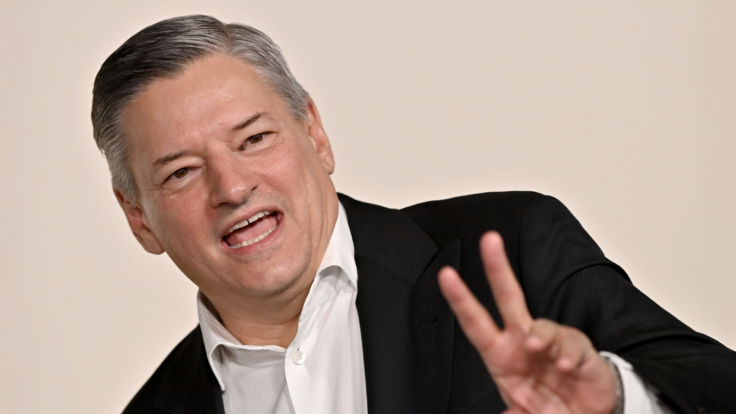
Synagogue. Star power, of course, and music execs including Rob Stringer, Monte Lipman, Michele Anthony, Rob Light, and Allen Grubman, plus Hollywood repped by Netflix’s Ted Sarandos and WME’s
Richard Weitz, both of whom were close to Davis. Even Craig Susser (of Craig’s). Clive had a complicated reputation, especially in his later years, but he was always great to me, especially when THR would shoot his annual Grammy party class photo. R.I.P.
💫💫 P.S.A.: WIH is off on Thursday so I can check out the Great American State Fair (kidding). Eriq Gardner will be here tomorrow as usual, and then I’ll be back next
Monday. Happy 250th, U.S.A.!
Tonight, my take on Comcast’s NBCUniversal spinoff, and the ticking clock on its entertainment assets. Plus, Julia Alexander looks at A24’s unholy A.I. partnership with Google’s DeepMind unit, and what’s really at stake here.
Programming note: This week on The Town, Lucas Shaw and I made
sense of the NBCUniversal spinoff, and the WSJ’s Emily Glazer insisted that Larry Ellison actually likes hanging out with Donald Trump. Subscribe here and
here.
Not a Puck member yet? Just click here. Got a news tip or an idea for me? Just reply to this email, text me, or message me on Signal at 310-804-3198.
Discussed in this issue: Josh D’Amaro, Brian Roberts,
Demis Hassabis, Jeff Zucker, Ari Aster, Rupert Murdoch, Cate Blanchett, Ben Affleck, Josh Kushner, Robert Eggers, Larry David, Diane Keaton, Eli Collins, Scott Belsky, Rob Bonta, Sandra Bullock, Reese Witherspoon, Daniel Katz,
Jeff Schaffer, Guillermo del Toro, Sundar Pichai, John Krasinski, Kane Parsons, Taylor Sheridan, Bob Iger, Celine Song, Greg Peters, Jon Feltheimer, Barack Obama, James Cameron, Evan Spiegel, Bob Chapek, and… Andy Cohen.
But
first… |
Who Won the Week: Andrew
Stanton
|
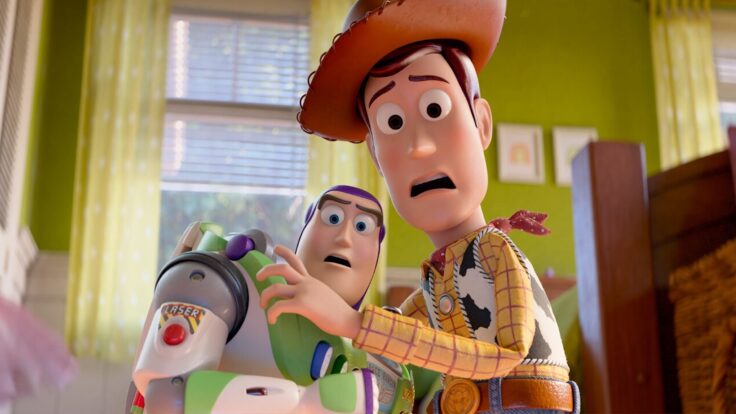
The Toy Story 5 writer-director’s $70 million second weekend is the largest domestic drop (56
percent) of the series. But even opposite the World Cup, the film will almost surely become the third in the series to cross $1 billion worldwide, with all of them earning an A Cinemascore and a Rotten Tomatoes score in the 90s, a remarkable achievement for a 30-year-old franchise.
Dishonorable mention: Supergirl’s publicity team. Despite the disastrous $38 million opening for the $170 million-budgeted and poorly received film, the DC P.R. people are spinning
that post-pandemic, all female superhero pics are doomed now. Okay… No doubt there’s rampant sexism in the comics fan base, and the sequels to female-fronted Suicide Squad, Wonder Woman, and Captain Marvel all tanked. But the sexism has always been there, and those sequels earned markedly lower critics’ and audience scores than their predecessors, as did Madame Web, which put up a rare 10 on RottenTomatoes before opening to just $14 million in 2024.
Post-Covid, the sequels to the male-fronted Venom also earned less, and everything from The Flash to Black Adam to Eternals to Thunderbolts has underperformed the boom times. The scary fact is that audiences now require superhero movies to be good, and differentiated, and nostalgic, and exhibit a reason for being other than effective I.P. exploitation. Supergirl is none of those.
Speaking of
Warners…: Aggregators online seem to think my Thursday reference to Jonah Hill’s comedy Cut Off as “unreleasable” by its planned July date means it will never be released, Batgirl-style. No, it’ll get a release, just not until Hill has had more time with it. |
“‘Yeah, but I’m the president of this.’”
—Larry David, when producer Barack
Obama pushed him to incorporate a note on HBO’s Life, Larry and the Pursuit of Unhappiness, according to director Jeff Schaffer.
Runner-up: “Investment idea: Needing scale, the soon to be spinoff NBCUniversal acquires Versant.”
—Alex Sherman, the CNBC reporter, joking on X about his spun-off parent company
reuniting with another planned Comcast castoff |
A little more on this…
To me, the big question from today’s transformative Comcast news is
whether the planned split of the NBCUniversal media empire into its own publicly traded company will even happen. Call me cynical, but it seems that by merely announcing a plan to create a pure-play entertainment company—unburdened by the challenged cable and broadband business and the shrinking TV networks spun off into Versant—potential merger partners may emerge for both the connectivity and media sides of the company.
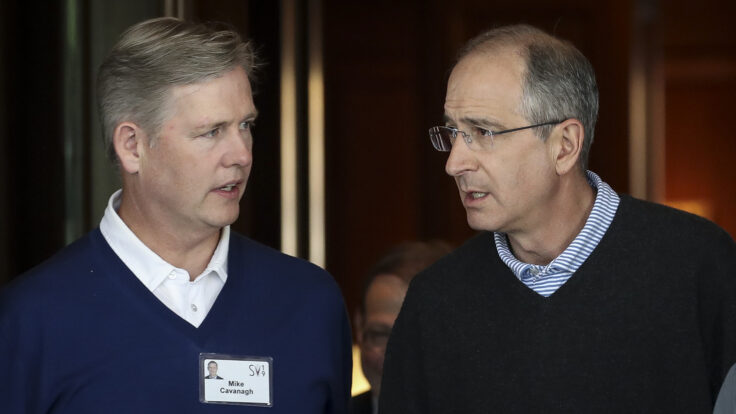
Maybe that’s why Brian Roberts
is stepping down as C.E.O. of the family company he’s run since 2002, and the expectation—the hope, really—is that, just like when Warner Bros. Discovery announced a split, suitors will step forward. And maybe, like when Rupert Murdoch sold most of Fox but kept news and sports, the Roberts family will endeavor to maintain control of the legacy connectivity part of their business—a merger with Charter? A mega-roll-up of nationwide broadband providers?—while throwing in the towel
on content, shipping Universal, NBC, Peacock, the theme parks, and Andy Cohen off to a deep-pocketed buyer. Maybe even before Mike Cavanagh—the former investment banker and Philadelphia guy, who, tellingly, has been running the media business without prior operational experience at a media company but lots of experience doing corporate transactions—can assume his perch atop the spun-off company. Maybe.
Roberts can’t say that, of course. In fact,
he and Cavanagh said the opposite today, specifically shooting down the widespread belief in the analyst community that M&A is the goal. “This is the right move to put each company in the strongest position to create value, fully monetize its assets, and aggressively pursue its own organic growth strategies,” Roberts insisted. “Our plan for NBCUniversal and Sky is to build and invest for growth,” Cavanagh added. Maybe they mean it. Maybe Roberts is bringing back Michael
Angelakis, his former C.F.O., because Angelakis has a clear plan to stave off Elon Musk’s growing Starlink satellite service and its 10.3 million subscribers in 160 countries. Maybe Cavanagh can find a way for Peacock to compete and fund the necessary sports rights without cash from cable networks or broadband subs. Maybe he’ll buy a cruise line or timeshare business to complement the theme parks.
But maybe the last thing the Comcast guys want is to seem thirsty,
especially if those hoped-for suitors don’t actually emerge. After all, dance partners are tough to find in media these days—especially when Trump hates you, thanks to the MS NOW network. CNBC walked through lots of reasons why potential NBCUniversal buyers—including, yes, Netflix, still smarting from its failed deal for Warner Bros.—might
beproblematic. But problems are meant to be resolved, and for every streamer like Netflix that doesn’t want a broadcast network like NBC, there’s someone who does.
And Comcast had to do something. The stock is down nearly 30 percent over the past year and hasn’t moved much at all since cord-cutting began chipping away at Hollywood’s boom era more than a
decade ago. Investors just weren’t buying the combination of a troubled broadband business and a top-tier entertainment company with a subscale streamer that still elicits chuckles when you say its name at a dinner party.
Carving up the company addresses the perceived value gap, they hope. Comcast, since buying NBCUniversal from GE in 2013, has actually been a fantastic owner. Thanks to major investments, the parks have grown exponentially. The Olympics, Sunday Night Football,
the NBA, and the broader sports portfolio is now matched only by ESPN/Disney. The movie studio, without superheroes or an I.P.-rich library, has become a consistent number two behind Disney at the box office under Donna Langley, effectively creating its own franchise conveyor belt by investing in Illumination (family), Blumhouse (horror), and Steven Spielberg (Jurassic), luring franchise filmmakers Chris Nolan and Jordan
Peele, and soon Taylor Sheridan on the TV side, and buying DreamWorks Animation outright.
There’s value there, the only question is when Comcast will attempt to realize it. Maybe this is a longer-term play. Maybe they do the split, see how each side is valued and performs, then reassess in a few years, with potentially a more Roberts-friendly administration in Washington. But Peter Supino, the Wolfe Research analyst, agrees with me that action
will come sooner. “We doubt that this breakup will occur,” he wrote in a note this morning. “Instead, we expect one or both Comcast units to merge with peers or competitors.” M&A rules require suitors to wait a year or two after spinoff is completed, so going sooner “strengthens Comcast’s negotiating position with partners who will not want to wait 1-2 years for an otherwise completed spin-out to ‘season’ for tax purposes,” he wrote. If so, it’s Warner Discovery all over again, but with one
Ellison-style buyer unlikely to step up for the entire company. Instead, we’ll soon get to see what just NBC, Universal, Peacock, theme parks, and Andy Cohen are worth on the open market. |
4.6 percent
Expected growth of the global entertainment and media
industry in 2026. [PwC]
34 million
Global audience for UFC Freedom 250 on Paramount+, doubling the initial viewership announced for the U.S. and Latin America. [UFC]
13 percent
Share of songs tagged “explicit” on Spotify’s global top 50 chart today, way down from 74 percent on the same day in 2018. [Stat Significant] $4.2 million
Revenue
generated by a recent sale of the late Diane Keaton’s clothes after Bonhams set a record for auction registrations. [WSJ] |
Now here’s Julia on A24 and Google… |
|
|
|
The entertainment industry is worrying about the indie player’s $75 million deal with
DeepMind for all the wrong reasons. Google isn’t trying to get into filmmaking—but it does want filmmakers to start using its tools. |
|
|
|
There’s been a fair amount of hysteria surrounding Google DeepMind’s recently announced partnership with A24,
the private equity-backed indie distributor turned film and TV studio that has successfully branded itself as a home to auteurs and artists while garnering a $3.5 billion valuation. For a certain type ofpost-hipster cinephile, A24 is practically synonymous with Ari Aster, Robert Eggers, and Celine Song. DeepMind, on the other hand, is not.
The company has been touting the sort of generative A.I. video,
including a recent A.I.-assisted animated short at Tribeca this month, that would seem anathema to the very human creative work that has made indies like A24 (and Neon, and Mubi) feel like the final bulwark against the slopification of Hollywood. So it wasn’t unexpected when the discourse around last week’s announcement of a “deep research and development collaboration between A24 and Google DeepMind” went thermonuclear.
The pushback got so noisy across the industry that A24 was
already doing some clean-up a few days later: “This partnership exists because we want to dictate what tools get built for artists, and so they have a voice in shaping them rather than having tools handed to them,” a spokesperson told Wired. “We’d rather have a seat at the table than on the sidelines.”
Okay… So A24 gets a seat at the table and $75 million of Google’s money. What does Google get in return? I joked with one TV executive that the entire team at DeepMind has more
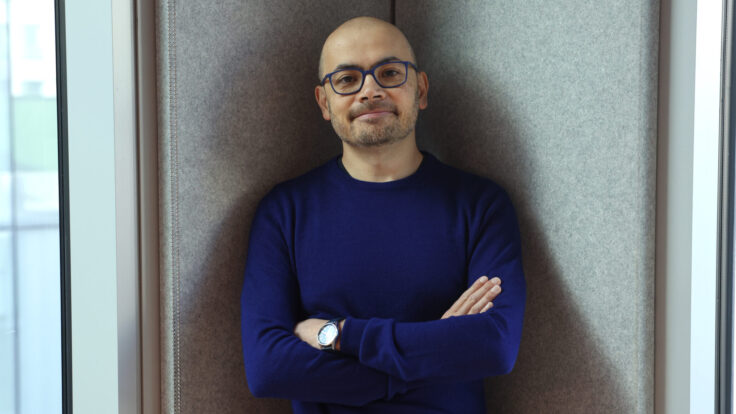
pressing things to worry about than winning Oscars. (C.E.O. Demis Hassabis recently announced that his ambition was to end all disease.) But the race to become the de facto A.I. video-generation tool for professional creatives remains wide open. That’s a huge opportunity, and perhaps no production company in Hollywood could give Google more street cred with the exact type of artist it needs to win over. |
The DeepMind–A24 deal may reek of transactionalism, but Google has been more quietly courting Hollywood for
some time. In 2025, Alphabet C.E.O. Sundar Pichai highlighted that “major film studios and entertainment companies” were using Veo2, Google’s main video-generation model. Last month, Pichai told developers that more filmmakers and musicians were using Veo3 in their filmmaking and songwriting process. And in this A24 announcement, DeepMind V.P. of product Eli Collins framed the deal as an effort to ensure “the tools of the future are shaped by the creators who
use them.”
The unspoken goal, of course, is to encourage A.I. tooling within production houses and studios so that Google can scale its suite of products in lockstep. Google’s business was built off a very simple concept with search, but the company scaled its offerings as the use case for queries grew, and as more websites launched to meet those query demands—largely without any actual investment in the content, itself (outside of payouts to creators via YouTube’s revenue sharing model).
Hollywood’s industry-standard software tools—Avid for editing, Pro Tools for sound, Nuke for compositing, etcetera—are also very enmeshed and difficult to dislodge. Google needs to buy its way in.
It doesn’t take much foresight to see how quickly Google’s tools could become integral to the filmmaking process in the so-called A.I.-assisted era. Imagine that another Kane Parsons type—one of the new crop of YouTuber filmmakers who may be less resistant to
using A.I. tools in some capacity—gets a deal with A24 to make a movie. While working on that project, perhaps this next-gen auteur is exposed to Google’s powerful software suite, and subsequently continues to rely on those tools, effectively marketing them as he or she moves through their career.
A24’s Scott Belsky, who leads the company’s technology and innovation initiatives, and DeepMind’s Collins aren’t the only two executives thinking about how to convince anxious
creatives to incorporate more A.I. tools, even at the experimental level. In March, Netflix, led by Ted Sarandos and Greg Peters, acquired InterPositive, Ben Affleck’s A.I. company, for a reported $600 million; Jon Feltheimer is aggressively pushing Lionsgate’s teams to work more closely with A.I. video-generation company Runway; and Martin Scorsese recently became an advisor to Black Forest
Labs, whose A.I. tools he says can help speed up storyboarding. Each initiative is, in its own way, a bet on fusing A.I. into the postproduction process—technology that could lower the cost of VFX and lower the barrier of entry for less-resourced filmmakers, even as it puts a lot of people out of work.
With their Google partnership, Belsky and fellow A24 co-founder Daniel Katz are presumably hoping to dip a toe in these waters without scaring off the creative community.
But the harder test is whether A.I. postproduction tools also appeal to more-established filmmakers. Award-winning talent like Guillermo del Toro and Cate Blanchett have decried using generative A.I. in film and television. Others, typically more entrepreneurial types, like Sandra Bullock, Reese Witherspoon, James Cameron, and Steven Soderbergh, have praised opportunities for its use in pre- and
postproduction. (A.I. firms are throwing around endorsement money, of course, so… grain of salt.) Here’s the real problem: In the age of YouTube, does any of it matter? |
Google’s
Hollywood Future
|
Infused in the hubbub around Google and A24’s new partnership are unspoken fears that this is once again a
moment of Google-led inevitability disrupting a fragile industry. YouTube went largely ignored until it engulfed the whole town a few years ago. If Google becomes the dominant player in A.I.-assisted filmmaking software, what does that mean for the ever-growing unease regarding Big Tech’s shadow over Hollywood?
When this topic comes up, the question I often pose to executives is whether they’d ever stop uploading their content—their network’s shows, or studio’s trailers, even full-length
episodes—to YouTube. Google is home to the largest video repository on the internet, and those videos are used by Google’s A.I. teams to train their own products. After a 2025 report found that millions of YouTube videos were being used to train Gemini models, a Google spokesperson simply affirmed that they “use YouTube content to make our products better, and this hasn’t changed with the advent of A.I.”
As it currently stands, YouTube allows for creators, which technically would include
studios and networks, to opt out of competitor A.I. companies using their content for training. But there is no opt-out for Google, according to its own terms of service. Google has been sued by creators and studios over alleged copyright infringement and unauthorized use of copyrighted content to train its models. But the company isn’t backing down—and is leaving it up to the courts to determine its obligations toward its tens of millions of YouTube creators. When asked about lawsuits
with creators, Pichai deflected by pointing out that Google is “not the only player in a big ecosystem.”
Fair—but Google is the only player with a video-generation tool training on content uploaded to its massive hosting platform. All of which leads to the ultimate question regarding this A24 deal: Is Google’s dominance inevitable in this new part of Hollywood’s underlying tech foundation? While there seems to be little competition, especially among the major players, an
opportunity exists for startups built by established talent, craftspeople, and executives, such as Affleck’s InterPositive, that can leverage their existing expertise; realistically, there’s no one who understands where A.I. can be most efficaciously deployed in pre- and postproduction than those who are currently working in it.
Though, if history has taught us anything, if there’s a business that Google executives think can help cement its dominance—in this case making the company the
go-to for professional creatives, aspiring filmmakers studying at schools like USC or NYU, and your everyday creator—they’ll just be snapped up. |
Clive Davis understood ego better than anyone in the music business.
[Atlantic]
Acquired finally did Disney. I learned a bunch of details about how often Walt nearly capsized his own company. [Acquired]
Josh D’Amaro was so boring in his first C.E.O.
sit-down interview that there’s really nothing to say, so… mission accomplished? [WSJ]
D’Amaro’s next-gen Disney robots will surprise and delight and kill us all. [Bloomberg]
Shades
of Bob Chapek’s Oogie Boogie Bash earnings call: Snap lost $1 billion in value during the time it took Evan Spiegel to introduce his ridiculous $2,200 glasses onstage. [Art of the Brand]
Bob Iger and B.F.F. Josh Kushner want to own an NBA team in Las Vegas. Iger’s son
Max has worked for the Spurs and CAA Sports. Gotta think he’d be involved, too. [Bloomberg]
Taylor Sheridan is plugging a book. Given how gleefully he shits on Hollywood, Sheridan might be the only top TV creator to wait until after the Emmy voting window to do press.
[Bill Simmons Podcast]
Shocker: Publicists who court the proprietors of celebrity fan accounts often realize those people are batshit crazy. [Wired] |
My Thursday analysis of whether the Ellisons would consider selling CNN to assuage California regulators
drew pointed responses. Some examples…
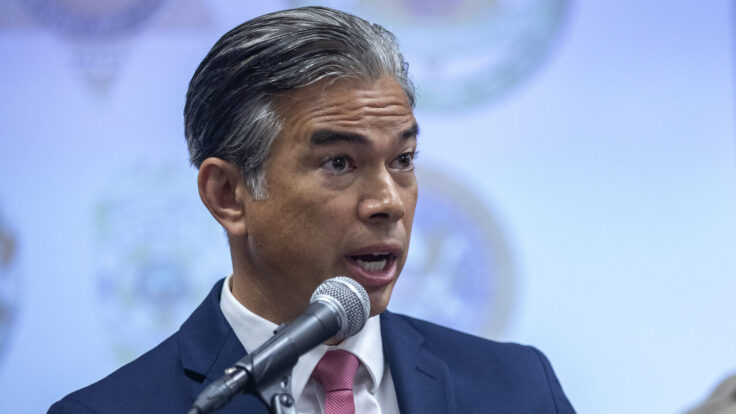
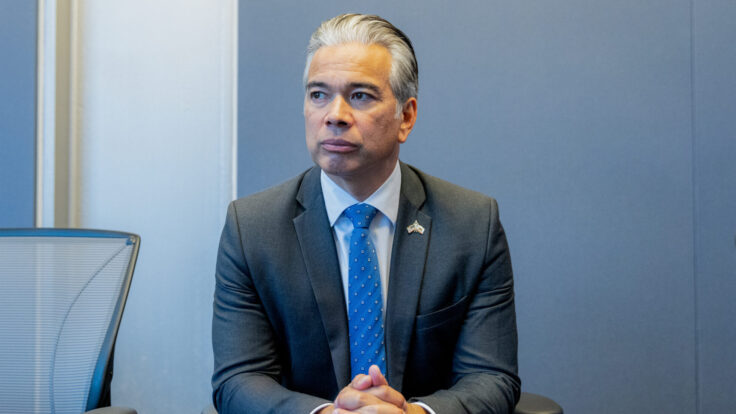
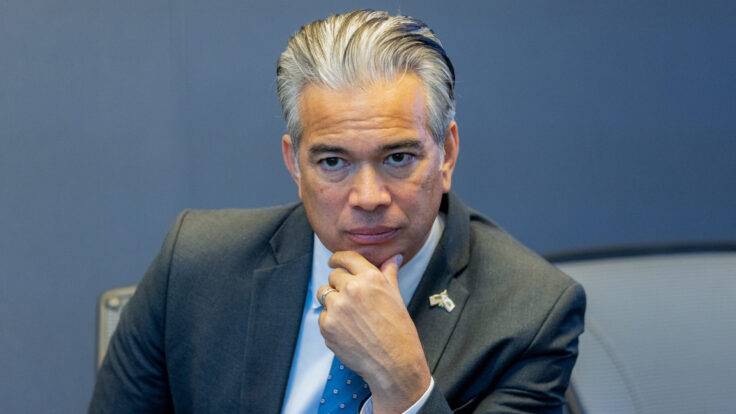
“[Attorney General] Rob Bonta should tread very carefully. Asking for a divestiture for purely political purposes would be setting a very bad precedent. Imagine red states demanding disfavored asset sales or crazy D.E.I. ‘remedies’ before they sign off on future media transactions, and the alternative would be to fight a silly lawsuit for two years. It’s much more defensible to ask for remedies directly connected to this
transaction, namely layoff totals, wide film releases, and in-state production requirements.” —A lawyer
“Don’t forget Trump wanted CNN sold (or even [Jeff] Zucker fired) as part of Time Warner’s sale to AT&T, and they said no. Ellisons would be crazy to put that on the table.” —A producer
“Unless David can find a Koch or some other conservative billionaire to buy CNN, he would only be causing himself another
headache by selling to Diller to calm the Democrats down. Trump may not have jurisdiction to block a sale, but he would certainly try, and he can hurt David in other ways.” —An analyst
“Maybe bringing back [John Krasinski’s] Some Good News is one of the remedies to consider.” —An executive |
Have a great week,
Matt
Maya Tribbitt contributed research for this issue.
Got
a question, comment, complaint, or World Cup fever? Email me at Matt@puck.news or call/text me at 310-804-3198. |
|
|
|
Need help? Review our
FAQ page or contact us for assistance. For brand partnerships, email ads@puck.news.
You received this email because you signed up to receive emails from Puck, or as part of your Puck account associated with {{customer.email}}. To stop receiving this newsletter and/or manage all your email preferences, click here. |
Puck is published by Heat Media LLC. 107 Greenwich St., New York, NY 10006 |
|
|
|
|