Welcome back to What I’m Hearing. Still waiting on World Cup Final ratings, but sources are
telling Puck’s John Ourand that the Fox number could hit 40 million (!). If you missed it, Tom Cruisemet Elmo, broadcasters
mistookMatt Damon for Brad Pitt, and Donald Trump had to be cropped out of Spain’s victory
photo. Can’t wait for 2030.
Tonight, my take on today’s court-ordered pause of the WarnerMount merger. Plus, highlights from my mildly argumentative chat with Paramount’s top lawyer, and Julia Alexander breaks down the latest Netflix viewership data dump (with exclusive numbers!).
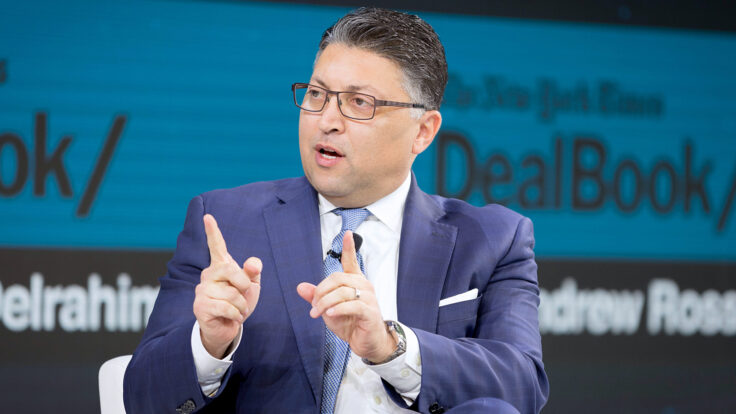
Programming note: This week on The Town, Paramount’s Makan Delrahimteased concessions to settle the WarnerMount lawsuit, analyst Michael Morrisbroke down the Netflix financials, and Data-Driven Hollywood author ViolaineRousselexplained how predictive models are influencing greenlight decisions. Subscribe here
and here.
Not a Puck member yet? Just click here. Got a news tip or an idea for me? Just reply to this email, text me, or message me on Signal at 310-804-3198.
Discussed in this issue: David Ellison, Jennifer
Lopez, Dan Lin, Eric Seufert, Ted Sarandos, Rich Gelfond, MarkRober, Hernan Lopez, BelaBajaria, AraceliMartínez-Olguín, the Stokes Twins, David Zaslav, Alex Honnold, BenAffleck, Jay Shetty,
Bill Simmons, Greg Peters, Jon Bernthal, Whitney Cummings, AriEmanuel, RahmEmanuel, ScottStuber, Pat McAfee, Ms. Rachel, and… Liam Gallagher.
But first…
Who Won the Week: Chris Nolan, of course
No, I’m not prepared to fully anoint directors the new I.P.—the list of butts-in-seats filmmakers is short,
and I.P. is still the new I.P. But… directors are definitely the new movie stars, a more reliable indicator of quality to savvy audiences when actors are ubiquitous on social media and routinely prostitute themselves for brands. The Odyssey’s $124.5 million domestic and $264.1 million worldwide haul is Nolan’s biggest global opening (though still behind The Dark Knight Rises with inflation), and all the metrics are suggesting a path to $1 billion as several of the
summer’s sure-thing I.P. plays—Moana, Star Wars, Minions, and Supergirl—all falter.
So while yes, Spider-Man and Avengers will still be huge, something is happening at the box office. And if I were a studio head, I’d probably rather have the next commercial movie from the five biggest directors (Nolan, Cameron, Coogler, Gerwig, Villeneuve) than the next
installment of almost any piece of well-worn I.P. Wouldn’t you?
Runner-up: Gotta be Imax C.E.O. Rich Gelfond, whose bromance with Nolan led to 23 percent of the domestic gross and $51.8 million of the global haul coming from the format, including $6.3 million from 41 Imax 70mm screens.
Honorable mention: To the TV Academy, for announcing its move to boot five categories off the live Emmys telecast on a summer Friday afternoon as everyone was
obsessing over The Odyssey and the World Cup, so we’ve all forgotten that the three major guilds condemned the move.
Quote of the Week (Makan Delrahim edition)
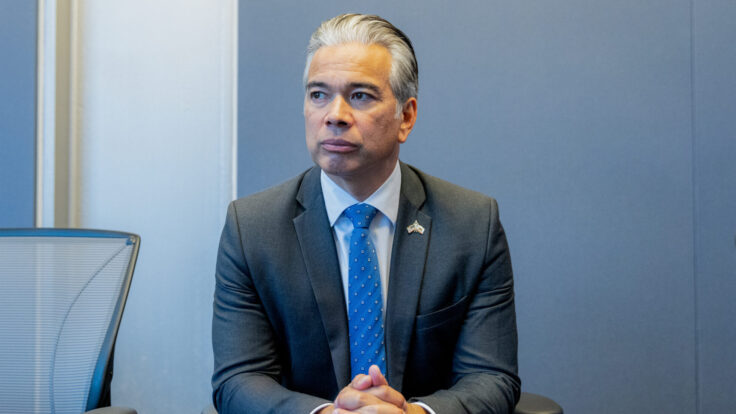
Ahead of today’s court-ordered pause in Paramount’s acquisition of Warner Bros. Discovery, its top lawyer let loose on The Town. Some highlights:
On whether he’s got a list of possible concessions on his desk to settle this matter…
“Of course it’s on my desk. It’s on the [California] attorney general’s desk. I was shocked when he said upon filing that it was only in the press that he learned about it. He got it two months ago. And once we learned that it
hadn’t been disclosed to the other state A.G.s, we gave it to the other state A.G.s.”
On whether he’d put in writing David Ellison’s “guarantee” of 30 films a year in theaters with 45-day windows…
“We’ve offered to make it enforceable. No response. Crickets for two months. You know why? Because they just wanted to bring a lawsuit.”
On whether they’re willing to sell or spin off CNN…
“We’ve said we’ve been open to all legitimate discussions. What is
the harm of CNN? Where’s the antitrust harm? I think if the states are using their state power to try to control speech by who owns it, that’s a serious First Amendment violation that nobody should be for, especially the creative community.”
On whether Paramount would move its corporate headquarters from California to Tennessee or elsewhere…
“It is safe to say that multiple states have reached out to us to invite us to talk to them about going there. That’s a statement of
fact. But ultimately, these are big decisions. David [Ellison] has grown up here. He wants to be in California. We’re one of the few companies that actually moved our headquarters to California last year.”
A little more on this…
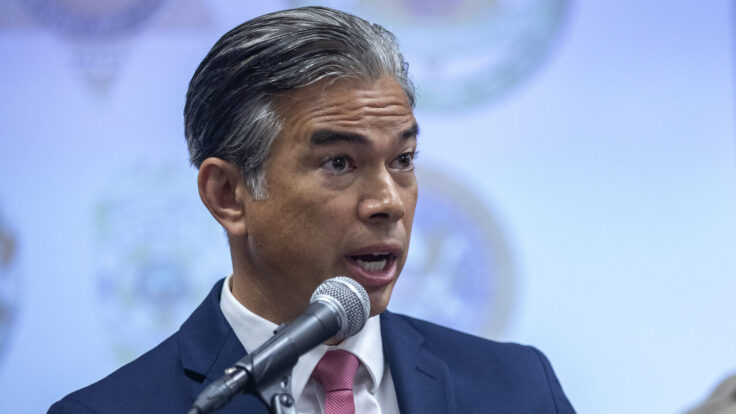
Did Judge Araceli Martínez-Olguín tip her hand in today’s 14-page ruling halting the WarnerMount merger? Both Paramount and the state attorneys general expected the temporary restraining order to
be granted for 14 days, with a courtroom showdown now set for August 3 on the request for a preliminary injunction. That would stop the merger for the duration of the litigation and, after September 30, cause the Ellisons to incur the dreaded ticking fee.
But I don’t think Paramount expected Martínez-Olguín to declare that the states had made a “strong showing” that the deal will harm competition—and in wide-release theatrical film distribution, of all things. To me, that was the weakest
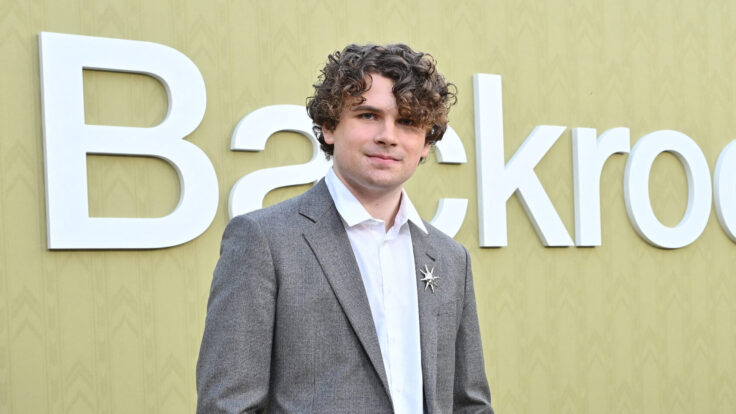
of the three “markets” as defined by the states because obviously any number of film companies can and regularly do release movies on 3,000 screens, including Amazon MGM Studios, Lionsgate, and A24, all of which have enjoyed their biggest box office hits ever this year in Project Hail Mary, Michael, and Backrooms, respectively. That fact will certainly come up at the injunction hearing, and Martínez-Olguín seems open to the argument. But she also appears to be
applying the Philadelphia National Bank standard that says the WarnerMount consolidation is presumptively illegal and must be proven otherwise—a tougher road for Paramount.
The judge also doesn’t seem enthused with Paramount’s argument that the merger will help it finally compete with Big Tech in the streaming wars. The ruling states the court “cannot accept” the position that efficiencies in other markets are a defense to illegal effects in the markets defined in the litigation.
That’s a slightly different argument than ignoring streaming competition when discussing cable TV distribution, but it signals at least some reluctance to accept Paramount’s pleas for scale to battle Netflix. Eriq Gardner will have more analysis of the T.R.O. ruling tomorrow.
Data of the Week
39 percent Share of the U.S. population that considers themselves to be “content
creators.” [Luminate]
45 percent Share of U.S. moviegoers that saw The Odyssey this weekend in Imax or another premium format. The usual share for a film on opening weekend is around 22 percent. [EntTelligence]
16 percent Jump in CD sales in the first half of 2026, thanks to souvenir-loving K-pop devotees. (Half of
the Gen Z and Millennial fans who bought them don’t even own CD players.) [Luminate]
$587 million Price paid (in cash!) by Netflix for InterPositive, the 16-employee A.I. startup co-founded by Ben Affleck. [Netflix]
5.5 Average number of songwriters listed on Billboard-charting songs, up from two per track 30 years ago. [Stat Significant]
Before Netflix retreats from its semiannual Engagement Reports, here’s what the numbers
really say about how the streamer is doubling down on movies, betting on creators, and quietly preparing to live in a YouTube world.
In December 2023, Netflix released its first semiannual Engagement Report, a massive Excel file that was open
to everyone—analysts, journalists, and competitors alike. It was, as company executives would repeatedly boast, an unprecedented act of data transparency. Of course, it was also somewhat self-serving: The geniuses in Los Gatos knew that no other streamer would dare follow suit.
Alas, this month’s viewership data dump will be Netflix’s last before the company retreats to an annual cadence—the latest evidence of jitters surrounding the streamer’s slowing growth. To wit: Analyst
HernanLopez of Owl & Co. found that average per-subscriber viewing dropped about 4.6 percent year over year, continuing the trend of overall decline as YouTube hoovers up market share.
But even without the omnipresent and often unflattering comparisons to the world’s largest video platform, there are plenty of reasons for co-C.E.O.s Ted Sarandos and Greg Peters to be concerned about what all that data reveals. Here’s
what the past three years of Engagement Reports tell us about Netflix, and what recent strategy shifts reflected in the first-half numbers suggest about the company’s future.
1. Netflix Is Far From Franchise
Dependent
Both Sarandos and content chief Bela Bajaria love to remind people that Netflix spends more
on original content than anyone. Of course, that’s partially because Netflix doesn’t have the same deep bench of series and films that its competitors have built up over decades. Indeed, Luminate recently found that Netflix’s library content—i.e., shows and movies that have been on the platform for at least one year—accounts for 60 percent of all viewing. But library viewing sits between 90 and 98 percent for every other streaming service.
So Netflix needs its originals
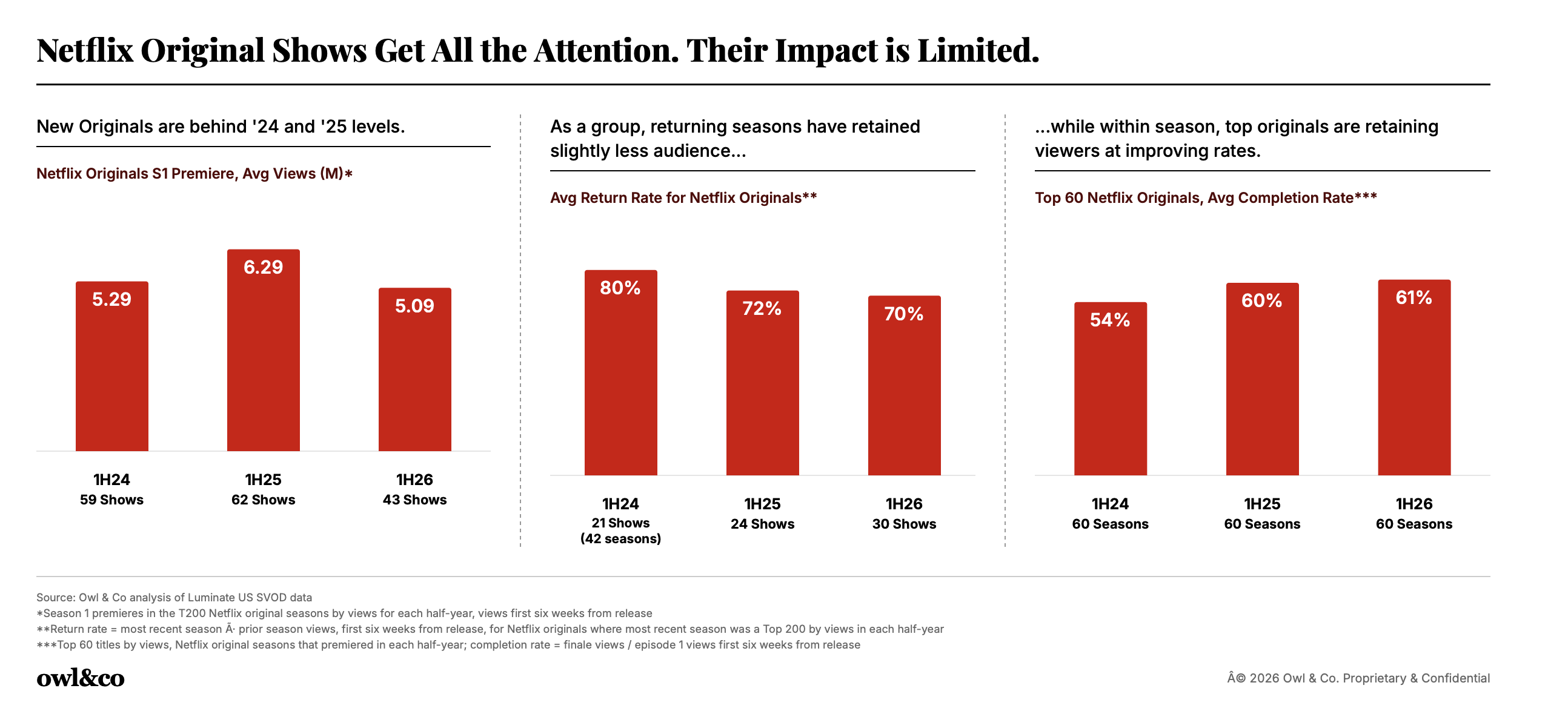
to land, even as its programming teams try to build out their own franchises that can drive multiple seasons and spinoffs. But as the company tries to find new shows and films that can plug the Squid Game or Stranger Things holes, there’s a lot of pressure on those bigger titles that dominate headlines and social media feeds. And yet data shows that engagement still hasn’t concentrated at the very top, despite more big I.P. attempts. Since Netflix’s first Engagement Report, the
top 10 highest-performing titles have accounted for between 4.1 percent and 6.2 percent of total viewing time, with the highest share occurring in the second half of 2025. In the first half of 2026—which saw the release of Bridgerton’s fourth season and the final episodes of Stranger Things carry over from the New Year’s Eve drop—the top 10 accounted for 5.1 percent, a relatively stable trend line.
Another fascinating detail, per Owl & Co., is how Netflix originals are
performing from a subscriber-retention perspective. Lopez estimates that returning seasons of Netflix originals may have drawn back a smaller share of their previous-season audience in the first half of 2026 (about 70 percent) than in the first half of 2024 (80 percent) and 2025 (72 percent), but overall retention is still high. Furthermore, top originals that premiered within the half saw an increase in average completion rate, meaning viewers are more often finishing the seasons that they
start.
Now, there are two ways to read the data. Licensed content—which comprises about 53 percent of Netflix
content spend, per Lopez—is increasingly important because it comes with built-in audience and awareness (no need to spend on marketing!) as the company’s content strategy widens to incorporate more expensive bets. That includes live sports, which don’t perform as well in Engagement Reports but do attract new subscribers.
At the same time, original content engagement isn’t as dire as some analysts might have expected. That’s a promising sign, especially as Netflix remains one of
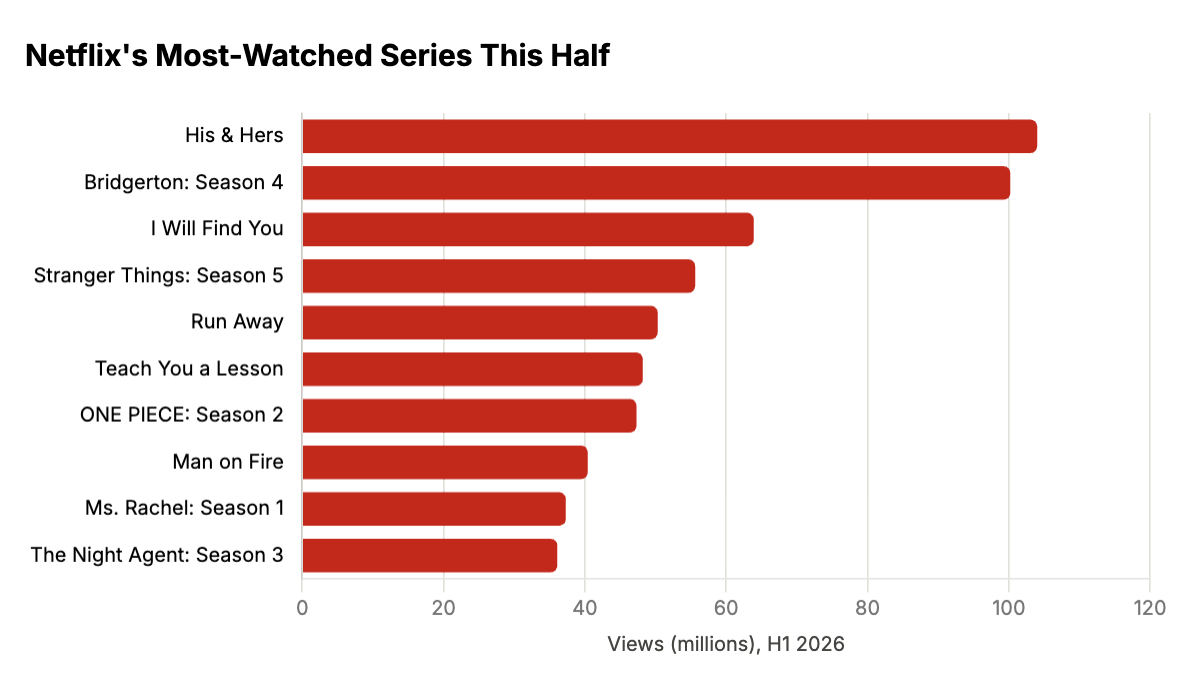
the rare platforms where new shows are breaking through at engagement levels on par with massive previous hits like Bridgerton and Squid Game. See: the Jon Bernthal and Tessa Thompson limited series His & Hers, which slightly beat out Bridgerton’s fourth season to be the most viewed series this year so far.
2. Netflix’s Original Movies Are Filling the
Holes
By this point, we know that licensed films are integral to Netflix’s strategy, which is why the company is
extending licensing deals with both Universal and Sony, and a big part of why Sarandos and Peters made a play for Warner Bros. Overall, film viewership was down about 3 percent in the first half of the year, but there are two pieces of good news for Netflix: Audience reception of original films with more than 100 million views has steadily improved over the past three and a half years, as Rotten Tomatoes scores show—and the number of movies that generated more than 100 million views
tripled in the first half of 2026 year over year.
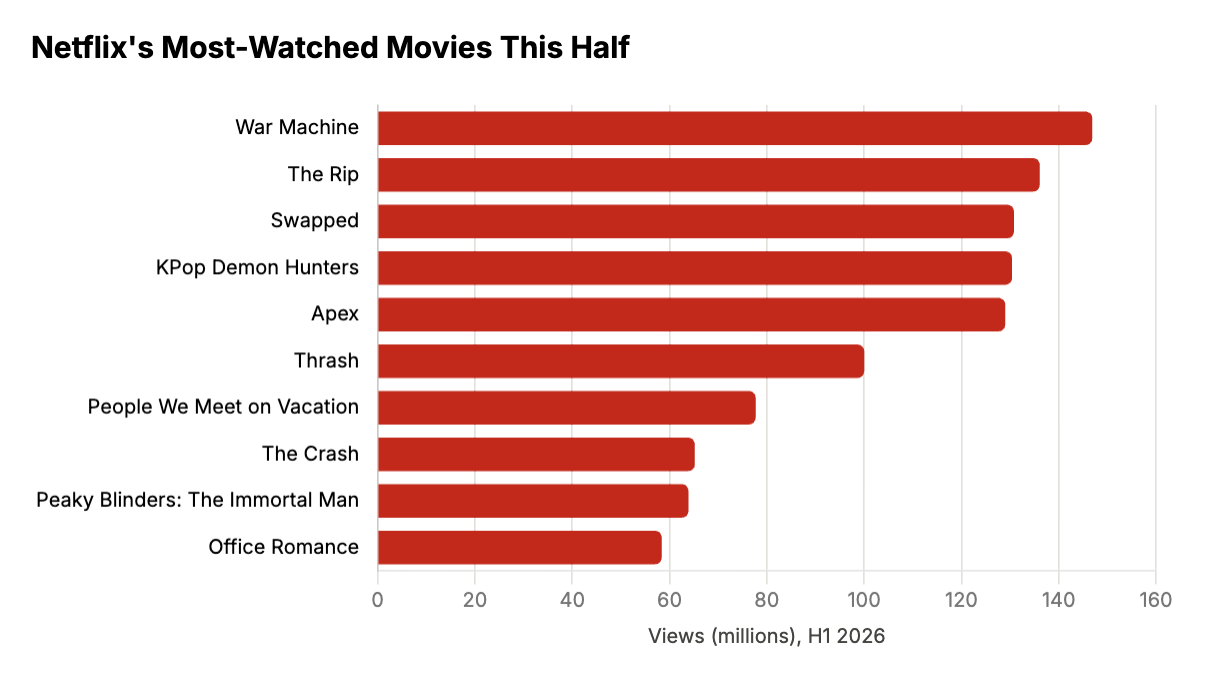
Netflix’s most popular movies (outside of animation) often represent genres that traditional studios have largely abandoned: original action-thrillers and actual comedies, which—surprise!—people still like. Films like War Machine (classic “guy vs. alien” setup), Matt Damon and Ben Affleck’s The Rip (“cop vs. cartel” premise), and Thrash (man-eating shark vs. men who don’t want to
be eaten) may have mostly disappeared from theaters, but Netflix has trained audiences to expect an ever-replenishing supply on the platform. That, and Jennifer Lopez (Office Romance).
Of course, these films are heavily promoted on the homepage—something that could potentially hurt Netflix in
the long run. In a recent note, analyst Eric Seufert made a compelling argument that engagement could continue to suffer because Netflix uses its most-prime real estate to highlight its biggest films and TV shows to all customers, rather than focusing on hyper-personalized content like Instagram, YouTube, and TikTok do. Sarandos called out the company’s “best-in-class” personalization on the most recent call, but finding the correct balance will be crucial as Netflix film head
Dan Lin produces fewer films and takes bigger swings.
3. Creators Aren’t a Zero-Sum Game
It’s still a little early to declare whether Netflix’s creator strategy is succeeding. Netflix is still
signing new deals—most recently with the Stokes Twins and Rhett & Link, who have a combined 160 million subscribers across their channels—and videos from other creators are still relatively recent additions. But data can at least hint at what’s working and what’s not.
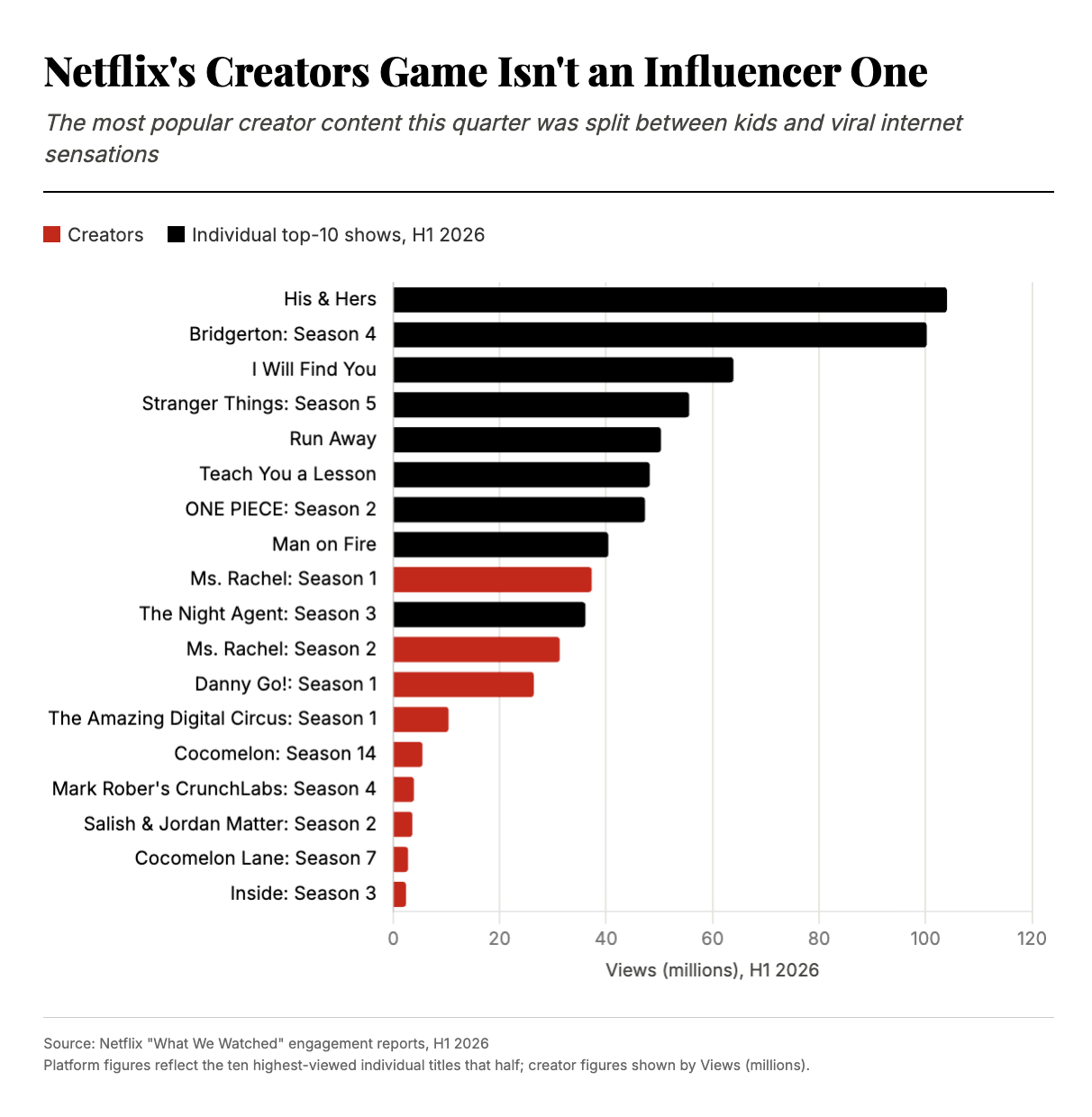
When looking at individual creators’ performance for their most recent season compared to Netflix’s top 10
series from the half, Ms. Rachel ranks highest, and her first season marks the only creator representation on that top 10 list. Danny Go!’s first season, which debuted on Netflix in April, also performed well. Most fascinating is the success of The Amazing Digital Circus, a popular YouTube show that made the jump to Netflix in 2024 (with episodes appearing only after they debuted on YouTube). Most recently, the Digital Circus team put the
newest episode in theaters, where it grossed $36 million globally (and became part of the “YouTubers as Hollywood saviors” narrative). Yes, a viral adult animation show generated about 30 percent of Supergirl’s total gross.
Other swings, like Mark Rober’s CrunchLabs and Inside, a reality competition show from British YouTube collective the Sidemen, are less proven, but some creators are clearly finding a new audience on Netflix—or their old
audience is traveling with them. (Plus, Rober has been injected into other parts of Netflix’s programming, like Alex Honnold’s free solo of Taipei 101—becoming kind of a Pat McAfee–type personality for Netflix.) And poaching popular YouTubers to help build up their arsenal of kids programming on a platform that parents view as “safer” than YouTube also seems to be paying dividends.
I’m still not bullish on the idea—I don’t believe that Netflix needs to
become YouTube, and that it’s futile to even try—but there are whitespace opportunities where the company can squeeze out additional engagement while managing costs. And if they generate an undisputed win, as they have with Ms. Rachel, all the better. We’ll see if the Jay Shetty and Bill Simmons bets actually pay off. I guess now we’ll have to wait a whole 12 months to find out.
My Reading List...
Finally, David Zaslav has announced a $68 million donation to the MPTF and other industry
charities that help… hahahaha just kidding. He offered $68 million to buy his kids’ childhood summer camp. [Real Deal]
You won’t believe this, but the legal settlements paid to the nonprofit Trump Foundation by ABC, Paramount, and others may have been “spent without explanation.”
[MS NOW]
Netflix is cutting Whitney Cummings’s Trump “sex traffic” joke from its Mark Twain Prize for American Humor broadcast. [Mediaite]
New:
A Netflix rep tells me the Trump-controlled venue made that call: “While it’s our preference not to cut jokes from anyone’s set, the Kennedy Center has the contractual right to do so.”
Finally, the takedown of the horrendous Disneyland ride-reservation app that I’ve always wanted to write. [WSJ]
A filing in the U.K. reveals revenue from
Disney cruise ships, which the company does not break out, surpassed $3 billion for the first time last year. [Fortune]
Ari Emanuel could prove super-useful to his brother Rahm’s fairly obvious presidential aspirations.
[N.Y. Times]
The only World Cup halftime show review that matters is Liam Gallagher’s. [Vulture]
The Feedback...
My Thursday take on Netflix earnings and viewership problems generated the usual chorus of Netflix
opinions. Some examples…
“Regarding Netflix—it’s a cultural problem. They used to hunt and compete, now they sit back and have endless meetings and assume that anything interesting will come their way. [Former film chief Scott] Stuber was easy to get to but had bad taste—go look at his IMDb. [Current film head] Dan [Lin] hides behind his M.B.A. They need to restructure and hunt for good stuff and incentivize people
to try to make great things with a different comp structure. Classic stuff when challenger becomes incumbent.” —An agent
“Wall Street will drive Netflix off a cliff just like it drove Time Warner into the three mergers that destroyed the company.” —A lawyer
“Netflix isn’t taking enough creative risk. There’s a sameness to the shows and movies, and that’s by design. Plain and simple. It’s ironic because as you noted [on The Town] its biggest hits tend to
be the shows [Squid Game, Adolescence, Stranger Things] that no algorithm or predictive model would suggest to make.” —Another agent
“Maybe Netflix really did want to buy Warner Bros. to enter new growth markets (for them) and wasn’t going to decimate theatrical?” —An executive
Finally...
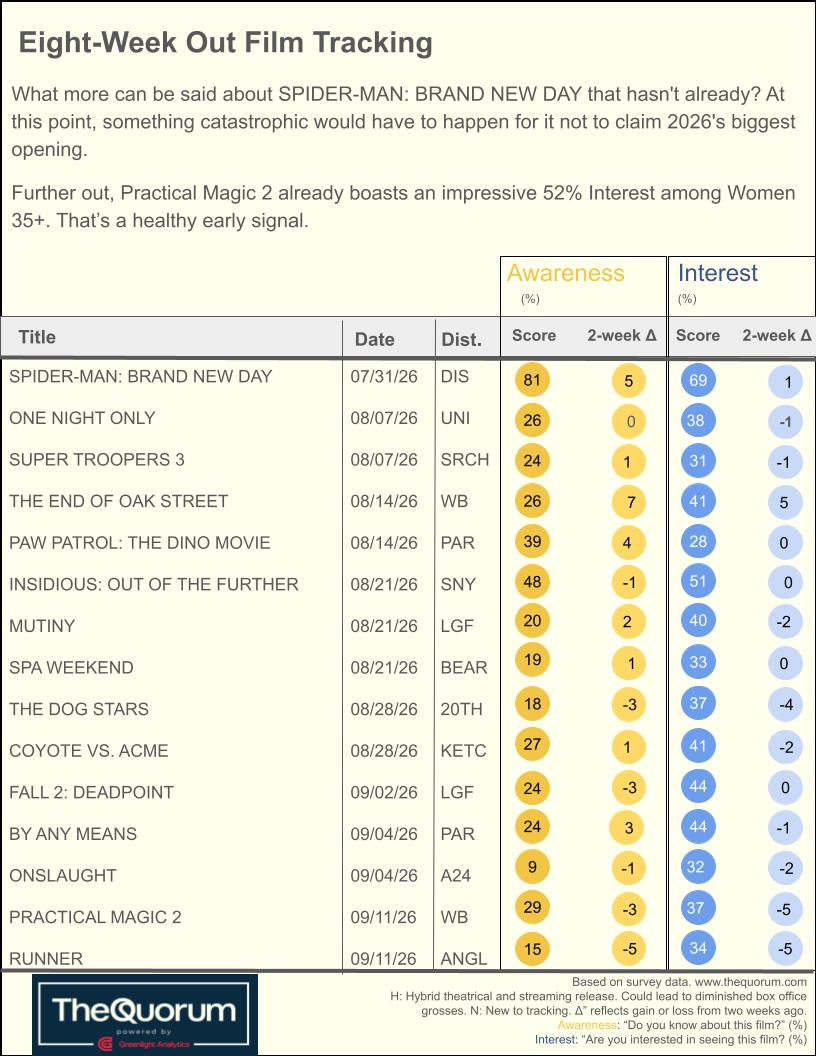
Warner Bros.’s Practical Magic 2 is generating strong numbers among women, according to the latest
early film tracking chart from The Quorum…
Have a great week, Matt
Maya Tribbitt contributed research for this issue.
Got
a question, comment, complaint, or how to tell Mike Tyson that Shohei Ohtani is a man? Email me at Matt@puck.news or call/text me at 310-804-3198.
You received this email because you signed up to receive emails from Puck, or as part of your Puck account associated with {{customer.email}}. To stop receiving this newsletter and/or manage all your email preferences, click here.
Puck is published by Heat Media LLC. 107 Greenwich St., New York, NY 10006
Didn't get an email? Check your spam folder and confirm the spelling of your email, and try again. If you continue to have trouble, reach out to fritz@puck.news.
Didn't get an email? Check your spam folder and confirm the spelling of your email, and try again. If you continue to have trouble, reach out to fritz@puck.news.
Member Exclusive
Get access to this story
Create a free account to preview Puck’s full offering, including exclusive articles, private emails from authors, and more.