Hello and welcome back to Dry Powder.
Thanks as always for being a subscriber to Puck, our new media company covering the intersection of Wall Street, Washington, Silicon Valley, and Hollywood.
Each week, I receive feedback from readers and sources about Wall Street's biggest characters and concerns. Today I'm opening my notebook to address questions about Elon Musk's fire sale, Peloton's collapsing stock, and the artful, largely unreported financial considerations behind Larry Culp's plan to vivisect GE.
Bill
Regarding the most pressing questions on Wall Street and in my inbox. Each week, I receive feedback from readers and sources about Wall Street’s biggest characters and concerns. I’ll be engaging with some of those questions here—in addition to a few observations of my own.
Bill, do you think Elon will keep selling? And that the Tesla stock will remain steady?
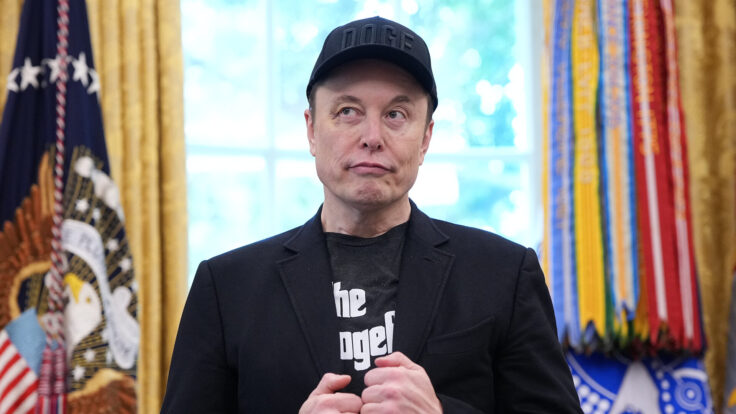
He’s playing with house money, so it’s doubtful Elon Musk cares very much what happens to the stock price if he happens to sell some shares from time to time. He’s worth around $290 billion at the moment. And, let’s face it, Tesla is a meme stock, completely untethered from the company’s financial performance. If Tesla’s price action were the slightest bit correlated to its income statements, then as my friend Scott Galloway told me recently, one could expect Tesla stock to fall 80 percent or more “pretty crisply” given its momentum-driven, 16-fold increase over the past two years.
All of which is to say, I think Elon Musk could shoot someone on Fifth Avenue and it would have no effect on the Tesla stock price. He’ll be able to sell as much stock as he wants, as often as he wants, for as long as he wants, and he’ll still have all the money he could possibly want and much, much more. Now, as for the morons who bought Tesla stock after Elon’s November 6 tweet about selling stock, only to see the stock retreat (and who have now lost 10 percent of their money in a week), well I guess I do feel sorry for them. But by now, most people know, or should know, that Tesla is a confidence game.
You wrote an extensive article on Sunday about the rise and fall of GE. What’s your impression of the current C.E.O., Larry Culp? Do you think his plan to trisect GE will unlock more value for shareholders?
Larry is all about Larry, let’s make no mistake about that. Culp is not only the first outsider to lead GE, he is also the first GE C.E.O. to have an employment contract. And what a doozy it is! Just compare his original contract, from when he was hired three years ago, with how that contract was recut in August 2020, in the midst of the pandemic, in a way that vastly increased the odds of a massive payout for him. The original, four-year contract that Culp signed in October 2018 called for him to be paid an annual salary of $2.5 million, plus a target bonus equal to 150 percent of his base salary, or another $3.75 million. He was also given an annual stock grant valued at $15 million. In addition to Culp’s roughly $21 million in annual compensation for his four years, he also received a stunning onetime “inducement award” of between 2.5 million and 7.5 million GE shares. GE was in a difficult spot at the time—having recently dispensed with two C.E.O.s in the course of around 15 months—and Culp used his leverage to extract a potentially very lucrative contract.
Here’s how it was supposed to work: If GE’s stock increased 50 percent, to $18.60 a share, Culp would get 2.5 million GE shares, worth about $47 million. If the stock increased 150 percent, for instance, he’d get 7.5 million GE shares, worth about $233 million. There would be no payout for Culp if the stock did not increase at least 50 percent. It was a heavily incentive-based contract, rewarding Culp hugely for increasing the dormant GE stock price.
Of course, things didn’t work out that way. Between October 2018 and March 2020—the start of the pandemic—GE’s stock was pretty much flat, meaning that the chance of Culp getting his “inducement award” was between slim and none. Then GE took a turn for the worse. Between Valentine’s Day 2020 and May 15, 2020, the company’s stock plunged around 57 percent, to around $5.50. Culp’s stock award was no longer even remotely achievable. No problem! Let’s recut his deal! In April 2020, Culp voluntarily agreed to forgo the balance of his 2020 salary, leaving him with what he had already been paid, or about $653,000. He also voluntarily gave up his 2020 cash bonus, the $3.75 million. Per his original contract, his 2020 compensation also included a $15 million annual stock bonus, with a roughly three-year vesting period.
Meanwhile, he and the independent members of the GE board of directors, were working on a new deal for him. On August 18, 2020, the GE board amended Culp’s 2018 contract. The term of the contract was extended to at least through August 2024, and potentially also for another year, to August 2025. As part of the contract revision, Culp voluntarily relinquished the “inducement award” granted at the time of his hiring. Then, the board replaced it with a new “Leadership Performance Share Award,” which, according to GE’s 2020 proxy, was “intended to provide Mr. Culp with the incentive to continue to provide services to GE during this extended employment term” and “as it became clear…that the GE transformation would take longer than previously contemplated.” It was worth, potentially, some $233 million to Culp if the GE stock price increased by 150 percent.
As part of his contract extension, the board revised Culp’s deal upon which his original stock award was based—a decision made, according to GE, by the independent directors of the board at the recommendation of the independent compensation committee and one with which Culp “was not involved.” (My sources in and around the GE board of directors tell me that Culp was involved with the contract changes, as any CEO would be.) What had been a baseline of about $12.40 per share—meaning that the number of GE shares he received would not kick in until GE’s stock price was 50 percent higher than $12.40, or $18.60 per share—was drastically lowered to $6.67 per share, making it much more likely that Culp would get the big payout.
The timing for Culp was particularly fortuitous. Along with the market as a whole, GE’s stock has about doubled since the board agreed to recut his deal. (It’s still about flat from where it was when he took over.) The first award of about 4.65 million shares went to Culp last December after the GE stock averaged about $10 for 30 days. In May, Culp was awarded a second batch of about 4.65 million GE shares that are his to keep too, assuming he stays at the company until at least 2024. He has the potential for one last award of roughly 4.65 million shares if the GE stock hits about $16.68 (or roughly $133 a share, after Culp engineered the 8 for 1 reverse stock split in September) and stays there for 30 days. Incredibly, had the GE board not given Culp the August repricing deal, his original 2018 stock grant would still be out of the money. Instead, at the moment, Culp is about $120 million richer on paper.
As for whether his trisecting of GE will result in more value for shareholders, I suppose that one day it probably will. At the moment, though, it’s a flop. Since Culp announced the plan on November 9, GE’s stock is down 8.3 percent.
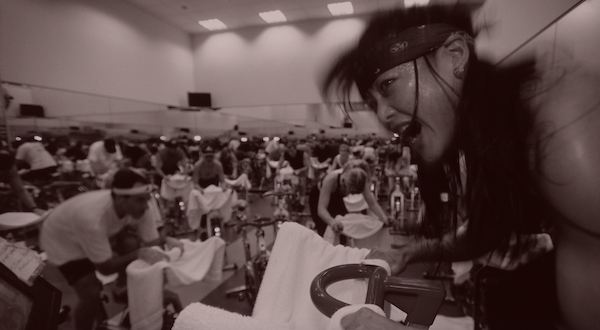
Peloton was one of the stars of the pandemic, and now it’s raising $1 billion from stock? Is this just a normal correction now that gym culture has re-emerged? Also, Scott Galloway recently suggested that the company could be a great M&A target for Apple (which is leaning into health sciences) or Nike (which hasn’t credibly entered the electronic fitness market). You’re a former deal guy. What would you do?
Even though Peloton’s executives and the company’s slick marketing make the high-end workout equipment industry seem oh-so-glamorous, it’s a tough business. When I was at Merrill Lynch, I sold Life Fitness, then owned by the buyout firm Mancuso & Co., to Brunswick Corporation for $310 million. Mancuso had bought Life Fitness six years earlier for $62.5 million, so the firm made a killing on the deal. In 2019, Brunswick sold Life Fitness for $490 million to another buyout firm.
The problem with this business is human nature. People get very excited about new and exciting things. And few things were more exciting in 2019—the year Peloton went public—than Peloton’s clever, stylized advertising featuring handsome and gorgeous models glowing after riding their Pelotons, all the while being pushed to their limits by their equally stunning instructors. At the Vanity Fair New Establishment Conference that October, I listened with a mixture of awe and skepticism as Peloton C.E.O. John Foley preached the gospel of $4,000 exercise bikes and the network effect of everyone sweating together at home. I could only guffaw when Foley shared his vision of these weekend warriors gathering socially at a Peloton event, and how great it would be for all those people who had worked out at home, anonymously, to meet up with their fellow believers for a beer, or whatever.
Back in the real world, of course, what happens is that the excitement of working out at home fades, as does the excitement of working out more generally. That’s why a very high percentage of people buy gym memberships in January, after the holiday feasting, and then never go. Foley was somewhat brilliant in positioning Peloton to Wall Street as a subscription content play, but at the end of the day, Peloton is just another premium fitness brand churning out workout videos and connected devices—a growing market but one that is increasingly crowded. When I heard that Peloton had acquired Precor, another high-end gym equipment manufacturer, and is now selling treadmills, it occurred to me that this may be the end of the line for the Peloton fad, after the pandemic-era sugar high. Treadmills are a dime a dozen. If Foley thinks he can make Peloton’s version special, well then god bless him.
So yes, Peloton should raise all the money it can, as fast as it can. The bells are tolling for the company. Not that it won’t stick around, or be bought by Apple or Nike—those are good ideas for Foley to consider—but the bloom is off the Peloton rose. Since Peloton agreed to buy Precor, for $420 million last December, the Peloton stock has lost more than half its value. Anyone remember GoPro, the once-thrilling action-camera company that was all the rage once upon a time? Sure you do. It went public in June 2014 and the stock quickly doubled. Those were the days. Since its I.P.O., GoPro’s stock is down more than two-thirds.
Janet Yellen is warning lawmakers (again) that the U.S. could default in less than a month. Is Wall Street even the slightest bit worried?
The short answer is no, Wall Street is not worried about this because, like the rest of us, Wall Street has been conditioned over many years to know that this is just the latest bit of political Kabuki theater. It’s ridiculous of course, as is much of the behavior in Washington these days. It would be a total joke if the consequences for the U.S. government defaulting on its debts as they become due weren’t so serious. Talk about precipitating a major—and long overdue—financial crisis!
That's all for now. I'll be back in your inbox next Sunday with more Dry Powder.
Have a question you’d like answered in the next edition? Email us at fritz@puck.news.
FOUR STORIES WE'RE TALKING ABOUT 
Kathleen Kennedy is one of the most prolific producers in Hollywood. But it's time for someone else to manage the franchise. MATTHEW BELLONI 
Backlashes against racial progress are as American as genetically-modified apple pie. But C.R.T. has unleashed a new torrent of grievances. BARATUNDE THURSTON 
The media has called for a blood sacrifice, as Logan Roy might say. But the Sun Valley crowd thinks Kotick isn’t going anywhere—yet. DYLAN BYERS 
Twenty years after stepping down as the leader of GE, and being minted the C.E.O. of the century, Jack Welch’s baby is about to become three companies. What went wrong? WILLIAM D. COHAN 
You received this message because you signed up to receive emails from Puck.
Was this email forwarded to you?
Sent to {{customer.email}}
Puck is published by Heat Media LLC.
For support, just reply to this e-mail. For brand partnerships, email ads@puck.news |


SHARE