{{ 'now' | timezone: 'America/New_York' | date: '%b %d, %Y' }} |
|
|
|
Welcome back to The Best & The Brightest. I’m Leigh Ann Caldwell, filling in for
Peter Hamby (who will be back in your inbox on Thursday).
It was an extremely busy day. I started my morning hosting a Puck Power Breakfast with Rep. Adrian Smith, R-Nebraska, who dished on tariffs, Trump’s visit to China, and Nebraska’s pale blue dot. (Make sure you’re subscribed to get the full readout tomorrow.) Afterward, I hosted a panel for the
Effective Governing Coalition, an offshoot of the New Democratic Coalition, with four Democratic House members about affordability and the mood on the ground in their swingy districts. Shocker: Some embraced Trump’s gas tax holiday. I’ll have a lot more on that tomorrow, too.
In today’s issue, my colleague Ian Krietzberg ponders the mystery of the Trump administration’s seeming pivot on A.I. regulation—from its hands-off beginnings to its post-Mythos musings about the
need for an F.D.A.-like approval process for new models. Did the White House see something that scared them straight? Plus, I have new details on that wildly expensive, no-bid contract to lacquer the Lincoln Memorial Reflecting Pool, and an exclusive on the two dozen endorsements just issued by a Biden alum-founded, counter-AIPAC PAC.
Also mentioned in this issue: Doug Burgum, Tariq Habash, Josh Paul,
Sara Jacobs, Jamie Raskin, Jim McGovern, Ayanna Pressley, Maxwell Frost, Ilhan Omar, Greg Casar, Pramila Jayapal, Rashida Tlaib, Kevin Hassett, David Sacks, Scott Bessent, Susie Wiles, and more… |
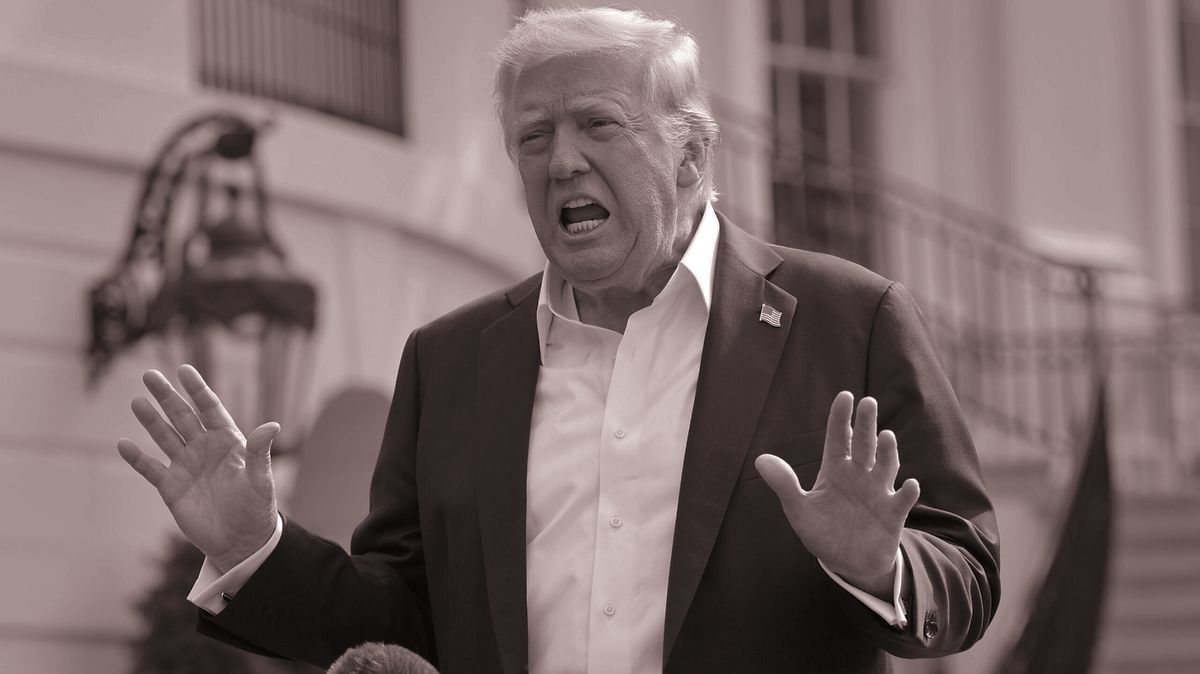
In a lengthy Truth Social post this morning, President Donald Trump slammed
The New York Times for its reporting on the surging cost of his Lincoln Memorial Reflecting Pool makeover, which jumped from $6.9 million to $13.1 million in a no-bid contract awarded by the Interior Department. According to the Times, the contractor is Atlantic Industrial Coatings, which Trump has praised for its work on the pools at his golf club in Virginia. “Instead of taking 4 years to build, at a cost, granite pavers and all, of 400 Million Dollars, we could construct a
far superior Reflecting Pool for 5 or 6 Million Dollars, and could complete the project in 2 weeks rather than 4 years,” Trump wrote. “Also, I didn’t give out the contract, ‘Interior’ did, to a contractor I did not know, and have never used before.”
But last Wednesday night, at a private event at the White House, Trump told a slightly different story. He spent several minutes bragging about the contract, according to a video an attendee shared with me, saying that the makeover was
supposed to cost $350 million and take three and a half years, but that his golf resort contractor offered to do it for $1.8 million in one week. “I said, ‘Sounds good.’ I didn’t even negotiate,” Trump told the crowd. He added that he wanted the pool to be aqua, but Interior Secretary Doug Burgum reminded him, “You’re in Washington, sir,” and recommended “American flag blue.” |
|
|
|
A MESSAGE FROM OUR SPONSOR |
Freight Rail Safely Moves America Forward Safety is the foundation of America’s freight rail network—and 2025 was a record-breaking year. Federal data show the train accident rate fell 14%, with derailments reaching historic lows. These results are thanks to skilled railroaders working alongside advanced technology every day. Across 135,000 miles of track, millions of sensors and high‑speed imaging systems help detect issues early—building a safer, more resilient rail system that keeps America moving
into the future. Learn more at aar.org/freight-rail-safety/ |
|
|
|
A new political group co-founded by two former Biden officials who resigned over
the administration’s position on Gaza is endorsing more than two dozen Democratic incumbents who have challenged the U.S.’s policies in the Middle East. A New Policy PAC, co-founded by Tariq Habash and Josh Paul, is among a handful of newish political organizations trying to counter pro-Israel groups, such as AIPAC, which continue to spend aggressively in Democratic primaries. “Our organization’s primary mission is to change
U.S. foreign policy around Israel and Palestine,” Habash told me.
The group’s latest round of endorsements, shared with me exclusively, includes mostly progressive members, including Reps. Sara Jacobs and Jamie Raskin, who are Jewish, along with Jim McGovern, Ayanna Pressley, Maxwell Frost, Ilhan
Omar, Greg Casar, Pramila Jayapal, and Rashida Tlaib. “Elected officials have a responsibility to be in step with the people they represent, and these leaders have shown moral clarity and political courage,” Habash added. The group has previously endorsed nearly a dozen challengers.
And now, here’s Ian… |
|
|
|
After a yearlong anything-goes policy toward A.I., the White House is suddenly talking about
“vetting” new models and wrapping the industry in red tape. Is the pivot a reaction to midterm polling, J.D. Vance’s 2028 push, or Trump officials seeing something that scared them straight? |
|
|
|
Is the White House about to make a massive pivot on A.I.? That was the question pinging around Washington
last week after The New York Times reported that President Trump was weighing executive actions concerning government oversight for new models. In an appearance on Fox News, National Economic Council director Kevin Hassett suggested that future A.I. models might go through an F.D.A.-like preapproval
process. “We’re studying possibly an executive order to give a clear roadmap to everybody about how this is going to go,” he said.
Even for an administration that seems to change its mind daily, that would constitute an unusual reversal. After all, the president kicked off his second term by unwinding just about every one of Joe Biden’s A.I.
policies—including an executive order establishing voluntary predeployment safety testing for frontier A.I. developers. He also appointed a since-departed A.I. czar, David Sacks, to serve as a conduit between D.C. and Silicon Valley, and issued an “A.I. Action Plan” that could have been written by the hyperscalers’ lobbyists.
But ever since getting a peek under the hood of Mythos, the secretive Anthropic model that is ostensibly too powerful to release to the
public, the Trump team seems to have changed its tune. “What we’ve had in the past month was a step change in the power of one large language model, but we’re going to see it from the other A.I. companies,” Treasury Secretary Scott Bessent recently said on Fox News. “What we’re determined to do is work with our A.I. companies to allow them to continue to innovate, but our charge in the U.S. government is maintaining safety.” |
|
|
|
A MESSAGE FROM OUR SPONSOR |
Freight rail is investing in America’s future
America’s Class I railroads invest $25 billion each year to strengthen the national rail network—driving historic safety gains. In 2025, equipment‑ and track‑caused accidents reached record lows, human‑factor incidents dropped nearly 20% year-over-year, and employee injury rates hit an all‑time low. Freight
rail's private investments upgrade critical infrastructure, expand workforce training, and accelerate safety innovations. From deploying advanced technologies and securing physical and digital networks to supporting first responders and local partners, freight rail is building a safer, faster, and more resilient supply chain. Learn more at aar.org/freight-rail-safety/ |
|
|
|
The comments coming out of the administration created such a buzz that White House chief of staff
Susie Wiles felt compelled to weigh in, issuing only her fourth-ever X post on her official account. “The White House,” Wiles noted, “will continue to lead an America First effort that empowers America’s great innovators, not bureaucracy, to drive safe deployment of powerful technologies while keeping America safe.” So… would there actually be no
F.D.A.-like agency for A.I., after all? Asked for comment, a White House spokesperson told me that any policy announcement would come directly from the president, and that any discussion around possible executive orders is, at this point, speculative. |
Adam Kovacevich, the C.E.O. of Chamber of Progress, a tech-industry trade group, told me
that there were two main drivers behind the pivot: the recent departure of Sacks, and the arrival of Mythos. “I think what you’re seeing is some of the normal chaos around factions of Trumpworld: throwing ideas out there, floating ideas in the press, then having to walk them back,” he said. “When there’s a new power vacuum, different factions try to fill it.” Bessent, in particular, may be attempting to step into Sacks’s shoes.
Brendan Steinhauser, C.E.O. of The Alliance
for Secure A.I., suggested that this pivot had latently been in process for a while. “I definitely think there has been a shift,” he told me. “But I was hearing probably two, three months ago that there was starting to be movement in the White House toward what I would call our side: a focus on safety and security.” He added that a lot of the momentum was coming from the Office of the Vice President, and that people within J.D. Vance’s orbit “had grave concerns about some of the
technology and the capabilities.” They and others, including on the National Security Council and in the West Wing, “were sort of pushing the White House to go a certain direction, or at least to take this stuff more seriously,” he said. This, according to The Washington Post, has blossomed into a turf war, with the Commerce
Department and national security aides at loggerheads over what government oversight ought to look like.
Whether acting out of genuine concern or political expediency, either explanation makes sense. Mythos is, by all accounts, an extremely capable model that has unnerved some of the people who have worked with it, and, according to several sources, its release was a bit of a watershed moment for operators in D.C. Poll after poll, meanwhile, shows that Americans are distrustful of A.I.
and worried that the government won’t do enough to protect them from adverse consequences. And Vance, among others in the White House, is presumably thinking about his own political future. |
|
|
|
But no matter the root cause or causes, the administration has certainly chosen a conspicuous time to start
shifting course. Public distrust and anxiety around A.I. and megacap tech companies has surged in recent months—which, in turn, has already sparked a tonal change from OpenAI and sent both Democratic and Republican candidates and governors scrambling
to respond appropriately. Meanwhile, the White House is quietly seeking a détente with Anthropic, which the Pentagon essentially blacklisted earlier this year. Last month, shortly after announcing Mythos, C.E.O. Dario Amodei met with Wiles and Bessent—a summit that officials described as “productive and constructive.”
For his part, Kovacevich doesn’t think the administration is simply bending to popular will—midterms notwithstanding. “This White House tends not to change
its position based on polling results,” he told me. “I think what happened was banks and other industries came to the White House with a lot of concern about Mythos, and a panic began.” Charlie Bullock, a senior research fellow at the Institute for Law & AI, agreed that it’s likely a response to the business community, and bank lobbyists in particular—although, he added, “Everything is politics to some extent.” |
A handful of companies have already agreed to engage with the government on A.I. oversight. Last week, the
Center for AI Standards and Innovation, which sits within the National Institute of Standards and Technology, announced agreements with Microsoft, xAI, and Google DeepMind that will let the government do voluntary predeployment evaluations of their models. Details on the arrangement, beyond the fact that it will build upon previous partnerships between CAISI, OpenAI, and Anthropic, are scarce. (Oddly, the NIST article announcing the partnership is no longer publicly available, and neither the
organization or any of the companies involved responded to requests for comment—the Post reported that the website was removed due to “sensitivity within the White House’s Office of the National Cyber Director,” a sign of the tension within the administration.)
According to Connor Leahy, the U.S. director for
ControlAI, the administration’s changing tack is due mostly to “thinking of A.I. not as a commercial issue, but as a national security issue.” In other words, if the government were still prioritizing commercial interests, hindering innovation would be seen as costly. But as the focus shifts to national security (and cybersecurity in particular), not having those restrictions could be far more costly. “In retrospect, it kind of makes sense that once the N.S.A.’s top analysts were
looking at this and saying, ‘Okay, this is not a speculative risk,’ people would jump into action,” Bullock said. “I think that’s consistent with an administration that takes national security seriously and is sort of just waking up to the risks that these A.I. systems pose.” |
|
|
|
Join Emmy Award-winning journalist Peter Hamby, along with the team of expert journalists at Puck, as they let you in on the
conversations insiders are having across the four corners of power in America: Wall Street, Washington, Silicon Valley, and Hollywood. Presented in partnership with Audacy, new episodes publish daily, Monday through Friday. |
|
|
|
Unique and privileged insight into the private conversations taking place inside boardrooms and corner offices up and down Wall
Street, relayed by best-selling author, journalist, and former M&A senior banker William D. Cohan. |
|
|
|
Need help? Review our
FAQ page or contact us for assistance. For brand partnerships, email ads@puck.news.
You received this email because you signed up to receive emails from Puck, or as part of your Puck account associated with {{customer.email}}. To stop receiving this newsletter and/or manage all your email preferences, click here.
|
Puck is published by Heat Media LLC. 107 Greenwich St., New York, NY 10006 |
|
|
|
|