Welcome back to Wall Power. I’m Marion Maneker.
The Metropolitan
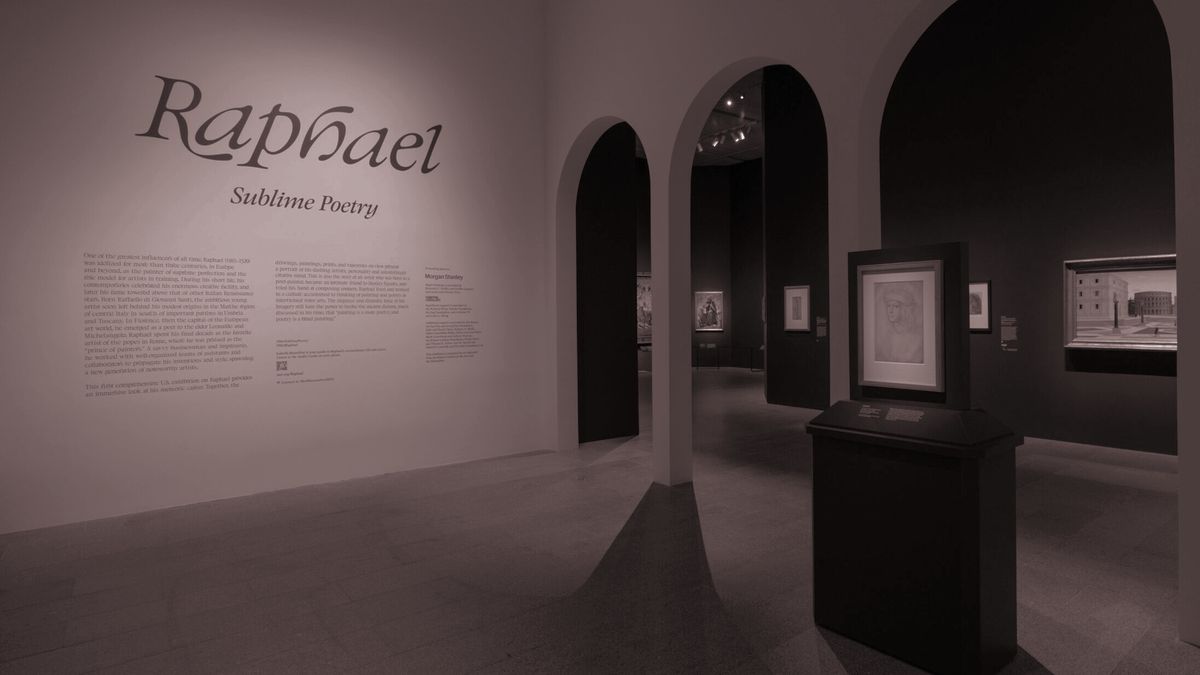
Museum of Art can sometimes seem like Buckingham Palace: There’s a fixation on protocol and a hauteur to the place—and that’s especially true regarding the museum’s once-in-a-lifetime show restoring Raphael to his Renaissance preeminence. I went to the press preview, which took place yesterday, before the exhibit opens to members for the rest of the week and to the public on March 29. Tonight, I’m going to tell you about it.
Tonight’s issue also features a stop by the
Brooklyn Museum, which just announced that it will be renovating its African art galleries, to open in the fall of next year. And Phillips has a Miami legend’s art for sale in May. We end with a recap of the recent kerfuffle surrounding The New York Times’s coverage of #MeToo accusations against a museum director six years ago.
Also mentioned in this issue: Anne Pasternak, Tina Hills, Joan
Mitchell, Adolph Gottlieb, Helen Frankenthaler, Jesús Rafael Soto, Leon Black, Michelangelo, Leonardo, Carmen Bambach, Zachary Small, Joshua Helmer, Nancy Rommelmann, Thomas Campbell, and more... |
|
|
|
Let’s get started with an announcement from the Brooklyn Museum… |
- Brooklyn makes a new home for African art: The Brooklyn Museum announced today that it will spend $13 million on a new, 6,400-square-foot home for its African art collection, to open in the fall of 2027. The new galleries will be connected to the Egyptian art galleries and display some 300 works from the museum’s 4,500-piece collection of African art spanning 2,500 years of history. “This is more than a new collection gallery,” Anne Pasternak, the Brooklyn Museum’s
director, said in a press release. “It’s a bold reframing of how African art is understood and celebrated in American museums.”
|
$5 Million Joan Mitchell Leads Phillips May
Sale
|
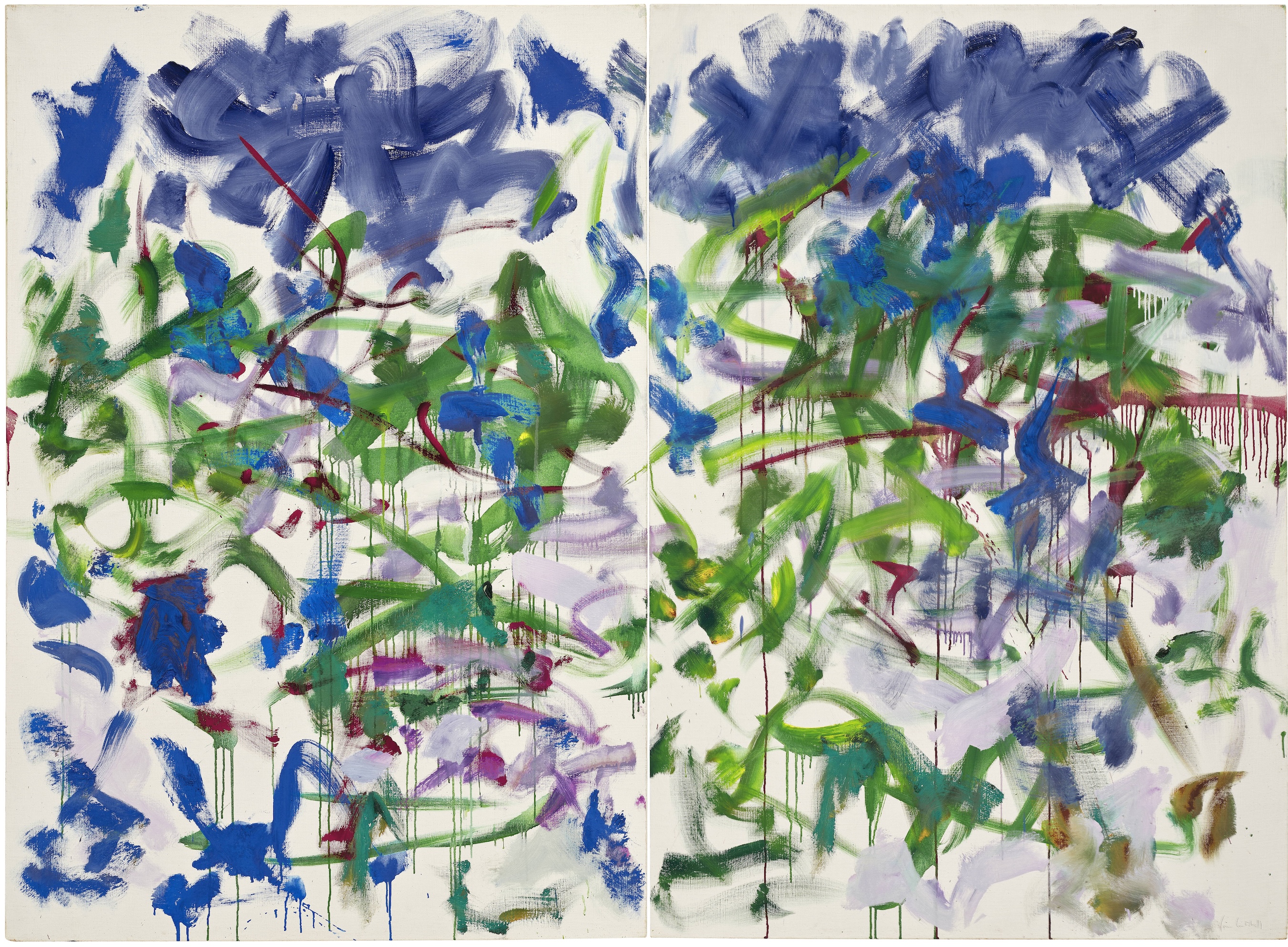
Joan Mitchell, Plain (1989). Photo: Courtesy of Phillips |
Phillips announced today the sale of works from the estate of Miami collector Tina
Hills, including Joan Mitchell’s 1989 painting Plain, estimated at $5 million. A leading figure in Miami’s cultural life, Hills was married to Ángel Ramos, the owner of Puerto Rico’s most widely read newspaper, El Mundo. After Ramos’s death in 1960, she married Lee Hills, the editor of the Miami Herald, and contributed to the establishment of what is now the Pérez Art Museum, Bayfront Park, and the Florida
Grand Opera. The collection includes works by Adolph Gottlieb, Helen Frankenthaler, and Jesús Rafael Soto.
Now, on to the Met and the main event… |
|
|
|
The Met’s milestone Raphael show, which was seven years in the making
and involved loans from museums including the Royal Collection and the Uffizi, documents the making of a master and puts him in his proper place among the Renaissance greats. |
|
|
|
If you’ve ever wondered why Leon Black spent three years and more than $95
million buying two drawings by Raphael, a new exhibit at the Metropolitan Museum of Art may have the answer. The Met has gathered 237 works by the Renaissance master, most of which are drawings, from museums both great and good. Together, they demonstrate why the artist is the equal—and perhaps the superior—of his contemporaries Michelangelo and Leonardo.
Organized by Carmen Bambach, the Met’s curator of drawings
who mounted the museum’s dramatic Michelangelo: Divine Draftsman and Designer in 2017, this show is both a career-capping event for her and an effort to reshape the canon of Renaissance artists. In her very personal catalogue, Bambach, a Leonardo expert, reminds us that Leonardo and Michelangelo were both latecomers to their exalted reputations. “From about 1510 to the 1850s, Raphael would be idolized as the Italian Renaissance painter of supreme perfection,” she
writes.
Raphael’s work has been a favorite among the ruling classes of Europe for five centuries, which makes the presence of nine works from five private collectors—in addition to loans from the Louvre, the National Galleries in Washington and London, the Ashmolean in Oxford, the Uffizi, and many more—all the more impressive. It also underscores that this show is a milestone event for anyone seriously interested in art and art history. |
|
|
|
In addition to drawings, paintings, and tapestries, the show includes videos depicting the
underlayers of works, as revealed by advanced technology, as well as projections of frescoes that can’t be moved from the Vatican. Walking through the sometimes overstuffed exhibition, it’s easy to either lose sight of Bambach’s argument or fail to discern it. I would highly recommend reading the catalogue before seeing this once-in-a-lifetime show—or, at least, trying to consume as much of the content on the Met’s website as possible before going. Otherwise, budget several hours to see the show,
read the wall text, and listen to the audio narrated by Isabella Rossellini that accompanies the exhibition.
I did not have that benefit. For reasons that still elude me, the museum refuses to make catalogues available until after the ponderous press events, as if seeing the show informed would spoil the speeches. As of this morning, I was still racing through the catalogue to understand what I’d seen, despite having made three circuits of the show yesterday
morning. |
In calling her exhibition Raphael: Sublime Poetry, Bambach wants you to
understand that painters were not separate from the poets, pageant makers, and even warriors who were among the courtiers to the great Italian families. Indeed, Raphael’s father, the painter and poet Giovanni Santi, was an acolyte of the ruling family of Urbino, where Raphael was born. Santi, who died when the artist was only 11 years old, had written an epic poem, longer than Dante’s Divine Comedy, extolling the virtues of Federico da
Montefeltro, the ruler of Urbino before the city was sacked by Cesare Borgia.
Santi was a successful, if not world-historical, painter who recognized the talent of his son, a prodigy, and gave him enough basic instruction to become an apprentice to his friend Perugino, a master with a predominant reputation. Becoming his apprentice was the 16th century equivalent of going straight from middle school to Yale grad school. The precocious Raphael was
still a teenager when he received his first commission, an altarpiece that the Met was able to reassemble after 350 years. The show also gives us several small devotional works by the youthful master, including a remarkable Saint Sebastian as an elegantly garbed young nobleman instead of a half-naked martyr pierced with arrows.
From 1504 to 1508, Raphael lived in Florence, where he was able to examine the Michelangelo sculptures and Leonardo paintings and drawings that
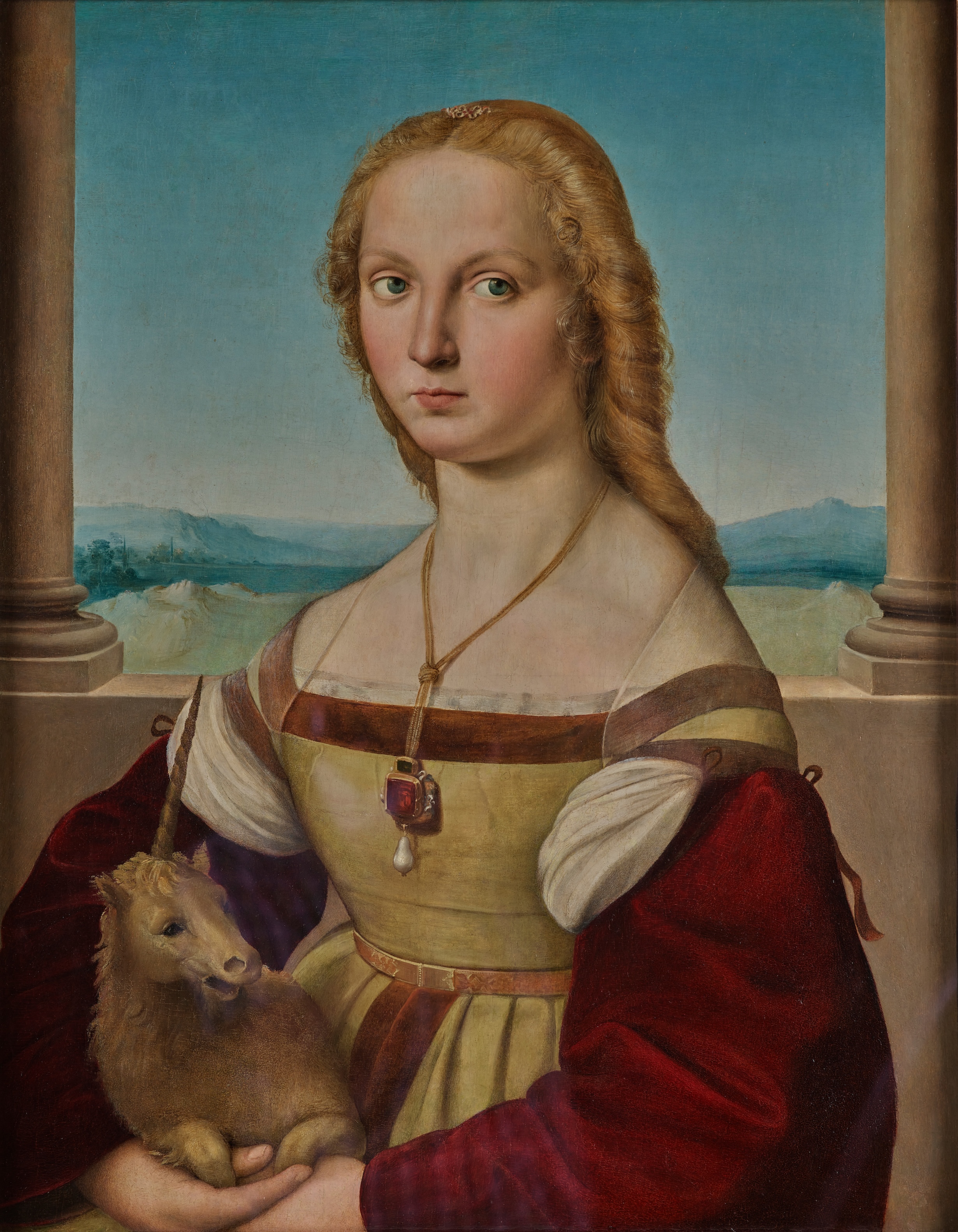
he’d heard of back home. Florence’s wealthy merchants, who were keen to have devotional works and images of the Madonna and Child, became Raphael’s patrons. As he created images of elegant Madonnas to suit the taste of the merchants, his innovation was to humanize his religious subjects through gesture and reaction. Raphael’s portraiture gets a gallery of its own, anchored by the extraordinary Portrait of a Young Woman with a Unicorn, from 1505-06, and the Portrait of Baldassare
Castiglione, from 1514-16. |
Raphael, Portrait of a Lady with a Unicorn (1505-06). Photo: Mauro Coen/© Galleria
Borghese |
In 1508, while still only 25 years old, Raphael moved to Rome, where he leapfrogged more senior
artists to become the favorite of two popes, Julius II and Leo X. Here the show transports us to the Eternal City, projecting on the gallery walls the famous images that the artist created in the Vatican, including The Parnassus and The School of Athens. |
|
|
|
Even though he died at the age of 37, Raphael had by then trained a generation of painters in his
innovations. That partly explains his remarkable influence and reputation among artists over three centuries, Bambach explained, before the rediscovery of Michelangelo and Leonardo. The final rooms of the show are devoted to some of the most fully realized drawings by Raphael himself, as well as those who followed his path. There you’ll see Head of an Apostle, one of two drawings that Leon Black bought for $47 million each more than a dozen years ago. Surrounded by other ethereal
Raphael drawings from the world’s most prestigious museums, you can see how intoxicating it must be to be able to own one for yourself. |
Last week, the conservative RealClearInvestigations
took aim at the notoriously aggressive New York Times reporter Zachary Small over a 6-year-old story that the reporter wrote as a freelancer (along with staffer Robin Pogrebin). The piece accused Joshua Helmer, the former assistant director of
the Philadelphia Museum of Art, of making employees uncomfortable during his tenure there. RealClear’s Nancy Rommelmann asked why the story had not run in The Art Newspaper, where it had originated, and a former editor offered her a pointed explanation: “The Art Newspaper only runs stories we can verify.”
The internecine media snark is fun, but RealClear was perhaps misreading the comment. Their piece included a screenshot of a 23-point email that Small
sent Helmer in November 2019, demanding a response within 48 hours. Times spokesperson Danielle Rhoades Ha confirmed that Small sent the same email simultaneously to several of Helmer’s former colleagues at the Philadelphia Museum, plus its board, as well as that of Erie, the art museum where Helmer became director upon leaving Philly. She claims it was a “fact-checking email.” It’s hard to verify a story, or check facts, when no one will respond—which perhaps explains
TAN’s position.
It’s a different story at the Times, which surely has more reporting leverage. Two years earlier, in 2017, Pogrebin had set in motion the ouster of the Met’s former director Thomas Campbell by questioning his leadership. “When the Times began reporting,” Rhoades Ha went on, “our
reporters reached Mr. Helmer, whom they interviewed for the story that was published in January 2020.” By “our reporters,” Rhoades Ha meant Pogrebin.
Helmer was out a few days after the Times published its first story on January 10, though he told the paper he’d followed museum policy, otherwise declined to discuss what he called his “personal life,” and never faced a lawsuit over the allegations. Nevertheless, the Times published a few more stories that mentioned the
accusations against Helmer. RealClearInvestigations says that after leaving Erie, Helmer “self-exiled to northern Pennsylvania, took up woodworking, and hasn’t worked again.” (Though we later learn that he “was fortunate to have invested well and thus did not need a job.”)
Small wound up full-time at the Times, working as “an investigative reporter on the dynamics of power and privilege in the art world.” Many in the art world have since been subjected to the staff writer
throwing the paper’s weight. |
That’s enough for today. Join the Inner Circle for tomorrow’s conversation with Seth
Johnson, Bonhams’ newish C.E.O.
See you then,
M |
|
|
|
Puck founding partner Matt Belloni takes you inside the business of Hollywood, using exclusive reporting and insight
to explain the backstories on everything from Marvel movies to the streaming wars. |
|
|
|
Ace media reporter Dylan Byers brings readers into the C-suite as he chronicles the biggest stories in the industry:
the future of cable news in the streaming era, the transformation of legacy publishers, the tech giants remaking the market, and all the egos involved. |
|
|
|
Need help? Review our
FAQ page or contact us for assistance. For brand partnerships, email ads@puck.news.
You received this email because you signed up to receive emails from Puck, or as part of your Puck account associated with {{customer.email}}. To stop receiving this newsletter and/or manage all your email preferences, click here. |
Puck is published by Heat Media LLC. 107 Greenwich St., New York, NY 10006 |
|
|
|
|