Welcome back to Wall Power on this snowy Sunday. I’m Marion
Maneker.
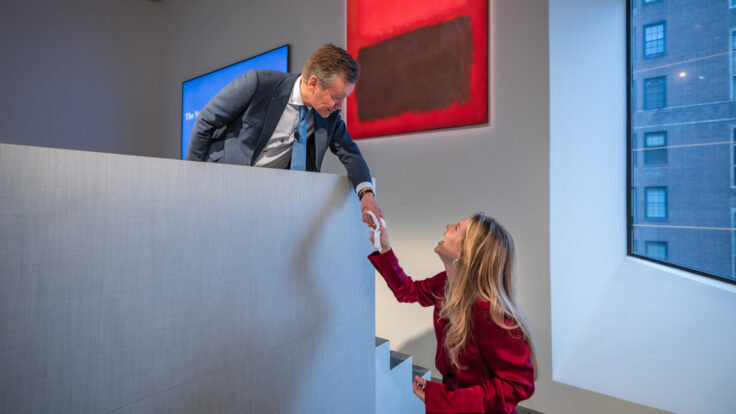
The market for American art, a wide-ranging category that encompasses all kinds of paintings and sculptures from the country’s 250-year history (not to mention the colonial era) seems to be gathering momentum—or at least reflecting collectors’ growing curiosity. Last week, I attended Christie’s evening sale of William Koch’s Western art collection, where there was a lot of action in the room and a jovial spirit of friendly competition.
There’s even dealer gossip that Landman and Yellowstone creator Taylor Sheridan, maybe feeling extra flush after the $1 billion deal he signed with NBCUniversal in October, was a very active bidder on Koch’s Frederic Remington bronzes. Sotheby’s was also bustling yesterday. I’ll have more details on all of that below the fold.
Don’t forget: If you’re not a subscriber, you can sign up here. Or, if you want to add the bonus Wednesday edition of Wall Power, upgrade to the Inner Circle here. Want an explanation of the benefits, or just want to get something off your chest? You can always reply to this email or dial +1.917.825.1391 on SMS, WhatsApp, or Signal. Give it a try. I’ll hit you back.
Mentioned in this email: Taylor
Sheridan, Marian Goodman, Ricco/Maresca, Frederic Remington, Eli Sterngass, René Magritte, the Koch brothers, Darren Walker, Emerson Collective, Thomas Moran, Frank Tenney Johnson, Eastman Johnson, and Joshua Johnson (none of whom are related), G. Harvey, N.C.
Wyeth, Alfred Jacob Miller, Charles Marion Russell, Maynard Dixon, Childe Hassam, Maurice Brazil Prendergast, Mary Cassatt, Sanford Robinson Gifford, Winslow Homer, Henry Ossawa Tanner, Robert Scott Duncanson, and many more…
Saddle up…
|
-
Marian Goodman has died at 97: The gallerist who stewarded the careers of Gerhard Richter, Anselm Kiefer, Maurizio Cattelan, Julie Mehretu, John Baldessari, and Giuseppe Penone has died at 97. Marian Goodman Gallery, which has locations in New York, Paris, and Los Angeles, sent an email to collectors yesterday notifying them of her death last Thursday. She began art dealing in
1965, launching a print publisher and gallery. (The New York Times has a longer obituary here.)
- Game boards at the Armory: Wandering this year’s edition of the Winter Show at the Park Avenue Armory, I noticed that Ricco/Maresca, the pioneering gallery of outsider, self-taught, and folk art, was
showing 22 vintage game boards—like checkers and parcheesi—that read like abstract paintings. The dealers invoked Piet Mondrian and Paul Klee in their discussion of the objects, which have asking prices in the $6,000–$9,000 range. It just so happens that I had seen
earlier in the day 24 game boards collected by Bruce and Doranna Wendel on offer at Christie’s online sale of American folk art. This one, probably the best example of a gameboard as abstract art, is
estimated at $10,000, which will make it a little bit pricier, when fees are added, than the works at Ricco/Maresca.Today’s snowstorm might have dampened attendance at the armory—then, again, with nothing else to do, many on the Upper East Side might have braved a few blocks in the blizzard—but the show is up until February 1. That gives you plenty of time to swing by and see the truly
interesting mix of art, antiques, glass, rugs and other textiles, silver and design objects, and furniture.
- More FOG art fair sales: Lisson Gallery sold an Anish Kapoor work from 2023 for £600,000 at San Francisco’s FOG art fair, as well as a 2014 Olga de Amaral work for an undisclosed price, a Hiroshi Sugimoto from 2016 for $200,000,
and an Oliver Lee Jackson painting for $150,000, along with other works by Hugh Hayden, Leon Polk Smith, and others. ARTnews reported that Gallery Wendi Norris sold Wolfgang
Paalen’s Ardah, from 1945, for $350,000, and Marie Wilson’s Spirit of the Desert, from 1959-60, for $120,000. Gladstone sold a Richard Mayhew work for $350,000 and a Robert Bechtle for $150,000. Jessica Silverman sold Loie Hollowell’s Ultramarine Brain over Yellow Waters, from 2025, for $450,000.
- Darren
Walker, studio head: I was a little surprised when I saw the Instagram post from former Ford Foundation head Darren Walker announcing his new role as president and chief executive of Anonymous Content, the production company best known for the movies Spotlight and The Revenant, as well as the show Schitt’s Creek. But Laurene Powell Jobs, whose Emerson Collective is Anonymous
Content’s lead investor, took to the pages of The New York Times to explain the choice as tapping into Walker’s rare combination of “creative and fiscal talent.” Walker, who will remain president of the board of the National Gallery of Art in Washington, also got atta-boy endorsements in the Times from Ava
DuVernay, Richard Plepler, Indra Nooyi, and Bryan Lourd.In an effort to seem balanced, the Times raised some former criticism of Walker, citing his support for building new prisons to replace Riker’s Island; favoritism toward friends like Agnes Gund’s foundation and Thelma Golden at the Studio
Museum in Harlem; and the decision, in 2020, to postpone a major Philip Guston retrospective in the aftermath of the George Floyd murder. That last issue wasn’t a question of censorship, as many have tried to cast it, so much as it was about managing labor relations at the institutions where the show would appear.
|
$9 Million
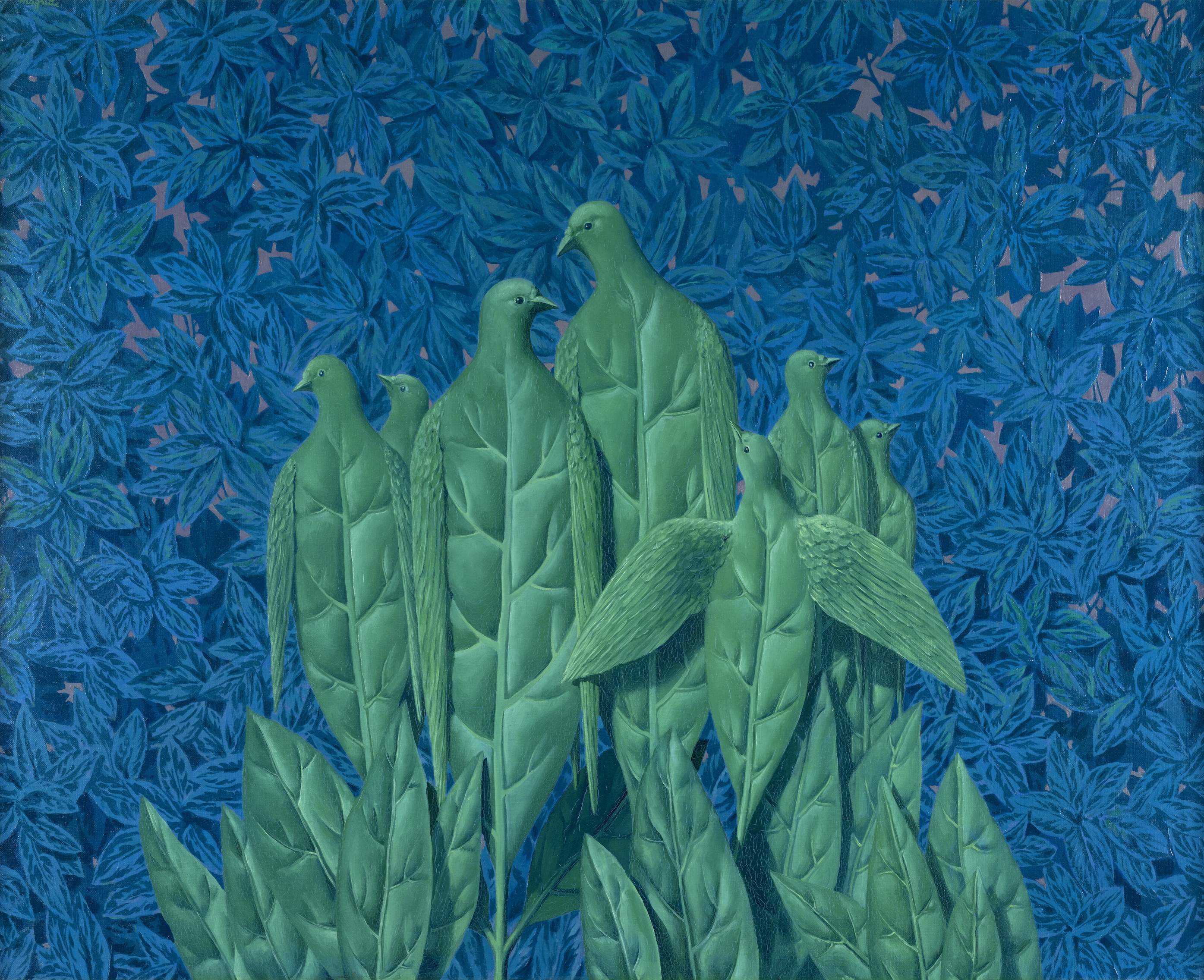
Magritte to Lead Christie’s March Surrealism Sale
|
René Magritte, Les grâces naturelles (1961), estimated at £6.5 million ($8.8m). Photo:
Courtesy of Christie’s
|
Christie’s already announced the surrealism-heavy Vanthournout collection for its
March sale in London. Now, they’ve unveiled a work that has been in a private collection for the past 25 years: René Magritte’s Les grâces naturelles, from around 1961, one of 18 works in which the Belgian surrealist employed his “leaf-bird” motif. The work is estimated at £6.5 million ($8.8 million) and comes to auction after a bronze of the same motif sold for nearly $3.7 million in 2024.
Now, let’s ride out West…
|
|
|
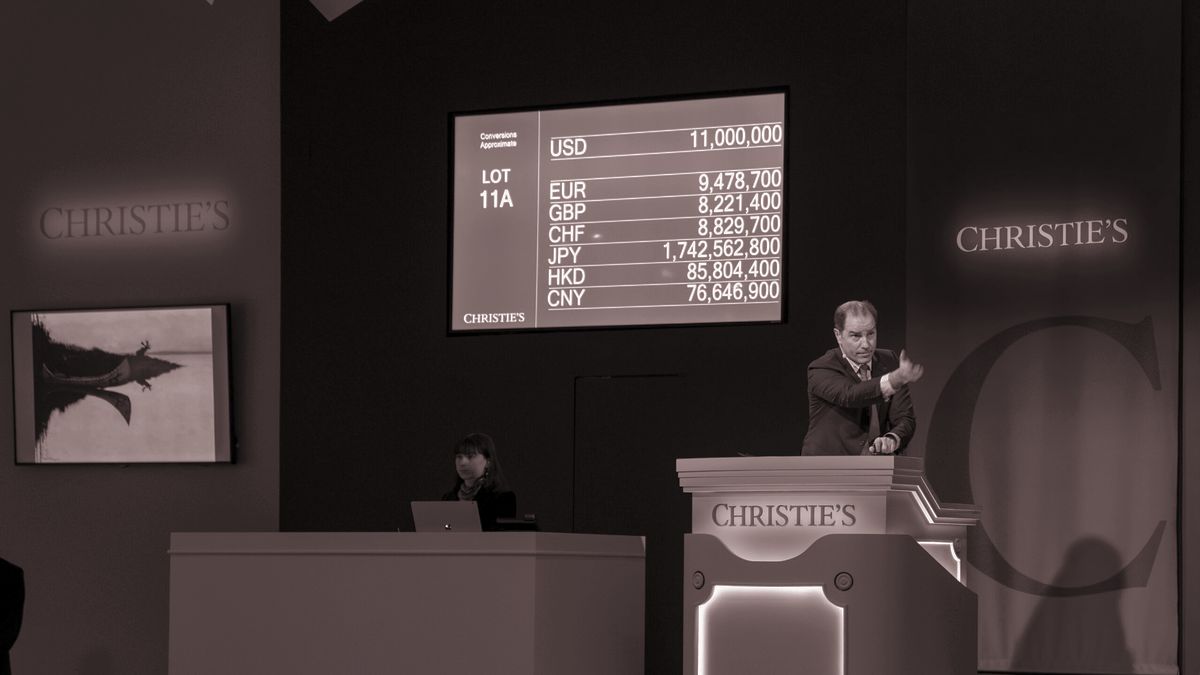
Christie’s $84 million sale of William Koch’s Western art unfolded like a friendly
poker night, led by two unnamed, deep-pocketed collectors who helped drive prices well above estimates. But that doesn’t mean all is well in the world of American art. Some segments still have a ways to run back toward their previous highs.
|
|
|
Because I couldn’t help myself, earlier this week I headed into Manhattan for Christie’s evening
sale of the $50 million collection of William Koch, one of the four Koch brothers who inherited their father’s oil-refining and engineering business. In 1983, Bill and one of his brothers, Fred, were bought out of the business by David, his twin, and the fourth brother, Charles. Charles and David would grow Koch Industries into a massive privately held industrial conglomerate with 120,000 employees. Bill used
the money he received for his share of the family business to invest and collect rare wines, Americana, maritime memorabilia—he won the America’s Cup in 1992—and art, especially Western art.
At 85, Bill Koch is winding up his affairs. Last year, he put up his homes in Aspen and on Cape Cod for sale, and sold what remained of his wine collection for nearly $29 million. After assembling a Western art collection over the last 40 years, and selling some $17 million worth of Western art a
decade ago, including Thomas Moran’s The Cliffs of Green River, Wyoming for $8.5 million, Koch seemed to be ready to part with the rest, which would take two days for Christie’s to sell. Thankfully, the evening sale began at a humane 5 p.m.
The Western art crowd, who are very different from the contemporary art folks one usually sees in
Christie’s salerooms, was pretty relaxed about the whole business. The auction room was crowded but not overpacked, and some of the bidders seemed more inclined to camaraderie than competition. Not that they held back: On Lot 4 of the sale, a woman bidding on Frank Tenney Johnson’s The Stampede tapped out when the numbers rose well above the $500,000 estimate. But in the relaxed atmosphere, auctioneer Adrien Meyer was able to entice her back in above
the $700,000 high estimate. She put in two more bids with a seven-handle but was ultimately topped by an $800,000 bid, which drew groans of sympathy from several bidders seated around her.
She lost the work to a buyer who took the Johnson, along with Frederic Remington’s bronze, Coming Through the Rye, for just under $10 million, as well as G. Harvey’s Texas Oil Patch painting for a little more than $735,000. Another
buyer snatched up N.C. Wyeth’s Wild Bill Hickok at the Cards for $2.2 million (the estimate was only $1 million); and Remington’s prized nocturne, An Argument with the Town Marshall, from 1905, for $11.8 million (the estimate was $4 million). The same bidder also took home the cover lot for the sale: Coming to the Call, Remington’s own bid at making “modern” art, which depicts a moose on the shore of a lake illuminated by vivid green and yellow hues
that simulate the gloaming of sunset. That painting sold for nearly $13.3 million. The buyer, who spent more than $27 million in just a few minutes on a Tuesday evening, had also set the record price for a Frederic Remington work of art… twice.
I don’t know who either of these two big buyers was. Some dealer gossip pointed to Yellowstone and Landman creator Taylor Sheridan buying Remington bronzes, but I have no reason to believe that’s
true. Much of the bidding was conducted by Christie’s relationship managers with ties to Texas and other clients who are big buyers. And it would make sense that a collector with Koch’s long-standing pedigree—he bought the top lot in 1984—would attract other big-money collectors who have been waiting their turn. That said, the woman seated in the saleroom who missed out on Lot 4 was able to buy a beautiful Alfred Jacob Miller painting, estimated at $2 million, for $4.7 million
with fees—almost triple the previous record for a work by that artist.
In the end, the room had an “Everyone got what they really wanted, no hard feelings” vibe. The hammer total for the evening portion was $55 million, over a $40 million aggregate estimate, which meant Christie’s went into the day sale having covered their guarantee. The next day, a number of artists saw prices that far exceeded estimates: A Charles Marion Russell painting sold for the artist’s
second-highest auction price, at nearly $3.5 million; and a Maynard Dixon painting made $950,000 against a $250,000 estimate. Altogether, the two sales totaled more than $84 million. Another collection of Western art of this caliber is not likely to come to market anytime soon. But these prices will surely spark interest among both sellers and buyers.
|
The American art category has a reputation for an aging collector base. But when I spoke to
Eli Sterngass, a partner in gallery Lincoln Glenn, he told me that he had sold three Hudson River School paintings in recent months to buyers in their 30s and 40s. As with Old Master paintings, younger collectors are figuring out that high-quality, historic work is much cheaper than contemporary art these days. Though Sterngass pointed out that some categories, like American impressionism, have not yet seen their estimate levels become as attractive.
Nevertheless,
Childe Hassam’s Gloucester Harbor, from 1899, made more than $2 million over an estimate of $1 million in Christie’s sale of Max Berry’s collection. A Maurice Brazil Prendergast painting of the bridle path in Central Park sold for $2.3 million—nearly five times the estimate. Another canvas depicting Gloucester Harbor sold for $610,000, approximately double its estimate. Despite those successes, and a strong Mary Cassatt
price in the day sale, there were a number of impressionist works that sold for prices below the estimate range, confirming Sterngass’s assessment.
Meanwhile, in Christie’s various owners sale, there was a big price of almost $2.9 million for Sanford Robinson Gifford’s Sunset over the Palisades on the Hudson, from 1879. “That Gifford blew me away,” Sterngass said. “A Gifford of that quality hasn’t come up in a while.” Naturally, the work had a
Rockefeller provenance. In the same sale, a deaccessioned Thomas Moran view of Venice made $250,000 over a $30,000 estimate. And there were strong prices for Winslow Homer, Eastman Johnson, Henry Ossawa Tanner, and Robert Scott Duncanson.
|
Tanner and Duncanson are two of America’s most famous artists of African descent. But their
predecessor is the painter Joshua Johnson, who had two works sell at Sotheby’s on Saturday, including Lady on a Red Sofa, from 1820-25, which made a near-record price of $508,000. Naturalist Martin Johnson Heade’s painting of Brazilian hummingbirds had an estimate of $120,000, which was enough to entice an
irrevocable bid. The work ended up selling for $700,000. A smaller version of an Augustus Saint-Gaudens bronze of a Puritan was estimated at $150,000, but sold for $350,000. (The larger statue stands in Springfield, Massachusetts. This smaller one had been owned since 1932 by descendants of one of the city’s founders.)
Good numbers
are not always good news. You have to look back at the prices achieved in earlier markets—and segments of the American art category are still a ways off. For example, Grandma Moses, who only started painting in earnest late in her eighth decade and became famous in the 1940s and ’50s, saw a version
of her Over the River to Grandma’s House, from 1944, sell for nearly $625,000. It was estimated at $300,000 and had an irrevocable bid.
The record for a Grandma Moses painting is $1.36 million, paid in 2006 for a version of Sugaring Off, painted in 1943. She gave a number of different pictures the same title. A smaller version of Sugaring Off, from 1944, sold in November for a little more than $380,000. These are not the same painting, but it shows you that
expectations going into this sale were much lower. Sterngass told me he got a call from a client just after the Moses hammered. “What the hell just happened,” the client asked. That price is good news, but let’s not get carried away. I’m not saying Moses went down by two-thirds and is now back up to half of what her work once was. But we do have a ways to go before American art is truly pricey again.
|
That’s enough for today. Mrs. Wallpower has been out shoveling snow. I guess I’d
better go help.
Speak soon,
M
|
|
|
Puck founding partner Matt Belloni takes you inside the business of Hollywood, using exclusive reporting and insight
to explain the backstories on everything from Marvel movies to the streaming wars.
|
|
|
The ultimate fashion industry bible, offering incisive reportage on all aspects of the business and its biggest
players. Anchored by preeminent fashion journalist Lauren Sherman, Line Sheet also features veteran reporter Rachel Strugatz, who delivers unparalleled intel on what’s happening in the beauty industry, and Sarah Shapiro, a longtime retail strategist who writes about e-commerce, brick-and-mortar, D.T.C., and more.
|
|
|
Need help? Review our FAQ page or contact us for assistance. For brand partnerships, email ads@puck.news.
You received this email because you
signed up to receive emails from Puck, or as part of your Puck account associated with {{customer.email}}. To stop receiving this newsletter and/or manage all your email preferences, click here.
|
Puck is published by Heat Media LLC. 107 Greenwich St., New York, NY 10006
|
|
|
|