Welcome back to Wall Power. I’m Marion Maneker.
Two museum
shows opened recently that follow up on important recent exhibitions in New York and London. The first is a thought-provoking exploration of the friendship between Édouard Manet and Berthe Morisot that just opened at the Cleveland Museum of Art—a rare opportunity to see much of Morisot’s painting in one place and in counterpoint to Manet’s work. The second is a show of Georges Seurat’s seascapes at the Courtauld Gallery in London, following a
major exhibition last year of the so-called neo-impressionists who pursued Seurat’s divisionist path. Tonight, we’re going to discuss both shows.
Up top, notes on the three-minute museum heist at the Magnani-Rocca villa in Parma that got everybody all excited. I suppose that’s because of October’s cinematic jewel robbery at the Louvre. But the truth about these thefts is that they’re just vandalism. You can’t sell the art, and nobody benefits, least of all the thieves. Plus, news on
Christie’s single-collection sale of South Asian modern and contemporary art in London this June. (Bengali artists are on fire right now.)
Also mentioned in this issue: Giorgio Morandi, Luigi Magnani, Henri Matisse, Paul Cézanne, Pierre-Auguste Renoir, Vasudeo Gaitonde, Ganesh Pyne, Kattingeri Krishna Hebbar, Helene
Kröller-Müller, Jan Toorop, Georges Lemmen, Anna Boch, Emily Beeny, and many more…
Just a reminder: If you’re not a subscriber, sign up here, or upgrade here to join the Inner Circle, where the real action takes place.
And as always, let me know what I got wrong by replying to this email or sending me an SMS or WhatsApp at +1.917.825.1391.
There’s a lot to get to tonight… |
-
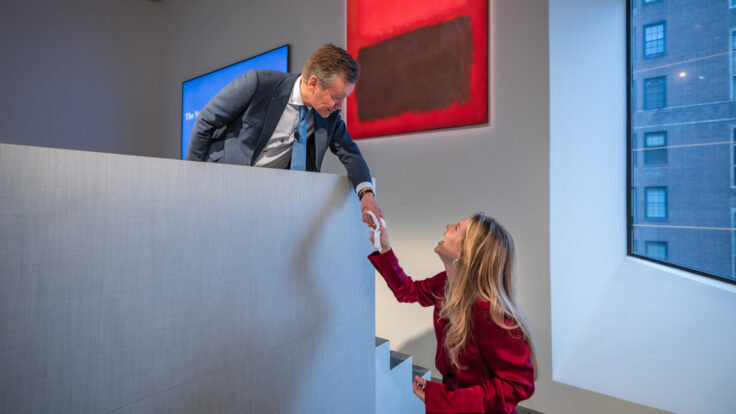
Another museum heist: You might have seen the reports yesterday that Italy’s Magnani-Rocca museum was robbed of three paintings in about three minutes, more than a week ago. Luigi Magnani, who died in 1984, was a man of diverse cultural interests: He used the fortune his father made as a breeder of cows, dairy farmer, and maker of formaggio to compose music, write novels, study art history, and collect art. His legacy is the Magnani-Rocca Foundation, named
after his noble mother and enterprising father. (You might remember the great Giorgio Morandi show at David Zwirner last winter, which was a loan of works from the Magnani-Rocca.) The villa, which is near Parma in the Emilia-Romagna region, was turned into a museum that opened in 1990 and was later renovated.
These types of museums have long been targets for art thieves due to their lax security. Here it seems the robbers fled when the museum’s security system went off,
abandoning a fourth work in the process. The three stolen works are Henri Matisse’s Odalisque on the Terrace, Paul Cézanne’s Still Life with Cherries, and Pierre-Auguste Renoir’s Les Poissons, which was probably the most valuable—if stolen artworks can be said to have any value.
Press reports are putting a $10 million value on the three works, but they’d be difficult to sell to anyone in the legitimate art
world. The market has a system for identifying stolen art, and most galleries and auction houses are governed by laws that require the seller to refund money if a work’s authenticity or clear title does not check out. At some point, the works could be sold in private transactions, but someone would have to wait a long time. What would they be willing to pay to take that risk?
|
|
|
|
CHANEL Connects, the flagship arts and culture
podcast, goes global for Season 6. From the Hamburger Bahnhof in Berlin to Tokyo’s Nexus Hall, tune in to a series of intimate conversations in iconic places. In this episode, recorded live at the Guggenheim Museum in New York City, celebrated artists Sarah Sze and Julie Mehretu connect with Yana Peel, President of Arts, Culture & Heritage at CHANEL. The conversation moves from the now to the next, exploring both artists’ ongoing commitment to their communities and abstraction as a launch pad
for radical invention. Listen Now. |
|
|
|
- A South Asian art renaissance: Christie’s announced today that it would revive its South Asian modern and contemporary art sales in London this June with 93 works from a single collection focused on the artistic legacy of Bengal, including art by Vasudeo Gaitonde, Ganesh Pyne, and Kattingeri Krishna Hebbar. The sale follows the success of Bengali artists in last week’s South Asian art sales in New York. The top lot is an
untitled orange abstract work by Gaitonde from 1971, estimated at £1.2 million. Pyne’s The Fisherman, from 1979, comes to market with a £250,000 estimate. That’s on par with the two works sold in New York last week that made prices in the $2 million region.
According to Christie’s, Pyne’s work rarely comes to auction, and these lots suggest that the specialists believe last week’s strong prices will give other potential bidders confidence and build appetite for the works. Last
week, Hebbar’s work set a new auction record at almost $770,000, close to double the artist’s previous high set just two years ago.
|
Now, let’s look at two shows on two continents… |
|
|
|
Two exceptional new exhibitions—one on the relationship between
Berthe Morisot and Édouard Manet, the other on Georges Seurat’s connection to the sea—invite us to reconsider three French masters. |
|
|
|
Maybe it’s just me, but I’ve noticed we’re beginning to get a number of important
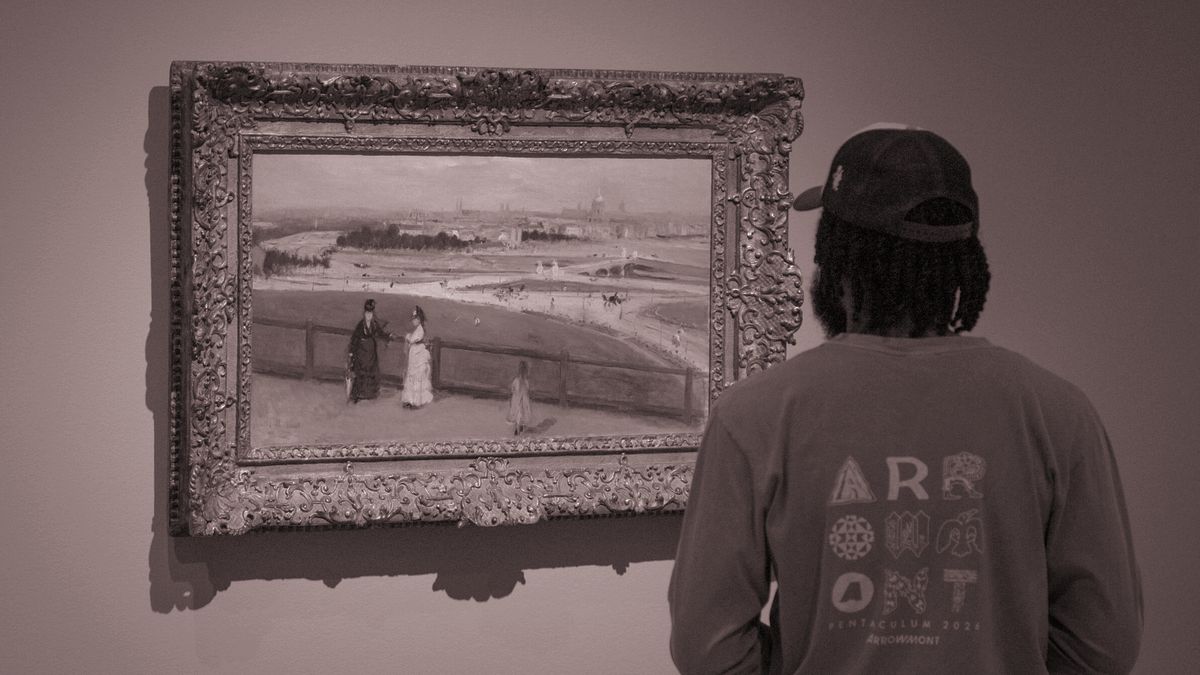
museum shows that are in dialogue, perhaps indirectly or even inadvertently, with previous blockbuster shows. And the conversation between them offers some indication of where the art market is going. Two new shows that caught my eye, both for their subject matter and for their arguments, are Manet and Morisot, which opened last weekend at the Cleveland Museum, and Seurat and the Sea, at London’s Courtauld Gallery. The latter is a study of the painter’s seascapes, which
constitute the majority of his extant paintings after he died at the age of just 31.
Each show plays off another major recent show that helped create a Doppler effect of interest and amplify the experience: In the case of Manet and Morisot, the show debuted at San Francisco’s Legion of Honor just two years after the Met mounted its Manet/Degas superfriends show. The point of Manet/Degas was to show that the two great artists of the late 19th century—one not
quite an impressionist, and the other perhaps the echt impressionist—shared a milieu and social circle while resolving those influences into often very different works of art.
The Courtauld’s Seurat show, a fitting tribute to the institution’s large holdings of the artist’s work, follows a major exhibition of neo-impressionist art held at London’s National Gallery last fall. Radical Harmony, drawn from Helene Kröller-Müller’s trailblazing
collection of neo-impressionist art in her eponymous museum, was a rare opportunity to see the depth and variation of this movement beyond Seurat and his short life. The show focused on neo-impressionism’s radical politics and the close-knit group of artists who played off one another, including some rarely seen in other museums, like Jan Toorop, Georges Lemmen, and Anna Boch. The Courtauld show does the reverse—isolating Seurat on the coast and
revealing another side to the movement. |
At the core of Manet and Morisot is a radical thesis that I’m surprised the
reviewers of the Legion of Honor exhibition had downplayed. I don’t get the sense that the show has changed much going from one venue to another, but the Cleveland Museum—a major encyclopedic art institution in America that perhaps gets overlooked—has added context by opening a companion exhibition drawn from its deep holdings of French photography. The photos document the radical social and cultural changes—the rise of modernity and industrialization, the catastrophic Franco-Prussian War and
the revolt of the Paris Commune, etcetera—that took place alongside the birth of impressionism. Indeed, the war and Berthe Morisot’s own self-criticism resulted in the destruction of much of her early artistic production. |
|
|
|
In this episode of CHANEL Connects, meet renowned
painter and critic David Salle. For more than five decades, the artist has been creating across disciplines: on the canvas, behind the camera, and now, in dialogue with artificial intelligence. He connects with Yana Peel, President of Arts, Culture & Heritage at CHANEL, for a live conversation recorded at LACMA in Los Angeles. Set against this backdrop, they discuss Salle’s formative years at the legendary art school founded by Walt Disney, his collaborations—from Martin Scorsese to AI
engineers—and the enduring power of human intention as the digital frontier evolves. Listen Now. |
|
|
|
But that’s not what is so provocative about this show. Emily Beeny,
the Legion of Honor’s chief curator, contends that although Manet gave Morisot essential encouragement and validation, she ultimately became his peer—as well as his sister-in-law. In Beeny’s show, Morisot is as much of an artistic interlocutor of Manet as, say, Degas was. There’s an unexplored sidenote here in the fact that Degas and Morisot were also friends: In fact, Degas convinced Morisot to join the impressionist group that exhibited outside the official
salon—a move that Manet, while sympathetic to the impressionists, was never willing to make himself.
In some ways, when Morisot became a pillar of the impressionist group, she was asserting her independence and self-confidence. “From the dawn of impressionism,” noted Beeny, “critics mistook Morisot for Manet’s pupil, whether intending to flatter or denigrate, and many 20th century historians of impressionism reduced this complex relationship to the extraordinary pictures Manet painted of
Morisot between 1868 and 1874, overlooking (or indeed disparaging) her work and casting her as a model or muse.”
Human nature being what it is, many have tried to invent an emotional or sexual connection between the two. But their real relationship is far more interesting. Citing both Manet’s first biographers and recent feminist scholarship, Beeny explained that “as Morisot’s work became more daring and garnered widespread acclaim, Manet began to follow her example, emulating her choice
of subjects, her high-key colors, and, most especially, her rapid fluttering brushstrokes.” The social constraints that surrounded the deeply bourgeois and respectable Morisot meant she was excluded from painting the modern life that Manet experienced in cafés and brothels, and on the evanescent street scenes of Paris. She had to make do with her “world of private interiors and leafy parks, of middle-class women, their children, and their domestic employees.”
As Manet began to succumb to
the ravages of syphilis, his world contracted. The Paris of an invalid was not so different from that of a respectable lady. Which isn’t to say that Manet took inspiration from Morisot’s subject matter only after he became ill. Indeed, the show—which includes many important pictures from Manet/Degas, like the seminal Balcony that features Morisot as a model—traces a complex call-and-response between the two artists over 15 years. |
Seurat’s
Working Vacation
|
Manet’s market breakthrough came in 1872, when he sold a group of works to the art
dealer Paul Durand-Ruel. Manet generously introduced the dealer to Morisot’s work, resulting in the sale of a seascape she’d painted in Cherbourg; some of her best works would be made during her family’s summer retreats to the seaside. Georges Seurat, too, took advantage of his time away from the bustling city to develop his technique. It was at the seaside that Seurat carefully calibrated the effects of weather on his work. Overcast skies played havoc with his
painting, but he mastered the depiction of its “unmistakable pearly glow,” as curator Karen Serres put it in the catalogue for Seurat and the Sea. That did not mean he accepted it. In a letter from Honfleur to Paul Signac, he exhorted, “Let us get drunk on light once again.”
And that he did. The seaside works were well received by critics even though his larger figurative paintings, like the now-famous A Sunday Afternoon on the Island of La
Grande Jatte, took a beating. One writer called the figures in La Grande Jatte “poorly made mannequins.” And even though the critics saw a poetic melancholy in the seascapes, that was not Seurat’s goal. Rather, he was looking for an analytical way to depict light and color. The seascape—with its long expanses of beach and sand, sea and waves, and even grass and dunes—was ideal for working out the tonal range of combining colors and applying them with short brushstrokes.
For
Seurat, the two pursuits—his attempts to capture modern life in Paris and his technique work on the coast—were meant to reinforce each other. Over time, the Parisian pictures won out. They are now, of course, canonical works, and these seascapes are supporting material—an inversion only history can achieve. |
I’ll be back tomorrow with some detailed analysis of what happened in Hong Kong. Join
the Inner Circle if you want to get access to those insights.
M |
|
|
|
Puck founding partner Matt Belloni takes you inside the business of Hollywood, using exclusive reporting and
insight to explain the backstories on everything from Marvel movies to the streaming wars. |
|
|
|
Ace media reporter Dylan Byers brings readers into the C-suite as he chronicles the biggest stories in the
industry: the future of cable news in the streaming era, the transformation of legacy publishers, the tech giants remaking the market, and all the egos involved. |
|
|
|
Need help? Review our
FAQ page or contact us for assistance. For brand partnerships, email ads@puck.news.
You received this email because you signed up to receive emails from Puck, or as part of your Puck account associated with {{customer.email}}. To stop receiving this newsletter and/or manage all your email preferences, click here. |
Puck is published by Heat Media LLC. 107 Greenwich St., New York, NY 10006 |
|
|
|
|