Welcome back to Wall Power. I’m Marion Maneker, back in your inbox after some weekend technical difficulties. I hope everyone else had a mishap-free Mother’s Day.
We’re on the glide path to
the May sales, which have never been more important to the direction of the art market. In my conversations around town last week, the mood was surprisingly positive. That doesn’t guarantee success—but after three years of a market on tenterhooks, the advisors and auction house folks I’ve been seeing are all pretty sanguine about the week’s prospects.
While we wait, I thought I’d share a great story from my colleagues at Air Mail on the Peter Hujar moment happening in New York. There are two shows connected to the photographer at Ortuzar right now. One of those has been curated by Andrew Durbin, the author of a dual biography of Hujar and Paul Thek, while a third show is coming to the Morgan Library in late May.
Up top, a second Patek Philippe has now auctioned for more than $10 million at Phillips in Geneva. Also: Does the Met Gala
blowback portend animosity for the art world? Plus, we’ve lost two important art world figures in recent days: John Marion, the former Sotheby’s auctioneer, and the Swiss gallerist Bruno Bischofberger, who has also departed this vale of tears.
Also mentioned in this newsletter: Julian Schnabel, David Bowie, Dennis Hopper,
Debbie Marion Murray, Louis Marion, Alfred Taubman, Dede Brooks, Anne Burnett Windfohr, William Burroughs, Fran Lebowitz, Gracie Mansion, David Wojnarowicz, and
more… |
|
|
|
A MESSAGE FROM OUR SPONSOR |
Nudo: An Evolving Icon For 25
years, Nudo has distilled color into pure clarity and form. The Toi et Moi earrings extend that vision, pairing a luminous amethyst with hand-set diamond pavé in a composition that feels both precise and effortless. A study in contrast and balance, they embody jewelry worn on instinct, defined by personal style, not occasion |
|
|
|
- Bacs
& Russo watch pops in Geneva: The Patek Philippe “South America” gold wristwatch that Phillips had estimated at 5 million Swiss francs sold over the weekend for nearly 8 million francs with fees. That works out to nearly $10.25 million—a lot of money for a wristwatch. In case you thought that was an anomaly, a pink gold and platinum F.P. Journe watch, originally sold as part
of a 20-watch subscription that allowed the watchmaker to finance his fledgling business more than 25 years ago, sold for 10 times its 450,000-franc estimate with fees, or CHF 4.9 million. That’s nearly $6.3 million for those of us who keep score in dollars.
- Times readers slammed the Met Gala. Will the auctions be next?: I happened upon this
recap, in the Times, of 500 negative reader comments in response to the paper’s story about its 15 favorite looks from the Met Gala. “It seems that the gala, to some, landed as a financially frivolous, Marie Antoinette–like affair,” Jacob Gallagher wrote
in summation. He added, “The opulence of the clothes became another example of billionaire class entitlement for a cause most people don’t benefit from.”
I raise this only because we seem to be rolling into a season where more nine-figure works of art will be sold publicly, further underscoring the vast gulf between the very rich and those struggling under the cost of living constraints created by tariffs, war, and inflation. And, as you recall, the last three years of art market torpor
were quietly characterized by growing sales at the bottom of the price spectrum. There appears to be a broad appetite for art in its many forms, and the billionaires who can spend $20 million or more on a work of art are just coming back to the public market. So maybe strong auctions won’t provoke the same kind of backlash. - Auctioneer John Marion dies: Former Sotheby’s auctioneer John Marion died on Wednesday, according to his daughter Debbie
Marion Murray, who posted the news in a Facebook group for ex-Sotheby’s employees. The auction house was a family business for the Marions: John’s father, Louis, was a founder and eventual president of Parke-Bernet Galleries, the company that purpose-built 980 Madison Avenue to serve as its home beginning in 1949. Louis Marion was president of Parke-Bernet when it was sold to Sotheby’s in 1964.
In 1960, his son, John, joined Parke-Bernet, and after the
acquisition by Sotheby’s rose to become president in 1972 and chairman in 1975. During that period, Sotheby’s was sold to Alfred Taubman, and Dede Brooks became president in 1987, handling operations while John remained the face of the company. He served in that role until 1994.
In 1988, John married Anne Burnett Windfohr, a Texas ranching and oil heiress. Together, the couple built a significant art
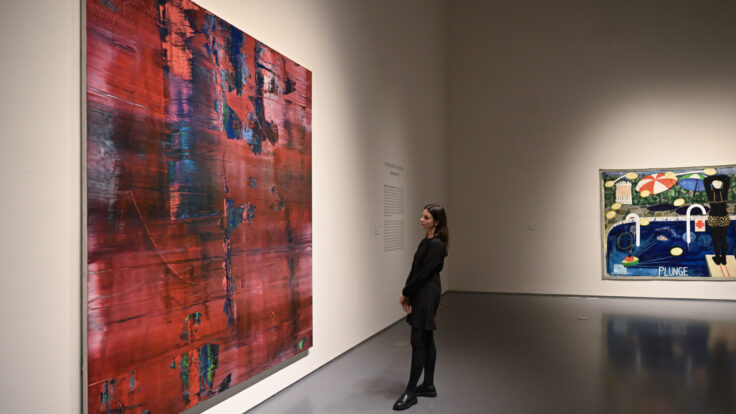
collection, which at one time included the set of Matisse Backs now on view at Acquavella Galleries. Anne Marion’s sale at Sotheby’s in 2021 totaled $157 million, with Andy Warhol’s Elvis 2 Times making $37 million, Clyfford Still’s PH-125 selling for nearly $31 million, Richard Diebenkorn’s Ocean Park #40 selling for more than $27 million, and a red Gerhard
Richter abstract painting selling for $23 million.
|
|
|
|
A MESSAGE FROM OUR SPONSOR |
Color in Motion Nudo extends
beyond a single design. With the Nudo bracelet, color unfolds across the wrist in a silhouette made to move with you. Each detail is crafted by hand and designed to catch the light. It embodies Pomellato’s creative ethos – jewelry without constraint. |
|
|
|
- Bruno
Bischofberger dies at 86: On Saturday, Bruno Bischofberger’s gallery announced on Instagram that the mainstay Swiss art dealer had died at 86. Bischofberger had been a fixture in contemporary art since the 1960s, when he opened his first gallery in Zurich and soon afterward brought pop art to Europe by showing Andy Warhol, Roy Lichtenstein, Robert Rauschenberg, Jasper Johns, and
others. The gallery continued to deal in Warhol’s work while also branching out into a number of different schools that later became prominent, including conceptual and land art, minimalism, and neo-expressionism in the 1980s. Along with Warhol, Bischofberger was closely associated with Jean-Michel Basquiat.
Of course, this scene from Julian
Schnabel’s movie Basquiat, with David Bowie playing Andy Warhol and Dennis Hopper as Bruno Bischofberger, will likely shape our perceptions of Bischofberger in the future. “It’s not how much you work on something that matters,” Hopper as Bischofberger says to Basquiat, “it’s how much you get for it.”
|
Now, let’s hear from our friends at Air Mail… |
|
|
|
Six months after the release of Ira Sachs’s film Peter Hujar’s Day, three
exhibitions in New York give long-overdue attention to the American photographer. |
|
|
|
Farm animals were Peter Hujar’s first subjects. The photographer’s early years were spent
with his Ukrainian mother and grandparents on a farm in central New Jersey, which exposed him to the emotionality of nature. Decades before his lens moved between nocturnal vagabonds in the East Village and names such as Diana Vreeland, William Burroughs, and Fran
Lebowitz, the young man realized the power of his eye. He could monumentalize any subject, even if it was an aloof cow or a dilapidated shack.
The art dealer Gracie Mansion, who gave Hujar his final exhibition—a year before his AIDS-related death in 1987, at age 53—agreed that his gaze was revelatory. “When you look at his photograph of a blanket crumpled on the back of a chair,” she told me, “you realize that it is actually a portrait of that
blanket.” Mansion sometimes has to resist the impulse to turn away from the artist’s arresting black-and-white photographs, largely captured at his East Village studio, “because what you see is often so raw and intimate.”
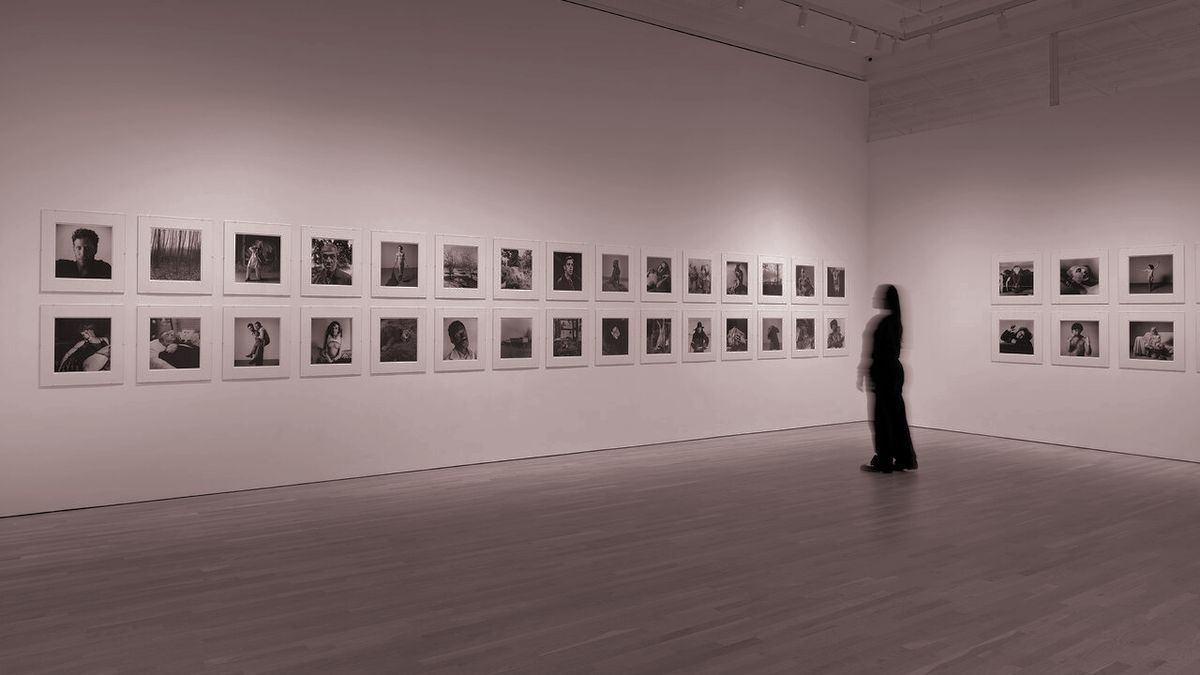
This spring, a trio of exhibitions in Manhattan walk us through Hujar’s enigmatic images. Ortuzar will remount Peter Hujar: The Gracie Mansion Show exactly four decades after it went up in Mansion’s gallery. The 70 photographs, installed to the artist’s
specifications in a two-row grid at the tiny Alphabet City storefront, now occupy the Tribeca gallery’s soaring walls in the same grid formation. Mansion remembered that she had to hire an art handler to meet Hujar’s arduously “specific spacing” demands between each photograph. “He would avoid hanging two portraits together so you could pay attention to everything equally,” she said. |
|
|
|
Whether nude or landscape, the images possess a similar tactile texture. And the juxtapositions are gripping.
A newly skinned cow hanging from its hind legs in a Germantown slaughterhouse unexpectedly complements the unsettling calm in the expression of David Wojnarowicz, another seminal East Village artist and the photographer’s longtime companion.
Ortuzar’s concurrent show, How Beautiful This Living Thing Is—organized by the author and editor Andrew Durbin, who wrote the recently released
book The Wonderful World That Almost Was: A Life of Peter Hujar and Paul Thek—exhibits artists who crossed paths with Hujar. The grouping begins in the late 1950s, when the emerging artist turned to professional photography, and also visited Italy for the first time. In the late 1960s and 1970s, Hujar did editorial freelancing, which brought him modest fame. Besides
Wojnarowicz and Paul Thek (Hujar’s first serious love), the show features colleagues such as Ray Johnson, Greer Lankton, Sheyla Baykal, and Susan Brockman. Durbin said he visualized the show as a “poetic laboratory” and sought artists who suggested kinship to Hujar’s photography, and “who were thinking about what is inside and
outside the frame.”
In late May, the Morgan Library & Museum will resume its exploration of Hujar’s art, begun in an exhibition eight years ago, with a show dedicated to his contact sheets. For Hujar: Contact, the museum’s curator and department head of photography, Joel Smith, has cherry-picked around 110 contact sheets from the 5,700 in their Peter Hujar Collection, while delving into the more intimate and process-driven aspect of Hujar’s
output.
These three exhibitions come six months after the release of Ira Sachs’s film Peter Hujar’s Day, starring Ben Whishaw. “This should have happened a long time ago,” Mansion said of the burgeoning interest in Hujar’s photographs. In our age of over-manipulated and downright fake imagery, Hujar’s nuanced eye toward mortality, performance, and sexuality is enduringly authentic. “We all come into the world with masks,” said
Durbin, “and he was both interested in that mask and was compelled by what was behind it.” |
Thanks, Osman, and the folks at Air Mail. I hope you enjoy these occasional tastes of Air
Mail’s content ahead of our fuller integration coming soon. Until then, we’re just about ready to dive into the auction season. More on that on Wednesday with our first auction report following on Friday.
Catch up with you then,
M |
|
|
|
Puck founding partner Matt Belloni takes you inside the business of Hollywood, using exclusive reporting and insight to explain
the backstories on everything from Marvel movies to the streaming wars. |
|
|
|
Ace media reporter Dylan Byers brings readers into the C-suite as he chronicles the biggest stories in the industry: the future
of cable news in the streaming era, the transformation of legacy publishers, the tech giants remaking the market, and all the egos involved. |
|
|
|
Need help? Review our
FAQ page or contact us for assistance. For brand partnerships, email ads@puck.news.
You received this email because you signed up to receive emails from Puck, or as part of your Puck account associated with {{customer.email}}. To stop receiving this newsletter and/or manage all your email preferences, click here. |
Puck is published by Heat Media LLC. 107 Greenwich St., New York, NY 10006 |
|
|
|
|