Hello, sports fans, and welcome back to Wall Power. I’m Marion
Maneker.
Surrealism has been the driving force of the art market in the past few years. We’ve talked about it in a number of ways, including this assessment of the Whitney’s new show about surrealism in the ’60s. Tonight, Julie Davich comes at it from a new direction, with a look at some contemporary artists bringing surrealism’s interest in
the uncanny into the 21st century. She also previews Galerie Sardine and Anne Buckwalter’s new show.
But first, a reminder that there’s still a little more time to take advantage of Puck’s fourth anniversary deal for new subscribers: 20 percent off your first year if you subscribe by October 4. Join our community yourself, or
buy a friend a gift subscription. Or, if you’re already a member and thinking about upgrading to Wall Power’s Inner Circle, now is a great time: We’re also offering 20 percent off there. Just
click here to claim your spot.
Let’s get started… |
-
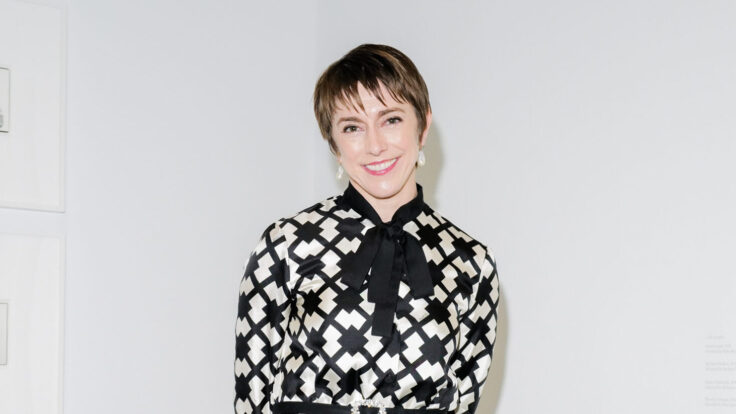
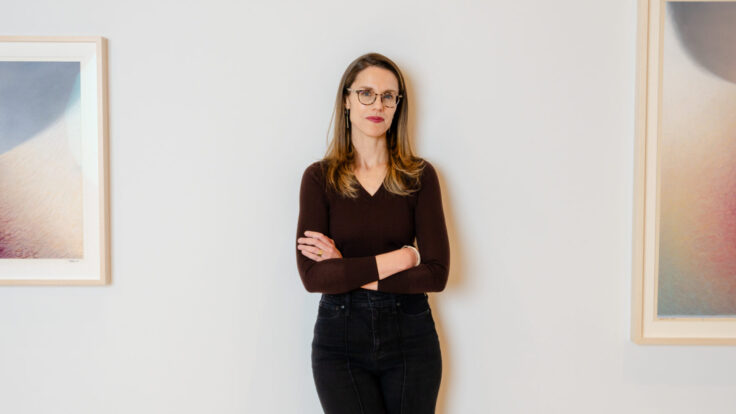
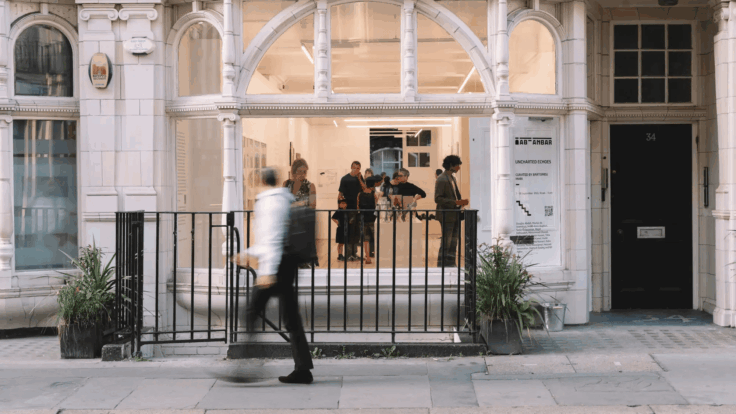
Outside the white box: It’s been about a century since white walls with sparse paintings became the norm for displaying art, and 50 years since the term “white cube” was popularized. Galerie Sardine founder Valentina Akerman thought it might be time for a new standard—or, rather, a return to an old standard. “I wanted to create a kind of modern-day salon,” she told me. “I’ve always felt there was space for something more personal, more conversational, where artists and
art could be experienced.” That desire for intimacy informed her gallery’s name, which refers to sardines packed together in a small tin.
Now, after two summers hosting shows and accompanying dinners in a farmhouse in Amagansett, Akerman is bringing the itinerant project to a loft space in SoHo. “I want to continue to put all these exhibitions in spaces that are not white boxes,” she said. She’s targeting a November opening with a show of figurative paintings by Justin
Bradshaw, an English artist who moved to Italy to pursue his fascination with classical art, along with ceramics by Colombian-born artist Maria Robledo. Artists whom Akerman has exhibited in the past include Sophie von Hellermann, Erin and Sam Falls, Ana Benaroya, and Nate Lowman.
Akerman, who was also born in Colombia, runs in artist circles, professionally and personally. She
spent most of her career designing artist books and producing artist editions, and she’s also married to painter Joe Bradley, who has been represented by David Zwirner gallery since 2023. She said artists are responding to her nontraditional model of exhibition and representation. “In this moment of redefining the nature of things in the art world,” she said, “there’s room to do something interesting and different.”
|
|
|
A MESSAGE FROM OUR SPONSOR |
Have you planned for the future of your art collection?
Explore our guide for valuing, appraising and transferring your art collection to ensure the
pieces you spent decades collecting live on as you intended. |
|
|
- Anne Buckwalter at Uffner & Liu: Long before “cottagecore” became part of the mainstream—before Audrey Gelman opened the Six Bells, and Dôen dresses and William Morris fabrics became de rigueur—there was Anne Buckwalter. Raised in Pennsylvania Dutch country, Buckwalter, now in her late 30s, paints country interiors in gouache on wood panels, with quaint flourishes like floral wallpaper, folk furniture, hooked rugs, and cross-stitch samplers. She depicts
entire rooms or zooms in on particular tableaux, such as a dining table set for a meal. She plays with patterns, like wood grain or intricate lace, and flattens the perspective, which makes the objects on the tables and dressers appear ready to slide right off.
Coming off a summer exhibition at the Farnsworth Museum in Maine, where she lives, Buckwalter is showing her latest works at Uffner & Liu gallery on the Lower East Side. If you look closely at the paintings, you’ll find
unmistakable hints of desire. The decorations on some of the depicted stoneware pitchers and chairbacks are nudes, some of them in sexual positions. In several paintings, the eroticism is more overt, with figures seen through lace curtains or peeking out from underneath tables—but always partially obscured, and never showing their faces. “She’s asking, ‘What does it mean to be a woman in the home?’” gallery partner Lucy Liu explained to me, “and contrasting that with the liberal
feeling that can exist in that space.”
Her new series of gouaches on paper, which start at $4,000, are quilt patterns, with sexual elements hidden in the fabrics. (The show title, Lover’s Knot, is also a quilt pattern.) The paintings are priced at $8,000 to $25,000. The Rose Art Museum in Waltham, Massachusetts, is in talks to bring her Farnsworth exhibition, Manors, there. Otherwise, you have until November 1 to see her show downtown.
|
|
|
A subset of a booming market is getting its due, with young female artists helping
to push the growth. This is all happening even without consensus on what, exactly, “contemporary surrealism” is. |
|
|
Surrealist art is having a moment for many reasons—not least because, as a specialist
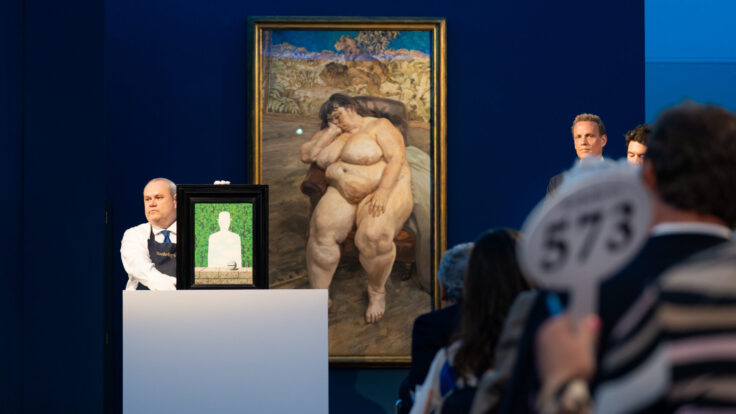
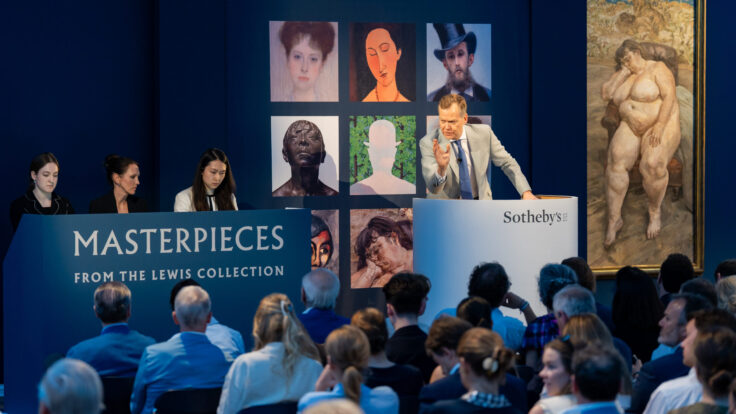
friend once posited, the surreal is often preferable to reality, and offers occasions to laugh in profoundly unfunny times. As Gagosian’s Freja Harrell, who works with two surrealist artists, put it to me, “Surrealist imagery is resonating now because it’s the visual language of excess and estrangement.” No wonder, then, that the genre is booming relative to the rest of the somewhat lackluster art market—just look at the results of the recent auction of
surrealist works from the Pauline Karpidas collection, which doubled its presale estimate.
The market for female surrealists, in particular, has experienced a well-documented explosion. In the past few years, Leonora Carrington, Remedios Varo, and Dorothea Tanning all achieved world-record prices for their work, and in November, Sotheby’s expects to set a record for Frida
Kahlo with El Sueño (La cama), from 1940, estimated at $40 million. This rising tide has also lifted the market for contemporary surrealism, with young talents like Swiss artist Louise Bonnet, who paints humorously distorted shapes with human qualities, and Polish artist Ewa Juszkiewicz setting artist records in recent years. |
|
|
A MESSAGE FROM OUR SPONSOR |
Have you planned for the future of your art collection?
Explore our guide for valuing, appraising and transferring your art collection to ensure the
pieces you spent decades collecting live on as you intended. |
|
|
The size of the contemporary surrealism market is minuscule compared to that of the
classic surrealists—Juszkiewicz’s and Bonnet’s records are, respectively, $1.6 million and $738,000, whereas Carrington’s is $28.5 million. But it’s growing rapidly. A recent report from Sotheby’s showed that sales in the contemporary surrealist category rose nearly 265 percent between 2018 and 2024. For the category’s female
artists, the jump was more than 400 percent. While these figures are based on an extremely limited and subjective sample of just 15 artists, they gesture at the remarkable levels of demand.
But despite the hype, it’s surprisingly difficult to get consensus on what contemporary surrealism actually is—or isn’t. Robert Zeller, who wrote the literal book on the subject, described new surrealist painting as having an “uncanny” quality. But that’s a pretty capacious
container. Another hallmark is a play on art history. “One of the important things about surrealism is that they looked back to the past for inspiration,” Zeller told me. “This is very different from other modernist groups that wanted to start over again in Year 0, who viewed the past as being derelict of value—deadweight.” |
|
|
Several contemporary surrealists are finding an audience with their subversion of
traditional genres, from landscapes to portraits to still-lifes, with some of the most compelling work coming from young women drawing on Old Masters. Maria Kreyn, a Brooklyn-based artist, along with Juszkiewicz and her fellow Gagosian artists Bonnet and Anna Weyant, all belong in that rarefied group. “The underpinnings are the same, but the results are so different,” said Harrell.
Kreyn is known for her dramatically lit paintings in the Renaissance
tradition of Caravaggio, Rembrandt, and Van Dyck. They earned her a Vanity Fair piece in 2018, followed by a commission from Andrew Lloyd Webber to create a series of paintings based on Shakespeare’s plays for a Covent Garden theater. Her more recent paintings, however,
are J.M.W. Turner–esque: turbulent seascapes, with skies that look like unfolded origami. “It’s about mental puzzles, like ‘What does the world look like if your eyeball is a prism, not a sphere?’” Kreyn mused when I stopped by her studio last week.
The Russia-born artist works with Maria Vega of the M.O.N. Art Foundation to display the works in historic churches. Her fourth such project is an upcoming
exhibition of dramatic seascapes at Fitzrovia Chapel during Frieze London; an installation last year during the Venice Biennale garnered her a great deal of attention. Soon after that, her only painting ever to appear at auction—Gravity, from 2024—made HK$4.1
million, or $525,000, against an estimate of HK$1 million, at Sotheby’s Hong Kong. |
|
|
As for Juszkiewicz, she’s the poster child for contemporary surrealism: One of her
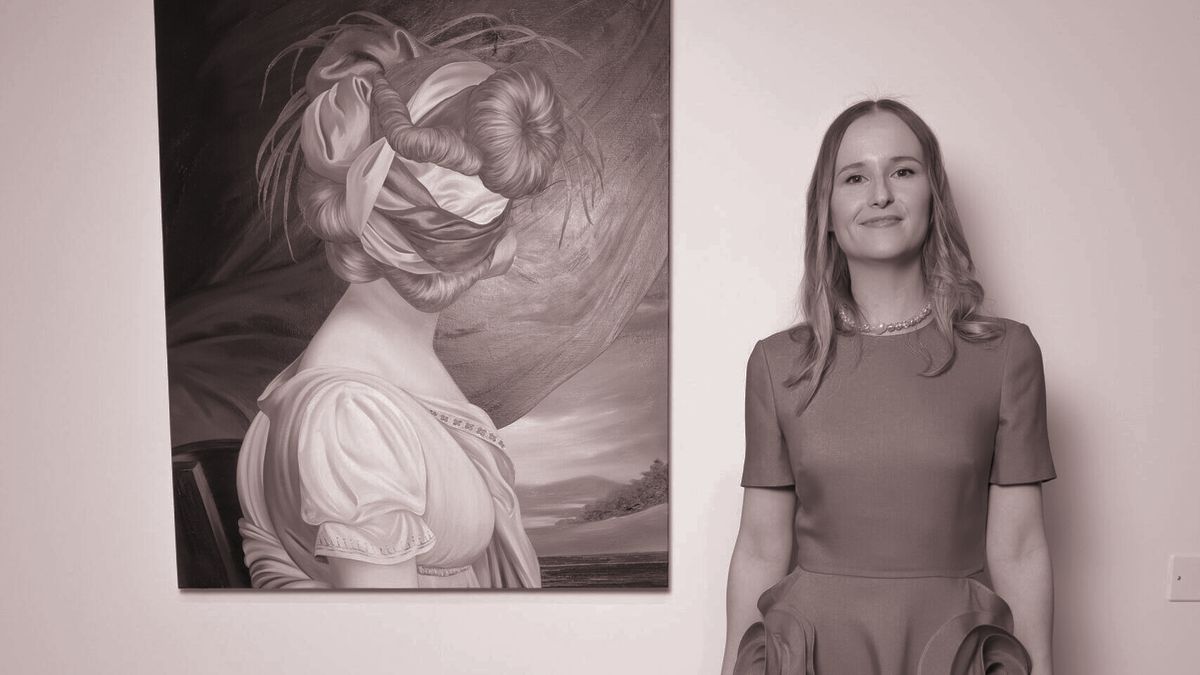
paintings appeared on the cover of Zeller’s 2023 book, New Surrealism. She takes 18th and 19th century portraits of richly dressed women and obscures their faces, either wrapping them in sumptuous fabrics or covering them with plaited hairdos or elaborate floral arrangements. “Taking something familiar and putting a twist on it makes it easy for people to understand,” said Harrell, who works with both Juszkiewicz and Bonnet. “That kind of estrangement makes us see the underlying
structures, how women were staged as silent symbols.” Juszkiewicz has a big 2026 coming up, with the publication of a monograph in March and the opening of a solo show at the Thyssen-Bornemisza Museum in Madrid in May.
Meanwhile, Anna Weyant similarly puts a humorous, subversive spin on historical tradition in her work. For her most recent project during New York Fashion Week, she took the familiar trope of a dollhouse and blew it up to life-size proportions at the Academy Mansion,
complete with giant doorknobs, making her audience feel like the dolls inside. A wonky candelabra sat atop the towering dining table; the baroque-style dressing table was topped with an oversize hairdryer; a Disney-inspired fountain was in the center of the courtyard. “These pieces have given me purpose and comfort in uncertain and unsettling times,” Weyant said of the items she carefully placed throughout the house. Her best paintings have made multiples of their estimates at auction, with her
$1.6 million world record achieved at Sotheby’s in 2022 against an estimate of $150,000.
There are a few more contemporary surrealist artists with shows to look out for this fall. The opening of Sasha Gordon’s first show at David Zwirner, featuring her unnerving self-portraits, was jam-packed in New York last week. In London, Victor Man, whose top auction price multiplied tenfold in 2023 to $2.2 million, has his first solo
exhibition of his “psychologically layered” paintings at David Zwirner. And Lévy Gorvy Dayan is pairing works by Leonor Fini with up-and-comer Aleksandra Waliszewska in a show curated by Alison Gingeras.
If you’re priced out of these artists’ markets, check out the program at Megan Mulrooney Gallery in L.A. Mulrooney sold out her booth of Piper Bangs’s paintings of biomorphic objects at the Armory Show, and is currently showing the unsettling, swollen still-lifes of Ginny Casey. |
Thanks, Julie. And with that, I hope you all had a great weekend.
M |
|
|
The ultimate fashion industry bible, offering incisive reportage on all aspects of the business and its biggest
players. Anchored by preeminent fashion journalist Lauren Sherman, Line Sheet also features veteran reporter Rachel Strugatz, who delivers unparalleled intel on what’s happening in the beauty industry, and Sarah Shapiro, a longtime retail strategist who writes about e-commerce, brick-and-mortar, D.T.C., and more. |
|
|
Puck sports correspondent John Ourand and a rotating cast of industry insiders take you inside the executive suites
and owners boxes where the decisions that shape the entire sports business are made. You’ll hear interviews with players, network execs, and everyone in between. The Varsity is an extension of John’s private email for Puck by the same name. New episodes publish every Wednesday and Sunday. |
|
|
Need help? Review our FAQ page or contact us for assistance. For brand partnerships, email ads@puck.news. You received this email because you signed up to receive emails from Puck, or as part of your Puck account associated with {{customer.email}}. To stop receiving this newsletter and/or manage all your email preferences, click here. |
Puck is published by Heat Media LLC. 107 Greenwich St, New York, NY 10006 |
|
|
|