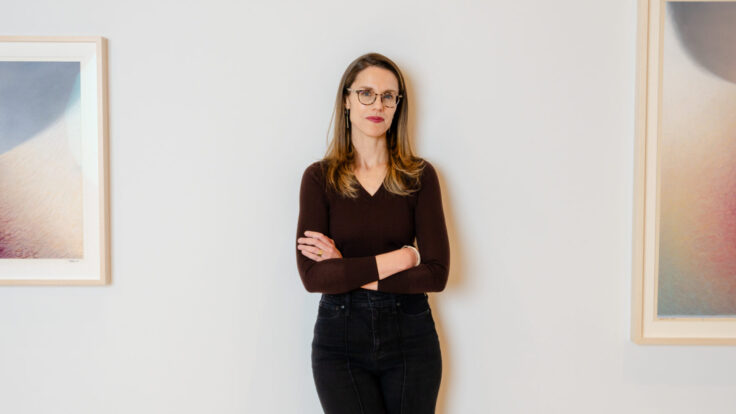
Welcome back to Wall Power. I’m Marion Maneker.
In an effort to
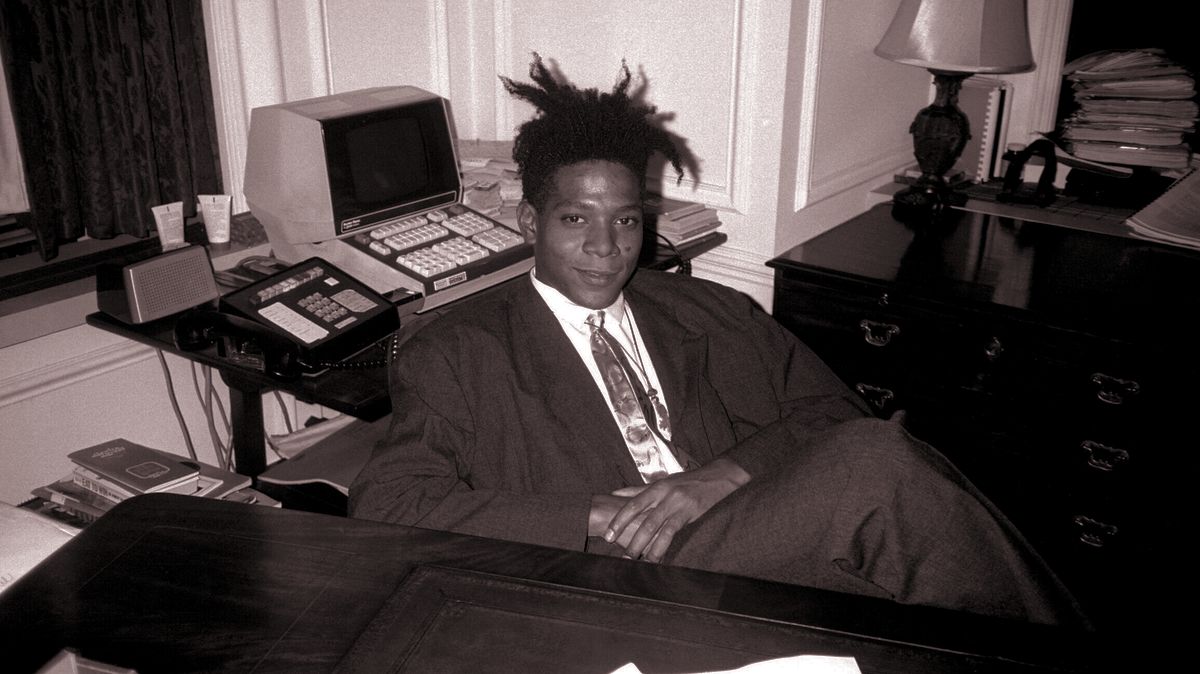
repair relations with the Kingdom of Denmark, tonight we’re heading to their Louisiana Museum of Modern Art, where Jean-Michel Basquiat’s Headstrong opens at the end of the week. The exhibition, at one of the world’s leading museums of contemporary art, is a very focused take on an artist who has had surprisingly little museum attention despite—or maybe because of—his central role in the market. More on that below the fold.
You know the drill: To become a
subscriber, sign up here. To get the in-depth, professional-tier Wednesday edition of Wall Power, you must upgrade to the Inner Circle here. Want to chat with me or get something off your chest? You can always reply to this email, or dial +1.917.825.1391 on SMS, WhatsApp, or Signal.
Also mentioned in this
issue: Julian Schnabel, Len and Emily Blavatnik, Andy Warhol, David Hockney, Pablo Picasso, Damien Hirst, Yayoi Kusama, Banksy, W.E.B. Du Bois, Anders Kold, Hilton Als, Julie Mehretu, John Cheim, Knud Jensen, C.J.
Jones, Philip Rebeiz, Wendy Williams, Laurence and Patrick Seguin, the Arora family, Peter Brant, the Schorr family, Nora Kohen and Alfredo Ghirardo, Patrick Dovigi, Jho Low, Yusaku Maezawa, Adam Lindemann, and more…
Before we get
started… |
- Two collectors battle for a Julian Schnabel: Sotheby’s London held a small online sale of contemporary art last week that totaled just under £1.3 million. By far the most successful lot in the sale was a very large—more than 8 by 5 feet—painting by Julian Schnabel, The sound of someone’s backbone snapping, from 1981, which had a giveaway estimate of £30,000.
Schnabel’s market has been reasonably active lately: A 1979
plate painting sold for nearly $1.3 million in May 2023, and an Untitled (Girl with No Eyes), from 2001, made almost $580,000 that November. But The sound of someone’s backbone snapping would not have appeared to be in very high demand. Nevertheless, it ended up selling for £228,000. When I
inquired into the motivation of the bidders, I was told they were “truly just two people wanting the same painting.” - The Courtauld is getting new contemporary galleries: The Courtauld announced today that Leonard and Emily Blavatnik’s foundation has donated an additional £10 million to the institute, which will help open new galleries dedicated to contemporary art. The new spaces are slated to
open in 2029 as part of the Courtauld’s expansion at Somerset House.
- Phillips’ London editions sale tops £3 million: Phillips’ London editions sale was 100 percent sold at £2.95 million ($3.96 million), up from £2.6 million ($3.58 million) the year before. The top lots were from Andy Warhol, David Hockney, Pablo Picasso, Damien
Hirst, Yayoi Kusama, and Banksy.
|
Now we can go to Denmark… |
|
|
A forthcoming exhibit of works on paper at Denmark’s Louisiana Museum of Modern
Art showcases the artist’s own version of Du Bois’s “double consciousness”—not least because he made these works to keep for himself. |
|
|
Browsing through the catalogue for Headstrong, the new Jean-Michel
Basquiat show opening on Friday at Denmark’s Louisiana Museum of Modern Art, I couldn’t help but think of the famous sociologist W.E.B. Du Bois’s concept of “double consciousness.” Du Bois had invented the term to capture how Black Americans—living under unique psychic, social, and cultural pressures—had to be cognizant of society’s hostility toward them while also nurturing their own authentic sense of self. In order to manage this duality, this awareness of being
watched while having to watch themselves, Du Bois posited that Black people had to develop two souls. Thus the title of his most famous book, The Souls of Black Folk.
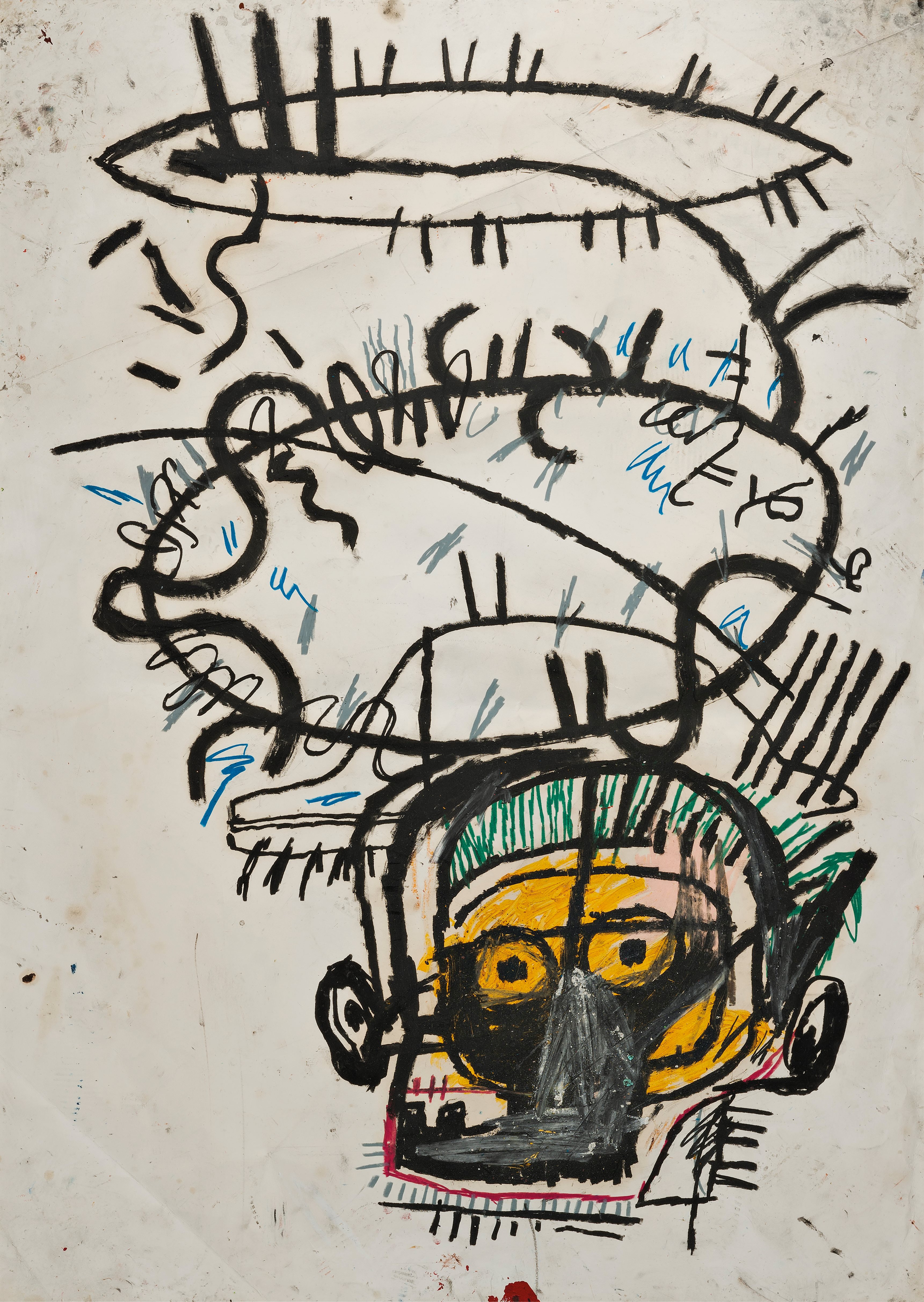
I thought I was being clever, but this idea comes up again and again in the catalogue of the 45 pieces in the show—works on paper depicting heads of figures that bear no resemblance to real people. The curator, Anders Kold, saw the drawings as “expressions of mental and even
existential states,” which also “express a desire to be seen for who you are and not to be judged by appearances.” The writer Hilton Als, a friend of Basquiat’s when both were young, described a self-portrait that “doesn’t look ‘like’ Jean, but rather some version of a self Jean might have seen through someone else’s eyes: It’s a funny picture about perception—yours.” The artist Julie Mehretu, citing Basquiat’s “struggle of
being a person of color in a violent and biased system,” said the artist plays with “the subconscious and the social … using text and mark-making as systems of thought and interrogation.”
Apropos of the theme of compartmentalization, or of nurturing one’s private identity, Basquiat kept these works for himself, and they were not seen publicly until after his death. He made them during the period from 1981 to 1983, when he also created some of his best and most valuable pieces in intense
jags of productivity. But he never sold this series of drawings. Instead, they were first assembled in 1990, two years after he died of a drug overdose, when John Cheim curated a show from his estate at the Robert Miller Gallery. Cheim pulled 27 heads from the works on paper and displayed them tightly arranged in three rows on one wall. |
Jean-Michel Basquiat, Head (1982-1983). Photo: Courtesy of Colour Themes
|
The impact was memorable. Nearly 30 years later, the Fondation Louis Vuitton’s major Basquiat
retrospective in Paris re-created the concept with a wall of heads lined up in two packed rows; the display was one of the most talked-about features of the show. The Brant Foundation created its own smaller version when the show made its way to New York in 2019. For an artist who makes an immediate connection with viewers, these works were among his most intimate and self-conscious. |
The Louisiana, which gets about 700,000 visitors a year, was established in 1958 by the Danish
businessman Knud Jensen as a true museum of modern art, encompassing paintings, drawings, sculpture, film, design, and architecture in “a snug little place up the coast,” as Kold put it to me on a Zoom call. “You can be in the park and look into the galleries, or be inside and look out at something in the park.” Kold and his museum are very artist-focused, and tend to approach their shows in a way that fits their space. “Our exhibitions are not ‘books hung on the
wall,’” he told me. “They are physically specific to the galleries. You have to calibrate the institution with the artist.”
And they’ve found it fruitful to examine artists through their works on paper. It’s an approach that began with a Philip Guston show in 2006 and has been refined through shows of George Condo, Richard Prince, and Robert Longo. With
Basquiat, Kold has added the element of narrowing the subject matter, too. “If you show 50 major drawings with the same motif,” he said, “you can figure out if he is a good artist or not.” That’s also made easier by the fact that Basquiat is a fairly specific kind of artist. “To me, Basquiat is a great painter,” Kold said. “But he is drawing when he is painting.” |
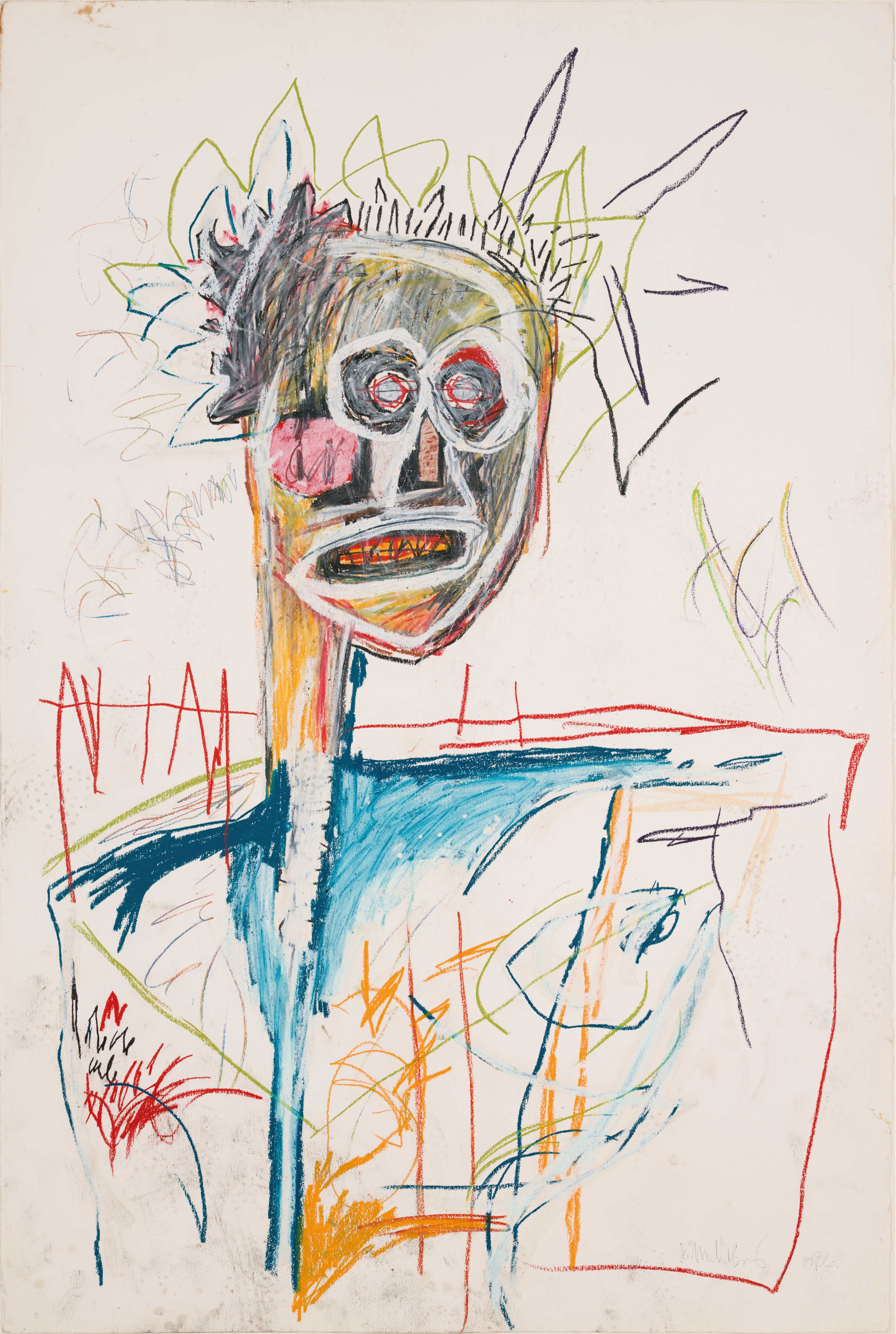
Jean-Michel Basquiat, Untitled (Man with Hat) (1982). Photo: Courtesy of Colour
Themes |
Kold explains in the catalogue that the idea for Headstrong emerged from his conversations
with art advisors C.J. Jones and Philip Rebeiz, whom he credits with activating a global network of clients to realize the exhibition. But he also delves into how the show is able to isolate what’s essential about Basquiat as an artist. Like Renaissance painters, Basquiat expresses the inner character of his subjects through their outer “physiognomy,” Kold says, citing the artist’s early exposure to Gray’s Anatomy. “Basquiat’s heads put all these
layered associations into play,” he writes, and, perhaps, “express a desire to be seen for who you are and not be judged by appearances.” |
The heads also play a unique role in Basquiat’s market. Unusually for an artist of such
international renown, few museums own Basquiat’s work. Of the 45 drawings in the show, only one is loaned by another museum. The rest come from private collections, including those of Wendy Williams; Laurence and Patrick Seguin; Britain’s Arora family; Peter Brant; the Schorr family, who were early collectors; Nora Kohen and
Alfredo Ghirardo; Patrick Dovigi; and many others not named.
Another former Basquiat collector is the notorious fugitive Jho Low, who got the work on paper Untitled (Head of Madman), from 1982, for $12 million during an art-buying spree in 2013, using money he had siphoned from the Malaysian 1MDB development fund. (The work is not included in the show.) Madman was resold
three years later for $9 million to satisfy a loan.
Low’s buying—and subsequent selling—should have been more of a setback to the Basquiat market. But the same year Madman was resold, Japanese entrepreneur Yusaku Maezawa entered the market, buying Basquiat’s huge untitled Devil canvas from collector Adam Lindemann for $57 million; the next year, he reset the market, buying an untitled painting of a head for $110
million.
At first, Maezawa appeared to be the only buyer. But over time, new collectors entered the Basquiat market, and during the doldrums of the last few years, the artist’s work has often seemed like the one entry point for new buyers unafraid to spend substantial money. Maezawa eventually sold both of his large Basquiats for significant profits after relatively short holding periods. Now, of course, it’s not uncommon to hear about Basquiat paintings selling for high-eight-figure and
low-nine-figure prices on the private market—an economic reality that leaves some buyers looking toward the works on paper for relative value. In 2020, an Untitled (Head), from 1982, sold for $15 million at auction. Four years later, another large work on paper sold for almost $23 million. |
I’m going to leave it there for today. Come
join us in the Inner Circle tomorrow for an interview with Josh Pullan, who runs Sotheby’s luxury business.
See you there,
M |
|
|
Puck founding partner Matt Belloni takes you inside the business of Hollywood, using exclusive reporting and insight
to explain the backstories on everything from Marvel movies to the streaming wars. |
|
|
The ultimate fashion industry bible, offering incisive reportage on all aspects of the business and its biggest
players. Anchored by preeminent fashion journalist Lauren Sherman, Line Sheet also features veteran reporter Rachel Strugatz, who delivers unparalleled intel on what’s happening in the beauty industry, and Sarah Shapiro, a longtime retail strategist who writes about e-commerce, brick-and-mortar, D.T.C., and more. |
|
|
|
|
JOHN OURAND & DYLAN BYERS |
|
|
Need help? Review our FAQ page or contact us for assistance. For brand partnerships, email ads@puck.news. You received this email because you
signed up to receive emails from Puck, or as part of your Puck account associated with {{customer.email}}. To stop receiving this newsletter and/or manage all your email preferences, click here. |
Puck is published by Heat Media LLC. 107 Greenwich St., New York, NY 10006 |
|
|
|