Welcome back to The Best & The Brightest. I’m Peter Hamby. Tonight, exclusive new
data on young men and their continuing drift from Donald Trump. It’s some of the most granular research yet from an ambitious Democratic project examining why young men flipped to Trump in 2024—and what Democrats can do to regain their trust.
Mentioned in this issue: John Della Volpe, Doug LaMalfa, Kevin McCarthy, Gavin Newsom, Marjorie Taylor Greene, Mike Johnson,
Sylvester Turner, Mikie Sherrill, MrBeast, Joe Rogan, R.F.K. Jr., J.D. Vance, Andrew Tate, Kristi Noem, Erika Kirk, Kamala Harris, Alexandria Ocasio-Cortez, Bernie Sanders, and more…
|
|
|
Glyphosate is backed by regulators worldwide
For 50 years, glyphosate-based products have been approved and reapproved by regulators in the U.S., EU, Canada, Japan and more.
Bayer stands behind these thousands of findings and legislative language that reinforces science-based processes and keeps labels uniform. At Bayer, we succeed when farmers succeed.
Learn more
|
|
|
 |
Abby Livingston |
|
- The LaMalfa shocker:
Rep. Doug LaMalfa, a Republican from far Northern California, died suddenly this morning, and the shock was felt everywhere on the Hill. LaMalfa was a well-regarded member, and colleagues from both parties expressed deep sadness over his death. He belonged to an old guard of Republicans who knew how to get along with Democrats, and was a loyalist to Kevin McCarthy, his fellow California Republican.Even so, Democrats were ruthless with LaMalfa
last year, when they obliterated his district amid the mid-decade redistricting push. His immediate successor will almost certainly be a Republican—Gov. Gavin Newsom is expected to set a special election in the late spring or early summer—but that person will likely lose their job in November, when the new Democratic-friendly congressional map snaps into place.
- Johnson’s incredible shrinking margin: For Republicans, one of the grimmer
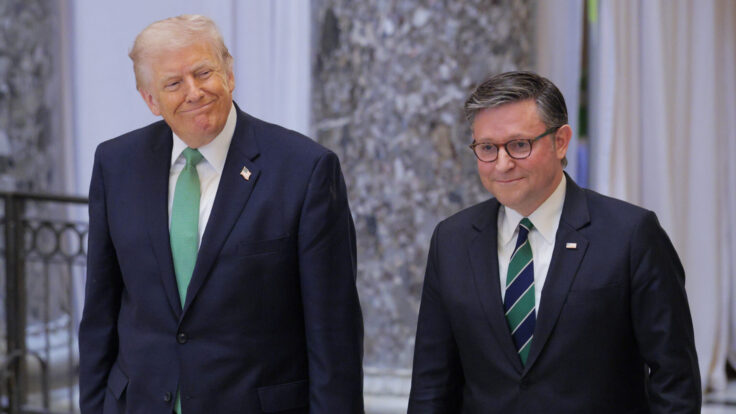
aspects of House life these days is that whenever a member dies or leaves office—LaMalfa is the first Republican and fourth member to die in office this term—Speaker Mike Johnson’s tiny margin gets even smaller. With LaMalfa’s death and Marjorie Taylor Greene’s resignation yesterday, the House is now divided 218-213, which means 216 is the new magic number for passing legislation.The size of that margin could increase Democratic leverage during future
negotiations. For most of this term, Democrats suffered with their own margin issue, as they slowly filled three vacancies created by member deaths. But with the Republicans’ headcount now reduced by two, even minor health issues or travel complications can lead to political migraines and frantic whipping on their side of the aisle.
There are currently several special elections on the calendar, aside from the race to replace LaMalfa: Greene’s old Georgia 14th district will be filled on
March 10; in Texas, the long slog to succeed the late Democrat Sylvester Turner will be determined on January 31; and on April 16, New Jersey will host a special election to replace now-Governor Mikie Sherrill, a Democrat, in New Jersey’s 11th district. Barring unforeseen circumstances, all of these seats are expected to stay in each party’s columns.
|
|
|
Now on to the main event…
|
|
|
The disaffected young men who helped elect Trump are fed up with high prices, worried about
A.I., and frustrated by the president’s neocon turn. And, according to exclusive new polling data, they’re souring on Trump just as they turned on Joe Biden.
|
|
|
After the Trump administration stormed into Venezuela to arrest Nicolás
Maduro, I waited eagerly for my colleague Julia Ioffe to weigh in with her typically insightful (and wry) analysis of foreign policy in the MAGA era. She delivered, outlining the myriad ways in which Trump has dialed back his supposedly isolationist views in favor of a “newfound zest for foreign intervention.” The
catalogue, so far this term: a strike against Iran’s nuclear sites; strikes against Houthi rebels in Yemen and Islamic State positions in Syria and Nigeria; and saber-rattling against Colombia, Mexico, and Denmark. Last year, Trump launched more missile strikes (626) than Joe
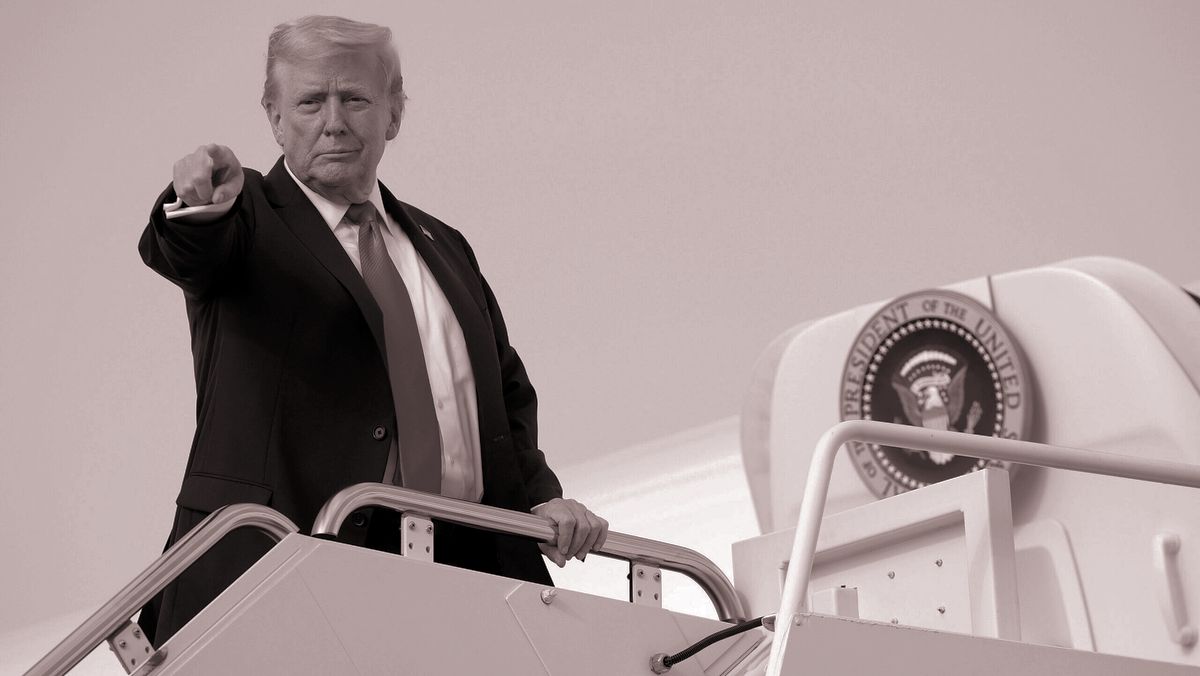
Biden did in his entire first term (555). The administration made its pivot abundantly clear on X this week, with the State Department posting an aggro image of Trump, declaring, “THIS IS OUR HEMISPHERE.”
|
|
|
Giving farmers the tools to succeed
What helps farmers? Competition in agriculture and streamlined regulations.
Because access to innovative tools means more choices for farmers and stronger food security for Americans. At Bayer, we succeed when farmers succeed.
Find out about farming innovation
|
|
|
As Julia pointed out, the MAGA faithful have mostly gone along for the ride. “What used to bill itself as a
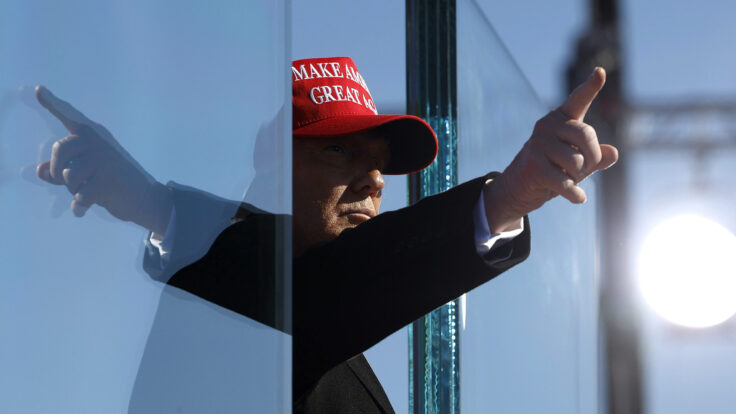
noninterventionist movement has deftly reformatted,” she wrote. But while the Trumpiest Republicans might love the pivot, MAGA alone didn’t get Trump elected. His 2024 math worked because independents and casual voters broke for him, too—and despite Trump’s victory lap this week, his military adventurism continues to put him crossways with one of the most important voting blocs that sent him back to the White House: young men.
In many ways, the drift of young men away from Trump this year
tells the story of why his presidency has hit the skids. Simply put, Trump continues to do things he wasn’t elected to do—and young male voters have noticed. This week, I received exclusive new data from a fresh, large-scale report conducted by Speaking With American Men (SAM), a multimillion-dollar research project created by Democrats in the
aftermath of 2024, that studies why young men shifted so dramatically to the G.O.P. The project is helmed by longtime youth polling expert John Della Volpe, who surveyed 4,211 young people between the ages of 16-29 from October 28 to November 6 for the second installation of The SAM Project’s ongoing study. It found that young men simply don’t trust the president anymore—a rupture that began with Trump’s Liberation Day tariff announcement last spring.
|
Last year, young men were typecast as a bunch of reactionary white “bros” who voted for Trump because of
podcasts, Zyn, misogyny, or whatever. Those were all real angles, sure—but they also conveniently whitewashed the whole story. Young men of all races and classes shifted to Trump, hoping that would bring down costs and help them access an economy that felt out of reach, Della Volpe told me. But prices haven’t gone down, and the president seems more focused on foreign policy than domestic affordability. In Della Volpe’s polling last spring, Trump’s favorability rating among young men was 56
percent; in his SAM survey shared with Puck, it now stands at 46 percent (and a lowly 36 percent among all young people). “The big picture is that Trump was getting the benefit of the doubt in the first 100 days of his term,” Della Volpe told me. “Now, they are reflecting on those policies several months later and seeing no significant improvement. And they’re saying that their situation is no better. In many cases, it’s worse.”
The survey also found that “avoiding unnecessary wars and
conflicts” is of paramount importance to young men: 78 percent of them said it “matters,” and 68 percent said they’d be more likely to support a candidate who avoids them. Young men also said that Democrats would avoid foreign wars compared to Republicans, by a five-point margin. Of course, the Trump administration would say that their Venezuela action was necessary, and Trump stressed this week, too, that the United States is not at war with the country. But when your administration
forcibly extracts a foreign leader from a heavily fortified compound, killing dozens of people in the process, that might seem like a semantic difference.
Meanwhile, only 27 percent of young men agreed that Trump is “delivering for people like you.” Forty percent said, “He talked big, but let people like me down,” while another 26 percent responded, “He’s made an effort but didn’t deliver.” During the campaign, the president positioned himself as a fighter in campaign ads and at
UFC events, but just 22 percent of young men agreed with the question, “Do you feel like Donald Trump is fighting for people like you?” (A combined 50 percent of young men said “no” or “not really” when asked the same question.) When asked to choose a description for Trump’s impact on the political system, only 40 percent of young men said, “He shakes things up and brings needed change.” But 47 percent said Trump “creates chaos and makes things worse.” If young men saw Trump as a change agent
last November, it seems they no longer do.
|
The SAM Project’s latest survey is also the rare high-quality poll that includes insights from 16- and
17-year-olds, many of whom will be eligible to vote in next year’s elections and in 2028. The new data is jam-packed with goodies for political junkies. To wit, among young men, Barack Obama registered the highest favorability rating of any public figure (56 percent), trailed most closely by MrBeast (55 percent) and Joe Rogan (53 percent). The only Republican who comes close to Trump’s favorability rating with
young men (46 percent) is Robert F. Kennedy Jr. (44 percent). Otherwise, young men give MAGA Republicans a favorability rating of just 32 percent. J.D. Vance has a lower favorability rating (33 percent) among young men than Andrew Tate (35 percent). Kristi Noem has an abysmal favorability rating—the same as incels (17 percent). The late Charlie Kirk remains
rather popular, with an 11 percent net approval rating among young men. His widow, Erika, though, is underwater at a –4 percent net approval rating.
|
|
|
By a single point, young men actually think Democrats are better on immigration policy than
Republicans, undercutting cocky White House aides proud of their deportation memes. But even though young men are turning on the G.O.P., they don’t hold the Democrats in very high esteem either. Only 18 percent of young men said the Democratic Party is “definitely fighting for people like you,” while 34 percent said Democrats are fighting “maybe a little.” Kamala Harris is underwater with a –11 percent net favorability rating with young men, and
Alexandria Ocasio-Cortez is at –2 percent. Likely presidential contender Gavin Newsom, who has made a push to bro out on his eponymous podcast, has only a 26 percent favorability rating among young men. Surprisingly, Bernie Sanders’ favorability rating with 16-29-year-olds overall is just 39 percent—and 40 percent among men—suggesting his appeal to Millennials hasn’t translated to the youngest generation. “He’s seen as part of the system now,”
Della Volpe told me.
The Bernie number gets to a crucial insight about young men. For them, Della Volpe told me, conventional politics are not really top of mind. That’s because they haven’t seen politics deliver for them in their lifetimes. Instead, their perspectives are based on the pressures they face in their everyday lives, both economically and existentially. In the poll, only 28 percent of young men identified as Republican, and just 19 percent identified as Democrat. The rest
identified as unaffiliated or independent. A slight majority (52 percent) said they did not consider themselves to be politically engaged. “What we have found is that young men think they’re doing what society wants, which is be providers and be protectors,” Della Volpe told me. “But they don’t feel respected by the political institutions and the process. A big reason for that is they weren’t really targeted or communicated with writ large by political leaders, other than Trump and his types,
until recently.”
|
The survey also revealed an enormous amount of anxiety about affordability and what it means to be successful
in America. Men listed groceries and rent or housing as the top items they’re most stressed about paying for. They said political leaders have almost no respect for trade jobs or the working class. Almost half of young men (49 percent) said they wanted political leaders in both parties to do more to “prepare workers for the future of A.I.” Many also described their fondness for cryptocurrencies as a pathway to creating wealth in a world with few opportunities to do so. (And speaking of their
digital lives, the survey found that 87 percent of young men play video games weekly—with 51 percent saying they game for three hours a day or more.)
These frustrations can lead to resentment, the SAM survey found, which are some of the feelings that Trump tapped into last year while reaching out to men on podcasts and YouTube shows. “Breitbart got it half-right,” Della Volpe said. “Politics doesn’t flow only from culture, it also flows from the daily experiences shaping young people’s
lives.” A large majority of young men, 67 percent, said that “society puts too much pressure on men to act a certain way”; 57 percent said, “I’ve held back my opinion because I was worried how people would react”; and 51 percent said, “Sometimes I feel blamed for just being a man.”
Based on his survey research and modeling, Della Volpe bundled young men into five different cohorts, trying to categorize them in a more nuanced way than the usual left-right spectrum. Among these groups, the largest he
identified—the “Resentful Strivers”—made up 29 percent of young men. This cohort might be right-leaning, but mostly because they feel like their efforts are undervalued at work, at school, and with women and family. They aren’t ideological, nor are they purebred conservatives or lifelong Republican voters. They mostly just feel ignored. “These men are resentful that they’re working hard and not being recognized, through financial gain or financial stability or through politics,” Della Volpe told
me. “But I believe they are center-based, non-ideological, and they are shifting right because they feel let down by the left.”
Della Volpe added that these are gettable votes for Democrats, or any politician that lends them an open ear. “I truly believe—and I sliced and diced this thing for hours—it really is far more about experience than ideology,” he continued. “They care about the environment, they care about access to healthcare, they care about not entering unnecessary wars, they
care about corruption. There is an opportunity for Democrats to establish a relationship that can potentially be turned into political persuasion messaging, and mobilization messaging, in the coming years.”
|
|
|
Unique and privileged insight into the private conversations taking place inside boardrooms and corner offices up and down Wall
Street, relayed by best-selling author, journalist, and former M&A senior banker William D. Cohan.
|
|
|
Finally, a media podcast about what’s actually happening in the media—not the oversanitized, legal-and-standards-approved
version you read online. Join Dylan Byers, Puck’s veteran media reporter, and Julia Alexander, a longtime media analyst, as they sit down with TV personalities, moguls, pundits, and industry executives for raw, honest, sometimes salacious conversations about the business of media and its biggest egos. New episodes publish every Tuesday and Friday.
|
|
|
Need help? Review our
FAQ page or contact us for assistance. For brand partnerships, email ads@puck.news.
You received this email because you signed up to receive emails from Puck, or as part of your Puck account associated with {{customer.email}}. To stop receiving this newsletter and/or manage all your email preferences, click here.
|
Puck is published by Heat Media LLC. 107 Greenwich St., New York, NY 10006
|
|
|
|






_01K77C0D9VDDGVNNP1DBKASPB4.jpg "Bayer")