Hello and welcome back to The Best & The Brightest. I’m Leigh Ann
Caldwell.
Hope everyone had a good weekend while the Senate stayed in town to discuss how to end the shutdown. They took no votes on Friday (which, yes, is part of the Senate weekend) or Saturday, but things were happening behind the scenes—including senators mostly ignoring President Trump’s rants on social media about the filibuster and eliminating the Affordable Care Act. I’ll have details on the latest below.
I also have a bit more insight into the
conversations and fretting happening among Democrats as they continue to celebrate Tuesday’s election walloping. Yes, it was a good night for the party, but that doesn’t mean they’re clear about the path forward.
But first… |
- Democrats
reach shutdown deal: A deal has been reached to end the government shutdown, according to two sources familiar with the situation. The agreement, which will have the support of at least 10 Democrats—enough for the agreement to pass—doesn’t make any changes to the Affordable Care Act, which Democrats had been demanding as subsidies expire at the end of the year. However, it does give Democrats the guarantee of a vote to provide relief for skyrocketing healthcare prices—and, in the
event of G.O.P. objections, the ability to blame Republicans heading into an election year for failing to address rising healthcare costs.
The deal, notched Sunday evening after a long weekend of accelerated negotiations, comes as the shutdown reached its 40-day mark, and more than 40 million Americans didn’t receive their SNAP benefits, federal workers went more than a month without pay, and thousands of flights were delayed or canceled amid snarled air traffic.
New
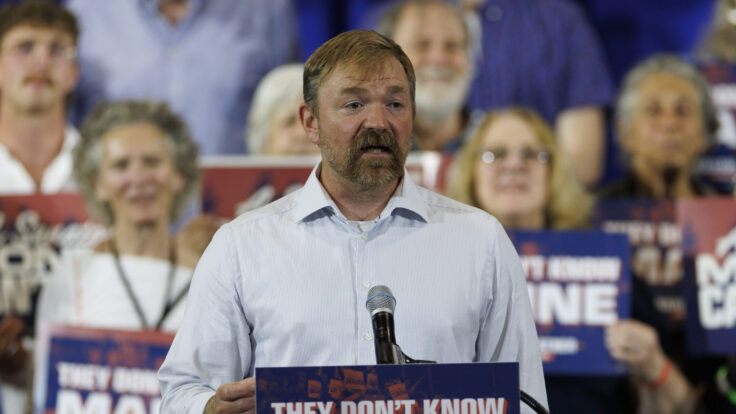
Hampshire Democratic Sens. Jeanne Shaheen and Maggie Hassan, along with Maine independent Angus King, led the negotiations with Republicans and Senate Majority Leader John Thune, the two sources said. The deal is dividing Democrats, however, putting the centrist wing at odds with more liberal members who, after last week’s elections, have been
emboldened to keep fighting until they secure a major policy win—i.e., extending the A.C.A. subsidies.
The deal includes the passage of three of the 12 yearlong funding bills, covering veterans programs, SNAP benefits, and the legislative branch, alongside an extension of government funding through January. A commitment to a vote on a Democratic plan to extend the A.C.A. subsidies before December is part of the deal, too, with Democrats eyeing the January 30 funding deadline as
leverage if Republicans don’t keep their end of the bargain. The deal also includes hiring back all federal workers fired during the shutdown, and guarantees that more federal workers can’t be fired through 2026 if the government were to close again. Plus, it guarantees that SNAP benefits will be paid in the event of a future shutdown in the next year, and funded at a higher level in 2026, giving food stamp recipients additional support.
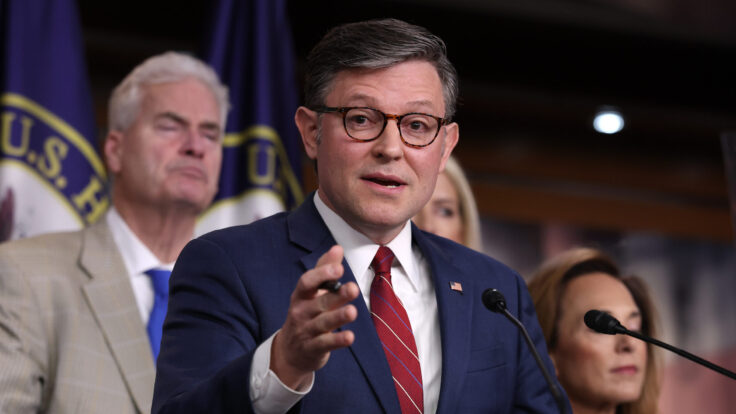
House Speaker Mike Johnson
and the Republican-led House—which hasn’t worked in more than 50 days—will have to come back and accept this deal, or else be held squarely responsible for extending the shutdown.
Meanwhile, Trump isn’t a key part of the negotiations—he held another fancy party at Mar-a-Lago this weekend and attended the Washington Commanders football game, where he bragged about the “greatest” military flyover ever, all while continuing to fight having to pay SNAP benefits. And senators
mostly ignored his demands to eliminate the filibuster and essentially scrap the Affordable Care Act by redirecting healthcare money straight to Americans. Obviously, neither were serious proposals, but they demonstrated Trump’s unwillingness to be a serious player here.
|
|
|
Last year, Instagram launched Teen Accounts, which default teens into automatic protections. Now, a stricter “Limited
Content” setting is available for parents who prefer extra controls. Instagram will continue adding new safeguards, giving parents more peace of mind. Learn more. |
|
|
-
Ohio’s Tim Ryan chatter: Democratic strategists expect a surge of new midterm candidates to join the fray up and down the ballot, after the results of last week’s elections proved that voters are thirsting for change. Among the first new recruits to arrive could be former Ohio congressman Tim Ryan, who lost the 2022 Senate race to JD Vance.
I was on a panel with Ryan on MSNBC last week when he said he was reconsidering a run for
governor, which he had ruled out earlier this year. Ryan didn’t respond to texts asking for more details, but it’s clear that politicians on both sides of the aisle are reacting to the evolving facts on the ground. The day after the election, Vivek Ramaswamy, the leading Republican candidate for governor, posted a video calling on the G.O.P. to refocus on affordability issues and drop the culture war clickbait—a sign that he’s feeling less confident about his prospects in Ohio
than he was just a few days earlier.
Indeed, it’s clear to almost everyone, except perhaps Trump, that Tuesday was a referendum on both the president and the cost of living. “People are way more pissed than I thought they were,” said Democratic political strategist Chuck Rocha, who knocked on doors in Newark and parts of northern New Jersey with dense Hispanic populations. Rocha said that the Latinos he spoke with were angry in particular about the costs
of their insurance premiums, beef, coffee, and electric bills—an anecdote that matches exit polls and other surveys. In Passaic County, a 45 percent Latino area that Trump carried by three points in 2024, Mikie Sherrill won by 15 points.
|
And speaking of Democrats… |
|
|
After last week, ebullient Democrats gathered in Washington to plot how to instill the
lessons of the election: make room for disagreement, run younger candidates, dump the litmus tests, and hammer Trump on affordability. |
|
|
On Friday, evangelists of the Democratic Party gathered at the first annual Crooked Con in Washington—a
two-day conference hosted by the Pod Save America bros. The idea was to showcase top party strategists and the “least annoying” politicians—mostly the younger crop of senators and House members—and discuss the future of the Democratic Party, which is obviously undergoing its most significant generational shift in decades. The gathering also served as an impromptu celebration: One year after Trump walloped Kamala and Republicans took over Washington, the
party has regained some of its swagger.
Yes, there were a few tense moments. The “Are We Having Fun Yet?” panel began as a conversation about how the party repelled moderate, white, and male voters by doubling down on lefty litmus tests that turned off a large swath of America. But Pod Save co-host Jon Lovett and The Bulwark’s Tim Miller broke into an argument with commentator Hasan Piker about Israel’s influence and how Zohran Mamdani has handled the issue. Their disagreements spotlighted a debate still roiling the party despite a successful off-year election, when Democrats won big in blue states, cities, and counties, and improved their showing in nearly every red territory. Barack Obama, the surprise guest on Thursday night, summed up the prevailing sentiment, saying, “Tuesday was nice,
but we’ve got a lot of work to do.” |
|
|
Instagram Teen Accounts default teens into automatic protections for who can contact them and the content they can
see.
Nearly 95% of parents say Teen Accounts help them safeguard their teens online. And we’ll continue adding new protections, giving parents more peace of mind. Explore our ongoing work to keep teens safe online. |
|
|
As D.N.C. chair Ken Martin told me, Democrats are indeed riding high after
Tuesday. “It was a real ass-kicking,” he said. Still, the party will have to work through some of the tensions within the coalition, like disagreements over Israel. While Democrats have united around a focus on affordability, progressives have pointed to Mamdani’s win as proof that far-left democratic socialist ideas can appeal to their party’s voters. For their part, moderates have cited Abigail Spanberger and Mikie Sherrill’s victories as proof that moderate
candidates can still win statewide. Of course, they’re both right: With Trump’s favorables dropping and prices continuing to rise, there’s plenty of space for different flavors of Democrats to succeed. “A lot of different types of Democrats won on Tuesday night, and that’s exactly the point,” said Rebecca Katz, a Democratic consultant and founding partner of Fight Agency.
The biggest challenge for the party is whether it can become a bigger tent and ditch some of the
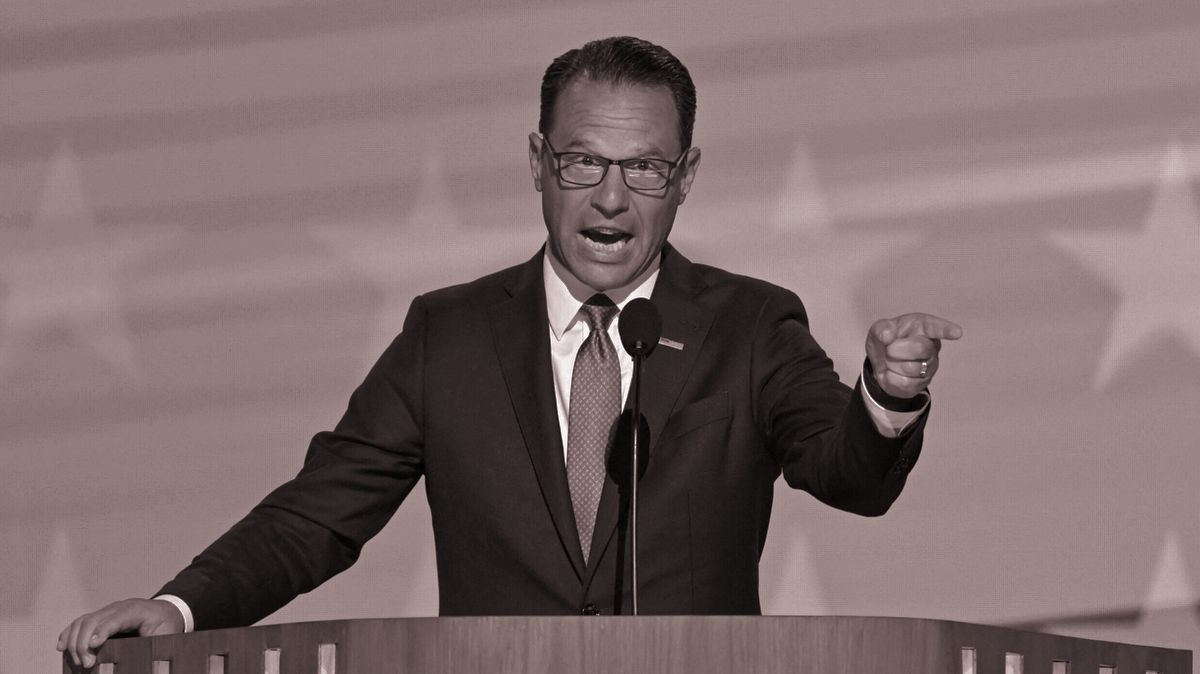
litmus tests that defined the last decade—when progressives primaried moderate incumbents so often that, in 2021, Reps. Hakeem Jeffries and New Jersey’s Josh Gottheimer created a super PAC to defend against attacks from the party’s left. Contentious primary races in key Senate races, including in Maine and Michigan, will test the party’s unity as progressives challenge more establishment, moderate candidates. But as evidenced by
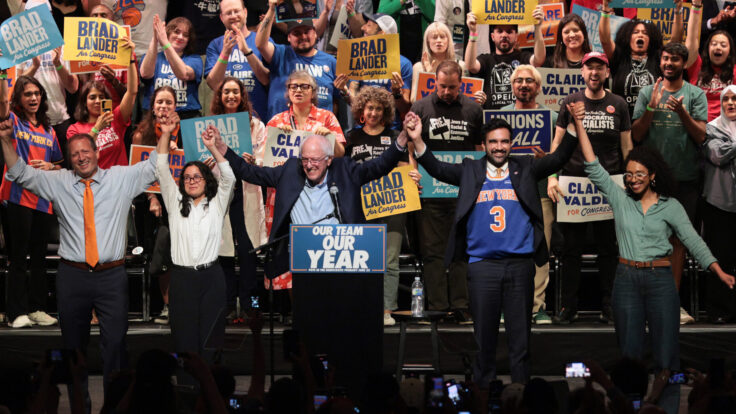
Mamdani’s upset over Andrew Cuomo in New York and Graham Platner’s ascendance in Maine, party gatekeepers don’t have the same pull that they once did.
Of course, success in an off-year doesn’t always translate to big victories in a midterm. Republicans did very well in the 2021 election, winning all three statewide races in Virginia and barely losing the gubernatorial election in New Jersey, just one year after Biden won the
state by 16 points. But in the midterms the following year, Republicans performed far worse than expected, barely winning the House and failing to pick up the Senate. |
So many of the party’s enduring flash points—over Israel, political tactics, more populist rhetoric,
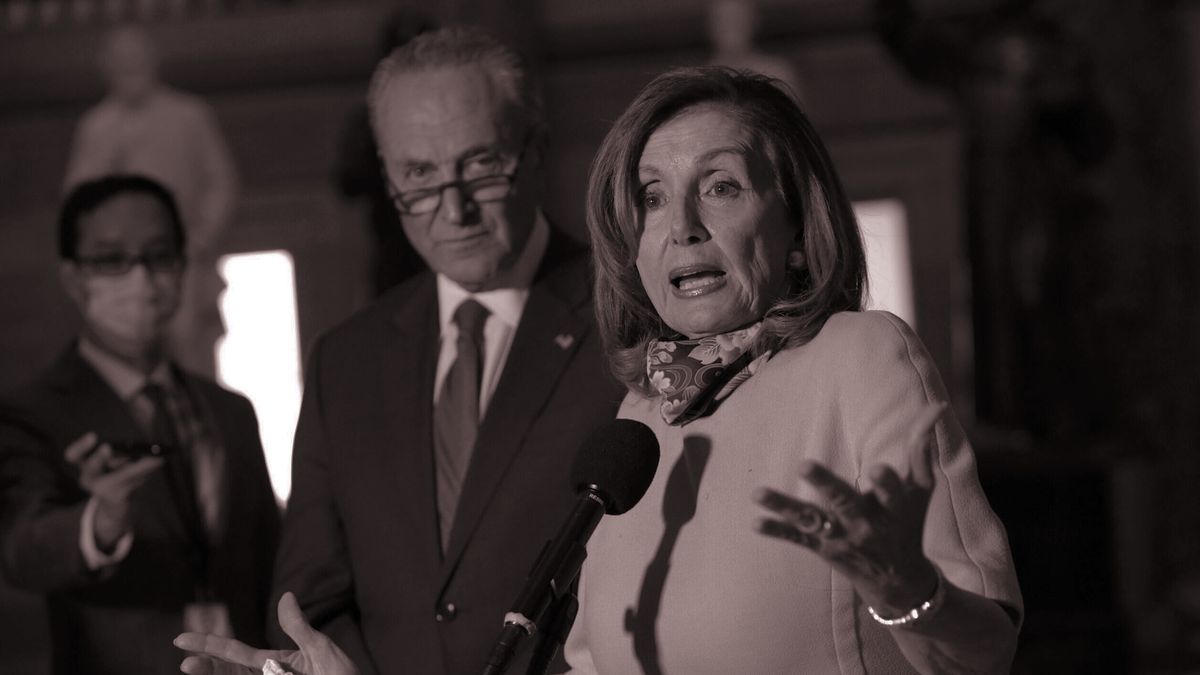
etcetera—might eventually be resolved, at least in part, by the monumental generational shift underway. Former House Speaker Nancy Pelosi announced this week that she will be retiring. Chuck Schumer will almost certainly face a primary in 2028 if he doesn’t retire, himself. Spanberger (age 46) and Sherrill (a youngish 53) were both part of the House class of 2018, which got into politics because of Trump. They may have different instincts than
Mamdani or even Gavin Newsom, but the new guard is united by having risen to national prominence in a far more polarized era. |
|
|
Pelosi, to her credit, has recognized the need for change. While the 85-year-old speaker emerita has come to
be viewed by many as representative of the most calcified aspects of the old guard, she also recruited Spanberger and Sherrill in 2018, and was instrumental in getting Biden to step aside last year. And, as one of her last acts, she played a crucial role in helping California Democrats redistrict Republicans out of their seats—the sort of radical power play that had been resisted by institutionalists of her vintage.
Pelosi’s retirement could also lead to a wave of retirements in
the House. On Friday, Pelosi’s longtime number three, Rep. Jim Clyburn (age 85), told CNN’s Kasie Hunt that he’s considering retirement, and will make a decision by the end of the year. Rep. Steny Hoyer (age 86), her longtime number two, is mulling retirement as well, and Democrats are speculating that others from Pelosi’s crew, including Rep. Zoe Lofgren (age
77), are also preparing to walk away. In the Senate, Richard Durbin (age 80) and Jeanne Shaheen (age 78) are both leaving at the end of the Congress.
Schumer, for his part, hasn’t addressed his plans to run again. But Democrats expect Schumer will retire, and those who know him say the more pertinent question is whether he’ll remain leader after the 2026 election or, like Mitch McConnell
and Pelosi, step down and finish out his career as a rank-and-file member. His decision might hinge on the outcome of the midterms and the performance of the candidates he recruited, including North Carolina’s Roy Cooper (age 68) and Maine’s Janet Mills (age 77). Meanwhile, at Crooked Con, scattered boos rang out from the crowd when Lovett mentioned Schumer; later, Lovett said it was the third time in 48 hours that he’d heard
boos at the mention of Schumer’s name at a Democratic conference.
And yet, even now, there are some in the party who dispute the very idea of lingering generational tensions. “The biggest divide and frustration within a party is between those who are actually fighting and using the power they have to make a difference in this moment, and those who are sitting on the sidelines,” Martin told me. “What people thirst for right now are fighters.” |
|
|
Join Emmy Award-winning journalist Peter Hamby, along with the team of expert journalists at Puck, as they let you in on the
conversations insiders are having across the four corners of power in America: Wall Street, Washington, Silicon Valley, and Hollywood. Presented in partnership with Audacy, new episodes publish daily, Monday through Friday. |
|
|
Unique and privileged insight into the private conversations taking place inside boardrooms and corner offices up and down Wall
Street, relayed by best-selling author, journalist, and former M&A senior banker William D. Cohan. |
|
|
Need help? Review our
FAQ page or contact us for assistance. For brand partnerships, email ads@puck.news.
You received this email because you signed up to receive emails from Puck, or as part of your Puck account associated with {{customer.email}}. To stop receiving this newsletter and/or manage all your email preferences, click here.
|
Puck is published by Heat Media LLC. 107 Greenwich St., New York, NY 10006 |
|
|
|