 |
|
Happy Martin Luther King Jr. Day, I’m Eriq Gardner.
|
|
Welcome back to The Rainmaker, a private email about money, power, fame, and their intersection with the law.
This week, I’m revisiting the conviction of Pras Michel. The Fugees rapper is now facing 20 years in prison for covertly attempting to influence two presidential administrations, and he isn’t going quietly. His criminal case has seen some recent twists, and it all led to a pretty extraordinary evidentiary hearing this past week in the nation’s capital.
P.S. If someone else forwarded you this email, and you’d like to continue receiving this newsletter, click this link.
But first…
|
|
|
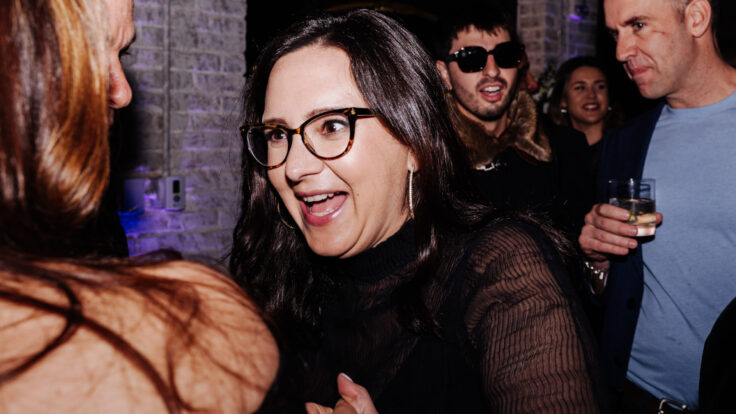
- Ackman’s defamation drama: Like many, I've been closely monitoring the intensifying clash between Bill Ackman and Business Insider over the publication’s articles alleging that his wife, former M.I.T. professor Neri Oxman, plagiarized in her 2010 dissertation. Ackman is now hinting at an imminent lawsuit, but I share the deep skepticism of those questioning whether the billionaire’s better half can convincingly prove falsity, given her acknowledged lapses in citation, a problem whose extent appears to be growing by the day. A defamation case in a New York court would also likely face challenges without a demonstration of actual malice, despite Ackman’s suspect contention that his wife is a private figure who need only show negligence.
However, those dismissing Ackman’s legal maneuverability might be underrating the Pershing Square founder’s capacity to exert legal pressure. While New York boasts a robust anti-SLAPP law designed to dismiss frivolous cases, it’s worth noting that B.I. is owned by the German publishing conglomerate Axel Springer. If I were Mathias Döpfner, I might be more apprehensive about German defamation law, where the burden of proof rests on the defendant to demonstrate truth (as opposed to the plaintiff proving falsehood), and where insults can lead to fines and even imprisonment. While there are American laws designed to counter such libel tourism, and Ackman might think twice about exposing his household to discovery, the complexity of this situation should not be underestimated.
- Goodell trouble: I’m told that those in paywalled houses shouldn’t throw stones at Peacock for having exclusive rights to an NFL playoff game, but I can’t help myself. After all, Saturday night’s clash between the Kansas City Chiefs and Miami Dolphins came less than 48 hours after a federal judge ruled that NFL teams are not immune from antitrust liability for the way they pool telecasting rights and eliminate competition between themselves. But for mutual agreement, the Chiefs and Dolphins could be separately licensing their game broadcasts. Of course, that would be a huge change. Guess what? U.S. District Court Judge Philip Gutierrez heard the NFL’s argument that this alternative arrangement would destroy the league’s broadcast model, and decided it’s an issue that’s best reserved for trial. As such, a six-week trial is tentatively set to begin in late February.
Will we actually witness such a proceeding, which would be absolutely consequential across the media landscape given the supremacy of live football? Time will tell. With billions at stake, this could be the moment that Roger Goodell starts earnestly negotiating a settlement with class-action lawyers.
- Newman’s own restraining order: You know the name, and you undoubtedly recognize the face, but will Paul Newman be gracing our presence anywhere beyond the realm of food product packaging? That question currently rests with a Connecticut judge after the late actor’s grown children quietly brought a motion for a restraining order upon discovering his visage on a hairbrush. I’ve previously covered the dispute between Newman’s heirs concerning Newman’s Own, the charitable entity endowed with the rights to his name and image. Now that the popular brand is apparently seeking to push its boundaries, Newman’s daughters are arguing that it not only flouts the trust’s explicit provisions, but also runs contrary to the underlying ethos. A hearing in Stamford has been set for Friday.
- Disney’s big settlement: Disney has successfully vanquished the legal battle brought by TSG Entertainment, the financier behind Avatar 2 and Deadpool, concerning alleged financial misconduct. The dispute has just settled on confidential terms, I’ve learned. TSG alleged that Disney, following its acquisition of 20th Century Fox from Rupert Murdoch, renegotiated an output pact with HBO so that it could take its hits to Disney+ and Hulu. TSG claimed it was jilted by the new arrangement, and alleged some $40 million in accounting errors. Disney has now managed to pay its way out of this sticky situation.
|
 |
| A Fugee’s Legal Reunion |
| Another surprising bend in Pras Michel’s tragic quest to reclaim his name, and $75 million, in the face of seemingly endless legal woes. |
|
|
|
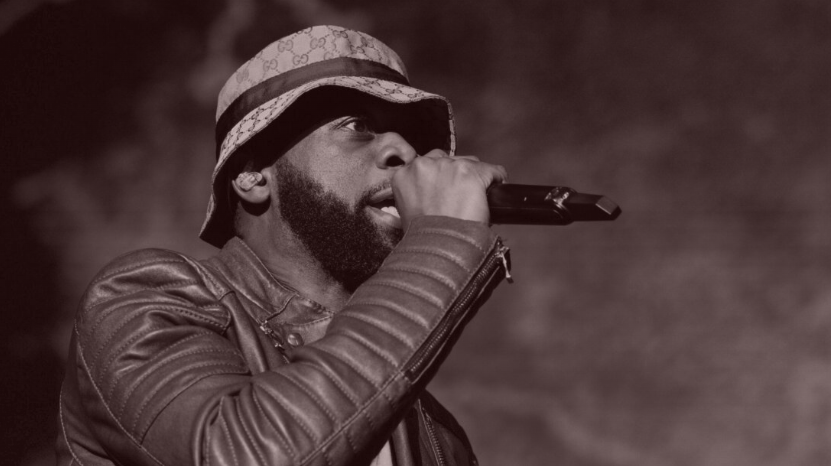
| Every great song deserves a remix, and legal proceedings are no different. Consider last year’s trial of Pras Michel, the founding member of the Fugees who now faces 20 years in prison after being convicted of participating in a conspiracy. Michel’s legal odyssey revolves around his association with Jho Low and getting mixed up in illicitly funneling millions of the shady Malaysian social climber’s dollars into Obama’s 2012 re-election campaign. Subsequently, Michel tried to convince the Trump-era Department of Justice to back off its pursuit of Low for raiding Malaysia’s 1MDB sovereign wealth fund. Separately, Michel, prodded by Low, aided a scheme to have the Trump administration extradite Chinese dissident Guo Wengui to please China. Now, the pressing concern is whether the politically unsavvy Michel got a raw deal when he became one of the very, very few individuals in American history to be convicted of serving as an unregistered agent of a foreign power.
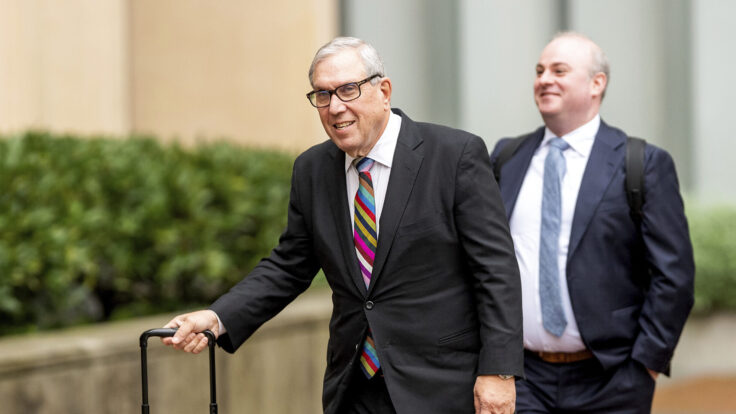
This past week, D.C. District Court Judge Colleen Kollar-Kotelly presided over an extraordinary hearing that probed whether that conviction should be vacated due to the alleged shortcomings of Michel’s octogenarian attorney, David Kenner. It was, in a sense, a trial about a trial—a proceeding that lifted the veil of usual secrecy between client and lawyer to dissect Kenner’s performance eight months ago. The prosecution found itself in the unusual position of defending the work of Michel’s former attorney, a departure from last year’s trial, which featured notable figures like Leonardo DiCaprio and former Attorney General Jeff Sessions testifying about Low’s rise and lifestyle, all the back-channel lobbying efforts, and Michel’s connection to the affair. This time, the witness stand was reserved to those with an insider’s view of the trial preparation.
The hearing took a broad view of Kenner’s work but featured the modish topic of how the veteran attorney used artificial intelligence in his closing argument. During the April 2023 trial, Kenner tasked Eyelevel.AI, a program that was fed transcripts of the trial, to craft a passionate summation incorporating “Ghetto Supastar,” Pras’s 1998 smash. Instead, the program spat out a closing that featured “I’ll Be Missing You” by Diddy, a seemingly harmless but foolish error that reached jurors just before they began deliberating Michel’s fate. Despite this, a couple of weeks after the guilty verdict, Eyelevel’s makers issued a press release trumpeting how their technology “made history” as the first use of generative A.I. in a federal trial.
Michel’s new attorneys at ArentFox Schiff seized on the involvement of A.I. in this case, a stratagem that tracks federal judges’ growing unease with the emerging technology. In court briefs, they accused Kenner of not only relying on Eyelevel.AI to ghostwrite his closing, but holding a financial stake in the technology. Unfortunately for Michel, much of this appears exaggerated. As Judge Kollar-Kotelly heard for herself this week, Kenner holds no such stake, and whatever Eyelevel generated amounted to a very tiny piece of the overall closing argument. As e-discovery expert Alon Israely told Michel’s legal team during the hearing, “This A.I. business makes for good press, but I think you are grasping at straws.” |
|
|
| Why does Michel face 20 years in prison while everyone else connected to the scandal has gotten off lightly? Low is still at large. Other peripheral figures connected to the back channels of Low and the Chinese have skated—the lobbyist Elliott Broidy got pardoned, the casino mogul Steve Wynn beat a civil suit, and Hawaiian businesswoman Nickie Lum Davis is facing just two years of prison time, which she’s now appealing.
Michel’s predicament might partially be explained by rejected plea offers, but attributing his particular misfortune to inferior legal counsel is equally plausible. Kenner brought a half-century of trial experience to the table, including having famously helped Snoop Dogg beat murder charges back in 1996. However, the solo practitioner had little experience defending a complex political corruption case. And in the months leading up to the trial, Kenner lost motion after motion and spent quite a lot of effort on a quixotic quest to compel both Obama and Trump to appear as witnesses.
At the hearing, Kenner testified that his overarching strategy was to highlight Michel’s “political naivety” and steer the jury’s focus toward his client’s lack of intent to violate campaign finance laws and the Foreign Agents Registration Act. While that strategy makes some sense, Michel’s new lawyers hammered Kenner for failing to bring any legal experts to the witness stand to make subtle points about the law. Additionally, Kenner didn’t object when Broidy, Wynn, and others were called “co-conspirators” during the original trial and had a lot of their uncharged behavior recounted to the jury, raising the possibility that Michel got convicted for the activities of others.
Could Kenner have done more to preclude prejudicial testimony? Perhaps. The lawyer explained that he hadn’t objected because he believed such testimony would end up being helpful in distinguishing Michel’s small role in the ordeal, although he conceded that he should have raised some fuss about how a testifying F.B.I. agent had framed the conspiracy discussion.
If the hip-hop star stands any chance of winning a new trial based on the proposition he received ineffective counsel, it’s probably here. That said, it certainly seems like quite a long shot. Despite his shortcomings, Kenner didn’t come across as incompetent. In fact, the 82-year-old insists he still hopes Michel will prevail. He told the judge, “I’m on team Pras.”
But I don’t think anyone should underestimate the money factor in this mess. One startling revelation from this week’s hearing pertained to Kenner’s personal investment in the case. The attorney was originally paid a $750,000 flat fee for what became three years of work, and then found himself continually chasing his client for promised expenses. When Michel was slow to pay up, Kenner put up a whopping $1.4 million of his own money to cover the bills and has not been repaid. Yet, on the eve of trial, Kenner told Bloomberg Businessweek, “Some have advanced the notion that Pras was hurting for money and that might [show] a motive to become involved in those matters that led to this indictment. Nothing could be further from the truth.”
One of my pet theories about this case is that Michel turned down the government’s plea offers because he hoped to recover about $75 million that the government had seized from his bank account after tracing those funds (along with gifts to DiCaprio and funding for Wolf of Wall Street) to 1MDB. Michel, who by most accounts leads a lavish lifestyle, is currently challenging the seizure of this money, claiming he’s an “innocent owner” of the fortune. Michel has also attempted to fund his legal defense by pitching a share of that $75 million to investors. In order to secure loans to cover his mounting debts, according to court documents, he’s also offered his songwriting earnings and life story rights as collateral, while allegedly presenting forged documents to lenders.
All of which is to say, I have absolutely no idea what caused a big firm like ArentFox to make an appearance in the case to attempt to get the music star a new trial. (Former Alabama Senator Doug Jones, a partner at the firm, is reportedly set to join Michel’s legal team, but I didn’t see him at the hearing and he hasn’t made an appearance in the case yet.) Michel’s rep dodged my inquiry, but I bet there’s a really good story behind the arrangement. |
|
|
| That’s all for today, although I enjoyed all the comments I got after my analysis last week of The New York Times’ lawsuit against OpenAI. Some of you thought I was off my rocker, while others asked excellent follow-up questions about copyright law. I even received one report from an A.I. company that specializes in predicting judicial outcomes. According to Pre/Dicta’s model, OpenAI’s motion to dismiss will be granted—a result I’d find very surprising indeed. While I expect the Times to have setbacks in the case, I’d be shocked if the publication didn’t at least survive a motion to dismiss. We’ll see. In the meantime, keep those comments coming! |
|
|
|
| FOUR STORIES WE’RE TALKING ABOUT |
 |
| A.I. & Its Times |
| On OpenAI eating the internet and a blueprint for a media-Silicon Valley detente. |
| BARATUNDE THURSTON |
|
 |
| Hollywood’s Dude Slump |
| Female-skewing films dominated the ’23 box office. So why are studios still banking on so much superhero I.P.? |
| SCOTT MENDELSON |
|
 |
| Lionsgate's Lifeline |
| The studio is trying to catch the eye of a streaming suitor, but first it need to drop the Starz dead weight. |
| MATTHEW BELLONI |
|
 |
|
|
|
|
|
 |
|
|
|
Need help? Review our FAQs
page or contact
us for assistance. For brand partnerships, email ads@puck.news.
|
|
You received this email because you signed up to receive emails from Puck, or as part of your Puck account associated with . To stop receiving this newsletter and/or manage all your email preferences, click here.
|
|
Puck is published by Heat Media LLC. 227 W 17th St New York, NY 10011.
|
|
|
|