 |
|
Happy Monday, I’m Eriq Gardner.
|
|
Welcome back to The Rainmaker, a private email about money, power, fame, and the law—basically, everything you need to know before starting a rap beef.
In this week’s edition, is it really illegal to impersonate a YouTube executive? Thanks to the impending Carlos Watson trial, we’re about to find out. Plus, the $4 billion Ryan Kavanaugh merger nobody is talking about, the lawyers going nuclear on Clare Locke, Shari Redstone’s Rhode Island problem, Rob Gronkowski vs. Mark Cuban, Amazon quietly suing a screenwriter, and finally, could Kendrick Lamar’s rap battle with Drake wind up in court?
Programming note: This Thursday at 3 p.m. ET, I’ll be doing an Inner Circle call to break down the latest twists in the Donald Trump hush money trial. Want to join? Upgrade your membership if you haven’t already, and email Fritz@puck.news to RSVP.
P.S. If this email somehow found its way to you, sign up here to continue receiving this newsletter. Or, better yet, subscribe to Puck.
Let’s get started…
|
|
|
- The shadow of Les Moonves: Among the many issues complicating the Paramount Global sales process is the fact that any deal announcement won’t represent a finish line, but rather the starting gun of regulatory review. And depending on the buyer, that journey could prove turbulent. If Paramount is being merged with another studio, the Department of Justice will scrutinize the impact on Hollywood’s labor market. Should a foreign owner or a private equity shop enter the equation, the transfer of the CBS license could become a focal point of concern for the F.C.C. And then there’s the state of Rhode Island…
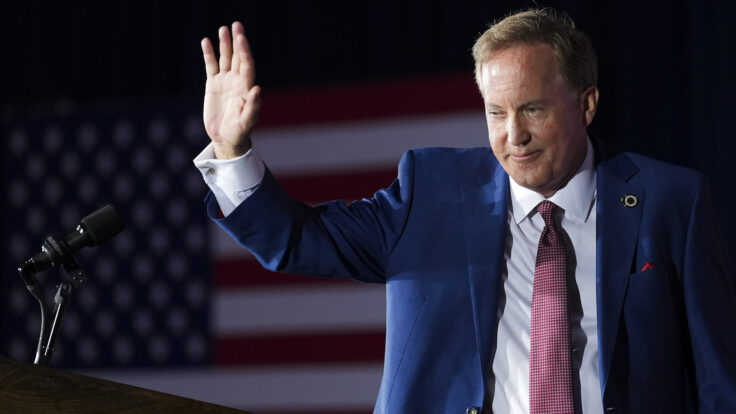
Already, the state’s pension fund, which holds a stake in Paramount, is flexing its muscles in the Delaware Court of Chancery, contending that Shari Redstone is “usurping Paramount’s corporate opportunities” by offering her control of NAI, the parent company, as an alternative means to acquire Paramount without fairly compensating Class B shareholders. Rhode Island has not only filed suit to access books and records, it’s quietly making moves to unseal exhibits in the previously settled battle between the Redstones and Les Moonves over control of CBS. Last month, the Rhode Island Office of the General Treasurer sent a letter to Paramount’s general counsel, Christa D’Alimonte, referencing a two-decade-old case where a transaction was halted due to a controller usurping a corporate opportunity. Paramount’s outside attorneys rebuffed the request to inspect books and records, winking at Rhode Island’s litigation posture. Something to keep an eye on.
- Gronk settles, Cuban holds out: Rob Gronkowski is paying $1.9 million to settle claims over how he promoted the crypto brokerage company Voyager. While it was previously known that the legendary NFL tight end had cut a deal to extricate himself from litigation, I found the precise settlement amount in court papers that were filed late Friday. Adding intrigue are the other celebrities who have not settled and are defending themselves for hyping crypto busts like Voyager and FTX—most notably Mark Cuban, who is slated to stand trial in November over the Voyager sponsorship deal he secured for his Dallas Mavericks. The plaintiffs, represented by David Boies and Adam Moskowitz, are still awaiting class certification, and they’re presenting the Gronk settlement along with a couple other smaller ones on the path toward achieving this goal.
- A ‘Road House’ scoop: Amazon MGM has just filed a countersuit against R. Lance Hill, the screenwriter behind the 1989 cult classic Road House, alleging Hill perpetrated a fraud upon the U.S. Copyright Office. Earlier this year, Hill first took legal action, asserting that he recaptured rights to Road House by invoking the termination provision of copyright law. He also claimed that the current Doug Liman remake, starring Jake Gyllenhaal (not to mention Conor McGregor in his screen debut) infringed on his work. In response, Amazon notes that Hill operated through a “loan-out” company decades ago, and argues that it’s this entity—not Hill himself—that registered and licensed rights to the script. Consequently, Amazon argues, Hill is “fabricating a fraudulent claim of copyright authorship.”
Amazon isn’t the first to pursue this strategy. See also: an ongoing case involving Sony’s Columbia Pictures and Bad Boys writer George Gallo. However, given that Amazon shelled out $8.5 billion for MGM’s somewhat dated intellectual property library, this case could have real implications for the tech giant’s original-content ambitions.
|
|
|
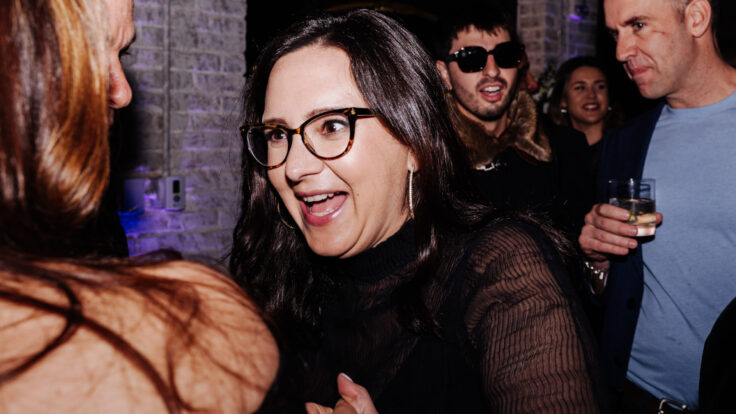
| Back in 2021, Ozy Media’s empire of spammy newsletters and cringey videos started to crumble under scrutiny. Ben Smith, then the media columnist for The New York Times, famously detailed how the company’s chief operating officer impersonated a YouTube executive during an investment pitch call with Goldman Sachs. The incident was bizarre, but did it qualify as aggravated identity theft? And was the broader effort by Ozy to secure tens of millions of dollars by embellishing its prospects in the content marketplace, including by inflating revenue and investor interest, tantamount to conspiracy to commit securities and wire fraud? These questions will land in the lap of a Brooklyn jury when the criminal trial against Ozy founder Carlos Watson kicks off on May 20.
Since Watson was indicted in February 2023, his legal team has protested that he’s being unfairly singled out for what they claim is routine “puffing and bluffing.” In a motion to dismiss, submitted last August, Watson’s lawyer Ronald Sullivan argued that such puffery, no matter how morally questionable, has become woven into the fabric of the tech economy. Sullivan cited Apple, Google, Tesla, and Airbnb as engaging in similar tactics and asserted that criminalizing Watson’s fundraising efforts would disrupt the entire landscape. “To argue otherwise is to ignore the realities of the freewheeling venture capital market that has produced much innovation,” he wrote, adding that sophisticated counterparties were not likely to be led astray by clumsy impersonation attempts or overly optimistic revenue projections.
On April 29, U.S. District Court Judge Eric Komitee issued his long-awaited response, declining to dismiss the indictment. In his ruling (read here), the judge acknowledged that Watson could indeed raise the materiality of the falsehoods. But he emphasized that determining whether investors would find significance in something like a misleading list of Series C investors would ultimately be a decision for a jury.
At trial, Watson hopes to go much further with his defense. He is not only questioning the existence of “victims” who prosecutors assert were duped by Ozy, he is also seeking to broaden the scope of the trial by putting the entire media industry under the spotlight. In particular, he’s targeting Smith’s old haunt, Buzzfeed, as well as Vice Media, alleging that they, too, secured substantial capital through phony traffic numbers and revenue projections they later missed.
While the judge has rejected Watson’s contention that he is being selectively prosecuted as a Black man, a ruling is pending on a government motion to preclude him from introducing evidence of Buzzfeed’s alleged fraud or testimony suggesting that inflating financial figures is common practice in the media sphere. Expect a decision on this matter very soon. |
|
|
| Watson may have one point: There seems to be curious activity unfolding elsewhere in the industry. Consider Triller, the social networking platform known for its short-form videos. As it stands, the company is majority owned by Proxima Media, affiliated with Ryan Kavanaugh, who arrived in Hollywood a couple decades ago with a “formula” to guarantee movie profitability only to have his Relativity Media wind up in bankruptcy and face a flurry of fraud lawsuits. Now, Triller is joining forces with an obscure, publicly traded, Hong Kong-based company called AGBA in what’s being hailed as a “$4 billion merger.”
So what justifies the lofty valuation? Securities filings reveal that AGBA reported about $57 million in revenue last year, while Triller itself contributed approximately $50 million—respectable figures until you consider that neither entity is profitable, with AGBA posting a $7 million loss and Triller hemorrhaging more than $1 billion between 2021 and 2023.
Then there’s this gem from Triller’s amended S-1 earlier this year, when it was evidently contemplating an I.P.O.: Amid several lawsuits from music publishers, Triller reported, “We entered into a settlement agreement relating to a lawsuit for copyright infringement whereby we agreed to pay Wixen [Music Publishing] $10 million in scheduled payments through September 2024 and approximately $5.5 million remains due. We currently do not have sufficient cash on hand to satisfy this obligation which could result in penalties under the settlement agreement.”
Not enough cash to make a $5 million payment? So why the $4 billion valuation? Maybe it’s a quixotic bet on the massive opportunities arising from a recent legislative development. I’m referring, of course, to the TikTok ban, which recently propelled Triller C.E.O. Bobby Sarnevesht onto Fox Business to boast about an anticipated surge of users and enhanced access to capital markets. When pressed on why Triller users don’t seem to stick around after downloading the app, however, Sarnevesht responded with a non sequitur: “A lot of people enjoy the fake virality because the Chinese play outside the regulatory issues we have to deal with.” I have absolutely no idea what Sarnevesht is talking about, and both Triller and AGBA didn’t respond to my queries. |
| The Clare Locke of It All… |
|
| I confess that I wrote the preceding section carefully, mindful that Kavanaugh is pursuing a defamation suit against a podcaster who accused him of running a ponzi scheme. (For the record, I’ve never faced a defamation lawsuit myself, despite the fact that I write about litigious people for a living and have been told by Marty Singer to “govern yourself accordingly” on a few occasions.) Notably, Kavanaugh is represented by Clare Locke, a firm now being forced into defending its own reputation.
Last autumn, as I previously reported, a few partners jumped ship to start their own boutique, Meier Watkins Phillips Pusch, and took a big client with them: Kytch, which was in the midst of settling a $900 million trade libel case against McDonald’s involving the fast food chain’s soft serve ice cream machines. Clare Locke moved to protect the $7 million-plus in legal fees it claimed it was owed for more than 10,000 hours of work. Arbitrations commenced, a lien was placed on settlement proceeds, and in the midst of some buzz that the defections had something to do with the firm’s work for Dominion in its defamation case against Fox News, Elizabeth Locke told reporters that in reality, their former partners had flown the coop to steal a multimillion-dollar fee opportunity.
On April 30, Kytch—represented by those same Clare Locke apostates—responded in court, and oh boy, did they ever! For starters, Kytch asserted that Clare Locke was overstating its fees by $5 million. Next, Kytch detailed the fee arrangement, claiming Clare Locke had agreed to a 70 percent discount on its hourly rates ($375 per hour for Tom Clare and Libby Locke), plus 35 percent of its recovery, plus $275,000 in flat fees.
Moreover, according to Kytch, Clare Locke was fired for cause. The company says Locke pushed them to obtain litigation funding to finish work (even though it was expecting a healthy contingent award), and later refused to work with ex-partner Daniel P. Watkins at his new firm. Jeremy O’Sullivan, one of Kytch’s two co-founders, was so furious that in a farewell letter to Clare Locke last October, he wrote, “I don’t know if I’ll ever be able to accept or understand the extreme level of Machiavellian malice that you waged against two people whose only crimes were trying to fix McDonald’s ice cream machines, and trusting you as our lawyer.”
That’s not all. Clare Locke, famous for its defamation threats against the media, is accused of filing confidential information on the public docket, disparaging a former client to a Bloomberg reporter, and interfering and jeopardizing ongoing settlement efforts by communicating with Kytch’s legal adversary.
Today, Clare Locke responded in court, saying that what’s actually relevant is that Kytch can’t walk away from its legal bill. The firm asks the judge to affirm an emergency arbitration award that would stop Kytch for the time being from dissipating settlement money.
Represented by Williams & Connolly, Clare Locke addressed most of the allegations about its conduct through footnotes. For instance, the firm contends that Watkins himself drafted the engagement letter, saying his current attack “represents a glaring and ongoing ethical conflict.” Furthermore, Clare Locke says that the termination for cause letter is “legally ineffective” and disputes the notion that it is jeopardizing the settlement. Moreover, it attributes the public nature of this dispute to its adversary. As stated by the firm’s legal team, “Kytch has not asked the Court to seal anything in the case—and in fact flooded the public record with more of its own confidential information.” |
|
|
| An intriguing question from a reader: “At what point can Drake or Kendrick Lamar sue each other for defamation?”
For those not in the loop, a no-holds-barred rap beef has erupted between the two hip-hop stars. The feud has been nothing short of relentless, with both artists unleashing a barrage of new bars to their eager fan bases every few hours. But what truly sets this clash apart is the sheer ingenuity on display, such as Drake’s audacious use of a deepfaked Tupac Shakur (which, predictably, drew a legal threat from Shakur’s estate) and Kendrick’s inclusion of a bottle of Ozempic on the cover of “Meet the Grahams” (a nod to Drake’s given name, Aubrey Graham).
As for my reader’s defamation question, Kendrick would seem to have upped the ante over the weekend with the verse, “Say, Drake, I hear you like ’em young / You better not ever go to cell block one. … Certified Lover Boy? Certified pedophiles.” While it’s conceivable that a colorable claim could be made, filing and actually winning a defamation suit are two different beasts. In the realm of a heated dis battle, where hyperbolic trash-talking is par for the course, the context often veers close to a libel-proof zone.
Interestingly, a recent ruling by the 2nd Circuit Court of Appeals sheds light on this matter. The court evaluated a dis track in the feud between Barstool Sports and actor Michael Rapaport, ultimately concluding that Barstool’s relentless stream of insults and slurs didn’t meet the threshold for defamation. “The nature and tone of the surrounding language can function as a strong indicator to the reasonable reader that the statement is not expressing or implying any facts,” the appellate justices concluded.
In any case, let’s hope this feud doesn’t escalate to the courtroom. Both Drake and Kendrick stand to lose more than just legal fees. With reputations intact and cash flow steady, there’s little need to involve the lawyers. |
|
|
| That’s all for this week. Always happy to field questions. |
|
|
|
| FOUR STORIES WE’RE TALKING ABOUT |
 |
| Shari’s Choice |
| Could the brutal Paramount M&A process end without a deal? |
| WILLIAM D. COHAN |
|
 |
| The A.I. Rat Race |
| Inspecting Google’s burgeoning existential threat. |
| BARATUNDE THURSTON |
|
 |
|
 |
|
|
|
|
|
 |
|
|
|
Need help? Review our FAQs
page or contact
us for assistance. For brand partnerships, email ads@puck.news.
|
|
You received this email because you signed up to receive emails from Puck, or as part of your Puck account associated with . To stop receiving this newsletter and/or manage all your email preferences, click here.
|
|
Puck is published by Heat Media LLC. 227 W 17th St New York, NY 10011.
|
|
|
|