Welcome back to The Best & The Brightest. I’m Peter Hamby, in California, where
the revolution was most definitely not televised. In last night’s primaries—and in the ongoing, tedious vote count out here—establishment Dems (mostly) carried the day against younger candidates and lefty populists. I’ll explore that chin-scratcher below, along with some thoughts on Spencer Pratt’s performance in the L.A. mayor’s race.
Plus, above the fold: Marianna Sotomayor has the latest readout from the primaries in Iowa and New Jersey, where the
drumbeat of bad news for Republicans continues. And Leigh Ann Caldwell drops in with news of another House G.O.P. rebuttal to Trump on Iran.
Also mentioned in this issue: Tom Kean Jr., French Hill, Rebecca Bennett, Xavier Becerra, Karen Bass, Randy Feenstra, Tom Steyer, Nithya Raman, Rob
Sand, Eric Garcetti, Mike Johnson, Zach Lahn, Daniel Lurie, Tyler Law, Brad Sherman, Mike Thompson, Nancy Pelosi, Connie Chan, David Valadao, Randy Villegas, Jasmeet Bains, Doris Matsui, Mai Vang, and more. |
|
|
|
| Marianna Sotomayor
|
|
- G.O.P. jitters in
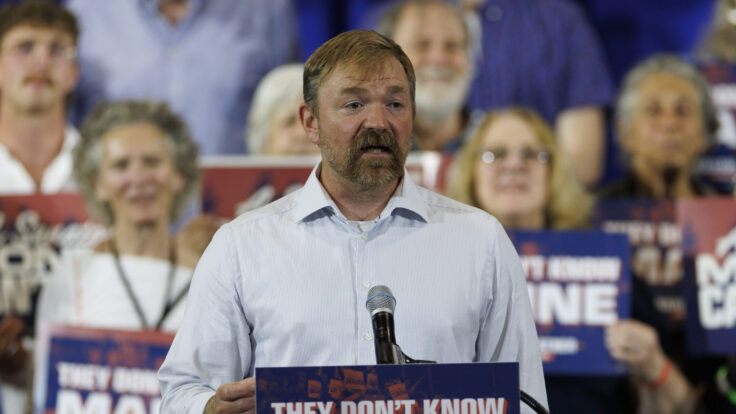
Iowa: President Trump’s endorsement winning streak came to an abrupt end last night when Rep. Randy Feenstra narrowly lost the gubernatorial primary to MAHA-backed businessman and sixth-generation farmer Zach Lahn. The result reignited anxiety among Republican lawmakers and strategists,
who worry that Lahn may not excite Iowans the way Democratic nominee Rob Sand is expected to rally Democrats—and possibly independents angry over the economic fallout from Trump’s tariffs and the war with Iran. I’ve yet to find a G.O.P. strategist or consultant who believes Sand is easy to beat—he’s formidable, and he has plenty of money to spend.
Democrats also secured their preferred Senate nominee in State Rep. Josh Turek, who flipped a Republican-held
seat in 2022—boding well, strategists believe, for his race against Republican Rep. Ashley Hinson. With an enthusiasm gap that clearly favored Democrats in the primary and an economic environment that’s hurting farmers, G.O.P. strategists warn that downballot candidates like Hinson, as well as Reps. Zach Nunn and Mariannette Miller-Meeks, will need all the help they can get from the top of the ticket. (House Democrats need to flip just three
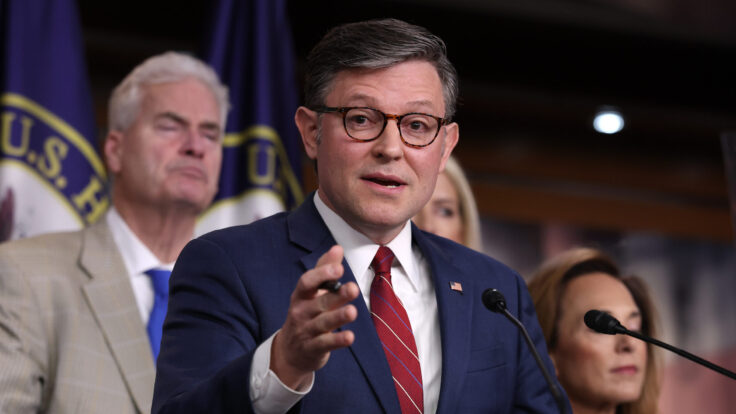
seats to win the majority.) - The case of the missing Kean: Republicans are growing increasingly skittish about New Jersey’s 7th congressional district, despite Speaker Mike Johnson’s assurance today at his weekly news conference that “you’re all going to breathe a sigh of relief” when the 90-days-and-counting mystery of AWOL incumbent Rep. Tom Kean Jr. is revealed. When Kean resurfaces—Johnson described whatever the
congressman is dealing with as “very common”—he’ll be facing former Navy pilot Rebecca Bennett, who beat three other Democrats to become the nominee.
But leadership aides and campaign strategists are far less sanguine. Several told me that the way Kean and his team have handled his still-unexplained disappearance has become a political liability. While Trump gave Kean a rousing, all-caps endorsement on Truth Social on Monday night—“Tom is working tirelessly,”
etcetera—some Republicans are privately hoping the New Jersey political scion steps aside, allowing local party leaders to choose a replacement candidate to defend the swing district in November. Everyone acknowledges that would look shady, but for some, it’s a political gamble they’re willing to make.
|
|
|
|

| Leigh Ann Caldwell
|
|
- Rebellion on the
Hill: Despite objections from Republican leaders, the House for the first time passed a measure that would end U.S. military involvement in Iran. It also advanced a Democratic bill that would provide $1.8 billion for Ukraine and impose new sanctions on Russia, setting up final passage tomorrow. These are the latest rebukes of President Trump and Republican leadership, who have resisted both the war powers measure and additional funding for Ukraine.
The votes
also expose divisions within the Republican conference. At a Puck Power Breakfast this morning, Rep. French Hill, a member of the Intelligence Committee and a longtime supporter of Ukraine, told me he remains undecided on the funding bill. He said the Democratic measure is not his preferred approach, and that he has encouraged leadership—so far unsuccessfully—to bring forward a Republican alternative. “I haven’t decided how I’m going to vote on it,” he said. “If I vote yes, it
will be to send that message … that elected representatives are not supportive of Putin and Putin’s destruction of Ukraine.” (More from our newsy conversation later this week.) - And finally… is Platner cooked?: Maine Senate candidate Graham Platner was asked by Democratic senators at a meet-and-greet yesterday near Capitol Hill whether there was any more damaging information that would come out about him.
Platner said there wasn’t, according to a person familiar with the interaction. But it didn’t escape notice that Platner skipped town before a reception hosted by VoteVets. Meanwhile, there are growing worries in Democratic circles that more bad headlines could still drop.
Maine’s primary is next Tuesday, and under state election law, the Maine Democratic Party could replace Platner on the ballot if he withdraws before July 14. Sources say Democratic leadership is not attempting to push
Platner out of the race. (The establishment-backed Gov. Janet Mills suspended her primary campaign.) But they are closely watching voter sentiment in the state.
|
|
|
|
In California’s primaries, voters mostly chose pragmatism over progressivism: Tom Steyer’s
class crusade fizzled, Saikat Chakrabarti got Pelosi’d, L.A. rejected its wannabe Mamdani, and Spencer Pratt—yes, Spencer Pratt—is still in the running. |
|
|
|
For all the talk of anti-establishment fervor inside the Democratic Party—calls for generational change,
pitchfork mobs coming for Chuck Schumer and Hakeem Jeffries, insurgent populists muscling aside moderates—California’s primaries this week were a triumph of machine politics and a sign that Democratic voters were more interested in pragmatism than big promises.
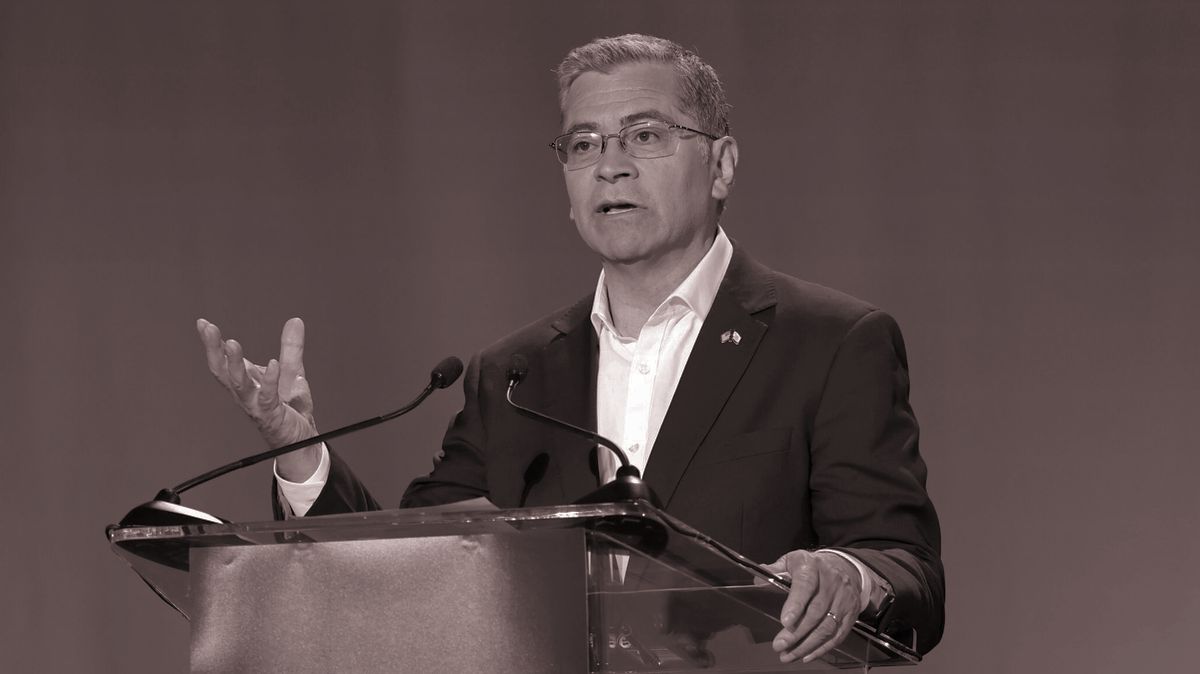
In the governor’s race, Democrat Xavier Becerra is leading the field and looks likely to advance to the top-two runoff after running a do-no-harm campaign backed by the state’s
consultant class and pretty much every corporate entity that does business in Sacramento. Barring some wild swing in the vote count over the next few days, Becerra’s chief Democratic rival, billionaire former hedge fund manager Tom Steyer, will be left behind. Steyer spent more than $200 million of his own money campaigning on big systemic change—taxing billionaires, building a million new homes, enacting a single-payer healthcare system. But California Democrats, apparently,
preferred the incrementalist. “There was a reward for being consistent and calm and steady in what Becerra is doing,” former Los Angeles mayor Eric Garcetti said on CNN last night.
In the L.A. mayor’s race, embattled incumbent Karen Bass, who is deeply unpopular in her overwhelmingly liberal city thanks to her hapless response to last year’s wildfires, still netted far more votes than Nithya Raman, the
democratic-socialist-aligned challenger to her left, and Spencer Pratt, the law-and-order attention merchant to her right. Unlike those two, Bass had the support of a political machine: organized labor, activist groups, nonwhite voters, pastors, and key Democratic endorsements. In recent months—as Pratt began to dominate the conversation over public safety—Bass finally figured out how to talk to her city with some humility, copping to mistakes and admitting that the homelessness
problem will take time to fix, while also assuring voters that violent crime is down, that she’s hired more cops, and that she’ll keep standing up for immigrants in the face of Donald Trump’s deportation ambushes in California.
As with other elections around the country dating back to last year, Democrats won or advanced by focusing on the basics. Yes, there were promises to stand up to Trump—table stakes for any Democratic messaging. (“California is bigger
than Trump,” Becerra said in his primary night speech. “Our values are undeniable—and undeportable.”) But Tuesday’s winners, generally, ran on the cost of living, safe streets and playgrounds, good schools, and healthcare costs. Not exactly peak woke.
“Californians are rightfully furious about the cost of living, but they have no interest in returning to a time when politicians were more focused on ideological purity tests than providing good schools, clean and safe streets, and cheaper
gas,” said Tyler Law, a Democratic strategist and advisor to San Francisco Mayor Daniel Lurie, a proud back-to-basics moderate Democrat. “Trump is the nonstop chaos agent in their lives. They want competence and stability.” Law pointed to Lurie’s sky-high approval ratings, saying “He’s focused on what matters in people’s lives” in the Bay Area. “The election results on Tuesday were a resounding validation of that approach.” |
In House primaries, crepuscular Democratic members of Congress like Brad Sherman and
Mike Thompson easily beat back younger, well-funded challengers as they advanced to runoffs against token Republican opponents. The populist left also flopped in key races. Candidates claiming the mantle of Bernie and A.O.C.—Ammar Campa-Najjar in a San Diego–area district and Saikat Chakrabarti gunning for Nancy Pelosi’s long-occupied seat—fizzled down the stretch. Pelosi herself flexed her
muscle to box out Chakrabarti, coming in late to endorse a more moderate successor, Connie Chan, sending her to the runoff against another moderate, Scott Wiener.
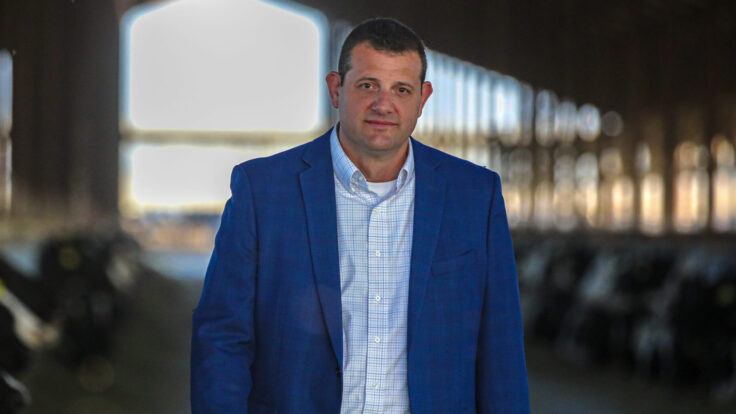
The leftists aren’t totally cooked. In the Central Valley, where Democrats want to unseat Republican Rep. David Valadao, the Bernie-endorsed Randy Villegas has a slight edge in the vote count over the establishment’s choice, Jasmeet
Bains. And in Sacramento, 81-year-old Doris Matsui might be facing a runoff against the much younger, more progressive Mai Vang, a teacher vowing to take on the country’s billionaire class. Both newcomers can win. But if they make it to Congress as part of California’s new delegation next year, under new congressional maps, they might be the loners on the left.
No one should extrapolate too much about the state of a political party—or the
country—from any single primary in a single state. The marquee elections in California, for governor and Los Angeles mayor, have plainly been weird, with many Democratic voters holding on to their crowded ballots late and voting strategically under the state’s top-two primary system. And California is almost prohibitively expensive to run in, no matter the office, making campaigns difficult for underdogs. But watching the results trickle in last night and today, it’s safe to assume that Democrats
in this deep-blue state scrutinized their many options and decided that the normie libs were just fine, thank you very much. |
Speaking of normies, Spencer Pratt is most assuredly not one. But his rise can’t be separated from his normie
appeal on public safety, an issue very salient to voters in Los Angeles, and not just Republicans. To be clear: While Pratt is likely to make the runoff against Bass—meaning the very online among us will have to endure five more months of A.I.-slop videos cooked up by his supporters—there is almost no chance he will actually make it to City Hall in November. As unpopular as Bass is, the city is just too blue for a candidate with an R next to his name, especially one who landed a
quasi-endorsement from Trump last month.
Like Trump, Pratt can be brash and shameless. But unlike Trump, he has been relentlessly on message about the perception of disorder in the city—and he generally shirks national culture-war fights. That’s why he has expanded his support beyond just Republicans, who make up only about 14 percent of the city’s registered voters. Pratt, though, is hovering around 30 percent of the vote, suggesting he’s pulled in independents and maybe even some
Democrats—a dynamic I wrote about last month. Why? Well, for all the media focus on his tactics and screen-first approach to campaigning, the reason is really just his message, and the message is not complicated. Whether in L.A. or Lubbock, the median U.S. voter prioritizes public safety over a range of issues—climate, democracy, matters of identity and
culture. And data shows that voters also believe the Democratic Party doesn’t really care about public safety anymore—crime, homelessness, drug addiction. Democrats have ceded that turf to Republicans, like Pratt. But they don’t have to.
There has been plenty of focus lately on the D.N.C.’s bungled autopsy report, which was supposed to get to the bottom of what the party did wrong in 2024. But there already was a great autopsy, which I wrote about last year, called
Deciding to Win—a deep, data-rich report conducted by the center-left outfit Welcome and endorsed by a range of bold-faced names across the progressive coalition: David Plouffe, Dan Pfeiffer, Matt Stoller, Sarah Longwell, Lis Smith, Jon Favreau, and so on. (You can read it here.) Among its findings: Only 4
percent of voters said that Democrats, as a party, prioritize crime as one of their top three issues. Instead, voters said, Democrats care way more about LGBT issues, abortion, and climate. A clear majority of voters (56 percent) also said they wanted Democrats to focus more on reducing crime. And the share of voters who see the Democratic Party as “too liberal” has increased dramatically since 2012.
“We need to focus on our popular positions, particularly on healthcare and the economy,
while moderating our unpopular positions, particularly on immigration and crime,” the report’s authors wrote. “Going forward, it will be critical for our party to reduce the gap between what voters want Democrats to focus on and what voters think we do focus on.” Voters in L.A. have been screaming for years that they want city leaders to focus on costs, affordable housing, and, yes, public safety. The issue set was there for the taking for any Democrat who wanted it, but Pratt
grabbed it first.
Bass, of course, couldn’t run as an incumbent pointing her camera at street homelessness and dangerous tent encampments. But her challenger from the left, City Councilwoman Nithya Raman, might have found more success in the primary by just admitting that Angelenos feel unsafe—without also dehumanizing homeless people on the streets, as Pratt often does. Instead, Raman seemed contemptuous of Pratt’s very presence in the race, which meant she was also seen as
dismissing the real concerns of his supporters, as if raising questions about drug abuse near playgrounds was some kind of lowly MAGA distraction. Pratt’s strength as a political figure—however limited in this election—has been gut instinct and emotional storytelling. That can make for a compelling choice in an election when your rivals prefer white papers and press conferences. |
|
|
|
Join Emmy Award-winning journalist Peter Hamby, along with the team of expert journalists at Puck, as they let you in on the
conversations insiders are having across the four corners of power in America: Wall Street, Washington, Silicon Valley, and Hollywood. Presented in partnership with Audacy, new episodes publish daily, Monday through Friday. |
|
|
|
Puck’s daily art market email, anchored by industry expert Marion Maneker, offers unparalleled access to the mega-auctions and
galleries, elite buyers and sellers, and the power players who run this opaque world. |
|
|
|
Need help? Review our
FAQ page or contact us for assistance. For brand partnerships, email ads@puck.news.
You received this email because you signed up to receive emails from Puck, or as part of your Puck account associated with {{customer.email}}. To stop receiving this newsletter and/or manage all your email preferences, click here.
|
Puck is published by Heat Media LLC. 107 Greenwich St., New York, NY 10006 |
|
|
|
|