 |
|
Hello, and welcome back to The Best & The Brightest. This is your Tuesday foreign policy edition and I’m Julia Ioffe.
Happy Passover! I celebrated the first seder last night with my parents and sister, a very close family friend (a Muslim), and my partner (an Episcopalian). During the seder, I invoked a lot of what I heard during my recent chat with Deborah Lipstadt, President Joe Biden’s special envoy for combating global antisemitism, which I’m sharing with you today. In light of what’s happening on college campuses all over the country, and the debates that have flared up again since the October 7 Hamas attack and Israel’s retaliation, I felt that sharing this conversation with Lipstadt, herself a professor and academic, would resonate on this first day of Passover, whether or not you celebrate, whether or not you are even Jewish.
But first…
- Some notes on Columbia: I do want to say a couple words about the events at Columbia University and beyond—in part because this was one of the first things my father asked me about last night. My short answer: It is painfully complicated. My slightly longer answer consists of a few disparate thoughts. The number of times anti-Israel protests have crossed over into antisemitism—e.g., harassing Jewish students as proxies for Israeli policy—provides its own answer. Calling to abolish Israel and telling Israeli Jews to move back to Europe (as if that’s where they’re all from, originally or more proximately), while at the same time advocating for the creation of a national homeland for Palestinians, is at best morally inconsistent and at worst antisemitic. (If you believe in the right to national self-determination for Palestinians, why don’t you believe in that for the Jews? And, honestly, vice versa.) Repeatedly and publicly trotting out the Jewish students who are members of these groups and these protests to say, essentially, We can’t be antisemitic because we have some Jewish members, is the equivalent of saying, I’m not racist because I have some Black friends. If you have to do that, you’re telling on yourself.
Moreover, it’s hard to watch the far left raise the banner of protecting free speech and academic freedom when they have often been quite dismissive of the concepts in the past. For the last few years, especially since 2020, the American left has been insistent and consistent in their stance that the personal safety and emotional well-being of marginalized groups is more important than a speaker’s freedom of speech. Why the change now? Perhaps it’s because this line of thinking designates some speech as more important than other speech; that is, the speech of the oppressed is more important than the speech of the oppressor. And in this view, as Ambassador Lipstadt points out below, the Jew is the (white, colonizing) oppressor. That, of course, is both inaccurate and antisemitic.
On the other hand, it’s quite clear that Republicans in Congress have realized they can make a fair amount of political hay by going after college presidents on the issue of antisemitism. It is a way to take a longstanding G.O.P. hobbyhorse—the persecution of conservatives on liberal campuses—and expand the number of so-called victims. In the process, they are continuing to vilify academia as extreme, dangerously left-wing, and out of touch. Columbia’s president, trying not to repeat the mistakes of the ousted presidents of Harvard and Penn, acceded to Republican exhortations to condemn and fight antisemitism on campus. (To them, any pro-Palestinian protest is, apparently, antisemitic.) Less than 24 hours later, the university moved to dismantle an anti-Israel protest encampment, allowing the NYPD on campus, where they arrested over 100 students.
This, of course, created enormous backlash and fierce protests—which was absolutely predictable—both at Columbia and beyond. What better way to make young people—who are already prone to a Manichean worldview—feel like the fight is more important than ever? What better way to get others off the sidelines and into the fray? And, for Republicans, what better way to emphasize the chaos they try to associate in voters’ minds with the left in an election year? And yet, in all of this, the actual well-being—physical and emotional—of real, flesh-and-blood Jews is secondary at best. We become, once again, a political football—worse, a political weapon. And that is what sets off my alarm bells.
|
| Anyway! Here is the wonderful Abby Livingston from the Hill, where Speaker Mike Johnson demonstrated some real spinal fortitude this weekend in allowing the House to vote on—and pass—a foreign aid package that includes desperately needed assistance to Ukraine. Even if allowing the chamber to simply do its work is what passes for courage these days, I’ll still tip my invisible hat to him. Kudos, Speaker Johnson. |
| House Dems’ Fundraising Edge |
|
Perhaps the most fascinating figures to emerge from recent F.E.C. filings shed light on the head-to-head matchups between House incumbents and their top challengers. After looking over the figures, it’s not only clear that Republican candidates are lagging behind their Democratic opponents, but that Democrats are often outraising them by hundreds of thousands of dollars. Here’s the highlight reel…
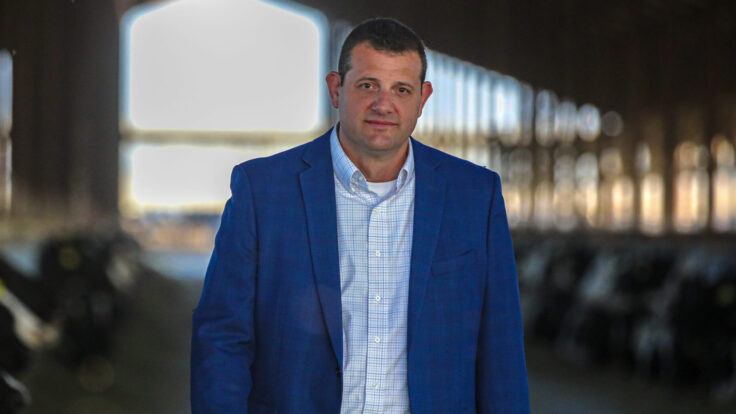
- Republican incumbents are getting walloped: No fewer than eleven House Republican incumbents were outraised by a Democratic challenger, while only nine Republican incumbents outpaced their Democratic rivals. But perhaps just as striking is who was outraised. That list includes G.O.P. Appropriations cardinals David Valadao and Ken Calvert, a designation that typically makes a member a veritable money magnet. Why does this matter? Getting outraised is often as much about momentum as money, and candidates who rely on outside groups to do the heavy lifting often drag money away from other races.
On the other hand, 18 Democratic incumbents outraised their Republican challengers. Alas, the only Democrat to be outraised was Vicente Gonzalez Jr., and it was by a former member, Mayra Flores. Zooming out, the mean Democratic challenger/incumbent in a competitive seat raised $841,000, compared with the average Republican challenger/incumbent who raised $463,000.
- In four of the five competitive open seat races—for Elissa Slotkin and Dan Kildee’s seats in Michigan, Abigail Spanberger’s in Virginia, and Lauren Boebert’s old Colorado district—the top Democratic fundraiser raised at least twice what the top Republican candidate pulled in. In the race to replace Katie Porter in Orange County, Democrat David Min outraised Republican Scott Baugh, but only by just over $100,000.
|
 |
| From Barnard to Jerusalem |
| As Israel’s war with Hamas grinds on and Ivy League campuses convulse with protests, an urgent conversation with Ambassador Deborah Lipstadt, Biden’s special envoy to combat antisemitism, about the modern right- and left-wing varieties of an ancient hatred. |
|
|
|
| When I came to meet Ambassador Deborah Lipstadt, Joe Biden’s special envoy for combating global antisemitism, in her office at the State Department late last week, she had something she wanted to show me. It was the cover of New York magazine from January 1996. “BEING JEWISH,” it said over a giant American flag that had some Jewish stars mixed in with the five-pointed variety. “As anti-Semitism fades and Jews assume ever-greater prominence throughout the Establishment,” the subhed said, “it’s time for Jewish Americans to let go of the idea that they are outsiders.”
“Amazing, right?” Lipstadt chuckled when I looked up at her.
Of course, that message has always seemed completely alien to me, a Jewish refugee from the Soviet Union, where our second-class status was legally codified and omnipresent to the point where it was obvious even to me, a child. But it felt even more ridiculous given what has taken place in America in the six months since October 7, when Hamas’s attack and Israel’s reprisal have unleashed a debate so emotional and so often shot through with antisemitism that it has made many American Jews question and reevaluate their place—and their safety—in American institutions. This comes just after the Trump years, with the attendant synagogue shootings and chants of “Jews will not replace us” having barely faded into memory.
The New York mag take had aged poorly, it was fair to say. And that was why Lipstadt, a respected academic who famously specializes in Holocaust denial, wanted to show me that cover. So on this, the first day of Passover, I bring you my conversation with Lipstadt. We spoke about not just the clashes on campus and the remarkable staying power of antisemitism, but also of the differences between anti-Zionism and antisemitism, and between right- and left-wing antisemitism. But even more importantly, she reminded me that this holiday encapsulates both the tragedy of the Jewish experience and its triumph, its richness. “In the seder it says, ‘In every generation, they rise up and try to destroy us,’” she said, quoting from the Haggadah. “But there’s a second sentence there: ‘God saves us.’ You don’t believe in God? [Believe in] our culture, our tradition. It’s a positive thing.”
I hope you find our conversation, which has been edited for clarity and length, as fascinating and inspiring as I did. |
| Discrimination, Right or Left |
|
| Julia Ioffe: My partner, who is not Jewish, was horrified to realize just how ubiquitous antisemitism is. One day he told me, “I don’t get it. Why do people hate Jews so much?” Do you have a good answer?
Deborah Lipstadt: First of all, it’s like asking, “Why do men hate women?” There’s no logical reason. Not to be too simplistic, but think about the etymology of the word prejudice: pre-judge. Antisemitism is the oldest hatred and it’s worked into the DNA, the soil of Western culture. You need someone to blame things on. Covid? Jews! Look at Pfizer! Who’s the head of Pfizer? A Greek Jew. Look how much money they make!
It’s a virus. It’s a virus because it never goes away. More importantly, it mutates. How could you have a hatred that works in Nazi Germany and works in Communist Russia? That works on the left and works on the right? Claims that Jews are capitalist and that Jews are communists? Jews are pushy and want to be in places where they’re not wanted [and that] Jews are clannish and only want to stick together. On one hand, these contradictions reveal antisemitism is ridiculous, but also how it mutates to fit the situation. And it all starts from the same source.
The template is the same: something to do with money; something to do with smarts, but malevolent smarts; something to do with punching above your weight; secretly maneuvering. And the other element is—and this, by the way, comes straight out of the deicide story, the death of Jesus—he wanted to chase the money changers out of the temple. Jews were small in number. Rome was the real power, Rome didn’t want to kill him. But the Jews said, “Crucify him, crucify him!” Jews! Those little Jews in Judea, a little tiny state, got Rome, the greatest power in the world, to do its bidding. Doesn’t make sense, but that’s all part of it.
And then the other element is the Jew as the devil. Because in Christian theology, what are the two characteristics of the devil? The devil is the only entity that can harm God, and the devil does his handiwork and disappears before you know you’ve encountered the devil. George Soros? The Rothschilds? The hidden hand.
You were watching Columbia University president Nemat Shafik’s testimony before Congress just now. What do you make of all these hearings?
Let me say this about the hearings of the previous three [university] presidents: [I don’t know] whether they were lawyered up, or whether they were so entrapped that they couldn’t explicitly say, “Genocide is wrong. Calls for genocide are wrong.” Columbia said that today. I think there’s a relativism [in how institutions define discrimination], especially when it comes to antisemitism.
Why?
Because the Jew doesn’t present as a victim of discrimination.
Now? In America?
Now. You and I are sitting here. What discrimination? You know, you have a good life. You walk down the street, nobody bothers you. You get stopped by the police in a traffic stop, you’re not worried you’re going to be shot. You’re well-heeled. The perception is that you can’t be a victim. And not only can’t you be a victim, but you’re an oppressor. In a lot of the rather simplified, if not simplistic ways, the world is divided into oppressors and oppressed. If you’re not oppressed, then you’re an oppressor. And how can the Jew be oppressed? You’ve got an ambassador sitting here to deal with antisemitism!
But now, of course, my argument is that antisemitism is, first and foremost, a threat to Jews—and often a lethal threat to Jews. But it’s also a threat to democracy. You have Jewish families in France, many of whose children attend Jewish schools, keeping their kids home last October after Hamas declared a day of rage after October 7. That showed that the families felt the authorities either wouldn’t, or couldn’t, protect them. And that’s a loss of faith in democracy, because democracy is built on trust.
You’ve described antisemitism as a threat to national security, and to national stability.
There’s an anecdote from Thomas Rid’s book Active Measures about an outbreak of antisemitism in West Germany in 1959. Tombstones were knocked over, swastikas were painted outside of synagogues. It was 14 years after the end of the war, so people began to think, “Oh my God, the Nazis are back.” This was exactly the time when West Germany was trying to enter multilateral organizations and becoming a manufacturer of arms. And people were saying, “Wait a minute, should we do this? The Nazis are back.” Fast-forward, 20, 25 years and a defector from the K.G.B. says, “Oh, that was a KGB operation.” What were [the Soviets] doing? They were using antisemitism as a destabilizer.
The Russians did the same thing after October 7th in France.
That’s right. It’s the same thing: “This is a tool we can use because it’s familiar.” My job here, when I first came into office, was really two things: protect Jewish communities abroad and get different governments to take this seriously, and work on the Abraham Accords. Now, it’s really to transmit the message that antisemitism is not just the threat to Jews, it’s also about democracy, national security, and stability. This is something really serious, something that bad actors—or as they call them in the I.C. community, “malign influencers”—can use to make you feel like maybe democracy isn’t the best system. |
|
|
| After 2016, many people on the left tried to paint antisemitism as a right-wing phenomenon. Now we’re dealing with left-wing antisemitism. How are they different? How are they similar?
I used to talk about a spectrum. Now I talk about a horseshoe and I talk about extremism. It’s true that most of the lethal actions, certainly in the United States, have come from the right. Pittsburgh, Poway, etcetera. But those on the left, the extreme left, have shown themselves to be horrendously willing to absorb and promulgate antisemitism in a way that, if it weren’t so dangerous, would be laughable. The Democratic Socialists of America chanting “Hands off Iran! Hands off Iran!” Do they know what the women there are dealing with?! Or, “Houthis, Houthis, make us proud!” They have slaves!
Sure, but what are the similarities and differences between left- and right-wing antisemitism?
One is talking about a white, Christian, homogenous society—so the Jew as interloper—whereas the other is talking about the Jew as oppressor. Compare the former, for example, to right-wing racism. The racist on the right is generally punching down: “Blacks are okay as long as they know their place. And their place is not in the White House and their place is not at my kid’s school or as my boss. Their place is still somewhat under me.” And that’s true of how the right wing sees Jews, too. What’s different with antisemitism on the left is that it sees itself as punching up. It’s going back to the template: “Jews are more powerful. Jews are richer. Jews want to control me. I have to protect myself ‘by any means necessary.’”
Are you worried about the election season heating up and antisemitism getting worse if Donald Trump wins?
I can’t talk about that. Hatch Act and all that. I can’t talk about politics and get involved in that. But let me say, I have been concerned for a long time about how antisemitism is used as a political tool. Right, left, center, Christian, Muslims, Jews, atheists—it doesn’t matter. It’s become a useful political tool. And that’s really scary to me.
Last question. We often see, especially after October 7th, a grouping together of antisemitism and Islamophobia. What do you think about that?
Look, when George Floyd was murdered, many people condemned the racism which was behind the murder and how he was treated. And no one said to them, “Okay, if you’re going to say racism, you have to also say, ‘and Islamophobia and misogyny and antisemitism.’” When you see an action, you’ve got to call it out. Then you step back and put it in the broader perspective. You say, “This was racist. And how is racism like antisemitism? And how is it like misogyny? How is it operating as a prejudice?”
After 9/11, when there was a surge of not Islamophobia, but hatred of Muslims in this country, crazy Islamophobia, crazy hatred of Muslims, you shouldn’t have issued statements that said, “We are against Islamophobia—and antisemitism.” Because it wasn’t about antisemitism. You call it out for what it is. Otherwise, you end up with this undifferentiated mishmash in which neither can be really fought. |
|
|
|
| FOUR STORIES WE’RE TALKING ABOUT |
|
|
|

|
 |
|
|
|
Need help? Review our FAQs
page or contact
us for assistance. For brand partnerships, email ads@puck.news.
|
|
You received this email because you signed up to receive emails from Puck, or as part of your Puck account associated with . To stop receiving this newsletter and/or manage all your email preferences, click here.
|
|
Puck is published by Heat Media LLC. 227 W 17th St New York, NY 10011.
|
|
|
|