Welcome back to The Varsity, a private email about the money, power, and egos that rule the sports business. I’m coming to you today from 34,000 feet, somewhere over the Atlantic, following a rejuvenating long weekend in London. A highlight: the Ted Lasso pub in Richmond. A lowlight: the hilariously overpriced Ted Lasso store next door. And yelling at Marchand to drive the Bentley on the left side of the road, which almost caused me to spill my crisp sancerre.
🚨 Pod alert: We’re a little more than a month into the MLB season, so I thought it would be a great time to bring ESPN’s MLB insider Jeff Passan on to The Varsity to discuss some of the hot-button issues percolating off the field, including impending labor negotiations. That episode posts on Wednesday. Meanwhile, make sure you listen to yesterday’s pod with Words + Pictures founder Connor Schell, who says that we’re currently in the golden age of nonfiction programming, and that it’s not ending anytime soon. (A little more on this below…)
Reminder: Despite the news of an acquisition by Disney (and subsequent roll-up with Hulu + Live TV) in January, Fubo didn’t have the greatest Q1. Not only did the sports and live TV streamer report declining subs and ad revenue in North America, it also warned that another drop would be coming in Q2. Should Disney worry about its new toy?
In tomorrow’s edition of The Varsity, available only to Inner Circle members, the great Julia Alexander reveals the underappreciated side of the story. Skinny bundles in the streaming space are having a moment and show serious promise—all of which should benefit Fubo. Click here to upgrade! Or else risk getting left behind…
|
|
|
|
A MESSAGE FROM OUR SPONSOR
|
The game will never be the same. The luxurious, powerful, and fully electric BMW i7. Learn more at
BMWUSA.com
|
|
|
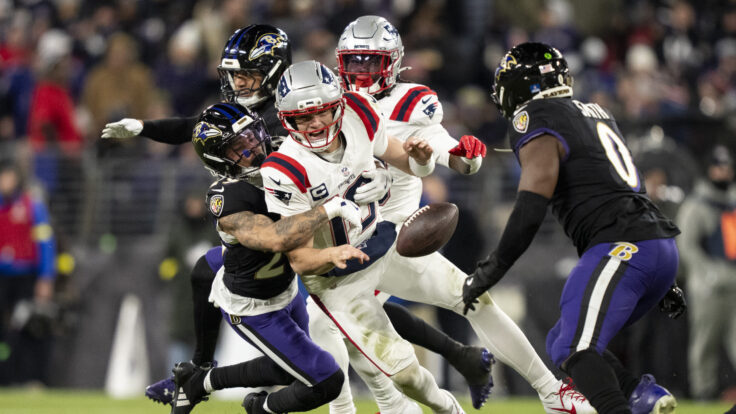
- The NFL’s antitrust concerns… maybe: Earlier today, Roger Goodell stood in the Oval Office alongside President Trump, who announced that the NFL would host the 2027 NFL Draft from D.C.’s National Mall. The Goodell-Trump bonhomie, once quite icy during the peak Kaepernick era, has thawed significantly in recent years. “The NFL-Trump relationship has come a long way,” Mike “F’n” Florio noted today. “In 2015, at the height of the #Deflategate scandal, Trump called Goodell ‘a weak guy,’ ‘a dope,’ and ‘a stupid guy.’ Then came the anthem controversy.”Tomorrow, however, Goodell isn’t expected to be anywhere near Capitol Hill. The Senate Commerce Committee will hold a hearing on the migration of sports from linear TV to streaming—the result of Senate Commerce Committee Chairman Ted Cruz’s suggestion that the federal government needs to look at the NFL’s antitrust exemption, which allows the league to pool all 32 teams’ rights into one big broadcasting package. It’ll be interesting to hear how lawmakers discuss the league during the hearing—in preliminary discussion, Sen. Cruz has already invoked the NFL’s antitrust status—and hypothesize about whether Goodell’s visit to the Oval served as a peacekeeping mission.
- Preschlack from the ashes: Remarkably, Main Street Sports (née Diamond Sports Group) has signed up almost 650,000 paid direct-to-consumer subscribers for its FanDuel Sports R.S.N.s since launching in January. And the company is on track to have 1 million paying streaming subscribers by the end of the year. These figures aren’t merely impressive—they’re almost stupefying, given the company’s near-death experience a year ago in bankruptcy restructuring. Since the start of the MLB season about five weeks ago, according to the company, Main Street Sports has averaged 250,000 unique daily users on its platform, and almost 1 million unique monthly users, among subscribers and authenticated users.Main Street Sports C.E.O. David Preschlack got me up to speed in an email: “What we’re seeing here is the real power of teaming up with the right partners,” he wrote. “With a strong mix of direct-to-consumer, TV Everywhere, Amazon Prime Video and MVPDs, we’re doing more than just evolving the regional sports model, we’re building something entirely new as a local sports media platform. And this momentum tells me we’re on the right path.”
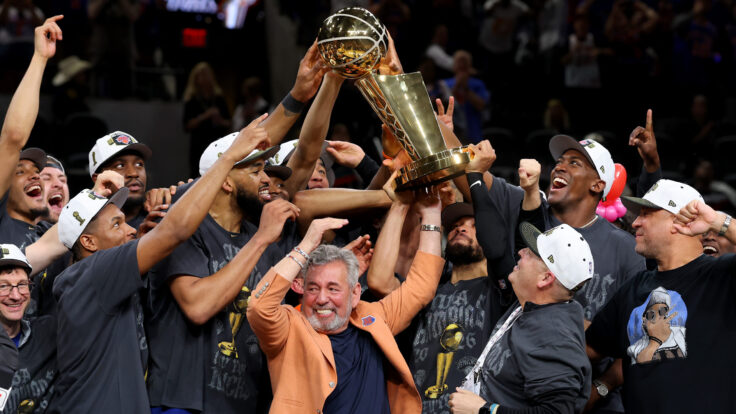
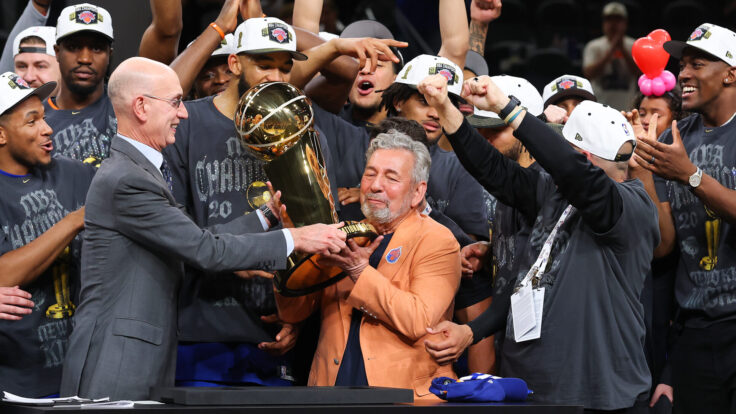
- Dolan on the rebound: As you know, Jim Dolan decided to slash the rights fees that his MSG Networks Inc. was paying his New York Knicks by 28 percent, and his New York Rangers by 18 percent in order to help restructure the R.S.N.’s debt. It turns out the cuts haven’t hurt the company at all. In fact, they seem to have helped. Guggenheim Securities published a report today noting, “We are reiterating our ‘buy’ rating and our $314 price target, primarily reflecting our view of team value based on recent market transactions and the company’s unique position in the largest media market in the U.S.”
- The cable-pocalypse: This private email spends a fair amount of time tracking the death of cable TV. That’s why I was so interested in a stat from ESPN’s comms chief, Josh Krulewitz, who noted that, thanks to its NFL Draft and NBA coverage, ESPN’s nets accounted for more than 56 percent of the sports share last weekend among the 18-49 demo. (For the record: The weekend runs from Thursday at 6 a.m. ET to Monday at 6 a.m., and the stat captures all Nielsen-rated ESPN networks, and any sports content defined by Nielsen.) It shouldn’t come as a huge surprise that the NFL Draft and NBA playoffs drew tons of young viewers. But at a time when ESPN’s distribution has fallen to just 62.7 million homes, per Nielsen, it’s notable that these declining linear assets still can attract large audiences around big events.
- What I’m hearing about Meadowlark: News broke late last week that former ESPN president John Skipper was leaving Meadowlark Media, the production company he co-founded four years ago. Soon after launch, the company signed a first-look deal with Apple for documentary and unscripted series, but its biggest success came from Dan Le Batard, Skipper’s co-founder and host of the syndicated program The Dan Le Batard Show With Stugotz. Meadowlark has also found some success with Pablo Torre’s pod, Pablo Torre Finds Out. Even insiders have more questions than answers right now. And while the company will still dabble in nonfiction, doc-style programming, sources have told me that it will make a heavier push to build out Le Batard and Torre’s shows.
|
|
Now, let’s get to Schell…
|
|
|
|
Connor Schell, the former Bristol content wunderkind and co-creator of 30 for 30, has heeded the higher calling of private equity–financed production company glory. With Words + Pictures, which he founded with Chernin Entertainment, he masterminded a new age of sports docs—Celtics City, Court of Gold, Full Court Press, etcetera—and figured out a new model in the process.
|
|
|
Despite the instability that has haunted the sports media industry over the past few years, we’re still very much in the golden age of sports storytelling. And if you ask Connor Schell—ESPN’s former content chief and co-creator of ESPN’s 30 for 30 series—it’s here to stay. He made a persuasive case on a recent episode of The Varsity, where he broke down the sports docu-boom.
In our candid conversation, Connor discussed how the industry has transformed during the past decade, walking the tightrope between creative freedom and league partnership, deciding which story goes to which platform, scaling his company, Words + Pictures, beyond the realm of sports, and much, much more. As always, this excerpt was slightly edited for length and clarity. You can listen to the conversation in its entirety here.
|
|
John Ourand: Is this a golden era for sports documentaries?
Connor Schell: I think we’re 15 years into the halcyon days of what I would call ancillary sports content based on access and storytelling. Going back to the great Olympic features of the 1970s, it’s always been about, how do you get people to care about the athletes that they’re watching compete? And one way is by knowing their story—by understanding the context, by understanding what they went through to get there, and what the stakes are. We can talk about what that looks like today, or what it might’ve looked like five years ago, or what it’s going to look like in five years. But I don’t think it’s going anywhere.
So how are things different today than they were five or 10 years ago?
The number of platforms that are really in this business. For a long time, HBO had a great business in sports documentaries and sports content—obviously, they still do. With the advent of 30 for 30, and a bunch of the originals that ESPN started to make, and as Netflix, Apple, Amazon, and other streamers have entered this space, consumers have more options—therefore, there are more places that commission things, and are trying to grow certain audiences. That’s one of the many changes.
When you and Bill Simmons started 30 for 30, you took a look at what HBO was making. And though HBO’s documentaries were fantastic, they were a lot older. It seemed that there were a lot of stories to be told that are much more current. So now, how do you not become what HBO was then?
That’s the thing we agonize over: How do you continue to reinvent what you’re doing so you don’t become stale? I give Bill a ton of credit for the initial conceit of swimming a little against the current with 30 for 30. People said no one was going to sit back and watch a long-form story, particularly not the demographic that was on ESPN at the time, or who ESPN was trying to reach. But if you tell someone a really good story about things they care about, they’ll come and watch and engage with it.
One of the things that streaming has allowed for is even longer form, like binge-watching, and the notion that people can find all episodes in one place at the same time and really engage in something. The next piece is a real renaissance of teams and leagues and players wanting to give access. But how do you take the access, put real storytelling around it, and ground it in the present? It’s something we think about all the time.
We’re trying to weave together that notion of important history and context for a sports fan, but we’re also going to take you inside places you don’t often get to go. We play with that form all the time, to try to keep things relevant and top of mind for fans, because levels of expectation around access just go up and up with every year that passes.
|
|
|
|
A MESSAGE FROM OUR SPONSOR
|
The game will never be the same. The luxurious, powerful, and fully electric BMW i7. Learn more at
BMWUSA.com
|
|
|
|
There’s the newish trend of granting a lot of access, but then there are two competing forces at play: You want to tell viewers the full, warts-and-all story, but you also are partnering with leagues that may want a more positive story to be told. Is that a problem for you?
Yes, sometimes those things are in conflict. I feel like I have enough wherewithal and credibility to say there are certain things we can’t agree to. But the reality is that in sports storytelling, you’ve always been dealing with league I.P. The NFL, NBA, MLB, etcetera, all control the use of their footage. So there are guardrails on all of these projects, and it’s incumbent upon the producer and director to have all the hard conversations up front, and to make sure you’re working with people who are totally aligned with you in the story you’re telling, and how you have to tell the story.
There have been a lot of projects that have either been brought to us, or we’ve explored, where the balance wasn’t right. As independent producers, we have agency, and we don’t do it. Everybody has the line they’re willing to walk up to, or not walk up to. I feel very good about the choices we’ve made, when we’ve made deals with leagues or teams or subject matters, in that we’re always telling an honest story. But not every project is the same. When we made O.J.: Made in America with Ezra Edelman, the subject was not involved. So each of these projects has a different goal and ambition.
|
|
You’ve placed shows on Netflix, Max, ESPN, etcetera. When you’re starting a documentary, or any kind of nonfiction series, are you thinking about what platform the project is tailor-made for?
That’s not necessarily the driving force. I work really closely with an amazing team, and we’re mostly focused on the story, and whether we have conviction around telling said story. And then the second question, because we are running a business: Is there a market for it? It does feel like each of those platforms has sort of developed their own style and brand. We’ll commit to making things, and start making them, before we go to market with it. But often, we’ll have in the back of our minds, like, Oh, it would be amazing if this ended up on HBO. That was something Simmons and I said to each other a lot about Celtic City before we did a deal with them.
ESPN is a linear network, and of course has a streaming component. What’s something you’ve made that you’re saying, Yeah, that’ll be perfect for ESPN?
We did a show called Full Court Press, with Peyton Manning and Jamie Horowitz at Omaha Productions. For the second season, Kristen Lappas, Hannah Beir, Alexa Conway, and Nikki Spetseris made an amazing show following this year in women’s college basketball. They picked three phenomenal players—Flau’jae Johnson, Hannah Hidalgo, and Kiki Iriafen—and tracked their journey. ESPN is the perfect platform for that. They have such a commitment to women’s sports overall, particularly to women’s college basketball. The fans are there. That show can sort of seamlessly integrate into so many other things they’re doing.
Then, we’re doing this Kansas City Chiefs show with them, which will come out around football season. And again, ESPN has so many ways to talk about that show, and to find the right audience for that show across a number of platforms. So, those are two great examples of projects that felt immediately like, This is an ESPN show.
You started Words + Pictures after you left ESPN, and you’ve done a lot of nonfiction shows. Where do you see the biggest growth potential for your company?
We work with a limited set of buyers, and the minute you do something with one of those partners that they’re unhappy with, or you’re not paying attention to, you lose your good will. It doesn’t matter how long you’ve done this, or what you’ve done in the past, you have to prove yourself every time.
With that in mind, one of the tension points in the business is: How much do you do, and how much can you scale? One of the reasons I wanted to leave what was a great job, and great circumstances, at ESPN, was because I aspired to tell stories outside of sports. So that’s a natural growth initiative for us. I also think you’re seeing a shift in live events, from traditional networks that have big infrastructures, to streamers, who haven’t built those infrastructures, and it’s not clear if they ever will. So I view it as an opportunity in the market to become a really credible provider of big live programming.
Another thing that I’ve spent a lot of time thinking about is where brands play in all of this. You’re seeing a lot of traditional marketers who are maybe spending less of their budget on traditional 30-second advertisements. So I’ve been thinking about how they play in the content space. It’s a really interesting time because everything’s changing. The market’s really hard, but there’s opportunity. If you can figure out new models for people, that’s how you can be really successful.
|
|
On Goodell’s decision to turn down Sen. Cruz’s invitation to appear before the Senate Commerce Committee: “If I were Goodell, I wouldn’t go in front of Congress, either. He would just be asked about the NFL’s Diversity, Equity, and Inclusion policies by grandstanding Senators like Ted Cruz, followed by bad-faith questions about white cornerbacks. What does he really have to gain?” —A Varsity subscriber
On cable’s implosion: “MLB Network isn’t going anywhere. Oh, and your O’s stink, too.” —An MLB fan
On the journalist who doubted I knew what “inamorata” meant: “You so need to give that journalist crap. You definitely could (possibly do) know the name of Emily Ratajkowski’s swimwear line is Inamorata. And Jordon Hudson almost certainly does, so I loved the original callout. Tell that journalist to hush, because your Marchand jokes have enough esoteric alcohol references to support being educated.” —A Varsity subscriber
|
|
|
|
Join Puck’s chief political columnist, John Heilemann, as he roams the corridors of power and influence in America on this twice-weekly interview show, taking you beyond the headlines with the people who shape our culture: icons and up-and-comers, incumbents and insurgents, moguls and machers in the overlapping worlds of politics, entertainment, tech, business, sports, media, and beyond. The conversations are rich and revealing, unrehearsed and unexpected… and reliably impolitic. A Puck-Audacy joint, new episodes drop every Wednesday and Friday.
|
|
|
|
Ace media reporter Dylan Byers brings readers into the C-suite as he chronicles the biggest stories in the industry: the future of cable news in the streaming era, the transformation of legacy publishers, the tech giants remaking the market, and all the egos involved.
|
|
|
Need help? Review our FAQ page or contact us for assistance. For brand partnerships, email ads@puck.news.
You received this email because you signed up to receive emails from Puck, or as part of your Puck account associated with . To stop receiving this newsletter and/or manage all your email preferences, click here.
|
|
Puck is published by Heat Media LLC. 107 Greenwich St, New York, NY 10006
|
|
|
|