|
Hello and welcome back to The Best & The Brightest, I’m Leigh Ann Caldwell, still suffering under the heat dome—and in the frigid halls of the U.S. Capitol, which is nearly as miserable.
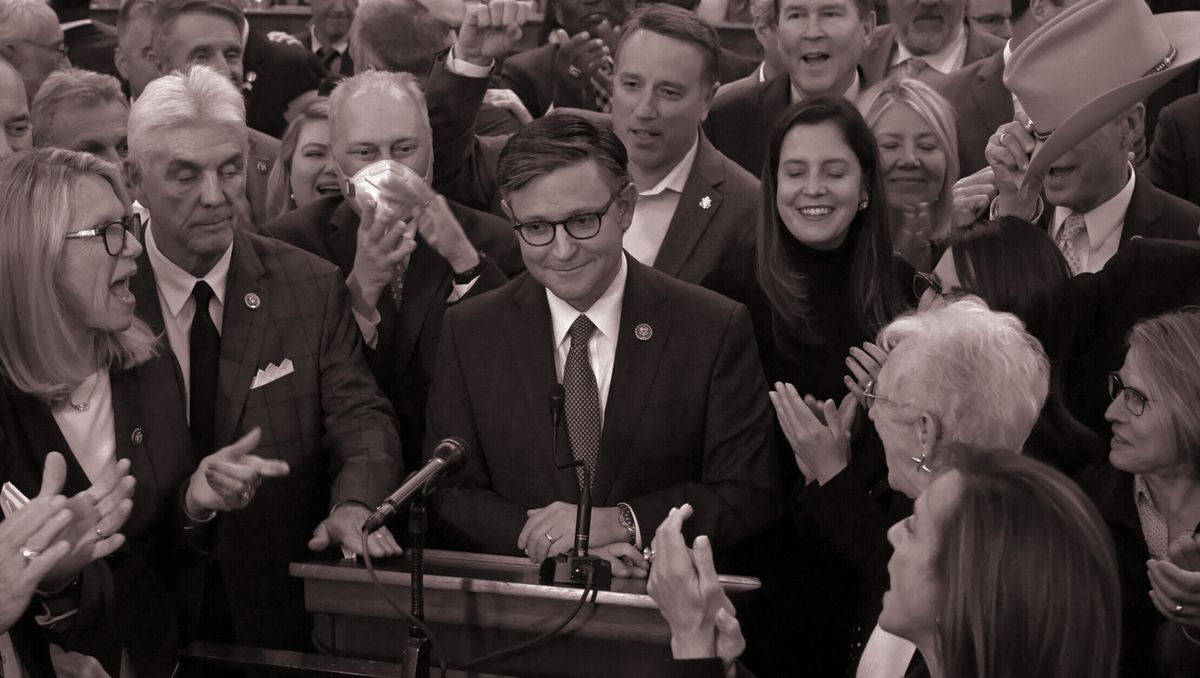
Today, my colleague Abby Livingston takes a 360-degree look at the machinations surrounding Mike Johnson’s push to get Trump’s Big Beautiful Bill across the finish line—Freedom Caucus pushback! Moderates in revolt!—and the challenges that members will face when the bill inevitably passes, in one form or another.
But first…
|
- No third impeachment… yet: Earlier today, House Democrats helped Republicans defeat a measure to impeach President Donald Trump. The resolution, foisted upon the House by serial impeacher Rep. Al Green, declared that Trump committed high crimes and misdemeanors by “usurping” Congress’s role of declaring war when he launched strikes against Iran over the weekend.The measure was tabled—meaning it essentially failed—but 79 Democrats, or more than one-third of the caucus, voted for it, in the clearest sign yet of where the party stands on the issue (this time). It was all symbolic, anyway: Democrats aren’t in power, and Republicans wouldn’t dare impeach a president they’re afraid to so much as think an unkind thought about.
Meanwhile, Democratic leadership encouraged, but did not whip, members to kill the motion, and would prefer to avoid the issue altogether. Trump, of course, has already been impeached twice and still managed to win back the presidency, so some Democratic members see a reprise as pointless. “Impeachment isn’t what we’re thinking about as a caucus,” Rep. Pete Aguilar, the number three House Democrat, told me.
Even so, 79 Democrats is not insignificant. Trump is already insecure about the prospect, and people close to him have told me it’s essential for Republicans to hold the House so that he can avoid yet another impeachment process. His long Truth Social post today attacking Alexandria Ocasio-Cortez, who called for his impeachment over the Iran strikes, only betrays his sensitivity.
|
|
|
|
A MESSAGE FROM OUR SPONSOR
|
|
Medicaid funding cuts hurt everyone, resulting in closed hospitals and crowded emergency rooms.
|
|
|
- Dems die in darkness: The Trump administration continues to cut Democrats out of the loop on Iran, despite legal requirements and traditional norms to brief both parties in Congress on matters of war and intelligence. The administration cancelled two bipartisan, classified briefings for senators and House members today, and will supposedly reschedule them for Thursday. The Gang of Eight—the bipartisan leaders of each chamber and their respective intelligence committees—has not received a briefing yet. (House Speaker Mike Johnson has.) Democrats are furious, and Republicans aren’t coming to their defense. After all, Sen. James Risch, the Republican chairman of the Foreign Relations Committee, told me: “I’m not having a problem getting information.” I asked him if only the party in power should be informed on issues of war. He didn’t answer.
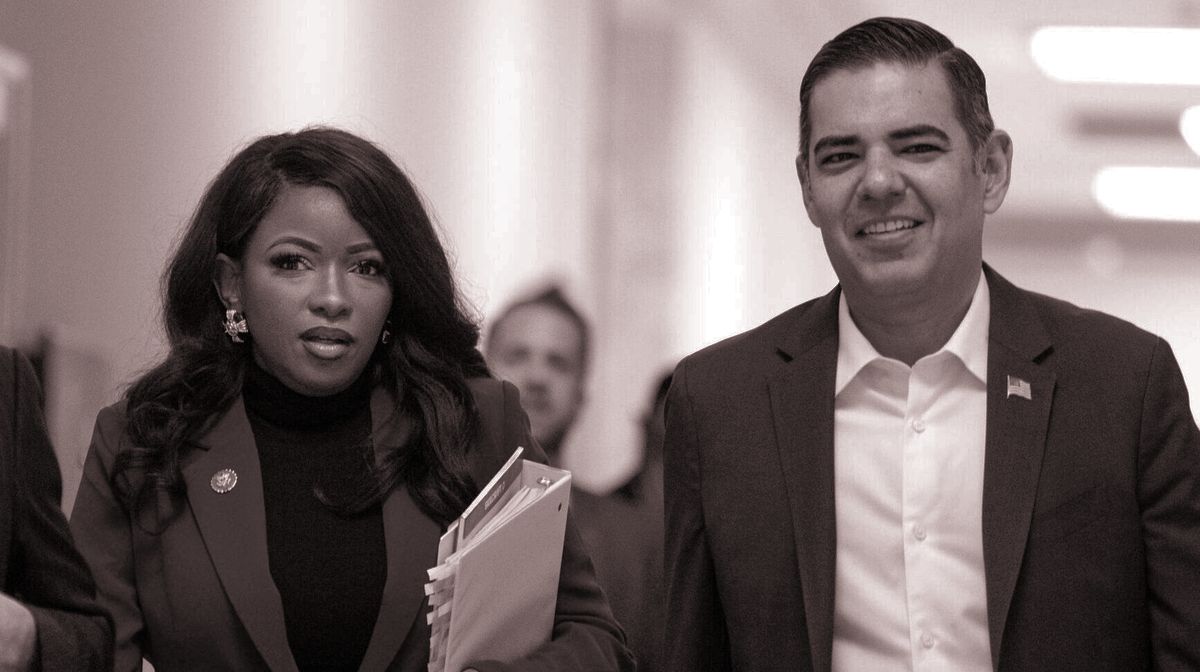
- A triumph of youth over experience: Rep. Robert Garcia won the internal election to be the top Democrat on the House Oversight Committee, a sign that the caucus is at least nominally aware of its generational challenge. House Democrats overwhelmingly chose Garcia, 47, who has little experience running a congressional investigation, over the 70-year-old Rep. Stephen Lynch, who was next in line for the ranking member position and has sat on the Oversight Committee for years. Whatever concerns members had about Garcia’s inexperience—he touted his service as mayor of Long Beach, California, to assuage them—they decided to move past the party elders this time around. We’ll see if voters in New York City make a similar choice in their mayoral race later today.
|
|
|
|
Republicans are bracing for an emergency landing of their Big Beautiful Bill, on or around the July Fourth holiday, whether they want it or not. It may not be pretty, but “it will pass,” a source close to G.O.P. leadership assured me—“one way or another.”
|
|
|
With 10 days remaining until their self-imposed deadline to pass the Big Beautiful Bill, Republicans are racing to work through their various parochial grievances with Trump’s priority tax and spending legislation. Sure, a majority of Americans disapprove of the multitrillion-dollar reconciliation package, and Republican lawmakers are woefully divided on whether it cuts too much, too little, or just doesn’t cut the right things. And yet, as the July Fourth recess approaches, there’s near universal confidence on Capitol Hill that the bill will inevitably get passed… somehow. “No doubt, it will pass one way or another,” a source close to House G.O.P. leadership told me. “It’s the entire agenda wrapped in one thing.”
Speaker Mike Johnson, true to form, is attempting to limit debate and hurry the BBB along by avoiding conference—the part of the legislative process where each chamber, having passed their own, different versions of a bill, dispatches party leaders to reconcile the differences. Instead, the chambers are conferencing more informally, in ongoing negotiations over the Senate version of the bill the House passed last month. The source close to House leadership said that any prolonged back-and-forth between the chambers would risk blunting the BBB’s momentum.
Nothing is ever really certain in this Washington, but Republicans aren’t even contemplating failure. Johnson has reason to believe the wind is at his back. The president’s Saturday night strike against Iranian nuclear sites was a unifying event for the party, with Republican after Republican—even the ones who despise Trump—praising the move, leading one G.O.P. operative to speculate that it “helped bolster Trump’s strength on the Hill that will potentially help get the BBB passed.” It doesn’t hurt that the attack temporarily pulled the BBB’s Medicaid cuts out of the national headlines.
|
|
|
|
A MESSAGE FROM OUR SPONSOR
|
|
Decisions made in the halls of Congress have devastating impacts on the halls of local hospitals.
|
|
|
On Tuesday, a dozen House Republican moderates, led by California’s David Valadao, sent a letter to Johnson and John Thune, the Senate majority leader, saying they cannot support a bill that cuts too deeply into Medicaid. But I get the sense that if these Republicans can win enough concessions for their constituents, they’re gettable. Meanwhile, the conventional wisdom continues to hold that, as another source recently told me, Republicans who object to the Senate’s lower SALT deduction cap will ultimately fold. “They say they’re going to vote no, but they never do,” this person said. New York Rep. Nicole Malliotakis told my partner Leigh Ann Caldwell earlier today that “anything under $30 [thousand] is dead on arrival.” Yet there’s hope that the Senate will allow those House members to save face with a small increase to the cap—basically anything north of the current $10,000 limit.
What does have Republicans concerned, however, is that the Senate parliamentarian, Elizabeth MacDonough, has repeatedly rejected provisions in the bill the House passed. MacDonough has ruled that putting millions of acres of federal land on the auction block, or exempting offshore drilling projects from environmental review, among other things, are not strictly budget-related and thus not eligible for the reconciliation process, which allows legislation to pass with a simple majority. As a result, some House members may have voted to approve politically risky provisions that will likely end up getting yanked in the Senate anyway.
Thune could always move to overrule the parliamentarian, but abiding by those decisions is one of the last, long-held precedents still respected on Capitol Hill. He has vigorously backed the filibuster, which is an adjacent issue to the parliamentarian’s role. But frustration is growing.
|
“There’s a Dollar Figure to Bring Down Anyone”
|
In any case, right now, the Senate has the ball. Trump is pushing to get the BBB wrapped in time for America’s birthday, and Johnson dialed up the deadline pressure when he instructed House members to be available to vote during the July Fourth recess week—clearly hoping the Senate will have passed the bill by then. But if the Senate does lob the bill back to the House on schedule, Johnson will be right back in the hot seat. So far, he’s demonstrated an uncanny ability to call recalcitrant members’ bluffs and ram bills through his tiny majority.
Nor is Johnson necessarily afraid of a failed floor vote—the ultimate humiliation for a party leader of a past era—which identifies the naysayers for Trump to target. “He’s been willing to suffer the slings and arrows of a failed vote, but in doing so, he forces people to align their statements with their behavior,” a senior G.O.P. strategist said of Johnson. Just ask Reps. Victoria Spartz and Warren Davidson, who got unpleasant calls from the president in February, after delaying a vote on Trump’s budget. (They folded immediately after.) At this point, members know the drill.
|
|
|
|
The ultimate presidential threat, of course, is a Trump-backed primary challenge—a very real prospect for BBB holdouts. Republicans all over the electoral map are anticipating a flood of challengers come July, after the quarterly fundraising filing deadline. Trump has made it clear that he has no problem hounding objectors on social media and potentially wading into their primaries next year. “Being with the president is foundational for almost the entire Republican conference for their individual electoral politics,” said the G.O.P. source close to House leadership. “The second you’re opposed, you create a challenge that is massive.”
One exception to the rule is Thomas Massie, the northern Kentucky libertarian and gleeful thorn in Trump’s side, who has demonstrated remarkable aplomb while taking social media beatings from the president. As I reported yesterday, Massie has effectively been the only reliable G.O.P. opposition to Trump in the House, and the president has taken notice, deploying two of his top henchmen to launch a super PAC to defeat him. The effort, however, might come to naught: Massie is buffered by his unique bond with his district, which led at least one Republican consultant who polled there to conclude that a primary challenge wouldn’t be worth the trouble. Others aren’t so sure. As the Republican consultant who works on House races told me, “There’s a dollar figure to bring down anyone.”
|
Assuming Republicans do pass the Big Beautiful Bill, they’ll face the daunting prospect of defending it in 2026. The bill is not popular, but operatives from both parties agree that it’s still largely unknown to voters. For the Democrats, the messaging around it is simple: It’s more tax cuts for the rich, and Medicaid cuts for the poor. Meanwhile, some of the smarter G.O.P. strategists I’ve spoken with acknowledge that it will be hard for Republicans to campaign on the bill’s nuances, such as Medicaid work requirements. But they argue that breaking out smaller provisions, like tax breaks on tips, will resonate with voters. Democrats disagree. “If House Republicans want to proactively campaign on the most unpopular piece of legislation in modern American history, go ahead,” scoffed D.C.C.C. spokesman Justin Chermol. “House Democrats and the D.C.C.C. will continue to expose the Big, Ugly Bill for the harm it will inflict on everyday Americans until we take back the House next year.”
In the House G.O.P. conference meeting this morning, Johnson and House Majority Whip Tom Emmer reportedly announced they’d raised buckets of money to support their members—a routine announcement at the end of a fundraising quarter, sure, but one that also seemed fortuitously timed to placate members worried that this vote will cost them reelection. And yet, some Republicans argue that casting a “no” vote could have the same effect. After all, this bill is the tentpole of the entire Republican trifecta government. “They all understand that if the entire Trump agenda collapsed because of their vote, we are going to lose anyway,” said the senior G.O.P. strategist.
|
|
|
|
Join Emmy Award-winning journalist Peter Hamby, along with the team of expert journalists at Puck, as they let you in on the conversations insiders are having across the four corners of power in America: Wall Street, Washington, Silicon Valley, and Hollywood. Presented in partnership with Audacy, new episodes publish daily, Monday through Friday.
|
|
|
|
A professional-grade rundown on the business of sports from John Ourand, the industry’s preeminent journalist, covering the leagues, players, agencies, media deals, and the egos fueling it all.
|
|
|
Need help? Review our FAQ page or contact us for assistance. For brand partnerships, email ads@puck.news.
You received this email because you signed up to receive emails from Puck, or as part of your Puck account associated with . To stop receiving this newsletter and/or manage all your email preferences,
click here.
|
|
Puck is published by Heat Media LLC. 107 Greenwich St, New York, NY 10006
|
|
|
|



_01JY75NY2T5QA676ZF7VT30N67.png "Coalition to Strengthen America's Healthcare")
_01JY75P0TDPHGP5PE4ASQHTYN2.png "Coalition to Strengthen America's Healthcare")