 |
|
Happy Monday, and for those of you Dimes Square-adjacent Line Sheet readers who attended the Barbie-themed rager last Friday on the Lower East Side—thrown by a gaggle of Vogue employees, a Bustle Digital Group queen, and a Ssense soldier—I hope you had a great time. Especially the one who RSVPed as “Raf Simons”...
As for Barbie itself, I chose exercise, sleep, and potty training my two year old over sneaking out to see the movie this weekend, and while I hate to admit any sort of mental weakness, I am feeling major FOMO. What I can say after weeks of absorbing far too much content on the topic: It’s absolutely crazy how much people seem to like the color pink.
One more thing before we get to the good stuff: I’m taking requests for a special mailbag issue that’ll be published sometime in August when I’m trying to relax and Kering or LVMH will inevitably decide to announce a large acquisition that’ll prevent me from doing just that. Just hit reply to this email, and make the questions easy, please!
Today, I’ve got all the niche legacy media news that’s fit to print (yes, it’s my favorite subject, too); a follow up to last week’s Kering bonanza; and a look at the current deal-making landscape for indie brands.
Mentioned in this issue: Edward Enninful, Stefano Tonchi, Sharon Waxman, Hearst, Troy Young, Kim Kardashian, the Mayflower, Jessica Giles, Joanna Coles, Kate Lewis, Edward Menicheschi, Emily Adams Bode Aujla, Julie Bercovy, LVMH Ventures, Guy Trebay, and many more…
But first… a few more notes on the Gucci vacancy…
|
| Some Notes That Gucci C.E.O. Job |
|
| Multiple people messaged me on Thursday and Friday, asking why I hadn’t mentioned Susan Chokachi, the Gucci “executive vice president of brand and client engagement” as a possible successor to outgoing C.E.O. Marco Bizzarri. Chokachi has been with the company forever—since 1998, before the sale to Kering (then PPR), and through the Tom Ford, Frida Giannini, and Alessandro Michele eras. Bizzarri, in particular, was a huge fan (as are many people who report to her), which is why he promoted her into a role long held by Robert Triefus, another Michele-era architect who was briefly working on Web3 stuff before joining Moncler-owned Stone Island as its C.E.O. a couple of months ago.
Several Line Sheet readers stressed to me that Chokachi deserved the opportunity. However, after speaking to other senior people who would know, the final consensus was that if she was going to get it, she would have gotten it already. Most importantly, this job really requires someone who works closely to product—a Jacopo Venturini-type. If they were going to hire a marketing person, then Triefus, who spent years at Giorgio Armani before Gucci, would have been groomed for the role. Keep sending me your thoughts, though!
And now for a few notes on an unlikely glossy marriage… |
| Stefano Is Going to TheWrap! |
|
| TheWrap, one of the few Hollywood trades not currently owned by Jay Penske, will publish a new luxury magazine, edited by former W magazine editor-in-chief Stefano Tonchi. TheWrapBOOK, a coffee table-style biannual, is set to debut in February 2024 and will be dedicated to “art and cinema,” Tonchi told me. Tonchi will also consult TheWrap’s new online style vertical. Alexandra von Bargen, a longtime ad sales exec with experience across mass, niche and B2B publications, has been recruited as publisher and managing director of fashion and luxury accounts.
Dear reader, you’d be forgiven if TheWrapBOOK strikes you as a slightly unusual business tangent for a Hollywood trade—and if Tonchi, a creature of the last vestiges of Condé Nast town car culture, seems like an unusual practitioner of said trade arts. After all, TheWrap was founded around 14 years ago by Sharon Waxman as a responsible alternative to the late Nikki Finke’s nuts-but-extremely fun Deadline, which in turn had been founded to poke a thousand holes into Variety and The Hollywood Reporter, both sinful dens of favor-trading. Since then, Penske Media Group vacuumed up everything but TheWrap, which Waxman told me is profitable and cash-flow positive, despite this year being tougher than most.
Tonchi and Waxman first met in 2003, when both were in line to get their headshots taken at The New York Times. Back then, she was covering Hollywood, and he was the new style editor of the magazine. Stefano would eventually go on to launch T, a luxury supplement that became a nicely profitable business and a paradigm for many news publishers who saw an economic play in glossy media.
The two only reunited within the last year. Since his litigious exit from W, Tonchi did a spell consulting for L’Officiel and then went on to launch Palmer, a book-form biannual magazine about the culture around Palm Beach. (George co-founder Michael J. Berman, C.E.O. of Galaxy Media Partners, publishes the magazine, which they’ve sold as an alternative to the dreary paid-to-play niche regional publishing model.) Tonchi is still Palmer’s editorial director, as well as an investor in the title.
The reunion of Waxman and Tonchi seems to speak to two larger microtrends in niche publishing. Tonchi, who can be adorably old-world in many ways, has an unmistakable genius for a medium that no longer really exists. Waxman, who is presumably looking to grow the total addressable market for TheWrap beyond digital For Your Consideration advertising, seems prepared to take a flier that his talent can be a differentiator in the trade space—after all, imagine the commercial opportunities afforded by having Stefano style A-list nominated actors and actresses come award season, with all those juicy ads from the studios running on adjacent pages. Stefano’s annual Best Performances issue of W had a culty credibility in both the fashion and entertainment industry. Presumably he’s looking to rekindle the magic. |
|
|
| The announcement just so happens to come on the heels of the appointment of Edward Menicheschi, the former publisher of Vanity Fair and C.M.O. of Condé Nast, as TheWrap’s new president. More recently, Menicheschi was advising Valence Media, the company now known as MRC, which includes Billboard and The Hollywood Reporter, prior to Penske Media Group’s acquisition of those titles.
Waxman told me that Menicheschi’s arrival and her decision to start covering fashion and style were purely coincidental; his “gift with purchase,” she joked. Instead, she said she saw “significant white space” to cover fashion through the lens of the entertainment industry—citing Saint Laurent Films, Pharrell at Louis Vuitton, and Pinault’s play for CAA as proof points—and is actively on the hunt for a news writer. (I nominate Booth Moore.)
As mentioned, TheWrap is one of few Hollywood trades that operates independently of PMC, which does business with luxury brands not only through The Hollywood Reporter and Variety, but also through WWD—where Moore currently works—the fashion industry’s extremely boring paper of record. Tonchi is certainly the most high-profile, fashion-adjacent editor to ever touch this kind of publication. His approach is sophisticated and intellectual. During our conversation, he mentioned his seminal Barbara Kruger-Kim Kardashian cover from 2010—four years before Vogue dignified her with a cover—as the type of things he wants to do with TheWrap. Advertisers also love him very much, and that adoration is a huge reason he had autonomy at W for as long as he did before things got crazy. (We can discuss another time.) What I’m hearing more and more from fashion brands is that they aren’t looking for scale in their advertising partners, they’re looking to reach very rich people on platforms with extremely loyal, engaged readers. In general, as you know, everything is going niche.
So therein lies the opportunity: Fashion has never used Hollywood as a marketing platform more than it does right now, and Hollywood has never needed fashion more. TheWrapBOOK may indeed become a creative success and help Waxman continue to differentiate from Deadline and The Ankler, but it’s also important to recall that the formula Stefano created all those years ago at T has changed a bit: the rates are lower, the advertisers are more demanding than ever, and economies of scale no longer work in his favor. Fashion and Hollywood may need one another, sure, but the people who want to bring print back to life tend to be the masters of the art. And, alas, you can’t put the genie back in the bottle.
And now, one final amuse-bouche before the main event… |
| More Cries From the Hearst Salt Mines… |
|
| The Hearst layoffs at the end of last week were a bummer, as these things always are. It sounds like a good deal of the 41 layoffs were mid-level people who make, like, $90k a year if that, so this was a strategy where you keep the very senior people and the very very very junior people.
It wasn’t all erasables, though: The big news was that Seventeen is effectively being folded into Cosmopolitan, with the teen mag’s editor-in-chief Kristin Koch, who got her start working for the legendary Chris Garrett at Vanity Fair before apprenticing with Cindi Leive at Glamour, out after September and more than 10 positions eliminated. Cosmo editor-in-chief Jessica Giles (née Pels, for those of us who haven’t been paying attention) will assume responsibility for Seventeen. Bleh.
I was told that the Seventeen shift, which resulted in around a half-dozen layoffs, was not entirely financially motivated: Koch stepped down, which afforded management an opportunity to restructure. However, it’s wild to me that Seventeen exists in any form at this point. Or, really, Cosmo, for that matter. Don’t most teenagers get sex and love advice from TikTok? Joanna Coles turned it into a cultural force that totally eclipsed the Kate White era. But like many wise executives, Coles timed her exit brilliantly and it faded away in her shadow. She technically lost a power struggle with Troy Young, but the place lost altitude the moment after her departure. Anyway, this is only interesting to like 11 people anymore.
Many of these layoffs were at Elle, Esquire, and even a few at Harper’s Bazaar, the marquee titles at a publishing house that has long played second fiddle to Condé Nast in terms of prestige, and now really just seems bored by its own business. As print publishing further declines, the brands with mass reach matter less and less every year; the brands that reach rich people, as I was saying before, matter far more for obvious reasons. (Cheers to Town & Country!)
Some Hearst employees with whom I spoke weren’t upset about certain cuts—sometimes, these sorts of layoffs allow employers to sunset underachievers—but they were crying about how things are currently done at Hearst. The magazine’s president, former C.F.O. (and a veteran of the Condé finance team) Debi Chirichella is fine, they said, but lacks creative vision. Chief content officer Kate Lewis, a remnant of the Troy years, isn’t picking up the slack.
There is, if you believe it, some nostalgia for a leader like Young, who valued editors. (Disclosure: I charged Young way too much money for some pretty mediocre consulting work in 2013, when he first joined Hearst Magazines to run the digital division.) Young’s firing was pretty depressing for everyone involved (there was the whole union thing, and the whole “toxic culture” thing), and he certainly thought about editorial and brand differently than Coles did. But they both had taste. Lewis, coincidentally another descendant of the Chris Garrett coaching tree, is viewed as an effective cost-eliminator. And even if that’s what the company needs, it’s never going to be what the creatives want. There was a minute in the middle of the last decade where Hearst felt more vital than Condé—and advertisers were noticing—but that moment is long past.
And now, at long last, my feature story on LVMH Ventures, Bode, and more… |
 |
| Our Bode, Our Selves |
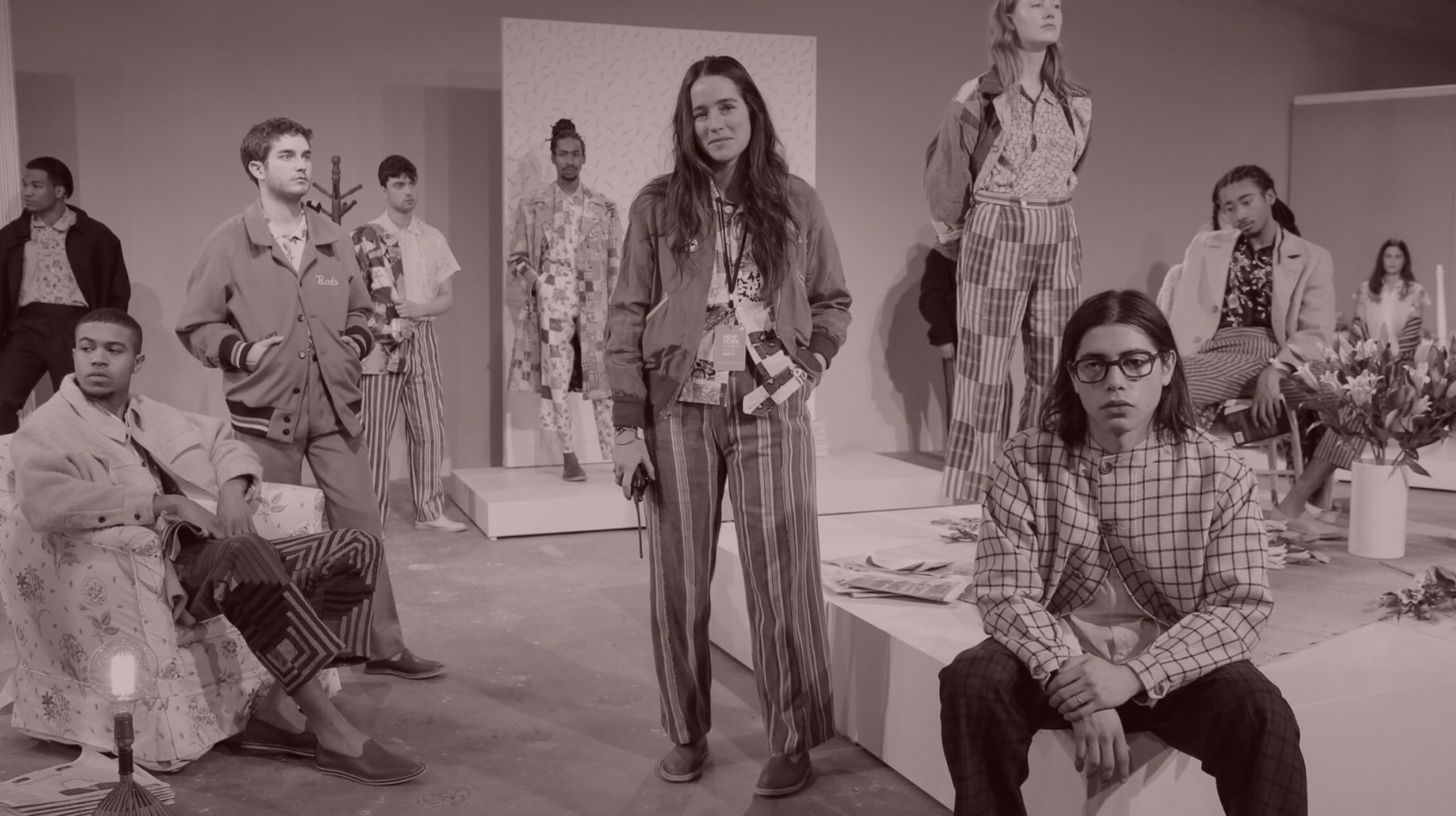
| Is Bode raising money from LVMH? Does Bode need the money? Is Bode really the next Ralph Lauren? Wait, is she actually a descendent of Mayflower lineage? Was she on the actual Mayflower?!? The mysteries behind a potential fashion power couple. |
|
|
|
| A couple of weeks back, I got a tip that Bode was talking to LVMH about a strategic investment. This was before the oh-so-precious New York label, founded by designer Emily Adams Bode Aujla, was the subject of a lengthy feature in New York magazine, but after a separate lengthy feature in GQ that wasn’t really pegged to anything in particular, other than Bode liking GQ and GQ liking Bode.
Oftentimes, when a founder looks to sell a stake in their company to an investor, or the devil, or whomever, they’ll attempt to engineer media coverage that sort of puts them on the market, whether or not bankers or lawyers have actually been contacted behind the scenes. Bode, which is owned by the designer but is sort of co-run by her husband (the furniture designer Aaron Aujla) and his brother (Dev, who is officially the C.E.O.), hasn’t quite positioned itself for a story like that: They prefer not to share financial information, and are regularly mad at a variety of the major news outlets.
For instance, they were upset with the Times’ Guy Trebay because he wrote flatteringly about a brand that had copied them; they were angry at WWD for writing about their store opening in L.A., because they had an “exclusive” with another outlet. So, I wouldn’t be surprised if they went to GQ as a positioning tool. (If I was their P.R., I would have pitched some sort of Vogue Business-GQ double billing, but again, they don’t want to talk numbers.) |
| What’s Going on Here, Anyway? |
|
| Regardless, it made me think there was some truth to the talks, and I further deduced they were likely with LVMH Luxury Ventures, the Julie Bercovy-led arm of the group that invests in small, mostly digitally-native, businesses. Since its inception a few years back, its fashion investments have included the central figure in streetwear for people who love Sweetgreen, Aimé Leon Dore; streetwear for L.A. dorks, Madhappy; and luxury ready-to-wear label Gabriela Hearst. The size of the investments are fairly small: The website says between €5 million and €25 million, but I’ve heard that they are sometimes tinier—say, $500,000 or $1 million—depending on what the company needs.
According to another person with whom I spoke—a person with meaningful, if not direct, access to information about Bode’s finances—the LVMH rumors have been around for a while, and LVMH Ventures makes sense because Bode is still quite small: No more than $10 million a year in sales as of 2022, in part because the product is difficult to truly scale. It is primarily made with deadstock—or vintage, or one-off!—materials, which are increasingly limited since many brands seek them out. Collectively, the industry is on the hunt to achieve “sustainability,” a fake word in the context it’s used. (What they mean is that they want to minimize their environmental impact.) Bode’s interest in these materials is deeper than a passing notion, but that doesn’t always give the company a leg up in sourcing them.
When I reached out to an LVMH spokesperson about the talks, they didn’t respond. Bode and her team also did not respond. Someday, I might be able to tell you for certain whether or not they are true. But for now, according to what I’ve been told, Bode is still self-funded by the designer. In other words, the assumption is that she doesn’t need anybody else’s money. |
|
|
| I have not ventured so far as to seek out her bank statements to confirm this, but it seems so strange to me that a major plotline of the Bode narrative—that she is independently wealthy—is left out time and again in reports about her, despite the fact that any time Bode comes up in conversation, her comfortable lifestyle (speculation about her real estate holdings, etcetera) also comes up. Most designers come from rich families, obviously, so I’m not sure why people care so much about Bode’s wealth—maybe because she is, as commonly reported, a Mayflower descendant, and that narrative mingles so well with her obsession with the history of clothes and Americana. Unlike Ralph Lauren, a designer she idolizes, Bode’s world was not imagined from nothing; it’s her true story.
But back to the money. There are benefits beyond cash in partnering with a firm like LVMH Luxury Ventures, namely absorbing the operational expertise of the larger group. And, of course, a potential exit route. Unique French perfumer Officine Universelle Buly 1803 was an LVMH Luxury Ventures investment before it was acquired by LVMH in 2021. Bode may not need the money, but she may eventually tire of the slog and tedium of operating the business. (Another commonality of the ultra wealthy.)
Bode is also at a crossroads, brand-wise. Her careful, considered way of working—her sourcing of vintage textiles, her reshaping of era-defining workwear silhouettes—has been hugely influential (the brand that Trebay wrote about was certainly not the only one to straight-up copy her). In collaboration with her husband, she’s created wooden jewel-box stores that make you feel like you’re walking into a diorama of a Wes Anderson film. She is obsessed with quality and the origins of things in a way that makes her admiration of Lauren wholly understandable. But to become the next Ralph Lauren, or even to build a lasting brand, she needs to get over the hump of being trendy with celebrities and finance bros, alike. An advisor like LVMH could help with that.
Regardless of whether this is all happening or not, the whispers speak to something bigger bubbling up right now in fashion, particularly with smaller, independent labels based in the U.S.—and I suspect in the U.K. as well, although it’s not a clean comparison. A lot of brands, big and small, had tremendous growth in that late-pandemic boom, so they ramped up production, hired a bunch of people, and in some cases, raised capital. That’s why, right now, so many brands are once again overloaded with unsold inventory, battling insurmountable debt, and eager to raise money or cash out all together, if they can indeed find a buyer.
I’ve seen this pattern repeated over and over again. My guess is that this isn’t Bode’s exact plight, but it’s definitely an illness that people are suffering from at the moment. Can the cycle be broken? No. But people will keep trying. |
|
|
| As previously reported here and elsewhere, LVMH is now officially sponsoring the 2024 Paris Olympics for about $166 million. (Sounds like a steal.) The business of culture! [Reuters]
Ye and Adidas are fighting over $75 million. [Bloomberg]
Edward Enninful says March 2024 will be his last issue as the editor of British Vogue. I wouldn’t expect an announcement about his replacement—although, of course, he can never be replaced—until the end of the year. Or at least after Fashion Month. [The Guardian]
Inside the world of Black Barbie collectors. [Vogue]
Selena Gomez sells $70 million worth of blush a year. I hate these kinds of annoying business stats that don’t really mean anything, but I do think Rare Beauty is worth watching. [Bloomberg]
Remember when big fashion companies started hiring chief diversity officers? Now, they’re all getting fired. [Wall Street Journal via Ray A. Smith’s Twitter]
Five out of six of the brands that performed the best on social media during Men’s Fashion Week are owned by LVMH. [Launchmetrics]
Twitter Menswear Guy noticed that Madewell mens suddenly looks good, and also observed that it’s probably because former Abercrombie designer Aaron Levine, who was famous with menswear guys long before Menswear Guy, seems to be consulting for them. [Twitter]
I didn’t make it over to the opening of Givenchy’s “ephemeral” store—its first store in the city—but I did venture to the party that the company hosted by the pool at the Goldwyn House. So did a good amount of young actors, despite the strike. Great success! [WWD]
This isn’t really news, but I just wanted to let every person who lived in New York in the 1990s and early 2000s know that Built By Wendy still exists. Wendy Mullin, who now lives in Los Angeles, relaunched it in 2016. I recently posted something about this on Instagram and
multiple people freaked out, so enjoy. [Built By Wendy]
Some of you have asked me for shopping help. I’m flattered and always willing to offer up my opinion. However, my friend Becky Malinsky is a professional, and I highly recommend her thoughtful, sensible, fun weekly newsletter. If you ask me for advice, I’m probably just going to get the answer from Becky, so you might as well go straight to the source. [5 Things You Should Buy]
Shayne Oliver has a new exhibition opening in Berlin. [Hypebeast]
Matthew M. Williams, the current creative director of Givenchy and also his own brand, 017 ALYX 9SM, is releasing what he is referring to as a mixtape in September, in collaboration with Alamo records founder and C.E.O. Todd Moscowitz. The first single is "FAMOUS LAST WORDS (an ode to eaters)" by Ethel Cain. I have no further comment, I only report the news. [Inbox]
You probably saw it all on Instagram Stories, but just in case, here are pictures from Anna Cleveland and Jefferson Hack’s wedding in the English countryside. [Vogue] |
|
|
Until Thursday,
Lauren |
|
|
|
| FOUR STORIES WE’RE TALKING ABOUT |
 |
|
 |
| Solomon’s Crunch |
| The Goldman C.E.O. is facing a pivotal quarter. |
| WILLIAM D. COHAN |
|
 |
|
 |
|
|
|
|
|
 |
|
|
|
Need help? Review our FAQs
page or contact
us for assistance. For brand partnerships, email ads@puck.news.
|
|
You received this email because you signed up to receive emails from Puck, or as part of your Puck account associated with . To stop receiving this newsletter and/or manage all your email preferences, click here.
|
|
Puck is published by Heat Media LLC. 227 W 17th St New York, NY 10011.
|
|
|
|