 |
 |
|
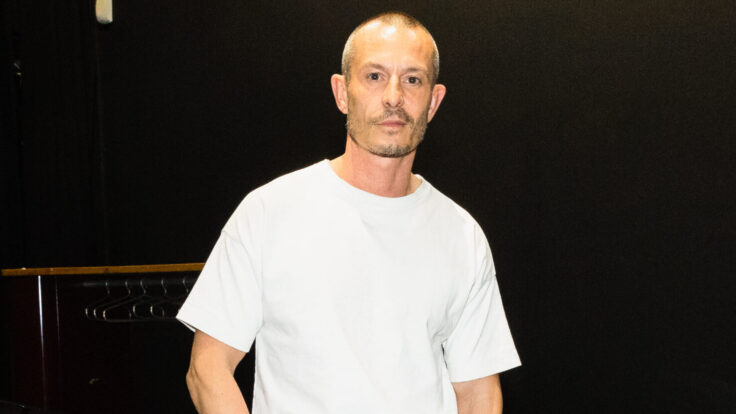
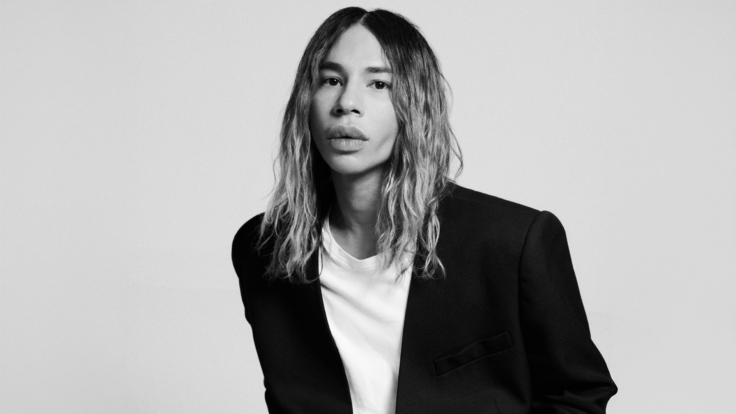
Hello, and welcome to Line Sheet. Today’s big story is a candid interview with Alexander Wang, the former wunderkind who has spent the last two-and-a-half years rebuilding his life in the wake of multiple accusations of sexual assault. (Wang eventually met with several of his accusers and the situation was resolved outside of court.) We covered everything from his scandal to the state of his business. Wang’s trajectory, after all, is a microcosm of the fashion industry’s transformation over the past 20 years into a consolidated, pop-culture machine.
Meanwhile, I’ve also got an analysis of the Pinault-wants-to-buy-CAA intrigue, and what to expect from a consummation. If Kering, Group Artémis, or all of the above are interested in a corporate membership, please don’t hesitate to reach out to Puck’s ace brand marketing executive Alex Bigler at alexandra@puck.news so she can organize that for you. (We’re high touch like that.)
But first… a brief dispatch from Los Angeles, where fashion people are also feeling the effects of the double whammy of the SAG-AFTRA and WGA strikes.
|
| Hollywood’s Summer From Hell: The Second Order Fashion Effects? |
|
| This is a busy time of year for fashion events in Los Angeles. The Sunset Tower is getting plenty of use out of its long table overlooking the pool. (I wonder how often people fall in?) The Future Perfect’s artfully curated takeover of the Goldwyn House has quickly become a go-to for fashionable parties (last week was Las Jaras wines, this week is Givenchy). Miu Miu has invited folks out to Malibu next week. Mid-summer, fun right? Maybe not for those in this company town whose livelihoods rely on television shows being made and movies being filmed—and the businesses that rely on them, too.
On Friday, at a private showing of Wings of Hermès populated by press and 25-inch Birkin-toting clients, a woman turned to me in the middle of a scene featuring dancing hands and joked, “Do you think these gloves are in SAG?” Perhaps she was trying out new material with a random stranger since she can’t legally put pen to paper these days.
But seriously, many of the editors on the ground at Wings of Hermès were fielding calls concerning canceled covers, or at least dealing with how to use a cover without the celebrity talking about the project he or she is supposed to be promoting. Meanwhile, celebrity stylists are fretting over the potential lack of red-carpet work during the next couple of months: With the Emmys likely delayed and press junkets axed, there will be a lot less for them to do. (Thank god they squeezed in that Barbie premiere.) Expect to see a lot of reality television stars, musicians, and people who are famous for nothing getting more coverage over the next few months.
The other question looming: How hard are actors going to go on brand deals during this period? One influencer talent manager texted me right after the news of the SAG-AFTRA strike: “I was also wondering today if actors will be allowed to take brand deals during the strike. Both legally and morally. Like, I’m striking in solidarity, but swipe up??” Are actors going to feel comfortable showing up to a luxury brand’s store opening and posing for photos? More to come on this, I’m sure.
And now for some Kering improv… Imagining the union of CAA and Pinault… |
|
A MESSAGE FROM ILIA
|
 |
| We believe in skin that looks like skin—and radiance that comes naturally. That skincare and makeup are one. That not every natural ingredient is good for the skin, nor is every synthetic bad.
Clean beauty is where it all collides—with conscious, carefully-selected ingredients, and no compromises.
Protect and revive your skin with innovative, multi-tasking SPF formulas, plus shop our latest launches at ILIAbeauty.com.
Just for Line Sheet readers: get 15% off your first purchase with code LINESHEET
|
|
|
| What a Pinault-Owned CAA Would Really Look Like |
|
Last week during the Allen & Co. conference in Sun Valley, more info started leaking about Kering C.E.O. and French billionaire François-Henri Pinault’s interest in buying CAA, the Very Important talent agency currently majority-controlled by private equity firm TPG (which, as you probably know, is also an investor in Puck). The latest, as reported by my partner Matthew Belloni, is that TPG and CAA are looking for a valuation of at least $7 billion, and that the talks are progressing—“intensifying,” as Matt put it. Some things to think about from the fashion side:
- It’s important to remember that, despite the Pinault architecture, this purchase would be made through Group Artémis, the Pinault family office that owns about 40 percent of Kering. (A spokesperson for Pinault and the Group Artémis declined to comment.) Artémis is the place where he plops all strategic investments that are not luxury goods. Pinault has spent the last 15 years “rationalizing” the Kering portfolio so that it is a pure luxury product play: leather goods, apparel, eyewear, fragrance. Investors are happy with that, and only want it to become more profitable, not to suddenly operate a totally different business with a totally different structure.
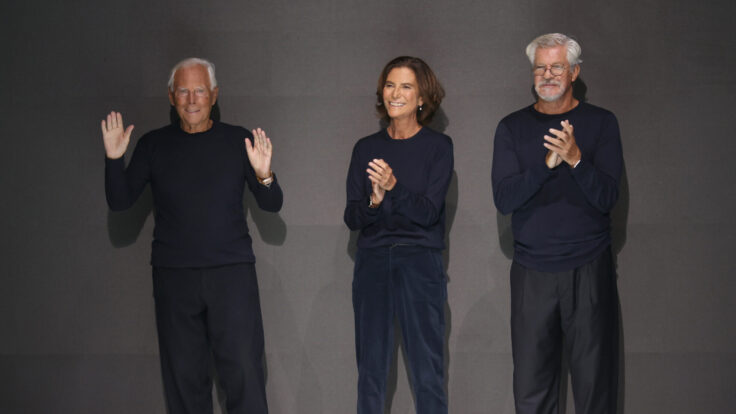
- Group Artémis has dozens of investments—in tiny fashion brands, like Giambattista Valli and Courrèges, that wouldn’t do well operating within Kering; in technology companies; and even in popular crêpe restaurant chain Breizh Café. But the model here is Christie’s, the auction house that Pinault’s father, François Pinault, bought in 1998 for $1.2 billion. Talk to a few executives, and this is what you learn: Christie’s operates separately from Kering in every way. A “friendly alliance,” sure, as one ex-executive put it, but nothing formalized.There is no outfitting Christie’s employees in clothing from Kering brands, no special attention paid to creating auctions of vintage clothing and handbags around Kering brands. CAA, too, would likely operate independently, and almost definitely require the top partners (Richard Lovett, Bryan Lourd, Kevin Huvane) to stay for a certain period of time as a part of their earn out, and presumably take some cash off the table in the process. After all, TPG’s initial investment in CAA valued the company at slightly more than $1 billion. Everyone should do well here and Pinault would surely want the triumvirate to stay as long as possible.
- Compared to Christie’s, there are obviously more synergies between CAA and Kering that speak to the inevitable melding of the fashion and entertainment industries. Just look at FHP’s wife, Salma Hayek, a CAA client who played a significant supporting role in House of Gucci, a 2021 film based on a book about a company that she basically owns. While Gucci did not seek out publicity around the film—and Hayek’s connection was not mentioned in most press—the company did allow costumers to view the archives, dressed many of the stars for the premiere, and hosted screenings.
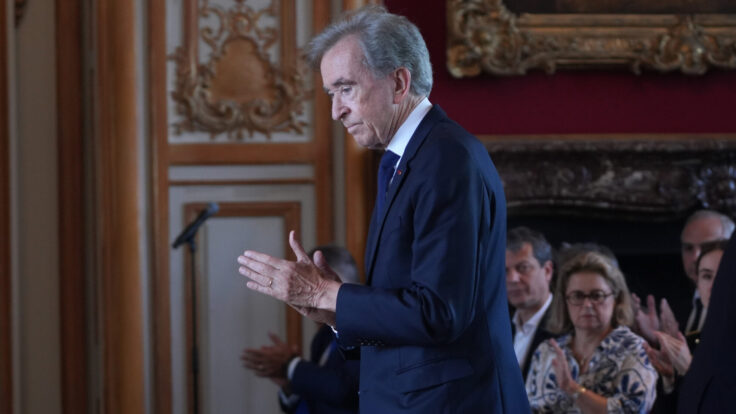
- Wonderful as it might be to get CAA talent directing and starring in the Pinault fashion cinematic universe, it will obviously remain equally important for CAA talents to land deals with Prada, Chanel, and all the brands owned by LVMH. The collective marketing budget of that group, which owns Louis Vuitton, Dior, Celine, Loro Piana, Kenzo, Givenchy, and many others, is far greater than Kering’s. (In 2022, LVMH spent more than €28 billion on “marketing and selling expenses,” about €8 billion more than Kering generated that year in revenue.) It’s going to be interesting to watch LVMH C.E.O. Bernard Arnault’s reaction to this purchase, if it does move forward, but no matter what, CAA needs to keep working closely with that group.
- As for why Pinault might view CAA as a good investment beyond the obvious: It’s a luxury brand within its category, and is a facilitator of culture-creation, something that seems to be very important to him. On the other hand, the business of representation is changing before our very eyes. (That’s part of the reason why CAA’s arch rival, Endeavor Group Holdings, has done so much around live events.)
The French profess to think long term when it comes to investments, and so Pinault must have an idea of what CAA can become. He may be particularly focused on the company’s sports interests, including the stadiums they have developed through CAA Icon; their management of the Formula 1 Brand, a cash cow; and the football (soccer) talent relationships obtained via CAA’s acquisition of ICM. Pinault is also the owner of French football club Stade Rennais, and I hear he wants to acquire smaller clubs to become feeders for the tier-one property.
And now for the main event: Alexander Wang’s confessional interview… |
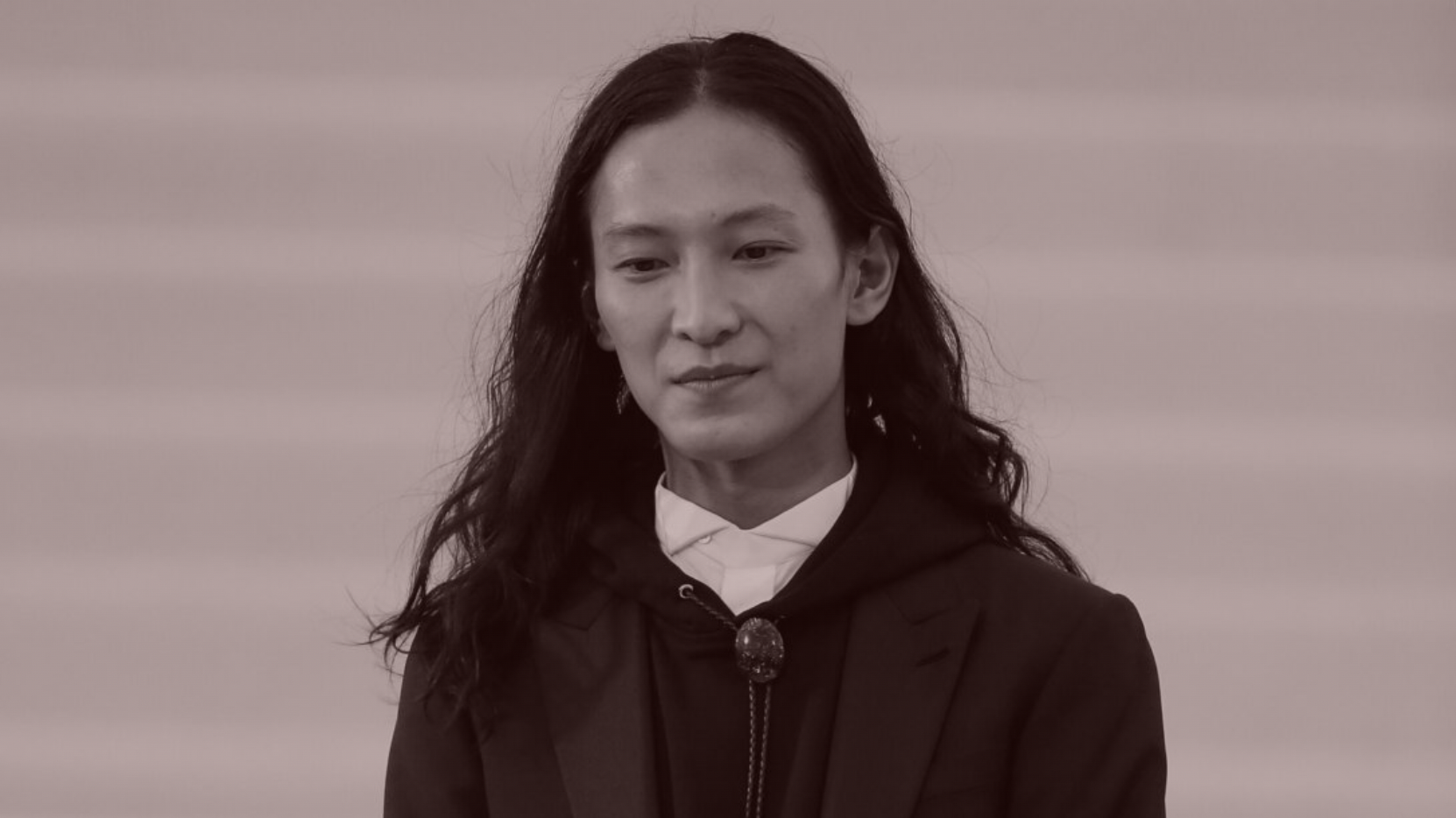 |
| Alexander Wang’s Bid for a Do-Over |
| In his first major interview since his very public scandal, Wang offers a candid history of his career, what went wrong, his view of the business, his Ye ties, and his unspoken yearning to become relevant once again. |
|
|
|
| To industry insiders, Alexander Wang’s story is a familiar one: A former Teen Vogue and Marc Jacobs intern who launched a high-low cashmere line—a glossier version of indie sleeze—at the age of 21, Wang was one of the biggest stars among a set of young American designers poised for global dominance. Other brands coming up at this time included Proenza Schouler, Rodarte, Thakoon, Band of Outsiders, but there were so many more. Most no longer exist.
Wang was different in that he scaled up fast across a bunch of categories, from high-margin shoes and accessories (studded handbags, teetering heels) to actual clothes (blazers to wear while clubbing) and basics, too (a t-shirt line with intentionally stretched-out collars, the requisite skinny jeans). His collection was synonymous with the Model Off Duty look, and also with what the models were presumably doing off-duty, too: partying.
Wang lived the fashion life to its fullest. He would rent a bus on the weekends for his friends to hop around New York to spots with table service; he threw his first Fashion Week afterparty at a gas station in the Meatpacking District where Courtney Love performed. Then, seven years after launch, he was named creative director of Kering-owned Balenciaga, one of France’s most prestigious couture houses. As a Chinese-American, he was the first person of Asian descent to hold such a position.
Designers are told that they need to develop a point of view, a way to differentiate themselves in an increasingly homogenized market. (Wang did that.) But they’re also expected to evolve that point of view in order to keep customers interested. By the mid-2015s, after his short stint at Balenciaga, Wang was met with this challenge. As streetwear—the blanket term for the merch-driven fashion—became runway worthy, and brands like Supreme and Off-White™ by Virgil Abloh were all anyone was talking about, Wang’s after-party position was starting to feel dated. At the CFDA/Vogue Fashion Fund dinner in November 2019, Anna Wintour briefly mentioned Wang’s nightlife habit in a speech touting the triumphs of the American fashion industry. Wang and his team were seated a few tables away from me, and I remember thinking, This guy is almost 40. Is he becoming a caricature of himself?
So by the time that he was publicly accused of sexual misconduct, in 2020, he was already at an inflection point. “In 2018, we did a rebrand,” Wang recently recalled to me. “I didn’t want it to just be about marble stores with black and bronze and studs. We changed the logo. But in that, we got rid of a lot of the old products: the cut-out heel, the studded bag. And then Covid happened. And the allegations happened. It was one punch, and then another punch. We had just had this transformation—a butterfly moment, and it was like, punch, punch.”
The accusations gave industry insiders permission to completely drop Wang. The apology he issued after meeting with 11 of his accusers, represented by the media savvy attorney Lisa Bloom, did little to restore his reputation. (Neither side ever acknowledged if there was an actual settlement, and Wang declined to comment on it. When I spoke to several of the accusers earlier that year for a story, many of them expressed to me that they just wanted Wang to recognize what he did and apologize directly to them.)
Wang’s business was barely affected by the negative press. He had already turned his attention to China, where the reports meant less to consumers. And after years of stop-and-start attempts to raise outside capital, he took a minority investment from two Chinese companies in 2022: fashion, textile and real estate conglomerate Youngor Group, and venture firm Challenjers Capital.
Today, the company generates more than $200 million in annual sales, and is on track to post double-digit growth this year. Asian market sales revenue is a big reason for that, but North America remains part of the equation, too. It’s still a top-10 brand for certain retailers, and there are plans to open four more stores in the region over the next year—Toronto, Vancouver, Miami, and Las Vegas—in addition to the three that already exist in SoHo, New Jersey’s ghastly American Dream mall, and Southern California’s South Coast Plaza. (Of course, new stores do not necessarily equal bigger profits: all the additional product that’s shipped needs to sell.)
The fashion industry is obsessed with two things: money and newness. Designers garner attention for big jobs and first collections; the in-between rarely gets acknowledged. Despite no longer needing the approval of the industry, Wang still seems to want it. He has started showing collections again. And he wanted to do this interview—an attempt, perhaps, to finally clean the slate.
During our 90-minute Zoom conversation, I observed a person as unfailingly polite as ever, but perhaps less guarded. Wang was never an actor, but he did often wear a protective mask. Now, in some ways, he has less to lose. This conversation has been edited for length and clarity. |
|
|
| Lauren Sherman: What does your life look like in 2023?
Alexander Wang: It’s very different from when I last saw you a couple of years ago. And tremendously different than when I was really showing in New York: a different state of mind, a different altitude. I’m turning 40 this year, so I’m approaching a big, big personal milestone. The lead-up to this really got me thinking and reflecting on so many things about my personal life, business priorities—things that I felt like I hadn’t put much attention to in terms of work on myself and in relationships.
Prior to all the allegations, at the peak of when I was showing and doing a lot of collaborations, I saw myself on this quick-moving train and I didn’t know where to get off. Every season, even while I was preparing for a show, I’d be like, What am I going to do next season? It was this go-go mentality. I couldn’t think about the crash. I could only think about the next step.
So many of the decisions—who I surrounded myself with—were very much just related to being in my twenties in New York. It’s only with the last year that I’ve thought about what it all has meant to my life trajectory. Sometimes you take the wrong exit and you get this really long reroute. And then you end up discovering things about yourself that you never knew were there. I’m so grateful in a very ironic way for this opportunity. |
|
|
| Let’s talk about the allegations, which surfaced over the Christmas holidays in 2020, into early 2021. I vaguely remember something bubbling up maybe a year or six months earlier. Did you see it coming?
The incident that came out a year before was completely different than the one that broke out during Christmas. And they were completely different scenarios that involved different people. And so, to be honest, I was not prepared at all. I was really confused. I was on a vacation with two of my friends, on my way to Miami—my birthday’s on the 26th of December. Everyone was wishing me Happy Birthday on social media, then the next day, boom. I remember getting off my flight and my phone was brrrrrrr.
I didn’t leave my hotel room. I didn’t leave that bedroom. I was talking to my team, asking, What do we do? Do we respond? It was the first time I was really confronted with a situation of this nature. Not that [a previous] sweatshop allegation wasn’t serious, but this was something that I was really thrown off by. I really struggled with how to address the situation collectively because it started as one individual and then there were more, but each one had their own story.
In respect to their privacy, I don’t want to get into the details, but I felt like there was no way that I could respond without, in this media storm, one statement being mis-contextualized for another. We held off. And we held off for a few weeks. And then when it started to really take off, I knew we couldn’t ignore it any more.
One of my biggest regrets was not reaching out to the individuals and being able to listen to them earlier on. The statement that was put out came from a place of anger and it came from a place of confusion. These relationships and encounters had spanned so many different time periods. Some were casual encounters. Others were people who I’d seen for years. And some I don't recollect meeting. It was very hard for me to wrap it all in my head and to put out one statement that I felt like would really address it. No matter what I said, there’s no way that it would feel appropriate.
How was the response from people in the industry?
Certain people reached out. But a lot of them stayed quiet. That was a very heartbreaking moment. It was painful and it was very shaming. Looking back [on those years partying], I thought we were all having so much fun. I didn't see this at all happening. Only over time did I realize that I could have had more empathy and sensitivity and understanding of each person’s experience with it. And the role that I held in creating these hedonistic environments. I also didn’t think about the role that I had as a business owner and the responsibility that comes with employees and being someone who has influence or visibility on a public level and how that all tied into this whole scenario.
You became famous immediately, no one ever said no to you. Kanye is an extreme example of this. Your reputation as a party boy was part of your personal brand, but also your fashion brand’s identity, too. Can you step back now and understand that you did have the power because you were the star?
Please don’t use a Kanye reference in this. I just don’t want that to come out…I don’t want to say that no one ever told me, though. There were definitely people, especially in the business, who challenged me by saying, hey, are you sure? But at the time, it was my family [backing the business] and everything was casual.
Another big part of it was that I became very guarded when it came to things that made me feel insecure, like real intimacy. My lifestyle wasn’t hospitable to real intimacy and didn’t allow room for deeper connections. Even though I was in these situations where I felt like it was casual, we’re having fun, but that might not be the feeling of someone else. Developing that empathetic side is something I’ve worked a lot on, even prior to the allegations coming out.
Really quickly on the Kanye thing. I’m not comparing him to you. But when I was writing about you right before you did the show in L.A. at the beginning of 2022, I had heard that you were working on Yeezy.
Oh, gosh.
You can have a minute to think about this. But why did you do that? Of course, a lot of major designers worked with him over the years, and this was prior to his 2022 craziness. But given the state that you were in, why did you engage with that?
Note: Wang asked to go off the record, later clarifying that he wasn’t working on Yeezy, but had been involved in another project of West’s, whom he’d known since that late aughts. His on the record statement: Kanye was an early supporter of the brand. He was always working on the most exciting things, and I was invited to have a peek into his creative world. It was very casual and nothing came of the discussions. We haven’t been in touch since then. |
|
|
| Since you brought up that early time in New York, let’s talk about how you got into the business. You started selling your knitwear line straight out of Parsons—what were you told was possible?
When I look back, it was a time when I was really lost in just making things happen versus keeping my eye on a bigger picture of what I wanted to say as a brand and what I wanted to do. Obviously the fashion industry has changed so much since I began, but I never thought so much about: what will this brand look like in 20 years?
What kind of advice were you getting early in your career?
I was getting advice from every single corner and from every single person that it was almost like I didn't know where to look. And it started making me insecure. When the Balenciaga offer came through, it was not something that I’d ever really thought about or anticipated. [Note: Wang was the creative director of the Kering-owned house from 2012-2015.] It was very overwhelming. In the end, I took the Balenciaga job without agreeing to the [Kering] investment [in his namesake brand], because I knew that at the end of the day, this brand was something that I built from the bottom up. I didn’t want to be tied in all the way with an investor.
I thought, I can go to Balenciaga and they’re going to teach me how to do licenses. They’re going to teach me how to do new categories, global distribution, the whole aspect that I hadn’t been exposed to. It’ll be like grad school. And then one day I’ll come back and I’ll be able to apply it towards my brand. I’m grateful and I did learn a lot. I see now that, wow, the fact that I was Chinese was a big part of the interest in me, which didn’t really register at the time. It never occurred to me until, with every single collaboration, they wanted to do a China event.
Did you feel like that time that you being there was detrimental to your core business?
Absolutely. Absolutely. It was straining. Where do you put your best ideas? Do you give it to the place where you own all your stuff, or do you give it to the place where you have the possibility and the resources to put it on a much bigger stage? That was always the struggle for me. It was a very different time from [the late 1990s] when the Gallianos and the McQueens and the Marc Jacobs of the world first got those big jobs, the amount of information and content and the speed was just so different. I didn’t take that into consideration. Look, would I take it back? No. But it definitely helped inform and shape how I think about opportunities moving forward: what I say yes to, and what I say no to.
When you went back to Wang full time, there were tons of rumors circulating about you taking an investment, including reports about one from General Atlantic. Then, a few years later, Stripes operating partner Brigitte Kleine joined your board. But nothing seemed to pan out, at least not publicly. Why didn’t it happen?
We were having so many different conversations with different buyers, and their priorities were always different. That’s when I brought Paula [Sutter, former president of DVF, credited with that company’s commercial renaissance in the late 1990s and early 2000s] back into the business as an advisor. When we were having those original conversations, there was no one really guiding us. We had banks, but no one in the leadership capacity to say, hey, you know what, I’ve seen these transactions before. This is what you need. And this is what you need to work on. So then we went back out and that's how I met the investors that I have now.
Okay, so the allegations happened, and then, after you met with them one on one, the accusers eventually “moved forward.” You start building back up again. And then you do this show in L.A. Why?
The business was in a solid place. We were about to close the investment, and I always wanted to do a show in L.A. And the truth is, originally I wanted to do this Chinatown show in New York years back. And the location we wanted in New York wasn’t available. So we started looking at other Chinatowns. And I felt like, as part of everything that we were doing during Covid, which was really thinking about more philanthropic opportunities where we can give back, Chinatown was a huge priority for me and the organization surrounding it. And so I came upon a location in Los Angeles, and they were just really excited to have us there. It just felt nice to be in a place where people were inviting. Obviously, the fashion show was a pillar of that.
But we had a night market. We kept all the little local stores, vendors open and things like that. It was the first time all my family was able to come because they were all in California to come and experience it. I was really proud of that show, I was expecting that there was going to be reviews and things that mentioned the allegations. But the moment was bigger than the collection. There were other things that we had to say as a brand.
A year later, you did the show in New York. How did you feel that went?
That one was a little rocky. That show was supposed to happen on Chinese New Year, and there were some delays. When we finally landed on a date, we realized it was actually right before Fashion Week. Okay, everyone’s going to say that we’re coming back to Fashion Week. And I figured, if that becomes the message, then so be it. The teams have worked so hard in putting this show together, I couldn’t think about it much anymore. Let’s be proud of the work that we’ve done. But it was a very different vibe and energy to what the L.A. show was, because it was very small and intimate. It was a lot of editors who hadn’t come to our shows since the allegations. This New York show was different, and I felt it. I knew that things were not going to change overnight. But I saw it as a step forward that I needed to take. |
|
|
|
|
| Do you feel like you need the industry’s approval? Do you feel like you need editorial support, all that stuff to make the brand what you want it to be?
I recognize that we are no longer the new kid on the block. That’s very much apparent. And that that was even happening before the allegations. Our brand used to be about these big moments and spectacles and things for the writers to write about. We’ve really had no editorial support, very little, in the last couple of years. We had support from a lot of family and friends of the brand and things like that, but there was really very little industry support. There are some that I know have made up their minds. And I accept where we are as a brand.
Back in 2017, 2018, you were really focused on making the brand a media brand; now every fashion brand is a media brand. What is your strategy around creating content now, given that you will have to deal, maybe forever, with people leaving negative comments?
Today, my job is about building a global luxury lifestyle brand led by a Chinese-American name. Something where I feel like I can really bridge cultures and think about challenging the conformity of luxury and just making my family proud. I get excited by challenging the status quo. But I also know that some of the content we put out is going to be misinterpreted or misunderstood. Sometimes the joke doesn’t land.
I’ve seen that on my personal page, like a lot of the memes and things that I posted were used against me [at the height of the allegations], and I thought, Gosh, I can’t be entirely myself. But if this is the forum that you want to play in, you have to understand that there are a lot of different perspectives and opinions. You also can’t ignore the fact that it can go down a very dark hole.
You’ve seen the consolidation of the industry happen before your eyes. Is there an opportunity for brands like yours to emerge, especially as those big groups take over more of the manufacturing in Europe and Asia?
There’s always going to be at a certain point, when you scale as a business, there’s always going to be commodity items. Then at the core of it, you have to have the thing that makes your brand unique and important enough for them to come to you. But I also see brands like Telfar. That’s a perfect example of a brand that has nurtured a community that is so loyal and so strong that they’ve been able to do things that are completely their own, write their own rules, and be successful at it. And I have great admiration for Telfar [Clemens]. I knew him back in the day. But to see where he’s gotten his business, that’s incredible. |
|
|
| A few weeks ago, the French newspaper Libération ran a lengthy interview with Balenciaga designer Demna. Two interesting things he said, translated from French:
On whether the online “cancellation” killed his creativity: “To be aware of the world in which we live? I think not… In terms of creativity, I have become more radical in my approach.”
On Kim Kardashian: “For me, it is not Kim who embodies my work… She embodies me maybe 0.0001%. That’s the problem: the perception of people for whom Eliza Douglas [the artist and friend of the house], who has been there since my first show, does not embody Balenciaga, but rather Kim Kardashian, who carried two bags for a year and a half. That’s the problem with the world we all live in.” [Liberation.fr]
A reminder that we’re supposed to be able to sign up for Phoebe Philo drop alerts any day now. [Style Not Com]
I hear this exposé on the culture at Essence is just the first of a series on billionaire beauty mogul Richelieu Dennis. [Business Insider]
I’m a Greta Gerwig person but I am also Barbie-ed out! Ace beauty reporter Rachel Strugatz explains why Mattel’s beauty collaborations are falling short of expectations. [BoF]
The celebrity stylists union that was recently formed in the U.K. is launching a newsletter. [BECTU]
In the midst of the Allen & Co. conference, Diane von Furstenberg posted a photo of her and Mark Zuckerberg, calling him “a fighter with no anger.” Then she deleted it. [Taylor Lorenz, with a screenshot]
The late Jane Birkin’s personal influence on how women dress is unmatched. [Washington Post]
A sort-of shakeup at Rag & Bone: the remaining co-founder Marcus Wainwright is stepping down from the role as chief creative officer. He’ll remain on the board. [Retail Dive]
The upcoming I.P.O. of L Catterton-backed Israeli beauty company Oddity, owner of Il Makiage, says a lot about the state of beauty funding, which is down 50 percent from last year. [Crunchbase News]
Richemont reported an unexpected decline in U.S. sales, shares dropped [Bloomberg via BoF]
Wimbledon style beyond Kate Middleton and Brad Pitt. [NYT] |
|
|
| Coming Thursday, because this was wayyy too long! If you want to be included, email me before E.O.D. Wednesday.
Until next time,
Lauren |
|
|
|
| FOUR STORIES WE’RE TALKING ABOUT |
|
|
|
|
|
 |
|
|
|
Need help? Review our FAQs
page or contact
us for assistance. For brand partnerships, email ads@puck.news.
|
|
You received this email because you signed up to receive emails from Puck, or as part of your Puck account associated with . To stop receiving this newsletter and/or manage all your email preferences, click here.
|
|
Puck is published by Heat Media LLC. 227 W 17th St New York, NY 10011.
|
|
|
|