{{ 'now' | timezone: 'America/New_York' | date: '%b %d, %Y' }} |
|
|
|
Hi, and welcome back to Line Sheet. I’ve escaped Fashion Month temporarily, and we’ve got a great issue for
you today: By popular demand, Malique “Malique@puck.news” Morris has investigated the supposed relaunch of Matches. Who are these guys that count LVMH Luxury Ventures and the Hermès family as investors? Will it be called Matches or MatchesFashion? Can we have Raey back? Malique investigates all this and more, just for you.
Up top, Malique and
Sarah Shapiro consider whether The Gap’s sudden makeover as an entertainment brand is actually selling clothes, plus an update on the culling of the Vanity Fair Oscar party list being overseen by newish editor Mark Guiducci. Today’s issue is available exclusively to Inner Circle members. (Upgrade here, if you haven’t already.)
Fashion Month is over, but
discourse never dies. (Please send me your thoughts from today’s Valentino show… I hope you are enjoying Rome.) Tomorrow on Fashion People, my guest is Alastair McKimm, founder and editor-in-chief of Prototype_ and head of VTG Studios. We discuss the best, and some of the worst, of the shows. We go deep! It was fun. Listen here
and here.
Also mentioned in this issue: Joe Wilkinson, Mario Maher, Tom and Ruth Chapman, Simone Rocha, Graydon Carter, Liane Wiggins, Young Miko, Mike Ashley, Pam
Kaufman, Greg Tress, Troye Sivan, Natalie Smith, a best new artist Grammy nomination, Grace Wales Bonner, the Shein supply chain, Tyla, Marco De Vincenzo, Susie Cave, Nick Beighton, Stefano Rosso, and more… |
|
|
|
A MESSAGE FROM OUR SPONSOR |
For Fall Winter 2026, MALO offers an early view into what comes next. Grounded in the house’s long-standing commitment
to quality without compromise, knitwear comes into quiet focus with elongated silhouettes, and generous volumes. Pieces are conceived to layer naturally—knits over shirting, coats over dresses—creating a dialogue between softness and discipline, with modern proportions. Cashmere is shaped with precision yet worn with ease, expressed in a mineral palette of stone, camel, slate, and deep chocolate. Designed and made exclusively in Italy, this is a considered view of the season ahead, shaped with
clarity and intention. Explore Fall Winter 2026. |
|
|
|
Two Things You Should Know…
|
- The Gapaissance faire:
Over the last two years, Gap has restored its place in the culture, partly by tapping young musicians to dance in its denim. In 2024, the brand premiered ad spots with Troye Sivan and Tyla, and one featuring the K-pop–adjacent girl group Katseye, doing intense choreo to Kelis’s “Milkshake,” went kinda viral last summer. On Tuesday, the
brand released a music video/ad hybrid for its athleisure offering, entitled “Sweats Like This,” starring the Puerto Rican rapper Young Miko.
The spot was the latest example of fashiontainment. There’s probably more to come: Pam Kaufman joined Gap Inc. from Paramount Skydance as chief entertainment officer in January. Gap’s new store on
Chestnut Street in San Francisco has a music listening section in the back, and the company recently listed a vice president of development role based in West Hollywood—a telling signal given the title and location. The creative campaigns have shown an ability to spot new stars: After their ad last summer, Katseye got a best new artist nomination at this year’s Grammys. —Malique Morris and Sarah Shapiro - Party lines: On the latest
episode of The Town, our partner Matt Belloni grilled newly minted Vanity Fair chief Mark Guiducci about his decision to cut the Oscar party guest list in half. The 31-year-old party has become an award season institution and a cultural hallmark, and Guiducci insisted that the choice
to cull the guest list and move locations was intended to make the event “feel like the magazine, itself.” (Guiducci may barely qualify as a Millennial, but he has mastered the Condé Nast practice of sounding like he was professionally weaned in the ’90s.)
Anyway, he dodged Matt’s questions about who exactly had gotten nixed. But he confirmed that former VF boss Graydon Carter will be in attendance, as our partner Dylan Byers had
previously revealed. Mark also acknowledged that he’d be honoring a tradition that Carter effectuated in the glory days, the so-called “Golden Rule”: If you come with an Oscar, you’re welcome to the party. When Matt asked whether “the 10 agents” who accompany the winners will be admitted, Mark slipped the question again and said: “We want to create an environment that those people want to be in, so they don’t necessarily need to see all the people they see all the time.” —Maya
Tribbitt
|
|
|
|
The mysterious relaunch of the luxury e-tailer is shouldered by two relatively unknown
entrepreneurs. Can they revive a zombie brand in a tattered sector? What could possibly go wrong… |
|
|
|
It’s been a tumultuous decade or so for Matches, the luxury e-tailer that Ruth and
Tom Chapman founded as a boutique in West London in 1987—which, as you know, went on to become an online luxury force that platformed many British designers, from Grace Wales Bonner to Simone Rocha to Susie Cave of The Vampire’s Wife. Private equity firm Apax Partners nabbed the company from the Chapmans in 2017 at a $1 billion valuation, and sold it seven years later to Frasers Group, retail veteran Mike Ashley’s
holding firm, for… £52 million, or about $66 million.
The Frasers misadventure lasted about two months. Matches shuttered in 2024, and the fallout was swift. Vendors were owed around £210 million ($270 million). A few labels, including The Vampire’s Wife and Cefinn, ceased operations shortly after. |
|
|
|
A MESSAGE FROM OUR SPONSOR |
For Fall Winter 2026, MALO offers an early view into what comes next. Grounded in the house’s long-standing commitment
to quality without compromise, knitwear comes into quiet focus with elongated silhouettes, and generous volumes. Pieces are conceived to layer naturally—knits over shirting, coats over dresses—creating a dialogue between softness and discipline, with modern proportions. Cashmere is shaped with precision yet worn with ease, expressed in a mineral palette of stone, camel, slate, and deep chocolate. Designed and made exclusively in Italy, this is a considered view of the season ahead, shaped with
clarity and intention. Explore Fall Winter 2026. |
|
|
|
Then, last December, Frasers sold the Matches I.P. to a pair of relative unknowns: Joe
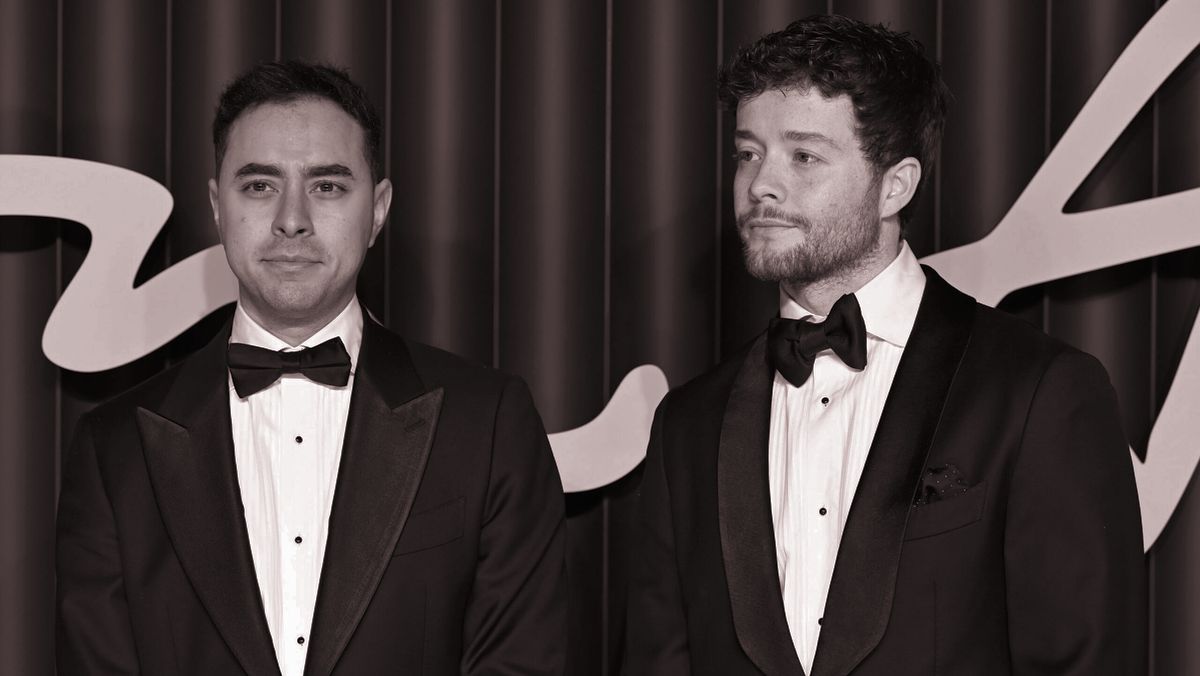
Wilkinson and Mario Maher, the co-founders of Heat—the LVMH Luxury Ventures–backed mystery box service that evolved into Mile, a members-only shopping app—and Hulcan, a luxury holding company. The pair are trying to revive Matches within that holdco, and have $150 million in capital to play around with from Frasers Group, LVMH Luxury Ventures, and Stefano Rosso and the Hermès family.
No one really knows what Matches 2.0
will look like, mostly because the Hulcan guys have been tight-lipped. Before selling the I.P., Frasers Group had planned to relaunch Matches as a members-only service this spring, with personal shoppers, priority shipping, and access to exclusive events in its Mayfair townhouse, according to a 2024 pitch deck I reviewed, which was apparently shopped around to brand partners and noted that the top 20 percent of Matches’ customers accounted for 78 percent of its business. I’m told the new owners
are potentially targeting a relaunch for the second half of the year, and have suggested that they’ll begin buying inventory in May or June. (Wilkinson and Maher denied this, but wouldn’t comment further.)
Yes, the timing of all this is slightly problematic. Indie labels, which rely on solid retail partners, were burned by Matches—and Ssense, and Saks Global, and LuisaViaRoma, and all the other fallen wholesale titans undergoing restructurings. When Frasers Group wound
down the operation, they claimed that too much change and investment was required to restructure the company, leaving many brands without inventory or payment. Hulcan wouldn’t comment on whether the company has yet approached brands, but the former partners I spoke to have little desire to become guinea pigs for a Matches revival.
Wilkinson and Maher are also an open question. In my conversations with a host of industry people, no one could articulate who they are beyond nice, cool, young
entrepreneurs. There are plenty of questions surrounding Mile, another business in their portfolio, although I’ve heard the founders have told industry insiders that it generates around $50 million something, presumably in annual transaction volume. (Wilkinson and Maher denied this, but wouldn’t comment further.)
As the figureheads of Matches 2.0, their Sisyphean task is to convince the industry they have the chops to revive a legacy retailer in a tattered sector where
most reinventions are likely dead on arrival. “We see enormous opportunity in this space and believe there’s now a clear gap in the market for a curated, multibrand platform that truly understands today’s luxury customer,” the Hulcan founders said in a statement. “Matches is the ideal brand to lead that next chapter and restore its position as one of fashion’s most trusted names.” |
No Country for Old Business Models
|
In happier times, Matches distinguished itself in online luxury by introducing new British labels
and buying idiosyncratic collections that exemplified their designers’ voices rather than chasing trends. When Apax took over, it focused on growth by overrelying on big brands while the company was getting thrashed by Brexit, according to a former insider. In that unstable environment, the company shuffled through C.E.O.s in their pursuit of scale: Ajay Kavan, a former Amazon executive; Paolo de Cesare, the former Printemps chief who lasted less
than a year; and finally, in 2022, former Asos C.E.O. Nick Beighton took the reins.
By 2023, Beighton’s crew had narrowed losses by consolidating teams and chasing down duty drawbacks (a refund of certain import duties, taxes, and fees), according to a person familiar with the matter. The company was pulling back on occasionwear, and focusing on higher-performing categories like handbags and athleisure to appeal to a wider, more lifestyle-oriented audience, this person
said. By then, though, the essence of the brand was gone, and Frasers Group inherited a business that barely resembled its original, insider-loved form. |
|
|
|
It’s unclear if Hulcan will follow through on Frasers’ plan to relaunch the business as a members-only
service. For one thing, they don’t have the townhouse anymore. Issey Miyake is reportedly opening a store in that space this year. (Wilkinson and Maher had no comment.) But the new owners are definitely retaining some of Matches’ DNA: Wilkinson and Maher acquired the I.P. for Raey, Matches’ in-house label, which I’m told was consistently a top-five bestselling brand for the company—at times even outperforming the likes of Saint Laurent, Gucci, and Toteme. Hulcan also tapped a few former Matches
employees, including Greg Tress, the former logistics operations manager, and Natalie Smith, the former senior commercial finance manager. I’m told Liane Wiggins, the former womenswear buying director, is also still involved.
But I’ve also heard that Hulcan hasn’t reached out to many of the people who built Matches in the first place—the Chapmans, former chief brand officer Jess Christie, or Raey’s former creative
director Rachael Proud. A well-placed source very familiar with the business noted that the new owners need the right creatives in place to produce “slick and stylish” content, and who have “an excellent buying eye that can manage budgets well.” This person added that “there are very few of those around these days. These are hard things to achieve without the right vision and experience.”
No matter what business model Matches lands on, the Hulcan team will have to be
pliable: So much (and potentially too much) has changed since it dominated its corner of online luxury. Established labels have beefed up their direct-to-consumer businesses and can afford to be selective about partners; in the wake of all the multibrand restructurings, smaller brands are correcting their overreliance on wholesale. An insider at one of Matches’ former brand partners, which did around $5 million in sales last year, told me its D.T.C. business has jumped since Matches
shuttered, and now accounts for more than 50 percent of overall sales, up from 40 percent in 2024. Meanwhile, labels are also gravitating to independent boutiques with loyal clients and favorable selling terms instead of larger players.
In short, Matches needs to propose something that feels novel and not fussy or convoluted. More than anything, though, the company has to court and secure brands that are excited to sell on the platform. I’ve spoken with labels that are open to working
with Matches again, but they’re waiting to see how the chips fall before signing on. Who wants to go first? |
What We’re Reading…
and Looking At…
|
Marco de Vincenzo is out as creative director of Etro after four years in the role. The
designer turnover isn’t slowing down. [Inbox]
The Estée Lauder Companies is suing Jo Malone for violating a trademark agreement in a recent fragrance collaboration with Zara. Prestige fragrance is all the rage, so brands are naturally going to be protective. Let the fragrance wars commence. [The Fashion
Law]
Apparently Shein has a supply chain management accelerator program for smaller brands. It looks like a profit play. This story writes itself. [The Business of Fashion]
Tag Heuer appointed Béatrice Goasglas, who joined the LVMH-owned watch
brand in 2018, as chief executive. She’s the first woman to lead the 166-year-old company. [WWD] |
Until tomorrow,
Lauren
P.S.: We use affiliate links because we are a business. We may make
a couple bucks off them. |
|
|
|
The industry’s go-to source for unflinching reporting on the trillion-dollar business of artificial intelligence - perhaps the single most
important technology of our time. Ian Krietzberg, the powerhouse journalist behind The Deep View, delivers twice-weekly insights into the latest dealmaking and breakthroughs in A.I., and how the intersecting worlds of finance, entertainment, media, and politics are being transformed in its wake. |
|
|
|
Puck founding partner Matt Belloni takes you inside the business of Hollywood, using exclusive reporting and insight to explain the
backstories on everything from Marvel movies to the streaming wars. |
|
|
|
Need help? Review our FAQ page or contact us for assistance. For brand partnerships, email ads@puck.news. You received this email because you
signed up to receive emails from Puck, or as part of your Puck account associated with {{customer.email}}. To stop receiving this newsletter and/or manage all your email preferences, click here. |
Puck is published by Heat Media LLC. 107 Greenwich St., New York, NY 10006 |
|
|
|
|