 |
| Welcome back to The Varsity, my private email on the titans who run the sports business—from the luxury suites and corner offices to team planes and production trucks. It was great seeing all my Puck partners in D.C. last week in the run-up to the White House Correspondents’ Dinner. We all had a great time at our party, in partnership with WME and Snap, at the Riggs. To all those who have remarked on the ascent of my social status since I arrived at Puck, I’ll let you eat cake…
On this date in 1988: The Baltimore Orioles won their first game of the season after 21 straight losses. A younger version of myself celebrated this highlight, a nadir of the Ripken era, at a Baltimore bar—a moment that was immortalized in this 15-minute video produced by MLB Network.
This issue is chock-full of news on Diamond, Paramount, the NBA, and the NFL. If you were forwarded this email, sign up here to become a Puck subscriber. And if you’re one of those people who keep forwarding this email, we’re prepared to kidnap Marchand from his silent retreat and send him after you…
Let’s get to it… |
| The Starting Five: Bob Bakish Edition |
|
- The Paramount-Charter extension is coming…: Here’s the only piece of good news about Paramount Global that you’ll hear all day: I’m told that the company’s negotiations with Charter have advanced far enough along that all sides expect to sign a short-term extension by E.O.D. tomorrow—a positive harbinger that a deal is in sight. Fortunately, Shari Redstone’s decision to defenestrate Paramount Global C.E.O. Bob Bakish has had zero effect on these talks. Bakish was intimately involved in Viacom’s carriage negotiations years ago, but since Viacom and CBS merged in 2019, those deals have been led by longtime cable industry veteran Ray Hopkins.Hopkins’ counterpart is Tom Montemagno, Charter’s E.V.P. of programming acquisition. The two seasoned executives have worked together for the better part of three decades, and provide another example of how media is really a relationship-based business. (Of course, Shari and Bob demonstrate what happens when those bonds break…)
On one hand, it would seem that Charter has a lot of leverage over Paramount. Paramount’s top brass is engulfed in chaos as Redstone tries to engineer a sale to David Ellison and RedBird Capital. Also, with the Super Bowl and March Madness over, CBS is approaching a fallow period, wherein it has no top-flight sports broadcasts to help force an agreement. On the flip side, Charter is not in a great position for another public battle with a broadcast network. Its recent earnings were nothing to write home about, and its stock is down 33 percent year to date.
Another reason to be optimistic: Paramount will make its P+ ad-supported tier available to Charter basic subscribers. (Charter has a similar arrangement with Disney and D+.) The final sticking point comes down to price. There’s still an economic gap that may or may not be narrowed by shuttering some of Paramount’s little-watched networks. The reality, of course, is that Jeff Shell or whoever takes over the company will probably be the one who makes the final decision on them.
- Diamond pressure: David Preschlack spent last weekend in Los Angeles nailing down a hugely important carriage deal. He and DirecTV’s Rob Thun agreed to the framework of an arrangement that will see DirecTV use the “glide path”—an emergent term of art in The Varsity’s expanding lexicon—as it moves Diamond’s Bally Sports-branded regional sports networks to a digital tier. DirecTV had originally been advocating for the “cliff path”—that other term of art—that Comcast wants to employ, whereby the distributor moves the R.S.N.s to a digital tier immediately, cutting around one-third of revenue overnight. (We’ve affectionately rebranded this the grinfucking option, of course, yet another preferred Varsity locution.) Nothing has been signed yet, but Preschlack and Thun have worked through the thorniest terms.Diamond’s DirecTV deal puts a lot of pressure on Comcast, whose own deal with Diamond expires Tuesday at 11:59 p.m. Comcast’s Greg Rigdon has not moved off of his “cliff path” position. The two sides are talking, but it doesn’t appear that either side has made a concession yet. Unless they agree to a long-term extension by tomorrow, it’s possible that the Bally Sports R.S.N.s will be dark on Comcast systems by Wednesday. And if Diamond is unable to work out a “glide path” deal with Comcast, it’s unlikely that the company will exit bankruptcy.
Right now, it’s too close to accurately predict how this all resolves. But with a DirecTV deal close at hand, the irrepressible Preschlack can point to successful deals with five top distributors: DirecTV, Charter, Cox, Mediacom, and FuboTV. That’s a nice emerging narrative to boast about. For its part, Comcast has remained true to a strategy of putting regional sports networks (MASN, Root Sports, and SportsNet Pittsburgh) on its digital tiers. I’ll have more on this soap opera on Thursday.
- WBD’s broadcast conundrum: As I reported last week, ESPN has a handshake deal for the NBA’s “A package.” And Amazon and the league have agreed to a deal framework for what has been described as the “C package,” as Marchand first reported last week. That leaves Warner Bros. Discovery and NBCU battling over the third package. It could take a week or more for things to shake out.One of the biggest questions centers on WBD’s matching rights, and how they might be deployed. In most media contracts, matching rights are applied to more than just money; they also pertain to platforms. In this instance, NBCU has said that if it wins a package, it will carry some NBA games on its broadcast network. WBD, of course, doesn’t have a broadcast network, and the company has apparently not reached out to other broadcasters about a potential joint bid. Its executives seem to be confident that their matching rights are comprehensive enough to counter whatever NBC is offering.
The NBA has made it clear that it prioritizes reach in these negotiations. Amazon provides a global audience, and ABC offers broadcast reach for the NBA Finals and other big events. Given the ever-shrinking cable audience, it would seem that the league would prefer to have another broadcast network involved. The next two weeks will determine whether that will include NBC or not.
Could a WBD joint venture with one of the broadcast networks—NBC? Fox? CBS?—still be possible? There is precedent, of course. The only way CBS and then-Time Warner kept March Madness away from ESPN, in 2010, was by joining forces and putting forth a combined bid. The partnership combo has been so successful that the two businesses have signed a series of extensions that run through 2032—at which time, based on where things are headed, they may be one single company.
- ESPN and the NFL: During the past week, two senior sports business executives suggested that the NFL’s negotiation over an equity investment in ESPN, as part of its 2025 streaming ambitions, might be progressing apace. After a bevy of phone calls, however, I can report that a deal is only slightly closer today than it’s been for the past several months. ESPN and the NFL are still talking, but nothing is imminent. ESPN is also talking to the NBA, MLB, and NHL, along with major technology companies and telecom players.Also, one item of note: I spilled a lot of ink earlier this year about the NFL’s frustration over its lack of visibility into the creation of Spulu, the enigmatic forthcoming streaming service from ESPN, Fox, and Warner Bros. Discovery. Several sources have told me that those hard feelings have subsided, and the topic rarely comes up when ESPN and NFL executives get together.
- R.I.P. Tom Phillips: I want to acknowledge the recent death of Tom Phillips, who founded a newsletter company in suburban Maryland 50 years ago. Phillips Publishing, his company, hired me as a young reporter in 1994, where I first covered all aspects of the cable industry. I haven’t talked with Phillips in the last quarter-century. But I’ve thought about him on occasion as my own career has brought me back to the newsletter business.
|
|
|
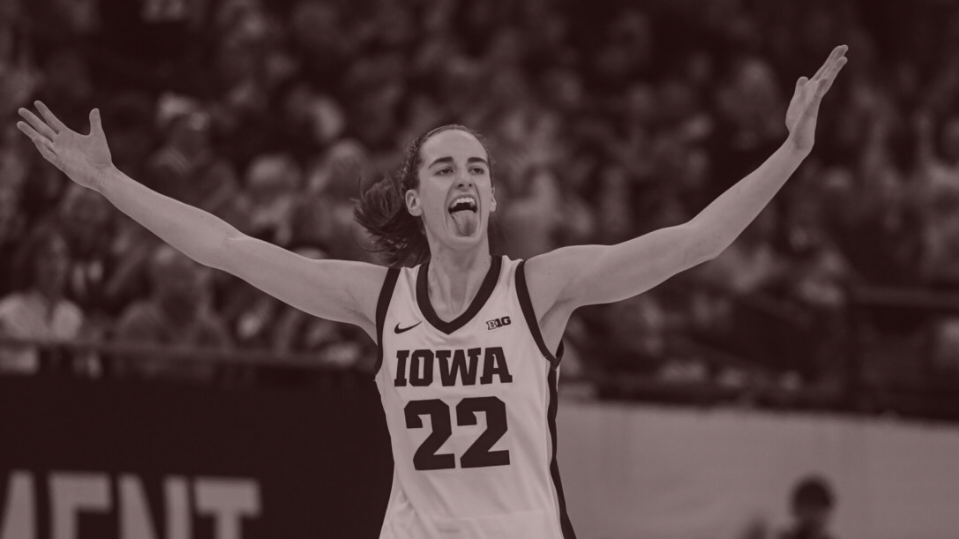
| About a year ago, I visited with several senior bankers and private equity executives, all of whom suggested that the women’s sports space was part of their investment thesis. Sure, Caitlin Clark was in the middle of her first run to the national championship game, and helped set the first of many TV ratings records. And, yes, U.S. women’s soccer had already become arguably the most beloved national squad since the Dream Team.But their comments foreshadowed even more capital, a rush of fresh deal flow, and financial potential. To wit: ESPN’s recently signed $800 million NCAA rights deal (which includes the women’s basketball tournament) already seems like a steal. NWSL franchise values have eclipsed $100 million in some markets. The WNBA Draft set viewership records. And Fox has carried women’s volleyball on its broadcast network.
Amid all this positivity, however, a growing pain has emerged: Women’s sports has gotten so popular, so fast, that some of the marketing efforts around it lack key infrastructure. Much of the marketing just seems so basic—banners and display, eyeballs, etcetera, rather than the real storytelling that creates the most significant R.O.I. for all parties.
Carol Stiff, who runs the Women’s Sports Network, described meetings where advertisers had no marketing plans to accentuate their ad purchases—something that almost certainly would not happen in men’s sports, where brands have been advertising for so long that it has become more of a rinse-and-repeat model. “We need investors to come in and demand better windows for exposure,” she said. “But I think the pressure’s on now.”
The effort to usher more corporate professionalism into the women’s sports space continues on Thursday with the Sports Innovation Lab’s NewFront, in New York. Invites were sent out to more than 200 media buyers and brand marketers. Sara Gotfredson, a former ESPN ad sales executive, started the sports media advisory Trailblazing Sports Group about 18 months ago to help brands develop these kinds of campaigns. Gotfredson said media organizations need to look at these types of deals on a grander scale. “Right now, it’s hard for brands and agencies to buy women’s sports because the players are not always the size of ESPN,” she said. “They might check the box and say, ‘Okay, great. We bought the unit in the champ game,’ or they might go do one N.I.L. deal. But there’s a long tail in women's sports. We’re really trying to help bring a lot of entities together and serve it up on a platter to brands so that they can invest more across more parts.”
Gotfredson mentioned a recent six-figure deal that could serve as a model: Visa’s partnership with the USWNT Players Association, which includes the brand paying $10,000 to each of the players’ families to help defray the costs of traveling to the World Cup in Australia and New Zealand. “Then we created media around it, and then Visa put its own media behind it,” she said.
Gotfredson referenced another advertiser, one of the biggest in sports, whose agency called wanting to increase its spend in women’s sports. But when Gotfredson asked basic questions about how the brand can help her audience, the agency reps just responded with a media plan focused on homepage takeovers. “I’m looking for them to be my strategic partner,” Godfredson said. “I would love for them to give me 10 of their female athletes and we’ll create a diary or a narrative around them as they’re going through the draft. We don’t have the resources to pay for that. We don’t have the resources to produce that. So we’re looking for more of a partner-type approach versus just buying some impressions.”
Gotfredson, who saw the potential for women’s sports when she was at ESPN, believes these types of deals will ensure growth for the entire sector. “From a storytelling perspective, when you look at the fans of women’s sports, it’s not just women,” she said. “They’re men and women, and they really skew young. They're in the social and digital landscape a lot, and they care about what these women are doing off the court just as much as they care about what they’re doing on the court.” |
|
|
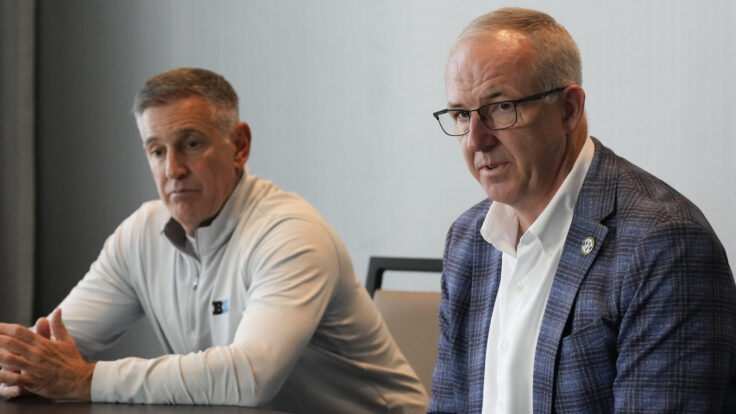
| “One point on the R.S.N. debacle that I feel isn’t getting enough attention (have seen it in coverage, but sparingly): the economic impact for MLB/NBA/NHL teams. We’re already beginning to see teams cut/trade higher-cost players as a result of local broadcasting deals falling through, and no longer being able to afford them. It helps that MLB, as an example, backstops teams’ revenue to an extent, but that is a short-term solution for a long-term problem. This has potentially major competitive implications, as well. Maybe I’m missing some reporting on this, but it feels like something that should be highlighted more.” —A league executive“[SEC commish Greg] Sankey disputes the idea that college sports are undervalued by saying, ‘If I was buying stock, I’d buy stock in college sports.’ If he’s buying stock in college sports, does that not inherently mean that he believes it’s undervalued?” —A financial advisor
“My brother and I were scratching our heads trying to understand why the NBA has been airing some of the early-round playoff games on NBA TV. It has little visibility, no cachet, and brings in no money from the big corporate players who want the playoff content. They make money from advertising but still…” —One of Jimmy Pitaro’s childhood friends
“How’s this for a drinking game? John mentions glide path: drink once. John mentions cliff path: drink once. Anyone (John, a source, a commenter) mentions grinfuck, grinfucked, or grinfucking? Drink twice. I'll be buying stock in Molson Coors and Diageo if this takes off.” —A satisfied Varsity subscriber [Ed. note: Five mentions, not including those contained within the game’s rules. Drink!]
“How did I not know that John Heilemann tended bar at Garrett’s? I must have been planning on attending those organic kombucha-making classes decades in advance.” —Another happy Varsity subscriber
“R.I.P. Garrett’s. All in on Puck. The best.” —A documentary producer |
|
|
| Until Thursday,
John |
|
|
|
| FOUR STORIES WE’RE TALKING ABOUT |
|
|
|
|
|
 |
|
|
| Need help? Review our FAQs
page or contact
us for assistance. For brand partnerships, email ads@puck.news. |
| You received this email because you signed up to receive emails from Puck, or as part of your Puck account associated with . To stop receiving this newsletter and/or manage all your email preferences, click here. |
| Puck is published by Heat Media LLC. 227 W 17th St New York, NY 10011. |
|
|
|