Welcome to The Varsity. I’m still in D.C., but I have my eyes on Washington State, where
the Super Bowl–champion Seattle Seahawks are officially for sale and expected to fetch a record-high price for an NFL franchise. My sources expect the number to rise above $8 billion—a great return for a franchise that Paul Allen bought for just $200 million 30 years ago. One billionaire who won’t be bidding up the price: Jeff Bezos, as my Puck partner Dylan Byers scooped last night.
Pod alert: College sports is in disarray,
which is why I invited Jay Bilas to join the Varsity podcast this weekend. Bilas, an attorney and one of ESPN’s top college basketball analysts, will offer a no-holds-barred assessment of the governance changes we can expect in the NCAA over the next several years. Also, make sure to listen to yesterday’s episode with pioneering sports journalist Christine Brennan, who unpacked the biggest storylines from Milan.
As always, this issue was
assembled with contributions from Curtis Rowser.
Also mentioned in this issue: Michael Jordan, Tyler Reddick, Gary Bettman, Tony Clark, Bruce Meyer, Jeff Passan, Brian McNally, Tyler Byrum, Bijan Todd, Ethan Cadeaux, Steve O’Donnell, Mike Morris, Michael
Ng, and more… |
Player of the Week: Michael Jordan
|
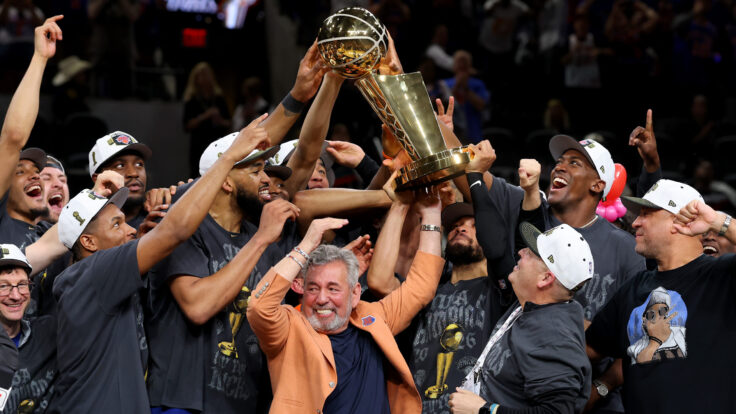
Michael Jordan, who grew up on NASCAR, found himself reaching the
pinnacle of the sport on Sunday after Tyler Reddick, who drives for M.J.’s team, 23XI, won the Daytona 500. The victory arrived just two months after Jordan won a landmark settlement with NASCAR in a lawsuit accusing the organization of illegal monopolistic conduct. The agreement included an undisclosed payout and granted race teams permanent charters, akin to franchise status in other major sports leagues. |
Honorable Mention: Gary Bettman
|
There’s no question that hockey is having a moment, even without Heated Rivalry. With the
U.S. men’s team headed to tomorrow’s Olympics semifinals, the NHL is also enjoying a surge of visibility and engagement. As my partner Julia Alexander reported earlier this week, NHL viewership is up around 40 percent year over year on ESPN and ABC so far this season. We’ll see how commissioner Gary Bettman capitalizes on
this momentum. For now, though, he must be feeling pretty good about where things stand as he prepares to negotiate his new rounds of media deals. |
Down to the J.V.: Tony Clark
|
And you thought you had a bad week. Tony Clark’s sudden resignation as
executive director of the MLBPA—following allegations that he had an inappropriate relationship with his sister-in-law, who also worked with the union—capped off a turbulent 12-year stretch. Clark, the first former player to lead the MLBPA, will be remembered for a tenure marked by a (still-ongoing) investigation into the union’s finances, and for getting defenestrated on the precipice of a potential labor stoppage. Speaking of which… |
- Here comes the lockout: Apart from the upheaval inside the MLB Players Association, insiders remain relatively certain that the owners will lock out the players after this forthcoming season, and that the prospect of missing games next year seems more likely than not. In his first interviews since taking over for Clark as the union’s executive director, Bruce Meyer left little doubt about his opposition to a salary cap. “It is something that
owners in all the sports have wanted more than anything, and baseball in particular,” he said on Wednesday. “There’s a reason for that: because it’s good for them and not good for the players.”
Meyer called a lockout “all but guaranteed,” adding that the league’s “strategy in bargaining has always been to put as much pressure on
players as they can to try to create divisions and cracks among our membership. It’s never worked. I don’t think it ever will work.” Yes, this might be a narrow interpretation of a financial strategy that has allowed the three other major sports to grow their revenues beyond MLB’s—in some cases, stratospherically—but it’s also a clever way for the new guy to establish street cred with his rank-and-file, mega-millionaire comrades. Anyway, get ready for a fight… - Down and out in D.C.: Less than two weeks after The Washington Post shuttered its sports section, Monumental Sports Network gave pink slips to five editorial staffers from the R.S.N.’s digital business. That includes senior director of digital content Brian McNally, Mystics reporter
Tyler Byrum, Wizards reporter Bijan Todd, and Ethan Cadeaux, who covered the Capitals and
Commanders.
I checked in with a Monumental spokesperson, who described the move as a “targeted action.” “We have been reallocating resources and positions to more effectively meet the operational needs of our business to best serve our fans and stakeholders,” the rep said. “Unfortunately, this action affected a handful of our staff members.” - NASCAR’s race schedule: Earlier this week, NASCAR president Steve
O’Donnell rode shotgun with me on The Varsity, laying out a map for the motorsport’s next lap. I mentioned the PGA Tour’s recent decision to trim its schedule—fewer tournaments, the thinking goes, means more focus and bigger impact for each event. NASCAR, meanwhile, has historically leaned into volume, with more races in more markets. So I asked him why that operating model still makes the most sense. “It’s worked for us,” O’Donnell said, “but I would not say this is the way it
will always be. Is there a number of races that makes more sense? Could it be 30—or even more? Could we introduce midweek races and shorten the season? All of that is on the table,” he said. NASCAR is synonymous with routine, but O’Donnell made clear that the calendar is negotiable.
Then there’s the distribution of it all. In today’s media landscape, distribution is where leagues either secure or squander their futures. O’Donnell continued: “Is it network? Cable? Streaming? Ultimately,
what will the sponsors be interested in to help drive our sport and really showcase our drivers and future stars?” For now, NASCAR is buckled into its existing media-rights deals—arrangements that O’Donnell said he’s excited about. “But long term,” he added, “I think it’s something to look at and really deliver what fans want.”
|
And now for the main event… |
|
|
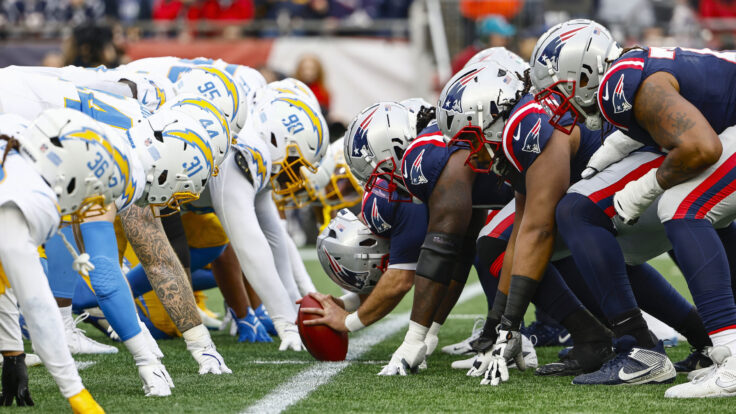
As analysts scramble to calculate estimates for the NFL’s market-busting media
rights, the league must consider the long-term viability of its linear TV partners—and whether sky-high, cutthroat negotiations could amount to a mortal wound. |
|
|

| John Ourand
|
|
|
|
A year and a half ago, as the NBA was negotiating with Amazon, ESPN, and NBC on what
would amount to a 150 percent increase in the annual value of its media rights, no one stopped to ask: What will this mean for the NFL? And yet the deal, along with Paramount’s overpayment for UFC rights last year, will be used as a rough benchmark to determine the size of the NFL’s next media packages. Those deals will surely amount to an unprecedented sum—the military budget of media contracts, really—but they’ll also underscore just how reliant the linear networks are on the NFL for their
survival. In a very real sense, to linear television, the NFL is the world’s most expensive life-support system.
TV executives know they’re going to pay a lot more for, at best, the same amount of games they have now. In fact, they view these new deals as an opportunity to buy the NFL out of its opt-out clause, which can be exercised after the 2029 season for most of the networks. (ESPN’s deal runs one year longer.) The networks essentially require the security of having NFL
rights locked in for the next eight years—even at the wild increases they’re expecting to pay—simply because pro football is the most reliable programming they have, and is, in many cases, the final frontier of linear.
With all this in mind, the analyst set has begun to scope out exactly how pricey the total package could get. “Coming up with numbers by just using an overall contract doesn’t make sense to me,” said Guggenheim analyst Mike Morris, pooh-poohing any
direct comps to the recent $76 billion NBA deal. “We looked at the actual viewer hours on the contract. If you comp the NBA to the NFL, the NFL should see a very significant step-up on that basis. The rights are worth a lot more—but the reality is they’re worth only what somebody will pay.” Interestingly, Guggenheim found that the NBA’s current rights deal has a “cost per viewer hour” almost three times higher than the NFL’s current figure—an incredible stat when you consider
how many more NBA games there are compared to football.
I spoke with a number of Wall Street analysts to gauge their predictions on how the NFL’s forthcoming negotiations, which are expected to begin this fall, may play out. None of them think the networks will be footing the entire increase. Rather, the consensus is that the NFL will carve out separate slates of games for Netflix, Amazon, and YouTube. That model would likely include five games each, including the four
international games the league took back from NFL Network and the two Christmas Day games that Netflix currently has for one more year. (The long-awaited 18th game, which will need to be hashed out with the NFLPA, is not yet factored into this package.)
The streamers want big events. Why not put the Opening Kickoff into that package, or the primetime Thanksgiving game? “Why isn’t there a Halloween game? Why is there only one game on Black Friday?” Morris asked. “Now you have two new—call
them billion-dollar—packages that didn’t exist before that start to expand your total revenue, but that only modestly come at the expense of your traditional partners.” |
Morris ran the numbers and projected that, based on the NBA’s deal, the NFL’s
media rights could hypothetically move from their current $10 billion per year to $18 billion (though he predicted the final figure would realistically come in lower). Similarly, Goldman Sachs analyst Michael Ng recently wrote that the NFL could see a 1.8–2.0x increase in the average annual value of its $110 billion, 11-year deals, which “would be broadly in line with its historical escalations.” Meanwhile, the consensus so far is that the Sunday afternoon broadcasters, CBS and
Fox, are the most likely to renew their packages. And though streamers are getting a lot more serious about sports, they remain interested in exclusive packages of games rather than carrying multiple games in the same time slot. That said, in his research note, Ng wrote that Fox was the most exposed network, “given that it is a sports-and-news pure play, with the second-largest NFL network contract.”
Analysts pointed out, also, that NBC’s Sunday Night Football could be a
potential target for the streamers. For the past 20 years, the league has programmed SNF as its premier primetime package, featuring its best games. NBC has made it clear that it wants to renew the rights, but if Amazon decides it wants to upgrade from its current Thursday Night Football package, its deep pockets would make it a formidable bidder.
In many ways, that Thursday–Sunday, Amazon–NBC dynamic will be the central tension to watch as negotiations unfold. The NFL
knows it can command huge increases from the TV networks; in many respects, it has them over a barrel. The trick is ensuring those increases aren’t so steep that they undermine the next bidding process, in the 2030s.
To put it in the lingua franca of the Wall Street crowd: Roger Goodell needs to figure out how to delicately, yet rapaciously, extract significant value from his longtime partners without entirely cannibalizing the relationships.
“Conventional wisdom for the last 10 years was that traditional media was inevitably dying,” Morris said. “Well, the data indicates that some of the traditional media companies—particularly those with NFL relationships—are seeing that there is a floor to those subscription declines. And a not-insignificant amount of that floor is supported by the NFL.”
|
On baseball’s labor pains: “I love baseball, and I’m all in on fixing this problem once
and for all. According to every study I’ve ever been involved with on hard salary caps, the players ultimately do just fine (especially the mid and lower players). Plus, the valuations of clubs skyrocket. Every team has hope. It’s no different than in the NFL, where tiny Green Bay, tiny Buffalo, and midsize Kansas City are on the same level as New York, Los Angeles, and Chicago. Of course, those leagues have centralized revenues and MLB doesn’t.” —A media executive
On the
NBA’s regular season: “The NBA’s star crisis has nothing to do with the regular season. It’s a direct consequence of the insanely strict salary apron imposed by the latest C.B.A., which has made it virtually impossible to keep championship-caliber teams intact. The league’s popularity has always been built on star-making through dynasties, where superstars establish their national brand identity reaching the Finals year after year. Yet under the current system, Giannis and
Luka have made two Finals appearances combined this decade. The NBA trashed its core model so more owners could have parades. It will prove to be a monumental misunderstanding of what actually drove the league’s popularity.” —A Varsity subscriber
On a newly retired exec: “Well-deserved callout on Steve Raymond’s retirement. Not only was he a super affiliate rep at ESPN (says a cable programming person), but he also built up the Adaptive
Spirit (formerly SkiTam) event and ongoing incredible support for Paralympians and other fabulous athletes. His work as an exec at Charter took accessibility for its customers and employees to a new level. One of the good ones.” —A media executive
More on retired execs: “I had the pleasure of working with both John Wildhack and Raymond. Wildhack taught me a lot about looking at sports rights through the lens of what’s next, beyond just what’s now.
Raymond’s tireless and passionate championing of the Paralympics and adaptive sports, especially skiing, is the first thing I learned about him when we met, and the first thing I think of now whenever I see his name.” —A broadcast executive |
Have a great weekend. See you Monday.
John |
|
|
Join Puck’s chief political columnist, John Heilemann, as he roams the corridors of power and influence in America on
this twice-weekly interview show, taking you beyond the headlines with the people who shape our culture: icons and up-and-comers, incumbents and insurgents, moguls and machers in the overlapping worlds of politics, entertainment, tech, business, sports, media, and beyond. The conversations are rich and revealing, unrehearsed and unexpected… and reliably impolitic. A Puck-Audacy joint, new episodes drop every Wednesday and Friday. |
|
|
An essential, insider-friendly Hollywood tip sheet from Matthew Belloni, who spent 14 years in the trenches at
The Hollywood Reporter and five before that practicing entertainment law. What I’m Hearing also features veteran Hollywood journalist Kim Masters, as well as a special companion email from Eriq Gardner, focused on entertainment law, and weekly box office analysis from Scott Mendelson. |
|
|
Need help? Review our FAQ page or contact us for assistance. For brand partnerships, email ads@puck.news. You received this email because you
signed up to receive emails from Puck, or as part of your Puck account associated with {{customer.email}}. To stop receiving this newsletter and/or manage all your email preferences, click here. |
Puck is published by Heat Media LLC. 107 Greenwich St., New York, NY 10006 |
|
|
|