{{ 'now' | timezone: 'America/New_York' | date: '%b %d, %Y' }} |
|
|
|
Hello and welcome back to The Best & The Brightest. I’m Leigh Ann
Caldwell.
House Republican leadership pulled an Iran war powers resolution from the floor today because… it could have passed. Three House Republicans have consistently voted for it in the past—Reps. Thomas Massie of Kentucky, Brian Fitzpatrick of Pennsylvania, and Tom Barrett of Michigan—and with Republican attendance challenges this week, its fate was too uncertain for leadership to take the chance.
Tonight, Marianna Sotomayor and I have some news on why Donald Trump endorsed Ken Paxton in Texas, to the horror of most Senate Republicans. Plus, Republicans are celebrating the passage of legislation that might (might!) actually address affordability. And A.I. guru Ian Krietzberg, the author of Puck’s indispensable
Hidden Layer newsletter, is here tonight with an incisive look at Trump’s meeting with Xi Jinping—where, beneath the summit pageantry and executive entourage, the real story was about Washington’s wavering over how to negotiate the rapidly accelerating A.I. race with China.
Also mentioned in this issue:
David Sacks, Elizabeth Warren, Scott Singer, Tim Scott, Mike Johnson, Jensen Huang, John Thune, Elizabeth MacDonough, Chris McGuire, John Cornyn, Kyle Chan, Lisa Su, Jim Anderson, Elon Musk, Dina Powell McCormick, Sanjay
Mehrotra, Scott Bessent, and more. |
|
|
|

| Leigh Ann Caldwell
|

| Marianna Sotomayor
|
|
- Inside the Senate’s
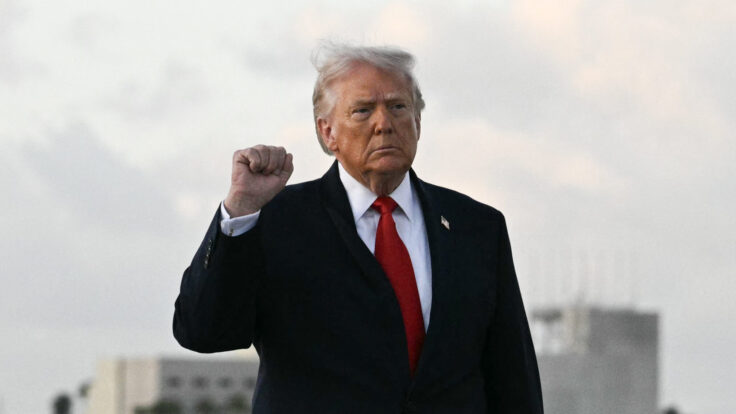
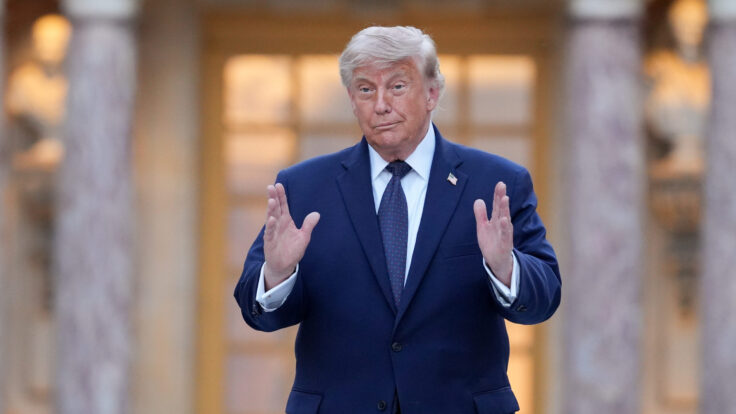
Paxton panic: President Trump’s endorsement of scandal-plagued Texas attorney general Ken Paxton over incumbent Sen. John Cornyn has sent shock waves through the Republican conference. As I wrote yesterday, the move could very well jeopardize Trump’s own legislative agenda—including funding for his White House
ballroom—since Cornyn now has little reason to stay loyal to a president actively trying to end his career.
According to several Republican sources, Trump made his final decision to defy party leaders and endorse Paxton only after a tense Monday phone call with Senate Majority Leader John Thune, who told the president that the $1 billion for the ballroom was in jeopardy, and that he would not fire Senate parliamentarian Elizabeth MacDonough after she
ruled against including the ballroom money in an ICE funding bill the Senate will vote on this week.
Following the call, Thune privately warned some that Trump might endorse Paxton, according to a senator familiar with the conversation. Shocked Republican operatives working to protect the Senate majority circulated the warning on a text chain. But a furious Trump, who is convinced that the Senate is undermining him, proceeded to do what many in his party suspected he wanted to do all
along: throw his support behind Paxton, whose politics and demeanor align more closely with his own, regardless of the consequences for either his legislative agenda or the Senate map. Trump’s anger at Thune, and the endorsement that followed, dominated the conversation Tuesday night at the White House congressional picnic.
On Wednesday, Senate Republicans huddled behind closed doors at an unusually long and well-attended lunch, where the ballroom continued to drive the chatter. Thune now
faces pressure from both sides: from Trump, who wants the project approved, and from many Republican senators who don’t want to vote for it. “Don’t shoot the messenger,” Thune basically told the conference as senators mulled strategy, according to a senator who attended the lunch. Ultimately, late Wednesday, Senate Republicans dropped the ballroom from the bill.
|
|
|
|
Claude, the AI without ads A space to think. Anthropic keeps conversations with Claude ad-free: no sponsored links, no advertisers shaping answers, no paid product placements you didn't ask for. When you bring your hardest problem to an AI, you shouldn't have to wonder who it's working for. Learn more |
|
|
|
|
| Marianna Sotomayor
|
|
- The House’s housing
breakthrough: House Republicans have spent months searching for something, anything tangible they can do to show voters they’re working to address the affordability crisis. And on Wednesday, they finally got it: Nearly the entire chamber voted to advance bipartisan legislation addressing housing costs and supply. The bill—a package of regulatory tweaks (incentives to encourage home-building) and populist chum (banning institutional investors that already own 350 single-family homes
from buying more)—has a little bit of something for everyone.
It was a rare bipartisan breakthrough after a protracted stalemate. An earlier version of the bill, led by Sens. Tim Scott and Elizabeth Warren, had already cleared the upper chamber. But the effort nearly collapsed in the House, where Republicans raised a series of objections until Trump, increasingly impatient with the delay, demanded that they fall in line. Overnight,
Speaker Mike Johnson and his leadership team reached an agreement with the White House that resolved a number of policy disagreements and allowed the bill to advance. (The new version is a little bit kinder to corporate landlords.) The question remains whether the Senate will take up the newly tweaked bill, with lawmakers in both parties hungry for another legislative accomplishment that they can campaign on.
|
|
|
|
One week after the president dragged Silicon Valley’s top C.E.O.s halfway across the world
to extract various business deals with Xi Jinping, the crew returned to Washington with more questions than answers. Among them: Does the White House have a unified policy on A.I.? And is China a competitor, or a customer? |
|
|
|
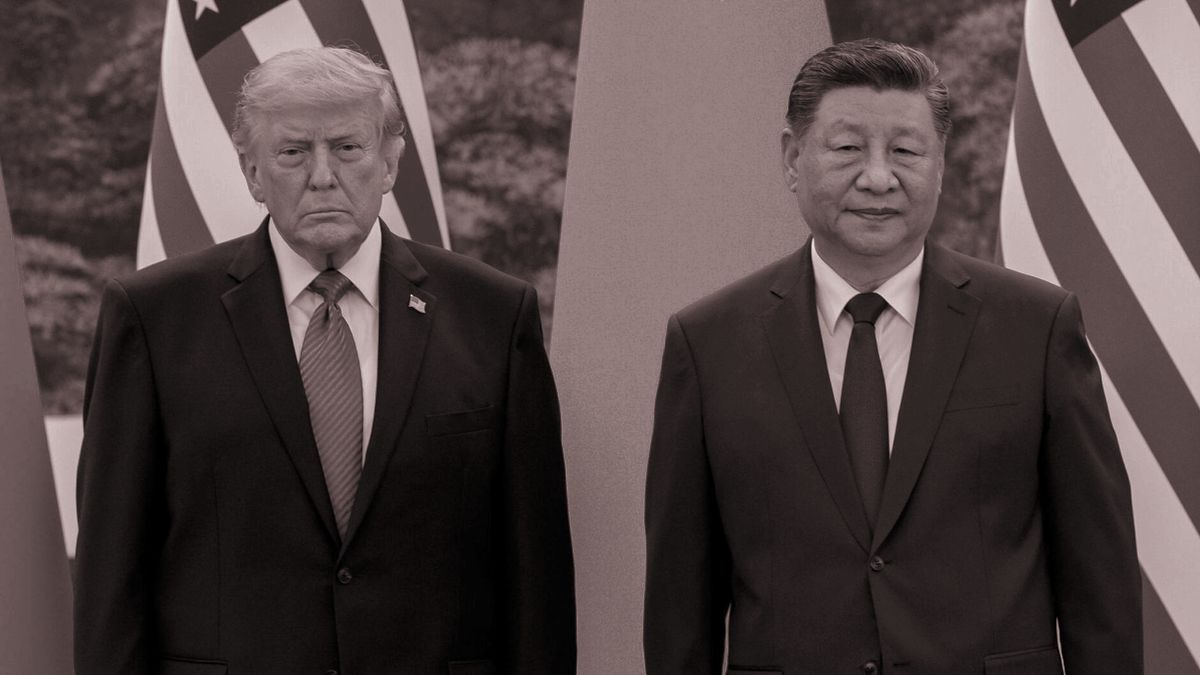
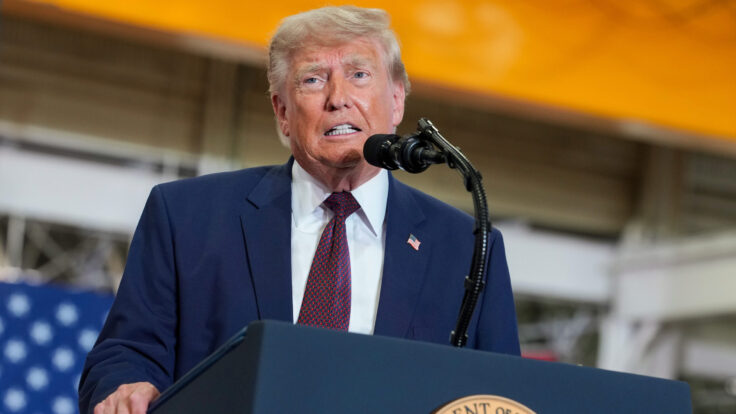
President Trump’s two-day summit last week with Chinese President Xi
Jinping—his first trip to China since 2017—included all sorts of agenda items: the Strait of Hormuz, the future of Taiwan, global trade, etcetera. But like everything else these days, the real focus came down to artificial intelligence, which has served as the central battleground of the increasingly tense cold war between the two countries. From Pennsylvania Avenue to Sand Hill Road, the binary race for A.I. supremacy has become the existential national-security justification
for the White House’s broadly anything-goes regulatory posture.
Against this backdrop—and especially considering the Trump administration’s growing anxiety over Claude Mythos—there was modest (perhaps quixotic) hope that the meeting would result in some sort of precedent-defining alignment on cybersecurity and A.I. safety. Such an agreement was at least within the “spectrum of possibilities,” according to Scott Singer, a fellow at the Carnegie Endowment for International
Peace. The business of A.I. was also expected to be a major point of discussion, given Trump’s entourage of a dozen executives including Meta’s Dina Powell McCormick, Micron’s Sanjay Mehrotra, Coherent’s Jim Anderson, Nvidia’s Jensen Huang (a last-minute addition who carpooled in from Alaska), and, of course, Elon Musk. |
|
|
|
Claude, the AI without ads A space to think. Anthropic keeps conversations with Claude ad-free: no sponsored links, no advertisers shaping answers, no paid product placements you didn't ask for. When you bring your hardest problem to an AI, you shouldn't have to wonder who it's working for. Learn more |
|
|
|
But two days and 30-ish hours of flight time later, the idea of a future deal seemed like an afterthought.
The post-summit fact sheet published by the White House mentioned U.S. planes, agriculture, beef, and Iran—but not A.I. On Air Force One, Trump told reporters, “We talked about possibly working together for guardrails.” When asked to specify which
guardrails, he said, “The standard guardrails that we talk about all the time.” The president then noted with characteristic bravado: “A.I. is fantastic. … We probably will—we’re going to work together.”
Meanwhile, in an appearance on CNBC during the talks, Treasury Secretary Scott Bessent offered a slightly clearer impression of the negotiations. “The two A.I. superpowers are going to start talking,” he said. “We’re going to set up a protocol in terms of, how do we go
forward with best practices for A.I. to make sure nonstate actors don’t get a hold of these models?” Singer found the lack of tangible results “relatively unsurprising” given the requisite theater embedded in this type of diplomacy. But, like many people I spoke with, he also believed that much more “could have been done that would have been in the national interests of both countries.” |
The status quo outcome may have been inevitable. After all, the American and Chinese governments have been
effectively micro-negotiating over A.I. soft power for years in plain sight. In 2022, the Biden administration imposed export limits on semiconductor chips and the equipment required to manufacture them. Those restraints were tightened over the following two years, and Trump added more in 2025—all of which hit China’s
semiconductor industry and triggered a countrywide effort to produce chips independently. Trump relaxed those restrictions only last July, following an intense lobbying campaign from Huang and AMD’s Lisa Su. And while the U.S. has since
cleared 10 Chinese companies to acquire Nvidia’s more advanced H200 chips, China has yet to approve the potential purchases. Trump’s decision to display the brain power of the American innovation industry served as merely the latest flex in this game of geopolitical tit-for-tat.
There’s also the
fact that the White House itself is still refining its position on the matter. Kyle Chan, a Brookings research fellow and China expert, acknowledged the challenges inherent in a negotiation that mixes economics and national security. Ever since industry booster David Sacks left the administration, he said, “there’s no unified voice on the U.S. side.” Chris McGuire, a senior fellow at the Council on Foreign Relations, echoed the sentiment. “It
seems like the administration isn’t totally decided on what its own stance or policy is,” he told me. “It’s not even clear who the administration’s lead on A.I. policy is.”
Mythos, Anthropic’s recent model that the company deemed too dangerous for public release, appears to be the source of this newfound equivocation. “I think the Trump administration didn’t quite understand the urgency of it until Mythos,” McGuire said, adding that the unreleased model “changed the whole
conversation within the administration.”
During his first year in office, Trump’s approach to A.I. policy was “premised on this assumption that A.I. was going to be important down the road, but wasn’t that important right now,” McGuire continued, calling this “the only reason you would advocate for complete deregulation and sharing the technology with other countries, with China, etcetera.” But after the release of Mythos, he said, “it’s very clear that a lot of senior people in
government are very convinced that this is an urgent issue, and we need to have a policy framework structured accordingly. But they’re starting basically from scratch.” |
|
|
|
We’ve seen
evidence of the administration’s scramble in recent weeks, particularly through its advocacy for pre-deployment model safety testing. Still, not everyone in Trump’s orbit is on the same page, and Trump himself “seems to be unclear where he stands on the issue,” Chan noted. Meanwhile, political factions beyond the White House, including
prominent Republican groups and a wide array of lawmakers, are also pointing to Mythos as a justification for federal intervention. |
Stumbling
Blocks Everywhere
|
Meaningful conversations with China will have to take place eventually, and when they do, Chan told me, they
will be heavily influenced by “the conversation in the U.S. about A.I. safety.” He said he wouldn’t be surprised to see some near-term progress on those talks, mainly because the Chinese are “sort of interested in A.I. as an area of potential cooperation,” and, interestingly, don’t really view it as a “divisive issue.”
But many of the researchers I’ve spoken with are asking what an overarching A.I. deal would look like—and what it means that we seem so far away from achieving one. As
McGuire pointed out, if the motivation were as simple as a shared interest in mitigating existential risk, “we would have seen something, so the fact that we haven’t means this is complicated.” He added that China is likely to view any U.S. proposal with suspicion and would be unwilling to make too many concessions, given that its “top priority is to catch up to the United States.” Basically, there are stumbling blocks everywhere. “These are hard issues, and they’re moving in real time. They’re
very technically complicated,” McGuire told me. “I think the administration really needs to appoint someone who’s their lead on A.I.”
For Singer, though, the idea of some grand agreement is immaterial. “At the end of the day, the most important work is going to be what the U.S. and China do, themselves, to make the models safer,” he said. “It’s a much harder question to figure out how to share information across borders, but simply having governments that understand what’s happening
inside their own countries is going to be really important.” |
|
|
|
Need help? Review our
FAQ page or contact us for assistance. For brand partnerships, email ads@puck.news.
You received this email because you signed up to receive emails from Puck, or as part of your Puck account associated with {{customer.email}}. To stop receiving this newsletter and/or manage all your email preferences, click here.
|
Puck is published by Heat Media LLC. 107 Greenwich St., New York, NY 10006 |
|
|
|
|