 |
|
Happy Monday, I’m Eriq Gardner.
|
|
Welcome back to The Rainmaker, a private email about money, power, fame, and how the law sometimes leads to a merciless accounting of who’s up and who’s down.
And speaking of accounting: This week I have a scoop about an upcoming trial in Hollywood involving three acclaimed films and tens of millions of missing dollars. Also in this email, in approximate order of wealth: Mat Ishbia, Barry Diller, Shari Redstone, Lucian Grainge, Anton Postolnikov (the Miami-based Russian American behind Truth Social), and Donald Trump, himself. (Still getting these emails forwarded to you? Subscribe here.)
Let’s get started…
|
| Can Hunterbook Hedge the News? |
|
| There’s been plenty of industry chatter, controversy, and perhaps a twinge of envy surrounding Hunterbrook, a new media-company-slash-hedge-fund with $100 million in funding to short-sell the targets of its investigative scoops. Apparently, Hunterbrook intends to further bolster its stock positions by giving regulators and plaintiff law firms an advance peek at its “reporting.” How this will play out, journalism-wise, is open for (very lively) debate.
Just days ago, Hunterbrook launched with an exposé detailing how UWM, the mortgage giant owned by Phoenix Suns owner Mat Ishbia, cornered the market by aggressively targeting independent brokers. This story hit the presses alongside the launch of a class-action antitrust lawsuit against UWM, steered by Boies Schiller. (My Puck partner Bill Cohan advised Hunterbrook.)
Does Hunterbrook’s structure render its reporting more legally precarious? That’s been a burning question circulating within my network. Intriguingly, unlike traditional news outlets, Hunterbrook claims to be deliberately avoiding inside sources, opting to rely on publicly available information. This approach is aimed at steering clear of laws prohibiting insider trading and tortious interference with confidentiality agreements. As for potential defamation lawsuits, while many might assume that a financially motivated publication is more susceptible, consider what a New York federal judge wrote less than two weeks ago in dismissing a case involving short sellers’ communications to the Food and Drug Administration about a certain biotech company:
“Plaintiff claims that Defendants’ short positions in Plaintiff’s stock gave them an improper motive to make defamatory statements about Plaintiff. But the short positions on their own do not support a showing of actual malice. The short positions could be viewed to support the contrary inference of Defendants’ genuine conviction that Plaintiff’s stock was overvalued rather than undermine it. While the short position plausibly created a profit motive to publicize the short seller’s critiques, that does not lead the Court to infer that they did not subjectively believe those critiques. After all, by shorting the stock, Defendants put their money behind their belief that the stock is overvalued.”
|
| In other words, short selling might be evidence against actual malice (which is different from plain ol’ malice) and make defamation lawsuits tougher for famous plaintiffs.
As far as I can tell, the legalities of reporting publicly available information as a hedge fund aren’t drastically different from reporting the same material as The Wall Street Journal. Though if the Journal didn’t use inside sources, it wouldn’t be, well, the Journal. As for the ethics of hedge fund-backed journalism, I’ll reserve judgment for another day. In the meantime, I’m eager to hear your thoughts—drop a reply with your legal take. |
|
|
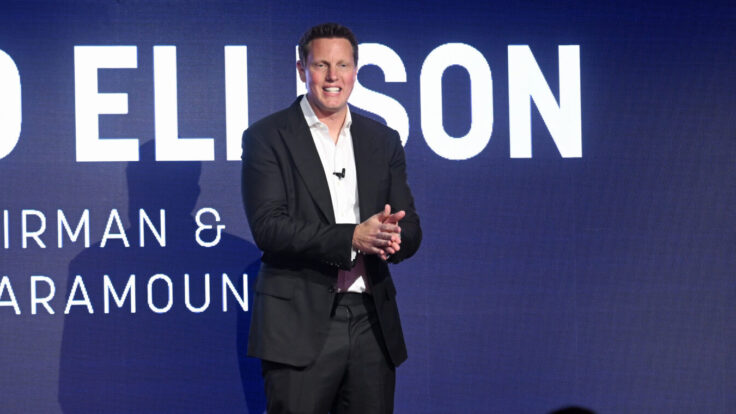
- Paramount legal risks: Shari Redstone doesn’t appear particularly fazed by the prospect of courtroom battles with Paramount shareholders as she pursues a deal with David Ellison’s Skydance. The Redstones, who have a controlling stake in Paramount’s parent company, might as well be living in Wilmington given the family’s decades-long presence in the Chancery court. The near inevitability of litigation over Shari rebuffing a $26 billion offer from Apollo probably isn’t causing her to lose any sleep.
Nevertheless, a major April 4 opinion from the Delaware Supreme Court regarding the separation of Barry Diller’s IAC/InterActiveCorp from Match Group is bound to raise the pulse of Redstone’s legal team. In a nutshell, the ruling underscores that while corporations mulling transactions benefitting a controlling stockholder may establish a special board committee to assess the transactions (as Paramount did), they remain subject to a heightened fairness review in court unless the committee is composed completely of independent directors. This ruling pertains to corporate transactions that cash out minority investors, but it will be interesting to see how the framework applies in other situations involving changes of control.
- Time to buzz the tower: Speaking of Paramount, the company scored a win on Friday in the lawsuit that threatened to take away rights to Top Gun and punish the studio for committing copyright infringement for releasing its Maverick sequel. As I previously explained, the family of deceased journalist Ehud Yonay, who had written a magazine article that became licensed source material for the 1986 Tom Cruise classic, was attempting to exploit a provision of the law that allows authors and their heirs to reclaim rights. In a new ruling, the U.S. District Court judge filtered out the unprotected factual elements of fighter pilots being trained to go out on missions, and then found Maverick too dissimilar to what Yonay originally wrote. Here’s the full ruling.
- Grainge wants out: Usually, a lawsuit defendant doesn’t put up resistance to a proposal for an amended complaint that removes claims and allegations. However, the situation surrounding Sean “Diddy” Combs is far from ordinary, and Lucian Grainge, the powerful head of Universal Music Group, obviously detested being accused of attending and sponsoring parties at Diddy’s residence, where sex trafficking allegedly happened. So UMG’s lawyer, Pryor Cashman’s Donald Zakarin, wrote a pointed letter to the judge that accuses Rodney Jones, a producer who claimed to be the victim of sexual misconduct while working for Diddy, of lying. The letter, which can be read here, briefly nods to the Homeland Security raid in the news. UMG and Grainge argue there’s no basis to hold them responsible for any bad behavior by Diddy.
- All in the family…: The court docket is ablaze with activity surrounding the public stock offering of Trump Media, the parent company behind Truth Social. Insider trading criminal cases, civil disputes with co-founders, defamation claims, and on and on… One case that I haven’t seen written about, however, and which I’m now keenly watching (maybe even more so than the one that has Donald Trump scheduled to give a deposition on the same day his criminal trial begins, April 15), is the divorce of a Russian American businessman named Anton Postolnikov.
Postolnikov was apparently instrumental in helping Trump Media get off the ground by providing millions of dollars in loans, via an entity known as ES Family Trust. (According to securities filings, the debt is soon due.) The Guardian floated the notion that the ES Family Trust, which has come up in other cases, might have been used because the Postolnikov-owned, Dominica-based Paxum Bank, a favorite of the porn industry, was unable to do so itself. Divorce lawyers representing Postolnikov’s wife, Olga, seem to be conducting their own investigation into the ES Family Trust. Stay tuned.
|
| Speaking of finance… |
 |
| Once Upon a Time in Hollywood Accounting… |
| Twenty years ago, films by Scorsese, Soderbergh, and Michael Mann collectively grossed half a billion dollars at the worldwide box office. This month, Lionsgate and Content Partners are getting dragged into court over their share of the pie. |
|
|
|
| Back when I was legal editor at The Hollywood Reporter, few subjects caused me a bigger headache than the intricacies of deceptive accounting. While stories of industry veterans being swindled were abundant and undeniably captivating, the difficulty of unraveling these complex schemes made them particularly taxing. To be honest, back then I thought the days of public courtroom battles were numbered—not only because streamers have resisted sharing profits altogether, but also due to the prevalence of arbitration. But it seems I was mistaken.
On April 29, an entity called Library Rights Company (LRC) is scheduled to go to trial in Los Angeles over what it claims is the total disregard for its financial stake in three of the most famous films of this century—Martin Scorsese’s Gangs of New York (2002), Steven Soderbergh’s Traffic (2000), and Michael Mann’s Ali (2001). This saga, heretofore uncovered by any news outlet, is complex even by the notorious standards of “Hollywood accounting.” It starts with a 2019 statement from Lionsgate Entertainment that purported to show that these blockbuster movies, which had collectively raked in nearly half a billion dollars in worldwide box office, had subsequently earned a mere $900,951.
Naturally, that figure was a mistake. After all, in the years since their release, the three films have been airing on television, graced streaming platforms, and found their way into plenty of home entertainment collections. Initial projections in 2004 anticipated cash flow between $33 million and $37 million for the three films through 2019. When an accounting statement showed a paltry $900k, an audit was inevitable. Subsequent statements revised the revenue figures significantly upward.
Just how much Gangs of New York, Traffic, and Ali have truly earned is the crux of the upcoming trial. Thanks to a two-decades-old deal, LRC claims it is entitled to share of revenue from the three movies after it crosses the $21.5 million mark. Once that threshold is reached, LRC gets the next $13 million in income. According to those currently distributing the three films, however, the movies haven’t surpassed that milestone, leading LRC into court, and soon before a jury, to explain Hollywood economics. For observers, this trial offers a chance to hear how the movie business is evolving and get a glimpse behind the financial curtain. |
| The King Behind the Throne |
|
| Notably, the litigants had absolutely nothing to do with the release of Gangs of New York, Traffic, and Ali. Instead, much of the credit is due to Graham King, the relatively anonymous megaproducer who enjoyed one hell of a run in the 2000s, financing top-tier auteur films by pre-selling foreign distribution rights. Matt Damon once lauded his exceptional tastes. He won the best picture Oscar for Scorsese’s 2016 film, The Departed, and he’s currently at work on the controversial Michael Jackson biopic, as my partner Matt Belloni recently reported.
Back in 2001, King merged his Initial Entertainment Group with Germany-based Intermedia. But tensions flared when Scorsese went overbudget on The Aviator. In 2004, the two firms parted ways—but not before the Germans negotiated themselves a stake in Gangs of New York, Traffic, and Ali as their price for allowing King to reclaim his old company. King later sold his interests in the movies to Tango Films, which then sold them to Content Partners, which, along with Lionsgate, now licenses them globally to broadcast and streaming services. The joint venture between Content and Lionsgate is the primary defendant in the lawsuit.
After the split with King, however, Intermedia got itself into a bit of trouble, racking up debts on big-budget productions like Terminator 3: Rise of the Machines and Oliver Stone’s Alexander. Alas, their interests were foreclosed upon by a company affiliated with Ron Tutor and David Bergstein, both notorious figures in Hollywood history: Tutor made billions in the construction industry before flipping Miramax from Disney to the Qataris. As for Bergstein, he was in the real estate business until he got into the distressed debt business with Tutor. They loaned money to various indie production companies or bought up their debt and wound up acquiring hundreds of film titles. Then, their own companies wound up in involuntary bankruptcy. In 2018, Bergstein went to prison for defrauding investors.
From the chaos of foreclosures, bankruptcies, and even a criminal case, Tutor’s Library Rights Company (LRC) emerged, claiming to hold the golden ring from the mostly forgotten marriage between King and the Germans. Content Partners, represented by Marty Singer, remains steadfast in challenging the premise that LRC possesses a stake in Gangs of New York, Traffic, and Ali. Nevertheless, the saga has led to an audit to ascertain the true value of these cinematic classics. The results are on the brink of being showcased in open court, with valuation experts poised to deliver testimony.
Legal battles over Hollywood accounting typically revolve around dissecting contractual definitions of “net profits” to determine the costs and fees that studios are entitled to deduct. More recently, accounting disputes have also focused on the dynamic between production studios and streaming platforms, which are often under the same corporate umbrella, adding another layer of complexity. It’s not uncommon to see conflicts over whether sufficient revenue is being recorded, or if income is artificially suppressed to the detriment of profit participants.
The case involving Gangs of New York, Traffic, and Ali is far stranger. Firstly, the focus is not on profits, but on gross revenue. Moreover, the audits scrutinize nearly two decades of income on a global scale, rather than solely examining the relationship between a vertically aligned producer and streaming service.
In theory, that should simplify matters, but as is often the case in Hollywood, nothing is as it seems. Here, both sides are motivated to interpret the accounting records in their favor, resulting in skirmishes during the auditing process. For instance, a $9 million swing hinges on Ali’s distribution in Germany. A previous sub-distribution deal was canceled, possibly before a $11.5 million minimum guarantee payment was fulfilled. Subsequently, Fox secured the distribution rights for Ali in the country, albeit for only $2.4 million, allocating a larger guarantee for Aviator in a bundled deal encompassing both films. So, how to record these transactions? That’s become a central question.
This is also the type of case where the verdict could be misleading. The goal for LRC, represented by attorney Jeremiah Reynolds, is to get to the $21.5 million threshold, or at least get close. According to LRC’s auditor, the post-2004 gross proceeds total $21.57 million, implying that if a jury agrees with those calculations, the damages awarded would be less than $100,000. That sum might not sound like it’s worth incurring millions in legal costs. Then again, should this outcome transpire, at the very least LRC will have gotten to the point where it stands to receive the next $13 million from the three films’ earnings.
In this plausible scenario, for the next decade the company that owns rights to Gangs of New York, Traffic, and Ali would get pretty much nothing for licensing those films. Any money would be routed to another company, partly because a generation ago, Terminator 3 was so damn expensive that it caused a default. Sound bizarre? Welcome to showbiz. |
|
|
| That’s all for this week. Look forward to hearing your thoughts about Hunterbrook. |
|
|
|
| FOUR STORIES WE’RE TALKING ABOUT |
 |
|
 |
| Altered Carbon |
| Spotlighting green shoots in the global war against carbon emissions. |
| BARATUNDE THURSTON |
|
 |
|
 |
| The Perfume Wars |
| A close look at the lucrative business of fragrance dupes. |
| RACHEL STRUGATZ |
|
|
|
|
|
 |
|
|
|
Need help? Review our FAQs
page or contact
us for assistance. For brand partnerships, email ads@puck.news.
|
|
You received this email because you signed up to receive emails from Puck, or as part of your Puck account associated with . To stop receiving this newsletter and/or manage all your email preferences, click here.
|
|
Puck is published by Heat Media LLC. 227 W 17th St New York, NY 10011.
|
|
|
|