 |
|
Happy Monday, I’m Eriq Gardner.
|
|
Welcome back to The Rainmaker, a private email about money, power, fame, and how their pursuit can occasionally lead to a quarter-century in the clink.
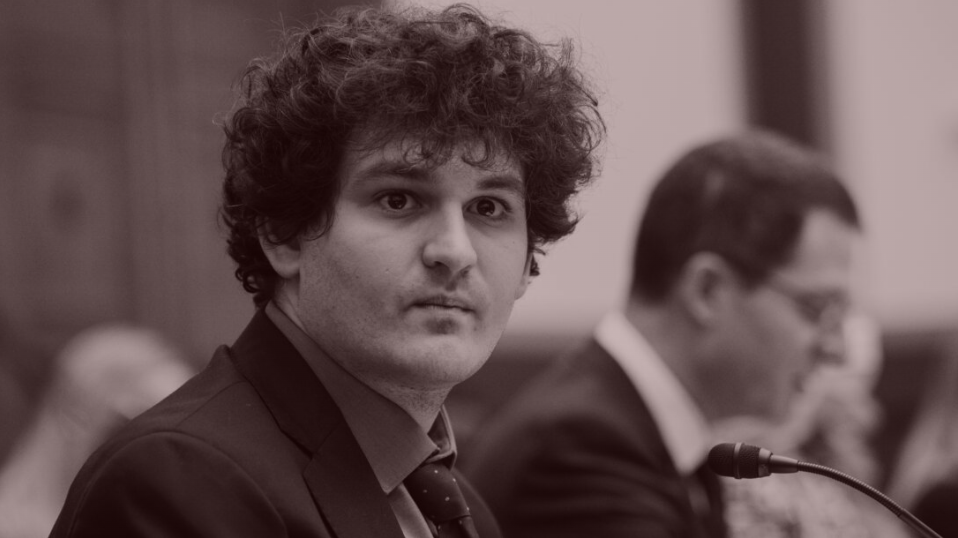
Yes, I’m talking about Sam Bankman-Fried, who was just sentenced to 25 years behind bars. In this week’s edition of The Rainmaker, I explain how the crypto con artist got on Judge Lewis Kaplan’s bad side, and the arguments that S.B.F.’s lawyer Marc Mukasey could make on appeal. Plus, a couple other developments on the crypto legal front that have Gary Gensler smiling.
We’ve got a jam-packed issue today, with details on Disney’s secret A.I. deal, Netflix’s latest defamation debacle, and some Bryan Freedman blowback. Still getting these emails forwarded to you? Subscribe here, or we’ll sign you up for S.B.F.’s prison Substack.
Let’s get started…
|
| A Disney A.I. Détente & Gensler’s M3GAN Fear |
|
| When Disney shareholders gather for their annual meeting on Wednesday, all eyes will be on the leadership duel between Bob Iger and Nelson Peltz, who’s launched a multimillion-dollar campaign to get himself and former Disney C.F.O. Jay Rasulo on the board. As for me, my attention has been on the undercards. Some activists are agitating for reduced health spending on gender transitions, while others are demanding more details about political and charitable giving. But the proxy issue that I’ve been geeking out over is artificial intelligence.
Late last year, the AFL-CIO’s pension fund and New York City Comptroller Brad Lander proposed that Disney disclose its A.I. usage and establish ethical standards. The S.E.C. then rejected Disney’s entreaty to not allow these shareholders to micromanage business operations. As a result, the matter was headed for a vote.
Alas, there won’t be one. Lander’s office confirmed to me that the A.I. proposal was withdrawn after Disney agreed to more disclosures. So what, exactly, is Disney prepared to tell us, and when will it begin doing so? The specifics are shrouded in secrecy. Intriguingly, the same applies to Comcast, which struck a similar deal to avoid a shareholder vote on its own A.I. strategy and standards.
Artificial intelligence is a pretty trendy topic this proxy season, and shareholders are only beginning to flex their muscles on this front. Late last month, an A.I. proxy vote at Apple received nearly 40 percent support, while numerous other companies, including Paramount, are about to poll shareholders. As if Shari Redstone didn’t have enough to think about…
Eventually, corporations will probably be compelled to unveil their A.I. use, and when that happens, they’ll want to be careful. Lately, it seems, S.E.C. Chair Gary Gensler has been binging Hollywood movies featuring thinking machines and contemplating how corporate leaders might go wrong when putting A.I. into action. During a recent address at Yale Law School, Gensler cited Spike Jonze’s Her as a cautionary tale about systemic risk (“Imagine it wasn’t Scarlett Johansson, but it was some base model or data source on which 8,316 financial institutions were relying”) and pointed to 2001: A Space Odyssey and Terminator as underscoring the need to develop A.I. guardrails. And speaking about M3GAN, last year’s sleeper hit about a killer robot doll, he noted, “The company does not tell [investors] that the scientist behind the robot is aware that the A.I. isn’t complete.”
While that omission is not what frightened me most about a sentient toy on a killing spree, I’m beginning to understand why some corporations have decided less is more when it comes to A.I. disclosures. As the tagline might go, G@RY is watching. |
|
|
- Inventing Rachel: Netflix is once again in hot water over a dramatization of a true story. In Delaware federal court, a judge has given the green light for libel claims over Inventing Anna, the Shonda Rhimes-produced series about the exploits of Instagram influencer Anna Sorokin, also known as Anna Delvey, who successfully masqueraded as a wealthy German heiress, duping New York’s affluent circles. The lawsuit was filed by Rachel Williams, a former Vanity Fair staffer who felt unfairly portrayed as an opportunistic and avaricious Sorokin confidante in the series. (Williams is also the author of her own memoir, My Friend Anna.) Netflix defended its portrayal, arguing that much of the content was truthful and that a characteristic like “disloyalty” cannot be proven false. Well, guess again. U.S. District Court Judge Colm Connolly deemed Williams’ libel claim to be plausible, particularly the scenes showing her semi-fictional counterpart leaving Sorokin in a distressed state.
This is just the latest in a litany of defamation cases faced by Netflix, a trend I’ve previously highlighted and will do so again and again, until people understand that the No. 1 libel target in America actually isn’t owned by Rupert Murdoch. (Psst… Netflix is headed to a libel trial on May 6!) Notably, this case, like many others, revolves around a peripheral character. It’s often these individuals on the fringes who pose the most significant legal threats to dramatizations and biopics. This isn’t a new phenomenon; as I reported long ago, Sony had to pay off a former girlfriend of Mark Zuckerberg following the release of The Social Network.
- Life of Bryan: Speaking of defamation lawsuits, Puck fixture Bryan Freedman is facing an unusual one in L’Affaire Kassan—the legal war between Hollywood talent agency UTA and MediaLink executive Michael Kassan. A few weeks back, Freedman filed a lawsuit on behalf of UTA and didn’t mince words when he described Kassan to a Deadline reporter as a “pathological liar.” While much of that dispute is now headed to arbitration, Kassan’s resentment toward Freedman persists and has set off additional litigation. (Read the complaint.)
Interestingly, Freedman is also on the defensive for his aggressive P.R. in a second intra-agency clash—the fallout at A3 Artists Agency. A3’s digital and alternative departments were sold to Gersh for $15 million amid a feud between owner Adam Bold and partners Robert Attermann and Brian Cho. Bold is currently pushing to oust Freedman from the case, citing conflicts of interest and griping that the attorney breached ethical rules by giving colorful quotes about his personal life to, yes, a Deadline reporter.
Knowing Freedman, I doubt he is fazed by any of this. With regard to the Kassan case, litigation privilege is pretty expansive, and as Freedman confidently proclaims, “Facts are not defamation.” As for Bold’s recusal bid, Freedman is now pointing to divorce papers from his opponent’s ex-wife to support what he said publicly. Aggressive? Sure. Of course, history also shows that attorneys who incessantly leverage the media for litigation advantage run the risk of being bitten in the ass. Just ask Michael Avenatti.
|
| And now on to last week’s big legal story… |
|
|
| When Sam Bankman-Fried heads to FCI Herlong, or whatever Bay Area medium security prison will soon house him, perhaps he’ll think long and hard about how Judge Lewis Kaplan formed an early impression of him as an uncommon thief. Throughout the entire case, right up until he dropped a 25-year prison sentence on the disgraced crypto wunderkind, Kaplan kept explaining his decision-making by drawing comparisons to a bank heist.
To wit: When S.B.F. wanted to tell the jury that his Anthropic A.I. investment could return hundreds of millions of dollars to FTX, Kaplan scoffed at this proposed silver lining—equating it to a guy who robs the Federal Reserve only to return the money after winning the Powerball. When S.B.F.’s legal team discussed the involvement of FTX attorneys in his past behavior, the judge compared the situation to a bank robber who buys a new residence and then blames his oblivious real estate attorney. And during sentencing, Kaplan again treated Bankman-Fried like John Dillinger, refusing to go easy on him despite assurances that FTX customers would soon be made whole. Said Kaplan: “A thief who takes his loot to Las Vegas and successfully bets the stolen money is not entitled to a discount on the sentence.”
All well and good, except, technically speaking, Bankman-Fried wasn’t convicted of being a thief. Rather, he owned a quasi-bank in FTX and is going to jail because of deception. He was found guilty of perpetrating a fraud, à la Elizabeth Holmes, who received a little over 11 years in prison after manipulating people into thinking her blood-testing company, Theranos, had achieved significant breakthroughs. Bankman-Fried, who similarly misled investors and customers, is now set to serve more than twice as much time.
These sorts of comparisons only go so far. Under the flag of effective altruism, S.B.F. took ungodly liberties with billions of dollars in customer funds. Holmes not only took advantage of people’s wallets, but also played god with their health. So will the S.B.F. sentence stand up? On appeal, Bankman-Fried’s attorneys will try to convince higher authorities that Kaplan, a 79-year-old Clinton appointee who continues to have an active legal career, really didn’t understand the ins and outs of S.B.F.’s crypto enterprise, denying him a fair trial by precluding evidence and testimony about the Anthropic investment, the input of FTX lawyers, the website’s terms of service, etcetera.
S.B.F. shouldn’t be counted out here. As history shows, white-collar crooks tend to have a knack for turning the tables on appeal, both by dissecting the nuances of fraud (everybody lies!) and by poking holes in federal sentencing calculations by arguing that only actual losses count (who’s the victim?). As I wrote last month, S.B.F. attorney Marc Mukasey is almost certainly looking at the decision by the 3rd Circuit, which ruled back in 2022 that sentencing shouldn’t factor in intended financial harm. It’s only a matter of time before this makes its way to the Supreme Court, and Mukasey could even be the one to take it there.
Nevertheless, it’s unlikely the 25-year sentence will get the heave-ho—especially considering the hefty amount of money that went missing and Bankman-Fried’s witness-stand fibbing (which probably goes a long way toward explaining why Kaplan formed such an early, negative impression of the defendant). At the end of the day, the judge took the discretion that was afforded to him, landing on a harsh but defensible punishment. Incidentally, it’s also a number that’s pretty darn close to what you’d expect for someone who actually makes off with bags of cash from a bank. |
| Other Theaters of the Crypto Wars |
|
| The Bankman-Fried sentencing wasn’t the only major development during a monumental week in the Biden administration’s legal war on crypto. While the incarceration of S.B.F. will be roundly cheered inside the Justice Department, a few other twists are poised to lay the groundwork for the next stage of prosecutions and enforcement actions. Among the most interesting is the years-long effort by S.E.C. chair Gary Gensler to enshrine in law the notion that cryptocurrencies are actually unregistered securities. The legal wrangling has yielded mixed results, but the government scored a colossal victory on March 27 when U.S. District Court Judge Katherine Polk Failla (a colleague of Kaplan’s in New York) permitted the S.E.C. to proceed in court against Coinbase, the largest exchange dedicated to facilitating U.S. crypto transactions.
What truly stands out about the Coinbase ruling (read here) is not just the determination that the $60 billion public company facilitated the buying and selling of “investment contracts,” a.k.a. securities, but also the recognition of the S.E.C.’s enforcement power to police crypto in the first place. Coinbase attempted to contest the S.E.C.’s jurisdiction by invoking the “major questions doctrine,” endorsed by the Supreme Court just two years ago. According to this doctrine, an agency can only regulate a fundamental sector of the economy with explicit congressional authorization. Coinbase argued that the S.E.C.’s expanded mandate requires a clear statement from federal lawmakers. Judge Failla rebuffed the argument, responding that the crypto industry doesn’t qualify as a significant part of the American economy. Furthermore, she noted that the S.E.C. isn’t asserting a radical expansion of its regulatory power, as it has a long track record of grappling with emerging technologies and related financial instruments within its existing authority. Failla rejected Coinbase’s due process arguments, too.
While this decision will undoubtedly face appellate scrutiny, it’s bound to embolden Gensler. And when his S.E.C. does crack down on those in the crypto sphere for flouting securities laws, the government will be seeking huge penalties, as evidenced by another bombshell dropped this past week.
For more than three years, perhaps the most discussed case in this realm has been the S.E.C.’s action against Ripple Labs, over the sale of its crypto token XRP. Last December, U.S. District Court Judge Analisa Torres delivered her summary judgment that most XRP transactions don’t constitute investment contract securities. Only Ripple’s XRP sales to institutional investors fell into that category. At the time, most viewed the decision as a huge blow to the S.E.C. However, on March 25, the government rolled with the punches by discussing the financial harm to those investors, seeking a staggering $876 million in disgorgement, nearly $200 million in prejudgment interest, and then an additional $991 million penalty to serve as a deterrent.
The eye-watering, nearly $2 billion tab sent shockwaves through the crypto community. For some, it probably was a roller coaster of emotions. One day, they felt schadenfreude at Sam Bankman-Fried’s fate, only to bemoan their own predicament the next. Such is life on the wild economic frontier. |
|
|
| That’s it for this week, though I’ve got some tasty public records requests cooking. Stay tuned. |
|
|
|
| FOUR STORIES WE’RE TALKING ABOUT |
 |
| NBC Blame Games |
| On the palace intrigue consuming NBC News post-Ronnaghazi. |
| DYLAN BYERS |
|
 |
| Shari’s Silver Lining |
| Chronicling the latest twist in the Paramount Global bidding wars. |
| WILLIAM D. COHAN |
|
 |
| Tubi or Not Tubi |
| Revealing the alchemy behind Tubi’s Gen Z foothold. |
| JULIA ALEXANDER |
|
 |
|
|
|
|
|
 |
|
|
|
Need help? Review our FAQs
page or contact
us for assistance. For brand partnerships, email ads@puck.news.
|
|
You received this email because you signed up to receive emails from Puck, or as part of your Puck account associated with . To stop receiving this newsletter and/or manage all your email preferences, click here.
|
|
Puck is published by Heat Media LLC. 227 W 17th St New York, NY 10011.
|
|
|
|