Greetings from Healdsburg and welcome back to In the Room. I hope you had a great
Thanksgiving and are enjoying a restful holiday weekend. I’m headed back to Los Angeles tomorrow before a quick, midweek jaunt to New York.
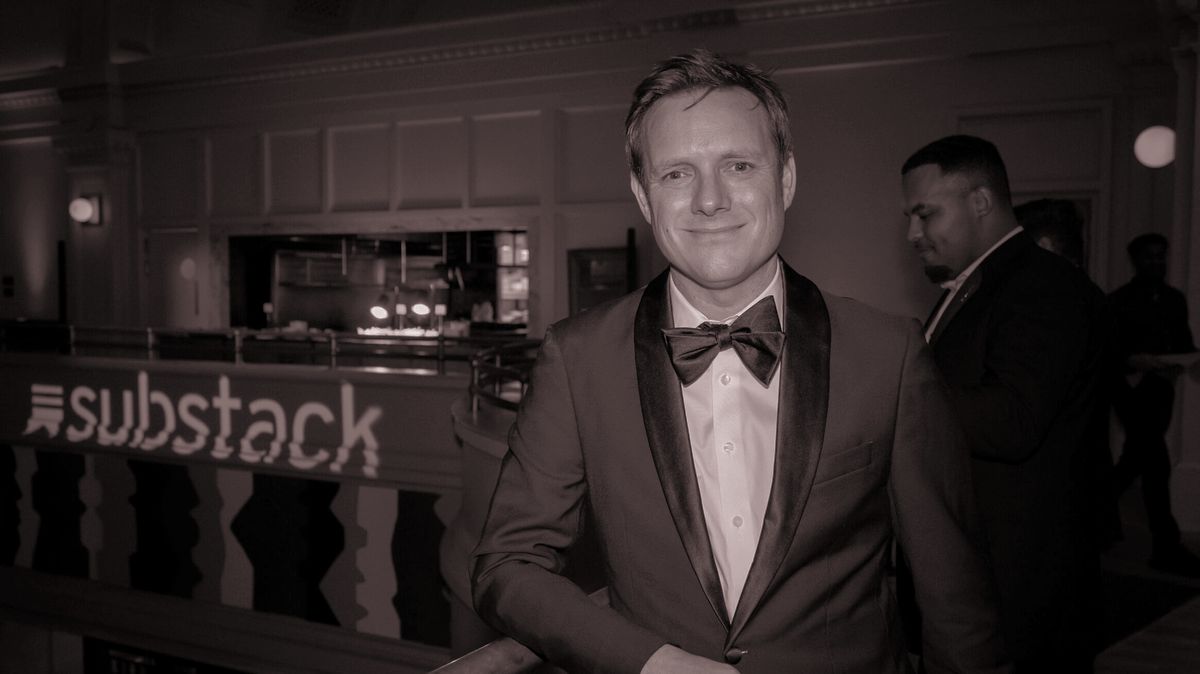
In tonight’s issue, my podcast co-host, Julia Alexander, offers a provocative, sweeping assessment of the current state of platform economics in the creator era, where monetizing superstars is a phenomenally difficult business.
🍸 Speaking of which, on the latest edition of The Grill
Room, Julia and I dished on the Substackification of legacy media, the blurred lines between journalists and influencers, and the Nuzzi–Lizza–R.F.K. Jr. scandal that won’t die. Plus, some thoughts on how A.I. is transforming Apple and Google. Follow The Grill Room on Apple,
Spotify, or wherever you prefer to listen.
Let’s get started… |
-
Counter point…: Brian Morrissey and Troy Young, co-hosts of the podcast People vs Algorithms, also joined me this week on The Grill Room for a pre-Thanksgiving discussion that serves as a nice complement to Julia’s story today. We spoke a lot about the journalist-as-performer model and who is winning in this newly defined space. Naturally, Olivia Nuzzi—and her recent memoir excerpt—came up, which led to a
semi-hot take from Troy: “I’d love to hang out with Olivia Nuzzi, and I loved reading that little excerpt because it was funny. Maybe she’s taking herself seriously. I don’t know. It’s clearly kind of ridiculous, but that just makes it great entertainment.”
Young, the former president of Hearst Media, tied that provocation to his larger point: “I think that the brands are doing better. I think in a world where you’re not attached to a distribution system, you need to give people
a shortcut, right? You could create a shortcut because you’re immensely insightful, because you write really well. There’s all kinds of people that I read that are not, you know, quote unquote performers who really stick out to me in the information space. The sort of hyper-performative ones are, like, that’s one variety.” - The Chalamet model…: Later on in our conversation, we briefly digressed into how this all applies to the new
rules of celebrity—and how Timothée Chalamet’s ability to slide back and forth between movie star and influencer is increasingly the new gold standard for Hollywood. Brian, a longtime media reporter, wondered where this all might be headed. “I mean, Timothée Chalamet has adapted, and maybe he’s just natural at it, but he’s clearly doing a good job,” he said. “What I wonder about is the inevitable correction. You hear talk about the return of gatekeepers. And I think there might
be something to that, in that everything has grown too accessible.”
Brian went on to ponder the difference between modern celebrities and influencers. “Celebrities, back in the day, there was some level of mystique. There was a scarcity to them,” he noted. “That’s different from having to be a hustler in this decentralized media system. Look at how Justin Bieber is ‘forced’ to be streaming himself playing ping-pong and stuff. I mean, this is a totally different
environment.” (Listen to our full conversation on Apple, Spotify, or your podcast
platform of choice.)
|
And now, Julia’s main event… |
|
|
Google Zero killed the open web, ChatGPT isn’t replacing lost traffic,
and superstar talent is a phenomenally difficult business. Digital media companies trying to stay upright are belatedly turning to creator-first subscription platforms in search of sustainable, niche audiences—without realizing that they’ve seen this movie before. |
|
|
Any media executive can attest to just how biblically weird the industry landscape has
become: Information has been fully commoditized, once-almighty search referral has become roadkill on the A.I. superhighway, and people get their news from a ChatGPT query or a singing SpongeBob SquarePants fish on TikTok. Meanwhile, some of the most prominent mainstream journalists and commentators are now making a living on
Substack, YouTube, and even Patreon. Parasocial audience relationships are at the center of a new media ecosystem where authenticity matters as much, or more, than legacy institutions.
This paradigm shift explains, in part, why Vox Media C.E.O. Jim Bankoff entered into a revenue-sharing deal with Kara Swisher and Scott Galloway to distribute their podcast, with the hosts taking 70 percent; why everyone’s wondering when Ezra Klein
will depart from The New York Times; and, maybe, why the new guy at Vanity Fair desperately leaned in all the way on the talented but troubled Olivia Nuzzi. |
|
|
A MESSAGE FROM OUR SPONSOR |
Transform Movie Fandom into Business Impact 🎬 The real magic of movies goes far beyond the screen, extending to purchasing behaviors beginning during the pre-release excitement and ending in ongoing fandom. New research from Amazon Ads and Crowd.DNA reveals the untapped potential of this, finding that fans maintain 10+ year connections with their favorite films and 81%
actively participate in movie-related purchases. These purchases aren’t limited to merchandise or music from the film. Moviegoing is driving cross-category spending, from dining to retail and beyond. Amazon Ads full-funnel solutions allows brands to engage fans all along the journey, creating
opportunities for content discovery, engagement, and continued fandom. Visit Amazon Ads to learn more. |
|
|
Talent has always been a differentiator, but it’s a far more significant asset in an
era when traffic is forever eroding and an entire business model is slouching toward extinction. Which is also why media executives—many of whom have been revisiting Kevin Kelly’s 2008 essay on how 1,000 “true fans” can be more valuable than 1 million “lesser fans”—are convinced the industry’s future is not only star-based, but niche. So now, they’re focused on
targeting fandoms—an industry buzzword that glosses over the fact that so much of traditional and monocultural media has become profoundly unpalatable to modern audiences.
We’re currently in the early stages of this ground-shifting transformation, which has been marked by mild gestures toward innovation. Rather than recognize that many of its Web 2.0 brands have been orphaned in the modern landscape, Vox is experimenting on Patreon, and its own New York magazine
has launched a Substack in pursuit of new audiences, alongside the FT and Daily Mail. Economist president Luke Bradley-Jones said at a recent media conference that he viewed offering the magazine’s “Off the Charts” newsletter on Substack as an opportunity to “nurture more of a niche audience around a particular area of interest, which isn’t in any way going to cannibalize our core subscription base.” A whole generation of media executives is praying
that something will work as they cut costs to buy time.
After all, the bad memories of the industry’s “pivot to video”—when legacy publications cranked out off-brand schlock for a quickly disinterested Facebook—are still fresh in publishers’ minds. Once upon a time, you could have told the difference between Vanity Fair, Fortune, The Daily Beast, and, say, Business Insider. But by the late teens, large parts of their social feeds became indistinguishable melting
pots of resistance bait and viral poop cruise fare—some of it straight to video. By the time they regained their brand nerve, it was too late. Which is why this latest pivot may be equally destined for failure. |
When it comes to the business of newsletters, Substack is the clear market leader, at
least on a platform level. Of the six (yes, only six) English-language “news” sites that saw year-on-year engagement growth in October, Substack recorded the most, with a 49 percent increase in visits (to about 130 million), per Press Gazette. Politico and The Hill were second and third, but registered less than half of Substack’s growth. Per Bloomberg, as of March, more than 5 million people paid for Substack newsletters—and it only took four months to go from 4 million paid
subs to 5 million.
There’s no denying that Substack, which recently closed a nine-figure round of funding led by Bond and Chernin Group at a unicorn valuation, is attempting to become the dominant platform. But like every platform, it’s focused on its own growth, encouraging people to post notes and treat the app almost like X, which drives engagement but doesn’t necessarily convert engagement into dollars. Even co-founder Hamish McKenzie declared last month that Substack
is a social network where people can “post a haiku or share a beautiful image.”
Focusing on the top line is natural for a growth-minded company leaning into a meaty valuation with a new investor group at the tiller. But it’s also a challenge for a company built on creating value for third-party talent. Bari Weiss, the most successful innovator on the platform, just sold her Free Press to David Ellison, the new skylord of Paramount, for
$150 million. How long will the FP remain on Substack before Ellison pushes to transition the audience to his own tech stack?
Indeed, Substack is quietly proving to be a gateway drug for its top talent. To take just one example, Anne Helen Peterson and Lyz Lenz recently migrated their popular newsletters to Patreon because of financial incentives. And nearly 3,000 newsletter writers have decamped Substack for Beehiiv in the past year, according to
Beehiiv’s C.E.O., Tyler Denk.
Just last month, Ryan Broderick noted that since leaving Substack, his newsletter, Garbage Day, has reached nearly 100,000 unpaid subscribers, up from 65,000 when he abandoned ship. Part of the issue, he argued, is that “Substack fills your lists with junk signups,” spam bots, dead accounts, or followers recommended from other publications that rarely pay. Authors like Taylor Lorenz have specifically
called out Substack for focusing more on “followers” and re-creating a social feed, which may increase discovery for writers and publications but doesn’t encourage converting followers into customers. (McKenzie told me in response that the Substack team is “extremely focused on creator growth, and that’s the very reason we have built discussion and discovery features into Substack. It helps people find creators to subscribe to. Without these features, creators are almost entirely dependent on
addiction-focused social networks to grow their audiences.”)
Publishers like The Economist or New York might shrug off some of Substack’s issues, even when one of their contributors decamps for its potentially greener pastures. The Economist’s parent company earned £368.5 million (about $485 million) in revenue last year, up 2 percent year over year. New York, for its part, remains the most admired asset within the Vox Media portfolio. (A Vox Media
spokeswoman said its Substack and Patreon experiments offered the company community-engagement features and network effects, and that it’s continuing to invest in its O&O platforms as well. The company doesn’t see it as an “either/or” proposition, she said.) Substack isn’t a growth engine for these companies so much as a discovery play. But what are they hoping that discovery leads to further down the funnel? |
|
|
A MESSAGE FROM OUR SPONSOR |
Transform Movie Fandom into Business Impact 🎬 The real magic of movies goes far beyond the screen, extending to purchasing behaviors beginning during the pre-release excitement and ending in ongoing fandom. New research from Amazon Ads and Crowd.DNA reveals the untapped potential of this, finding that fans maintain 10+ year connections with their favorite films and 81%
actively participate in movie-related purchases. These purchases aren’t limited to merchandise or music from the film. Moviegoing is driving cross-category spending, from dining to retail and beyond. Amazon Ads full-funnel solutions allows brands to engage fans all along the journey, creating
opportunities for content discovery, engagement, and continued fandom. Visit Amazon Ads to learn more. |
|
|
This could prove to be an existential question. Google at least sent traffic back to
websites, where brands could convert eyeballs into advertising revenue. Facebook and Twitter once performed the same service before they changed their algorithms. But like YouTube, Instagram, or X, Substack’s goal is to create activity within the app, to keep people there and monetize that captive audience via their own advertising architecture. One can only assume that Substack’s new funding will be used to build out a robust advertising marketplace, which the platform still
lacks.
But the incentives that made the open web work as an ad-supported enterprise don’t exist inside walled gardens like Substack. McKenzie and C.E.O. Chris Best want more content to bring in more readers, and to encourage more writers to launch their own newsletters to further cement its network effect. If their strategy works, brands like New York and The Economist will matter less as individual creators compete for the same attention.
The
legacy publisher/Substack relationship is bound to be lopsided, if not downright abusive. More than 30 percent of all paid subscriptions come through Substack’s app, and every publication is now required to offer in-app payment options (like Apple Pay), meaning Apple and Substack maintain the space between reader and publisher. Publishers can’t take their customers with them to their own apps or websites. Sound familiar? It’s largely how publishers ceded control of their audiences when
they published on Facebook and YouTube. |
We all want to champion experimentation. But everyone knows that The
Economist’s data-nerds newsletter, or Vox’s membership portal on Patreon, cannot replace all the lost ad revenue from falling traffic. (Visits to Vox’s site have dropped by more than 50 percent over the past two years, according to Semrush tracking.) Almost every media executive acknowledges the paradigm shift—scale is out, niche is in; S.E.O. hacking is out, community development is in; big splashy digital advertising is out (mainly because Google took it back), subscriptions are
in.
This, many of them have told me, is the future of media. Fewer executives, however, can answer the most pressing questions for the most recognizable media brands: What do those companies look like in the future? It seems like an awkward way of arriving at a barely concealed truth: There are way too many text-based media brands in the market, and the fandom divide will largely separate those that succeed from those that follow the long, Polaroid-Kodak journey into
obsolescence.
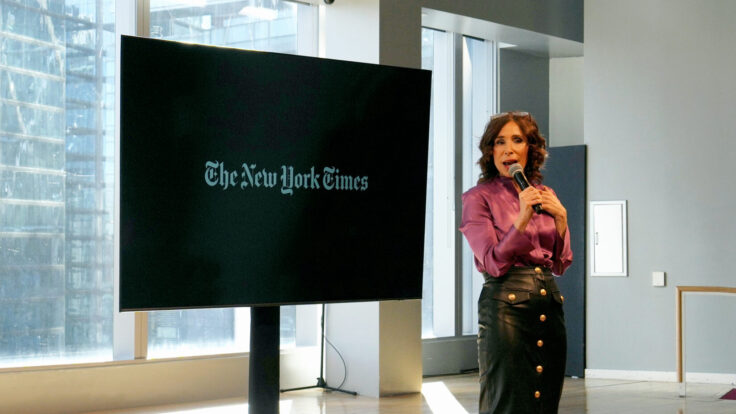
Not all publishers are going this route, of course. The New York Times is pouring all of its resources into its own app, including a shortform video feed, games, and shopping, refusing to relinquish audience development and ownership to other platforms. New York Times Co. C.E.O. Meredith Kopit Levien isn’t the only one with superapp dreams, either. The Economist, The Washington Post, and CNN, with varying degrees of success,
have followed suit with their own shortform video feeds—as, of course, has Substack. Even Jimmy Pitaro wants ESPN Unlimited’s app to be the go-to place for the modern sports fan, combining betting, fantasy, and highlights alongside live games. But these are costly expansions, requiring investments that erstwhile behemoths like Vox Media, BuzzFeed, and Vice can’t afford.
For the brands that aren’t trying to figure out how to turn Wordle into a growth engine,
or integrate gambling into its superapp, becoming a YouTube or Substack brand may seem like the only path forward. And that means Vox Media may end up looking less like the collection of a dozen websites we know it as today, and something more like Beast Industries, the reported 450-person team that turned Jimmy “MrBeast” Donaldson’s YouTube channel into a media empire. In fact, Axios’s recent report that Bankoff is considering splitting off the legacy media
assets from Vox’s growing, star-centric podcast business suggests that management is already thinking about it this way, too.
That’s Patreon and Substack’s big pitch: Ignore the rules that drove the open web; it’s dead. Focus on building up, not out. Vox Media was once the home of not only Ezra Klein, but also Johnny Harris (now an independent YouTuber with more than 7 million subscribers), Cleo Abram (a former Vox staffer, also with 7 million
subscribers), Alex Heath (an ace talent who recently left The Verge for his own multiplatform independence, including a podcasting deal with Vox), Matt Yglesias (one of the most successful authors on Substack, with more than 203,000 readers, paid or otherwise), and on and on. But the company that helped launch their careers now can’t afford to bring them back without selling off websites or initiating mass layoffs. And that may be where the industry is
headed. For Vox to become a media brand of tomorrow, it needs to shed its former skin—or else become another cautionary tale in an industry full of ghosts. |
Thanks, Julia. Have a great weekend, Dylan
|
|
|
Join Emmy Award-winning journalist Peter Hamby, along with the team of expert journalists at Puck, as they let you
in on the conversations insiders are having across the four corners of power in America: Wall Street, Washington, Silicon Valley, and Hollywood. Presented in partnership with Audacy, new episodes publish daily, Monday through Friday. |
|
|
A professional-grade rundown on the business of sports from John Ourand, the industry’s preeminent journalist,
covering the leagues, players, agencies, media deals, and the egos fueling it all. |
|
|
Need help? Review our FAQ page or contact us for assistance. For brand partnerships, email ads@puck.news. You received this email
because you signed up to receive emails from Puck, or as part of your Puck account associated with {{customer.email}}. To stop receiving this newsletter and/or manage all your email preferences, click here. |
Puck is published by Heat Media LLC. 107 Greenwich St., New York, NY 10006 |
|
|
|