{{ 'now' | timezone: 'America/New_York' | date: '%b %d, %Y' }} |
|
|
|
Hello, and welcome back to The Best & The Brightest, your daily politics dispatch. It’s foreign
policy Thursday (and World Cup opening day!) and I’m your host, Julia Ioffe. This is also, very sadly, my last dispatch edited in part by my dear friend and colleague—my brilliant, hilarious, and kind frolleague—Kathy Gilsinan. Kathy is off to be a staff writer at Politico Magazine, which is extremely lucky to have her. She’s going to do amazing things—and you should absolutely read her there—but I’m very much going to miss her, as
will everyone at Puck.
In today’s issue, Axios’s Barak Ravid has gone from D.C.’s breaking news darling on all things Middle East to a subject of skepticism and ridicule. But is it his fault if the White House really believes a deal with Iran is just around the corner? Or is this a cautionary tale about a president who knows reporters better than reporters know themselves? Plus, up top, Marianna has an update on the
Valadao–Villegas race and Leigh Ann follows up with Senator Mark Warner on the Pulte–FISA fiasco.
Also mentioned in this issue: Eden Rafshoon, Jonathan Swan, Martin Indyk, Mike Johnson, Dave Lawler, Barack Obama, Jared Kushner, Jim
VandeHei, Avi Berkowitz, Steve Hilton, Jay Clayton, Mike Allen, Gahl Burt, Jasmeet Bains, Benjamin Netanyahu, Joe Biden, and more. |
|
|
|
| Marianna Sotomayor
|
|
- California
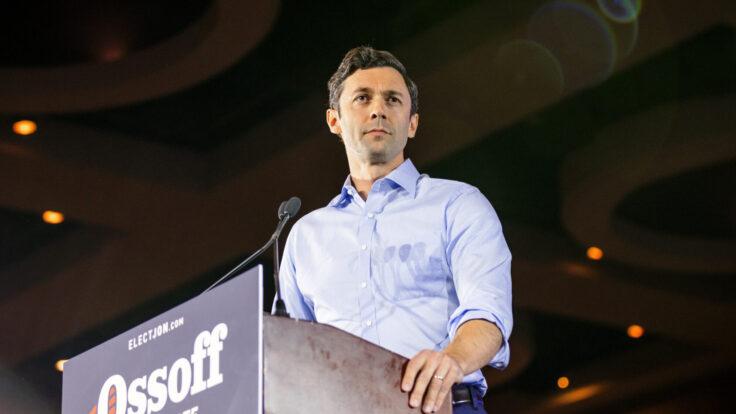
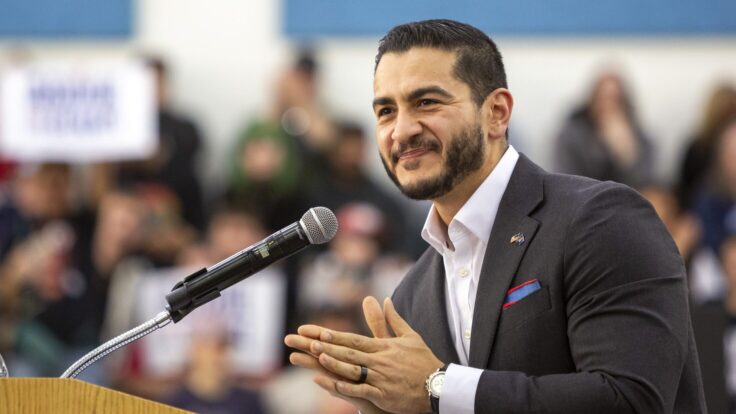
swingers beware: The swingiest House district in California now has its November matchup: Longtime incumbent G.O.P. Rep. David Valadao will face progressive Democrat Randy Villegas, who defeated the more moderate State Assembly member Jasmeet Bains in the primary. Valadao first won election to the House in 2012, lost his seat in the Democratic wave of 2018, and then reclaimed it in 2020. Democrats now hope to flip the Central
Valley seat once again, arguing that today’s political tailwinds are reminiscent of the ones that unseated Valadao eight years ago.
There’s reason for them to be optimistic: For the first time since 2018, Democrats outpaced Republicans in primary turnout. With roughly 95 percent of votes counted, Valadao has captured 41 percent, while Democratic candidates collectively account for 59 percent. Valadao’s share could slip further as the remaining ballots are tabulated, which would mark his
weakest primary performance to date. (According to public election data, he has never increased his share of the electorate between the primary and the general election.) Meanwhile, the D.C.C.C.—which had initially supported Bains—moved swiftly to mend fences with Villegas as soon as the primary result was in. If there is any lingering bad blood there, a shared determination to defeat Valadao seems to be keeping everything drama free.
Several Democratic strategists, however, concede
that Valadao has long defied conventional political logic, repeatedly winning a district that has leaned Democratic for years. And Republicans believe that durability will carry him through once again—especially with gubernatorial candidate Steve Hilton at the top of the ballot and a lefty like Villegas as his challenger.
|
|
|
|

| Leigh Ann Caldwell
|
|
- Congress’s winning
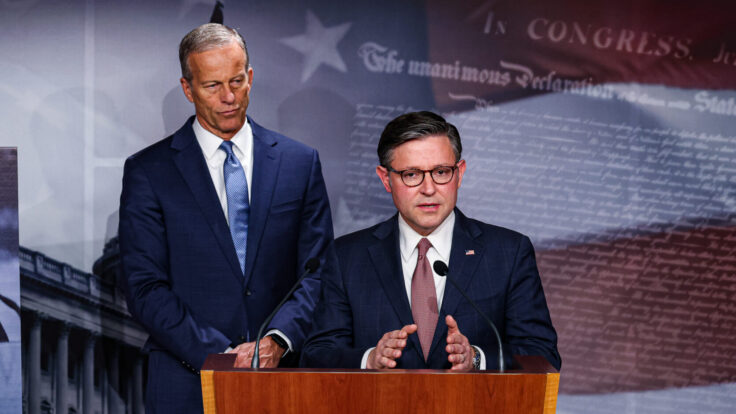
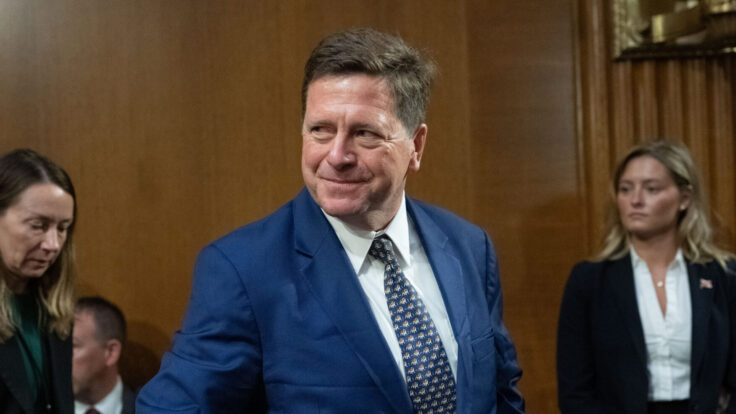
streak?: Shortly after House Speaker Mike Johnson failed to pass a short-term extension of Section 702 of the Foreign Intelligence Surveillance Act, which expires Friday, Trump bowed to congressional pressure and quickly nominated Jay Clayton, his former S.E.C. chairman, to serve as permanent director of national intelligence—replacing incoming temporary director Bill Pulte after an outpouring of anger from Democrats and
Republicans, alike. Congress had already forced the president to drop the ballroom funding proposal and the anti-weaponization fund. Now Pulte is off the table as well.
And yet, even that capitulation may not be enough to save FISA. Sen. Mark Warner, the top Democrat on the Intelligence Committee and typically a supporter of FISA, said Trump’s move fell short. “There needs to be a clear guarantee” that Pulte won’t serve in any capacity as D.N.I., including during a
transitional period, he said in a statement. Warner later warned reporters: “God forbid, as we move into the World Cup, that something would happen, but if something happens, it falls at the feet of the president.”
|
|
|
|
Now on to the main event… |
|
|
|
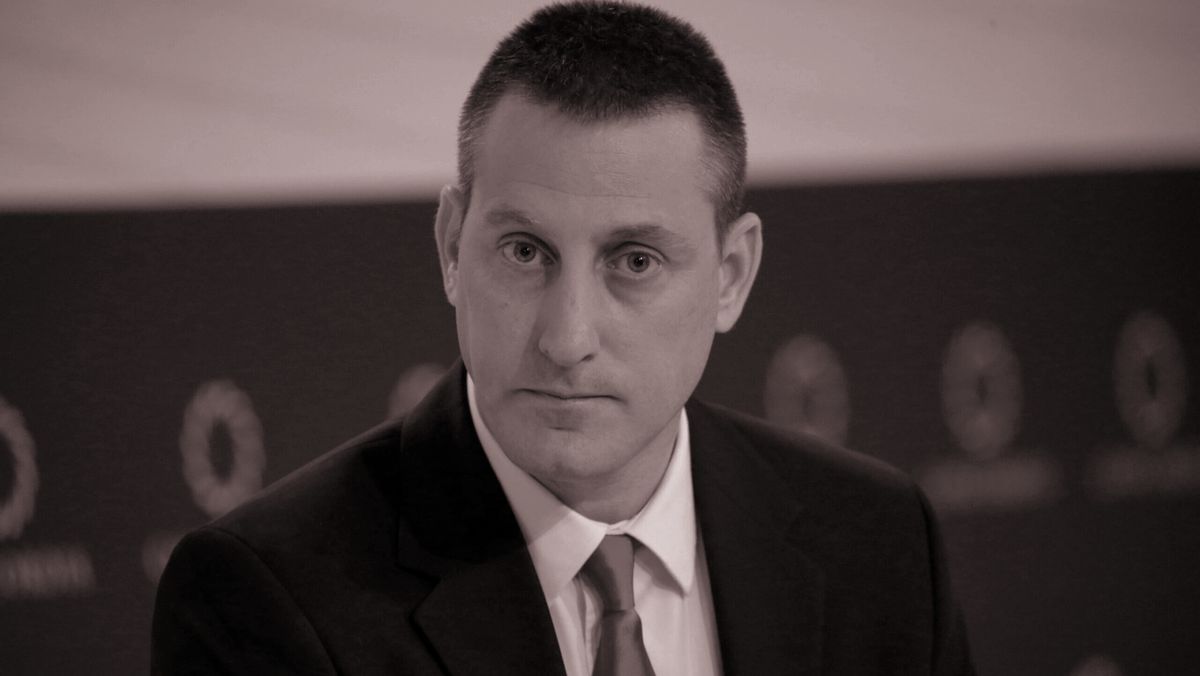
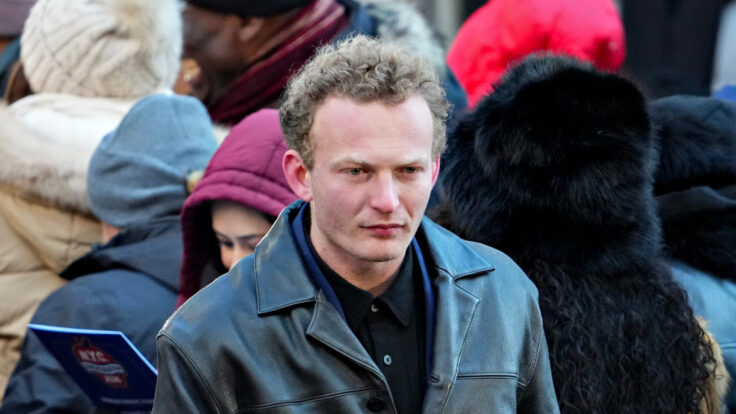
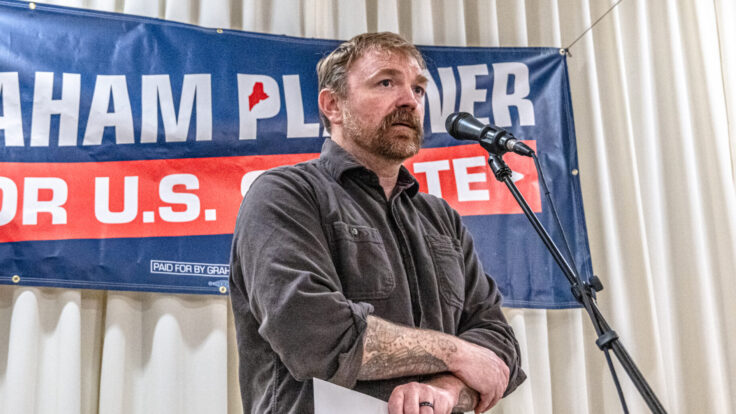
Barak Ravid has become one of D.C.’s most well-wired reporters during the Iran war,
leveraging a direct line to the White House into endless scoops about the negotiations between Washington and Tehran. But what happens when your best source is an unreliable narrator? |
|
|
|
A few weeks ago, a handful of D.C. luminaries gathered at the Woodley Park home of socialite Eden
Rafshoon for a birthday dinner honoring Gahl Burt, the widow of the late, legendary ambassador to Israel, Martin Indyk. By all accounts, it was a lovely evening, but at some point, over the fish and rice, the subject of Donald Trump came up, and the conversation predictably went off the rails. According to three guests who didn’t want to go on the record and violate their host’s privacy, Barak Ravid, Axios’s star
reporter, had shared that Trump was a great source, one that he has treated as any other. Taken aback, a well-known D.C. intellectual suggested that perhaps that wasn’t the best metric with which to evaluate the 47th president of the United States—even for a journalist. |
|
|
|
Innovation is at the heart of modern agriculture.
Regenerative agriculture is helping farmers produce more high‑quality food for the nation. Not only does this work help safeguard crops and reduce risks to harvests, but it also improves soil health, conserves water, and increases biodiversity. At Bayer, we succeed when farmers succeed.
Learn more. |
|
|
|
Things quickly spiraled from there. Ravid countered by saying that Iran negotiations were messy under
Obama as well, that Trump was a distinctly American figure, and that there had been corrupt presidents before him. A prominent political journalist interjected and tried to impress on Ravid that this was not, in fact, a normal presidency—and, really, was the president even that good of a source, given his elastic relationship with the truth? “If a source lies to you again and again and again, what is your policy about publishing that?” the journalist asked Ravid.
The
tension that led to the scene, which left Ravid and his wife shaken, had been quietly building for months. In Washington, people have often spoken about Ravid with a kind of awe, showering him with the Beltway’s highest compliments—“workaholic,” “relentless,” an “insider” with “incredible sources” in the Middle East and enviable “access” to the White House. Which is why so many have been so surprised that Ravid, who had built a reputation as a hard-charging and ultra-plugged-in reporter, seems
to be so faithfully reproducing the president’s magical thinking that a deal with Iran is just around the corner.
Some of these attacks, Ravid’s defenders contend, have come from the left or been motivated by professional envy. (“I think some criticism is driven by jealousy,” one of his former colleagues confessed.) And Ravid is certainly not the only one reporting on every micro-development inside the White House. As Trump well knows, pretty much every reporter in this town is a sucker
for a good exclusive—especially when you give them all your phone number.
But Ravid has more credibility than most of his peers on the Middle East, which means that people truly pay attention to his siren-emoji-laden tweets—even when his reporting has tended to give the impression that the conflict is essentially over and negotiations are on track. “I think those items [about an imminent deal], along with everything else that Trump does, create a false
sense of reality that even people who are not supporters of Trump’s have bought into,” said the political journalist who attended the dinner. “Trump wouldn’t keep planting these bullshit items with Axios and other reporters if it didn’t benefit him.”
A friend and former colleague of Ravid’s in Israel expressed the complexity of the situation. He defended Ravid’s reporting,
describing him as “an honest and a cautious person”—someone who, during his tenure at Axios, has become as synonymous with the company as any journalist besides co-founder Mike Allen. Nevertheless, this person added, Ravid was “working on a daily basis with people who are not cautious and are not honest. They’re using his credibility that he’s built over the years to manipulate the market. And he’s risking something along the way. He’s built this incredible
reputation over the years—and with good reason—as a fearless reporter who takes no prisoners. But I don’t know that that’s his reputation half a year from today.”
Ravid, himself, flatly rejected the notion that he has been used, or allows himself to be used, by the White House. “That’s utter bullshit,” he told me. |
Between Barak
& A Hard Place
|
Like so many of the most invested D.C. insiders, Ravid started out as an outsider. He began his career in
Israel, where he told me he was interested in journalism from a young age. At 18, like almost all Israelis, he started his mandatory military service, joining Unit 8200, the signals intelligence wing of the I.D.F. that’s known as Israel’s N.S.A. The elite unit recruits the brightest high school students; its alumni are heavily represented in Israel’s startup scene. “It’s a brand,” one Israeli journalist told me. Ravid learned Arabic, completed the required three years, and, seriously considering
a military career, signed on for another three. But then he decided to try journalism.
His big break came when he was reporting on the tensions between then-president Barack Obama and Bibi Netanyahu for Haaretz, a left-leaning paper whose English-language edition has a significant international readership. Ravid developed a reputation for hard-nosed reporting and independence, earning him the eternal enmity of Israel’s eternal prime minister.
“Bibi hates Barak because he is an incredibly well-sourced reporter who doesn’t accept the bullshit briefings put out by Bibi’s media team,” said the Israeli friend and colleague.
Ravid also acquired a reputation as someone who absolutely had to have the story first—and was good at advertising it when he got it. “He is probably the most competitive person I’ve ever met,” this person said. “When you’re in direct competition with him, it’s impossible to have a cordial relationship. He has
to win every round. And everything is an exclusive, world-shattering scoop.” |
|
|
|
Regenerative agriculture propels progress, helping farmers grow more food sustainably. Access to modern agricultural technology gives farmers more choices and strengthens their yields. That’s why Bayer is investing in innovative solutions that help growers boost yields and improve soil health so they can keep quality, affordable food on the table for Americans. At Bayer, we succeed when farmers succeed.
Learn more. |
|
|
|
After 10 years at Haaretz and a pivot to television, Ravid connected with Jonathan
Swan, then Axios’s star White House reporter, who in turn recommended him to Allen. “He’s very clever in planning his career,” one prominent Israeli journalist told me. “He played in both dimensions, in Hebrew with analysis and the scoops locally, and in English. [Then] he started to have sources outside of Israel and built trust in Washington.”
Another breakthrough arrived in 2017, when Ravid scored a meeting at the White House. What should have been a brief introduction to the
deputy N.S.C. spokesman changed when Jared Kushner walked in with his advisor Avi Berkowitz. That meeting led to a relationship that deeply informed Ravid’s coverage of Trump’s failed attempts at negotiating a peace deal between the Israelis and Palestinians and the subsequent signing of the Abraham Accords. Kushner also became a source for Ravid’s excellent book about the accords, Trump’s Peace, published in Hebrew and English. Trump became another
source. Speaking to Ravid at Mar-a-Lago in 2020, he made clear his displeasure with Netanyahu for calling Biden to congratulate him on winning the November election. “Fuck him,” he said, giving Ravid’s book its central scoop and turbocharging his career in the U.S.
Ravid, however, wasn’t content simply to talk to a president out of power. Now an Israeli TV personality and an author of Axios’s Tel Aviv newsletter, he was determined to find a way into the Biden White House.
“We inherited him,” one Biden administration official recalled. “He used to yell at us: ‘How dare you! I used to speak to the president all the time! Don’t you know who I am!’ He was very aggressive.” The official recalled repeatedly trying to duck him, to no avail. “I heard you think I’m annoying,” Ravid allegedly said, explaining that his daughter had heard it at school from the official’s daughter.
Soon enough, this official concluded that Ravid was worth talking to, not least because
he had such impressive sources in Israel and the Middle East. “He trades,” the Biden official said. “You tell him something and he’ll say, ‘I spoke to someone in Bibi’s government and they told me this.’ He’s more useful than other reporters, who are a one-way street.”
Others valued him for a different reason. “If you want to get a message out immediately, you can use Barak. That’s well known,” said another Biden official. “It’s immediate. It’s as close as you can get to just putting
something up on Twitter. That’s my experience. I don’t think he’s dishonest or anything. I just think he prints what people tell him.” |
All the News
That’s Fit to Print
|
There are several factors that have made it almost impossible to report on the Iran war—a frozen conflict
defined by no clear objectives, few reliable narrators, and endlessly shifting goalposts. And for a reporter with such high-level access, it can be equally impossible to resist the temptation to publish every micro-scoop—no matter how tenuous. In recent weeks, Ravid has become a kind of punchline in certain circles: the boy who cried “Iran deal,” ceaselessly
propagating the idea that a grand bargain is imminent. “I am covering the news, okay?” Ravid told me. “If the president or the White House say something about the negotiations with Iran, then I’m covering it.” He bristled at my characterization. “The boy doesn’t cry ‘Iran deal,’” he said. “The boy says the guys who are working on the Iran deal are crying ‘Iran deal.’”
As Ravid told me, it was true at the time when, on May 28, he
posted, “U.S. and Iran reach deal but need Trump’s final approval.” It was only later we learned that the deal was really an agreement to extend the ceasefire and start the real negotiations, the ones about what to do with Iran’s nuclear program. And when he posted
on May 29, “BREAKING: Trump signals he is about to approve Iran deal,” Ravid said that Trump did in fact signal that he was going to approve it, only to not approve it one day later—an event that also merited a siren emoji. “I was sure that Trump, at that Situation Room meeting, was going to sign off on the deal,” Ravid insisted. |
|
|
|
That report, he told me, was “1,000 percent accurate.” But there’s a difference between accurate and
truthful, especially in the Trump era. Is it accurate to report that Trump and company believe that a grand bargain is imminent? Sure. Is it true that a deal is actually around the corner, or even feasible? Probably not, for all the reasons experts on the region have been painstakingly repeating for months.
Even some of Ravid’s admirers tell me they worry he moves too fast to make that distinction, and that something very important gets lost in his relentless focus on always
being first. Ravid, however, doesn’t want to hear it. He argued that other news organizations have matched his reporting and that, despite the siren emojis on Twitter, he has always had a caveat in the actual story advising readers that there have been other moments when a deal seemed close, only to fall through. If people didn’t read the actual story, that was on them. This was a line I heard often from Ravid’s defenders. “I can’t help it if people haven’t read the full story!” Axios co-founder
Jim VandeHei snapped in frustration. Allen called Ravid’s critics “jealous haters.”
Dave Lawler, Ravid’s longtime editor at Axios, offered a more nuanced defense. “There are challenges to this with the president as a source,” he told me, explaining that not every call with the president results in a breaking news story—or even makes it into a story at all. Nor is the White House the source for many of Ravid’s scoops, Lawler added. (As is standard practice
in any newsroom, Lawler said, he is aware of the identities of Ravid’s sources and of the “triangulation” that happens to verify every piece of reporting.)
Lawler is also keenly aware that this is not a normal situation. Stories about the negotiations can move markets, and the Iranian government and its bots are constantly jumping onto X to rebut Ravid’s stories and accuse him of being a Mossad agent. “As an editor, I’m conscious of the fact that sources in general don’t always just want
to give you information; they want to shape narratives,” Lawler told me, “Neither Barak nor I are ignorant of that.”
Ravid’s coverage, Lawler said, has adapted to reflect the fact that the Iran deal horizon is ever-receding, despite the White House’s assurances otherwise. His stories have always included disclaimers that past promises have proved hollow, Lawler said, and in light of the past month, they’ve become more numerous and prominent. The fine print has had to become a little less
fine. “You have to be conscious of the fact that we’re in week four of the cycle where the administration has been saying we’re close to a deal,” Lawler told me. “The truth is that the more this has happened, the more you have to caveat it, because the more it’s a pattern of the administration,” VandeHei conceded.
And yet, Ravid is unswayed. When we spoke last week, I asked him what he personally thought about the proximity of a deal given his two decades reporting on the region and its
endless wars. “I still think that as of June 2 at 16 minutes past 4 p.m. Eastern time, we’re still very close to a deal again, a deal to reach a memorandum of understanding that will start the process of opening the Strait of Hormuz, and start the process of talks on Iran’s nuclear program.” A week later, Trump, unsatisfied with the negotiations’ progress, ordered renewed strikes on Iran.
As of this afternoon, Trump had called the attack off again—sending the Dow up 1,000 points. As Ravid
made sure to note in his own reporting on the talks, “Trump has claimed an agreement was close multiple times before, and Iran has not publicly confirmed any agreement.” Nevertheless, he added, three sources briefed on the talks told Axios that negotiators were making progress. |
That’s all for me, friends. Enjoy the World Cup opener and I’ll see you back here next week. Until then, good
night, tomorrow will be worse—especially because Kathy Gilsinan won’t be here.
Julia |
|
|
|
Unique and privileged insight into the private conversations taking place inside boardrooms and corner offices up and down Wall
Street, relayed by best-selling author, journalist, and former M&A senior banker William D. Cohan. |
|
|
|
Join Emmy Award-winning journalist Peter Hamby, along with the team of expert journalists at Puck, as they let you in on the
conversations insiders are having across the four corners of power in America: Wall Street, Washington, Silicon Valley, and Hollywood. Presented in partnership with Audacy, new episodes publish daily, Monday through Friday. |
|
|
|
Need help? Review our
FAQ page or contact us for assistance. For brand partnerships, email ads@puck.news.
You received this email because you signed up to receive emails from Puck, or as part of your Puck account associated with {{customer.email}}. To stop receiving this newsletter and/or manage all your email preferences, click here.
|
Puck is published by Heat Media LLC. 107 Greenwich St., New York, NY 10006 |
|
|
|
|