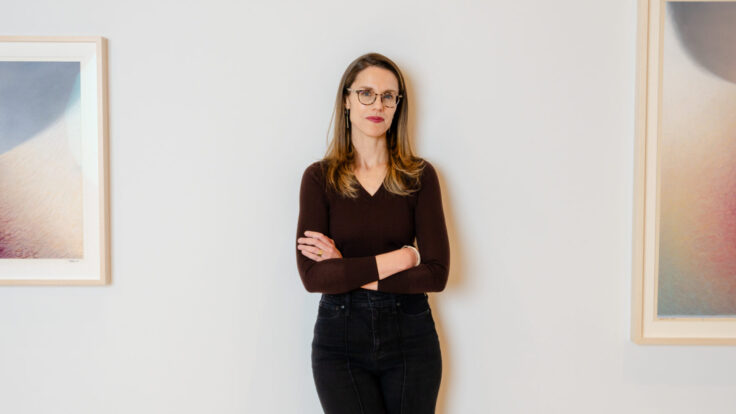
Hello, and welcome back to Wall Power. I’m Marion Maneker, in Paris
for the next week of sales, which I’ll share with you soon. (No, I was not at the Louvre this morning.) In the meantime, Julie is here with a dispatch from Mayfair, where she visited the Pavilion of Art and Design fair and found that the design scene remains a bright spot in an uncertain market.
But first… |
|
|
A MESSAGE FROM OUR SPONSOR |
Bold, sculptural, and fluid.
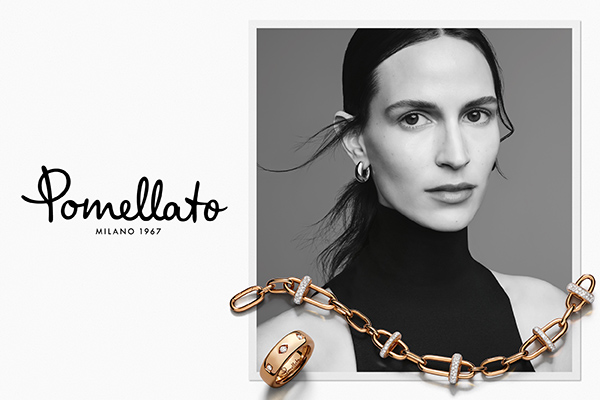
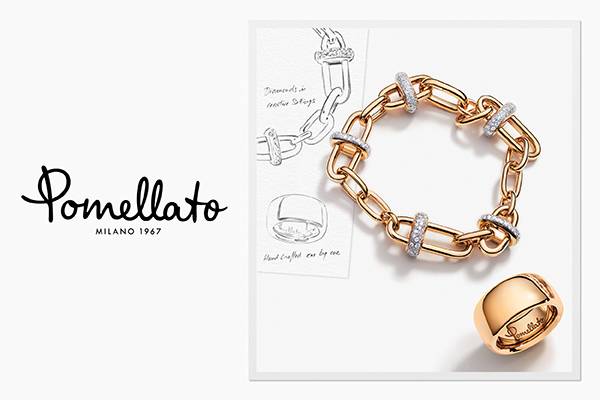
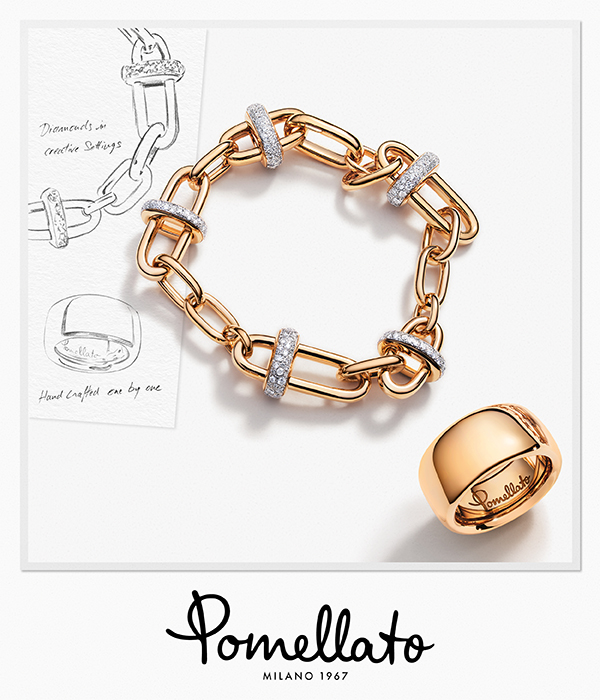
Pomellato’s Iconica collection honors Milanese goldsmithing with handcrafted pieces that are more than just jewelry; they are a symbol of empowerment, authenticity, and timeless beauty. From statement necklaces to stackable rings, each piece reflects expert craftsmanship and modern expression. |
|
|

| Julie Brener Davich
|
|
- Bonhams
changes hands… again: On Friday morning, Bonhams chairman Hans-Kristian Hoejsgaard sent an email to employees worldwide announcing that Pemberton Asset Management—one of the company’s existing lenders, described as a “leading investor in mid-market companies backed by Legal & General, the U.K.’s largest insurance company”—had “taken ownership” of the auction house from Epiris LLP, the private equity firm that purchased Bonhams in 2018. Hoejsgaard also revealed that C.E.O.
Chabi Nouri and C.C.O. Céline Assimon were no longer with the company after being “part of an exciting but challenging journey,” and that Seth Johnson would be replacing Nouri as C.E.O., Liese Thomas would join as C.F.O., and Jennifer Babington would serve as C.O.O. (Alex Lejeune, currently pulling double duty as C.O.O. and C.F.O., will stay on through the end of the year to help with
the transition.) A town hall has been scheduled for Monday to answer any questions.
Historically, Bonhams has been comparatively strongest in the car category, and the incoming leadership team suggests the auction house will double down there: Johnson joins from IGPL, the family office of U.K. billionaire Michael Spencer, whose interests include
cars; Thomas from McLaren Automotive; and Babington from the Envision Racing Formula E Team.
Epiris had previously explored a sale of Bonhams at least once. In 2023, after a period of investment and acquisitions, Bloomberg reported that Epiris was working with JPMorgan Chase to find a buyer at a valuation of £1
billion. That year they reported a record $1.14 billion in sales, a 14 percent increase over the previous year, which itself was a 27 percent increase from the $816 million in sales in 2021. (Bonhams did not release a sale total for 2024.) The terms of the Pemberton Asset Management transaction were not disclosed. A spokesperson for Epiris told me, “We are pleased to have agreed to a refinancing in which Pemberton will provide Bonhams with new funding to support its continued growth.” - A surrealist centennial in London: Louisa Guinness’s namesake art jewelry gallery fills a sunny corner spot in Kensington, near some of the city’s most established antique sellers. In one of the large, streetfacing windows is a stack of bowlers topped with a white dove, hinting at the surrealist treasures inside for her current show,
which celebrates the movement’s 101st anniversary.
Connecting surrealism across the generations, the show features pieces by historic artists Niki de Saint Phalle, Salvador Dalí, Max Ernst, Man Ray, Claude Lalanne, and Leonora Carrington alongside those of contemporary practitioners including Georg Hornemann, Luz Camino, Jiayang He, and
Martina Kocianova, whose works are priced mostly below €5,000. Carrington designed pendants and brooches, in collaboration with sculptor José Sacal, featuring her fantastical creatures in 2010, the year before she died, but they’ve only recently come to light outside of Mexico. The gold ones come in editions of 10, and the goldplated sterling silver versions, which Guinness is offering, come in editions of 100, priced at €14,000 each. (Across town, the talk of
Frieze Masters was Carrington’s painted wooden cradle in the shape of a sailboat, from 1949, at Gallery Wendi Norris.)
In Dalí’s striking watch brooch, The Eye of Time, conceived in 1949, the iris is an enamel watchface surrounded by eyelids of diamonds, complete with a ruby tear duct and diamond teardrop. Considered the
pinnacle of the artist’s jewelry output and one of only four known examples, the brooch has been irreverently displayed by Guinness in surrealist style atop a bread roll. The last time one appeared at auction, at Sotheby’s in 2017, it made $372,500; three years prior,
one in better condition made $1.1 million.
Guinness’s show runs through November 7. For her next trick, she has written the catalogue introduction for an exhibition of jewelry by female artists titled From Louise Bourgeois to Yoko Ono at the Museum für Angewandte Kunst Köln, in Cologne, Germany, opening
next month.
|
|
|
Now, let’s get to the main event… |
|
|
At the Pavilion of Art and Design fair in London, the thrum of activity
surrounding art deco, as well as contemporary artist-designers working in natural materials, evidenced the health of a market fueled by global collectors—and their decorators—who were eager to buy. |
|
|
Before I stopped by London’s Pavilion of Art and Design fair this week, a well-placed
contact in the design world told me I had to see Anna Petrus’s table. The Hunting Tray table, which features a tin-plated copper tray decorated with hunting scenes atop a blackened wooden base, marked Petrus’s entrée into metalworking—rare for a woman in 1920. But when I made my way to the Swedish gallery
Modernity’s booth, where it was supposed to be displayed, I learned that the table had sold before the fair even started.
That kind of selective demand was evident throughout the fair’s plushly carpeted tent, which was awash in red stickers—indicating items that had already found a buyer—and jam-packed with well-heeled collectors who came not to merely ogle Fernando Jorge’s £39,000 diamond
rings, say, or the 17th century Japanese two-fold printed paper screen, asking £48,000 at Rose Uniacke’s booth. They were there to take pieces home. |
|
|
A MESSAGE FROM OUR SPONSOR |
Handcrafted in Milan. Inspired by Pomellato's rich heritage, the Iconica Collection is a masterclass in quiet precision. The Iconica Bracelet features alternating gold and diamond links sculpted to a seamless silhouette. The matching ring shares the same commitment to fluidity and comfort. The result is timeless Milanese elegance with a contemporary edge. |
|
|
For the past few years, as the art world has fretted about declining sales, the
design category has held steady, and even grown, albeit led in large part by Les Lalanne and Tiffany. Annual totals for dedicated design sales at the major houses between 2020 and 2024 reflect this: Phillips’ numbers stayed level at $23.7 million; Sotheby’s total grew from $58.5 to $63.2 million (this figure does not include works sold in other categories, like the $12.5 million Tiffany window in Sotheby’s modern evening sale last year); and Christie’s total
grew 64 percent, from $41.6 to $68.1 million.
And here in London, PAD is the only annual design fair of its kind. Simon Andrews, a former Christie’s design specialist and advisor, told me that London’s design market has recovered somewhat from Brexit. “This fair asserts London’s position,” he said. “It remains robust.” The PAD fair in Paris, he noted, has a stronger
history of connoisseurship. But of the two, London can’t be beat for design innovation. “Ostensibly, the two fairs are vying for the same market, but they’re not, really—they’re fulfilling different aspects,” Simon said. |
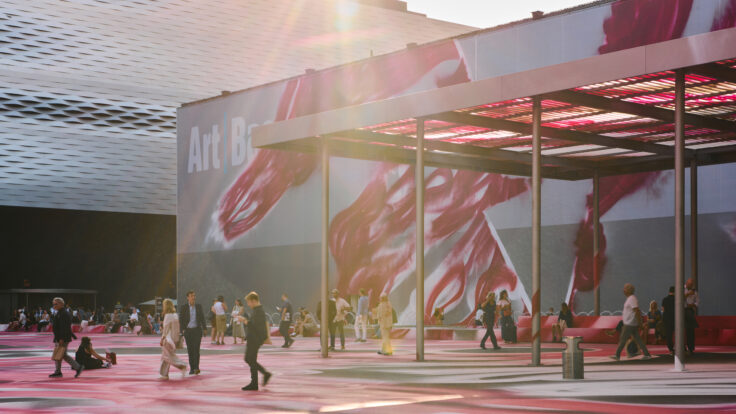
PAD London, which is held in a purpose-built tent in Berkeley Square, near the city’s
auction houses and many of its contemporary art galleries, has grown considerably since it launched in 2007. This year’s edition is among its biggest, with 67 dealers from 20 countries. Eleven exhibitors were new or back from a hiatus, including the first-ever participants from the Middle East: Pik’d Gallery, from Beirut, and Booroom Gallery, whose Russian proprietor relocated the business to Dubai from Moscow.
It’s a major investment for exhibitors, of course. A booth at PAD is expensive
compared to other design fairs, according to a former participant. And then there’s the shipping, insurance, installation costs, travel fees, etcetera, that come with fair participation. (The fair organizers soften the blow by bringing around bottles of Ruinart after lunchtime.) But attendees and participants both told me PAD is worth it. The fair provides access to new global collectors and interior designers, and the high production value attracts an affluent international crowd, making
participation valuable as a marketing channel even if no sales occur on-site.
Many of the booths seemed to coalesce around three clear design trends: art deco; bronze and ceramics (or, as London gallerist Mélissa Paul put it, “things forged in a fire”); and organic forms and materials. Andrews, the design specialist, mused that the appeal of such objects is that “they are ‘real’ in a way that much of what is being presented or available to global society cannot always be
assured to be ‘real,’” in our techno-centric, screen-addled world. “They don’t roll off a production line, and they can’t be 3D printed or downloaded from the internet.”
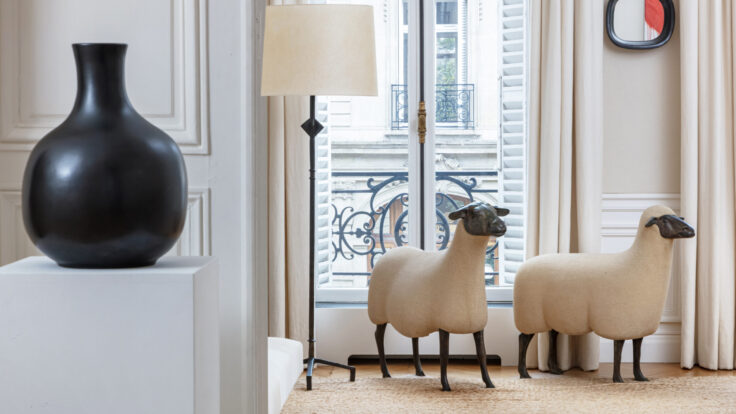
The preponderance of objects linked to the art deco movement, which celebrates its centenary this year, was particularly notable. (The Musée des Arts Décoratifs in Paris opens its One Hundred Years of Art Deco exhibition this week.) Galerie Jacques Lacoste, a leading French dealer in 20th century design, devoted
its entire booth to the movement. Among the items on sale was a white leather couch, circa 1929, by decorator Paul Dupré-Lafon that recently sold at Bonhams for €70,250. Other highlights included a dining
table from Émile-Jacques Ruhlmann’s Fisherman Trout Club project in Normandy, circa 1932, and a pair of recently rediscovered and fresh-to-the-market panels by Jean Dunand that a source in the design field speculated could be worth around £500,000. (Galerie Jacques Lacoste didn’t immediately respond to a request for comment.) |
|
|
This year’s edition of PAD also marked the return of Friedman Benda after about a
decade’s hiatus because, as Marc Benda told me, he wanted to do a project with British designer Faye Toogood in her home country. The wait was worth it: Toogood designed the booth, titled The Magpie’s Nest, featuring her works made from local materials, like wool, hand-carved English oak, and Purbeck marble. I sat with Benda on a
couch by Israeli designer Raphaël Navot that evokes sand dunes. |
Sarah Myerscough Gallery booth at PAD London. Photo: © Stephane Aboudaram | WE ARE
CONTENT(S) |
Nearby was the
booth for British dealer Sarah Myerscough, who represents 30 artist-designers working in natural materials. (This past week Myerscough celebrated the opening of a brand-new gallery
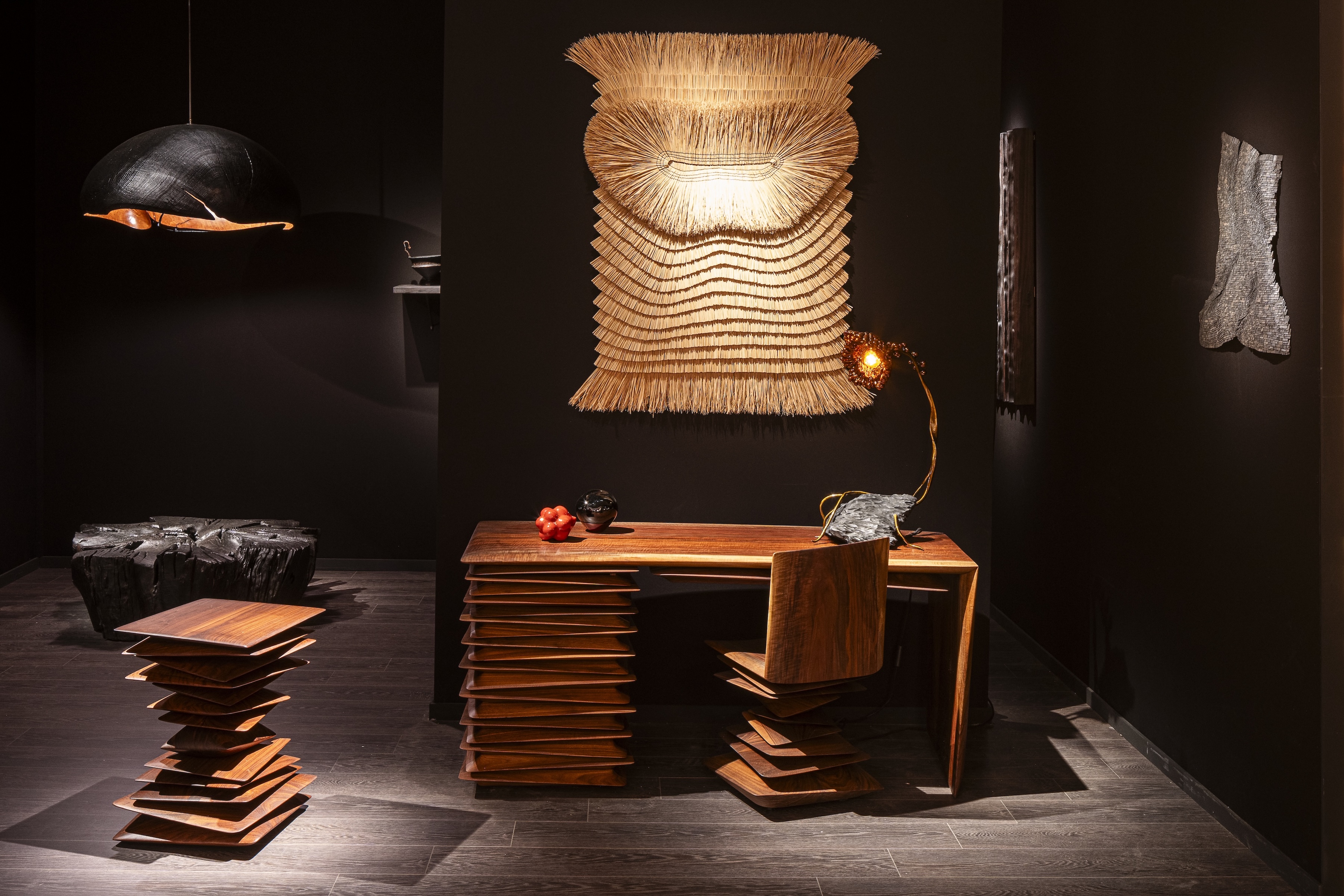
space in a former school in Mayfair.) The standout was the walnut Sheets desk and chair by Hudson Valley designer Christopher Kurtz, priced at $82,800 and $21,000, respectively. Also showcasing contemporary, craft-focused designs was Mélissa Paul, who started her career in embroidery for fashion houses like Lanvin and Chloé. When I stopped by her booth, she had sold a stoneware and porcelain
mirror by Agnès Debizet for £14,000, as well as a bronze jellyfish chair, branch candle holder, and fan scones by Clotilde Ancarani.
Overall, the fair reflected the fact that
there’s no shortage of H.N.W.I.s with houses to decorate and designers who want to keep earning commissions. Indeed, the buzz at PAD was already gravitating toward the next prize, the Salone del Mobile in Riyadh next month, sponsored by the Saudi Arabian Ministry of Culture’s Architecture and Design Commission—which, along with the Visual Arts Commission, is trying to create a Western-style commercial art ecosystem in the kingdom. This will be the first iteration of a Western fair brand in the
country, and one can certainly see why dealers would want a foothold in a region awash in petrodollars. We’ll know soon if the experiment succeeds. |
Thanks, Julie. I’ll be back with you all on Tuesday.
’Til then,
M |
|
|
The ultimate fashion industry bible, offering incisive reportage on all aspects of the business and its biggest
players. Anchored by preeminent fashion journalist Lauren Sherman, Line Sheet also features veteran reporter Rachel Strugatz, who delivers unparalleled intel on what’s happening in the beauty industry, and Sarah Shapiro, a longtime retail strategist who writes about e-commerce, brick-and-mortar, D.T.C., and more. |
|
|
Finally, a media podcast about what’s actually happening in the media—not the oversanitized,
legal-and-standards-approved version you read online. Join Dylan Byers, Puck’s veteran media reporter, as he sits down with TV personalities, moguls, pundits, and industry executives for raw, honest, sometimes salacious conversations about the business of media and its biggest egos. New episodes publish every Tuesday and Friday. |
|
|
Need help? Review our FAQ page or contact us for assistance. For brand partnerships, email ads@puck.news. You received this email because you signed up to receive emails from Puck, or as part of your Puck account associated with {{customer.email}}. To stop receiving this newsletter and/or manage all your email preferences, click here. |
Puck is published by Heat Media LLC. 107 Greenwich St, New York, NY 10006
|
|
|
|