 |
 |
|
Welcome back to The Best & The Brightest.
|
|
Hey, Teddy Schleifer here. I’m taking over tonight with a remarkable story revealing how the dark art of political opposition research unfolds in the digital age. I’ve spent months talking to sources and reviewing texts that showcase a tug-of-war between Peter Thiel and a group of Democrats, including David Brock, who have been shadow-boxing with the billionaire for almost a year. Tomorrow, Tina Nguyen will be back with fresh intel on the latest round of infighting rocking the House Freedom Caucus—and the implications for an increasingly beleaguered Kevin McCarthy and his razor-thin majority.
But first, another unmissable Capitol Hill dispatch from my colleague Abby Livingston…
|
| The Capitol Hill Cafeteria Report |
|
| An utterly indispensable, high-minded, and, yes, occasionally dishy readout of what our lawmakers are really legislating behind closed doors.
By Abby Livingston
- Seeing Around Corners: In the high school cafeteria that is the House floor, members really do have unofficial seats where they hang out. There’s a Texas Republican row toward the back, while the Congressional Black Caucus members tend to sit in the front, near the dais. And then there’s the so-called “Pennsylvania Corner,” tucked away in an obscure, southeast edge of the floor, which was once the powerhouse pocket of the Democratic caucus. Back in its heyday during the aughts, Republicans and Democrats alike would wander down to kiss the ring of its most powerful member, the late Jack Murtha, a close Pelosi ally who represented central Pennsylvania for decades, in hopes of earmark help.
The group was territorial, too: A former House staffer who worked the floor told me the Corner would “break their chops” if a non-member dared to sit with them. When members weren’t in the Corner, they were playing on the Democratic baseball team or hanging out at the Democratic Club or Capital Grille; and they were known, on occasion, to carouse—when carousing was still socially acceptable in Washington. Of course, they were also serious about their work. “Nobody in Congress spends that much time for socialization alone,” a former House leadership staffer told me. “There was a greater policy making virtue of that group.”
After about fifteen years of retirements, reelection losses, and Murtha’s death, in 2010, the Corner has become a diminished force in the House. But it’s not quite extinct. Capitol Hill sources I talk to frequently bring up “where the Corner is” when gaming out leadership races and whip counts. Corner member Bill Pascrell credits the group with working out abortion language in the Affordable Care Act that made the bill palatable to more conservative Democrats. More recently, the Corner—which once was solidly behind Pelosi—gave her fits when she whipped votes to hold onto her leadership of the caucus.
Of course, the greatest change hasn’t been the decline of the Corner’s ranks, but the rise of individual members who draw their power from social media, not floor cliques. It used to be that members could revel in obscurity, leveraging coalitions to enact incremental change. The new guard, like A.O.C., is leveraging direct relationships with the outside world to affect policy.
|
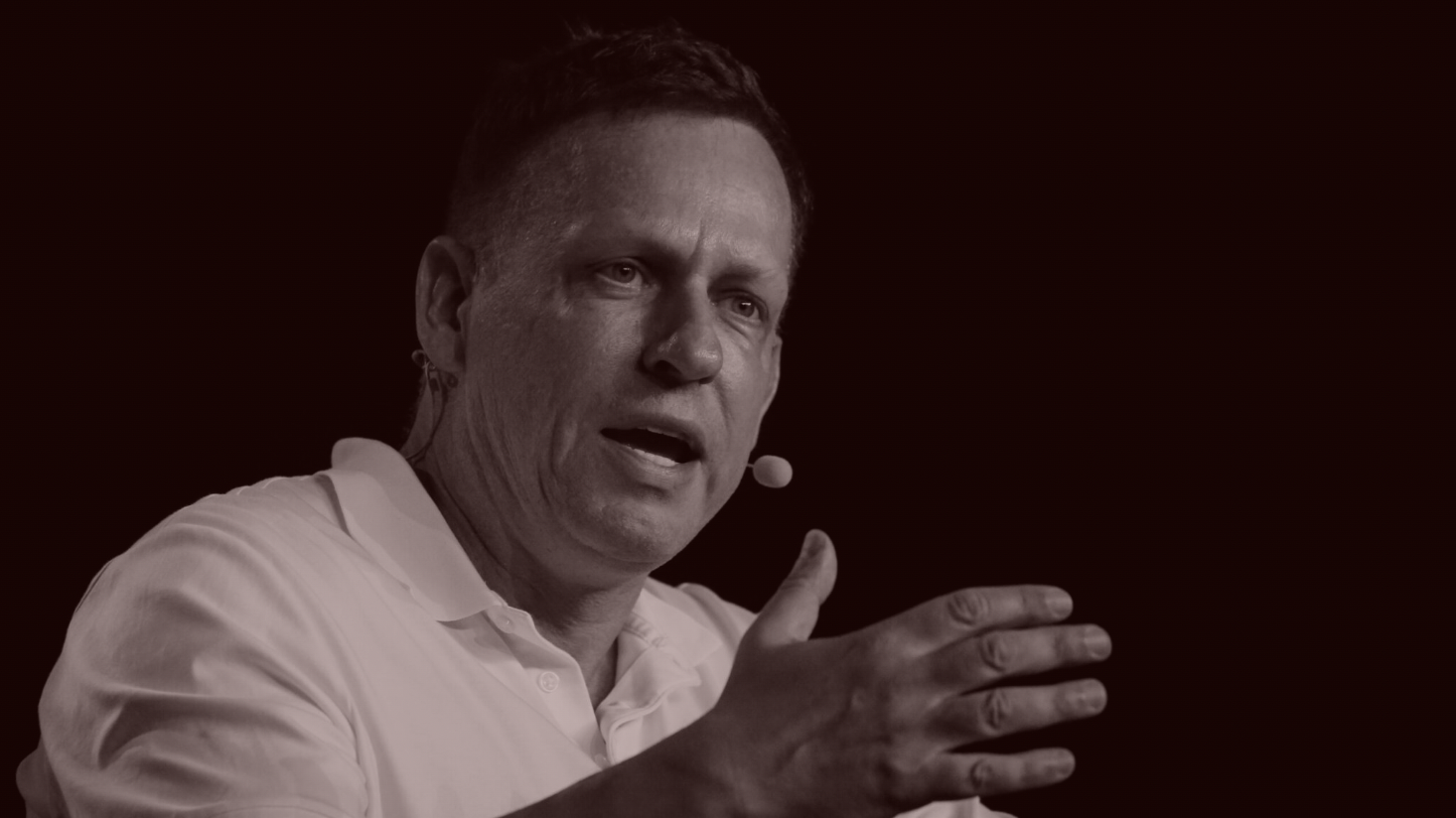 |
| Thiel, Brock & a Gutter Oppo Campaign for Our Times |
| When Peter Thiel emerged as the right’s potential heir to Sheldon Adelson during the ’22 midterms, a highly connected Democratic operative launched a guerilla opposition research campaign to chill his political influence. What happened next was sordid, and ultimately tragic, but also a telling reflection of a new era in political combat. |
|
|
|
| Last October, two weeks before the midterm elections, a budding model named Jeff Thomas walked into the Polo Lounge at the Beverly Hills Hotel for lunch with a friend who had been working with a well-connected Democratic political operative named Jack Bury. Thomas, then 35, dabbled in real estate, the art world, and the inchoate realm of social media influencing. But his most relevant avocation was as a former boyfriend of Peter Thiel, the multi-billionaire entrepreneur and Republican mega-donor. Thomas, who first met Thiel at Coachella in 2015, lived near the hotel at a $13 million place in the Hills that Thiel had underwritten.
Thomas was startled by the stakes of the meeting: Did he want to participate in a sprawling opposition-research project against Thiel, one that would pry into Thiel’s private life, apply pressure, and persuade him to leave national politics?
For six years, after all, ever since he appeared on stage during the 2016 Republican National Convention, Thiel had been a fixation in G.O.P. donor circles—a potential bottomless-pocketed heir to Sheldon Adelson or the Koch brothers. Meanwhile, he’d simultaneously developed into a fixation among Democrats, caricatured as a blood-swilling, Gawker-slaying, Trump-fluffing venture capital villain and putative Judas of the gay community, a portion of which could not square his personal orientation with his politics.
By late 2022, with the midterm elections in full tilt, Thiel’s political clout had only increased as he effectively bankrolled the Senate primary campaigns of his disciples J.D. Vance, in Ohio, and Blake Masters, in Arizona. Bury, backed by a handful of the country’s largest Democratic donors like Susie Tompkins Buell, saw an opportunity to both curb his influence and undermine his personal life.
Opposition research projects are the gruesome, dirty-nailed, and often invisible hand of politics—a staple of virtually every campaign, small and large, from Willie Horton to the George W. Bush D.W.I. to Swift Boats and more. It’s only gotten nastier and more personal in the digital age—Ashley Biden’s diary, Hunter Biden’s laptop, the Billy Bush tape. In the post-Citizens United donor-empowerment era, mega-donors have found themselves in the crosshairs, too. When the Kochs began their rise, Democrats set up an entire research apparatus to probe everything from their business practices to their web of political nonprofits. Now Thiel was the target of a smaller, much more intimate guerilla crusade, one that appears to be ushering in a new frontier in our gutter politics. |
|
A MESSAGE FROM OUR SPONSOR
|
| |
 |
At Chevron, we realize carbon capture and storage is a critical step in helping enable progress toward global net zero. That’s why we’re developing and deploying the technology in our facilities, while also working with partners to scale it to other industries, like cement and steel. Our target is to reach 25 million tonnes of CO2 per year in storage and offsets by 2030, the equivalent to the emissions of 3.1 million homes annual energy use. Part of supporting our efforts is our proposed Eastridge CCS project in the San Joaquin Valley, which is projected to capture up to 300,000 metric tonnes of CO2 per year. Also, through our partnership with Svante, we’re working to reduce the cost of carbon capture and help scale the technology. Moving closer toward global net zero by developing and deploying carbon capture and storage, that’s energy in progress.
|
|
|
|
|
| Oppo, as it’s known in the trade, is a dark art, and Jack Bury’s mentor was one of its finest practitioners: David Brock. A former conservative journalist who dug around for dirt on the Clintons, Brock famously switched sides, founding Media Matters for America in 2004 and eventually becoming a close Clinton family ally. Gregarious and mischief-making, Brock relishes controversy, and he has been embraced by top Democrats who believed that they needed to employ grittier tactics to fight the modern G.O.P. His ambitions were supercharged after Citizens United, which allowed him to launch the American Bridge super PAC, alongside a half-dozen other advocacy and opposition-research groups.
Brock has also become a center of gravity in the Democratic money universe, assembling a network of mentees and allies, like Bury, that some donor-advisors like to call the “Brocktopus.” And Thiel has long been in his sights: Way back in 2012, before Thiel was a known quantity outside of Silicon Valley, Media Matters singled him out as a subject of possible scrutiny. “Thiel’s role in funding [Republican] attacks has gone completely unremarked and largely uninvestigated,” the group wrote at the time, in an internal memo obtained by The Daily Caller. “An opposition research team will serve to hold Thiel and others like him accountable.” At the beginning of the midterms, Brock’s American Bridge deployed a video tracker to try to record Thiel when he would make public appearances.
A decade later, the Brocktopus was finally attempting to encircle its white whale. In recent private conversations, Brock has mused about how satisfying it would be to go after Thiel. Brock was not directly involved in the day-to-day intelligence-gathering into Thiel, I’m told, just like he isn’t involved anymore at Media Matters or American Bridge. But he and Bury are longtime friends and professional associates: Bury earns the last line in the acknowledgments in Brock’s 2015 memoir, and they remain in the same social circle. (Brock declined to comment.) Several donors in Brock’s network who backed the anti-Thiel project, like Tompkins Buell, told me they were comforted by Bury’s connection to Brock. “It’s just gone so low—and you’ve got to fight back,” said Tompkins Buell, Hillary Clinton’s lifelong friend, taking a realpolitik view. “You’ve got to fight fire with fire.”
Tompkins Buell has been active in politics for 40 years, and while she laments the sordid state of today’s political world, she doesn’t regret what she’s backed. “So what are we going to do, sit around and talk about how much we care about the poor people and how much we want to take care and love each other?” she told me. “We’ve just got to get out there and look out for ourselves and fight for what we believe in, and stand up for ourselves, and try to defend ourselves from these people.” She continued: “This never used to happen that I know of. I didn’t get down and dirty. This is really down and this is really dirty.” But alas. |
| Once Upon a Time in West Hollywood… |
|
| Oppo typically trafficks in high-school yearbooks and FOIA requests. This operation was far more laborious. Last summer, Bury set up a WeHo office and began amassing a group of activists to help him conduct dozens of interviews with people who might know Thiel. They chatted at private residences, at the Century City Fairmount, and at the West Hollywood Hotel, among other places, all in hopes of obtaining raw intel—Facebook messages, texts, private Instagram accounts, recollections—that Bury could vet and package in order to embarrass Thiel or weaken his image.
They were particularly interested in men who had attended his lavish parties or hung out with him socially. Bury planned to funnel any relevant information primarily to Ryan Grim, the empowered D.C. Bureau Chief at the progressive publication The Intercept. Grim was working on a piece about Thiel that Democrats hoped would publish before the midterms.
Bury, the son of longtime ABC News correspondent Chris Bury, is hardly the most prominent person in the opposition research field. But he was aided by Jordan Cockeram, who was running for West Hollywood City Council on a platform that included supporting the LGBT community, and at times by Ryan Kenney, a popular D.J. Both of them were recruited by Bury’s sherpa, Erik Christianson, the son of a top Wall Street executive with connections to elite Democrats, political ambitions of his own, and what he told friends was an abiding hatred of Thiel. (They each declined to comment.)
It was not always a buttoned-up operation. Some people approached by the aggressive Bury team told me or their friends they felt like they were being cornered or misled about who was cooperating. The project could feel disheveled at times, even to some people involved: One person who Christianson and Bury unsuccessfully solicited for information eventually went public about the operation in a widely-seen Instagram story that was swiftly forwarded by a friend to Thiel. Bury declined to comment for this piece, but I’m told he felt he was approaching his project using the standards of journalism, in which he began his career.
That October, Bury uncovered Thomas’s relationship with Thiel, the extent of which was not well known to even some of Thomas’s close friends. (Thiel, a longtime bachelor, married his partner Matt Danzeisen in 2017.) Bury was captivated: From afar, Thomas seemed like someone he could convince to dish. Who knew, perhaps one day Thomas could go on TV and talk uncomfortably about the relationship?
And so over lunch that October afternoon at the Polo Lounge, Kenney, Bury’s frontman, encouraged Thomas to participate in the reporting process. Genuinely trying to protect his friend while also helping Bury, he attempted to persuade Thomas to cooperate with the campaign, suggesting that maybe he could get his name excised from the Grim piece if he was a useful source. Thomas, in a fragile mental state at the time, left the meeting at the Beverly Hills Hotel intrigued. But he was also deeply concerned about the disclosure of his relationship, he would tell a friend.
Soon after the lunch, Bury and Thomas spoke by phone, and appeared ready to proceed. But Thomas later had an angry change of heart, just as Grim was en route to the airport to interview Thomas in L.A. So Bury upped the ante. Just before Election Day, on November 4, Bury texted Thomas directly. “Please don’t shoot the messenger,” the message began. “Ryan [Grim] proposed at least having a conversation with him about what you’re comfortable with having printed and what you want redacted. He’s an honest journalist … and being offered the option to approve a reporter’s final draft beforehand is super rare,” he wrote. “But I pushed for that because I like you & I didn’t want you to be caught off guard. Your name will be in print anyway, so why not control it and be protected?” Bury encouraged Thomas to connect with Grim in Miami the next day, and offered to chaperone the meeting. Bury was presumably speaking loosely, anything to get Thomas to cooperate. “I absolutely never promised that to him or anybody ever. Review and approve a draft? That’s absurd,” Grim told me.
Bury seemed desperate to enlist Thomas. He suggested that there was real money to be had if Thomas cooperated and extricated himself from Thiel. He texted that a New York P.R. executive “thinks you could easily get a book deal for $3-4 million if you tell an story [sic] about your past 5 years,” Bury said. “We would be willing to 100% pay for a top NYC book agent/attorney. Idk if you like writing but it would be cathartic.” The P.R. executive told me that conversation never happened. |
|
|
| The project wasn’t expensive, but Bury’s team and donors were willing to make small direct payments to people for their time or documents. One person who was approached told me that Christianson offered to help pay for the deposit on an apartment, for instance. (Though that has also been framed to me as an act of charity.) Of course, a Thomas tell-all would not fetch anywhere in the stratosphere of $3 million to $4 million, as Bury suggested; and, obviously, Grim is an influential reporter, not some stenographer. But Thomas, a political neophyte caught in a financial tug-of-war between Thiel and the Democrats, wouldn’t necessarily have known any of that.
Thomas was also in a vulnerable place in his life, according to many interviews with his friends and texts he exchanged that I saw over the last few months. He experimented with serious drugs, partied multiple nights a week all around the globe, and feasted on the vanity of social media. And he had complex emotions about Thiel—he seemed to enjoy living in a $13 million home and driving a fancy car, both of which Thiel provided, but he had also felt “kept” by him, as he would eventually tell Bury’s team in a recorded conversation. For Thomas, speaking to the researchers seemed to function as a form of therapy: it made him feel like he had control, according to people he told of the encounter, and in some ways he felt like he was speaking to Thiel, saying things aloud that he felt uncomfortable articulating to him directly.
Eventually, Thomas concluded that he would be willing to meet with Grim just before Election Day. Thomas had planned to sit down with him at the Ritz-Carlton in Key Biscayne for an in-person interview—Thomas wanted a massage and facial beforehand, which the researchers booked—but then Thomas flaked yet again at the last minute. Grim and Thomas would later chat by phone.
In the immediate aftermath of the interviews with researchers and Grim, according to people who talked with him, Thomas felt that he made a serious mistake in aiding what he described privately as a “shakedown.” At times, his apprehension veered into paranoia, with Thomas telling friends that he was having nightmares about his name appearing in the news. Several friends and his Republican family members, upon hearing about the operation and his worsening anxiety, encouraged him not to talk. By mid-November, Thomas was telling friends that Democratic operatives had tricked him and were bullying and targeting him and Thiel. Thomas even talked about how he might get revenge.
At a dinner with Thiel on November 15, he would later tell friends, Thomas confessed he had spoken with the researchers and Grim. Thomas took responsibility for what happened, and said that Thiel encouraged him to look forward, not put so much blame on himself, and move out of the house. Thomas, attempting to move on with his life, relocated to Miami.
Over the following days and weeks, meanwhile, the momentum behind the Thiel exposé appeared to peter out. Grim’s article, which Bury was pressing to get published before the midterm elections, never materialized. |
|
|
|
|
| For months, I had heard murmurs about the Democratic operation on Thiel, but its details were closely guarded by those in Brock’s orbit. Then the saga took an unpredictable and tragic turn. Shortly after 4 p.m. on March 8, Thomas was found dead on the pool deck of a Brickell highrise. The Miami Police rendered his death a suicide, according to an official report that I obtained. Thomas and Thiel had spoken on the phone earlier that day, and Thomas had expressed a vague need for help, I’m told. “We have no comment and believe we have all data points from a very complex situation,” Jeff’s stepfather, Matt Thomas, told me last month.
Days after he died, Grim responded to the unfortunate news peg and ran a version of his reporting that highlighted Thomas’s relationship with Thiel, titled The Death of Peter Thiel’s “Kept” Romantic Partner Is Being Investigated as a Suicide. The piece ran the gamut—Thomas’s take on Thiel’s politics, his description of his personal life, etcetera—but Thiel allies felt it positioned the donor unfairly close to Thomas’s death. Grim noted that he had interviewed Thomas in November but he also interspersed the quotes from his conversation with many others that he acknowledged that he had obtained from October “recordings of interviews” with “several Democratic and progressive activists who are working to expose what they see as Thiel’s hypocrisy.” Grim did not name the activists, and only sometimes specified which quotes came from which. (None of the recordings were made illegally, according to my reporting.)
Grim also presented other details that appeared to have been oppo-procured, such as a Facebook message from Thiel’s account inviting a UCLA student to a daytime party at Thiel’s home. A few weeks later, a reporter at The Daily Mail also somehow obtained “audio transcripts” of Thomas’s interviews with a third party, although the reporter did not mention how she received them. (The piece was about a purported row between Thiel, his husband, and Thomas at a New Year’s party. Thiel’s camp and a few others in attendance have denied to me that there was a confrontation.)
Meanwhile, Thomas’s death was a personal tragedy, one that his friends and family feel should be mourned privately, without political weaponization. A friend of Thiel’s said that the billionaire remains very “distraught” by Thomas’s death. Thiel feels like just another Brock target. “I never thought I would say this, but it’s made me more sympathetic to Anita Hill,” Thiel told me. He otherwise declined to comment for this piece. |
|
|
| On some level, the anti-Thiel campaign is at the vanguard of a few new political trends. The first is what you might call Oppo 2.0, a new era in which researchers—savvy with Instagram tags and pittance checks—are cosplaying as journalists and private investigators. At one point in February, a member of Bury’s team attempted to reach out to Ronan Farrow for advice on how to establish trust with a “victim.” (Farrow did not respond to the message.) But the project has also exposed a subterranean tension within modern politics—how much is too much? Do the ends justify the means? Where do we draw the line anymore?
“It’s not like they don’t dig into Soros’s life,” said a Democratic donor who has followed Bury’s moves and supports them—but only if they get the goods. “Having said that, I am ultimately a believer that unless you’ve broken the law, your private life really is your private life.”
Another Democratic operative who worked against a Thiel candidate was originally aghast when they first heard about Bury’s operation last fall. “There are some folks who feel like that’s not how we should be doing things. And other folks are like ‘fuck them.’ They’re playing gutter politics. Why shouldn’t we be playing gutter politics?” the operative said. “We live in gutter world now, and that’s not going away.”
Nevertheless, Bury’s team is proud of their year of work, which successfully showed how investigations into a donor’s personal life can, consciously or not, chill their activity. Over the last few years, Thiel has come to recognize, I’m told, that he may have been naive about life as a mega-donor. For many reasons, he is not planning to be a major player in the 2024 presidential cycle.
But like much of politics, these days, that all misses the larger point. In the end, the Brocktopus didn’t hook its white whale, a game-changing pre-midterms Grim story never dropped, the billionaire somehow became a quasi-sympathetic victim of their campaign, and somewhere along the way, a young man died. Who won here? |
|
|
|
| FOUR STORIES WE’RE TALKING ABOUT |
 |
|
 |
| History Boys |
| On an unsanctioned act of “diplomacy.” |
| JULIA IOFFE |
|
 |
| Kering vs. LVMH |
| The battle for mindshare in the era of big luxury. |
| LAUREN SHERMAN |
|
 |
|
|
|

|
 |
|
|
|
Need help? Review our FAQs
page or contact
us for assistance. For brand partnerships, email ads@puck.news.
|
|
You received this email because you signed up to receive emails from Puck, or as part of your Puck account associated with . To stop receiving this newsletter and/or manage all your email preferences, click here.
|
|
Puck is published by Heat Media LLC. 227 W 17th St New York, NY 10011.
|
|
|
|