Welcome to The Varsity, from a joyous Philly, even after hometown hero
Kyle Schwarber fell short in MLB’s Home Run Derby. The vibes around baseball have felt great this week—at least among sponsors and media executives. The sport certainly feels like it’s in a good place with its partners, even with the looming work stoppage. (More on that below…) In tonight’s issue, Michael Ratner and Lance Fensterman—the C.E.O.s of Fanatics Studios
and Fanatics Events, respectively—explain how Fanatics Fest became a gravitational center of the summer sports calendar, big enough to bring the ESPYs to New York and put World Cup finalists on a press conference stage 48 hours before kickoff.
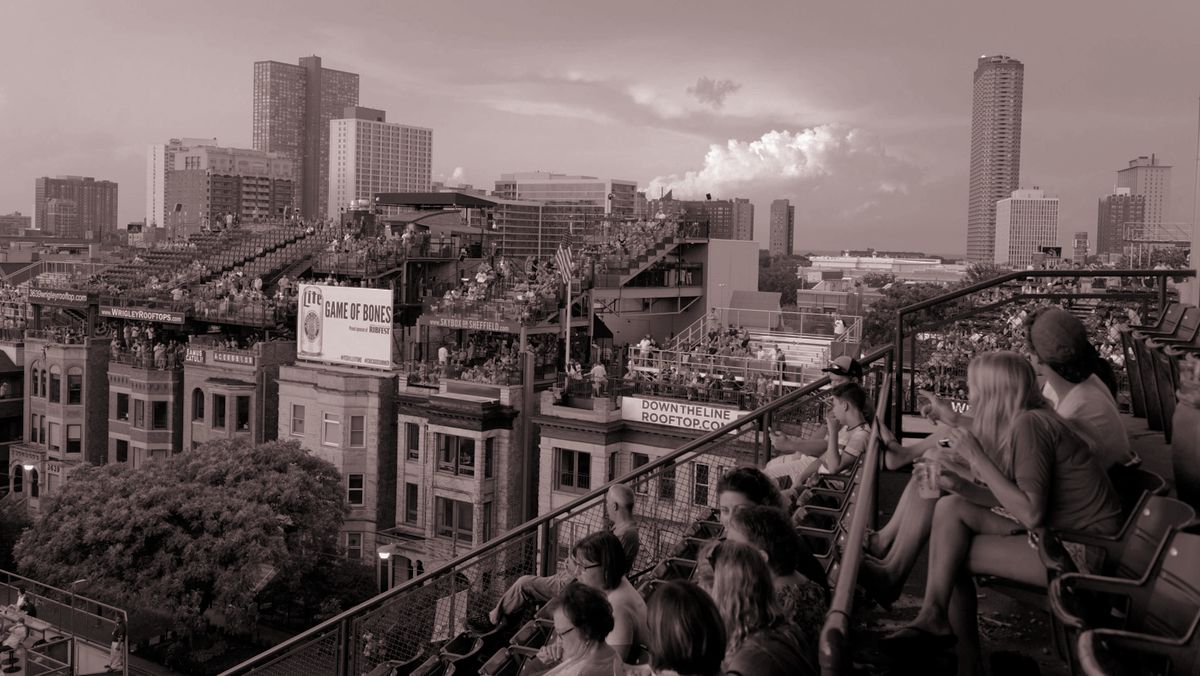
Pod alert: My Puck partner Eriq Gardner joins The Varsity tomorrow to explain the legal drama around Paramount’s acquisition of WBD and the NFL’s long-simmering Sunday Ticket suit. We also take a deep dive into the
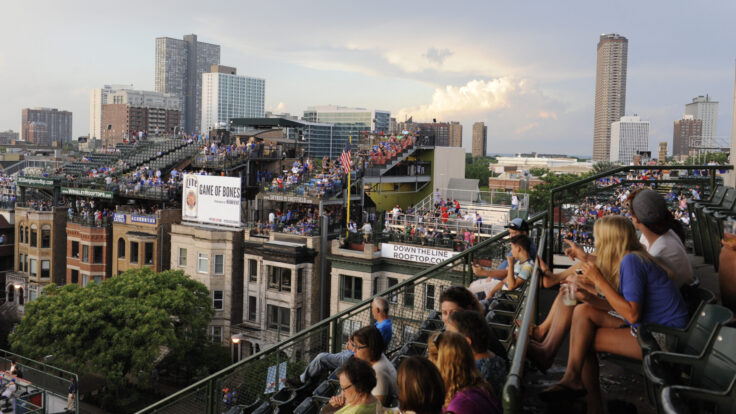
Wrigley Field lawsuit that Eriq wrote about last night.
Also mentioned in this issue: Roger Goodell, Will Ferrell, Marcello Hernández, Tyson Fury, Ted Sarandos, Jordan Walker, Bruce Meyer, Sean Diffley,
Kevin Durant, Anthony Joshua, Ben Strauss, Rob Manfred, Matt Vasgersian, LeBron James, Bert Kreischer, Bryce Harper, and more. |
The Brady Meter:
MLB Home Run Derby on
Netflix
Grade: C+
|
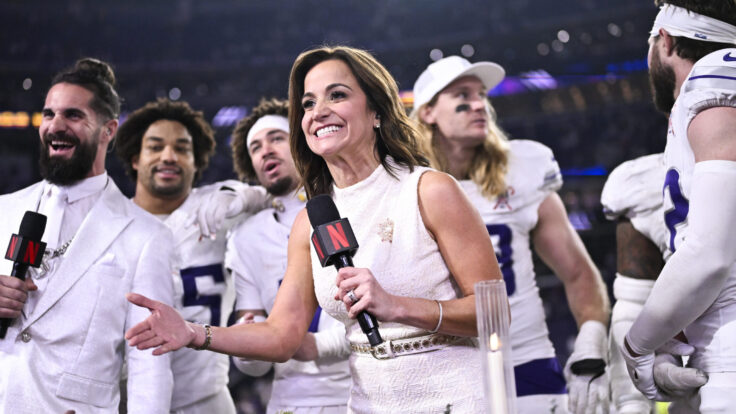
The best part of Netflix’s production of last night’s Home Run Derby was what wasn’t
there. Bert Kreischer, thankfully, stayed home. The streamer kept its show promotion to a minimum, though it did have Will Ferrell, star of Netflix’s upcoming golf comedy series The Hawk, on set for a widely panned segment.
The event was barely a half-hour old when a media executive texted, telling me to search
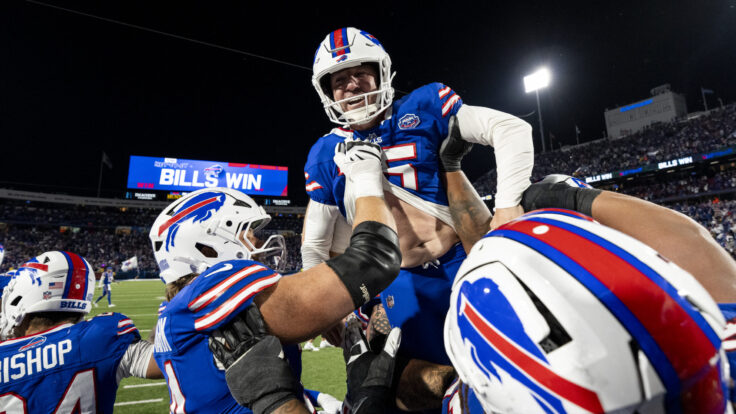
“Netflix Home Run Derby” on my social feeds. Not surprisingly, they were filled with complaints about too many ads, weird camera shots, and glitchy audio. Those complaints grew more muted as the event wore on. In the end, Netflix benefited from one of the most exciting finishes in Home Run Derby history, when Jordan Walker went deep on his last six pitches to edge Schwarber. Having a pro like Matt Vasgersian
calling the final shots helped. |
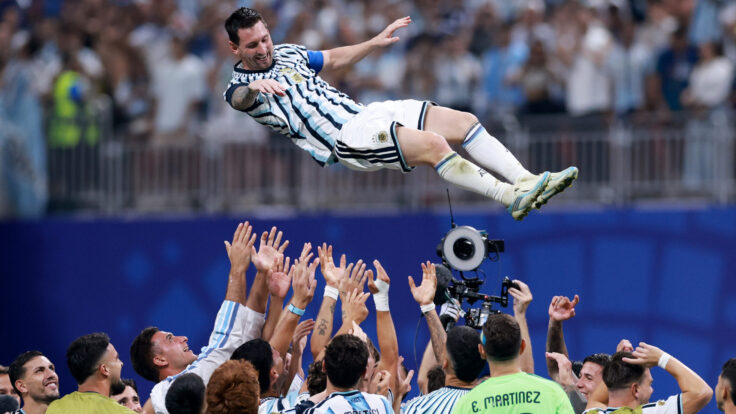
- Hydration communication breakdown: In some quarters, it seems like a fait accompli that hydration breaks will become a permanent part of FIFA World Cup games. The breaks, which allow media companies to sell three minutes of advertising, could tack on a couple hundred million dollars in the United States alone when rights fees for the 2030 and 2034 competitions come up this fall. As ESPN’s Ben Strauss
pointed out, European broadcasters and leagues should welcome that revenue opportunity, considering their packages have seen falling prices.
But well-placed sources tell me that senior FIFA officials remain torn—a potential obstacle to making hydration breaks permanent. The organization continues to field complaints
about the stoppages, particularly from abroad. One source described FIFA as “thin-skinned” on the issue. “They’re really hearing it from the rest of the world,” this person said. Or they’re just negotiating. Or both. - No peace in Philly: Major League Baseball’s owners and players entered the 2026 season expecting a showdown over salary caps, payroll floors, revenue disparities, etcetera. And at the midway point, little has changed. If anything, the two
sides seem even further apart. I’ll have much more on this in Thursday’s Inner Circle newsletter. (Upgrade here, if you haven’t already.) For now, though, two remarks from separate press conferences held today in Philly suggest that a work stoppage after the season is becoming inevitable.
First, from commissioner Rob Manfred: “It defies human experience to ask a fan to think
that the bottom end of that [payroll] gap has the same opportunity to win as the top.” Then Bruce Meyer, interim executive director of the MLB Players Association: “The supposed stewards of the game have spent an inordinate amount of time trying to convince those same fans that they shouldn’t have hope, or that they don’t have hope, or that the product they’re paying to consume in record numbers is somehow broken.” Good luck, everyone! - The
engagement debate: There are probably a dozen reasons why Netflix’s share price has fallen around 20 percent since January: price hikes, the failed M&A with Warner Bros. Discovery, and, of course, engagement. The viewer-hours-per-subscriber metric is declining and—as my partners Matt Belloni and Julia Alexander recently
discussed—giving Ted & Co. fits. Well, Morgan Stanley analyst Sean Diffley is out today with a note that might help calm those nerves in Los Gatos. “[We] see the potential for the live events/sports slate in the second half to show some improvement,” he wrote. (Oh, doctor!) “Netflix showed the strongest net retention score of all video streaming services. … While Netflix recently increased prices, the value perception remains strong.”
In
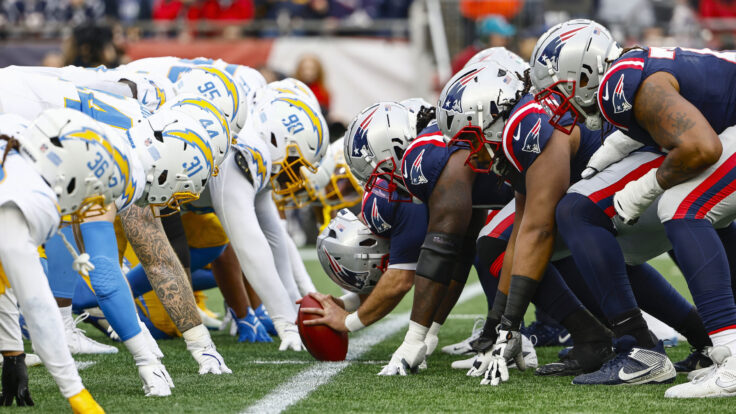
addition to last night’s Home Run Derby, the streamer has a solid sporting slate through the remainder of the year, including the MLB Field of Dreams game, the Tyson Fury–Anthony Joshua fight, and the mother of all engagement juicers: a mini-slate of NFL games, starting with opening night from Australia.
|
And now for the main event… |
|
|
|
Fanatics Fest has evolved from a collectibles convention into the closest thing
sports has to Comic-Con, with enough gravitational pull to drag the ESPYs—and much of the industry—to New York this week. |
|
|
|

| John Ourand
|
|
|
|
We’re headed for one of the biggest summer sports weeks in decades, from Major League Baseball’s
All-Star Game in Philadelphia to the World Cup final up I-95. But the week’s most interesting story may unfold in between, when Fanatics Fest returns to New York on Thursday for its third edition. I was skeptical when the event launched a few years ago, but its growth rate has been sufficiently staggering that ESPN eventually moved the ESPYs to New York for the first time in years to capitalize on the attention surrounding the festival.
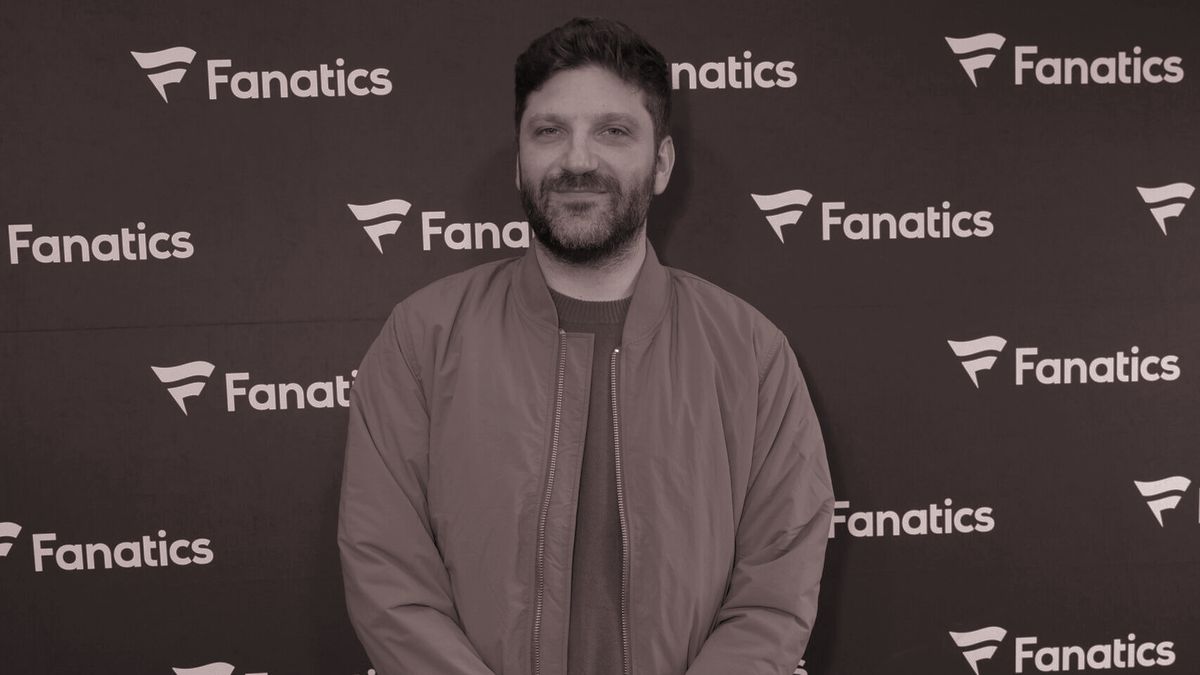
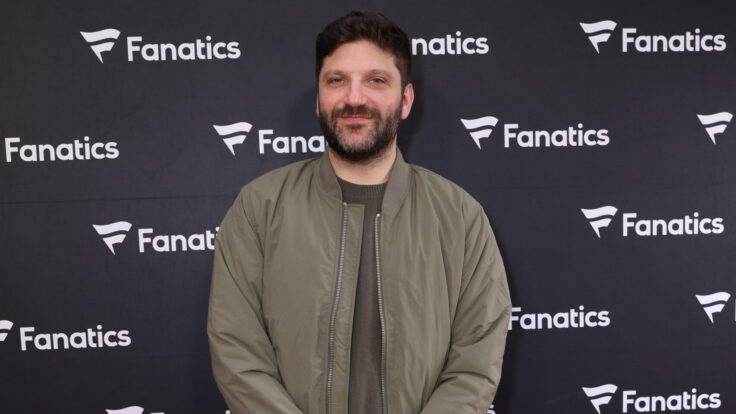
I recently sat down with the two executives behind
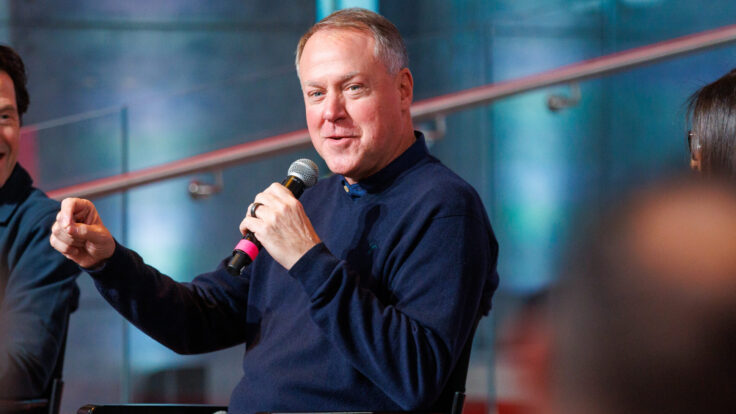
the whole shebang: Fanatics Studios C.E.O. Michael Ratner, who is overseeing this year’s revamped ESPYs, and Fanatics Events C.E.O. Lance Fensterman. Together, they explained what’s been driving Fanatics Fest’s rise; how sports fandom has evolved into a live, immersive, and shareable business; and why proximity to athletes now extends well beyond the arena. What follows are highlights from our conversation. You can also listen to the full interview
here. The following has been lightly edited for length and clarity. |
Coachella
for Sports Fans
|
John Ourand: When you launched Fanatics Fest three years ago, I
was a skeptic. I figured, “Who wants to see athletes unless they’re competing?” What was your vision?
Lance Fensterman: We didn’t know it would work, but it seemed like a great idea. There are fan fests—MLB does an amazing one at All-Star—but there was no unifying platform that brought together fans of all different leagues, sports, and teams to celebrate fandom where sports, collectibles, and culture collide. So the hypothesis was, we wanted to be the ones to
build that platform—like South by Southwest, CES, Comic-Con, or Coachella—for sports fans. That was the premise we launched with in 2024.
I’m blown away by how the popularity of Fanatics Fest has grown. Are you?
Fensterman: I think of it less as, “Wow, we pulled off something miraculous,” and more as leveraging all of Fanatics’ assets, relationships, and resources, pointed at fans, to deliver something special. When you do that well, fandom rewards you by
saying, “I’ll embrace this. I’ll come back.”
You also do a lot of work with brands. How did that part of your business develop?
Michael Ratner: This weekend, there are tons of brands activating—Starbucks, Raising Cane’s, Foot Locker, a Disney collab that Roger Goodell is part of with the NFL, Dick’s Sporting Goods—and we don’t look at them as sponsors. They’re partners. Brands know there are new ways to disrupt and break through the
clutter. Putting up a traditional linear TV spot isn’t necessarily the way—and even if you get in front of a lot of people, they might look down at their phones, so you’re spending money for people to look away.
If you reallocate those dollars into the content itself, you could spend more money on making stronger content that people actually want to share. If you subtly integrate your brand into content that’s entertaining rather than a commercial telling someone to buy something, it
lifts your brand, and you blend the audience and the customer without them even being hyperaware. So everybody wins.
Michael, you’ve been overseeing the new-look ESPYs, which you’re bringing to New York this week as a sort of precursor to Fanatics Fest. How will this year look and feel different?
Ratner: Part of that is leaning into the simple fact that social media plays a huge role in how the audience will receive something like this, and us being aware
that digital media is a huge piece of how people are going to consume this—and that’s everything from the preshow and the red carpet all the way through the events and some of the awards. We’ve been really thoughtful about how it’s all intertwined in a way that leans into the multimedia nature of what an awards show looks like and should feel like today. It’s been an amazing mix of creativity and relationships with talent.
Having Marcello Hernández as the
host is going to help with that—making it fresh, making it young, a little left of center, irreverent, while still honoring some of the world’s greatest athletes. It’s a total sprint over the next seven or eight days. What’s going to make “Sports Week” so special in New York—the World Cup final, WWE Saturday night, Fanatics Fest, the ESPYs—is the magic of people being able to be in so many places at once.
“Sports Week”—is that how you’re branding this Fanatics
Fest?
Ratner: Well, I certainly think that’s what’s coming. If you’re a fan and you want to be in and around sports and culture, this is the place to be. There are parts built for media and social media so that it can be received globally, then there’s a lot for the community in real life—collectors, fans who want autographs and photos, etcetera. There’s something for everybody, and it’s really cool how it’s multisport, multiday. We’re going to push toward a couple
hundred thousand people in and around the Javits Center over four days. It’s unbelievable how big it’s become in short order.
Turning this from a trade show into an absolute sports festival and spectacle has been magical, and it keeps getting bigger organically. Every sport is there, the biggest stars in the world—LeBron, K.D., you name it—are on panels. It’s not just more commoditized content you could watch on your laptop; it’s stuff you want to be part
of, a real community experience. Getting to see these superstar athletes in a totally different way is partly what makes it so special. |
What are you most jazzed about this week?
Fensterman: The Fanatics
Games, which I think will be 10 times better than when we launched it. And I’m excited about the FIFA involvement. They built practically an entire city of interactive experiences on the show floor. Then we’ve got the FIFA finals press conference at the show. This has never happened outside the stadium where the match is—but more importantly, it’s never happened in front of fans. For the first time, the captains and managers of both finals teams will be onstage at Fanatics Fest, talking about
the match they’re about to play in 48 hours for the World Cup championship. We’ve also brought in a ton of current MLB talent because we’re on the tail end of the All-Star break. We’ve added content, too: three stages last year, seven this year. So no matter where you are in the building, you’re going to be able to hear athletes and influencers and entrepreneurs talking about sports and culture.
Can you picture what Fanatics Fest looks like in 12
months?
Fensterman: I’ve got to get through the next nine days. But we’ve already started plotting for next year. I’ve got a file called my “Future Strategy Scratch Pad.” We really feel this can be a citywide, weeklong extravaganza of sports—the entire sports world gathering in New York. So we’ve started thinking about the key components, what we need to build now, even before this one starts. We’re always trying to think about what’s next, even when we’re exhausted and
terrified of what’s right ahead of us.
Fanatics Fest is very New York–centric. Is there a thought of going to the West Coast, or the middle of the country?
Fensterman: Right now, New York is the place for us to be. The canvas is massive, the fandom is huge, and it’s the intersection of so many types of fandom—Knicks, Liberty, Yankees, Rangers, Giants, Jets. So to answer directly: New York is where we’re based, and we think we can make this one of the
largest events in the world, period. Where we go from there—the world’s our oyster if we keep nailing this and delighting fans. |
On salary caps: “MLB teams still lag far behind in valuations, in large part because of
cost uncertainty without a salary floor or a salary cap. That’s one of the big reasons why owners are demanding it now. Once they get it, MLB valuations will catch up.” —A sports media executive
On World Cup ratings: “A lot has been written about the idea that some people watching Telemundo’s World Cup coverage do not speak Spanish. Have you considered that at least some of those people are watching Telemundo as a work-around? I know at least two people who do not get
the Fox over-the-air broadcast channel. They do, however, subscribe to Peacock and have watched matches on Telemundo even though they don’t speak Spanish.” —A journalist
On the Seahawks sale: “The Khosla family patriarch co-founded Sun Microsystems. Now the family is buying the Seattle Seahawks. If you have a product that at one point was in every computer lab in every engineering school in the country, you’ve made enough money to buy an NFL team.”
—A Varsity subscriber
On FanDuel’s Bryce Harper controversy: “With the contract and sponsorship deals he has, why is Bryce cutting Cameo videos?” —A Varsity subscriber |
|
|
|
Join Puck’s chief political columnist, John Heilemann, as he roams the corridors of power and influence in America on
this twice-weekly interview show, taking you beyond the headlines with the people who shape our culture: icons and up-and-comers, incumbents and insurgents, moguls and machers in the overlapping worlds of politics, entertainment, tech, business, sports, media, and beyond. The conversations are rich and revealing, unrehearsed and unexpected… and reliably impolitic. A Puck-Audacy joint, new episodes drop every Wednesday and Friday. |
|
|
|
An essential, insider-friendly Hollywood tip sheet from Matthew Belloni, who spent 14 years in the trenches at
The Hollywood Reporter and five before that practicing entertainment law. What I’m Hearing also features veteran Hollywood journalist Kim Masters, as well as a special companion email from Eriq Gardner, focused on entertainment law, and weekly box office analysis from Scott Mendelson. |
|
|
|
Need help? Review our FAQ page or contact us for assistance. For brand partnerships, email ads@puck.news. You received this email because you
signed up to receive emails from Puck, or as part of your Puck account associated with {{customer.email}}. To stop receiving this newsletter and/or manage all your email preferences, click here. |
Puck is published by Heat Media LLC. 107 Greenwich St., New York, NY 10006 |
|
|
|
|