Welcome back to The Varsity, and welcome to D.C., AJ
Dybantsa, the player my otherwise-hapless Wizards picked at the top of the NBA Draft tonight. AJ, you’re going to love life with Trae Young—and his untradable contract—for the next four years! And if you need a good AT&T Wireless retail location in the District, I’ve got a line on one for you.
In tonight’s issue, FanDuel president Christian Genetski details his company’s growth plans
amid a host of betting scandals. The number one sportsbook app in the country is facing novel competition from the prediction markets while also maximizing its World Cup business, so it was a particularly fortuitous time to talk to Christian, who’s only six weeks into his expanded role running the company. Our conversation will air on tomorrow’s Varsity podcast, but loyal readers are getting a preview of the goods tonight. Elsewhere, Adam Silver details his offseason
to-do list, Brendan Sorsby gets some bad news from the NFL, and Bob Iger explains why he never seriously considered spinning off ESPN.
Also mentioned in this issue: Dan Patrick, Chauncey Billups, Terry Rozier, Damon Jones, Shai Gilgeous-Alexander, Lawrence Ferazani, Jeffrey Kessler, Josh D’Amaro,
Jontay Porter, and more.
|
- Silver’s offseason to-do list: NBA commish Adam Silver visited Dan Patrick’s show in advance of tonight’s draft and offered a checklist of issues that will dominate his time this offseason. The two that most interested me are…
• Betting scandals: Silver, who still has to deal with the fallout from the arrests last year of Chauncey Billups, Terry Rozier, and
Damon Jones, said that the genie is out of the bottle when it comes to legalized gambling. “There’s no way we’re gonna turn the clock back on that,” he said. “We’re constantly looking at new ways to monitor activity, even with lines around the world.”
• And flopping: Silver said the league will address the problem at a competition committee meeting in Las Vegas in two days, following complaints about some of the thespian-level displays during the playoffs. (I’m
looking at you, Shai Gilgeous-Alexander.) “Modern flopping is often more about players trying to sell calls to officials,” he said. “In many cases, it actually is a foul. You could argue they’re overreacting to it. And I think we got to spend time looking at where that line is. … I’m listening to fans. To a large extent, fans don’t necessarily want to see guys falling down
on every play. That’s something we’ll pay more attention to this summer.”
|
|
|
|
A MESSAGE FROM OUR SPONSOR |
|
|
|
- A Sorsby mess update: In declining to hold a supplemental draft this summer, the NFL is essentially kicking the can down the road on the case of Brendan Sorsby, the former college quarterback suspended for illegally betting on games. The earliest Sorsby can play in the NFL will now be 2027. Even then, NFL general counsel Lawrence Ferazani offered no guarantee that the 22-year-old will find a team at that later date. The language in the
letter is striking, accusing Sorsby of failing to take any accountability “or indicate whether, or how, you would adhere to the League’s rules and policies governing the integrity of competition. Instead, even after receiving notice of the NCAA’s decision rescinding your college eligibility in May, you sought to avoid the consequences of that determination through litigation rather than accepting responsibility for your actions.” Sorsby’s attorney, the dreaded, increasingly
ubiquitous, and incredibly well-compensated Jeffrey Kessler, has said that he plans to pursue an appeal through the NFLPA.
- The spinoff that wasn’t: Rumors
that Disney has been looking to spin off ESPN have been circulating for the better part of a decade, ever since cord-cutting demoted the sports network from Disney’s honor-roll student to problem child. Of course, new Disney boss Josh D’Amaro has insisted that he has no plans to spin the network off into its own company. And in this week’s long sendoff FT profile, recent retiree Bob Iger explains why he also never seriously considered making such a move. “Imagine if it ended up in Netflix?” he scoffed. “Is that a good way to make a quick buck and completely discount future value and importance to the company?” Given last summer’s (by most accounts, successful) launch of ESPN’s app, the network’s airing of the Super Bowl in February, and D’Amaro’s focus on building out Disney’s streaming business,
perhaps those spinoff rumors will finally quiet down.
|
And now for the main event… |
|
|
|
FanDuel president Christian Genetski is only six weeks into his newly expanded
role running the company, but he’s got plenty of thoughts about the state of the sports-betting business—from FanDuel’s move into prediction markets to the Sorsby headache and why this year’s World Cup is like March Madness on steroids. |
|
|
|
FanDuel didn’t invent gambling, but the company and its various competitors, including DraftKings,
have done more than almost anyone to normalize the hobby by placing sports betting in the palms of millions of Americans. Since the Supreme Court struck down the Professional and Amateur Sports Protection Act in 2018 and ushered in the app-based sports betting revolution, the sportsbook has expanded relentlessly and is now available in 24 states. The hard part, it turns out, wasn’t growth but what came after: integrity scandals, regulatory battles over prediction markets,
etcetera.
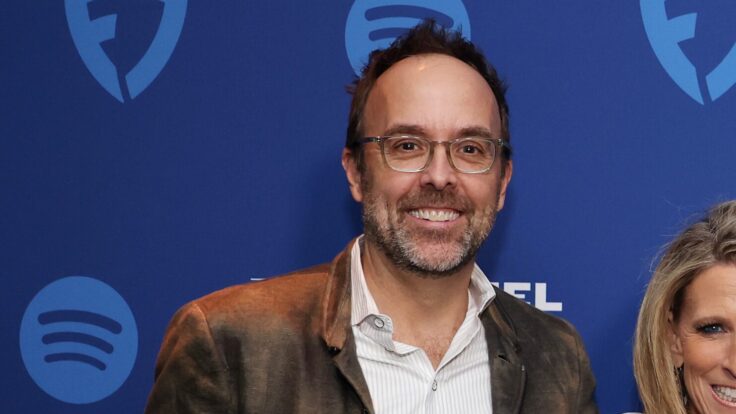
Christian Genetski, a former lawyer and current president of FanDuel Group, who’s just six weeks into his expanded role running the whole company, is squarely at the center of all the action. The World Cup is driving record handles for the app while simultaneously exposing how much of the potential market remains legally off-limits. I sat down with Genetski for Wednesday’s episode of the Varsity podcast, which publishes tomorrow, but I’m previewing the
highlights for loyal Varsity readers tonight. The following conversation has been slightly edited for length and clarity. |
“The
Regulated Market Wins”
|
John Ourand: Where does the World Cup fall in terms of popularity
on FanDuel compared to other sports?
Christian Genetski: Obviously, it’s been four years since the last one, and our business was much smaller then, and we had less population reach in the U.S. We certainly planned for it to be a bigger event this time, given that it’s being hosted in North America and the optimism surrounding the U.S. team. We’ve been very pleasantly surprised about the level of customer interest since the first game. There’s been much heavier
engagement, and it’s been interesting to see its power as an acquisition tool. June is not typically a big user acquisition month for our sportsbook, but we’re seeing a lot of people come to the sportsbook for the first time—and a lot of reactivations.
Other than volume, how is betting on the World Cup different from betting on the Premier League or MLS?
People who bet on soccer regularly—on the Premier League, Champions League, and MLS—are more hardcore soccer
fans. They’re people who know the game and know the players, so they’re betting more same-game parlays and more proposition bets around players. For the World Cup, we’re seeing people bet more on things that they’re familiar with, like the totals, the flags for different countries. There are a little less of the multi-leg parlay, sophisticated player-driven bets.
When something like the Brendan Sorsby scandal comes to light, how do you deal with that
internally?
The most important thing to remember is that in the legal, regulated market, we’re accountable for every transaction on our platform. There are still illegal sites—old-school bookmakers on campus using mobile apps, and sites that cater to underage users who can’t bet on FanDuel—so there’s a real dichotomy about where this activity takes place. We have dedicated teams and compliance departments monitoring all activity on our site. It’s sometimes not intuitive to
people—and this is by far the least important part of sports integrity scandals—but sportsbooks are actually victims in these scenarios. |
|
|
|
A MESSAGE FROM OUR SPONSOR |
|
|
|
Our employees work for FanDuel because they love sports. They think sports betting is additive to
the fan experience. So these stories are not fun for us. But we take very seriously our role in ensuring that there’s transparency. And what’s becoming clear is that if you do this, you will get caught. The leagues have done the right thing with very low-to-zero-tolerance policies, law enforcement has taken these cases seriously, and I think as the consequences become clear, this activity will diminish—at least on regulated sportsbooks. Sorsby specifically was betting in his own
name on sites available to people under 21, and using people over 21 to create accounts for him on regulated books. Those things are harder to catch, but we did unearth all of it. It’s an unfortunate story, but I hope the reaction to it makes an impression on others in his position. |
Influential people like Adam Silver have raised the idea of curtailing
prop bets—which, of course, are important for increasing engagement on your platform. Where do you come down on that?
In the wake of the Jontay Porter situation, we sat down with the NBA and asked what we should do together as close partners. We don’t need to take a bet on everything. Unders inform the pricing on overs, and if you were to eliminate all unders across the board, you’d probably end up with a really bad customer experience on pricing because you need
both sides of the bet. But to retain some perspective: If you look at the total volume of proposition bets and isolate the ones that have been problematic from an integrity standpoint, you’re talking about 0.01 percent of bets. That doesn’t mean it’s not important—it absolutely has to be addressed—but you have to place it in context. If you were to get rid of all prop bets, people aren’t going to
stop betting them; they’re readily available all across the illegal market. We operate our sportsbook in roughly half the states. The other half is not not betting—they’re just betting through other sources. Demand is there either way. What we’ve tried to do is work closely with the leagues and fellow operators to identify which bets and bet combinations are more vulnerable to manipulation, take a harder look at those, and continue to iterate.
You
recently launched FanDuel Predicts—sort of your hedge on the prediction markets. What is your view of those prediction markets, and where do you see this migrating to as a business?
Frankly, this wasn’t an area we were exploring before others jumped in. But once the federal government made clear they’re backing the right of C.F.T.C. licensees to offer sports event contracts, we had to pay attention. It’s been a delicate situation for us to navigate because we hold gaming licenses
in 25 states. That’s our primary business, and that public-private partnership with states has been genuinely beneficial. FanDuel has paid $5 billion in taxes over the course of its sportsbook and iGaming operations.
Out of deference to our primary offering, we’re not offering FanDuel Predicts in any state where we operate the sportsbook. In some sense, it’s like a launch party for FanDuel in half the country. Nobody knows how the courts will ultimately decide this. A new administration
may have something to say about what the C.F.T.C. does and doesn’t authorize. We’re aware things could take a turn. In the meantime, if we’re acquiring customers and giving them a great experience, that’s to the good—and if the long-term outcome is that a significant portion of the country accesses sports wagering through C.F.T.C.-regulated event contracts, FanDuel needs to be there.
If prediction markets get fully greenlit, why would a consumer choose the regulated
sportsbook?
Because for sports, it’s a much richer offering, and we think that will remain true. We’re not seeing meaningful cannibalization in states where we operate the sportsbook. There are things you can do for users in a regulated sportsbook—profit boosts, free bets, recycling of value—that are much more difficult on a prediction market exchange. We’re a sports company. The prediction markets may grow in pop culture and entertainment, but on sports, we think the regulated
product wins. |
On YouTube’s sports strategy: “Just a hunch here, but YouTube dialing it back on
sports comes as Google’s pouring more and more into A.I. data centers. They’ll spend $190 billion on data centers this year and are projected to spend $290 billion next year. I’m guessing the sports world will discover that Big Tech has other, much more important priorities at the very time leagues thought tech would be its rights-fee sugar daddies.” —A journalist
On NBC’s golf telecasts: “You’re gonna get smoked for your NBC take. They are dreadful at majors.
Just dreadful. If you talk to any golf fan, NBC is so far behind CBS on golf productions. It needs an almost total overhaul.” —A Varsity subscriber involved with the golf business
On Apple’s F1 strategy:“Apple’s strategic move of having F1 free to everyone is smart, especially for a few months to get people invested and more attached, and to have certain features and more exclusive races behind the paywall. I do think it’s probably underperforming a little, but
still doing better than soccer or baseball on the service.” —A Varsity subscriber
Errata: “I assume you meant the Austrian Grand Prix that’s going in front of the Apple TV paywall rather than Australia, which was held in March.” —A streaming executive |
See you all on Thursday,
John |
|
|
|
Need help? Review our FAQ page or contact us for assistance. For brand partnerships, email ads@puck.news. You received this email because you
signed up to receive emails from Puck, or as part of your Puck account associated with {{customer.email}}. To stop receiving this newsletter and/or manage all your email preferences, click here. |
Puck is published by Heat Media LLC. 107 Greenwich St., New York, NY 10006 |
|
|
|
|