 |
 |
|
Welcome back to The Best & The Brightest: Impolitic, coming at you this evening as I make my way to EWR—roughly 900 miles from Milwaukee, site of the Republican National Convention, and 30 miles or so from Bedminster, where Donald Trump spent much of the day recovering from an act of political violence whose ultimate electoral consequences are unknown (and unknowable) but that history will surely record as a defining moment in the 2024 presidential election—and this entire turbulent, toxic, all too often apocalyptic-feeling era in American politics and culture.
The failed attempt on Trump’s life, its short- and long-term political implications, and the monumental questions it raises about the campaign ahead are, naturally, the topics of this week’s column.
|
|
A MESSAGE FROM OUR SPONSOR
|
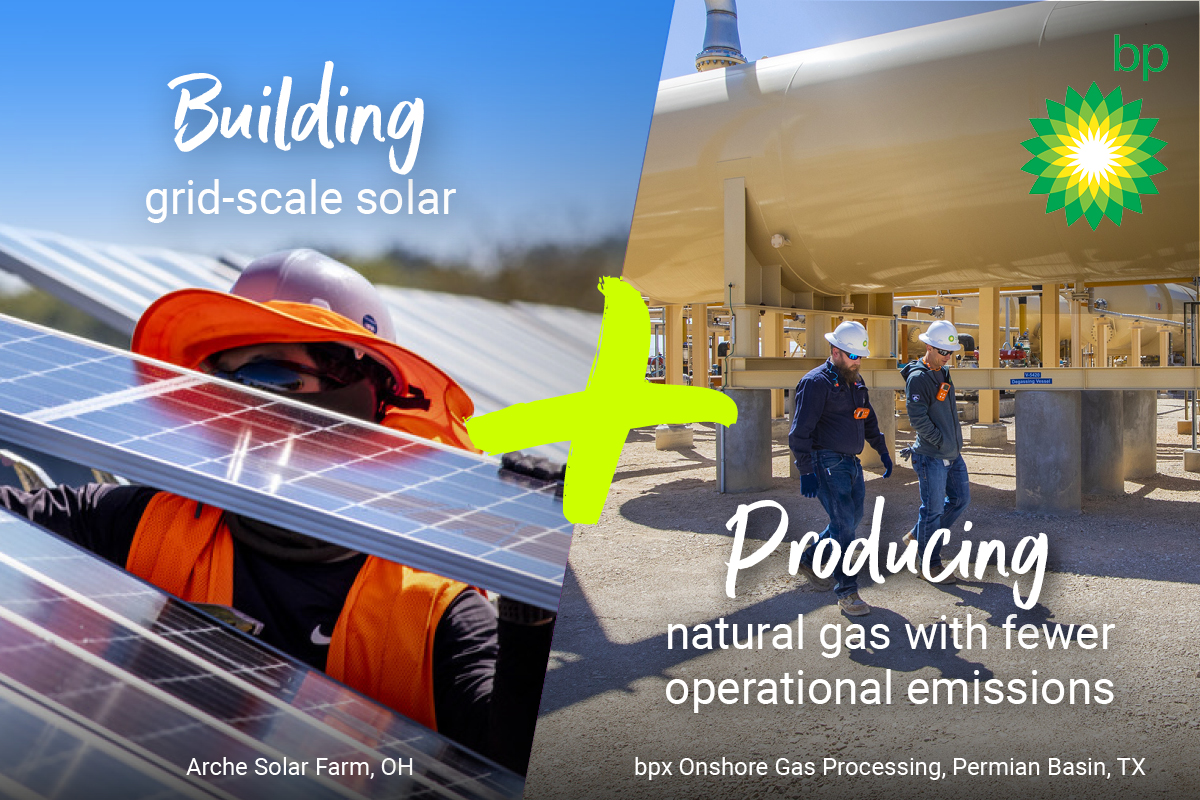 |
| bp added more than $130 billion to the US economy over the past two years. We did it by making investments from coast to coast – like building grid-scale solar in Ohio and producing natural gas with fewer operational emissions in Texas.
See all the ways we’re investing in America. |
|
|
| But first…
🎧 Essential listening: Last week on Impolitic With John Heilemann, we cranked out two more cracking-good episodes, which you’re gonna want to check out if you haven’t already. The first, with my old pal Jonathan Freedland of The Guardian and the BBC, offered a panoramic tour d’horizon of politics across the pond (i.e., the U.K. and French elections) and the view from Europe of our Trump vs. Joe Biden contest. The second was with James Carville. We taped right after Biden’s high-stakes post-NATO Summit press conference—which, no surprise, did nothing to disabuse the Ragin’ Cajun of his long-held conviction that his party needs to “reshuffle the deck” by replacing Biden if it wants to defeat Trump in November.
Also, my colleague Tara Palmeri worked overtime this weekend taping an emergency episode of her podcast, Somebody’s Gotta Win, about last night’s horror show. Listen here, or enjoy the edited transcript here.
🎙️ Programming note: I’ll be recording the podcast from Milwaukee this week with an assortment of sharp, savvy, plugged-in guests—Tim Miller, Alyssa Farah, Stuart Stevens, and more—offering takes that aren’t just fresh and piping hot but also enhanced and enriched by their long histories working in Republican politics, behind the scenes at G.O.P. conventions, and even (in Alyssa’s case) at the highest levels of Trumpworld. As always, fresh eps of the pod are available every Tuesday and Friday morning, but the easiest way to make sure you don’t miss ’em is to follow the show here or here or here.
And now, the main event… |
 |
| The G.O.P.’s Martyr Complex & The ’24 Inevitability Question |
| In Milwaukee this week, a Republican Party that already saw Donald Trump as a righteous victim even before he dodged an assassin’s bullet will hail him as more than a martyr: as a bona fide hero, a literally bloodied warrior, maybe even a messiah. But many Democrats fear that Trump’s brush with death will make him something else: a landslide winner in November. |
|
|
|
| A few minutes before the sharp pop-pop-pop of the would-be assassin’s bullets rang out in Butler, Pennsylvania, at 6:12 p.m. last night, I had just finished my second reading of Tim Alberta’s much-discussed magnum opus in The Atlantic on the Trump campaign. When it comes to the G.O.P. and the right more broadly, there’s no long-form journalist in the business better than Alberta, whose work is, as a rule, deeply reported, beautifully written, and perfectly timed. And this new piece is no exception. It features the Trump campaign’s co-managers, Chris LaCivita and Susie Wiles, boasting about the historic drubbing they believe they have in store for Joe Biden, while at the same time “privately praying” he doesn’t make way for a new nominee and thereby compel them to undertake a “dramatic reset.”
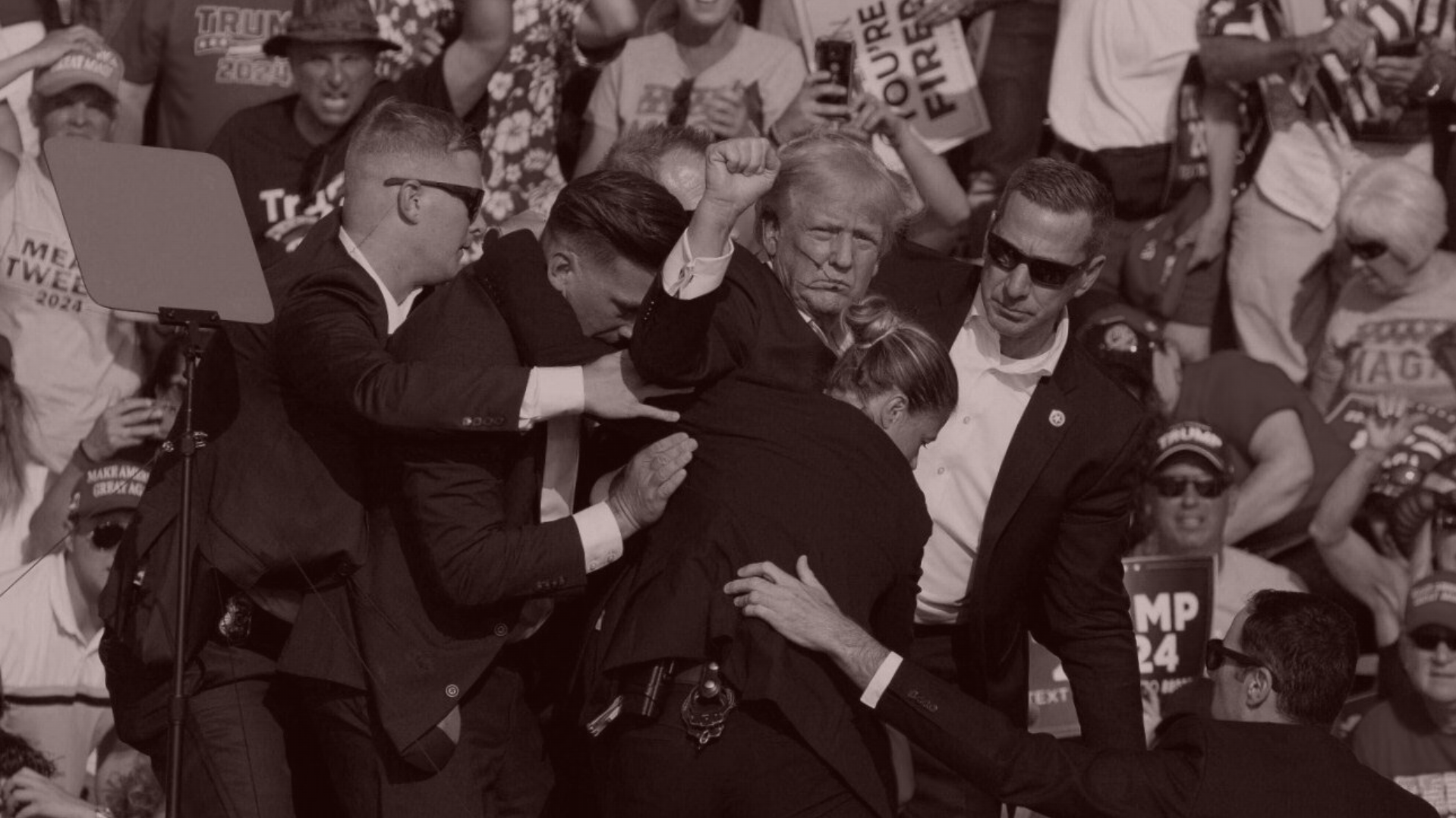
Before those pop-pop-pops caused me to look up at the TV to see what was going on, my plan had been to write this week about the outsize confidence of LaCivita, Wiles, and the rest of Team Trump: Was it well-founded, if perhaps a bit dicey in the fate-tempting department, or rather a sign of a stratospheric and nearly unprecedented degree of high-on-their-own-supply hubris? But the moment I saw the horrifying, chaotic scene unfolding in Butler in real time—Trump grabbing at his ear and then dropping to the ground; the Secret Service swarming the podium; Trump back on his feet, blood on his face, shaking a clenched fist and shouting “Fight! Fight! Fight!” before being rushed offstage to safety—I realized that the question I’d be grappling with in this space was altogether different: Is this game, set, match?
Of course, there were questions of greater immediate urgency related to the crime itself: Trump’s condition and that of the other victims in Butler, the identity and motives of the shooter, and so on. And there were questions of greater long-term consequence: What effect might this heinous, horrific act and the wave of reactions to it—on the right, on the left, and in the vast, yawning, aching middle of the ideological spectrum—bring to bear on a political and civic culture increasingly defined by its turbulence and toxicity, its ever-widening political divisions and ever-fraying bonds of social cohesion, its reflexive blame-casting and persecution-claiming, its downright pathological incapacity to grapple with the sickness of our gun culture, and, simmering away beneath all of the above, its pervasive sense of fear. |
|
A MESSAGE FROM OUR SPONSOR
|
|
| bp added more than $130 billion to the US economy over the past two years. We did it by making investments from coast to coast – like building grid-scale solar in Ohio and producing natural gas with fewer operational emissions in Texas.
See all the ways we’re investing in America. |
|
|
| Everyone I know in the political world was up late (very late) last night and out of bed early (very early) this morning, scrolling their social media feeds frantically and refreshing their browsers obsessively to keep abreast of any and all fresh, credible information related to the first set of questions. And, in their collective and respective states of shock, Democrats and Republicans of goodwill alike, were talking with their colleagues, peers, and bosses about what could be done—what they could do—cool things off and avoid the very real possibility that the assassination attempt could set off any number of escalatory chain reactions that would drive us all further into the darkness.
One result of those conversations was evident this morning inside the Trump campaign. After tweeting last night, “Well of course they tried to keep him off the ballot, they tried to put him in jail and now you see this,” LaCivita took that post down, and then together with Wiles issued a memo to their staff saying they would, “not tolerate dangerous rhetoric on social media.” Another result was President Biden’s address from the Oval Office tonight, in which he urged America to “lower the temperature” on our political rhetoric, and noted, “We don’t yet have any information about the motive of the shooter. We know who he is. I urge everyone, everyone: Please don’t make assumptions about his motives or his affiliations. Let the FBI do their job.”
Biden’s remarks about the shooter’s motives were a veiled rebuke to a wide array of Republicans who, in the wake of the shooting, took to social media to spout precisely the kind of baseless and incendiary bullshit that has made our current circumstances so fucking rotten, and so dangerous. South Carolina Senator Tim Scott blamed the “radical Left and corporate media” for what happened in Butler. Ohio senator and apparent frontrunner in the Trump veepstakes J.D. Vance claimed that “the central premise of the Biden campaign … that Trump is an authoritarian fascist who must be stopped at all costs … led directly” to the shooting.
Along with many others on the right, Georgia Congressman Mike Collins cited a reported comment of Biden’s on a recent call with donors—“It’s time to put Trump in the bull’s-eye”—and then put a none too fine point on the matter: “Biden sent the orders,” Collins tweeted. Conservative pundit Erick Erickson proudly pointed out that he’s said for months that “MSNBC wants Trump assassinated” and then inveighed against The New Republic for its June cover, which portrays Trump as Hitler.
I don’t have the energy or inclination to devote the time for an epic rant laying out the extent and degree of mendacity, perniciousness, and corrosive bad faith that these reactions embody and entail. But I will simply note that not one of these, or the other like minded shit-posters on this topic, has seen fit to acknowledge one of the few hard facts about Thomas Crooks, the Bethel Park, Pennsylvania, 20-year-old identified by law enforcement as Trump’s wannabe killer: He was a registered Republican. This may or may not end up being meaningful in any way—we have no idea at this point. Which is precisely the goddamn point. |
|
|
| The same can be said of almost all of the potential political implications of the attempted Trump assassination. Politico’s Playbook had a good long list this morning of the looming questions of the post-Butler era: Will MAGA rallies ever be the same? Does this affect Trump’s V.P. calculations? Will Democrats talk differently about the stakes of the election, or about Trump’s autocratic impulses, authoritarian designs, and democracy-imperiling policy agenda? How will this affect Biden’s tenuous hold on the Democratic nomination and the efforts inside the party to induce him to step aside? I could speculate endlessly about all the matters, but the truth is, less than 24 after those shots rang out in Pennsylvania, it’s simply too soon to make anything approaching an informed assessment.
It’s not too soon, however, to discuss the spectacle about to unfold at the Fiserv Forum in Milwaukee. This morning on CNN, my pal David Axelrod opined, “The president … will be greeted as a kind of martyr at this event, and I think it could be angrier or could be more somber. But it’s certainly not going to be the same.” I agree that it’s not going to be the same, but have zero expectation whatsoever that the difference will bend toward the somber. Long before last night, the MAGA-fied G.O.P. viewed Trump as a righteous victim and were all-in on his self-proclaimed agenda of retribution. In Milwaukee, he’ll be greeted not only as a martyr but as something even more mythic: a bona fide hero, a warrior literally bloodied in battle, and (at least among those who occupy the party’s Evangelical pews) maybe even a messiah. It is going to be a sight to see—and not a pretty one, at least for those of us who considered ourselves card-carrying members of Team Democracy.
But it will also be a sight—in combination with the brutal ordeal to which Trump has just been subjected and the undeniable swagger he showed off (at least in public) in the heat of the moment—that is all but certain to give him a lift with the electorate than he would have otherwise gotten from his party’s primetime shindig in Milwaukee. I asked Mike Murphy, Axelrod’s cohost on the Hacks on Tap podcast and as ardent a #NeverTrump Republican as exists on planet Earth, how big a bounce in the polls he expected Trump to receive from the convention. Murphy, who believes that Trump’s raised-fist moment will be “the iconic symbol” of the next four days in Brew City, replied, “He has a ceiling, but this is going to smash him up against it. He’ll have a solid five to six point lead in the swing states, I think, and maybe more.”
If that’s right—and it seems entirely plausible to me—whatever remaining hopes Democratic electeds, donors, and strategists still harbor about Biden’s ability to stage a heroic comeback are likely shriveled to the point of vanishing altogether. Which brings us back to Alberta’s Atlantic piece and one passage in particular: “LaCivita had long conceived of the 2024 race as a contest that would be ‘extraordinarily visual’—namely, a contrast of strength versus weakness. Trump, whatever his countless liabilities as a candidate, would be cast as the dauntless and forceful alpha, while Biden would be painted as the pitiable old heel, less a bad guy than the butt of a very bad joke, America’s lovable but lethargic uncle who needed, at long last, to be put to bed.”
In the wake of Biden’s debate debacle, that passage was striking enough, but reading it again in the aftermath of Trump’s brush with death, it hits you like a two-by-four across your temples. For many, many, many months, the 2024 campaign was a tepid, torpid turnoff, a sequel starring two senescent retreads that the vast majority of the electorate had precious little interest in, let alone enthusiasm about. But the seismic events of the past fortnight have changed all that. Everyone is watching now, rapt. The implications for each candidate of what they’re seeing are almost too obvious to say out loud. |
|
|
|
| FOUR STORIES WE’RE TALKING ABOUT |
 |
| Roger of Arabia |
| Chronicling Condé Nast’s latest international headaches. |
| LAUREN SHERMAN |
|
 |
|
 |
|
 |
|
|
|

|
 |
|
|
|
Need help? Review our FAQs
page or contact
us for assistance. For brand partnerships, email ads@puck.news.
|
|
You received this email because you signed up to receive emails from Puck, or as part of your Puck account associated with . To stop receiving this newsletter and/or manage all your email preferences, click here.
|
|
Puck is published by Heat Media LLC. 227 W 17th St New York, NY 10011.
|
|
|
|