 |
|
Hello, and welcome back to The Best & The Brightest, your regular foreign policy dispatch from D.C. (arriving a day later as we shift back our schedule this week and next on account of the holidays).
It’s quiet here this week, with Congress out of session and most of #thistown out of town, so as we take a breath, I wanted to bring you a conversation I had with Mstyslav Chernov, the AP videographer who, along with his colleague Evgeniy Maloletka, shot some of the most searing images of the siege of Mariupol in 2022, early in Russia’s invasion of Ukraine. Their film, 20 Days in Mariupol, just made the Oscars shortlist.
But first, here’s Abby Livingston on the Hill…
|
| No Labels Backlash & Dingell vs. Trump |
|
It’s quiet on Capitol Hill, with Congress recessed until next week, but the undercurrent of anger, disunity, and chaos surrounding 2024 continues to surface in made-for-Playbook episodes that bode poorly for the year ahead. Among them:
- No Labels Strikes Back: Tensions flared around No Labels, the quixotic third-party operation attempting to place Joe Manchin (or another centrist-ish candidate) on 2024 ballots. On Wednesday, the group’s founding chairman, Joe Lieberman, hit back at Democratic anguish over the group’s spoilsport campaign, telling The Wall Street Journal that “Right now, looking at the polling, it’s not No Labels that’s going to re-elect Donald Trump… Right now, it looks like it’s Joe Biden who’s going to re-elect Donald Trump.”
Lieberman’s out-of-right-field attack isn’t shocking; after losing the 2006 Connecticut Senate primary, he left the party and successfully ran as an independent, while still caucusing with Dems. Two years later, he crossed party lines to campaign for John McCain, cementing his apostasy with a speech at the Republican National Convention.
But the comment is nonetheless extraordinary. For one, Lieberman served for 20 years with Biden, in a chamber and at a time when insults were watered down, indirect, and aimed toward colleagues described as “my friend.” And for all of Lieberman’s beef with Democrats, it’s hard to find much public friction with Biden. Moreover, it’s worth asking how Lieberman squares his current advocacy for a third-party ticket with his own painful experience in 2000, when Ralph Nader vaporized his vice presidential aspirations.
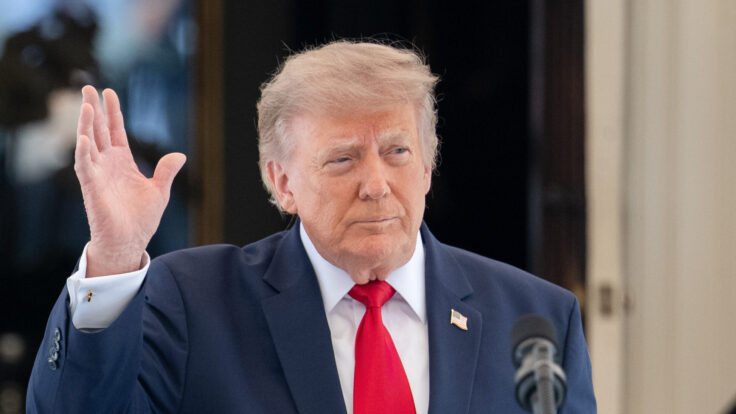
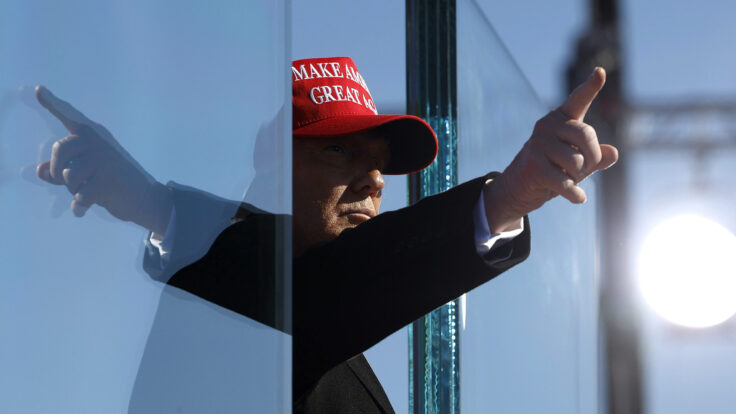
- Donald vs. Dingell: Elsewhere in strange and ugly headlines, Donald Trump spent the past 48 hours engaged in a holiday tirade directed at six-term congresswoman Debbie Dingell, a longtime fixation of the former president. The latest episode began on Christmas Day, when Trump posted about his political adversaries: “MAY THEY ROT IN HELL. AGAIN, MERRY CHRISTMAS!” In a routine CNN appearance, Dingell called the statement “pathetic” and said such rhetoric escalates political violence, both at her directly and within the culture. By Tuesday evening, Trump unleashed, calling her “a LOSER.”
Trump also returned to the heart of his grievance with Dingell, which is that he believes he should be spared her criticism after he approved memorial honors for her late husband, the legendary Energy and Commerce chairman John Dingell. “When I gave, as President, her long serving husband, the absolute highest U.S. honors for his funeral, a really big deal, she called me, crying almost uncontrollably, to say that she couldn’t believe I was willing to do that for a Democrat,” he wrote. “She thanked me profusely. Two months later, she was back on the trail ranting and raving about ‘TRUMP.’”
Reached for comment on Wednesday morning, Dingell noted, as an aside, that her husband’s funeral was not arranged by Trump, and said he had called her, and not the other way around. But she did add his call “was an act of kindness, as was lowering the flags, and I appreciated his kindness when he called and what he did,” she said.
Of course, few in Washington have forgotten when Trump snapped at Dingell, in 2019, when he singled out her vote to impeach him and suggested at a campaign rally that her husband was in hell. Alas, more of this rhetoric is likely on the campaign trail and will continue if Trump wins next fall. Dingell told me on Wednesday that “bullying, hate, division, and threats of violence are unacceptable by anyone, at any time, any place, and anywhere,” and that “each of us has a responsibility to ensure we are not normalizing it.” As of Wednesday evening, however, it was hard to find a single Republican lawmaker speaking up in her defense.
|
 |
| 20 Days in Mariupol |
| In conversation with Mstyslav Chernov, the Ukrainian videographer, about his Oscar shortlisted documentary, capturing the siege of Mariupol, the horrors of the invasion, and when and how the war ever ends. |
|
|
|
| As Mstyslav Chernov tells the story, it wasn’t hard to see what was going to happen. It was February 2022, and Russia had pulled nearly 200,000 troops toward the borders of Ukraine while Vladimir Putin made impossible demands of Kyiv and the West. An invasion was coming; Putin was going to finish what he started in 2014. And he was going to try to get Mariupol, too. The city, an industrial town on the banks of the Azov Sea, fended Putin off in 2014, and, given its strategic position between annexed Crimea and the parts of the Donbas that Russia had already taken, Mariupol was key to cutting a land route to the Crimean Peninsula.
So Chernov, a videographer for the Associated Press, and his colleague, A.P. photographer Evgeniy Maloletka, set off for Mariupol the night before the invasion. En route, they stopped to buy spare tires for their van and other supplies in the middle of the night. When the cashier asked them what they were doing so late at night, they told her: A war was coming. She didn’t believe them; most people in Ukraine didn’t. But the war came, one hour after Chernov and Maloletka arrived in the city.
They immediately found themselves in the cauldron of one of the war’s worst battles. Mariupol was quickly surrounded, its water and electricity cut, telecommunications severed. The bombardment was relentless and it was focused mostly on the civilian infrastructure, on hospitals, schools, theaters, residential buildings. Thousands of bodies piled up, and when people couldn’t bury their loved ones in their courtyards anymore, the mass graves became visible from space. Ninety percent of the buildings in the city were destroyed. The Ukrainian government estimates that 25,000 residents of Mariupol were killed during the three-month siege, but Chernov, Maloletka, and their colleagues believe the true number is about three times higher.
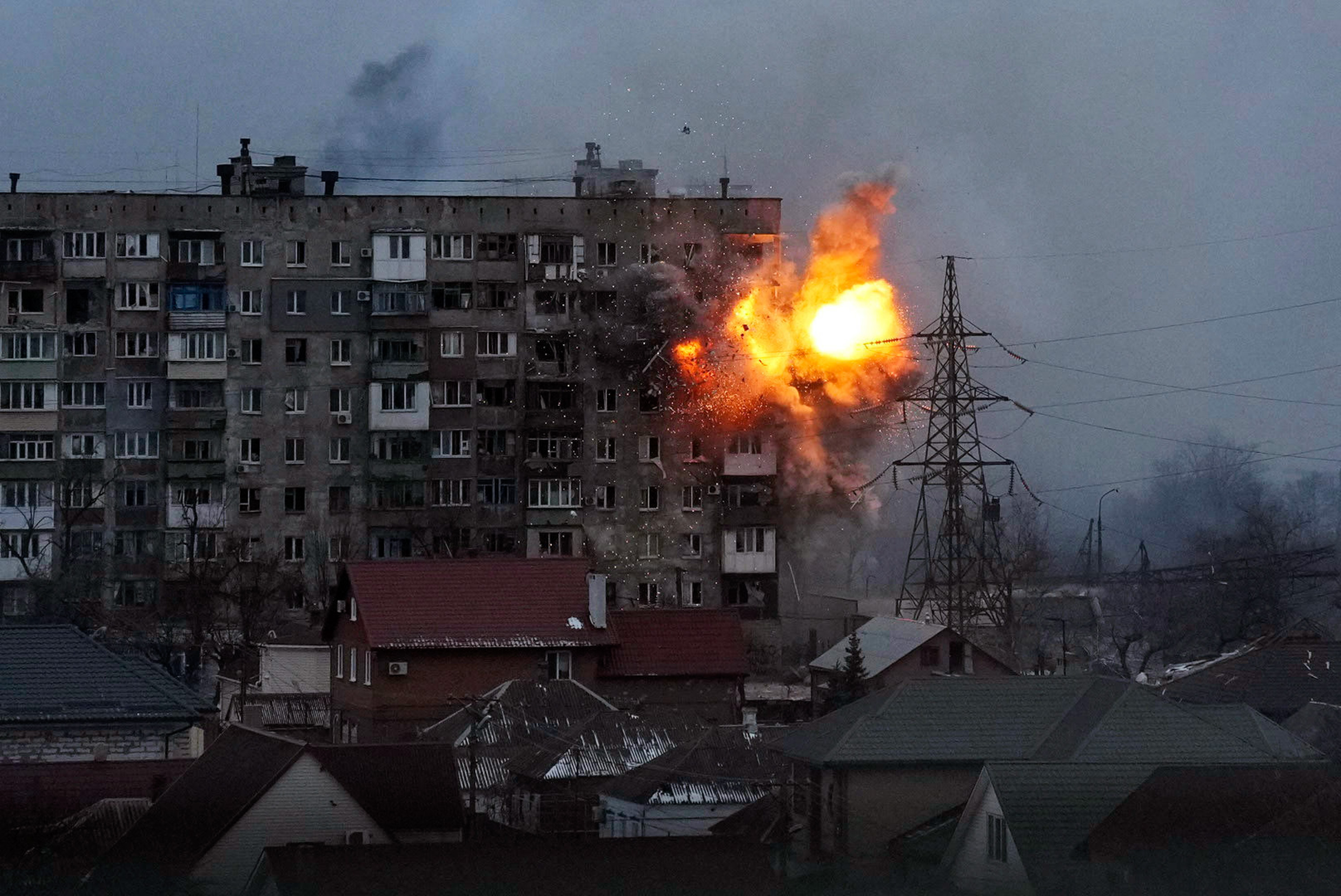
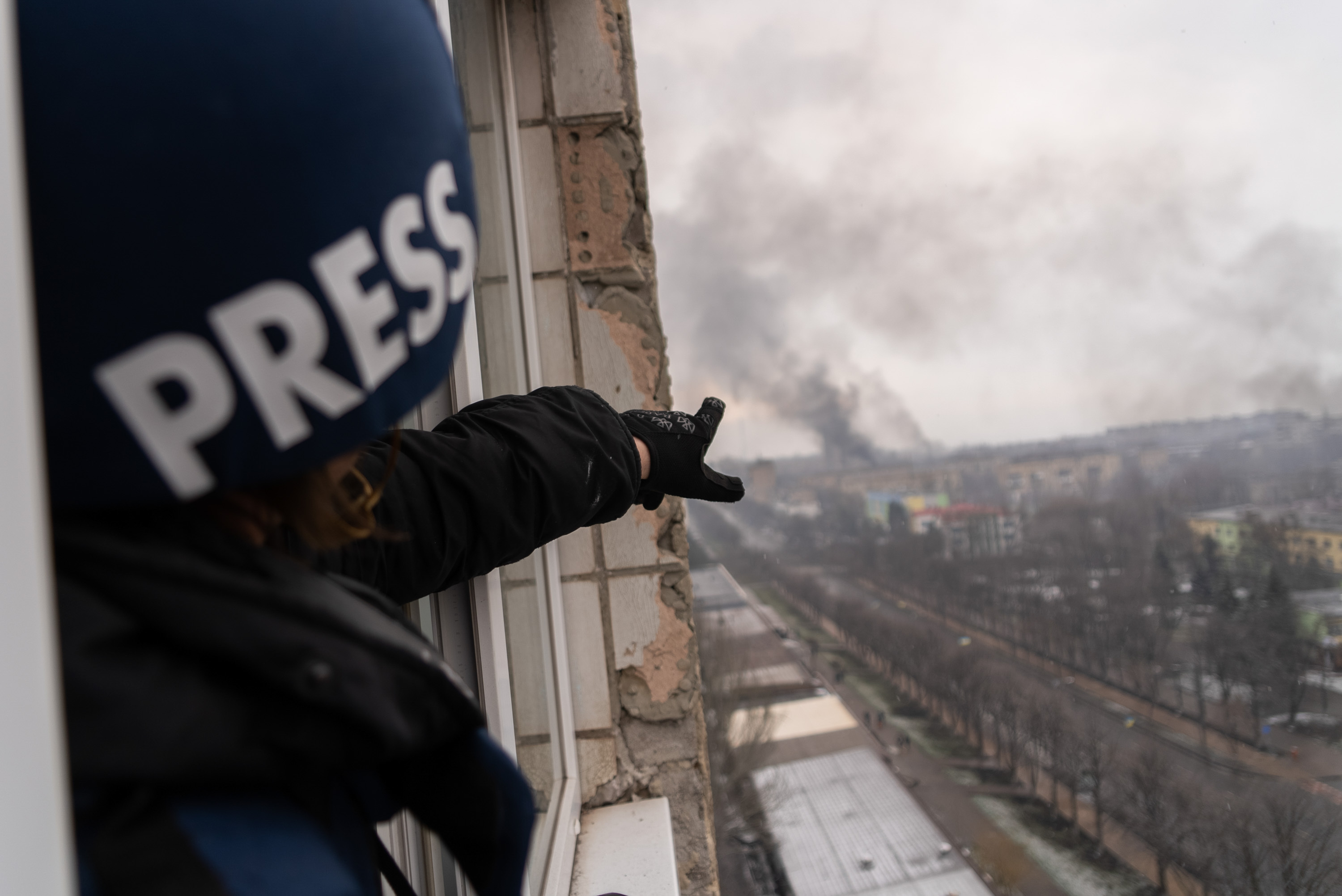
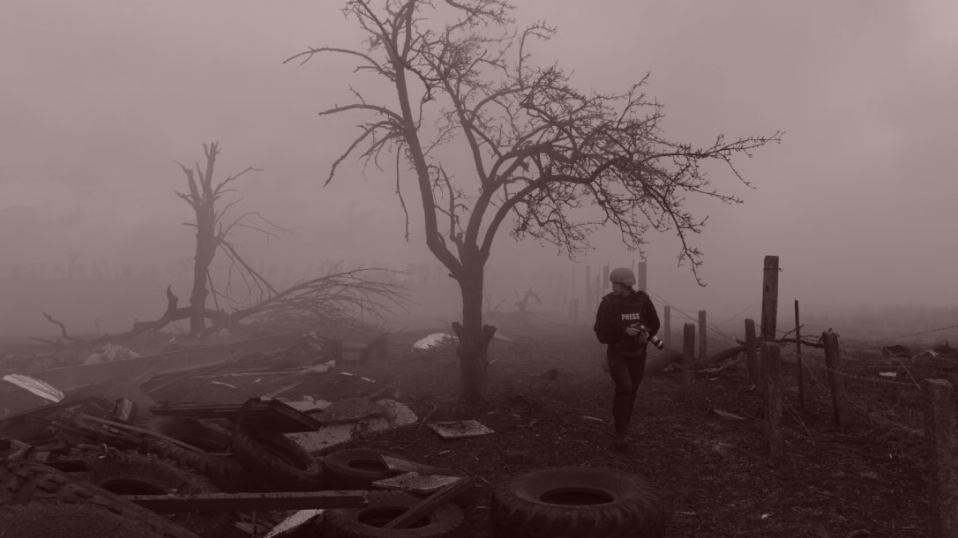
For nearly three weeks, Chernov and Maloletka were the only foreign journalists left in Mariupol and they chronicled the city’s descent into hell, managing to get their photos and footage out over the disappearing cell signals. Their horrific and iconic photographs—the tanks shooting at residential buildings, the wounded pregnant women streaming out of the bombed maternity hospital—shocked the world. Eventually, Chernov and Maloletka found themselves in a hospital, surrounded by Russian tanks, and they got word that Russian soldiers were hunting for them. That was how powerful their images had become.
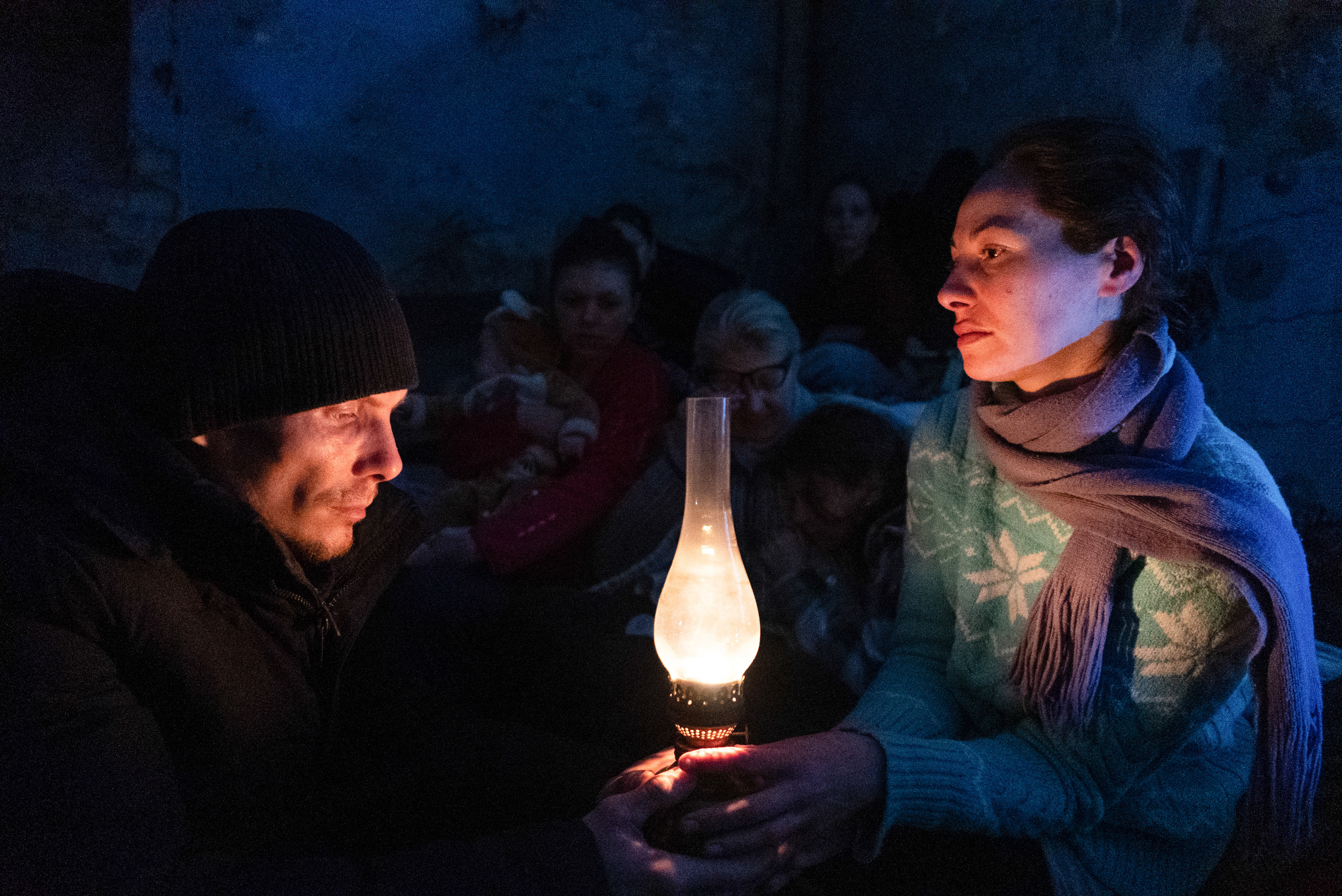
Chernov and Maloletka were rescued by Ukrainian special forces, and, with PBS, compiled the hours of footage from Mariupol into a film about the siege, 20 Days in Mariupol. To say the film is harrowing is an understatement. It is intimate, immersive: you are there in the emergency rooms as doctors fail to save injured children, and there as their uncomprehending parents howl in disbelief. There is no escaping the horror as the Russians close in, evil on the march, unstoppable, inevitable, and paralyzing. Watching it, I was taken right back to those awful first weeks of the invasion when I felt constantly on the verge of sobbing or having a heart attack, or both. The film is awful, necessary viewing, especially at a time when much of the world has begun to forget Ukraine.
I spoke to Chernov right as the Academy announced that 20 Days in Mariupol had been shortlisted for the Oscars. I hope you see the film, and that you find our conversation, which has been edited for length and clarity, as interesting as I did. |
|
|
| Julia Ioffe: While watching this film, it was hard not to think about Gaza, which is obviously a different war, with a different set of circumstances and different historical context, but some of the tactics seem the same—the siege, the bombardments, the failing hospitals, the desperation. I know you’ve covered a lot of wars, including the war in Syria. How was Mariupol different from other wars you’ve covered, and in what ways was it similar?
Mstyslav Chernov: That’s exactly the message we’re trying to convey with this film, which is that the heaviest and the most devastating side of the war is the human toll on the civilian population, whether it’s in Gaza or whether it’s in Israel, whether it’s in Aleppo—which was also destroyed by Russian bombs—or anywhere in the world. Unfortunately, in the wars that haven’t started yet, but will start, that is also inevitable. Everywhere, human life is equally important, and everywhere, it’s equally important to be telling the stories of civilians that are caught in the crossfire.
For me, Ukraine is just the most emotional because my career in war journalism started in Ukraine—and I didn’t know anything about war. It was a horrifying discovery. It was a horrifying experience for me in 2014. And I keep coming back to Ukraine, even in the years when no one cared about Russia’s invasion of Ukraine, I kept coming back to Ukraine to tell this story because it’s emotionally close to me. It’s my home.
We’re speaking at a time when the West has started forgetting about Ukraine, and attention has moved on to Gaza and Israel. In the U.S., there’s been a long fight to get more funding for Ukraine. And despite the universality of some of those themes, this is still a very specific war, one that is fading from the headlines.
Humans have a limited capacity to see tragedy. It’s very natural. The media has a limited capacity because of the toll it takes on journalists, first with Russia’s invasion in Ukraine, and now the war in Gaza. Journalists are getting killed and coverage becomes harder and harder and the media has limited resources. So it’s quite hard to be able to cover two wars at the same time.
That being said, of course, I think it’s wrong to forget about Ukraine because whatever was happening to Mariupol is now happening to Avdiivka. The story keeps unfolding and repeating, and if attention is not there, then it will create a false sense that there is no problem. We know what happens to Ukraine when the world suddenly forgets about it and moves on. In 2016, everyone forgot about Russia’s invasion of Ukraine and moved on to the Syrian war, which was also incredibly important, but that paved the way for Russia to prepare even a bigger invasion in 2022. If we as journalists and documentarians did a better job in the years preceding the 2022 invasion, if the world had paid more attention, maybe it wouldn’t be such a shock for everyone because Russia had already been attacking Ukraine for eight years. So it wasn’t actually a big surprise for those people who paid attention. |
|
|
| But it was a big surprise. You’ve mentioned in interviews that no one believed you that the invasion was coming, and you see it in the film, in the people you catch on camera. February 24th was a big surprise for most Ukrainians. Why, in spite of everything, do you think that was?
Ukrainians had been living in a state of war at that time for eight years already. So it’s not that Ukrainians were not prepared for the war. They were. Mariupol was a frontline city for eight years. The military was stationed there for eight years and had been preparing for an attack for eight years, so it was not a surprise. The scale was a surprise. Some of that is a question for intelligence services, and for governments, but it is also a personal choice for people because they did not want to believe it was too serious. And that was clearly a mistake.
I wanted to ask you about the language question. In the film, I was surprised to hear you and Evgeniy Maloletka were speaking Russian to each other. Even the surgeon cursing at Putin as he tries to save a child—everything was in Russian. What is the significance of that, of the fact that everybody in the film spoke Russian while being attacked by Russia to ostensibly defend the Russian language?
Mariupol was always a Russian-speaking city, as was my hometown, Kharkiv, and it always had strong cultural and family connections to Russia because it was so close to Russia. It doesn’t mean it was a Russian city. Close cultural connections doesn’t mean it is Russian, and what kind of language people use also doesn’t make the city Russian. Mariupol was always an example of what a city in the eastern Ukrainian Donbas could be if it wasn’t occupied by Russia.
It was a successful, thriving, beautiful Ukrainian city with Ukrainian culture, as was Kharkiv. The majority of people spoke both languages, it was a very natural thing. And hence the bitter irony of Russians saying that they are trying to save the Russian-speaking population and killing this population at the same time. That’s the reason why it is so important that almost every single word in 20 Days in Mariupol is spoken in Russian, because of that bitter, bitter irony.
It was also interesting to hear people in the film explaining to you, in Russian, that they want to live in Ukraine, that they don’t want anything to do with Russia. They don’t want to live under the Russian flag. And then you see a little switch, where you hear people saying that Ukrainians are bombing us, our own people are bombing us. You saw it also later, on Kremlin TV—Ukrainians in occupied territories saying it was the Ukrainian army that had bombed them. Where did that idea come from?
It’s a very interesting question. There’s a minority of residents who could have supported Russia even before the full-scale invasion, because probably they had family ties or they watched Russian media. So inevitably, some percent of the population supported Russia, even though they were a minority. For me, the painful part was that, when you see a shell hit in the city and then somebody would tell you, Oh, you don’t know who is shooting because you haven’t seen who shot it. But then just a day before that, I saw a Russian tank shooting at a residential building. Now, we know who was killed in that attack, and we know the name of the person who was sitting in that tank that pulled the trigger. And when you see that, there is no way you can say, Oh, we don’t really know what’s happening. That is why I am actually getting so emotional at the moment.
But it was important to show that reaction of people because that’s an effect of Russian disinformation. In Mariupol, it wasn’t only a military siege, it was also an information siege, which means only just a little information was getting in. People were very confused. Just imagine, they don’t know if their country still exists. They don’t have any information. They panicked, they’re shocked, they’re in a vulnerable state of mind and in this state of mind, people become very impressionable. Meanwhile, the only information getting in was Russian radio, which kept saying that the Ukrainian military is bombing them. |
|
|
| It’s hard to watch the film and not think, Where are these people now? Did they survive? You talk about it at the end, when you leave the city, that you feel bad abandoning them. Do you know what happened to the people in your film?
Everyone you see in the film, the families, the doctors, the police, the soldiers—almost everyone—they all have their different circumstances, but it’s especially hard for the families who lost their children. Even if they’re safe now, they still are broken and need help. We spent the whole year following up and searching for people, contacting them, speaking to them, trying to find out who was killed in the bombings and who was responsible for them. We found the husband of Irina, the pregnant woman on the stretcher who died from the bombing of the maternity hospital and who lost her child as well. These are very hard stories. There were more children [that were killed] than you see in the film. This is not everything. There are more people who we just didn’t have time to show because we only had 95 minutes. And it’s not enough.
What is happening in Mariupol now? I see stories about Russians buying up apartments in Mariupol. How is life for Ukrainians who stayed and survived? Do you know what their life is like under Russian occupation?
So, first of all, it’s important to say that Russia uses Mariupol as an example, and it is very important for them as propaganda, to show that they are doing something useful and to show the people that they care. So on the surface, they may try to build something, but most of what they build is actually given to the Russians who are moving into the city. There is really no benefit to residents of Mariupol itself. More than 200 high rises were knocked down or are slated for destruction because they can’t be reconstructed, which means thousands and thousands of people are losing their homes forever. But also it means that all the proof of the war crimes and what happened there, the bones of people who were burned and buried under the rubble, will disappear. There are at least 40,000 graves at the Staryi Krym cemetery, and most of them are without names; just numbers. And these are people who died during the siege because of a lack of medical attention, because of disease and hunger, because of suicides.
Suicides? I didn’t realize there were suicides in Mariupol during the siege.
There were a lot of suicides, yes. Speaking to police who were in the city, they all witnessed old people just throwing themselves from the top floor because they didn’t have food and water and they couldn’t go anywhere and they just committed suicide during the siege. So those people, too, are in those graves.
Those who remain—most of the “cleansing” has already happened because Mariupol has been occupied for a long time. People who had connections with the Ukrainian army or activists are being arrested or deported or tortured. Those who got Russian passports are having a better, more comfortable existence. But there are a lot of people who didn’t accept a Russian passport, and those people are under distress because they live in ghettos. They can’t leave through any Russian checkpoints until they get a Russian passport. They don’t have the right to get a doctor’s appointment. They cannot send their kids to school. And the kids are another problem. All the history books, all the curricula, have changed to a Russian perspective. That means those children who are actually going to schools are being reeducated and deprived of their Ukrainian identity—which is a war crime.
But again, that’s Mariupol. Think about Popasna, Volnovakha, Soledar, Bakhmut, the cities that are being occupied and are just unlivable—and they will never be reconstructed. The people who are not interesting for Russia to be made an example of, they are just forgotten.
Are any of the new apartments that are being built in Mariupol and shown off on Russian TV going to locals, to Ukrainians?
I haven’t heard of anyone who is originally from Mariupol getting apartments in the new buildings. But it is also very hard to get any information right now from Mariupol because people are afraid to speak. I seriously doubt that those people who lost their homes are getting anything back or getting any new houses, because Russia brings in a lot of Russians and they need to put them somewhere, so they put them in flats and houses that were abandoned by Ukrainians who left the city or who ran away from the occupation—stealing, basically—or they are moving into the houses that are built for them. But even if they put some people in new homes, it will never be enough. |
|
|
| From the 20 days you spent there, is there anything you regret?
Oh, I missed so many shots because there was so much more happening than a human being can possibly capture. We were probably able to capture 1 percent of all the tragedies that happened in Mariupol, and that is maybe 1 percent of all the tragedies that happened in Ukraine. It’s a small fraction, and it’s still very painful. There were so many moments during which I was just hiding from the bombs and bullets and I couldn’t film for that reason. There are so many stories that we filmed but didn’t find the time to show them.
Can you tell me a story that didn’t make it in?
Some of these stories were just told to us, so they’re spoken, but they’re not seen. There is a story of the parents who lost their children in a bombing. We actually met them in the corridor of the hospital on day 17. And they speak about how a bomb hit their house and how their children were buried under the rubble.
But we know what happened to them afterward. They came back to their home after the front line moved, and they buried their children next to their house. They buried them themselves, which is incredibly difficult psychologically. I can’t imagine how that feels. And then they left the city through a humanitarian corridor with the children who survived, and then they came back again to bury them properly. But they didn’t find anything; they didn’t find their bodies because they had been dug out and were about to be thrown into a mass grave. They were really afraid that they’re going to lose them, and they went through hundreds of bodies that were just stored in one of the buildings nearby. And they did find the bodies of their children. I just can’t imagine how hard it was for them to do that. But they gave them a proper burial.
There was another story of a man who one day came to Terra Sport, the fitness center that was serving as a shelter, and he was desperately asking for help. So several men went with him, and they went to a house nearby that had been hit by an airstrike and it collapsed, and the family of this man was buried under the rubble, but still alive. They were trapped on the first floor. He could hear them and he would speak to them through this small hole in the wall. He was asking [the people at the shelter], please help me get them from under the rubble. Firefighters were not available, there was heavy bombing all the time and firefighters were bombed as well. So these men are trying to help him to dig out his family, and they come back there every day for five days trying to dig them out, stone by stone, piece of metal by piece of metal. But they can’t because they do it with their hands under the shelling. And on day five they come back and their families are not responding. They’re dead. There were several people: his parents, his daughter.
So this man, he’s in shock. He turns to a sharp corner of the building, a sharp concrete corner of the building, and he starts running into it with his head, trying to kill himself. But he doesn’t. He’s bleeding and they take him away, back to Terra Sport, and they keep him on vodka for seven days because he wants to leave and probably commit suicide. But they keep trying to just at least keep him there. And one day, he just disappears. We don’t know what happened to him, but it’s just one example of thousands.
My last question, which I ask everybody I speak to about the war: How do you think this ends? And when?
Well, I’m not an oracle, but I can tell you Ukrainians are ready to keep fighting because they know if they stop fighting, the result will be the same thing that happened in 2015, when Ukraine gave up some territory to Russia in exchange for a possible peace agreement, and it led to escalation in five, six years, and it led to Russia occupying more territory. So it’s very, very clear for Ukraine where this is going if there is going to be another peace agreement with Russia occupying another part of Ukraine’s territory, which is going to lead to more attacks in the future. And what I hear from every single soldier is, I just don’t want my children to keep fighting the same war that we are fighting. Whatever it takes, we need to finish this war now and make sure this is not going to be repeating.
This is another thing international society is probably not really understanding. There is a widespread Russian misconception that if you stop giving weapons to Ukraine, then Ukraine will stop fighting and there will be peace. But in fact, the Ukrainians will just suffer more civilian and military casualties. The fight will not stop, because Ukrainians are fighting for their survival. And they will keep fighting with whatever they have. If they have only sticks, they will fight with sticks. |
|
|
| That’s all from me this year, friends. I hope you’re having a happy holiday season and that, in this time of great sorrow, you are holding your loved ones close. I’ll see you back here next year, next week, on Wednesday. Until then, good night. Tomorrow will be worse.
Julia |
|
|
|
| FOUR STORIES WE’RE TALKING ABOUT |
 |
|
 |
| Young Tucker |
| On Tina’s new book and the conservative media machine. |
| PETER HAMBY |
|
 |
|
 |
| Zaz & Shari |
| Zazmount possibilities, WaPo challenges, and CNN grumblings. |
| DYLAN BYERS |
|
|
|

|
 |
|
|
|
Need help? Review our FAQs
page or contact
us for assistance. For brand partnerships, email ads@puck.news.
|
|
You received this email because you signed up to receive emails from Puck, or as part of your Puck account associated with . To stop receiving this newsletter and/or manage all your email preferences, click here.
|
|
Puck is published by Heat Media LLC. 227 W 17th St New York, NY 10011.
|
|
|
|