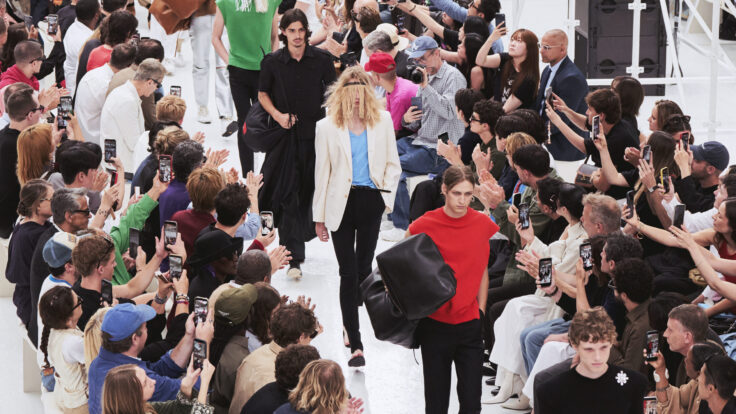
Hi, and welcome back to Line Sheet. Today is the final day of the Couture shows in Paris.
Tomorrow’s Fendi show in Rome caps off the season. Send me your on-the-ground takes.
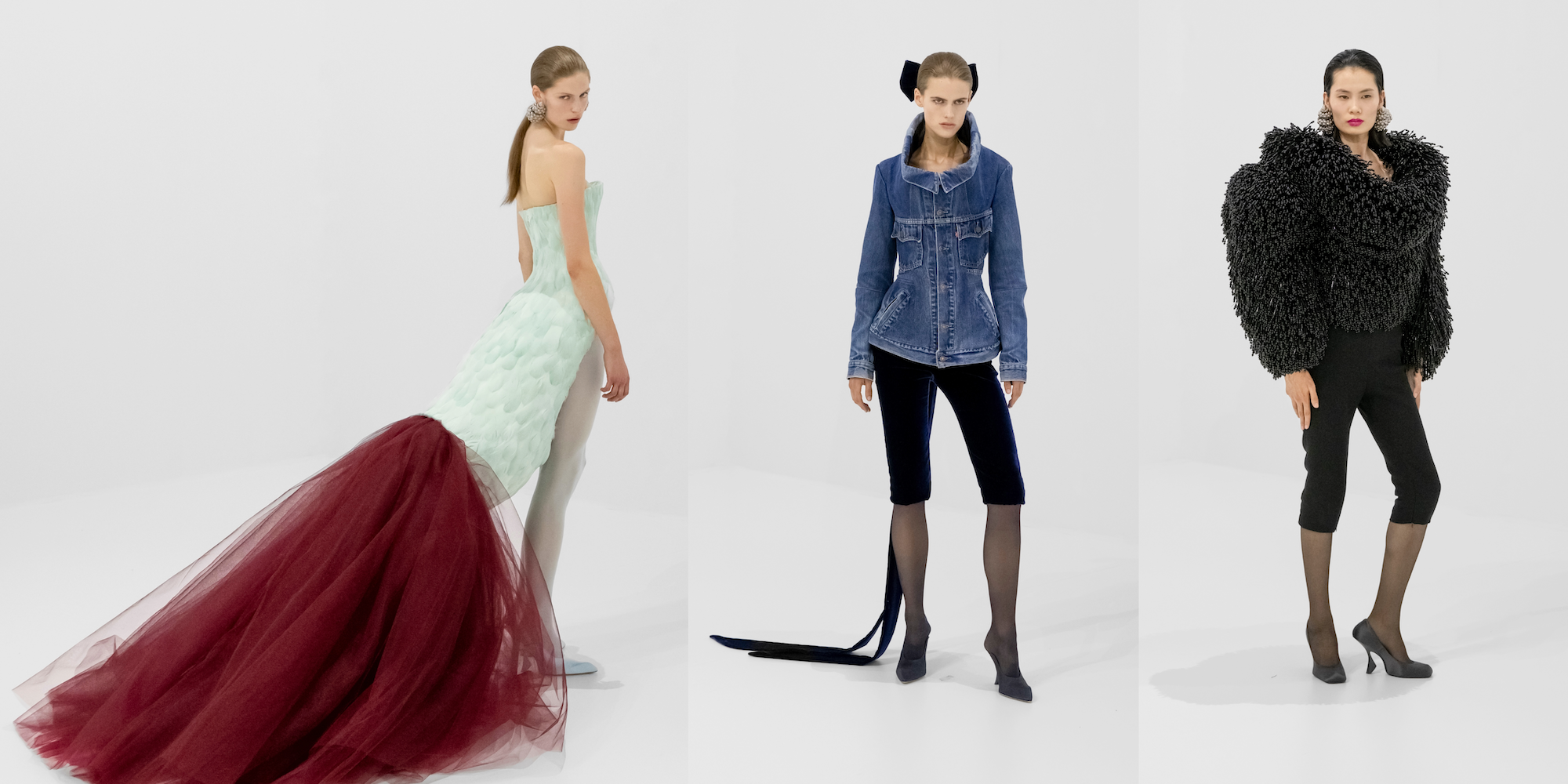
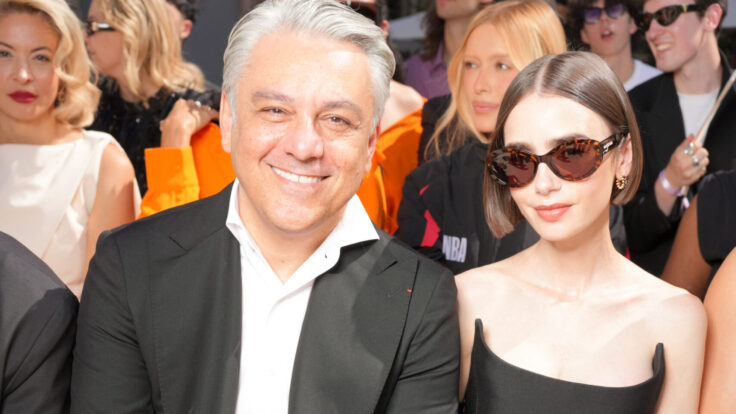
I loved seeing Anthony Vaccarello sitting front row at Pierpaolo Piccioli’s Balenciaga Couture debut today. It just made me happy for some reason, who knows why. Maybe I’m entering my sentimental era. (Ha!)
I’ll be back tomorrow with a special Inner Circle issue focused on what happened this week and plenty more. (Get ahead of
things and sign up here.) Today I’m covering the look of Sun Valley, making note of a mini Prada controversy, and offering an assessment of Duran Lantink’s first Couture show for Jean Paul Gaultier. For the main event, we have a super-special dispatch from Linda Wells, a journalism legend and editor of
Air Mail Look, our sister brand’s beauty vertical. A couple of years ago, Linda dug into the business of Dior Beauty, and she’s refreshed her reporting just for Line Sheet readers.
Also mentioned in this issue: Aleksandra Woroniecka, Johnny
Depp, Amber Heard, Mario Sorrenti, Allen & Co., Michael Eisner, Christopher Ilitch, Josh Kushner, Auralee, Lionel Messi, Karlie Kloss, Hermès, François Demachy, Jen Rubio, Alice + Olivia, Karen Bard Sayah, Kara Brothers, Brian Bordainick, Charles James, TJ Maxx,
Saint Levant, Sheryl Sandberg, Stewart Butterfield, Francis Kurkdjian, Wendi Murdoch, Eva Tate, Stacey Bendet, and more. |
Three Things You Should
Know…
|
-
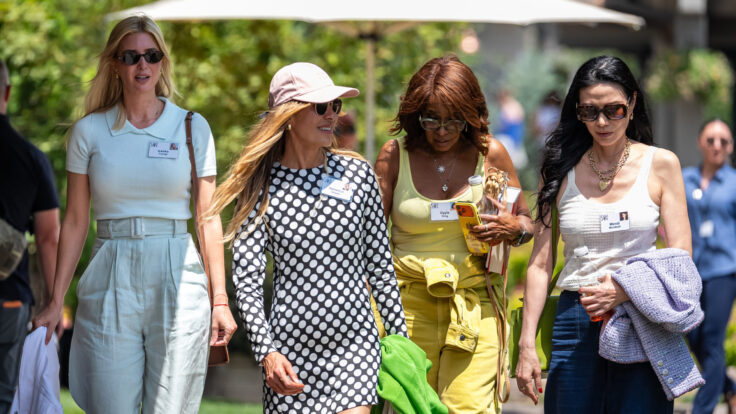
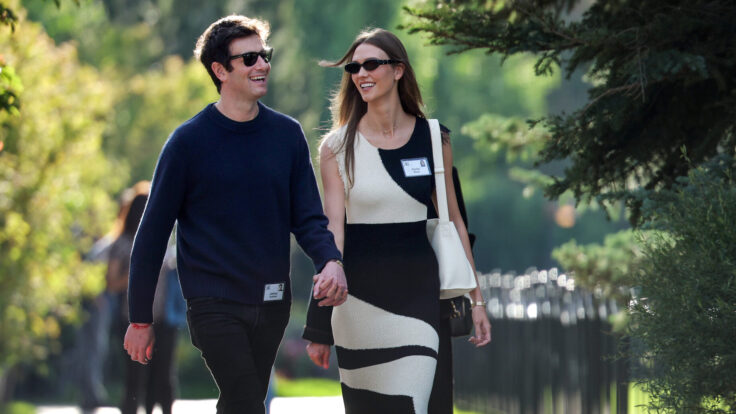
The Sun Valley fit parade: It’s always fun to see what real rich people wear to the annual Allen & Co. conference in Sun Valley, which kicked off yesterday. After all, these are the folks who can actually afford to buy the six-figure couture looks I just saw on the runway in Paris, even though they are often confined to drab office settings where those clothes aren’t fully appreciated. Alas, the luxury industry’s biggest problem is that Boomers, along with Gen Xers like
Wendi Murdoch and Stacey Bendet—and, sure, Elder Millennials like Away co-founder Jen Rubio—are the last group of people who really care about luxury fashion. Alas, day to day, many rich people do not care at all. (See: former Facebook C.O.O.
Sheryl Sandberg, who yesterday wore boot-cut jeans from the last time they were cool.)
Just look at what people are wearing on the promenade up to the lodge, where the actual conference takes place. Murdoch turned it out with a green
Hermès bag, and both Rubio (who is married to Slack billionaire Stewart
Butterfield) and model-novelist Eva Tate (whose partner is Detroit businessman Christopher Ilitch) wore traditional Y2K hot-girl looks: boot-cut jeans (the good kind) and tight tops with designer bags. (Today Rubio upgraded with a bit of Chanel Métiers
d’art.) Karlie Kloss, the media mogul and model who is married to Josh Kushner, was giving Auralee with a plaid shirt and white jeans. (Dylan Byers, our guy on the ground in Sun Valley, said he liked Kloss’s dress today. Not my favorite, though I respect everyone involved.) I’ve got to say, the best dressed so far has been
Michael Eisner in navy chinos, a striped polo, and a nearly Nantucket red V-neck sweater, complete with a lanyard holding reading glasses and sunglasses. He was truly giving Auralee. Or
Hanover.
I’m missing the truly wild and wonderful looks typically worn by Alice + Olivia founder (and Eisner daughter-in-law) Stacey Bendet, who is absent from the conference this year for reasons you can learn about on Reddit. If you want more Sun Valley commentary between issues of Line Sheet, be sure to follow
Karen Bard Sayah, who opens up her private Instagram account every year to provide minute-by-minute takes on looks from the lodge. I’ll be back in the coming days with intel on what people are wearing to dinner. (Getty photographers don’t get to go there.)
|
|
|
|
A MESSAGE FROM OUR SPONSOR |
The duty-free era is over. The EU ended its de minimis exemption July 1, the US did in 2025, and the UK is next. In the
US and EU, every parcel now carries duties - and in the EU, liability sits with you, not your customer. Swap's new report breaks down what changed in each market. Inside: |
• Why de minimis ended and what it means for your margins • How customs liability is shifting from customer to merchant • What DDP vs. DDU means for cart abandonment and returns • How to recalculate landed costs before the EU's November data rules |
|
|
|
-
The Prada–Saint Levant calculation: Last week there was some stressy online controversy after Palestinian singer Saint Levant wore a pendant shaped like historic Palestine in a video promoting Prada. (Levant was born in Jerusalem and raised in Gaza.) Online critics suggested that the pendant erased Israel and called for a boycott of Prada. The company ignored the chatter.
But these topics are nearly impossible to manage without upsetting some
constituencies, and there was a decent amount of debate about it at the shows in Paris, where everyone has an opinion and believes they know best. There’s an argument that someone at Prada should have intervened and suggested that the musician, whose real name is Marwan Abdelhamid, not wear the pendant. There’s also an argument that it’s none of their business what he wears, and the whole reason they hired him is because he’s an authentic individual. (Most of the time, brands
meticulously control looks when they’re paying ambassadors. But not always.) Anyway, this stuff is deeply nuanced, and I assume it will fade quickly. - Duran’s Couture debut, rated: I’m going to get into this more tomorrow, but I’d say this Couture week was pretty stodgy and sluggish, with Chanel essentially blowing the competition out of the water with a modern show that was sensitive to fashion’s post–peak luxury era needs. Everyone else seems to be
wishing that the past was not past. Duran Lantink does not care about Chanel. He cares about creating something he believes in.
|
- What’s amazing
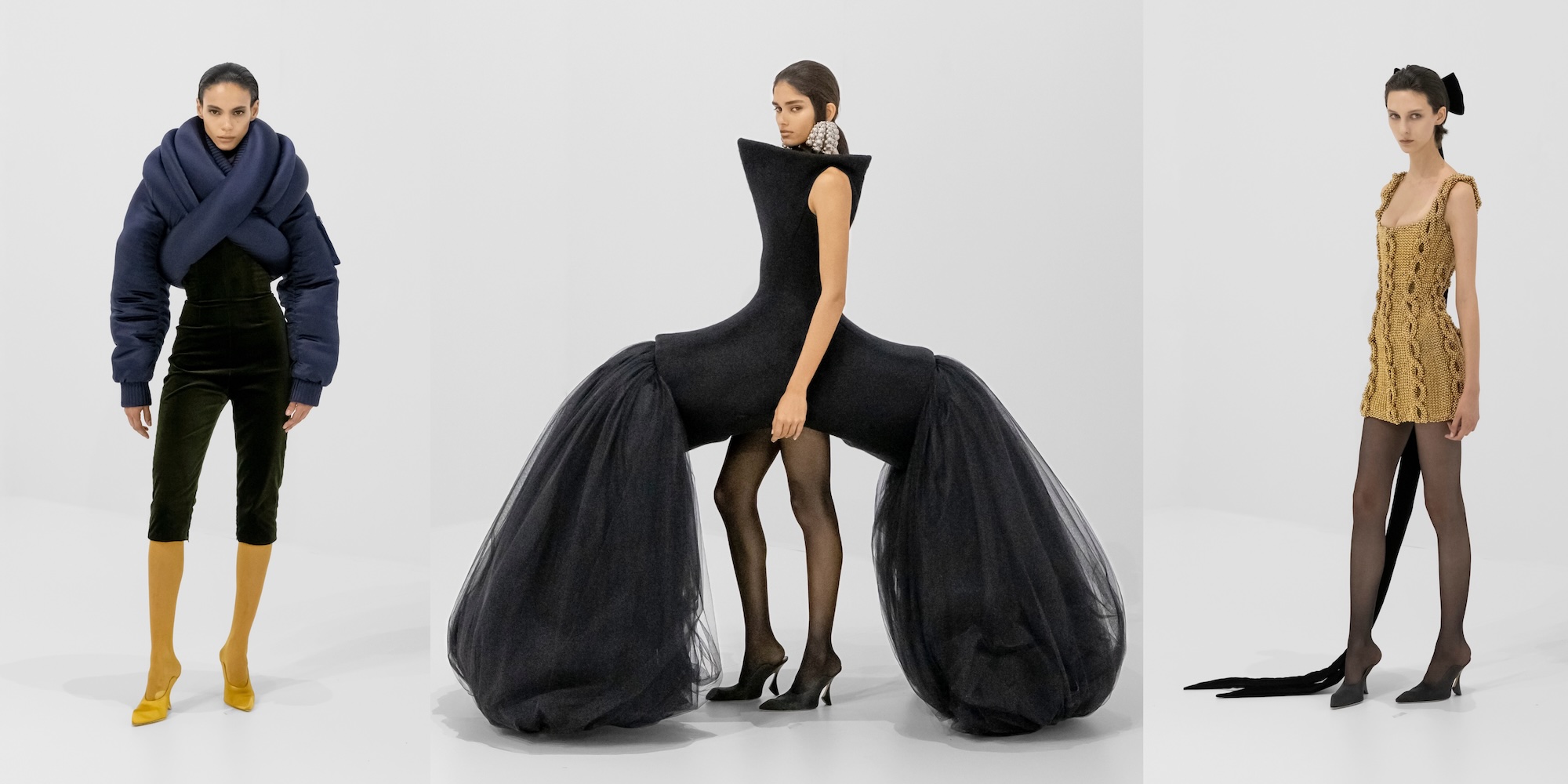
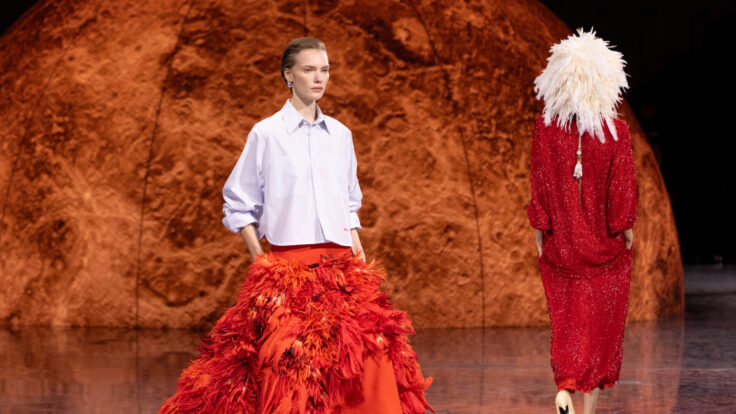
to me about the work of the Dutch designer, who was named creative director of Jean Paul Gaultier last year, is how darn appealing it is. For today’s Gaultier Couture show, he made a bunch of dresses that essentially looked like gussied-up plumbing, and they were tremendous. The more approachable looks further investigated his obvious obsession with notions of aristocracy and properness, and he nodded to the brand’s namesake, via certain design details, without stooping to mimicry.
Lantink is so, so confident. What a boon for Puig, which owns JPG and really needs it only to sell fragrance. If it wants, the company can sell a lot more with Lantink. There’s a commercial proposition under the shock and awe.
|
|
|
|
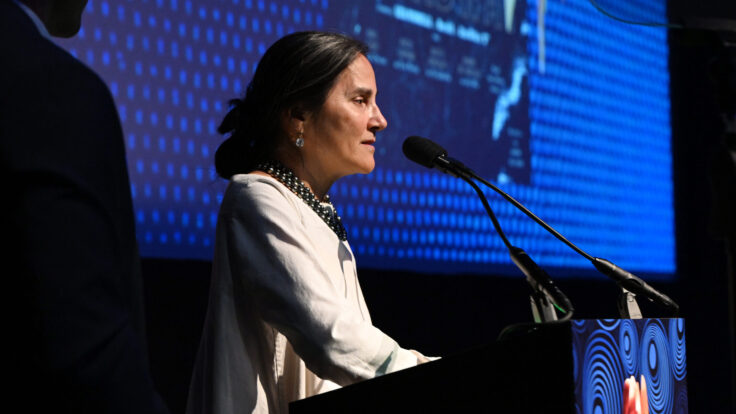
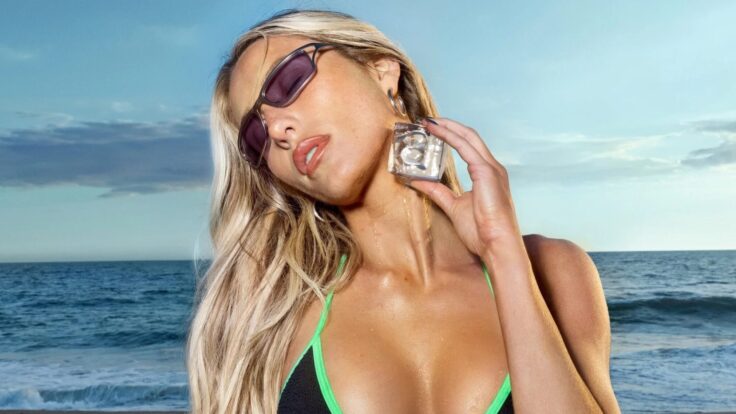
Dior’s men’s fragrance is the bestselling scent in the world and a cash cow for the luxury
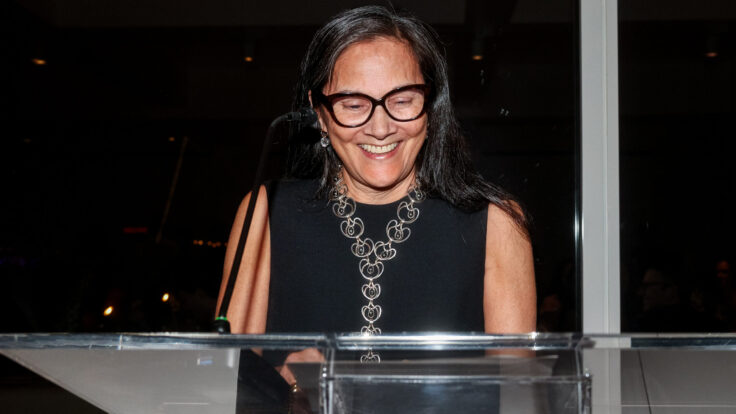
house. A new iteration drops later this month, inducing Air Mail Look editor Linda Wells to update her 2024 investigation into the curious history of a world-beating fragrance. |
|
|
|
Success in the fragrance world is rarely a matter of a pleasing scent, an appealing bottle, or a name that
captures the imagination. For all the Baccarat Rouge 540s and Santal 33s of the world—scents that seemed to come out of nowhere and rise to the top of the sales charts—there are enough flops and well-funded duds to fill all the shelves of TJ Maxx. And then there’s Sauvage. |
|
|
|
A MESSAGE FROM OUR SPONSOR |
The duty-free era is over. The EU ended its de minimis exemption July 1, the US did in 2025, and the UK is next. In the
US and EU, every parcel now carries duties - and in the EU, liability sits with you, not your customer. Swap's new report breaks down what changed in each market. Inside: |
• Why de minimis ended and what it means for your margins • How customs liability is shifting from customer to merchant • What DDP vs. DDU means for cart abandonment and returns • How to recalculate landed costs before the EU's November data rules |
|
|
|
The men’s fragrance from Dior has been the bestselling scent for more than a decade. Not just number one in
the men’s category or in France or duty-free or some other designation from the sales-and-marketing team to goose the figures. Number one among everything, all genders, worldwide. Lionel Messi level. (That was as true in 2024, when I first published a version of this article, as it is today.)
And yet number one has its perils too. The fragrance business
requires a sense of newness, often scheduled in two-year increments, which always carries a degree of risk. Later this month, Dior will launch another Sauvage blend from Francis Kurkdjian, the perfume director at the house, as well as co-founder and creative director at Maison Francis Kurkdjian, which LVMH acquired in 2017. He’s also the nose behind Baccarat Rouge 540.
Kurkdjian’s first iteration was Sauvage Eau Forte in 2024, which in itself was a riddle. Water (or
eau) usually suggests dilution and weakness, not strength (forte). And it doesn’t sound particularly sauvage, either. Kurkdjian is clear-eyed about the challenge ahead of him. “When you are number one, everyone chases you,” he said. This isn’t arrogance. Kurkdjian didn’t create Sauvage in 2015; another perfumer, François Demachy, gets credit for that. Instead, he’s the nose who’s accountable for maintaining its position.
And he doesn’t take the
obligation lightly. “When you are number one, you have many more enemies,” he continued. “When you’re number one, you feel that you deserve it, you feel that it doesn’t need any extra effort—that you can lay on your bed and relax. I’m not saying it’s easy, but it’s comfortable. You are in the car, and you may be the driver or you are in the back seat, but the car is tuned. ... And when it’s a high-end brand like Dior, the car is very comfortable. It’s comfortable, but the road can be bumpy.”
|
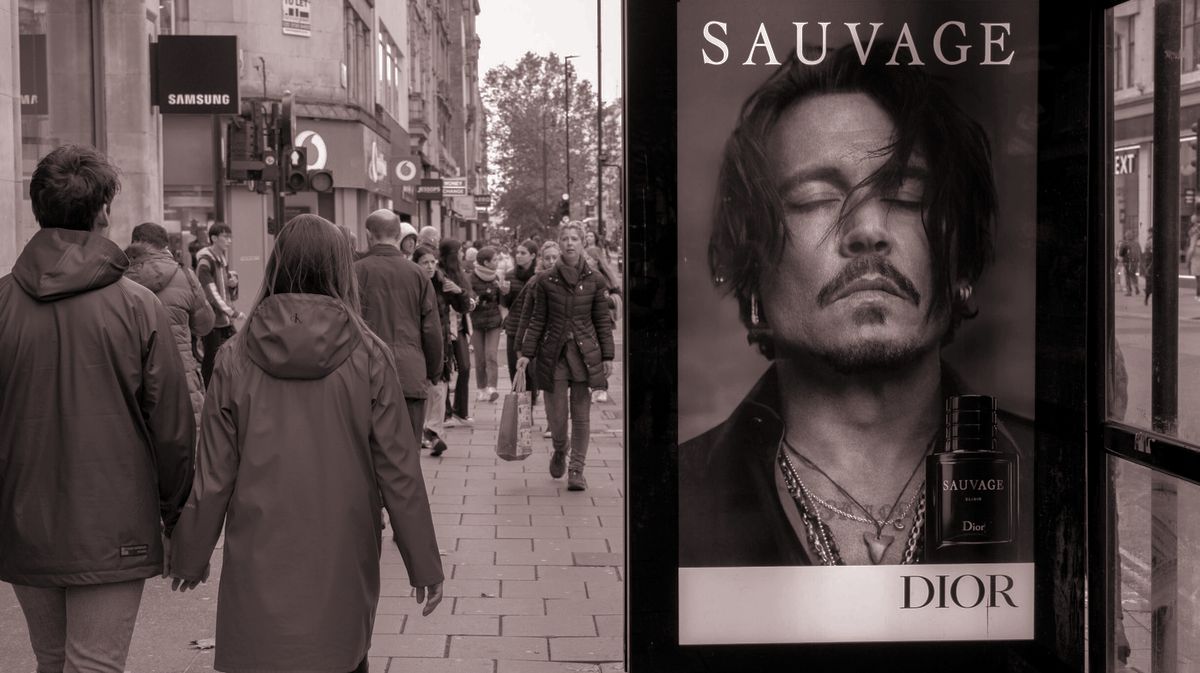
The Sauvage of 2015 had its fair share of bumps. I don’t need to tell you that its ads have always featured
Johnny Depp, who came under scrutiny during his divorce from Amber Heard and his subsequent defamation suit against her. Surprisingly, the notoriety didn’t seem to diminish Depp or the fragrance. “I was at Macy’s when the controversy about Johnny started,” said Linda G. Levy, who was the merchandise manager of fragrances there before becoming president of the Fragrance Foundation, an industry organization. During the trial, she said, “people
rallied around him. Who cares what was really true as long as he wasn’t abusive? But it put him on the map in ways that he never was before.”
Depp also appears in the ads for Sauvage Eau Forte, wearing piles of beaded jewelry and squatting before a backdrop of waterfalls that look very eau forte. Even if you had a head cold, you could identify Sauvage Eau Forte as a scent for men, given the smoldering vision of Depp and the unadorned midnight blue bottle. But the popularity of a
fragrance doesn’t come purely from a movie star or an extravagant promotional budget—although that certainly helps. “No matter what else is done, if the juice isn’t good, then there’s no chance of success,” said Levy. Sauvage, both the original and this variation, is a bit of an anomaly: a manly fragrance at a time when gender lines are loosening. The original Sauvage “is about thoughtless masculinity, in a way,” said Kurkdjian. “No-brainer.” He also described it as “clean-cut” and “like a
little black dress for men.”
The masculinity of Eau Forte, however, is more sophisticated and less obvious. It aims at freshness, he said, “while maintaining its strength”—a contradiction in a bottle. Kurkdjian achieved that tension by creating an unusual water-based formula with a high concentration of perfume oils and no alcohol. He combined the cleanness of lavender with a burned note, “the smell of the fireplace,” he told me, struggling to explain it exactly. “When you say ‘burnt,’
people think the negative way.” So not that. It has “some burnt facets, but there are good facets.” It’s dark and sensual. “Spiky,” Kurkdjian offered. “It’s a masculine scent that stays out of the clichés of what masculine is about in terms of perfume… It’s musky, it’s woody, and the spices blend a bit in between.” |
|
|
|
There was actually a precursor to these Sauvages—a citrusy cologne created in 1966 called Eau Sauvage, which
dominated the men’s market for 30 years. Dior promoted it with a series of illustrations of men in various degrees of hairiness and nakedness. (One of them wears an animal skin, caveman-style.) Despite the surging testosterone, all the Sauvages have female fans, too. I used to wear Eau Sauvage in the ’80s when I wanted something light and breezy. “In the olden days, there were women’s fragrances and women wore them, and there were men’s fragrances and men wore them,” says Levy. “That’s not true
anymore.” To be a number one scent, it has to have a sizable female audience.
Levy predicts success for Sauvage Eau Forte. Besides the fact that luxury fragrances are doing a killer business, this has the strength and purity that appeals to today’s perfume fan. The wild side of Sauvage may be a draw as well. “I think there is a kind of a dream, an inner dream, of people being wild,” said Kurkdjian. “It comes from our animality. Like when you’re in the middle of a desert and you can
scream.” Men, women, nonbinary, trans, pan, fluid, queer, the fragranced and the unscented—we all might be tempted right now to let out a good yell before getting back to the business of smelling like a million bucks, more or less.
A version of this story first appeared in Air Mail in 2024. |
I am very into the Loro Piana Fall/Winter advertising campaign, which was shot by
Mario Sorrenti in the Charles James–designed former home of the de Menils and the Rothko Chapel in Houston, styled by (rising Line Sheet star) Aleksandra Woroniecka, and conceived by creative director Franck Durand.
[Culted]
The women running Chanakya, the 40-year-old Indian atelier used by Dior, Prada, and Fendi, launched a contemporary womenswear brand called Chorus that maps Indian textiles and embroidery onto Western silhouettes, à la Kartik Research in menswear. Chorus even got an exclusive wholesale deal with Moda Operandi. As the global south’s
prominence in luxury kicks up, people are paying more attention to brands coming out of those “developing markets.” [Vogue Business]
Netflix has been gobbling up YouTube content at such a clip that it was only a matter of time before it got to the fashiontainment side of things. Next month, it’s going to start streaming YouTube
series from a bunch of glossies including Vogue, Glamour, Elle, and Cosmo. It’s only fitting that the deal is publisher agnostic (BuzzFeed, Penske, and People are involved), but oddly enough it doesn’t include GQ. What gives, Adam? [Netflix]
Starface’s former president Kara Brothers—who co-founder Brian Bordainick once told me was “a way more effective manager than I am”—has launched a media company called New Juice Studios, which wants to be the Oprah Winfrey Network meets Ted. [Inbox] |
Until tomorrow,
Lauren
P.S.: We use affiliate links because we are a business. We may make
a couple bucks off them. |
|
|
|
Need help? Review our
FAQ page or contact us for assistance. For brand partnerships, email ads@puck.news.
You received this email because you signed up to receive emails from Puck, or as part of your Puck account associated with {{customer.email}}. To stop receiving this newsletter and/or manage all your email preferences, click here. |
Puck is published by Heat Media LLC. 107 Greenwich St., New York, NY 10006 |
|
|
|
|