{{ 'now' | timezone: 'America/New_York' | date: '%b %d, %Y' }} |
|
|
|
Hello and welcome back to The Best & The Brightest, your daily politics dispatch from Puck. It’s
foreign policy Thursday, and I’m your host, Julia Ioffe. Last night, I had the honor and privilege of interviewing my friend and former New Yorker colleague Lauren Collins about her absolutely stunning new book, They
Stole a City. It’s a devastating, intimate history of a race massacre in her hometown of Wilmington, North Carolina—and how that event continues to reverberate through four families, white and Black, more than a century later. Run, don’t walk…
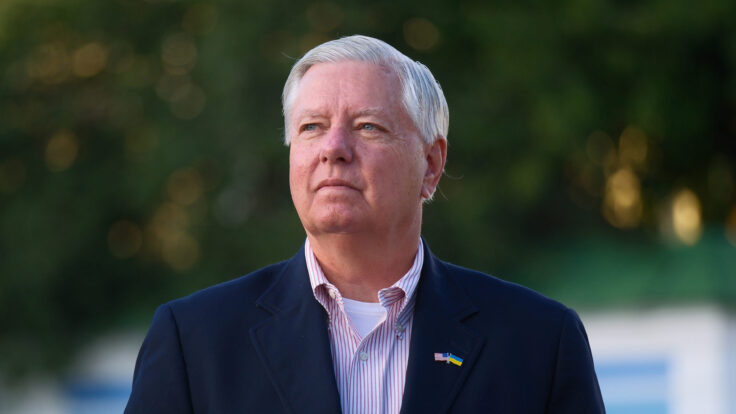
In tonight’s issue, Sen. Lindsey Graham’s last foreign policy will and testament. The last time I wrote about the man, he was
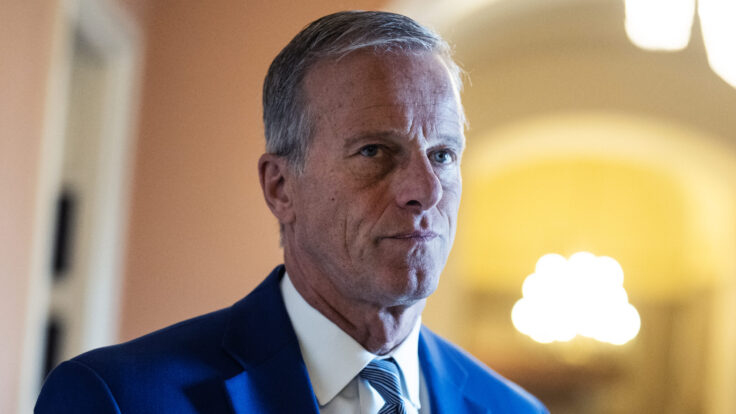
terrorizing American allies and infuriating Senate colleagues at the Munich Security Conference over Greenland. Now, with his passing, senators from the other side of the aisle are working to push the Russian sanctions compromise that Graham negotiated in Ankara over the line—if this brief moment of bipartisan alignment can survive Donald
Trump.
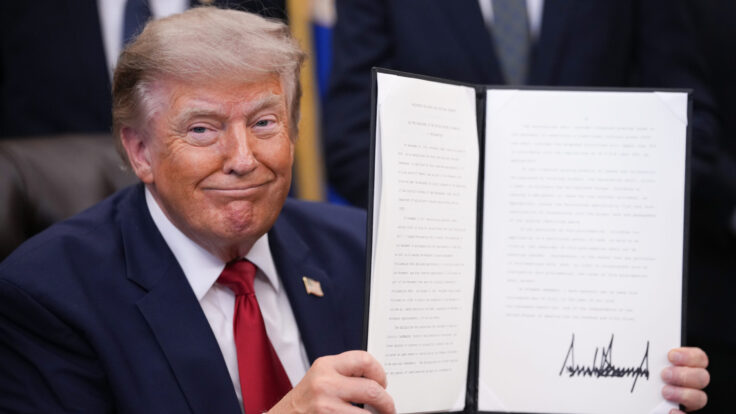
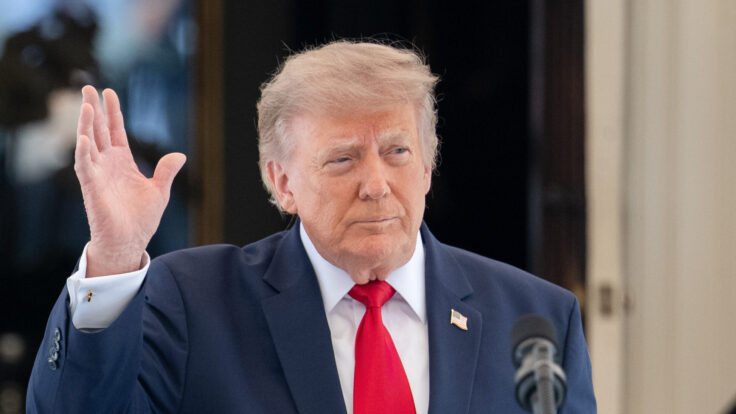
Plus, Leigh Ann Caldwell previews Trump’s primetime address on “election security” tonight. Republicans are bracing themselves for the president to squander the nationally televised time slot by rehashing old grievances; Democrats worry he’s setting the stage for undermining the integrity of the midterms.
Also mentioned in this issue: Todd Blanche, Raphael Warnock, Jon
Ossoff, Jeanne Shaheen, Eric Schmitt, Daniel Fried, Ron Wyden, Roger Marshall, Jackie Rosen, Volodymyr Zelensky, Roger Wicker, Richard Blumenthal, Richard Fontaine, Brian Fitzpatrick, Bryan Steil, and more. |
|
|
|
Building healthier communities means addressing the 80% of health that happens outside the
doctor's office. By working with local partners, UnitedHealth Group is helping communities across America live healthier lives. For example, UnitedHealth Group partners with The Good Acre and local farmers to deliver over 45,000 nutritious meals in the Twin Cities. This partnership helps participants lower their A1C and manage chronic conditions like diabetes, helping to build a better system for
everyone. Learn more. |
|
|
|

| Leigh Ann Caldwell
|
|
- Trump primetime
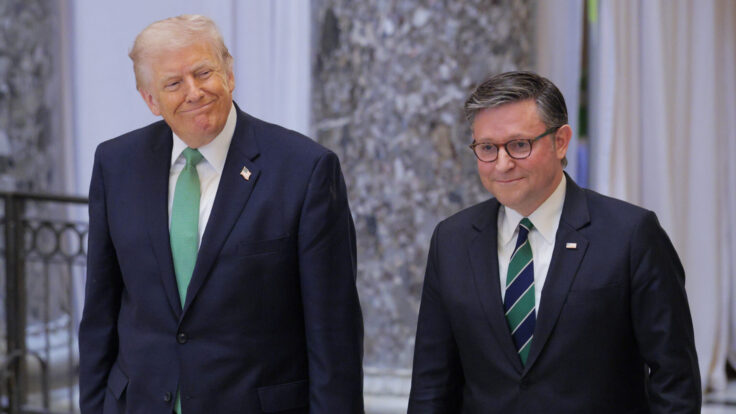
fears: Donald Trump’s primetime address tonight is being billed as a speech about election security—a return, presumably, to his false claims about the 2020 campaign and his efforts to shape the outcome of the midterms. Yet on Capitol Hill, I could not find a single Republican urging the president to use a nationally televised address to revisit this divisive and unpopular issue. “I think he needs to get over the 2020 election. That’s what I think,” said Rep.
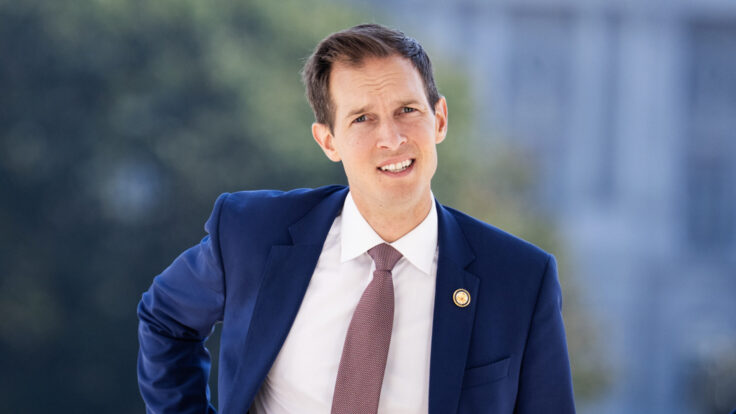
Brian Fitzpatrick, a vulnerable incumbent running for reelection in a district won by Kamala Harris in 2024 and Joe Biden in 2020. Fitzpatrick noted that he’d prefer to hear the president discuss substantive policy. “The housing bill that just passed with overwhelming bipartisan support—but he can’t talk about that, unfortunately,” he said, citing an example. “The most important thing is for him to explain to the country what’s been achieved in
Iran, where he wants to go, how he wants to pay for it, why it’s important that we pursue the course that he thinks is best.”
Many Republicans have largely given up on their president tailoring his message to help either their campaigns or the party, and most view another debate over the 2020 election as a political liability. Still, most of the Republicans I spoke with played dumb on the topic. Rep. Bryan Steil, who chairs the committee overseeing the
federal administration of elections, said, “I’m just looking forward to listening to it.” Kansas Sen. Roger Marshall, who faces reelection in a race that some Republicans acknowledge is tighter than expected, said, “I didn’t know he was speaking.” And Missouri Senator Eric Schmitt, a close Trump ally, said that he planned to watch, but declined to say what he hoped the president would address. “I do not give advice to the president that way,” he told
me.
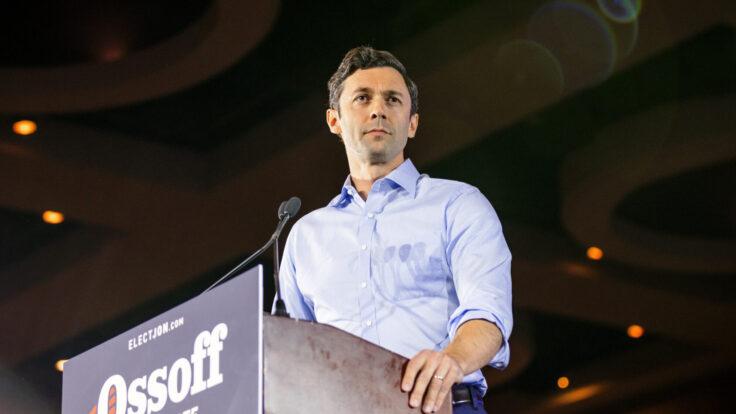
Democrats, for their part, will be watching Trump’s speech with a mix of trepidation and glee. If the president declares Georgia Sens. Raphael Warnock and Jon Ossoff illegitimately elected, it’ll be a great night for Ossoff’s reelection campaign and already full campaign coffers. (To be clear, neither Trump nor any president can invalidate the victory of a duly sworn-in senator.) But there’s also a deep undercurrent of fear: In their caucus meetings,
I’m told by two sources, Democrats have spokenly openly about their expectation that Trump will lay the groundwork to undermine the midterm elections in November. “This is a pretext for meddling in the outcome of 2026,” Warnock told me. And probably 2028, too.
|
|
|
|
“I’m his lawyer—was his lawyer.” —Deputy Attorney General
Todd Blanche, slipping up during day one of his Senate confirmation hearing to become the country’s chief law enforcement officer after Sen. John Kennedy asked whether he and Trump are friends. —Marianna Sotomayor
And now, the main event… |
|
|
|
A bipartisan coalition is betting that Graham’s final public appearance in Kyiv, and the
shock of his sudden death, can accomplish what 85 Senate co-sponsors could not: convince Trump to turn the screws on Russia. |
|
|
|
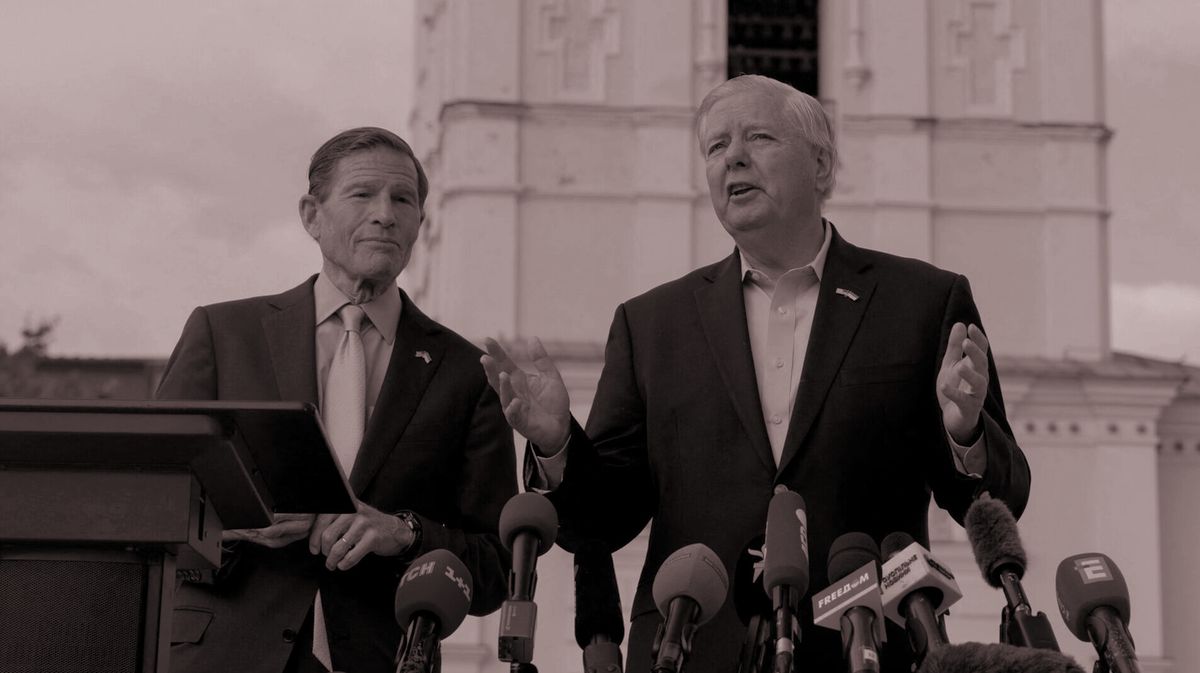
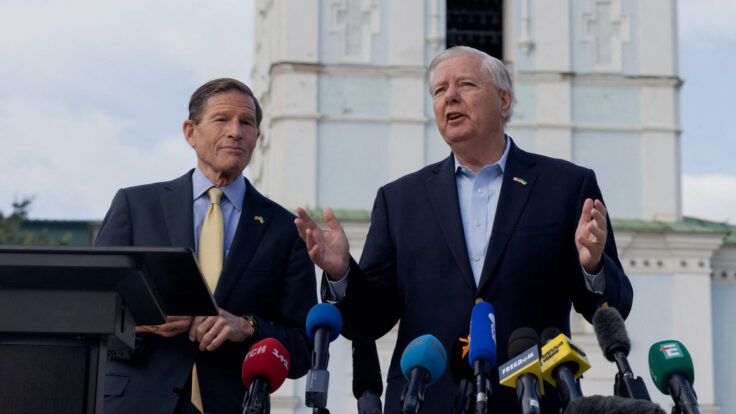
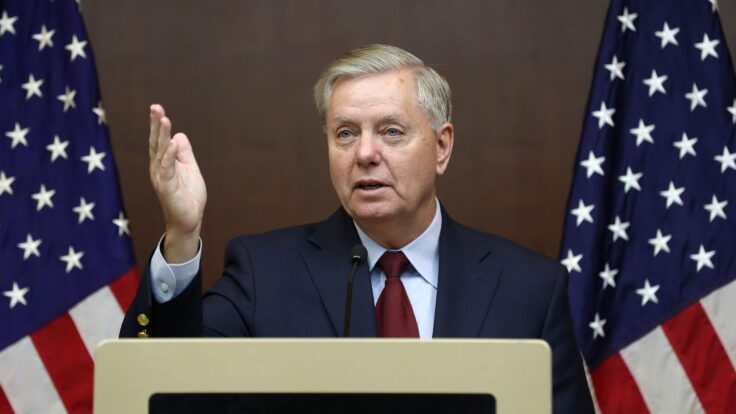
Last Friday, Sen. Lindsey Graham held a press conference in Kyiv and announced that, “as of
thirty minutes ago,” he and a bipartisan group of senators had reached a compromise with the Trump administration on Russian sanctions. For two years, he and Democratic Sen. Richard Blumenthal had been working on a bill that would ramp up
pressure on Russia by imposing massive tariffs on any country buying its energy. All along, Graham and Blumenthal had more than enough votes to pass the bill—the bipartisan legislation had a whopping 85 co-sponsors—but it never came up for a vote because the White House rejected it. The bill, the administration argued, would have hamstrung Trump’s ability to negotiate with Putin to bring his war against Ukraine to an end. Even some of the administration’s critics felt
the bill, in its original form, was unworkable.
But on July 10, after a warm meeting with Volodymyr Zelensky—whom Graham had previously called on to resign after his disastrous February 2025 Oval Office meeting—the South Carolina senator believed he’d found a way forward. Standing alone in front of some burned-out Russian tanks that had been hauled as trophies to Kyiv’s Independence Square, Graham announced that he and a bipartisan group of the Senate Foreign Relations Committee’s graybeards, including Jeanne Shaheen and Roger Wicker, had made a breakthrough. “When
I get back to Washington,” Graham said, “I’m going to go—with Senator Blumenthal—to the Republican and Democratic leader [of the Senate] to see if we can find time to move this Russian sanctions package that would give tools to President Trump to help end this war.” He was confident that they had found the right formula. “It’s going to become law,” he said. |
|
|
|
Stable jobs help build healthier
communities. That’s why UnitedHealth Group invests in job training programs for high-demand careers like medical coding across the country. So far, UnitedHealth Group has helped more than 300,000 people start or advance their careers, which means better health for them, and their communities. Learn more. |
|
|
|
Within hours of getting home, Graham was dead. The instant reaction of many in Washington’s foreign policy
community, where Graham loomed as a giant, was that this couldn’t have been an accident. The Russians, they thought, had to have poisoned him, precisely because of what he had just announced in Kyiv. Some began monitoring Russian state bot activity on social media for signals of any kind of Kremlin conspiracy. But the truth, it seemed, was more prosaic. Within a day, Graham’s family
released the preliminary forensic findings: The South Carolina senator had died of an aortic dissection. “It’s not paranoid conspiracy thinking, given Russia’s behavior,” one veteran Russia hand told me. “So it’s legitimate for the family to issue medical information.”
But others (myself included) were skeptical. “If the
Russians had tried to kill him, their track record would suggest he’d still be alive,” joked one Republican foreign policy insider, adding that a neighbor with a similar name would have turned up dead instead.
Trump, meanwhile, tried to capitalize on the outpouring of bipartisan shock at the death of one of his main Senate allies by declaring on Monday that there was one bill Graham would have most wanted Congress to pass: his crypto bill. It was an eyebrow-raiser, given the many exposés
about the Trump family raking in billions in crypto money—and because it had been so very clear, and recorded on camera for all the world to see, that Graham really just wanted more sanctions on Russia. |
The very next day, Blumenthal and his Senate Foreign Relations colleagues unveiled the newest version of
their bill. The Sanctioning Russia Act, according to a text the authors sent me, would impose mandatory sanctions on Russia’s military and political leadership, including Putin, the F.S.B., the S.V.R., the military’s general staff, and so on down the line. The same would apply for the biggest Russian financial institutions and even the country’s central bank. The bill would also go after the Russian shadow fleet and slap sanctions on large state L.N.G. projects, as well as future Arctic energy
projects, along with their controlling owners and executives. It also goes after the countries that help Russia evade sanctions and purchase the kind of dual-use technology it needs for its weapons systems. The goal, in the words of the bill’s authors, was “to deprive Vladimir Putin of the revenue financing Russia’s war against Ukraine.”
The key innovation in this version of the bill is its use of tariffs, rather than sanctions, to deal with the countries whose purchases of Russian oil
and gas have helped the country stay solvent through an expensive war. The legislation would give the president the authority to levy tariffs of up to 100 percent against the top five importers of Russian oil and gas. But because that group includes key U.S. allies—France, Japan, and Belgium still buy some gas from Moscow—the authors included an exception for countries that are buying less than 15 percent of Russia’s total oil or gas supply and are taking “significant steps” to wean themselves
off it. (The bill also provides for tariffs on the top five sanctions evaders, which include U.S. allies Turkey and the United Arab Emirates.)
This latest version of the bill is also more flexible than its previous iteration: The rankings would be reassessed every 180 days, and if a country falls out of the top five, the tariffs go away. Moreover, if a country is determined to be taking significant measures to reduce its purchases of Russian energy, it could also be exempt. The
combination of incentives would, proponents hope, effectively motivate countries like Hungary, which now has a new government, to take real steps to pivot away from Moscow and diversify their energy supplies. |
|
|
|
Predictably, not everyone is a fan of all these compromises, which would also empower Trump. The bill gives
the president considerable latitude to grant waivers, for example, which makes his critics uncomfortable. It also gives Trump the statutory authority to use his favorite geopolitical tool, tariffs—authority that the Supreme Court noted had been missing when it invalidated his Liberation Day blitzkrieg. Critics on the left, like Oregon’s Ron Wyden,
oppose the bill for this reason, warning that “it is extremely dangerous to give Trump massive new tariff powers,” which Wyden believes he is likely to abuse.
Cognizant of this, the bill requires Trump to certify to Congress that waiving any of these sanctions is “in the national interests of
the United States.” Moreover, proponents of this tariff-sanctions package argue, Trump is already violating all kinds of laws and norms, even without this bill. “I can’t quite see opposing the bill because maybe the Trump administration would abuse it,” said Daniel Fried, a retired ambassador who crafted the first set of Russia sanctions after Putin invaded Ukraine in 2014. “There’s no sanctions bill that’s perfect. The question is not whether it’s the best bill, but whether it
can work. And the answer is yes. And it’s your last goddamn chance.” |
Others see it as the best way to honor Graham’s last wish. “With Ukraine demonstrating remarkable resilience
and Russia facing mounting economic pressure, this is a critical opportunity,” said Shaheen, a Democrat, who is helping lead the charge to pass the bill in the Senate. “Senator Graham invested tremendous time and effort in building bipartisan support for this legislation, and advancing it would be a fitting way to honor his extensive work to bring this proposal to fruition.” A bill “to make those who enable Russia’s energy and defense sectors pay a heavy price would continue Senator Graham’s
work,” Sen. Jackie Rosen told me. “It would be a fitting tribute to pass the sanctions bill,” agreed Richard Fontaine, C.E.O. of the Center for a New American Security and someone who knew Graham well. “He was the top supporter of Ukraine in Congress. He’s always been atop the sanctions legislation. He pushed the president—seemingly effectively—on it, which is no easy task. He kept going to Ukraine, he kept advocating for Ukraine.”
Among Ukraine’s many
champions on the Hill, Graham stood out as someone who deeply understood how power was exercised in Washington, his friends recalled—and who used it with great effect, including on Kyiv’s behalf. Graham once spoke memorably about his quest, upon arriving on Capitol Hill, to uncover where the real decisions were being made. He quickly figured out
that the best way to have a say in foreign policy from the Senate was to chair not the Foreign Relations Committee, but SFOPS (State, Foreign Operations, and Related Programs)—the Appropriations subcommittee that funds the State Department, foreign aid, and things like the National Endowment for Democracy.
Graham understood that,
in the end, to have a real say on anything in the Trump era, one had to be seen as loyal to Trump. “Like L.B.J., Graham believed that it’s not the job of a politician to be an idealist and give nice speeches—it’s to get stuff done,” said the Republican foreign policy insider, who knew Graham well. “He thought, Hey, I ran for president and got one percent. Trump ran for president and won. This is where the Republican Party is.” If he wanted to help the causes he cared
about, he had to work within that reality, this person explained.
And Ukraine, as one of the main victims of Putin’s aggression, was a cause Graham cared deeply about for as long as he’d been in the Senate. “In a weird way, he may have had the sharpest power sense of the three amigos,” said the Republican foreign policy insider, referring to Graham and the late senators John McCain and Joe Lieberman. “He had a knack for figuring out where real power was
and then how to get it, because he wanted to use it.” |
That’s all from me this week, friends. I’ll see you back here next week. Until then, good night. Tomorrow
will be worse.
Julia |
|
|
|
Need help? Review our
FAQ page or contact us for assistance. For brand partnerships, email ads@puck.news.
You received this email because you signed up to receive emails from Puck, or as part of your Puck account associated with {{customer.email}}. To stop receiving this newsletter and/or manage all your email preferences, click here.
|
Puck is published by Heat Media LLC. 107 Greenwich St., New York, NY 10006 |
|
|
|
|