Hello, and welcome back to The Best & The Brightest. I’m Leigh Ann Caldwell, a
bit bleary-eyed after a delayed flight returned us to D.C. well after midnight. But we were the lucky ones: At O’Hare, the lines to rebook snaked all through the terminal after a snowstorm canceled and delayed hundreds of flights. At least air traffic controllers are getting paid again.
I’m not the only one back in D.C. In today’s issue, I’ve got fresh details on the congressional agenda for this three-week sprint to the next holiday recess, plus the latest in the Indiana redistricting
slog. For the main event, Abby Livingston previews tomorrow’s special election in Tennessee, which could signal how bad the environment really is (or isn’t) for Republicans. |
|
|
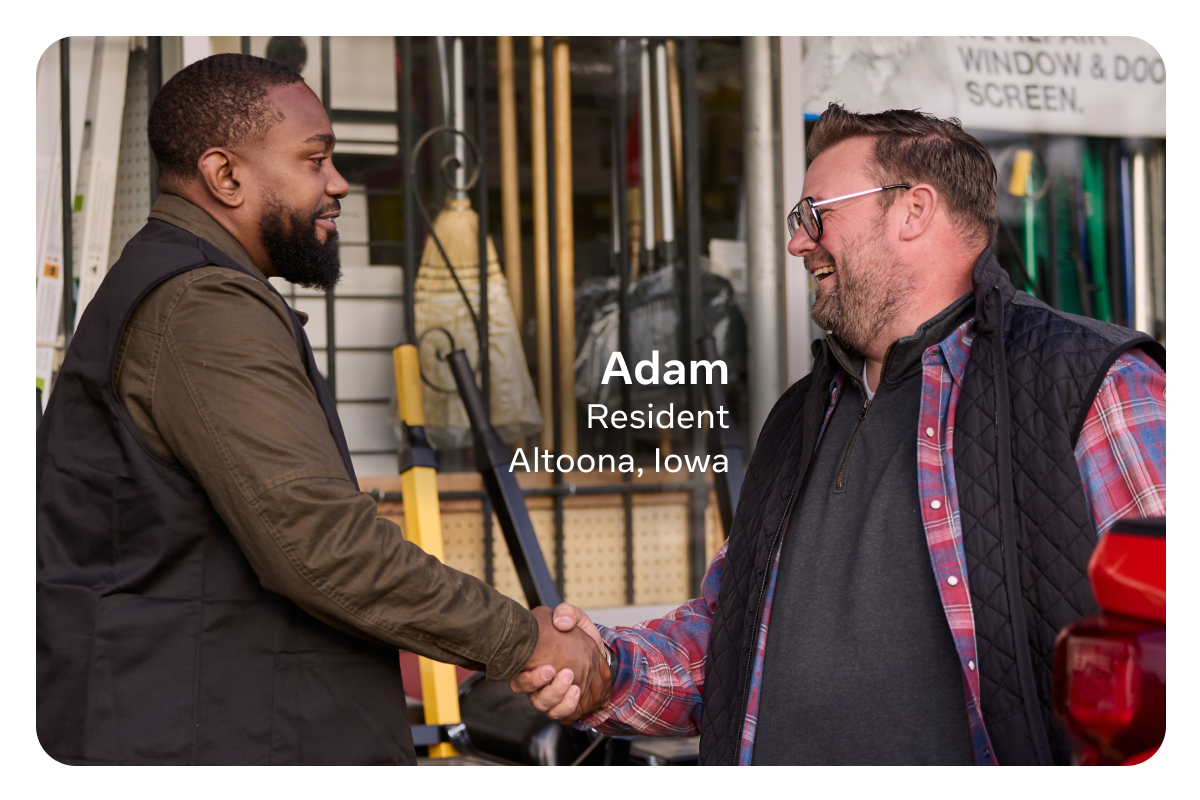
Meta is investing $600 billion in American infrastructure and jobs in communities across the country.
Adam, who grew up in Altoona, has seen the impact Meta's investment can bring. “Welcoming Meta into our community helped us create opportunities and start a new chapter for our next generation,” he says. Explore the impact in communities like Altoona. |
|
|
- Healthcare fail, part 983: Discussions between the White House and congressional leaders about reforming healthcare have been put on ice. Last month, Republicans had been discussing the possibility of new legislation being passed through the reconciliation process—“Reconciliation 2.0,” it was dubbed. But those lawmakers are now “back in their corners,” according to sources familiar with the situation, after the White House floated a proposal to extend Affordable Care Act subsidies
without conferring with anyone on the Hill. The decision not to get buy-in from congressional partners on such a delicate issue was amateurish, of course. But, as Republican aides told me, it also served as a potent reminder of how little this White House thinks about Congress at all.
The White House, which proposed a two-year extension of A.C.A. subsidies capped by income, didn’t just fail to build consensus. The administration also inadvertently derailed separate bipartisan Senate talks
for short-term insurance premium relief. Democrats walked away convinced that their G.O.P. counterparts would never coalesce around any Obamacare subsidy extension, even with Trump’s buy-in.
Next week, the Senate is expected to hold a vote on a Democratic bill to extend healthcare subsidies, which Democrats had insisted on in exchange for their votes to reopen the government. Absent a bipartisan deal, Democrats are expected to put forward a measure that makes no changes to the
current program, set to expire at the end of the year. The bill, which would require at least 13 Republican votes, will almost certainly not pass. Regardless, Democrats have the upper hand on messaging, policy, and politics, as Republicans prove once again that they either can’t or won’t legislate on healthcare. - Indiana takes a step toward redistricting: Today, under tremendous pressure to take up mid-decade redistricting, Indiana Republicans released
a proposal for a new congressional map that aims to eliminate the only two Democratic seats in the state by dividing Indianapolis into four districts. The state House is expected to take up the measure this week, and the Senate could do so next week.
But there’s a lot of uncertainty about what the Senate will actually do. Senate President Pro Tempore Rodric Bray had been adamant that there weren’t enough votes in his chamber to pass a new map, but reversed course last
week and said he would consider bringing one up. Among Hoosiers, there are a few schools of thought about Bray’s move. One Indiana Republican operative told me that some in his party want to just hold the vote and get it over with—thereby ending the political pressure from Trump, threats of violence, and swatting incidents that have accompanied the debate. Others think Bray won’t actually hold the vote, in order to protect his members from potentially getting crosswise with
Trump in public. Either way, it’s far from clear whether Indiana—which has been reluctant to redistrict—will pass these maps.
|
|
|
In the final hours of the Tennessee special election, the district Trump won by 22 points
has suddenly become ultra-competitive—a supermagnet for donors and a potential early warning system for a Democratic tsunami. |
|
|
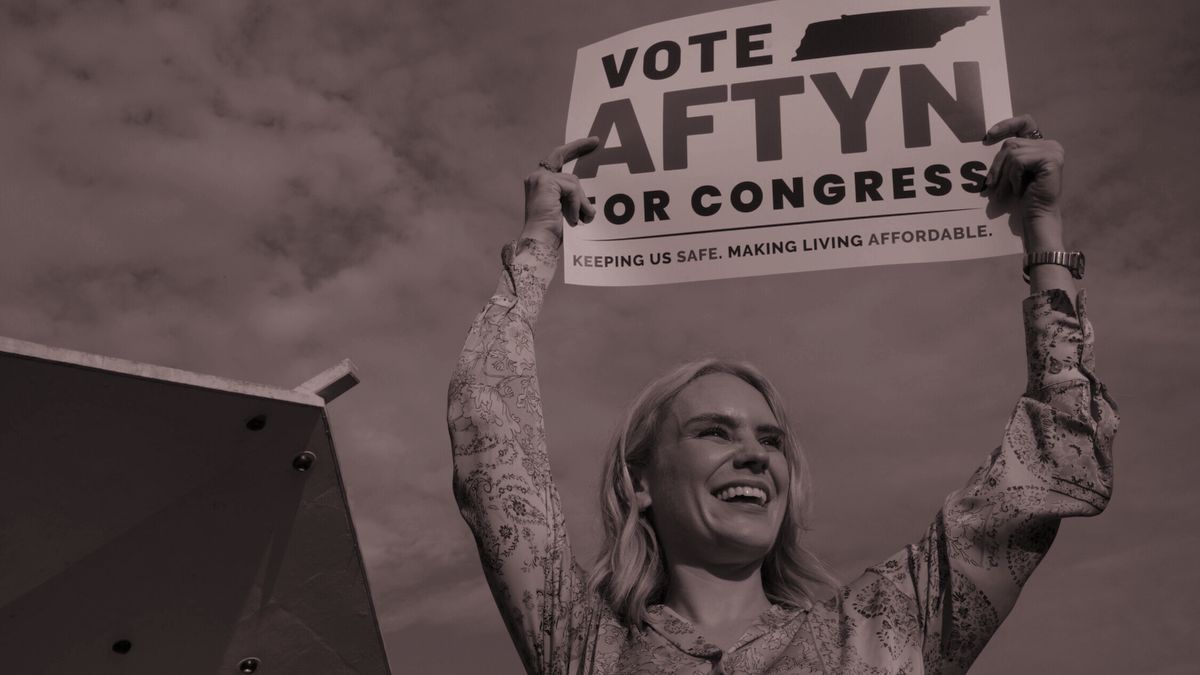
Washington is back from a long Thanksgiving recess, and all eyes are on central Tennessee, where tomorrow’s
special election could predict which party has the upper hand headed into the midterms. The state’s 7th district, encompassing parts of Nashville and stretching west, should be a safe Republican hold—Trump won it by 22 points last year, and its House seat has been in Republican hands since the 1980s. But Democrats massively overperformed 2024 benchmarks in last month’s elections, and the 7th could be in play. One recent poll found Democrat Aftyn Behn
and Republican Matt Van Epps in a statistical dead heat, and last week, Inside Elections moved the district into the “Leans Republican” column. Behn doesn’t even have to win—anything narrower than a double-digit loss for the Democrat would justifiably cause Republicans to panic.
The G.O.P. is duly worried about their already tiny House margin. According to Ad Impact, Republicans have spent $3.1 million on advertising in the race—an enormous sum for a supposedly safe
district—and no fewer than 43 Republican Senators and House members have donated to support Van Epps, a West Point grad and decorated helicopter pilot. Meanwhile, Democrats have plowed $2.3 million into advertising in TN-7, suggesting that the party believes Behn has a real shot. Both Hakeem Jeffries and Nancy Pelosi have written checks for her campaign. Perhaps most importantly, Behn has some serious consulting muscle behind her: Ian
Russell, a D.C.C.C. fixture, has been working on her campaign since July. |
|
|
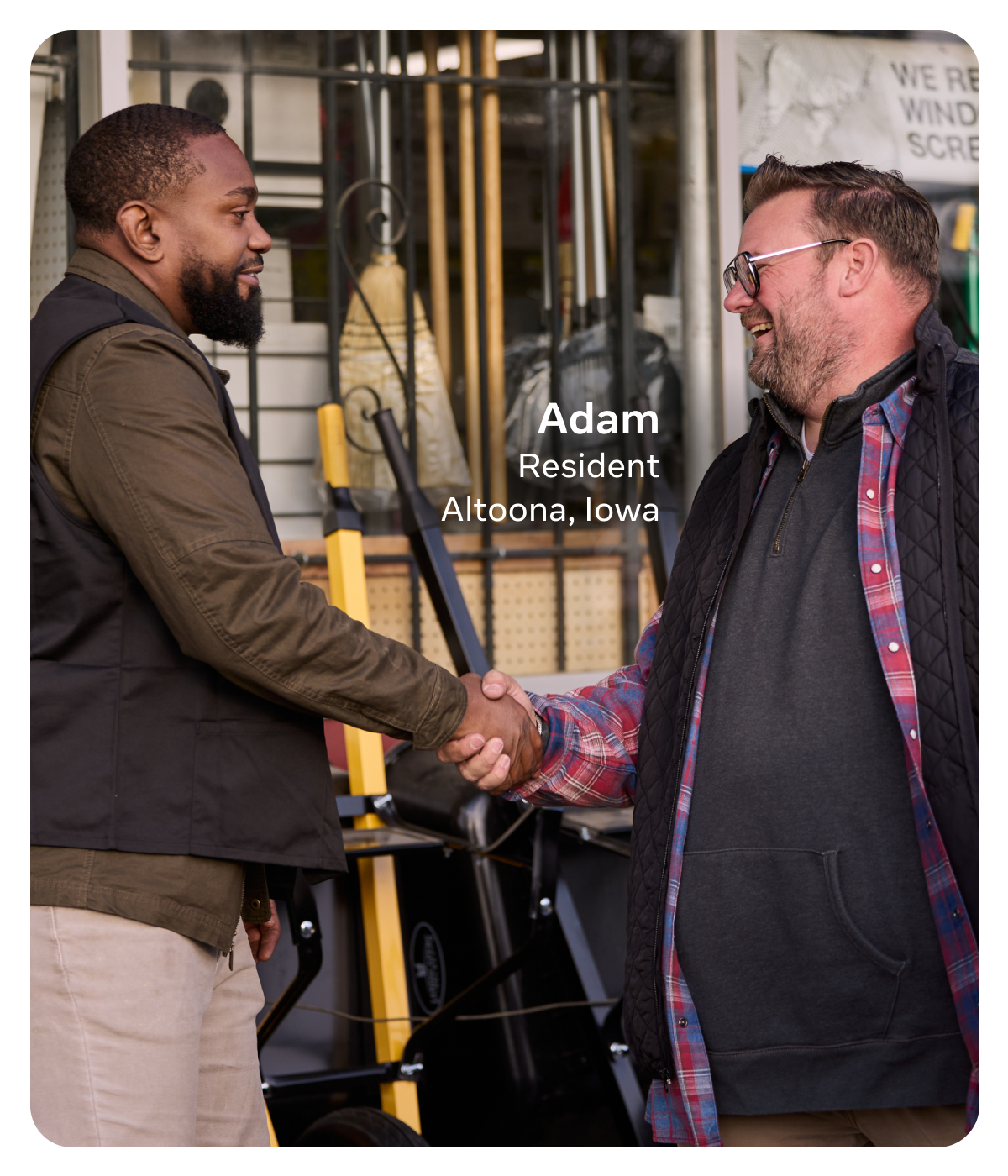
Meta's AI infrastructure is bringing jobs to local communities. Adam, who grew up in Altoona, has seen the impact Meta's investment can bring. “Welcoming Meta into our community helped us create opportunities and start a new chapter for our next generation,” he says. Explore the impact in communities like Altoona. |
|
|
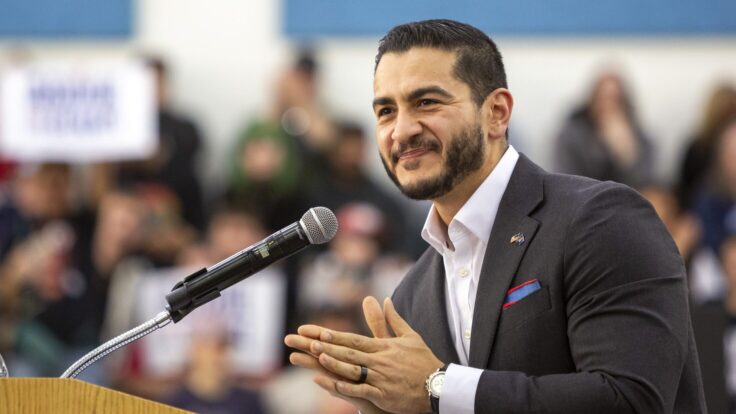
Of course, Behn is still a long shot, so I called up Russell to discuss the dynamics of tomorrow’s race. His
client has faced criticism that she’s too progressive for the district—she’s been called the “A.O.C. of the South” and previously endorsed defunding the police—and as a Millennial, her digital record has come back to bite her. (“I hate [Nashville],” she said in a 2020 podcast. “I hate the bachelorettes, I hate the pedal taverns, I hate country music.”) But Russell argued that this election is about mobilization more than persuasion, and he already sees it as a win for the
Democratic Party, regardless of the outcome. As always, this conversation has been edited and condensed for clarity. |
“A
Coalition of the Pissed Off”
|
Abby Livingston: The political world looked a little different back in
July, when you started working for Aftyn Behn. Trump’s Big, Beautiful Bill had just passed, and Republicans were taking victory laps. What made you think that a Trump +22 district was worth your time?
Ian Russell: The BBB was going to lead to a backlash because of what was in it, and we needed a candidate who could articulate that and rally voters to turn out in opposition. When Mark Green announced his
retirement, he said that he would stick around until the passage of the reconciliation bill, so that gave us the theme of the campaign from the beginning—that at a time when everything was becoming more expensive, Republicans had failed to lower costs. They were then going to turn around and cut taxes for billionaires while cutting healthcare for folks in Tennessee. Aftyn was the perfect candidate for that narrative.
There has been commentary that maybe she wasn’t the best
candidate in a general election, that a more moderate candidate in the mold of Mikie Sherrill, Abigail Spanberger, or Elissa Slotkin might have been better.
Mikie Sherrill and Abigail Spanberger did great jobs in their races. Marcy Kaptur, Jared Golden, and Marie Gluesenkamp Perez did great jobs in their races. This is about finding the candidate who’s best suited for the moment
from that community. What Aftyn is able to put together is a coalition of the pissed off—people who are not happy with what they’re getting out of Washington, frustrated with the direction that the country is going, frustrated primarily with what they’re seeing every time they go to the grocery store or look at their health insurance premiums.
You also need somebody with the energy and roots in the community. You can’t just parachute in a candidate that a political consultant built in the
lab and expect that person to excite the community where they’re running to get the turnout you need. The path to victory in a special election is far more focused on motivation and mobilization than it is on persuasion, because your biggest obstacle is actually the couch, not necessarily your opponent.
Behn does have the curse of the Millennial who was politically conscious in 2020. She went on a podcast and criticized the city of Nashville. She’s been in favor of Defund the
Police. How much is her record impairing the campaign?
I would argue that most folks in Nashville would agree with what she said. Most would agree that while they welcome tourists, and they love the fact that their city is a nationally known place for people to come, that some tourists behave in a way that is hard on the actual residents of the city. So I think even Republicans who live there would tell you privately they probably agree with those sentiments. |
Kamala,
Epstein & The A.C.A.
|
At what point in the campaign did you look up and say, this thing’s looking like it’s for
real?
We always had this theory of what it would take. We knew that for this to be real, we were going to need the right kind of national attention at the right time. And that didn’t start to come until the last couple of weeks. We were getting swamped on the airwaves, and [now] we’re almost at parity. I would have preferred, obviously, to have parity the entire time. |
|
|
National Republicans realized early on that they had a problem on their hands and had to scramble money to
Van Epps using coordinated spending. You know how significant that is, when the national party is going to use its dollars to prop up a candidate because of his lackluster fundraising. That showed us they saw that it was real, and that helped our base and our national supporters see that the race was real, so it all clicked into place right on time.
Kamala Harris came to the district and campaigned. Does she help nationalize this race? Is that a good thing?
We’re
trying to win a special election in a deeply Republican district in a place where Harris lost heavily to Donald Trump last year. The campaign has been grateful for any help to remind voters of the importance of turning out on the Tuesday after Thanksgiving, when nobody is thinking about voting.
Your campaign has mentioned Jeffrey Epstein in ads. Has that worked for Behn? And do you think we’ll continue to see the Epstein scandal resonate through the
midterms?
I don’t know if it’ll be on TV in the midterms—this may be the one and only race that uses the Epstein files on television. We’ll see. The Trump administration is going to drag its feet and obfuscate and do everything they can to fight the full release of the Epstein files, even though Congress has now called for that. So this very well could reach on.
But here’s how the Epstein files played. There were two 80/20 issues in our polling in this
district: continuing the A.C.A. subsidies, and releasing the Epstein files. So our challenge was to figure out how to tie these two issues together, but as we sat down and talked about it with Aftyn, the answer was actually quite simple: The Epstein files are an example of the wealthy and powerful getting treated differently than everyday people. The message that it’s sent to everyday Americans is: There is a club and you’re not in it. And whether it’s protecting perpetrators from accountability
or providing tax cuts for billionaires and big corporations, [that’s] a legacy of this administration. Aftyn’s been campaigning on behalf of the folks who are not in that club.
How did you know your opponents were getting nervous?
A special election in an R district is, to some degree, a small power trying to bring a larger power into a war. In order for us to get within range of victory, we needed to lay the groundwork to bring greater power into the conflict.
That certainly happened. We also awakened the other side. The national Republican organizations came in first. I don’t know what they’re seeing in their data—they haven’t released any polling—but they’re behaving as though they’re seeing the same thing in their polling that we’ve seen in ours.
You have J.D. Vance making a visit to the district, coincidentally to celebrate early Thanksgiving with troops on the base in Clarksville. You’ve got Trump tweeting about this race.
You’ve got the right-wing ecosystem going into overdrive. It feels like Aftyn’s face is on Fox News every 10 minutes.
In other words, they are behaving as though this race is what the polling showed it to be, which is very close. And I think that’s already a win for national Democrats as we seek to take back the majority next year. What a damning indictment of this administration’s failures to bring down costs for the American people, to even see a district like this in play.
|
|
|
Join Emmy Award-winning journalist Peter Hamby, along with the team of expert journalists at Puck, as they let you in on the
conversations insiders are having across the four corners of power in America: Wall Street, Washington, Silicon Valley, and Hollywood. Presented in partnership with Audacy, new episodes publish daily, Monday through Friday. |
|
|
Unique and privileged insight into the private conversations taking place inside boardrooms and corner offices up and down Wall
Street, relayed by best-selling author, journalist, and former M&A senior banker William D. Cohan. |
|
|
Need help? Review our
FAQ page or contact us for assistance. For brand partnerships, email ads@puck.news.
You received this email because you signed up to receive emails from Puck, or as part of your Puck account associated with {{customer.email}}. To stop receiving this newsletter and/or manage all your email preferences, click here.
|
Puck is published by Heat Media LLC. 107 Greenwich St., New York, NY 10006 |
|
|
|