 |
 |
|
Welcome back to The Washington Mall, my newish twice-weekly private email covering all the latest developments and intrigues in this town: atop Capitol Hill, in the West Wing, among D.C. media, and on K Street.
Speaking of which… for today’s edition, I sat down with my Puck partner Eriq Gardner to discuss the pre-midterms plot lines we expect to drive major political developments in the new Congress: Biden’s looming cabinet shakeup; McCarthy’s plans for the Speakership, a growing Senate staffer exodus; the latest political migrations on K Street; Wall Street’s debt ceiling fears; and a potential Buttigieg presidential run.
Mentioned in this email: Will Dunham, Jeff Miller, Scott Stanzel, Liz Truss, Tony Fratto, Gina Raimondo, Brian Ballard, George Gascón, Ron Klain, Amy Klobuchar, Gigi Sohn, and many many more…
But first…
|
|
More Trump ’24 Tea Leaves
|
|
|
I guess Tiffany Trump isn’t the least favorite Trump child after all. A source close to Donald Trump says that the former president is factoring his daughter’s upcoming nuptials into his thinking about when he will announce his candidacy. Over the summer, aides suggested that he announce the day after the midterms to get ahead of the competition and clear the field. But this strategy always presented risks: Obviously, if it’s not a great night for Republicans, or they fall short of red-tidal-wave expectations, Trump will look presumptuous, or foolish, or worse. I am also hearing that Trump wouldn’t want his big news to be eclipsed or muddied by the uncertainty of the immediate post-election period. If recent history is any indication, it will be at least a few days before all the races are called, and maybe longer if there are recounts.
So it’s fair to say that any plans to announce the day after November 8 have been ditched, and that Trump is now planning not to make any announcement until after his daughter’s wedding on Friday, November 11, at Mar-a-Lago, which is expected to be a multi-day affair. As for where he makes the announcement, I’m told Trump has rattled off the names of several swing states where he could build a rally around the occasion.
|
|
|
|
|
| Eriq Gardner: We’re just a few days away from the midterms, which in some ways seems like it’s become a referendum on Jerome Powell’s tenure as Fed Chair. Sure, Republicans are hammering Democrats on crime, but it’s inflation and the economy that is really moving the political needle these days. The Dobbs decision feels like it occurred in a different era. Then again, I’m old enough to remember that Kansas election a couple months ago. Yeah, I’ve seen the polls, but is there any hidden indicator that expresses what insiders really expect?
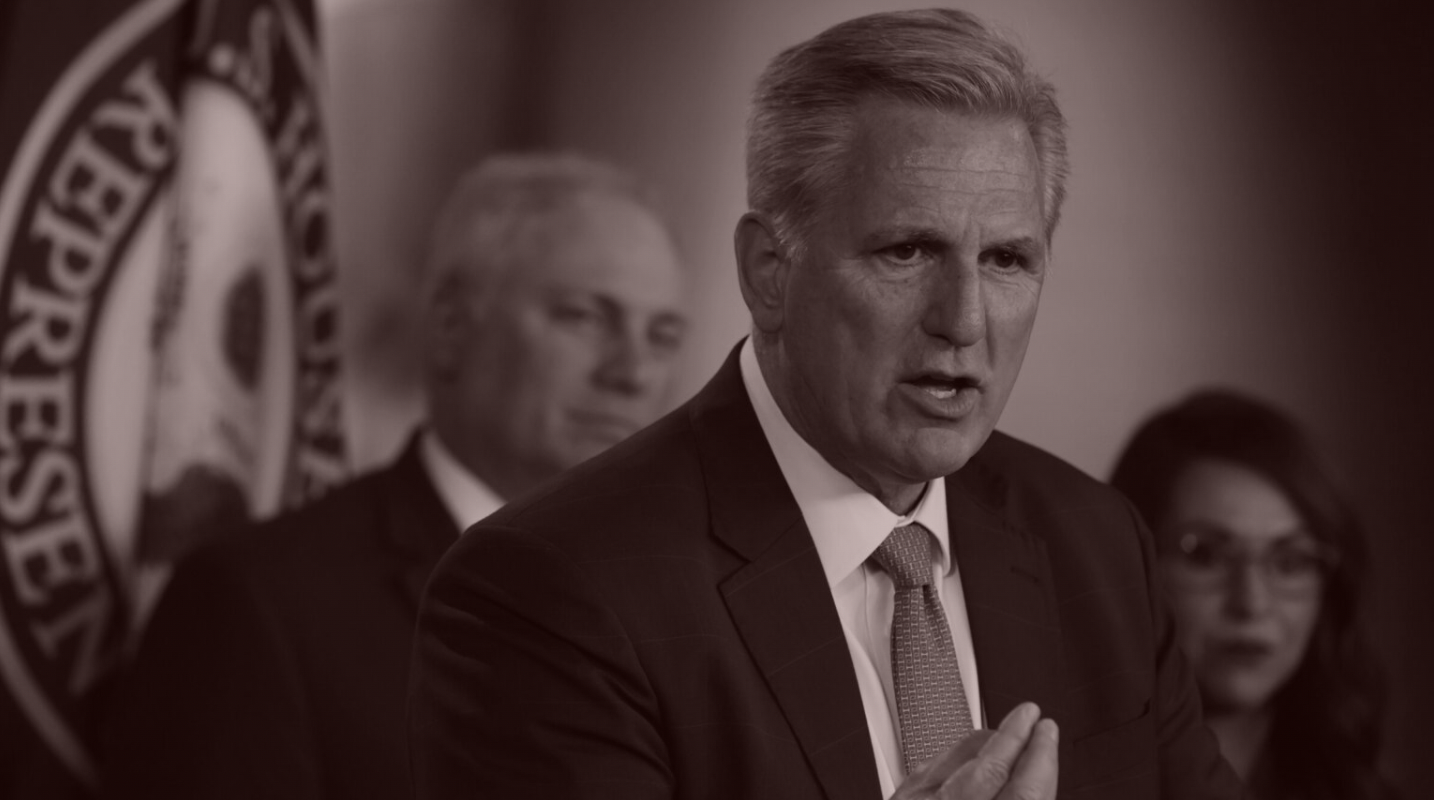
Tara Palmeri: Well, you’re seeing Kevin McCarthy staffers and allies being actively recruited by K Street firms, which suggests to me that the corporate world expects that the Republicans will retake the House. Will Dunham, McCarthy’s former chief of staff, recently headed to powerhouse firm Brownstein Hyatt Farber Schreck. And McCarthy’s close friend, Jeff Miller of Miller Strategies, appears back in high demand. These seem like strong leading indicators, and I would happen to agree, since there’s been no obvious rebellion or alternative to McCarthy at this point. The question is how long he will hold onto the gavel, given his factious conference.
Interestingly, I’ve also noticed that a lot of former George W. Bush aides are being snapped up for top corporate roles: Bush’s former deputy press secretary Scott Stanzel was recently named head of communications at Truist. Tony Fratto, another former Bush deputy press secretary who became the managing partner of Hamilton Place Strategies, was just hired as a partner and global head of corporate communications at Goldman Sachs. Sean McCormack, the former Bush administration spokesperson at the State Department, was named head of comms at Chevron. And so on. This all suggests that the Fortune 500 anticipates Republicans are about to take over Congress.
It’s notable that these roles are going to the old Bush guard rather than former Donald Trump aides. Of course, there’s still plenty of jobs out there for the Trump era set: Lobbyist Brian Ballard’s firm raked in $71 million during Trump’s term by offering to help major clients navigate MAGA world. But for the most part, those in Trump’s orbit have taken on roles as consultants rather than spokespeople or executives. Perhaps that’s because it’s easier for corporate partners to cut them loose when they don’t need them anymore, even if it means overpaying. Establishment Republicans are privately quite proud of this development. Of course, they prefer their own in charge.
This changing of the guard isn’t just in preparation for 2022. After all, nobody really knows if Republicans will decisively win the Senate, which is looking like a toss-up. But the Senate map is even better for Republicans in 2024, when Democrats will have to defend 23 Senate seats and there are a bunch of vulnerable Blue Dog Dems up for reelection, like Jon Tester in Montana, and Joe Manchin in West Virginia, and Kyrsten Sinema in Arizona. And, of course, it’s probably better than even odds that a Republican takes the White House in ’24, which means that the party wants to start laying the groundwork now.
But again, it’s hard to say how things will shake out. We’re all still prepared to be surprised after 2016. About six months ago, I began to see a lot of job openings for Democratic Senate staff jobs, especially committee staffers, which indicated to me that at least some of these aides were making the bet that Republicans would retake the Senate, and they were getting ahead of a job search. That began to look a little premature after the Dobbs decision in June, which has clearly made Democrats more competitive in key battleground states like Pennsylvania, Wisconsin, Arizona and New Hampshire, where candidates are within a margin of error in some polls. But as you noted, Dobbs already feels like a lifetime ago, and the G.O.P. has been hammering a potent message on inflation and crime. There’s a feeling, promulgated by candidates and message-makers on the right, that America is just more dangerous.
Eriq: I hear you on crime. In fact, if I had to pick one area where the political discourse is showing up in courts, it’s that very subject. A few years ago, we had nationwide protests about racial inequality in the justice system that led local Democratic district attorneys to enact more progressive—and now increasingly unpopular—reforms. For instance, in Los Angeles, D.A. George Gascón ordered prosecutors not to seek enhanced prison sentences for priors or for being associated with a gang.
Naturally, that’s become a hot-button issue this year. I hear lots of talk that Democrats aren’t serious on crime, but it’s not just campaign talk. We’re now seeing challenges to prosecutors exercising their discretion. Gascón, himself, has faced legal objections to what he did. Similarly, you can look at what’s happening this week in Pennsylvania, where Republicans in the state House are attempting to impeach Larry Krasner, the progressive D.A. in Philly, for not being aggressive enough in pursuing criminal activity. Interestingly, though not surprisingly, Republicans are also attempting to tie Krasner to John Fetterman, whose Senate race with Mehmet Oz has obviously become one of the most important in the nation, and could ultimately decide who takes the Senate. |
| A MESSAGE FROM OUR SPONSOR |
 |
| What if cow waste could help fuel the truck delivering your orders? At Chevron, we’re exploring ways to do just that. Collaborating with Calbio Biogas, we’re converting the methane from the waste equivalent of nearly 80,000 dairy cows into renewable natural gas (RNG) that, one day, can fuel trucks across the nation. A 1,000-pound dairy cow produces an average of 80 pounds of manure each day. RNG like this could help reduce yearly emissions of animal manure by 258 million tons. We’re continuing to expand our RNG capabilities, and are ahead of our plans to grow production 10x by 2025. Because we believe the future of energy is lower carbon, and we’re looking high and low—even to the manure from dairy cows—to help us get there. |
|
|
|
Benghazi Redux & Debt Ceiling Armageddon
|
|
| Eriq: When it comes to inflation—increasingly the key issue undergirding the midterms—Republicans seem to be ready to blame Democrats and the White House. But is that fair? And do they have any better solutions?
Tara: The White House is facing seismic global forces when dealing with inflation, and I’m not sure that either party has the right answer or quick fix to deal with this complicated issue. But the Biden administration misstepped by trying to downplay the recession and inflation. Last year, Biden called it a temporary issue; chief of staff Ron Klain tweeted that these were “high class problems.” That posture angered Americans and made them think that the White House wasn’t taking their economic woes seriously.
The White House has subsequently turned that messaging around, and is confronting the issue head-on, but those sorts of comments linger when Republicans are clipping them for campaign ads. It’s not entirely logical that voters say they trust Republicans to be more sensible stewards of the economy, when so much of the runaway spending over the past several years occurred under Trump, too. I’m also not convinced that their plans to attack inflation—cutting spending, presumably—wouldn’t backfire politically, if they were actually bold enough to see them through.
Republicans keep talking about tax cuts (see how well that worked for Liz Truss!) and stopping excessive government spending, balancing the budget, and so on. But some economists doubt that pulling these levers will lower the costs of goods in the short term, and some even say it could actually raise costs by pumping more money into the economy. And they won’t be able to get it done with Biden in office, anyway, because he ultimately has to sign off on any legislation. Sure, if the bills are especially popular, they could apply pressure on Biden to enact some Republican-inflected bipartisan legislation. Who knows—as Newt Gingrich remarked when I interviewed him last week, it’s worked before.
More likely, of course, is that Republicans will use their new power in Congress to launch scorched-earth campaigns at the White House. There are members of the right flank of the party who want to destroy his presidency at every turn, investigate his son, possibly impeach him and his cabinet secretaries, and are already talking about shutting down the government and refusing to raise the debt ceiling in 2023. The debt ceiling negotiations, in particular, could become a nightmare scenario, both for Americans and for the Republican Party, if they’re blamed for the ensuing economic carnage. Markets are already on edge—again, just look at how quickly things changed for Truss when bondholders lost faith in the U.K.
Naturally if Republicans are seen as a destructive party during an economic recession, it might be harder for them to win back the House or the White House in 2024. That’s one of the reasons I think McCarthy will try to take a page from John Boehner’s book and keep his caucus focused on various Benghazi-like investigations to tar Biden and his allies without actually torching the apple cart. But I’m curious, Eriq, what sort of Congressional investigations are Silicon Valley, Hollywood, and Wall Street worried about?
Eriq: Well, clearly, Big Tech has the most reason to lose sleep. We’ve certainly seen Republican leaders pound the table these past few years about supposed censorship online. I wouldn’t be surprised to see some hearings on the supposed scourge of shadowbanning, maybe even with Elon Musk as a star witness.
Actually, I’ve been a bit obsessed this past year with the fate of Amy Klobuchar’s antitrust package, which aims to crack down on the power of Big Tech. I’d love your thoughts on what might happen in Congress during this coming lame duck session. Does that stand a chance? How about codifying same-sex marriage rights? Or suspending the debt limit? What’s the priority for Democrats before the G.O.P. likely takes over?
Tara: I think there’s a real possibility that they could codify same-sex marriage, since the Senate overturned “Don’t Ask, Don’t Tell” in December 2010 during a lame-duck session after Obama’s first midterm shellacking. I don’t think Sinema or Tammy Duckworth would have shelved the bill if they didn’t think there was the political will to pass it among Republicans, with whom Sinema has worked hard to build alliances. On the debt limit, I’ve heard from very conservative Republicans, including allies of McCarthy, that they’d rather get that sorted out during the lame duck than have it become his first agenda item, potentially setting the new Republican leader up for a catastrophic fight that could send the economy into a tailspin and jeopardize his credibility. Republicans will obviously have some demands for passing it, but it takes the pressure off of McCarthy when he takes the gavel. I just wonder if there’s enough time before the next Congress to pull it off. |
|
|
|
Senate Tail Risks & Buttigieg’s Choice
|
|
| Eriq: Republicans capturing the House basically means that Biden’s legislative agenda is dead. Republicans taking back the Senate means… something different. Crucially, of course, it’ll determine whether Chuck Schumer gets to confirm any more federal judges. But I think it’s more than that.
The Biden administration actually achieved quite a bit legislatively during these past two years, and the next two will be spent interpreting what was passed and enacting regulations on issues ranging from healthcare to climate change. No doubt that will trigger inevitable legal challenges from conservatives and corporations who’ll say these agencies have overstepped their authority. There are certain issues pertaining to legislative delegation, in particular, that are practically guaranteed to be heard soon by the Supreme Court. It’ll be much easier for Democrats to respond if they control the Senate.
But that’s not all. I think whoever controls the Senate will have an impact on stuff that is really out of mind. Let me give one example: The F.C.C. is currently split between two Democrats and two Republicans with Biden’s nomination of Gigi Sohn as the fifth commissioner—the tie-breaker—still awaiting a confirmation vote. She’s too much of an activist to get confirmed if McConnell is in charge; indeed, she can’t even get confirmed in a 50-50 Senate, the upper chamber’s present composition. So we’re in a bit of a holding pattern to see what happens next week. If the Dems add a seat or two, maybe Biden gives her a new push. If not, I think her name gets withdrawn swiftly. I find it funny that voters in Georgia, Nevada, and Pennsylvania are unconsciously voting on whether we’ll see net neutrality or perhaps whether CBS and NBC can merge without violating F.C.C. rules, but there you go.
Also, come to think of it, I guess the fate of the Senate will determine whether Cabinet members are free to land cushy private sector jobs or must stick in their seats because replacements can’t get confirmed. We know Janet Yellen is probably leaving, though she denies it. Have you heard about anyone else who’d like to leave?
Tara: I don’t have specifics, but the two-year turnover is pretty standard in any administration unless a political appointee is taken out even earlier by scandal. I don’t think the outcome of the election will have that much impact on whether Senate-confirmed appointees stay in place or look for more lucrative jobs while Biden is still in power and they can cash out on their access and inside knowledge. What I do think will happen, however, is that you’ll see a lot more “acting” secretaries and appointees if Republicans take back the Senate.
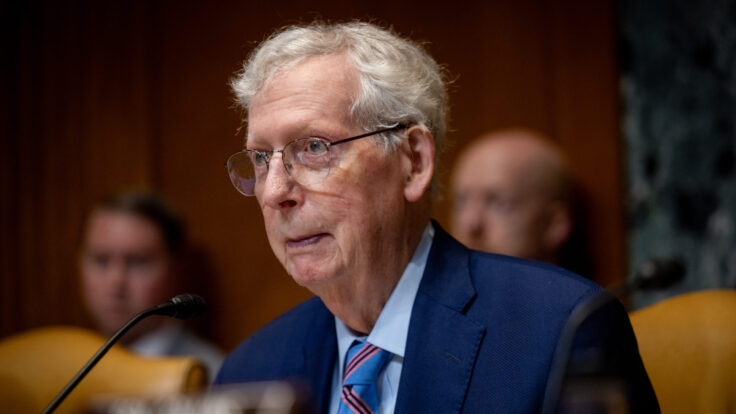
These officials are obviously neutered—as “actings” they don’t have the same backing from the president or sway with Congress. But that was how the Trump administration got by for a big portion of his presidency (if only because some candidates were so unqualified that even Republicans wouldn’t confirm them with McConnell in leadership). If Republicans take the Senate, I expect Biden will have to rely on his relationship with McConnell if he plans to submit more appointments, but we’ll see how friendly they are by March or April when the Biden cabinet exodus is likely to happen. With Ted Cruz as chair of the Commerce committee, do you really think he’ll confirm a new Commerce secretary, if Gina Raimondo moves over to Treasury?
Eriq: Speaking of the Biden cabinet: I’m not going to be the millionth person who asks you whether the president will run for re-election. Instead… um, how soon does Pete Buttigieg have to resign as Transportation Secretary to run for higher office?
Tara: I think it would be seen as a huge betrayal if Buttigieg resigns to start forming his own campaign before Biden makes his decision. Far more likely is that Biden first announces either that he is running—which means that Buttigieg will not primary him and he has to wait another six years—or Biden announces that he’s not running, in which case Buttigieg has to navigate a few potentially sticky situations.
The first will be if Biden endorses Kamala Harris to be his successor, which I’ve heard he’s inclined to do. This could always change—if there’s one thing we know about Biden, it’s that he’s susceptible to arm-twisting for the good of the party. Endorsing Harris will have little impact on other candidates like J.B. Pritzker, Amy Klobuchar, Phil Murphy and Gavin Newsom, because they are not members of Biden’s cabinet. But for Buttigieg it’s different—Biden allowed him to be one of the most visible members of the cabinet, especially as a Transportation secretary. He also allowed Buttigieg to promote, and in a sense own, the popular infrastructure bill. So Buttigieg would absolutely have to resign first, and take a cooling off period from the Biden administration, if he was going to challenge Harris. This might put him behind others, who will come out at the gate ready to take on Harris.
Indeed, I can imagine that it would be torture for Buttigieg to sit on the sidelines just because he was a member of Biden’s cabinet, and because Biden endorsed another candidate. Let’s not forget that Buttigieg won Iowa and came a close second in New Hampshire—could he really stand by and wait his turn? But I suspect he would definitely need a cooling off period to avoid alienating potential allies within the party or appearing disloyal. It might also be good for Buttigieg to have some distance from Biden’s increasingly unpopular administration, even if he’s associated with one of its most popular accomplishments. |
|
|
|
| FOUR STORIES WE'RE TALKING ABOUT |
 |
|
 |
|
 |
| The Fall of Ye |
| Some thoughts on the artist formerly known as Kanye West. |
| BARATUNDE THURSTON |
|
 |
| Licht’s Gut Punch |
| CNN staffers are in a panic over forthcoming layoffs and waiting for the next shoe to drop. |
| DYLAN BYERS |
|
|
|

|

|
|
|
|
Need help? Review our FAQs page or contact us for assistance. For brand partnerships, email ads@puck.news.
|
|
|
|
Puck is published by Heat Media LLC. 227 W 17th St New York, NY 10011.
|
|
|
|