{{ 'now' | timezone: 'America/New_York' | date: '%b %d, %Y' }} |
|
|
|
Hello, and welcome to The Best & The Brightest. I’m Leigh Ann
Caldwell.
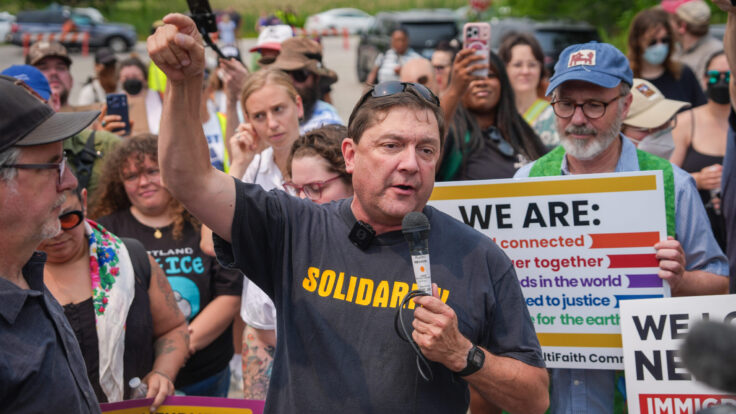
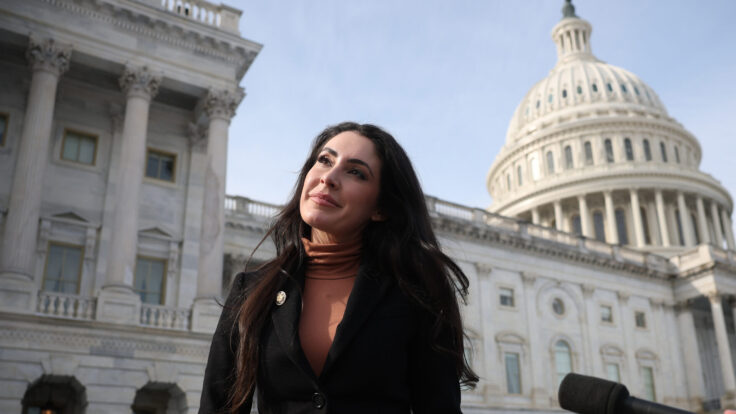
Yesterday, I sat down for a Guinness—the full extent of my St. Patrick’s Day celebration—with Rebecca Cooke, who’s running to unseat G.O.P. Rep. Derrick Van Orden from his swingy district in western Wisconsin. This is Cooke’s third time running, although this time with the backing of the Democratic Party, no nasty primary race, and a much better political environment than when she narrowly lost to Van Orden in 2024. But she’s
still waiting tables three nights a week.
Tonight, an inside look at Markwayne Mullin, who was grilled by his fellow senators today during his confirmation hearing to replace Kristi Noem as D.H.S. secretary. Plus, my colleague Dylan Byers has an update on Politico co-founder Robert Allbritton’s next act in Washington—and why he’s seizing the moment to take a shot at the Post.
Also mentioned in this
issue: Stephen Miller, Juliana Stratton, Melissa Bean, Gary Peters, Ron Johnson, Kevin McCarthy, Laura Fine, Tulsi Gabbard, Sean O’Brien, JB Pritzker, Raja Krishnamoorthi, Bernie Sanders, Rand Paul, Scott Bessent, Al Green, Ted
Cruz, Trump, Donna Miller, and more… |
- Following
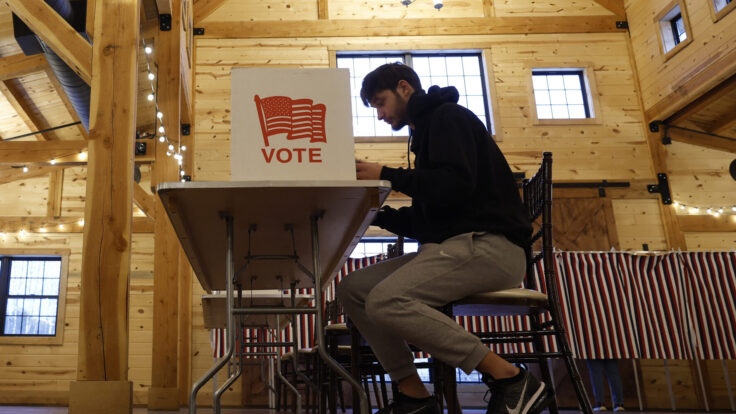
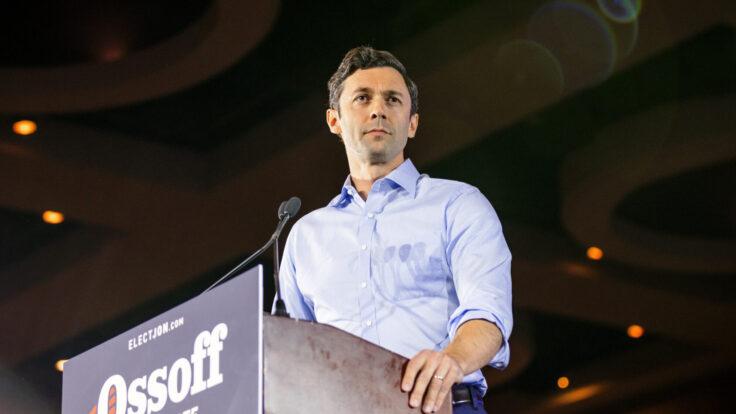
the money in Illinois: Democratic strategists say they will be closely studying the results of last night’s Democratic primaries in Illinois, where increasingly heavy spending by outside political groups is reshaping contests in safe districts. AIPAC, crypto interests, and A.I.-aligned groups all played major roles in several competitive House primaries, and especially in the hotly contested race for the state’s open Senate seat, which Lt. Gov. Juliana Stratton won with
millions of dollars in backing from billionaire Gov. JB Pritzker. One Illinois strategist described the outcomes as a “mixed bag,” but told me they noted a clear pattern: Candidates with significant outside spending generally prevailed.
The results, however, were not uniform. In Illinois’ 9th district, AIPAC-backed candidate Laura Fine lost, while in the 2nd district, Donna Miller, who was also backed by AIPAC, won. Stratton prevailed
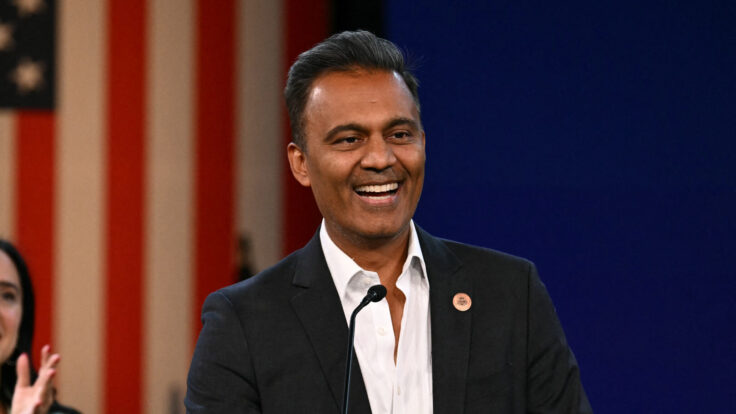
over Rep. Raja Krishnamoorthi, who had support from crypto interests. Meanwhile, moderate Democrat Melissa Bean succeeded in Illinois’ 8th district with backing from three groups—the clearest example of the power of aligned outside spending.
|
|
|
|
A MESSAGE FROM OUR SPONSOR |
Across the country, harmful corporate insurer practices are driving up costs and delaying care for patients and
families. Prior authorization requirements, AI-driven coverage denials, and excessive red tape shift medical decisions away from doctors and into corporate offices. These barriers can postpone critical treatment, increase out-of-pocket costs, and add stress during already difficult moments. Hospitals are focused on delivering timely, appropriate care, but insurer interference too often stands in the way. It’s time to
prioritize patients over paperwork and ensure access to affordable, reliable healthcare. Learn more about how these practices are impacting care and what can be done. |
|
|
|

| Dylan Byers
|
|
- Allbritton’s next
act: This week, Robert Allbritton, the boyishly ebullient Washington media heir and former proprietor of Politico, revealed a plan to aggressively increase his investment in NOTUS, the fledgling political news startup that he launched two years ago from inside his 501(c)(3), the Allbritton Journalism Institute. The plan includes doubling NOTUS’s 50-person staff this year, starting with three reporters he poached this week from The Washington
Post—which, as you know, has been going through some considerable shit. Taking on a floundering Post was the animating insight of Politico, of course. Now Robert is at it again.
In an interview with The Guardian, Robert said he’d been inspired to accelerate NOTUS’s growth plan because of the Post’s recent layoffs and rolling identity crisis. “Opportunity
knocks, and you’re going to decide if you’re going to answer the door or not,” he said. “We don’t want to be The Washington Post, but I think there’s a place for the journalism of the Post and the mission of the Post without a lot of the legacy expenses that were necessary when [that] organization was a print-based organization.” (Robert, who has been talking to press, did not respond to my requests for interviews.)
Rumors of Robert’s new
investment had been percolating for weeks on the D.C. social circuit, where better gossip can be hard to come by. Semafor’s Max Tani recently reported that Robert had applied to trademark “The Washington Sun,” which portends a merciful rebrand—NOTUS, which is pronounced “notice,” stands for “News of the United States” (sigh)—and suggested his desire to rekindle the sort of newspaper war that his father, the proprietor of The Washington Star (as well as WJLA-TV
and News Channel 8) once attempted to engage in with Kay Graham.
Wishful thinking, alas, but amid the Post’s contraction and the general ennui of the D.C. news industry, the prospect of any media proprietor telegraphing ambition and doling out checks inspired considerable interest. At a recent party in Kalorama, a group of beat reporters asked one another whether anyone knew what Robert might be paying. (I’m told some reporters are fetching north of
$300,000 a year.) Meanwhile, Washington’s executive establishment focused on Robert’s motivations: What was the thesis? What was the endgame? Why was he investing in another media outfit? And who would be his Jim VandeHei—the visionary and hustler who was going to operate this thing and put his family’s money to work?
[Read the full
story here]
|
|
|
|
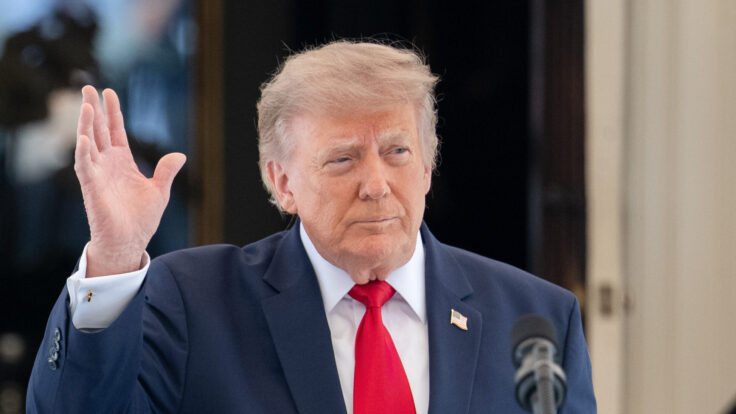
A combative, law-and-order Trump loyalist with a steep learning curve on policy, Markwayne
Mullin has leveraged his relationship with the president to rise from Oklahoma backbencher to Kristi Noem’s likely successor as secretary of Homeland Security. |
|
|
|
During the week of President Donald Trump’s first inauguration, Markwayne
Mullin, then a young congressman from Oklahoma, attended a standing-room-only event in Washington with tribal leaders and advocates. Trump had been hostile to Native American gaming since the 1980s, and the tribes were worried about how the newly elected president was going to treat the industry. Mullin, a member of the Cherokee Nation, promised to be the guy to build their relationship with Trump. He had a direct line to the president, after all.
Mullin ultimately
proved disappointing on that front, according to one lobbyist. Another person in the industry said that there weren’t any major gaming issues over the past decade anyway, at least until the recent rise of “prediction markets,” which Mullin apparently doesn’t see as a problem. But Mullin did have an inside track with Trump, whom he relentlessly defended both before and after his 2020 election loss. In 2022, the former five-term House member ascended to the Senate with Trump’s
endorsement. |
|
|
|
A MESSAGE FROM OUR SPONSOR |
Harmful corporate insurer practices are increasing healthcare costs and creating unnecessary barriers to care. Prior authorization delays,
coverage denials, and excessive administrative requirements slow treatment and drive-up expenses for patients and families. Reform is needed to ensure medical decisions are guided by doctors, not corporate red tape. Learn why curbing these practices is essential to lowering costs and protecting timely access to care. |
|
|
|
Earlier this month, of course, the president tapped Mullin for an even more high-profile gig: replacing
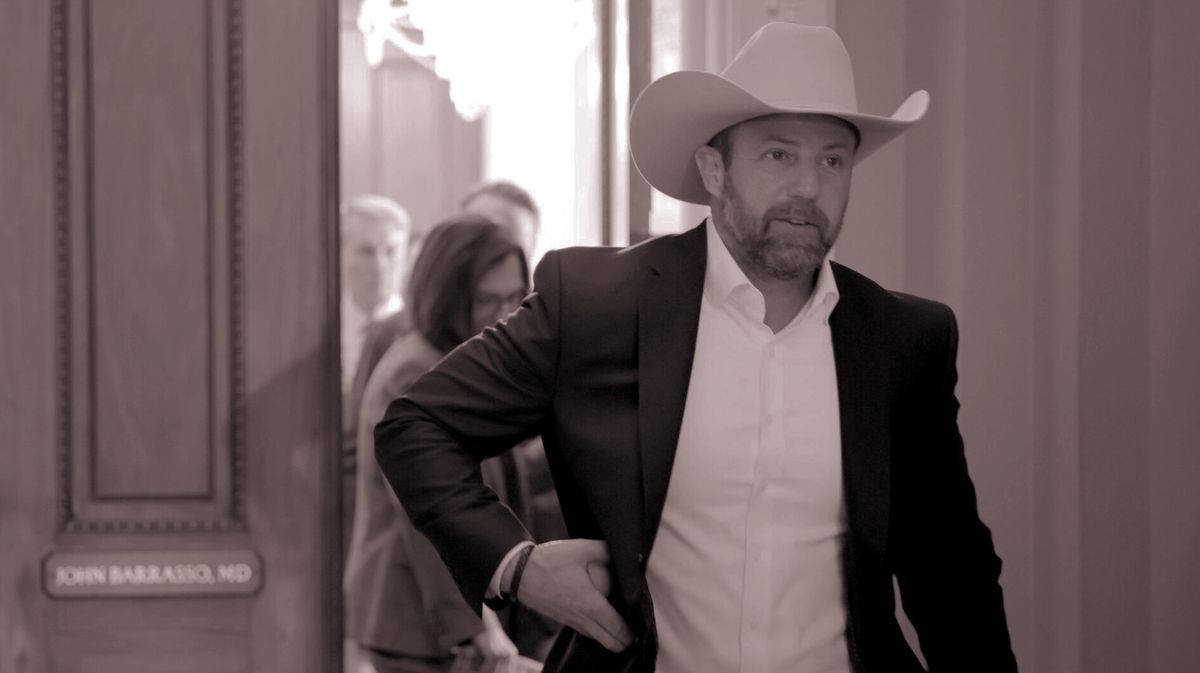
Kristi Noem as secretary of Homeland Security following her famously dysfunctional reign. And though he’s expected to be easily confirmed to the role—leading an agency that’s still largely shut down—his Senate hearing today showcased how his preternatural ability to talk himself into any situation has also, occasionally, gotten him in trouble.
Mullin is lower-profile and much less theatrical than Noem, which isn’t to say he’s not a character. He’s an ex-MMA fighter who
pops a Benadryl before slathering peanut butter on his pancakes, and walks around Capitol hallways bouncing a pink rubber bouncy ball because he says it helps him stay awake. His combative temperament has concerned some senators—he once challenged Teamsters leader Sean O’Brien to a fight during a hearing, prompting the octogenarian Sen. Bernie Sanders to intervene (not physically, mind you). At this year’s State of the Union, Mullin tried to rip a sign from Rep.
Al Green’s hands that read “Black People Aren’t Apes,” then doubled down in a video he posted afterward, calling Green “an idiot.” (Mullin’s office declined to comment for this story.)
Perhaps most problematically for him, he has called Sen. Rand Paul a “freaking snake” and said he understood why Paul was assaulted several years ago. Paul, as it happens, oversaw Mullin’s confirmation hearing today as chair of the Homeland Security Committee. “Explain to
the American public why they should trust a man with anger issues to set the proper example for ICE and Border Patrol agents,” Paul said, before proceeding to “roll the tape” of instances in which Mullin lost his temper. Mullin got defensive, refused to apologize for his comments, and said, “I didn’t say I supported [the assault]. I said I understood it.”
Nevertheless, Mullin, now in his third year in the Senate, has the advantage of his close ties to Trump, if not much expertise
in the myriad issues that fall under the D.H.S. umbrella—which include not just border security and immigration enforcement, but also oversight of the Coast Guard, disaster assistance, cybersecurity, election security, federal aviation, and all of the country’s ports. In his testimony before the Senate today, Mullin said that he and the president talk more about personnel matters than policy—although the two are aligned on that, too. A law-and-order hardliner who has sided with federal agents
when they’re involved in lethal confrontations, Mullin has defended ICE and is in favor of expanding deportations (although he said in today’s hearing he should not have used the word “deranged” to describe Alex Pretti, the American I.C.U. nurse killed by federal agents in Minnesota). He’s also a constant presence on cable news and his own YouTube channel, where he defends the president on everything. If confirmed, Mullin would become a central executor of Trump’s immigration
and internal security agenda, not just a messaging surrogate. (Don’t expect a repeat of Noem’s $200 million ad campaign, though.) |
Mullin first ran for Congress in 2012 as a Tea Party candidate on the then fashionable platform of repealing
Obamacare. He featured his plumbing business so prominently in campaign ads that the Federal Election Commission received complaints alleging the campaign was effectively a vehicle to promote it. Once in office, however, he applied the same relentless energy to building relationships with colleagues—including by leading 6:30 a.m. workouts, where he demands that anyone who brings up politics has to do burpees. It was there that he became close with Kevin McCarthy, during the
latter’s ascent to the speakership; Kristi Noem, then a House member from South Dakota; and Tulsi Gabbard, now the director of national intelligence, whom Mullin hyped up during her confirmation, including by hosting a party at his home to celebrate her confirmation.
Mullin grew even closer to Trump during the 2020 campaign, when the president paid a hospital visit to Mullin’s 15-year-old son, who’d suffered a traumatic brain injury in a wrestling
accident. Trump then called Mullin almost every day to check on his son’s progress. (Mullin’s son recovered and went on to wrestle at Oklahoma State.) The loyalty runs both ways: Shortly thereafter, on January 6, 2021, Mullin helped to barricade the door to the House floor against the rioters—but still voted against certifying the results of the 2020 election and repeated Trump’s false election lies.
Because of his longstanding relationships in the House, as well as his ties to the
president, Mullin has repeatedly positioned himself at the center of high-stakes negotiations, often at the request of the White House or Senate Republican leadership. One Republican senator told me that no matter what is being discussed during closed-door Republican meetings, Mullin always has something to say. “Our meetings will be a lot quieter” after Mullin is confirmed, the senator said. |
|
|
|
Still, Mullin has yet to secure a major deal. During negotiations over the state and local tax (SALT)
provisions in the One Big Beautiful Bill, Senate Republican leaders tasked him with rallying his House allies—even though he represents a low-tax state largely unaffected by SALT. Mullin was, as one House Republican involved in the negotiations put it, merely “engaged” in the discussions; he was in the room when the New York and New Jersey Republicans ultimately cut a deal with Treasury Secretary Scott Bessent, but did not play a decisive role.
A similar pattern emerged
amid last fall’s negotiations to extend Affordable Care Act subsidies and avert a government shutdown. Mullin participated in discussions, but contributed little. Last summer, ahead of another potential shutdown, the White House dispatched Mullin to gauge Democratic senators’ positions on a potential immigration deal. The talks, largely conducted in secret, never gained traction. While Mullin genuinely supported an agreement, one senator described his grasp of the issues to me as “an inch deep.”
A comprehensive deal was a long shot from the outset, and negotiations ultimately failed to get off the ground. |
Mullin has smoothed some of the feathers he’s ruffled in his tenure—O’Brien sat behind him today during his
hearing, proving that the boys can make up. “I reject this idea that you’re not qualified for this job 100 percent,” Democratic Sen. Ruben Gallego, another former House mate of Mullin’s, said at the hearing. The Cherokee Nation issued a statement backing his nomination, praising his “unwavering commitment to progress and the well-being of all communities,
including Indian Country.”
But Mullin’s ubiquity and repeated verbal gaffes provided plenty of material for his critics to wield against him at today’s hearing. He has, for instance, repeatedly referred to the Iran war as the Iraq war—and later claimed he “misspoke” for calling the war a war at all. Even Ohio Republican Sen. Bernie Moreno, praising Mullin at the hearing, acknowledged that he is “not going to replace Shakespeare as the next great orator.”
When Sen. Elissa Slotkin of Michigan asked Mullin who won the 2020 election, he dodged the question, saying only that “Joe Biden was sworn into office. He was the president for the last four years.”
Meanwhile, Mullin has rubbed senators with military backgrounds the wrong way when he “talks in a way that makes people think he was in the military,” as one Democratic senator put it, despite having never served in uniform. While acknowledging that the Iran
war is in fact a war, he’d told Fox News that “war is ugly. … You feel it in your nostrils, and hear it. It’s something that you’ll never forget.”
Thus Sen. Gary Peters, the top Democrat on the Homeland Security Committee, pressed Mullin about foreign trips that might resemble military service. Mullin replied that, while serving in Congress, he was “asked to train with a small contingency and go to a certain area” at some time circa 2015 and 2016. He declined to
provide further details, claiming that only four people knew about the mission, that it had been classified by the House—a designation that is not actually possible—and that he was not authorized to discuss it. Following the hearing, Mullin and several senators entered a SCIF to review the matter. But lawmakers emerged saying he was no more forthcoming in the classified setting, a dynamic that could slow his confirmation.
Some senators and aides also wonder why Mullin would give up a
Senate seat he could hold indefinitely for a highly political, no-win job likely to last no more than two and a half years. Granted it’s hard to say no to any president, but Sen. Ted Cruz did just that, twice, when Trump asked if he wanted a seat on the Supreme Court. For Mullin—who spent the final weeks of the 2024 campaign alongside Trump and has remained one of his most loyal defenders and enforcers on Capitol Hill—the pull proved irresistible. A plumber from
a town of 1,300, he accepted the role even as colleagues continue to question his temperament, qualifications, and ability to stand up to Stephen Miller.
“Nothing against plumbers, but he’s a plumber,” the Democratic senator told me, citing Mullin’s lack of qualifications. But then again, it’s not as if serving as Trump’s D.H.S. secretary requires a traditional résumé. “I’m not sure anybody’s qualified to be D.H.S. secretary,” Republican Sen. Ron Johnson
told me. “But I think Markwayne would do a good job.” |
|
|
|
Join Emmy Award-winning journalist Peter Hamby, along with the team of expert journalists at Puck, as they let you in on the
conversations insiders are having across the four corners of power in America: Wall Street, Washington, Silicon Valley, and Hollywood. Presented in partnership with Audacy, new episodes publish daily, Monday through Friday. |
|
|
|
Unique and privileged insight into the private conversations taking place inside boardrooms and corner offices up and down Wall
Street, relayed by best-selling author, journalist, and former M&A senior banker William D. Cohan. |
|
|
|
Need help? Review our
FAQ page or contact us for assistance. For brand partnerships, email ads@puck.news.
You received this email because you signed up to receive emails from Puck, or as part of your Puck account associated with {{customer.email}}. To stop receiving this newsletter and/or manage all your email preferences, click here.
|
Puck is published by Heat Media LLC. 107 Greenwich St., New York, NY 10006 |
|
|
|
|