 |
|
Happy Monday, I’m Eriq Gardner.
|
|
Welcome back to The Rainmaker, a private email about money, power, fame, and the legal forum where they all collide.
This week, I’m diving into the criminal case against Donald Trump. That is, the first one, which started today. You may have heard about opening statements. I talk to Mathew Rosengart, the go-to celebrity lawyer at Greenberg Traurig, about what happens next and whether this ends with the former president in jail or asking MAGA acolytes to pony up many more millions of dollars to cover his legal fees… or both.
P.S. If this email somehow found its way to you, sign up here to continue receiving this newsletter. Or, better yet: subscribe to Puck.
Let’s get started…
|
|
|
- Covington’s TikTok windfall: Congrats to Covington & Burling, which is poised to rack up a hefty sum in billable hours over the TikTok ban saga. While Chinese parent company ByteDance would have anywhere from six months to a year to divest the social media app if the bill passes the Senate, I wager that TikTok’s Covington litigators began drafting a lawsuit to enjoin the ban immediately after the bill passed the House of Representatives last Friday. As I’ve previously noted, I’m skeptical the ban would survive a First Amendment challenge, and the imminent legal showdown will put that theory to the test. Anticipate the filing of a case within the next few weeks.
- Elon’s $55B Hail Mary: It’s unclear to me how courts will respond to Tesla’s attempt to seek shareholder ratification of Elon Musk’s 2018 pay package, given Delaware Chancellor Kathaleen McCormick’s decision to void his $55 billion options grant. We’ll likely discover the trajectory of this legal battle around July 8, when shareholder attorneys will be vying for approval of $6 billion in fees.
In the Delaware case, Tesla’s legal team recently notified McCormick via letter of the proxy vote, which not only encompasses the ratification of back pay—an unprecedented test of Delaware corporate law—but also the company’s reincorporation in Texas. The letter suggested that these maneuvers in tandem could impact the fee petition. Undoubtedly, this will all be the subject of intense scrutiny and debate, perhaps for years to come.
- Pret-ty, pret-ty, pret-ty good: It’s fun to imagine Larry David seated at the defendant’s table while Sam Bankman-Fried takes the witness stand, especially given the series ending of Curb Your Enthusiasm. A settlement deal between FTX investors and S.B.F. (read here) potentially sets the stage for this scenario, with possible star turns by Tom Brady, Shohei Ohtani, and Michael Kives’ K5.
In pursuing celebrities for their ostensible role in convincing the public to buy several billion dollars’ worth of crypto while opening up accounts on the trading platform, FTX investors still need to overcome various motions to dismiss. Take David, who is now sharing a lawyer with Shaquille O’Neal (that’s a Max comedy I’d watch) and is contesting the basis for having to defend a case in Florida over that infamous Super Bowl advertisement. Under penalty of perjury, he swears he hasn’t visited the Sunshine State in more than a decade. I suppose if S.B.F. ever played golf with Larry David at Seminole, that would qualify as bombshell testimony.
|
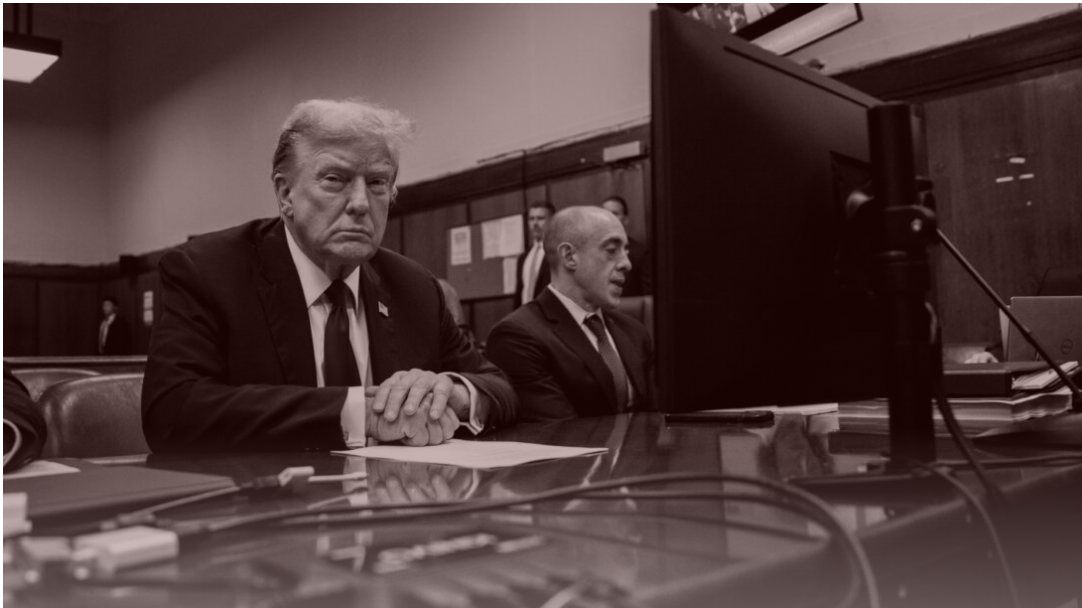 |
| Gaming the Trump Trial: Clink Questions, Legal Bills & Mistrial Potential |
| As the first Trump criminal trial kicks off in Manhattan, the largest questions loom: Can prosecutors claim to know Trump’s state of mind? Can they convince the jury that a payoff to a porn star qualifies as criminal election interference? And why, at the end of the day, the lawyering will make the difference. |
|
|
|
| This morning, the historic first criminal trial of a former U.S. president got underway on the 15th floor of New York County Supreme Court, in Lower Manhattan, with Judge Juan Merchan presiding. During opening statements, prosecutors spoke about Donald Trump’s $130,000 hush money deal with porn star Stormy Daniels back in 2016, describing the payoff as “election fraud, pure and simple.” Matthew Colangelo, the prosecutor, told jurors that Trump conspired with his former attorney Michael Cohen and National Enquirer publisher David Pecker to bury stories of sexual affairs in order to influence the presidential election that year. During his own opening, Trump’s lawyer Todd Blanche responded that Trump was innocent, commenting, “I have a spoiler alert: There’s nothing wrong with trying to influence the election. It’s called democracy.”
The six-week trial carries immense and obvious legal and political ramifications. So I caught up with Mathew Rosengart, a partner at Greenberg Traurig, whom I’ve known for years. These days, Rosengart is recognized as a go-to lawyer for celebrities like Sean Penn and Steven Spielberg; his pivotal role in helping free Britney Spears from a conservatorship brought him international recognition. Prior to his tenure as an entertainment and commercial litigator, Rosengart was a federal prosecutor known for handling significant cases during the Bill Clinton years, including the conviction of James Riady, the Indonesian billionaire who funneled massive amounts of money into Democratic Party coffers.
In our conversation, lightly edited, we discuss the prosecutors’ strategy, Trump’s defense, the possibility of the former president taking the witness stand, and the likelihood 45 will end up in prison. |
|
|
| Eriq Gardner: What’s your overall impression of this case?
Mathew Rosengart: It’s a very unusual case, even putting aside the unprecedented nature of a former president being tried criminally. What’s so interesting here is that although the government typically wins its cases, because it has the privilege of choosing which ones to pursue, this one feels to me like a toss-up. In a criminal case, that’s not the norm.
Do you really think the prosecutors will have difficulty proving this one?
At the end of the day, the odds favor the prosecution, as they typically do. But there are built-in defenses, coupled with the nature of this case, that make it more problematic than what we usually see. The government can sometimes—and often does—sleepwalk through a case and still win. But this is what I call a lawyer’s case. The lawyering will make the difference.
What stands out as most challenging for prosecutors?
You’ve got a case that is essentially about record-keeping, which in and of itself is not a crime. Even paying someone hush money, as salacious as it sounds, is not a crime. These record-keeping cases are usually technical and dry, without a lot of jury appeal. Here, the government has turned what typically would be a misdemeanor [for falsification of records] into a felony by connecting the underlying hush money payment to the concealment of another crime.
I was more skeptical last year, when I first read the indictment, which was a fairly anodyne document that basically repeats the same allegations in 34 counts over 16 pages. My thinking has evolved in some respects. Initially, it was unclear to me what the underlying crime was—what turns this into a felony? It’s now becoming clearer, as the government has put its cards on the table, that they are trying to show an effort to interfere with an election. That turns what seems to be a dry case into something with much more jury appeal, something slightly more sensational.
And that’s something prosecutors can roll with?
I think most people, and most jurors, are probably aware of the hush money allegations and probably also don’t care that much about the hush money allegations. But if you can present this as a public corruption case, I think the chances of conviction are better than they otherwise would be. Absolutely. If the D.A.’s office is smart, they’ll really stress that this is a public corruption case. It gives it more gravitas.
You say Trump has a defense to the charge that the hush money payments were part of a scheme to hide an affair on the eve of an election. Spell that out.
One of Trump’s defenses will be that the government’s case is largely based on Michael Cohen, a convicted perjurer. Indeed, in today’s opening statement, we saw Trump attorney Todd Blanche lean hard into Cohen’s history. This is a big deal. Cohen’s credibility will continue to be attacked by Trump’s defense team. Prosecutors will try to inoculate Michael Cohen by letting the jurors know that Michael Cohen’s word, in and of itself, does not have to be taken—that there is corroboration in the form of other witnesses and documents.
The other defense will not be that Trump didn’t know about the hush money payments. He certainly did. Instead, the defense will raise the question of whether or not Trump knew how the record-keeping would be done. Trump will argue that he is a billionaire, he’s a busy guy, he let his associates or underlings handle the actual documentation. One of the benefits that Trump has in that regard is that he, famously, does not email. So in this particular case, I don’t think there’s going to be any documentary evidence that Trump directed how the hush money payments should be accounted for. And if there is no credible, direct evidence regarding Trump’s state of mind, that seems to me to be a big problem for the government.
Can Trump be held responsible for falsified records if he wasn’t aware they’d be falsified?
Potentially, he can. But he’ll have a built-in defense that he relied on accountants. So, like many criminal cases, this comes down to knowledge and intent. What did he know? And when did he know it? |
| The Trump Witness Stand Calculus |
|
| Now we get to the seismic possibility that Trump decides to testify. I’m sure you share the prevailing sentiment in the legal community that it would be sheer folly for him to take that leap. But indulge me—what do you think prosecutors would focus on if he did step into the witness box?
One really unusual aspect of this case is there’s probably no other defendant out there who has ever made more public statements. So if he were to testify, the government would have a field day cross-examining him about what we call false exculpatory statements, misstatements, inaccurate statements, the Access Hollywood stuff. His testimony would open the door to so many things that, as a defense lawyer, you wouldn’t want. His lawyers might have to wrestle him to the ground to preclude that, but ultimately, it is his choice.
At a Sandoval hearing last week, prosecutors foreshadowed that if he does testify, they’d be grilling him about financial fraud at his company, financial fraud at his charity, the E. Jean Carroll case, and his attacks on the judges in other cases. Still, this case is going to get a tremendous amount of publicity, and you just know that something he hears on CNN or Fox News or over dinner might influence Trump’s decision.
I have no doubt that public opinion will shape the debate between Trump and his counsel. It’s important to keep in mind that there are two audiences here for Trump—the jury and the voters. That’s what makes this fascinating, because the voters might actually be more important to him than the 12 jurors. If he’s convicted, it’s unlikely he’ll go to prison, so something like public perception might be the more important factor in whether or not he testifies. |
|
|
| How do you think the judge should handle Trump when he inevitably violates the gag orders?
There is no doubt that Donald Trump will go up to the line, or even cross the line. There is only so much the judge can do. The most draconian thing would be for the judge to literally put him in jail for contempt of an order. I think this judge—who by all accounts is a very serious judge—would be very hard-pressed to do that.
What would be the downside of putting him in Rikers for a week?
I think there would be a real risk that this [trial] would be sensationalized, and [Judge Merchan] could potentially lose control. It definitely remains an option, and he may well do it. But Trump is going to have to do something even more dramatic for that to happen.
Speaking of the dramatic, it seems like a mistrial almost achieves Trump’s goal as much as an acquittal. Are there any wild antics we might look out for? Stuff you’ve seen throughout your career in terms of a defendant angling for a mistrial?
It’s a great point, particularly if this trial is going well for the government. I think a mistrial could be spun by him as a victory. One way is him acting out and violating orders, interrupting an examination or interrupting the judge essentially to test him. There could be something the jury sees, or is exposed to, that affects the integrity of the trial. Trump will be looking for those opportunities.
You know, I think they should have picked more alternate jurors.
I thought so, too. I was surprised there were only six. This is a case that cried out for at least 10 or more. The other thing that’s interesting to me is the lack of sequestration of this jury.
Totally agree, and I also thought it remarkable that they let lawyers on this jury. You don’t usually see that.
I was surprised by it as well. When I was a prosecutor at the Justice Department, my colleagues and I always used to say, “Just give us 12 intelligent, open-minded people who are honest and fair.” We did not typically want lawyers or individuals who fancied themselves as investigators or Perry Mason types. Not that lawyers can’t have open minds, but they might have pre-existing feelings or be attuned to the law. |
|
|
| Given the probability he’ll be fundraising his legal defense, what do you reckon his tab will be for this trial?
He has two high-priced lawyers, with a team behind them. We’re talking low to mid seven figures.
Any predictions on the outcome?
I hate to make predictions. As I said, it’s a very close case, much closer than any case I’ve seen brought by the government in a long time. All that said, the odds still favor the prosecution. The defense still doesn’t know all the government’s cards. The government has been working on this case for years. And the jury pool comes from Manhattan.
You don’t think he’d go to prison if convicted. Why not?
I don’t think he would. Putting aside the elephant in the room—the defendant is unique, he’s a former president, this would be his first criminal conviction— it doesn’t involve a tremendous amount of money. Generally speaking, the heart of the case is a misdemeanor. I do not see a criminal sentence being imposed if he’s convicted. What do you think?
I suspect you’re right. At most, I think he’d be sentenced to home confinement. Although I wonder what it’d be like in prison for him. Would the Secret Service have to go, too?
The implications of incarceration are mind-boggling. |
|
|
| That’s it for this week, but if you’re going to be at Puck’s D.C. party this Thursday, please come and say hello. I’ll be there, of course! |
|
|
|
| FOUR STORIES WE’RE TALKING ABOUT |
 |
|
 |
| Three Women |
| Six artworks electrifying the May auction season. |
| MARION MANEKER |
|
 |
|
 |
|
|
|
|
|
 |
|
|
|
Need help? Review our FAQs
page or contact
us for assistance. For brand partnerships, email ads@puck.news.
|
|
You received this email because you signed up to receive emails from Puck, or as part of your Puck account associated with . To stop receiving this newsletter and/or manage all your email preferences, click here.
|
|
Puck is published by Heat Media LLC. 227 W 17th St New York, NY 10011.
|
|
|
|