 |
 |
|
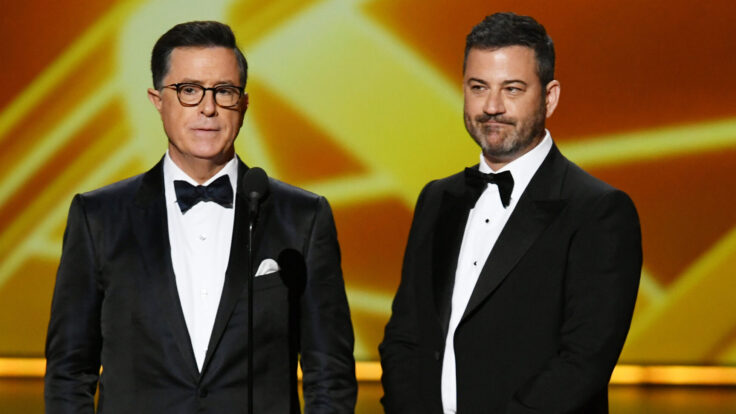
Welcome back to What I’m Hearing, coming to you from New York, where I’ve been sitting through enjoying a few days of Puck offsite meetings. Great to see so many at our third anniversary party tonight. I’ll be back in L.A. this weekend doing the Lord’s work on the Emmys event circuit, say hello if you see me.
🚨🚨 The Town live show in L.A.!: Come join us October 24 at Neuehouse in Hollywood for an in-person podcast recording with a special guest. Tickets on sale here.
Still not a Puck member yet? Click here. Got a news tip or an idea for me? Just reply to this email or message me anonymously on Signal at 310-804-3198.
Let’s begin…
|
|
|
- Disney’s debate damage dilemma: Dana Walden was not in Philadelphia for Kamala Harris and Donald Trump – ABC News Presidential Debate, as it was officially titled. The Disney TV chief was here in New York with C.E.O. Bob Iger, I’m told, and the two watched the broadcast together. I can only imagine Bob and Dana seeing the ABC News moderators repeatedly fact-checking Trump and thinking to themselves, if not panic-screaming aloud: Just once! Please, God, just fact-check her once!
Unfortunately for Walden, it didn’t happen. So far, Trump hasn’t name-checked Dana, a close friend of Harris, as part of his campaign to delegitimize the debate as “three on one.” But it’s only a matter of time, right? Megyn Kelly certainly went there, declaring on her podcast, “They did Dana Walden’s bidding tonight.” And Breitbart claimed the “obvious bias” of moderators David Muir and Linsey Davis “put the spotlight” on the Disney exec. Search “Dana Walden” on Twitter/X and the results are…ugly. Fox News hasn’t specifically gone after Walden yet, perhaps because she made so much money for the Murdochs when she ran Fox’s TV unit all those years. Walden always had a good relationship with Rupert, despite their differing politics.
These moderators are in an impossible situation, of course—damned by the right-wingers if they do point out Trump’s lies, and damned by everyone else if they don’t. If only the Megyns and Ben Shapiros knew how terrified Walden likely is that her Harris relationship will become an issue in the larger Disney C.E.O. succession race. She’s judiciously stayed away from Harris fundraisers since she gained oversight of ABC News, and only husband Matt Walden attended the convention anointing the couple’s longtime friend as the nominee for president. It doesn’t fit the Breitbart narrative, but literally the last thing Dana would want to do is put her thumb on the scale in a debate being scrutinized by 75 million viewers and potentially jeopardize her own professional ascension.
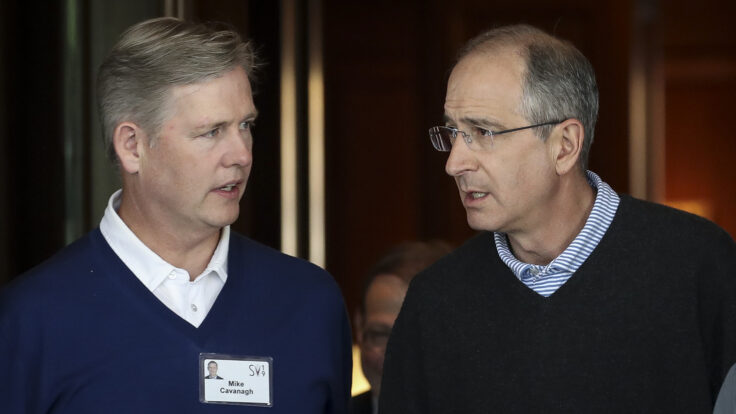
- Zaz scores a win…for now: No, your eyes didn’t deceive you, the Warner Bros. Discovery share price closed up about 10 percent today thanks to the news that Charter, home of the Spectrum cable service, reupped its carriage agreement a year early and on terms that, at least at first glance, aren’t a disaster for C.E.O. David Zaslav. The much-feared dip in TNT fees after losing the NBA did not materialize, nor did Charter insist on dropping certain channels, as it did in its recent Disney negotiation. Zaz is clearly breathing a sigh of relief, declaring “We held [the] price on TNT” today at the Goldman Sachs conference. But…it’s still not clear how this will impact the all-important deal with Comcast, which is up later this year. After all, Charter C.E.O. Chris Winfrey has prioritized carriage of streaming services like Max and Discovery+, the ad tiers of which will now be included in Spectrum packages at no charge. Comcast C.E.O. Brian Roberts, on the other hand, likely won’t settle for that. After all, part of the reason Roberts’s NBC Universal stole the NBA from Zaslav in the first place was to stick it to him in the next distribution deal. I don’t think that strategy has changed, and if Comcast scores reduced fees, Charter will start waving its favored-nations clause to demand those better terms for itself.
- Box office over/under: Blumhouse’s Speak No Evil is tracking for a ho-hum $10 million debut, and given the lack of R-rated horror competition lately, I’ll take the over.
|
| Today, in advance of the Emmys, I’ve got a really interesting guest column from Ken Basin, a veteran entertainment lawyer and business affairs executive, who offers a way to sustain the television business after years of Peak TV disruption by Netflix…. |
 |
| A Path Back to Sanity in TV Deals |
| “Cost plus” is the licensing model on which the Peak TV era was built. It has also become one of the drivers of the business’s decline. How can better dealmaking help set the industry back on a path toward sustainability? |
|
|
|
| For all its quirks, the basic dealmaking infrastructure of the television industry worked so well for so long because it did some important things very right.
First, it aligned the incentives of the talent who made the shows with the studios that financed and produced them and the networks that aired them. The greater the success of a hit show like Friends or Lost for the network that first aired it, the more money its studio made both from that initial license and myriad other revenue sources, the more the creators and stars would share in that success via “backend” compensation and residuals.
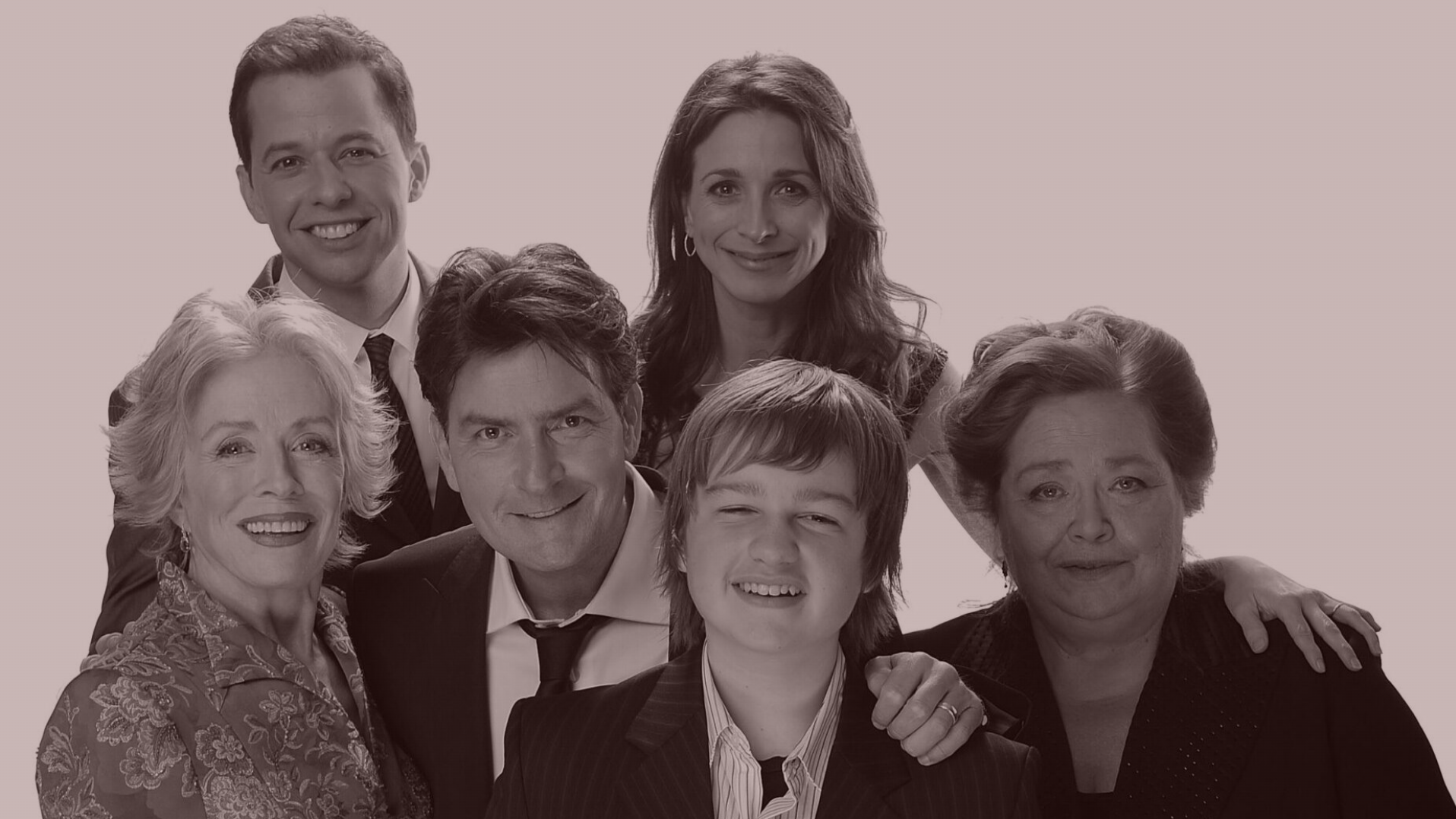
Second, it allocated and balanced risk and reward across those same players. Networks invested millions of dollars every year on unproven new series, most of which would fail, but occasionally scored a big hit that could sustain the network for years. Studios would “deficit finance” shows, meaning they would front the costs of production over and above what a network would pay to air them, then engage in “off-network” distribution (such as international licensing and syndication) to try to recoup that difference—plus, for bona fide hits, a whole lot more. Talent worked for relatively modest upfront fees, but those whose shows generated big ratings and long runs could see their compensation skyrocket. A single Seinfeld or Two and a Half Men could, by itself, carry a network programming slate, keep the lights on at a studio, and create generational wealth for profit participants.
In recent years, however, the deficit license has been largely replaced by the “cost-plus” deal, in which a commissioning platform’s license fee for an original series is higher than the studio’s cost of production (with that excess known as the “premium”). The studio’s “guaranteed profit,” however, comes at the expense of virtually all of its long-term upside, as the standard cost-plus deal grants licensees expansive exhibition rights—usually worldwide, with long exclusive license terms and significant restrictions on reserved rights—leaving the studio with few, if any, meaningful further distribution opportunities. First developed by Netflix and Amazon in 2014, the cost-plus deal was soon adopted and adapted by Apple and, eventually, even by the traditional studios for both their streaming and (later) linear networks. It is, in short, the model on which the Peak TV era was built.
For the studios, the cost-plus model completely de-risked a risky business, with guaranteed profits as high as 75 percent of the cost of production for the most sought-after series (at least before the streamers amassed greater leverage and steadily pulled back). It also helped unleash an era of explosive growth in fees for top-end talent, as studios were incentivized to abandon their traditional roles as penny-pinching stewards of responsible production, while the streamers were incentivized to overspend to lure stars and creators away from supplier studios.
But years of experience have revealed the systemic downsides of the cost-plus model, especially as it has, over time, effectively subsumed every other licensing model outside of broadcast television (where the model is even more fundamentally, and perhaps hopelessly, broken). Together with the “dollars-for-points” model of backend that emerged from it, the cost-plus deal has largely severed the alignment of interests among talent, studios, and networks. At the same time, because it functionally eliminates virtually all meaningful “off-network” monetization, it also makes outsize financial rewards impossible, even for the most-watched shows. In other words, by substantially raising the floor for each new series, the cost-plus license also drastically lowers its ceiling. For the studios and their profit participants, there are no strikeouts, but there are no home runs, either; just a steady stream of singles and (increasingly rarely) doubles. For these reasons and more, the cost-plus deal is not only the model on which Peak TV was built, it has also become one of the drivers of the industry’s decline. |
|
|
|
|
With near-universal recognition that the status quo is unsustainable, the standard cost-plus model is finally ripe for reform. In the years ahead, the streamers’ dealmaking should be guided by the question, What financial savings and strategic benefits can I achieve by acquiring only the rights I need, instead of all the rights I can get? Consider:
- The “standard” exclusive license term in streaming is “run of show plus 10,” meaning that the platform retains exclusive streaming rights for 10 years following the release of a show’s final episode. The series finales of landmark Netflix shows House of Cards (produced by MRC), Daredevil (Marvel/ABC), Narcos (Gaumont), and 13 Reasons Why (Paramount Television Studios, R.I.P.) were released in 2018, 2018, 2017, and 2020, respectively, meaning that we might assume those series will remain exclusive to Netflix in streaming until 2028, 2028, 2027, and 2030. But even today, is anyone subscribing (or staying subscribed) to Netflix because it is the only place to watch those shows? At a minimum, streamers should permit the licensing of early seasons of such series, with an eye toward driving traffic back to their own platforms. For example, Universal Television non-exclusively licensed the first four seasons of Brooklyn Nine-Nine to Netflix, where they quickly attracted new viewers who were forced to follow the show to Peacock for seasons 5–8.
- Netflix, Amazon, Apple, and Disney all consistently claim exhibition rights in China when licensing original series. Yet none has ever operated a service in China, and—for a host of obvious legal and geopolitical reasons—none likely will anytime soon. Certain high-value streaming originals could generate solid license fees (and audiences) in China.
- High-budget, star-packed streaming original movies could command significant interest from basic cable networks and FAST channels. Even ignoring the promise of license fees and advertising revenue shares from these deals, making some SVOD originals available on such platforms seems more likely to win the streamers subscribers than to lose them.
- Entrepreneurial studios with the resources and expertise to monetize retained rights will almost always favor network buyers whose license structures afford them the chance to bet on their own success. Offering these studios such an opportunity may not just save a streamer millions of dollars in reduced license fees, it could also confer a competitive advantage when bidding for highly sought-after shows.
|
| In short, platforms looking to cut their content costs and achieve (or cement) profitability should stop paying for rights they cannot use and exclusivity they do not need, and instead find ways to thoughtfully and creatively manage windowing and non-exclusivity for both financial and strategic gain. |
|
|
| Revenue sharing is a simple way to align interests in a deal, while reducing the financial stakes of “giving up” valuable rights. Although negotiators often make use of easy defaults like 10 percent shares and 50-50 splits, the percentage scale still goes from 0 to 100, and revenue-sharing arrangements can be constructed with nuance and specificity to productively allocate rights between studios and networks in license deals for both first- and second-run content.
Just as importantly, revenue sharing also reduces the personal and reputational stakes of letting rights go. Consciously or not, in Hollywood, the question Will this get me fired? hangs over every consequential decision. As a result, dealmaking is too often oriented toward avoiding embarrassing outcomes rather than optimizing for successful ones. Business leaders and negotiators are sometimes so afraid to make “the other side” look good that they give up an opportunity to “grow the pie” of total value in a deal. Revenue sharing is a particularly appealing dealmaking tool for value creation because it can help negotiators ease those anxieties and resist those perverse incentives when crafting the deals that represent the lifeblood of content businesses. |
| Success-Based Compensation |
|
| In the cost-plus model, the platform’s license fee is the same whether a show is watched by 10,000 viewers or by 10 million. The studio’s and talent’s gains from a successful series are therefore linear (more episodes = more money), rather than exponential (bigger hits = bigger payouts). The dynamics are no different for talent who, in lieu of traditional profit-participation definitions (which calculate payouts based on actual revenue and expense data), receive “dollars-for-points” deals in which each “point” of backend is translated into a defined cash payout whose value increases as more episodes and/or seasons are produced. Like cost-plus license fees, these dollars-for-points schemes compensate participants more for the speculative outside monetization opportunities the streamer has forgone than for the value a show creates for the platform. And because “dollars-for-points” systems are explicitly built to compete with traditional backend that talent might receive from outside studios that license shows to streamers on a cost-plus basis, by design, they generate broadly similar outcomes.
The industry should dramatically expand the use of performance-based bonuses in both original and second-run series licensing, through which the benefits will automatically be passed on to profit participants via conventional backend definitions, and dollars-for-points participation schemes. Some such terms already exist—for example, Amazon’s “top 3” bonus for points payouts on its most-watched originals, or the “current rankings bonus” and “critical acclaim bonus” included in Disney’s Series Bonus Exhibit—and certain streamers have already quietly signaled to talent reps their intent to move further in this direction. But today such success-based escalators are too opaque in construction, too modest in impact, and altogether absent from streamers’ license agreements with studios, in which license premiums also usually increase year over year by only 5 percent, even for later seasons of long-running hits.
The dream of success-based compensation in streaming has remained out of reach for years because of the streamers’ stranglehold on consumption data. But between the growing importance of advertising in streaming, and the sliver of data transparency obtained by SAG-AFTRA and the WGA following their 2023 strikes, the door has opened for data to become a meaningful factor in creative dealmaking around success-based compensation. |
|
|
| Responsibility-Based Compensation |
|
| It is not enough to restore the relationship between success and reward in compensation; we must also bring back the relationship between responsibility and reward.
The deficit model promoted conscientious spending on production by simultaneously applying upward and downward cost pressures on talent, studios, and networks alike. It encouraged studios to thoughtfully consider the right amount to spend, and it extended those incentives to the profit participants who were responsible for budgeting and executing each series. Those who could do more with less could reap the rewards of their efficiency in the form of enriched backend. From Lucille Ball to Norman Lear to Dick Wolf, the most successful producers have always known not just how to produce better TV, but also how to produce TV better.
Under the cost-plus model, however, studios are incentivized not to consider what costs are worthwhile, only what licensees are willing to bear—especially because studios generally command higher premiums on more expensive shows. For participants, when there is no deficit to manage and a talent-friendly streamer is generous about breakage requests, the math simply may not be compelling enough to justify reining in one’s creative appetites. The dynamics are even worse when streamers produce for themselves, thanks to the failure of existing dollars-for-points systems to account at all for cost, meaning that participants who budget too lavishly or run up overages see no adverse impact on their backends whatsoever.
Given the global scale of their businesses, there is likely no path for Netflix or Amazon back to a deficit licensing model, no matter how diligently they pare back their demands for licensed rights. But instead of always negotiating license fees as “cost plus premium,” streamers could experiment with flat, “all-in” license fee structures, under which studios and talent could profit more by focusing on efficiency and value and resisting extravagances. At the same time, dollars-for-points backend definitions must evolve to also take into account both ingoing budgets and production overages, while the highest-earning showrunners, producers, and directors should see at least some of their compensation reallocated to “underbudget bonuses” or otherwise made contingent upon effective show management.
This is, of course, all easier said than done. These new deal structures will have to overcome resistance from agents and lawyers, and will require thoughtful design and years of iteration to get right. But they would do wonders for realigning the parties’ incentives and shifting the industry collectively back toward a more sustainable mindset. |
| Higher Ceilings Mean Lower Floors |
|
| The hard reality is that, for companies and individuals alike, raising the compensation ceiling for high performers will require lowering the floor for low performers, while transparency in consumption data will force all of the players to abandon pretenses of commercial success from well-liked but little-watched series. In other words, the era of “treating everything like a hit, except the actual hits” must end for the era of “treating hits like hits again” to begin.
This sounds like an ideal everyone can subscribe to—until they find themselves doing worse in the new system. Though it seems clear that this is what much of the creative community professes to want, it is far less clear that they have the endurance and will necessary to achieve it.
Ken Basin is a lawyer and veteran business affairs executive who would like to emphasize in the strongest possible terms that all of the observations and opinions expressed in this column are his and his alone and should not be weaponized in any way against any of his past, present, or future employers, clients, or colleagues. This column was adapted from the second edition of his book, The Business of Television, which will be released on September 19 and is available for preorder now. |
|
|
See you Monday,
Matt
Got a question, comment, complaint or a good Emmys drinking game? Email me at Matt@puck.news or call/text me at 310-804-3198. |
|
|
|
| FOUR STORIES WE’RE TALKING ABOUT |
 |
|
 |
| LVMH Beauty Secrets |
| Peeking under the hood of LVMH’s beauty empire. |
| RACHEL STRUGATZ & LAUREN SHERMAN |
|
 |
| Aftershocks in Philly |
| Snap analysis of the Trump-Harris debate showdown. |
| PETER HAMBY, JOHN HEILEMANN & DYLAN BYERS |
|
 |
|
|
|
|
|
 |
|
|
|
Need help? Review our FAQs
page or contact
us for assistance. For brand partnerships, email ads@puck.news.
|
|
You received this email because you signed up to receive emails from Puck, or as part of your Puck account associated with . To stop receiving this newsletter and/or manage all your email preferences, click here.
|
|
Puck is published by Heat Media LLC. 227 W 17th St New York, NY 10011.
|
|
|
|