 |
|
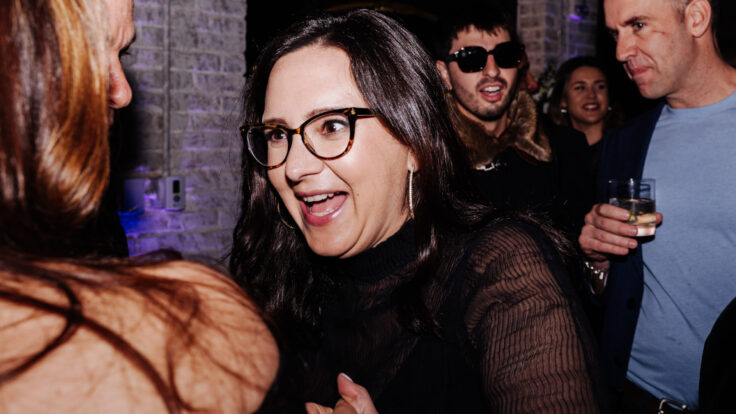
Welcome back to What I’m Hearing. Thanks to everyone who came to Puck’s The Powers That Be: Live event in Beverly Hills on Monday, and especially to Netflix chief content officer Bela Bajaria for a lively (and very off-the-record!) conversation—and for gifting me a Jellycat gourmet cheeseburger plushy, which I will treasure. Thanks also to our sponsors, Mayer Brown and Diageo. We’ll do more of these events in the new year.
As always, if you were forwarded this email, click here to become a Puck member.
Let’s begin…
|
|
|
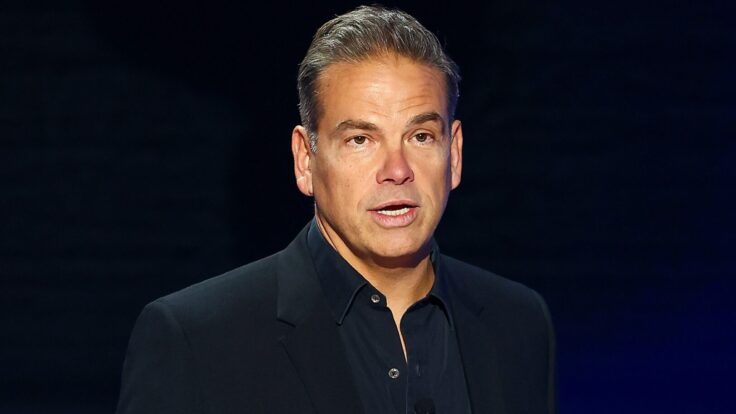
- All the Zaz that’s fit to print: Why did Warner Bros. Discovery C.E.O. David Zaslav participate in yet another big media profile that painted him as The Man Who Killed Hollywood? I’m told Team Zaz thought they’d get a better shake out of the Times Magazine than his recent run of terrible press in The New Yorker… and The Atlantic… and Barron’s… and GQ… and Fortune… and the Times proper. (Insert your own Charlie Brown-Lucy football joke.) Instead, they got a detailed, 8,400-word summary of every craven cost-cutting move, affront to the creative community, and say-one-thing-and-then-do-the-opposite moment from his wild 19-month tenure. (Honestly, I’d forgotten about TCM-gate!) Most of the stuff had been reported by me and others, but there are new and ridiculous details in the separate Times story focused solely on Zaz firing—and talking shit about—“friends” at CNN, like Jeff Zucker and Don Lemon. Replace the names with everyone you knew in middle school and the story still tracks. Plus, forcing CAA to issue a statement to the Times clarifying that C.E.O. Bryan Lourd did not endorse the killing of his own client’s Batgirl movie is… not great for Zaz.
Regardless, the question is what fallout, if any, results from all of this negative attention. Zaslav has clearly—in his own words about CNN’s Chris Licht, right before Zaz fired him—“lost the narrative.” But bad articles are the least of Zaz’s problems. He’s doing everything that he promised Wall Street and his constant benefactor, investor John Malone, he would—reducing the debt from $56 billion to around $43 billion and increasing free cash flow to $5 billion this year—and yet the Warner Discovery stock is down double digits since last week’s earnings call, and more than half since it debuted last April. The sad and inescapable truth is that the larger forces that led to each of the micro-scandals in the Times stories are pretty much out of Zaslav’s control: Linear TV is cratering, the ad business may never recover, younger consumers are turning away from Hollywood content, and there’s an increasing realization that the entire business is in secular decline. When Zaz & Co. took over the company, they predicted $14 billion of EBITDA this year. Now they’re talking in the $10 billion to $11 billion range. The value destruction is massive.
That makes for a less fun Times profile than rehashing Zaslav’s tone-deaf missteps and bad optics (the Cannes photo with Graydon Carter in matching cream-colored suits will never stop being funny). But the real story is about the perilous position of Warner Discovery and many of its peer companies these days. Can WBD even afford to seriously bid for NBA rights when the auction starts, probably in the new year? How bad do things need to get for Malone and the AT&T shareholders—who, by the way, still own 70 percent of WBD as part of this bizarre deal structure—to make an M&A move? Both Zaz and Malone said last week that they are building up cash to be an acquirer. But I posed that question today to LightShed analyst Rich Greenfield, and he noted that Zaz & Co. spent a big chunk of time on the recent earnings call talking up Warner Bros. Games, its successful video game studio, which might fetch many billions. “Could it be for sale?” Greenfield posited. “That made us think there might be a transaction in the coming year.” Or maybe something even bigger when the reverse Morris prohibition against a merger lifts in April. Buyer? Seller? Everything—and everyone—seems to be on the table right now.
- Speaking of Warners indignities… : There’s been serious interest, yet no formal bids thus far, for Coyote vs. Acme, the finished and shelved Looney Tunes movie starring John Cena that I revealed on Sunday would be shopped to other studios and streamers. Screenings on and off the lot are ongoing, and filmmaker Dave Green and the other talent would like nothing more than to shove a fat Netflix check in Warners’ face. But the wrinkle here is that WB gets to determine the right price, and I’m told the buyer will need to get close to the $70 million production cost. Tough. Maybe Elon Musk should just buy it and stream it exclusively on Twitter/X?
- Welcome to Penske+: Who’s excited for Sunday’s Billboard Music Awards? Not the streamers and TV networks, all of which declined to pick up the show after NBC, its home since 2018, kicked it to the curb. The BBMAs are off the air for the first time since 2010, and it may foreshadow the sad future for many awards shows. Jay Penske, whose PMC recently took over BBMAs owner Dick Clark Productions—which, remember, was valued at $1 billion in 2016—in a sweetheart deal with Todd Boehly’s Eldridge Industries, will instead air the show on a PMC website, BBMAs.watch. That’s a terrible URL, so let’s just call it Penske+.
Yikes. It wasn’t that long ago that NBC paid more than $20 million a year to lure the BBMAs away from ABC. Now it’s a pretaped, web-only clip show to be posted across Billboard’s social channels to make it appear to be a typical awards show. Maybe this kind of desperation will lead to badly needed innovation in the awards show space. But the BBMAs, based on the Billboard charts, honor the year’s most-consumed music, and the year’s nominated top-selling acts—Taylor Swift, Drake, SZA, Luke Combs, Olivia Rodrigo—have all declined to participate. In addition, DCP tried to lure artists by moving the show from May to November, right between Grammy nominations and Phase 2 voting. But the show’s only big headliner, Morgan Wallen, who taped his performance from Atlanta, was shut out of Grammy noms last week. The best hope of going viral is Mariah Carey, plugging her Christmas song.
At least DCP recognizes its diminished position and is paying for most production costs, I’m told; many awards shows charge the labels. (A DCP rep says, “We don’t disclose our arrangements with artists.”) The Academy, for instance, wants a big Barbie musical medley to kick off the Oscars show, but the fact and scope of that production will likely be determined by who’s gonna pay for it. Studios are usually asked to help foot the bill for Oscars performances, but Warners is literally selling off movies to raise money these days. By the time the Oscars arrive, marketing and awards budgets are spent, so who knows? Note to everyone involved here: Please make this happen. The world needs a medley of Ryan Gosling’s “I’m Just Ken” with the Billie Eilish and Dua Lipa songs, regardless of which get nominated. (An Academy source says nothing has been decided about the Oscars.)
- Maha making the rounds: The Maha Dakhil apology tour—sorry, she’s “listening” and “learning”—made a head-turning stop on Sunday night in L.A. Dakhil, the CAA agent who was demoted last month after she referred to Israel’s response to the Oct. 7 Hamas attack as “genocide,” showed up at a fundraiser for families of Israeli hostages organized by the U.S. Forum for Israel. Accompanied by producer Matti Leshem, who seems to be acting as an emissary of sorts, Dakhil generated a few side-eyes, according to one attendee. In recent weeks, Dakhil has also met with A.D.L. director Jonathan Greenblatt and the influential Rabbi Steven Leder of Wilshire Boulevard Temple, and so far only Aaron Sorkin has dropped her, despite full-court presses on her clients by rival agencies.
- Box office over/under: Hard to believe, but Lionsgate’s original Hunger Games debuted to $152 million domestic in 2012. Ballad of Songbirds and Snakes is tracking for about $50 million, and despite the competition this weekend from Trolls Band Together (kids), Thanksgiving (horror), and whoever is still interested in The Marvels, I’ll take the over thanks to that lingering fan base, and the interim agreement that let the cast promote for a few weeks now.
|
| Now on to the A.I. controversy threatening the SAG-AFTRA deal… |
 |
| Are Actors Overthinking the A.I. Threat? |
| A close look at the three primary concerns raised by SAG-AFTRA members regarding how “synthetic performers” and other computer-generated replacements could threaten their livelihoods. |
|
|
|
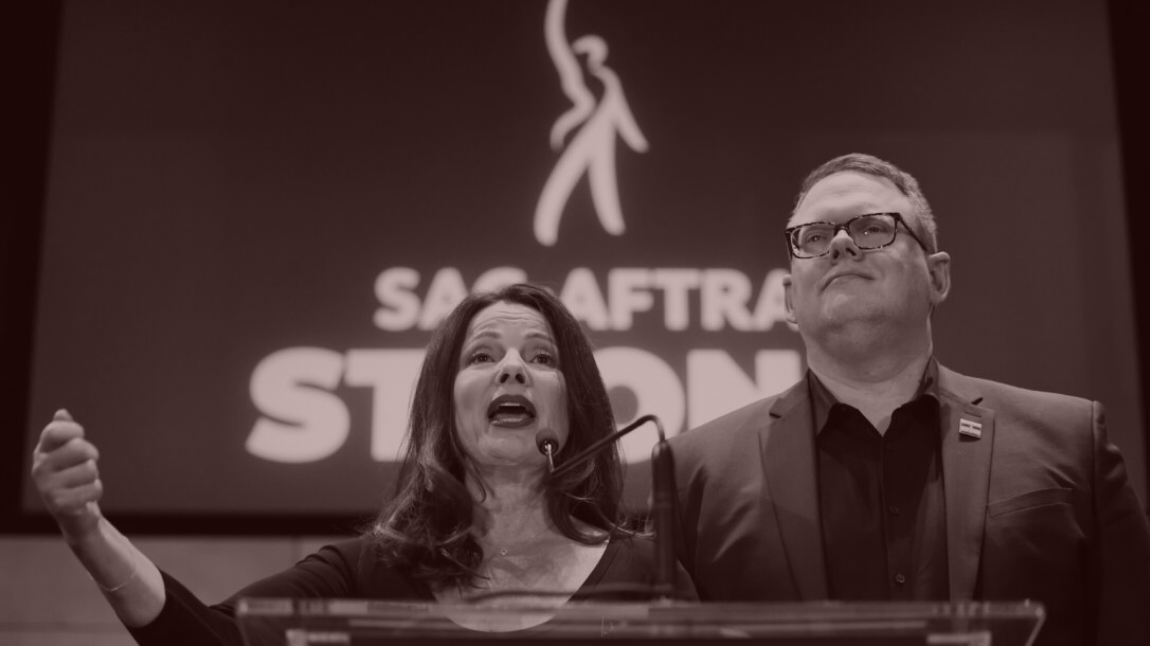
| The A.I. panic is setting in, and opposition to the tentative SAG-AFTRA agreement is growing. The deal is still expected to be ratified by the union’s 160,000 members when voting closes Dec. 5, and I stand by my conclusion on Sunday that president Fran Drescher, national executive director Duncan Crabtree-Ireland, and the negotiating committee and staff achieved the best deal possible. If members compare the contract to an idealized perfect agreement and vote it down, they may find themselves facing months more on the picket lines—and possibly no A.I. protections at all when the dust settles.
All of that said, it’s worth looking at the various concerns that members are raising: that A.I. is a job killer and “soul destroyer” and should be banned; that actors’ consent to digital replicas will be coerced; and that the A.I. provisions will hurt stunt personnel, in particular. |
|
|
| Former SAG-AFTRA board member Justine Bateman and two current board members have been particularly vocal in asserting that fully synthetic performers may take over the profession, as the new agreement doesn’t prohibit their creation and use. All the union achieved here was a requirement that the studios notify the union whenever they use such a digital creation, plus offer the union an opportunity to bargain for appropriate compensation, “if any.” Bateman was dismissive of this language on The Town podcast today: “It’s like negotiating with a cannibal,” she analogized. “So is it gonna be the left foot or the right foot that you're gonna cut off? And will you be grilling it or broiling it? And what kind of sauce?
But what this objection overlooks is that the companies would appear to have no obligation to bargain on this issue at all, as it doesn’t involve terms and conditions of an existing employment relationship. Getting a prohibition when the studios could simply decline to discuss the matter at all seems like the very definition of unrealistic expectations. And the union will have a chance to push further on the issue in just two and a half years, when the contract comes up for negotiation again.
Not that anyone is looking forward to more negotiations, but with that horizon in mind, we should examine Bateman’s belief that synthetic performer technology is an imminent threat. “People should just go see what is already being used, don’t take my word for it,” she told Matt. “Look at the videos.” Which videos? None of the screeners I’ve received so far this Oscar season seems to feature synthetic performers.
She’s referring to the impressive/scary output of generative A.I. companies, of course, but the evidence overall is mixed. On the one hand, A.I. has made enormous strides in an adjacent area, the production of still images in photorealistic (and other) styles. On the other hand, the history of advanced technology is not usually one of sudden, dislocating change. Around 2015, we were told that self-driving vehicles would flood the streets within a couple of years. Today, they’re on the road in limited numbers and few jobs have (yet?) been lost to that technology. Likewise, virtual and augmented reality have been slow to evolve, notwithstanding huge bets by Meta and others.
Indeed, my brother Michael J. Handel, a sociologist of work and employment who was previously at the Bureau of Labor Statistics, pointed out in a 2021 study that most technologies have disseminated more slowly than people anticipated or realize. He tells me that resulting job loss is more often through retirement and other attrition than direct displacement. “There is little support in [B.L.S.] data or projections for the idea of a general acceleration of job loss or a structural break with trends pre-dating the A.I. revolution with respect to the occupations cited as examples,” he wrote in a 2022 paper. B.L.S. doesn’t even attempt to forecast the job impact of nascent but undeployed technologies because the results are too speculative. |
|
|
| Of course, the SAG-AFTRA dissenters are concerned not only with short-term effects but also the long-term survival of the profession—a particular issue for younger members. So let’s look at another objection: While the studio can seek, at the time of employment, a performer’s consent to make and use a digital replica of the performer, no consent is required “when the photography or sound track remains substantially as scripted, performed and/or recorded.” Take note of the ambiguous “and/or,” a compound that often indicates the negotiating parties couldn’t agree on “and”… or “or.” Does this provision mean that no consent is required if the footage remains as scripted and as performed and as recorded once the digital replica is substituted in? Or does it mean that no consent is required if the footage remains as scripted or as performed or as recorded once the digital replica is substituted in? The first reading is more protective of the actor, while the second gives the studio more latitude.
Also, the union had originally sought to require that consent be secured at the time of use. This sounds like a wonky distinction, but it’s not: It means that if the performer doesn’t consent, the studio can choose to hire someone else who does. Think about a TV pilot test deal: Sign it, or there are five other actors who will. That makes the consent arguably coercive and illusory, since if you want the job, you’ll have to consent. But it’s not without precedent: The union agreement’s nudity provisions require advance notice at time of employment—and if you don’t consent, the studio can choose another actor.
Of course, coercion is a hallmark of employment relationships, generally: If you want the gig, you generally have to do what the job entails or else they’ll hire someone else. Consent at time of use would give the actor a veto right over digital avatars. As it is, the SAG-AFTRA language does require that use in subsequent projects requires identification of the specific projects, so it’s not as though the union got nothing in the way of guardrails. |
|
|
| Stunt personnel fall into two key covered categories: stunt performers and stunt coordinators. Stunt performers’ work can be categorized as stunt doubling or so-called nondescript (ND) stunts. Stunt doubling occurs when a stunt performer doubles for an on-screen performer in a fight, a fall, a burn (i.e., when lit on fire), a car chase or other hazardous action. The stunt community’s concern here is that studios will use the on-screen actor’s digital replica to perform the stunts digitally.
In other words, imagine being able to tell an A.I., “John stumbles out of the burning car engulfed in flames, then leaps into the nearby lake,” and have this rendered. Such advances would shift work from human stunt doubles to the digital replicas of on-screen performers, and shift compensation as well, from stunt performers to on-screen performers. Of course, the on-screen performer might have a right of consent, but in addition to the consent being coercive, it’s not even clear from the ambiguous “and/or” contract language that consent would be required at all, assuming the stunt is described in the script. (A source close to the union disputes the ambiguity and says consent would be necessary.)
In contrast to stunt doubling, ND stunts occur when the stunt performer is intended to be identifiable on-screen. For instance, a studio might cast a qualified stunt performer as Henchman No. 1 because the role is chock-full of fights, car chases, etcetera. Stunt performers are expressly permitted to bargain for—and routinely receive—“stunt adjustments,” depending on the nature of the stunt, the degree of difficulty, and how many takes are requested. According to a source, those adjustments, which are in addition to daily or weekly pay, typically range from a couple hundred dollars to $1,000 for a fight, up to $12,000-$15,000 for a vehicle explosion simulated with an air cannon, with burns, chases, falls and whatnot all carrying their own price tags. But if a digital replica is used, stunt performers would not have a right to bargain for those adjustments and most likely wouldn’t receive them.
So that’s the concern for ND stunts. Meanwhile, stunt coordinators, who design, oversee, and often direct (as second unit directors) the execution of stunt work, are concerned that moving stunts into the digital realm will deprive them of work altogether.
All of these concerns may one day be material but seem premature today. The technology to do these things with digital replicas doesn’t yet exist and might be slower to materialize than we anticipate. The union will have an opportunity in 2026 to revisit the A.I. language and judge whether further protections are needed. |
|
|
| And to those who’d rather see more protections or even prohibitions right now, ask yourself whether months more on strike, through the holidays no less, would really have been sustainable. And 2008 and 2014 should stand as cautionary tales. The 2007-08 writers strike was rightly about internet jurisdiction, but the assumption was that technology was going to be delivering webisodes and even “mobisodes” to eager viewers. The 2008 and 2009 guild agreements constructed an entire edifice of now largely irrelevant language on the subject. That was wasted effort and partially wasted union leverage, as it turns out. Not until 2014 did we get language that addressed what had actually begun to happen, which was streaming. But that was good news, as it meant that dissenters—those who demanded that their union get it right in 2008 lest the studios never revisit the issue of internet-based television—were doubly wrong: They picked the wrong horse, and they were mistaken in assuming there’d never be another race to run.
What’s an actor to do? It’s understandable that A.I. just seems wrong. “The WGA got a definition of a writer as a human,” Bateman told Matt today. “DGA got a definition of a director as a human. I told Duncan, ‘I think it would be a great idea. Why wouldn't that be given to SAG for human characters?’”
Not a bad point, but also not realistic (and it ignores the loopholes in the WGA deal). If studios don’t experiment with A.I., their nonunion rivals in the tech industry will continue to do so. The transitions a century ago from stage to screen and then silents to talkies should serve as a reminder about the need for actors to adapt. There’s ultimately only one possible way to outrun artificial intelligence, and that’s by using the human kind. It won’t be easy, but it’s probably not hopeless either. |
|
|
See you Sunday,
Matt
Corrections: Steven Spielberg is a producer on Maestro, not an executive producer, as I wrote on Sunday. Also, Jonathan said SAG-AFTRA is on strike against the video game studios, but they’re just threatening to strike. (Indeed, Jonathan informs us that negotiations resumed this week for several days.) Also, the SAG-AFTRA streaming bonus figure he mentioned, $40 million per year, should be noted as SAG-AFTRA’s estimate, and the bonus negotiated by the Writers Guild is estimated by a source to be likely worth about $4 million to $6 million per year, not $20 million.
Got a question, comment, complaint, or an explanation of what’s going on in the Madame Web trailer? Email me at Matt@puck.news or call/text me at 310-804-3198. |
|
|
|
| FOUR STORIES WE’RE TALKING ABOUT |
 |
|
 |
| Zaz Lit 101 |
| News and notes from around the media industry. |
| DYLAN BYERS |
|
 |
| Mike Drop |
| Is the new speaker stumbling into a MAGA mutiny? |
| TINA NGUYEN |
|
 |
|
|
|
|
|
 |
|
|
|
Need help? Review our FAQs
page or contact
us for assistance. For brand partnerships, email ads@puck.news.
|
|
You received this email because you signed up to receive emails from Puck, or as part of your Puck account associated with . To stop receiving this newsletter and/or manage all your email preferences, click here.
|
|
Puck is published by Heat Media LLC. 227 W 17th St New York, NY 10011.
|
|
|
|