{{ 'now' | timezone: 'America/New_York' | date: '%b %d, %Y' }} |
|
|
Welcome back to What I’m Hearing+, taking off from S.L.C. after a fantastic final
Sundance in Park City. Today, Eriq Gardner is here with a breakdown of last week’s big hearing in the increasingly nasty Blake Lively–Justin Baldoni case, including observations from inside the courtroom (Eriq was there for the fireworks). All yours, Eriq…
Not a Puck member yet? Never too late. Just click here.
Mentioned in this issue: Lorne
Michaels, Lewis Liman, Taylor Swift, Megyn Kelly, Jonathan Bach, Jamey Heath, Esra Hudson, Michael Gottlieb, Melissa Nathan, Jennifer Abel, R.F.K. Jr., Leah McSweeney, Sage Steele, Bryan Freedman, Ryan Reynolds, Alexandra Shapiro, Sean “Diddy”
Combs, Gavin Newsom, the Murdochs, Gabriel Sherman, Ron Burkle, Harvey Weinstein, Taylor Sheridan, and many more… |
|
|
A MESSAGE FROM OUR SPONSOR |
ONE BATTLE AFTER ANOTHER Nominated for 13 Academy Awards® including Best Picture &
Director "Anderson’s humanistic masterpiece of a movie says: You fight it with love” - Breaking down Bob's frantic chase through the river of hills and the lengths a father will go to for the love of his daughter.
Watch Now
|
|
|

| Eriq Gardner
|
|
- Brendan Carr’s new weapon: I’ve been on record suggesting that F.C.C. Commissioner Brendan Carr is more bark than bite, so allow me the anti-contrarian take that the agency’s new equal-time guidance might actually be a big deal.
This, of course, is the rule that if a candidate for public office gets broadcast airtime, their opponents must be given a similar opportunity. For decades, TV stations have relied on an exception for “bona fide” newscasts and interviews, which has allowed politically tinged shows like Jimmy Kimmel Live! and Today to feature candidates without opening their doors to every fringe hopeful. But now, Carr is signaling that “bona fide” will apply only to politically neutral
broadcasts. That is, if the F.C.C. smells partisanship, your exemption might not hold.
Yes, Commissioner Anna Gomez downplayed the move, but it now looks more like an engraved invitation to Republicans, independents, and third-party gadflies to file test cases while heading into a combustible election cycle. That, in turn, may chill editorial
decision-making. Does Lorne Michaels really want to book Gavin Newsom for SNL’s cold open if it means R.F.K. Jr. gets to do “Weekend Update”?
Predictably, media observers are gaming out whether Carr’s next fight will be with The View, Jimmy Fallon, or maybe a rematch with Jimmy Kimmel, who hasn’t retreated from his partisan jousting, recently calling Trump “President
Veruca Salt” and a “Real Housewife with nuclear weapons.” But are we sure this stops with late night and daytime? What happens when Trump challenges NBC Nightly News’s “bona fides” under the new guidelines? For now, I bet we see fewer Democratic politicians appearing in comedy sketches. And if you think the F.C.C. has better things to do than parse Seth Meyers monologues, well… you haven’t been paying attention. - Did Endeavor
mislead investors?: A new class action filed on January 16 against WME owner Endeavor over its privatization a year ago has gone mostly unnoticed, perhaps because it’s being conflated with the ongoing Delaware fights over the company’s valuation. (See my prior story about the appraisal mess that erupted when Endeavor’s equity stake in TKO Holdings—the
WWE/UFC mashup—spiked in value post-deal.)
But this new case deserves serious attention in its own right: It’s in federal court and backed by Susman Godfrey, a firm that tends to swing for the fences. The theory? That investors were misled into selling at depressed prices, thanks to allegedly false assurances that private equity giant Silver Lake’s $27.50-a-share buyout was “fair.” (Read the full complaint here.)
The fact that this is a securities fraud claim, rather than your typical fiduciary-duty suit, means the plaintiffs have to clear higher hurdles. Still, they point to nondisclosures by Endeavor that may prove useful, such as third-party valuations, alternative bidding activity, and Endeavor selling OpenBet to its previous leader, Ari Emanuel, for $450 million. The argument is that the company presented a stale or incomplete
picture of value just as insiders were consolidating control.
This sort of opinion-fraud claim is certainly an uphill climb. Courts are notoriously wary of securities suits that second-guess statements of judgment, especially when companies can claim they sincerely believed what they said. Expect Endeavor to argue that fairness is inherently subjective and that any investor could have checked TKO’s public stock price and drawn their own conclusions. Still, given the focus on what insiders
actually believed at the time of privatization, the case is less about spreadsheet math and more about email trails and motives. Discovery could become spicy. An Endeavor spokesperson called the claims “flawed” and “meritless,” adding, “We look forward to addressing them in court.” - What happens in Reno…: For all sorts of reasons, the Murdochs are the family that keeps on giving. There’s Gabriel Sherman’s new book,
Bonfire of the Murdochs. And now there’s a quasi-Succession sequel, courtesy of the Nevada Supreme Court. As you’ll recall, Rupert attempted to restructure his empire to favor his eldest son, Lachlan, at the expense of his other adult children James, Elisabeth, and Prudence. The resulting legal brawl unfolded in a Reno probate court under near-total lockdown… until it settled, with each of
Lachlan’s disfavored siblings reportedly receiving a $1.1 billion payout.
That might have been the end of it, but media organizations have continued to fight for access. And on Christmas Eve, they scored a victory: Nevada’s high court ruled that sealing the entire case was improper. The Murdochs just informed the court they won’t seek a rehearing, meaning some version of the case file is going public. Yes, redactions are likely. But
according to the justices, vague nods to privacy aren’t enough—any continued sealing will require actual factual findings. - Ron Burkle settles: After years of legal wrangling, a marathon fraud case brought by Ron Burkle, the billionaire co-founder of private equity firm Yucaipa, is coming to a close. The dispute
dates back to when Harvey Weinstein’s sexual assault scandal sent The Weinstein Company into bankruptcy. Burkle, a former friend of Harvey’s, had initially tried to buy the studio himself, but ultimately assisted Lantern Capital Partners, the Texas private equity shop that ended up acquiring TWC’s assets for $289 million.
Then came the falling-out. Burkle claimed he’d been cut out of the deal and sued Lantern for breach of contract and fraud. After a series of court
rulings trimming the case, a trial was set for later this year in Los Angeles Superior Court, where Lantern’s internal communications and the valuation of Taylor Sheridan’s Yellowstone universe would take center stage. Anyway, it’s nearly over. The parties have come to a confidential agreement to end a fight once valued at $80 million.
|
|
|
Now for yet more on the Baldonigate case… |
|
|
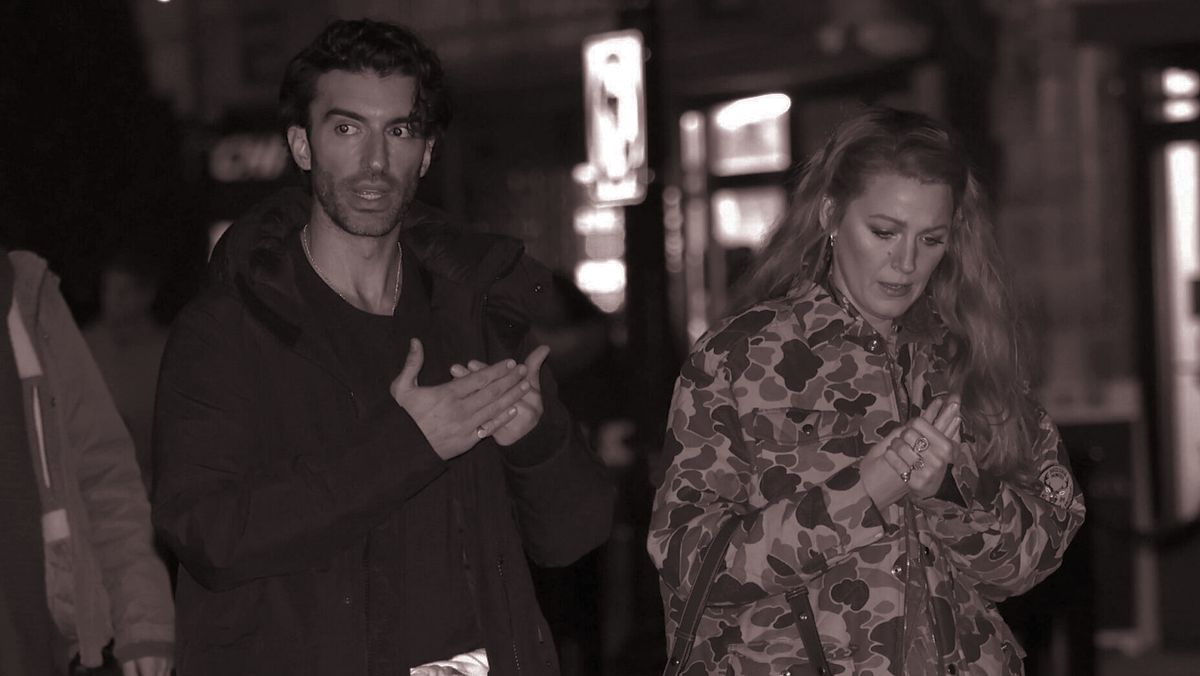
With both sides in the It Ends With Us legal/P.R. war seemingly intent on
seeing the case through to the bitter conclusion, its endgame is coming into view. And it could be an uphill fight for Blake Lively. |
|
|
If you want to understand how Judge Lewis Liman may rule in the Blake
Lively–Justin Baldoni case, here’s my advice: Forget the Taylor Swift texts and set aside, for now, those messages among Sony executives questioning Lively’s career prospects after she went public with her allegations from the making of It Ends With Us. You’re better off looking at what happened behind the scenes on NBC’s hit
sitcom Friends.
Twenty years ago, in a case that would become a legal landmark in Hollywood, a Friends writers assistant named Amaani Lyle sued Warner Bros. after the studio fired her from the hit show. Lyle claimed that the atmosphere in the writers room—where colleagues made lewd remarks and openly joked about sleeping with the show’s female stars—amounted to sexual harassment. A trial court dismissed her claims, an appellate court briefly revived
them, and the California Supreme Court ultimately put the case to bed on the basis that writing adult comedy requires latitude for the creative process. Ever since, Lyle v. Warner Bros. has been cited for the proposition that context matters, and that not every uncomfortable workplace interaction in a creative environment is
actionable.
So it was no surprise when Jonathan Bach, one of Baldoni’s attorneys, opened his summary judgment argument last week in New York federal court by invoking the Friends case. Context, he argued, was everything. None of Lively’s arguments—Baldoni’s commentary on her wardrobe or weight, Baldoni kissing her during rehearsal of a slow dance, producer Jamey Heath showing a video of his wife giving birth—held water, Bach
argued. First, none of the behavior was directed at Lively because she is a woman. And second, it was all part of the filmmaking process for an adult-themed movie about intimate relationships. |
|
|
A MESSAGE FROM OUR SPONSOR |
ONE BATTLE AFTER ANOTHER Nominated for 13 Academy Awards® including Best Picture &
Director "Anderson’s humanistic masterpiece of a movie says: You fight it with love” - Breaking down Bob's frantic chase through the river of hills and the lengths a father will go to for the love of his daughter.
Watch Now
|
ONE BATTLE AFTER ANOTHER Nominated
for 13 Academy Awards® including Best Picture & Best Director Leonardo DiCaprio and Paul Thomas Anderson reflect on their long awaited collaboration and the one-of-a-kind moviegoing experience it delivered.
Watch Now
|
|
|
Esra Hudson, arguing for Lively, countered that the distinction between
Lyle and this case was that Baldoni and Heath targeted her specifically, rather than just subjecting her to a generally inhospitable atmosphere. The relevant issue, Hudson argued, was consent—and Lively never gave it.
That was the moment, perhaps tellingly, Judge Liman pressed hardest. What was the limiting principle, he asked—in other words, how do we keep a consent rule from swallowing everything? Don’t directors have the ability to improvise? If kissing is off-limits,
what about a hand on an actor’s back? And if consent is the sole measure, what is the role of intimacy coordinators or nudity riders in contracts? “Your position would seem to have every issue decided by a jury,” Liman observed, “and that can’t be right.”
To some, this might just sound like routine probing by an engaged judge, testing the edges of each side’s argument before issuing a ruling. But as I sat in the New York courtroom, Liman’s approach felt familiar. About a year ago, he
pursued a strikingly similar line of questioning during a hearing on Leah McSweeney’s lawsuit against Bravo over alleged mistreatment on The Real Housewives of New York City. The former castmember claimed producers discriminated against her as a recovering alcoholic, “weaponizing” her alcoholism and exploiting her relapse for a storyline.
During that hearing, Liman pressed counsel to articulate limiting principles and openly wondered whether the theory advanced
by McSweeney’s attorneys would spell the end of reality television. Ultimately, Liman concluded that producers were entitled to cast participants willing to consume large amounts of alcohol, and that creative freedom outweighed the state’s regulatory interest. He dismissed much of McSweeney’s case, though he allowed a narrower hostile-work-environment claim to
proceed. It’s not hard to imagine a similar trajectory here, with Liman substantially narrowing Lively’s case before trial, even if he stops short of tossing it outright.
There are a few factual disputes, most notably over the circumstances in which Heath entered Lively’s trailer while she was nearly nude. Beyond that flashpoint, however, the parties largely agree on what happened, even as they fiercely disagree about what it means. That’s often the ideal setup for a judge inclined to
write doctrine rather than defer to a jury. In other words, this case has all the ingredients for a sequel to the Friends case. Some 20 years from now, it wouldn’t be surprising if lawyers are citing whatever Liman writes next. |
The
Shadow Smear Campaign
|
Liman must also decide how to handle Lively’s claim that Baldoni and other producers publicly
maligned her in retaliation for her complaints about on-set conduct. This is the strand of the case that has attracted the most attention—remember the New York Times “Hollywood smear campaign” headline?—and generated the most anticipation about what Lively’s legal team, led by Michael Gottlieb at Willkie Farr, might uncover. Would discovery expose a covert social media operation, orchestrated by Baldoni, that reshapes our understanding of the modern crisis-management
dark arts?
The short answer: Not really. Despite a tranche of documents that were unredacted on the eve of the hearing, Lively’s lawyers struggled to point to evidence supporting the theory that Baldoni coordinated a press and social media campaign to bury her. They highlighted instances in which Baldoni’s P.R. team—led by Melissa Nathan and Jennifer Abel—shared talking points with digital influencer Sage Steele ahead of a pro-Baldoni
video. But overall, they appeared to concede that the investigative haul was thin.
That disappointment now underpins a sanctions motion—Lively’s team argues that the absence of evidence is itself evidence, accusing Baldoni’s camp of switching to Signal and enabling auto-delete just when communications should have been preserved. They’re asking the court to draw the inference that Baldoni did, in fact, execute a plan to undermine her publicly—and, if the case reaches trial, to bar
him from offering any rebuttal.
Lively’s most formidable obstacle, however, may not be the evidentiary gaps, but whether Lively was truly an employee, as her side claims. If she is instead deemed an independent contractor, then several employment law claims, including retaliation, could fall away entirely.
That question remains a jump ball. Nevertheless, my eyebrows went up when Liman strongly implied that he didn’t view Lively’s unsigned, longform
loan-out agreement—which her team has leaned on heavily to establish employee status—as enforceable. On the employment question, which has barely merited media attention amid the tabloid-ready details the case has otherwise served up, Baldoni’s lawyers have pointed out that harassment and discrimination laws are “designed to address a power differential”—and Lively is hardly powerless.
On the contrary, she’s a marquee star who exercised significant control over her working conditions,
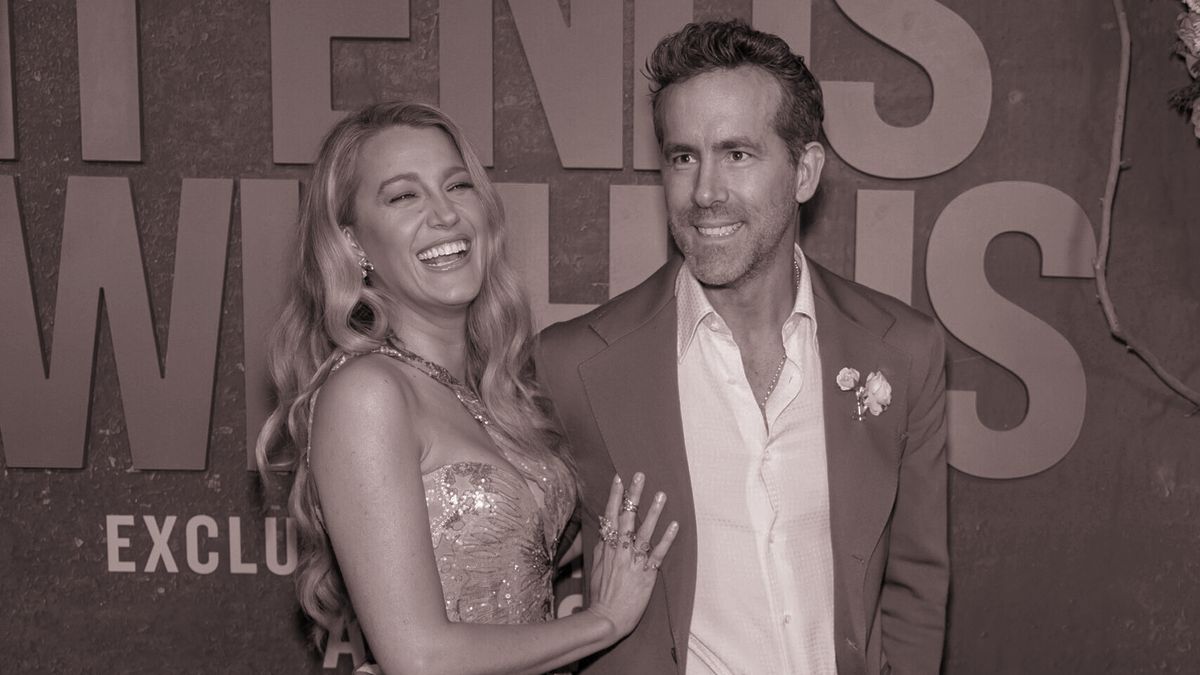
including extracting a 17-point list of demands early in the shoot. She also has a roster of influential allies (yes, this is where Taylor Swift reenters the story) and a powerful spouse, Ryan Reynolds, who was actively lobbying Colleen Hoover and executives at WME on her behalf (see my partner Kim Masters’s sharp-eyed coverage here).
All of which is to say that it’s possible Liman seizes on this line of reasoning, disposing of claims on grounds that few outside the courtroom have been paying much attention to at all. |
Notably absent from the lectern during the hearing was Bryan Freedman. He was
certainly present, and even brought his son to observe, but besides introducing himself, he remained silent and seated as his colleagues on Team Baldoni sent up three lawyers, including the formidable Alexandra Shapiro, whose recent client list includes Sam Bankman-Fried and Sean “Diddy” Combs. It was a savvy decision, both because Liman has shown an awkward aversion to Freedman in past proceedings that I’ve witnessed, and because Baldoni’s camp
faces defamation claims arising from Freedman’s own media comments made around the time this case was filed.
Those statements went beyond the usual lawyerly boilerplate that the opposing claims “lack merit.” Freedman told talk show host—and former client—Megyn Kelly that Lively had weaponized sexual harassment allegations to become the de facto director of It Ends With Us. He told others that Lively had lied outright. The question for Liman is whether
those remarks are actionable.
Shapiro urged Liman to tread carefully, warning that a ruling against Baldoni on the Freedman matter could chill constitutionally protected lawyering. “The consequences of not treating these statements from an advocate as opinions are severe,” she argued, cautioning against a precedent that effectively muzzles defendants accused of serious wrongdoing.
It didn’t look to me like Liman was persuaded. In this case, he’s drawn a sharp distinction between
advocacy in court and advocacy in the press, adding: “He had full license to say these allegations are wrong. But when he goes beyond that to attack reputation and motive, knowing that is false, there are limits.” So where does that leave things? Liman could dismiss much of Lively’s underlying harassment case while allowing the claims about what happened after she filed suit to proceed. If that’s the outcome, the fallout may force Hollywood to recalibrate the rules of reputational
warfare going forward. |
Thanks, Eriq. What a case. Julia Alexander is here tomorrow, and I’ll be back on
Thursday.
Matt |
|
|
|
|
JOHN OURAND & DYLAN BYERS |
|
|
Need help? Review our FAQ page or contact us for assistance. For brand partnerships, email ads@puck.news. You received this email because you signed up to receive emails from Puck, or as part of your Puck account associated with {{customer.email}}. To stop receiving this newsletter and/or manage all your email preferences, click here. |
Puck is published by Heat Media LLC. 107 Greenwich St., New York, NY 10006 |
|
|
|