{{ 'now' | timezone: 'America/New_York' | date: '%b %d, %Y' }} |
|
|
|
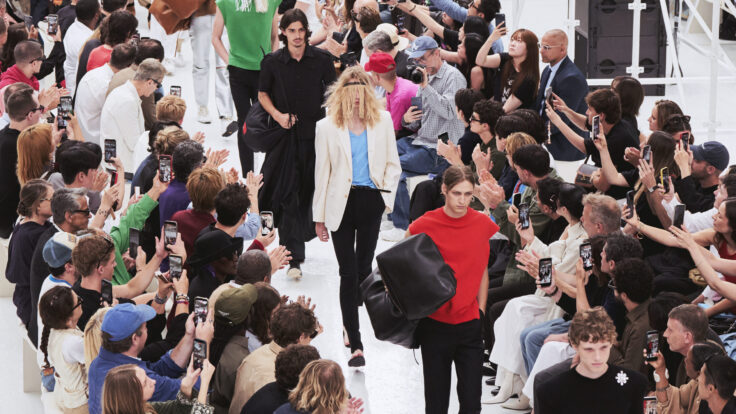
Hi, and welcome back to Line Sheet. Did you see Jil Sander walking around Art
Basel?
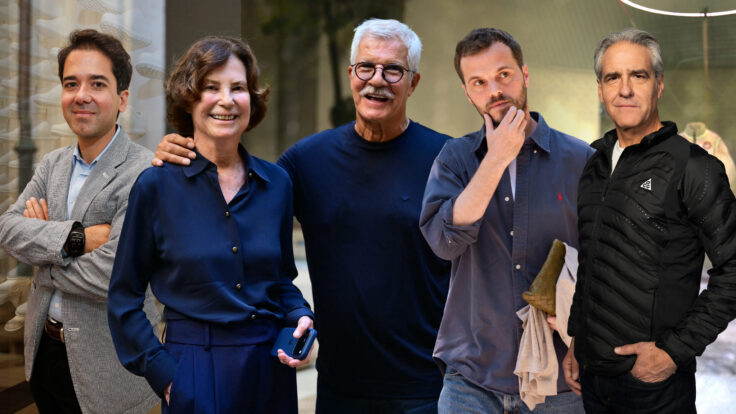
I’m still in London for a few hours. People get so wacky here when the sun shines. Tonight, a fine selection of fashion people congregated in Bloomsbury at one of my favorite restaurants in town, Café Deco, for one of our now-famous Puck Private Dinners with one of our most-favorite partners, ShopMy. The Brits really get it—both ShopMy and Puck—and it was
fun to bring this crew together for good food, wine, conversation, and a long, drawn-out investigation of the provenance of Boring Not Com. (These dinners are off the record, so I cannot reveal more… yet.)
As always, massive thanks to ShopMy’s superstar co-founder and president (and newlywed!) Tiffany Lopinsky and her strategy queen, Ayesha Shand. On the Puck side, the shoutout goes to partnerships boss Alex Bigler for braving economy
class on a red-eye to meet me in London. I enjoyed our catch-up at Vesper the night before. (I promise this is not turning into a food blog, but go eat there, too.) Finally, thanks to the Zetter, a new boutique hotel in the neighborhood where I stayed, for making it easy for me to wear four-inch heels and still walk home.
But back to the matter at hand. Before dinner, I
trekked all the way to the Hurlingham Club in South West London (the equivalent of going to the Pacific Palisades from Pasadena) for Hermès’s big to-do celebrating their London store opening. It was worth the trip. I’ve got more on Hermès’s massive bet on London Town below, plus news of Coperni’s bankruptcy in Paris—the latest development in the saga of Tomorrow Ltd., the brand accelerator that promised young labels like Coperni the moon and stars but ended up in administration itself in the
U.K. Also, Rachel Strugatz, the best beauty reporter in the business, gets to the bottom of the speculation that Jay-Z’s investment firm might buy Fenty Beauty from LVMH.
For the main event, Rachel returns to the state of Glossier, which remains in turnaround mode as still-new C.E.O. Colin Walsh attempts to get the house in order. Rachel, as usual, shares the good, not so good, and the bad.
Also mentioned in this
issue: Axel Dumas, Arnaud Vaillant, Charles Jeffrey, Evan Spiegel, Grace Wales Bonner, Jack Harlow, James Fox, Jay Brown, Pierre-Alexis Dumas, Jimmy Butler, Kaia Gerber, Larry Marcus, Martine Rose, Paul Smith,
Rihanna, Samuel Ross, Sébastien Meyer, Steven Meisel, Véronique Nichanian, and more. |
|
|
|
IN PARTNERSHIP WITH OVER THE MOON |
Discover lifestyle brand Over The Moon's Beach and Tennis Club—a shoppable destination inspired by the charm of an
East Coast summer. Discover crisp tennis whites, chic swimwear, polished accessories, and warm-weather essentials curated for everything from early-morning matches to sunset cocktails and celebratory weekends away. Rooted in Over The Moon’s signature blend of classic elegance and modern femininity, the collection brings together coveted designs from both established names and emerging talents. The result is a wardrobe that captures the effortless sophistication, relaxed ease, and understated
glamour of summer at its finest. Discover the collection at OverTheMoon.com. |
|
|
|
Three Things You Should Know…
|
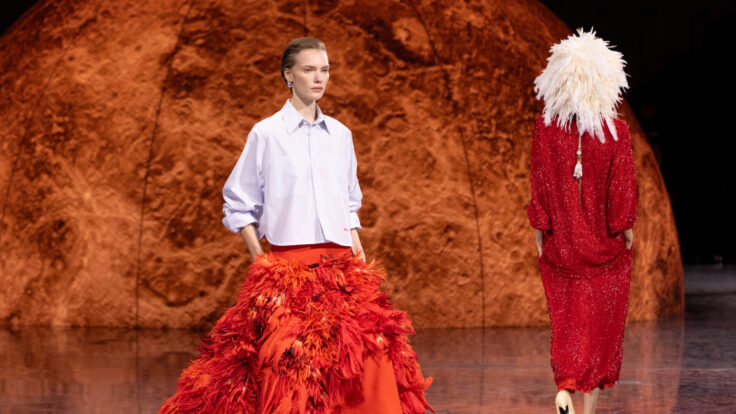
- Hermès’s Bond market: Early Tuesday morning, I took a train to London for the grand opening of Hermès’s new store at 166 New Bond Street, more than a decade in the making. It is truly the nicest single-brand store I’ve ever seen—55 rooms, reimagined by the company’s in-house architecture firm and finished by British artisans. (Last weekend’s How to Spend It has beautiful photographs of the space.) This is why Hermès is often depicted in the media as untouchable.
At the opening, I spoke briefly with Hermès artistic director Pierre-Alexis Dumas, the sixth-generation heir who is the right brain to his cousin, C.E.O. Axel Dumas’s left brain. Pierre-Alexis showed me the beigey-pink lacquered ceiling in the room for women’s shoes and how it was constructed to make it feel higher, despite restrictions
that wouldn’t allow for lifting it. Throughout the morning, he kept telling people that he was a bit melancholy, the way many creative types get after finishing up a big project. But that’s also just been the mood in the luxury industry of late, especially in post-Brexit London, amid the war in the Middle East. The city really needed this store. There is so much texture in the space—from the exposed bricks to a room lined in horsehair wallpaper—which gives it an unprecedented depth, reinforcing
the idea that to make something meaningful, you have to put a lot of work into it.
How much did all of this cost? In 2009, Hermès paid about £75 million for the property, so it’s fair to say hundreds of millions of pounds. And the expenses didn’t end with the store, of course. On Tuesday night, the company invited clients, press, and dignitaries
from around the world to the Hurlingham Club, where they had constructed several differently themed restaurants. There was also an ersatz pub where pretty much all the brand’s artistic directors (there are many you don’t even know about) gathered—including incoming menswear creative director Grace Wales Bonner and her predecessor, Véronique Nichanian, who was with good buddy Paul Smith. None of them participated in the very English quiz that
took place. (One of Axel and Pierre-Alexis’s favorite talking points is that “Hermès is the most British of French brands.”)
There were several performances throughout the evening, and mostly jokey dance troupes—a requisite for any Hermès party. There were fireworks and chandeliers made out of leeks and carrots. Someone D.M.’d me on Instagram, asking if it was funny or silly. I said both. The Dumases understand, arguably better than anyone else in this business, that there’s no reason to
buy anything they’re selling unless you take pleasure in it. - Coperni’s day after Tomorrow: Last week, a Paris court approved Coperni co-founders Sébastien Meyer and Arnaud Vaillant’s request to reorganize without having to liquidate. Meyer and Vaillant claim they had to do this after their distributor and shareholder, the brand accelerator Tomorrow Ltd., stopped paying them. Tomorrow, which is owned by
the Milan-based Level Group, filed for its own reorganization in the U.K. on April 2.
According to a statement shared by Coperni’s reps, “The teams remain fully mobilized and the brand continues its development.” From what I know, Meyer and Vaillant brought in new investors to buy back Coperni from Level but were rebuffed. (They claim Level owed them about €5 million.) Now they’re hoping that the support from the French court, which will assign them a lawyer, will allow them to finally
separate from Level and Tomorrow. A source close to Tomorrow, which was ultimately responsible for paying Coperni’s bills, said the money Coperni believes it’s owed actually pertains to years of marketing spend that the Tomorrow board never approved. (Reps for Coperni and the Level Group did not respond to requests for comment.)
Tomorrow, originally a wholesale showroom, created an incubator program with shared services to help scale brands and let their designers focus on designing. Of
course, these things pretty much never work, and at some point Tomorrow failed to raise the additional funding it needed, resulting in a fire sale to Level. There’s an argument that Coperni, Martine Rose, and Charles Jeffrey should just leave and start new brands if they want to continue without the albatross of Tomorrow. (Samuel Ross, founder of A Cold Wall, departed years ago and started a consultancy.) Anyway, it’s just another example of the
challenges young brands are facing right now as wholesale finally bites the dust.
|
|
|
|
IN PARTNERSHIP WITH OVER THE MOON |
Over The Moon, the lifestyle destination for creating a life well lived, brings together exclusive collaborations with
your favorite brands alongside a curated assortment of dresses, swimwear, accessories, and warm-weather essentials. Featuring coveted pieces from established designers and emerging talents alike, the collection is designed for every summer moment—from mornings by the water to sunset soirées and weekends away. Discover more at
OverTheMoon.com. |
|
|
|

| Rachel Strugatz
|
|
- Fenty’s
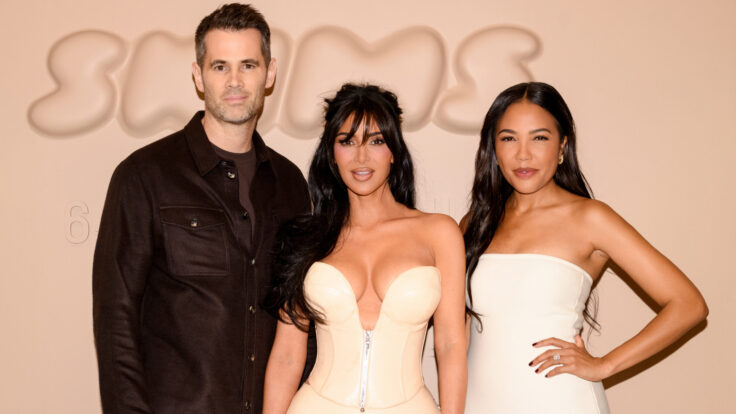
umbrella: Earlier this week, Cosmetics Business reported that MarcyPen Capital Partners—the current iteration of Marcy Venture Partners, the investment fund co-founded by Jay-Z, Jay Brown, and Larry Marcus—was in talks to purchase LVMH’s 50 percent stake in Fenty Beauty,
once a crown jewel of the luxury conglomerate’s beauty portfolio. (Rihanna still owns the other half of the business.)
Insiders report that Fenty’s business had been quietly under pressure for years. And Kendo, the LVMH beauty-brand incubator that co-created Fenty, is also much diminished. One high-level source said they’ve heard rumors about MarcyPen acquiring LVMH’s stake “for a while.” (A spokesperson for MarcyPen didn’t respond to requests for comment.)
|
|
|
|
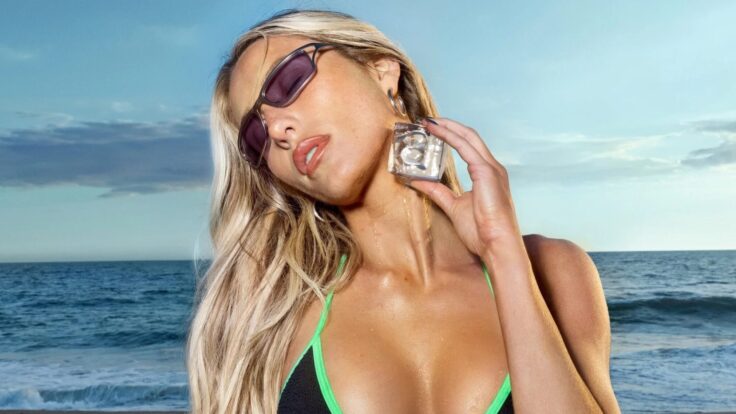
C.E.O. Colin Walsh inherited a beauty unicorn in retreat and is now doing the unglamorous
work of turning Glossier back into a business. But can the brand that epitomized Millennial beauty survive previous management’s mistakes? |
|
|
|
It’s been quite a year at Glossier, the ur-girlboss brand that has lost a few steps since its 2010s heyday.
Under the leadership of relatively new C.E.O. Colin Walsh, the beauty brand is finally acknowledging Glossier’s depleted mojo. Some of Walsh’s early moves to tackle the company’s operational issues and achieve profitability will be invisible to consumers; others, including new product and creative, won’t materialize until next year. But as one person familiar with the business put it, “They’re moving with urgency and focusing on the things they need to do.”
The overhaul
began in February with a brutal but much-needed restructuring in which Glossier eliminated more than a third of its 170-person corporate workforce and imposed a moratorium on new launches. As I reported earlier this spring, the company had been on a two-year binge of launching new products—three fragrances in five months!—and the recent cuts reflect an overdue
reckoning. “A company that started with four SKUs is a specific brand, and it has nearly 500 SKUs now,” said a person familiar with its products. The retrenchment extends to retail: Glossier is planning to shutter all its branded stores outside of New York City, L.A., and London—including its “mushroom trip”–themed Seattle outpost. I’m told that about half of the closures will take place by the end of this year. (Glossier declined to comment for this story.)
Meanwhile, Walsh has been
assembling a new leadership team. Nicole Solórzano, who previously led marketing at haircare line Ouai during Walsh’s tenure there as C.E.O., joined Glossier in April as chief marketing officer. The company is also continuing to search for a new creative director, which should be a coveted role, and head of product development. There’s some news on the financing front as well: Before Walsh arrived, Glossier had been pursuing a $100 million fundraising round on top of the $266
million it had already raised, seeking a valuation “south of a billion dollars”—roughly half of its previous valuation of nearly $2 billion.
That much-reduced figure was probably closer to what the business should have been worth all along. But Glossier couldn’t close the round. After Walsh arrived, he ended discussions about reviving the raise.
The company, however, still needed capital. So Glossier found another solution—a $45 million credit facility from Tiger Finance, according to sources familiar with the situation. |
|
|
|
Debt financing is pretty common across consumer brands and is not in itself a sign of distress, though a lot
depends on the terms. One founder of a leading beauty brand told me that debt facilities, which provide working capital, are practically essential for companies doing business with retailers such as Sephora and Ulta. Those retailers can owe brands millions of dollars at any given moment—revenue that exists on paper but has not yet arrived in a company’s bank account. Companies generating north of $100 million in annual revenue may also have $20 million to $40 million worth of inventory at any
given time in their distribution centers. Converting that inventory “into working capital when a lender has confidence that those products will eventually ship somewhere makes sense,” the founder noted. |
I’ve written extensively about Glossier’s struggles at Sephora, its exclusive U.S. retail partner, where
performance has taken a hit following a successful launch more than three years ago. Those struggles have stemmed in part from leadership’s failure to grasp the nuances of selling at Sephora, a series of lackluster launches, and a growing wave of competitors that have executed the Glossier playbook more effectively.
Alas, I’m told that Glossier will lose much of its Sephora shelf space this summer, when its makeup and skincare allotment will be halved. “The previous leadership launched a
whole bunch of products to fill a Sephora gondola that just didn’t fit within the ethos of the brand,” said a person close to the brand. “They would rather have one bay that performs.” (Glossier will still have an additional presence within fragrance.)
Losing space at Sephora rarely means your brand is knocking it out of the park. But it does provide an opportunity for Glossier to get rid of some duds and redundancies. Glossier intends to refocus on the products that built the
business: Balm Dotcom, Cloud Paint blush, and Boy Brow. “We spent a lot of time looking away from those,” one person involved with the brand told me.
As it sorts itself out at Sephora, Glossier quietly launched on Amazon earlier this year. A quick sweep suggests only a quarter of the collection is currently available, though that will likely expand over time. Amazon should be an incredibly meaningful business for a brand like this—Glossier’s prestige-but-accessible entry price point works
well here. There are no immediate plans to “blow it up,” according to the person involved with the brand. “They need to be in that channel.”
For now, however, Glossier has plenty of less sexy operational inefficiencies it needs to address before the brand stands a chance of getting back to some semblance of its former self—or the next version of itself. In the hands of a less capable operator, I might view Glossier as a lost cause. Under Walsh, I’m not yet ready to make that judgment.
|
What We’re Reading… and
Looking At…
|
Maybe
smartglasses are becoming a thing? Snap, which has been pretty early on integrating A.R. into the social media experience, is launching a $2,195 pair with similar technology and commissioned the Steven Meisel to shoot a campaign starring Kaia Gerber, Jack Harlow, and Jimmy Butler. At
that price, Evan Spiegel clearly isn’t going for ubiquity. [Snap]
J.W. Anderson released a new lookbook, once again featuring real people, including Camille Bidault-Waddington, the art historian James Fox, ceramicist Akiko Hirai, and most importantly, every fashion girl’s favorite muse, the
super-publicist Caroline Deroche Pasquier, plus her son Martin. It’s great. [Instagram] |
Until tomorrow,
Lauren
P.S.: We use affiliate links because we are a business. We may make
a couple bucks off them. |
|
|
|
Need help? Review our
FAQ page or contact us for assistance. For brand partnerships, email ads@puck.news.
You received this email because you signed up to receive emails from Puck, or as part of your Puck account associated with {{customer.email}}. To stop receiving this newsletter and/or manage all your email preferences, click here. |
Puck is published by Heat Media LLC. 107 Greenwich St., New York, NY 10006 |
|
|
|
|