 |
| Welcome to Dry Powder. I’m Bill Cohan. |
In today’s issue, a close look at an intriguing new theory circulating on Wall Street about the fate of Shari’s Paramount auction, should she continue to ignore Apollo’s $26 billion bid for all of Paramount Global in favor of the preposterous David Ellison deal. I touched base with some Yale buddies to explain how the whole thing could work. I hope the Redstone lawyers are taking notes…
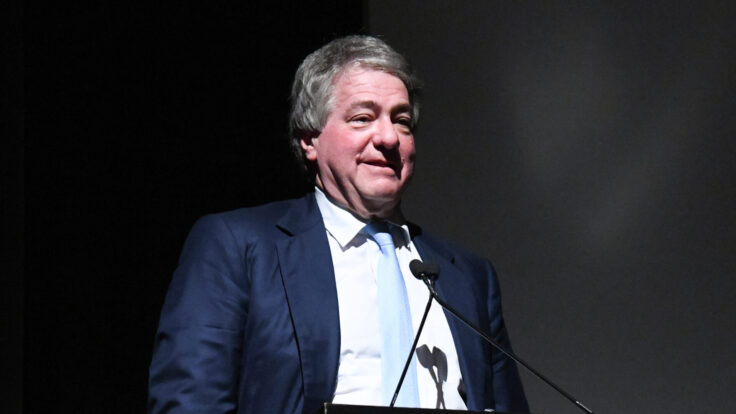
Also, before jumping in, I want to warmly welcome veteran art writer Marion Maneker to the Puck family, whose excellent private email on the art market, Wall Power, will go out every Sunday and Tuesday. The first issue will arrive in a few hours. You can sign up here. I’m told the first dispatch includes a reference to Leon Black’s pair of $50 million Raphaels, which the fallen Apollo co-founder referenced in our conversations published over the past two weeks. (You can find part one and two here and here.) I couldn’t be more excited.
But first… My partner Dylan Byers recently reported on a piece of micro-deal-making involving some players from the Dry Powder Cinematic Universe…
- Diller’s new partners: Ben Sherwood, the former Disney-ABC Television president and ABC News chief, and Joanna Coles, the former Hearst Magazines chief content officer and onetime Cosmopolitan editor and So Cosmo star, plan to acquire a 49 percent stake in The Daily Beast from Barry Diller’s IAC, according to two sources with knowledge of the matter. Diller will retain majority control, while Coles will run the company in a C.E.O. or editorial director capacity, serving as its public face but hiring an editor-in-chief to run the newsroom. (The salary offer for the E.I.C. is only $300,000, I’m told, so let’s see who they get.)Of course, The Daily Beast has been an abysmal business for some time. The brand has lost whatever luster it had in the early Tina Brown days, and it’s become a money-losing, low-eight-figure business with union headaches and talent leakage. The Beast’s former top editors, John Avlon and Noah Shachtman, left for CNN and Rolling Stone, respectively. Heather Dietrick, its former C.E.O., left for another opportunity last year at Outside Interactive, the Sequoia-backed outdoorsy media roll-up play.
Not surprisingly, Diller has been a motivated seller for some time, and his banker, the well-liked and smart Jason Rapp at Whisper, has been marketing the asset for ages. At one point there was an acqui-hire concept in the works wherein IAC would bring in Janice Min, the former Hollywood Reporter editor, to run the business and also manage The Ankler, where she is C.E.O. It didn’t work out.
Sherwood and Coles are perhaps more logical partners, even if the title still seems a bit beneath their stations. Both are longtime media veterans who love the news game and no doubt see the distressed asset as a path back into the arena without having to outlay substantial investment. After leaving Disney in 2019, Sherwood launched a youth sports app that he recently sold to TeamSnap. Following her exit from Hearst, Coles tried her hand at Hollywood production and various SPAC launches but couldn’t get much off the ground. (She remains on the Snap board.) All the while, like Iger in the interregnum, one senses they never really left their old worlds behind.
Both Sherwood and Coles are not answering their phones, though I’m told the pair planned to give an interview to The New York Times over the weekend ahead of a formal announcement early this week. —Dylan Byers
|
| And now for the main event… |
 |
| The Paramount Sale Vulcan Chess Theory |
| As the bizarre and absurd Ellison-Redstone deal marches forward, with board directors fleeing, a new theory has emerged: Shari’s bankers and lawyers are appeasing her for now… until they recommend the Apollo offer instead. Yes, full Revlon mode… |
|
|
|
| The National Amusements nightmare continued apace this week with more bad news for Shari Redstone. Earlier this month, we learned that Shari had decided to all but ignore Apollo’s $26 billion bid for all of Paramount Global in favor of David Ellison, KKR, and RedBird Capital’s cockamamie bid to buy National Amusements Inc., the Redstone family holding company that controls Paramount, for more than $2 billion—a premium of at least 160 percent above the $760 million that her economic stake is valued at these days—and then to have Paramount buy Ellison’s Hollywood company, Skydance, for $5 billion. That’s crazy.To evaluate the Ellison madness, the Paramount board, which Shari controls, first appointed a special committee, which then hired Cravath, the law firm, and Centerview Partners, the excellent boutique advisory firm run by my longtime friend Blair Effron. The special committee then handed Ellison and his partners a 30-day exclusive period to see if a definitive agreement could be worked out, while appearing to let the Apollo offer fade to black. But this decision seemed motivated purely by Shari’s self-interest—as if she didn’t give a shit about her aggrieved shareholders and simply wanted a clean break from all of her business woes… not only Paramount’s decline but also her N.A.I. burden.
That holding company, of course, has some $200 million of debt; $175 million of payment-in-kind preferred, growing at 7.75 percent every year (owed to her M&A advisor Byron Trott and his firm, BDT & MSD Partners); and some 1,500 movie screens globally. Only Ellison, KKR, and the RedBird guys have offered to take both messes off her hands.
The only tradeoff for Shari with the Ellison deal is that it will likely also come with significant shareholder lawsuits, many of which have been foreshadowed in recent days. Both Matrix Asset Advisors and Barington Capital, two holders of Paramount shares, are publicly questioning the Ellison deal. Paramount’s largest non-Redstone voting-stock shareholder, the long-suffering Mario Gabelli, is also against the deal and feels he is entitled to Shari’s 160 percent premium, too. He told the Los Angeles Times, “All voting stock should be treated equally.” He told Reuters that if Shari gets a premium for her voting stock, and he doesn’t, he would have no choice but “to sue.” He told the New York Post on Friday he’d even rather see Paramount pursue Bakish’s “turnaround strategy” than sell now. “I’m a firm believer in what Bakish is doing and I think he can pull it off and the stock will be worth substantially more,” he said. (This is a real-head scratcher too, as there’s no evidence that any kind of turnaround is underway at Paramount under Bakish.) Gabelli suggested that Paramount sell off assets—CBS, MTV, Comedy Central, and BET—and use the after-tax proceeds to pay down debt, which is not a bad idea in theory, but in practice, these tired assets will get marked-to-market in a sale process, and it likely won’t be pretty.
Gabelli, bless his heart, is digging in. According to Paramount’s proxy statement, filed on Thursday, he actually increased his stake in the voting shares of Paramount by 27 percent, to 5.1 million shares, giving him a stake of 12.5 percent. Warren Buffett, who had been the largest holder of Paramount’s non-voting stock—with 93.7 million Paramount shares as of September 30—reduced his stake by a third, to 63.3 million shares, at the end of December. (My bet is that Buffett sold his remaining stake during the first quarter of 2024, but we’ll know soon enough when he reveals his first-quarter holdings.) Meanwhile, the biggest news from the proxy was that four of the company’s 11 board members were effectively resigning, including Nicole Seligman and Robert Klieger, both attorneys and longtime Shari allies. Also standing down, unexpectedly, are Dawn Ostroff, the media executive who only joined the board a year ago, and banker Frederick Terrell.
Needless to say, this is unusual under any circumstances, but it is especially unusual in the midst of a highly controversial sale process that is increasingly looking like the Redstones will benefit disproportionately at the expense of the non-Redstone shareholders. Curious about what was going on and why four directors would resign in the middle of an M&A process, I reached out to both Ostroff and Seligman. Ostroff was kind enough to respond that of course she couldn’t talk about what was going on at Paramount; Seligman did not reply.
For some corporate governance insight, I turned to the indefatigable Jeffrey Sonnenfeld, the senior associate dean at the Yale School of Management, and to Steven Tian, the research director at the Chief Executive Leadership Institute, which Sonnenfeld founded at the SOM. “I do know some past and present members of the board,” Sonnenfeld told me by email. “I did not communicate with any of them, but I am certain that they do not relish the prospects of lengthy, draining litigation.” Of course, these four directors resigned because they don’t want to get further roped into what Shari is trying to pull off here. (Despite the board’s D&O insurance, it’s likely too late, alas, to avoid the adjacent headaches of litigation, even if someone else will cover the cost.)
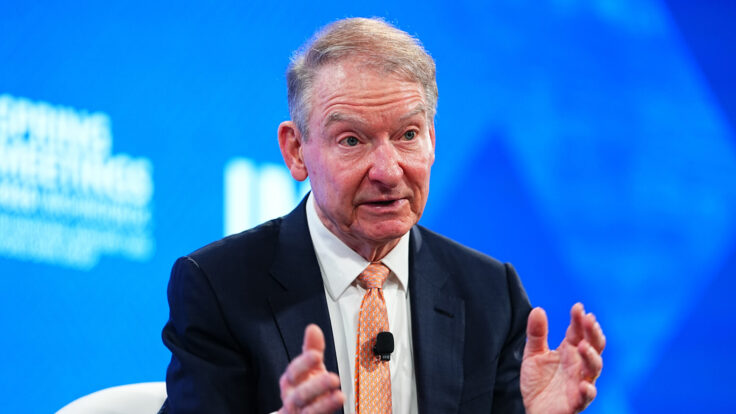
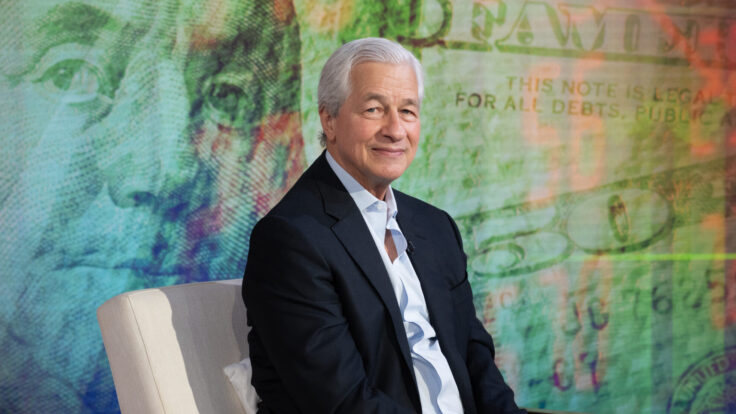
Why are savvy individuals like the ubiquitous plutocrat Charles Phillips and Barbara Byrne, a former longtime banker at Lehman Brothers, who was there while it collapsed, still hanging around this sinking ship? The Paramount board has never been a model of ideal corporate governance. Don’t forget, Seligman’s compensation committee awarded Bakish total compensation of $31.2 million in 2023, after being paid $32 million the year before. That’s roughly the same amount that Jamie Dimon, the C.E.O. of JPMorgan Chase, has been getting paid lately. And in case you’ve forgotten, JPMorgan Chase’s market value is $526 billion, after making some $50 billion in net income in 2023. Paramount Global has a market value of $7.6 billion, after losing around $1.3 billion in 2023. (Bakish and Bob Iger were paid the same amount in 2023; Disney’s stock is up 13 percent in the last year, while Paramount’s fell 50 percent.)
There’s no question that Shari is setting herself up for lawsuits in Delaware court. In fact, this deal is so preposterous that a new theory is circulating on Wall Street about what’s really going on and might take place next. |
|
|
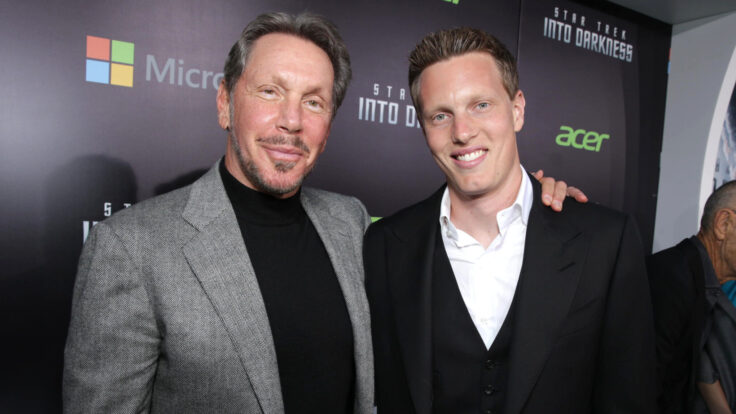
| The Redstones have a funny little history with the Ellisons. As my partner Matt Belloni noted on Thursday, Charles Phillips used to be the president of Oracle, David Ellison’s dad’s company. As I also reported once upon a time in Vanity Fair, when Sumner Redstone’s mansion in Beverly Park was infested with termites, Sumner rented Larry Ellison’s Malibu home for six months while it was being fumigated. (Technically it was rented by his former girlfriend-turned-caretaker Manuela Herzer, who was then controlling much of Sumner’s life.) So, ya, the Ellisons.I can also see why David Ellison wants to do the deal this way. Yes, he has to pay $2 billion, or so, for NAI to get Shari’s controlling voting stock in Paramount. But if he then gets Paramount to buy Skydance for, say, $5 billion, he controls the whole thing. He will likely replace Bakish straight away with Jeff Shell, the ex-NBCU C.E.O. who is now an advisor to RedBird, put his own people on the board of directors, and walk away with what he wants: control of the Paramount studio and the rest of the company for, what, a $3 billion profit? (This is my figuring that he and his posse pay $2 billion to Shari and then Paramount pays them $5 billion for Skydance, et voila, $3 billion ka-ching.) Every other shareholder earns bupkus for a premium and then gets to hold on to the equity of a company now run by Ellison, KKR, RedBird, and Shell that still has $14 billion of net debt and the same dismal prospects it had when Shari controlled it. (If this happens, it would be KKR’s second stop at the Paramount buffet, having bought Simon & Schuster last year.) This is not investment advice, but I don’t see why the stock would move up after this deal, unless Ellison et al. have some unrevealed plan to shutter the money-losing Paramount+ and sell off the cable channels, and maybe even CBS and its local affiliates. As Gabelli has said so eloquently, he’d have no choice but to sue. And maybe Shari is preparing to be sued and to settle somehow, as happens with most shareholder lawsuits. But this one feels different to me, and more like a total affront to the long-established principle of treating all shareholders fairly and equitably, if not exactly the same.
Why, you may wonder, would the super-smart bankers at Centerview and the super-smart lawyers at Cravath shun the patently fair Apollo deal and endorse the patently unfair Ellison deal? Which brings us back to a theory of the case shared with me by the dynamic Yale duo of Sonnenfeld and Tian. Distilled down to its essence, the Yale bros believe that Centerview and Cravath are playing 4-D chess with Shari. Shari and Ellison may think their deal is happening with the blessing of the special committee to the board, but, according to Sonnenfeld and Tian, that’s only because it then triggers Paramount Global’s “Revlon duties”—the requirement to sell a company to the highest bidder if what’s being contemplated is a cash deal, not a strategic merger. (The Revlon legal decision, from 1986, harks back to when corporate raider Ron Perelman succeeded in buying Revlon, the cosmetics company—even though the board didn’t want to sell it to him—because he offered the highest price. It turned out to be a pyrrhic victory for Perelman, who owned Revlon until 2023, when it filed for bankruptcy and he lost control of it to his creditors.)
Once the Paramount board’s Revlon duties kick in, Sonnenfeld and Tian argued, the special committee will have no choice then, and only then, to thoroughly investigate Apollo’s obviously higher, better, and “fairer” offer. As I noted last Sunday, it is the sacred duty of the special committee to make the best deal it can for all shareholders, not just the Redstone shareholders. But the Yale crowd believes that sacred duty won’t be done until after a definitive deal between Ellison and Shari is reached. At that point, the special committee will be obligated to explore any, and every, better offer for the company, through a “go shop” provision in the contract. And since there is only one other offer—the $26 billion Apollo offer—the special committee will have no choice but to explore, and then accept, the higher and fairer Apollo, presuming it is still on the table.
If Sonnenfeld and Tian are right, Centerview, Cravath, and the special committee are biding their time, letting Shari and David do their thing, but will ultimately sell the company to Apollo, its offer being far superior for all shareholders and the only way to avoid months, if not years, of litigation. It also solves another problem faced by the special committee to the board, which Shari hand-picked and can fire on a whim. According to the Yale theory, the special committee can appease Shari, shop the company with her imprimatur (as part of the definitive agreement), and still end up picking Apollo. “The saving grace for [the special committee],” Tian told me, “is they know the right thing will eventually happen, which is, as long as Shari makes the deal, any deal, then Paramount is effectively on the auction block. So the advisors are not the naive ones here, … and they can genuinely say by the end of all this that they did well for all shareholders.” (Not surprisingly, neither Cravath nor Centerview would comment—maybe the Ellison deal is being cut today.)
I told Steven that I was glad he and Jeffrey believe that Shari will ultimately get course-corrected by the special committee, if not by the Delaware courts at the end of all this. “Right,” he replied. “She may not know it, or want to hear it, but her advisors surely know Delaware law and how Revlon duties [work] and [that] a de facto auction [will] kick in with any change-of-control transaction.”
The Yale theory is an interesting theory, for sure. And we’ll soon see whether it plays out this way, or not. My only disagreement with the Yale duo is that I believe the special committee’s Revlon duties have already kicked in. After all, Shari put a for-sale sign on Paramount months ago, and we’re only talking about cash deals here. There’s no stock-for-stock strategic merger on the table. If there were, that would change the whole calculus and allow Shari to sell Paramount to whomever she wanted—she could make the argument that it’s strategic, she’s not cashing out, and Ellison is her preferred merger partner. But she’s not doing that. She’s selling out for cash and is in the process of screwing the other Paramount shareholders. There’s no question she’s put the company in play, she wants out, and that she is now obligated to sell to the highest bidder. So in my way of thinking, forget the Ellison charade and just do a deal with Apollo.
Maybe that’s a little naive. And while the Centerview/Cravath approach is a little more circuitous, it’s also more politically astute. We’ll know in the next couple weeks if Jeffrey and Steven are right.
I did, however, talk to someone close to the situation today, who emphasized that the dynamics are particularly complex given Shari’s absolute power to reject any deal that she doesn’t like, and also the fact that Skydance is a private company, and if Paramount is going to buy it, it needs to be thoroughly studied and valued before an agreement can be reached. This person also reminded me that just because one party has “exclusivity” for a period of time—in Ellison’s case, 30 days—that doesn’t mean that a deal will be concluded with that party, as the Yale duo has asserted correctly. Plus, there are the minority shareholders of the voting stock, like Gabelli, and the holders of the non-voting stock, like Buffett, whose interests are the purview of the special committee, a job I’m told the people on it are taking very seriously.
I wondered, though, if the committee’s job is more difficult than it normally would be because Shari is putting her thumb on the scale to make sure she gets the deal she wants. “They understand what her rights are as a controller,” this person told me about the special committee. “There’s a reality. There are transactions that require a shareholder vote, and she has rights. People bought into a company where N.A.I. has those rights, where whoever owns the majority of the ‘A’ shares has those rights. You can’t be blind and oblivious to that. But the committee has the absolute right to say ‘No.’ And that’s a very powerful right. Whenever you represent a special committee, and the committee has its own advisors, they’re going to do the best they can to weigh options and figure out what path they think is best for all the people who don’t get a direct seat at the table.” |
|
|
|
| FOUR STORIES WE’RE TALKING ABOUT |
|
|
|
|
|
 |
|
|
| Need help? Review our FAQs
page or contact
us for assistance. For brand partnerships, email ads@puck.news. |
| You received this email because you signed up to receive emails from Puck, or as part of your Puck account associated with . To stop receiving this newsletter and/or manage all your email preferences, click here. |
| Puck is published by Heat Media LLC. 227 W 17th St New York, NY 10011. |
|
|
|