 |
 |
|
Welcome back to What I’m Hearing, back home from CinemaCon a little early so I missed today’s Disney and Paramount presentations. (I’m especially sad I missed the Gladiator II pageantry.) Thanks to everyone who showed up yesterday for my panel, the ballroom was packed! On Monday, Scott Mendelson and I will have a CinemaCon-themed look at the rest of this year (and a little of ’25) at the box office, but today I have a different movie-related treat…
As always, if you were forwarded this email or are new to the WIH community, click here to become a Puck member.
Let’s begin…
|
|
|
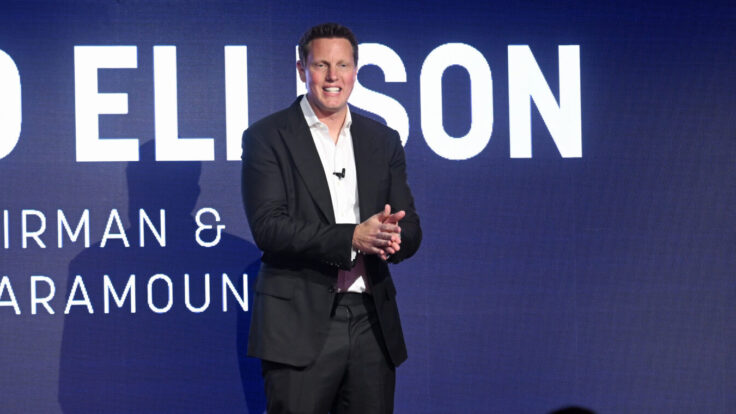
- Ellison’s Paramount board buddy: Much has been made this week of the four Paramount Global board members who will not stand for reelection at the shareholder meeting in June. But amid Paramount’s owner entering into exclusive sale talks with David Ellison, almost nothing has been said publicly about one of the remaining board members and his interesting professional and personal ties to the Ellisons. Charles Phillips, who has been on the Viacom and now Paramount Global boards for nearly two decades, was co-president of Oracle from 2003 to 2010. Not only was he “handpicked” by Larry Ellison (Forbes’ word, not mine), he also served on the company’s board and worked closely with David’s centibillionaire father during a period when Oracle grew rapidly via M&A. The two have remained close, I’m told.
Not only is Phillips on the Paramount board, but he’s part of the special committee of “independent” directors evaluating which of two potential suitors to engage with. One source close to the board told me that Phillips has been a vocal supporter of the $2 billion Skydance/KKR/RedBird Capital offer for control of National Amusements Inc. and the merger of Skydance with Paramount over Apollo’s $26 billion bid for all of Paramount. Is Phillips pushing to deliver this deal to his old pal Larry? Paramount declined to comment.
Another interesting wrinkle here: Centerview Partners, which is advising the special committee, also has reaped millions in fees from a bunch of Oracle deals. Centerview advised hospitality tech provider Micros Systems in its $5.3 billion acquisition by Oracle in 2014. More recently, Centerview advised Cerner, a provider of digital information systems, in its $28.3 billion acquisition by Oracle. Big bankers are involved in tons of lucrative deals; doesn’t mean they’re pushing for something that doesn’t make sense. But the connections have not gone unnoticed by a certain faction within Paramount that, like many common shareholders, is looking skeptically at the Ellison bid.
- Will somebody please buy Megalopolis?: This is getting embarrassing. Barry Hirsch, the 90-year-old attorney for Francis Ford Coppola, told IndieWire last week that the $120 million, self-financed film wouldn’t commit to playing a festival without first securing distribution. Welp, so much for that. Given the bad buzz and lack of offers, they’ve now rolled the dice on Cannes, hoping the Euro-centric audience will embrace the weirdness and reverse the narrative from the botched debut screening in L.A. (Seriously, what decade is Team Coppola living in? Doing a public screening for the town’s decision-makers, and inviting one trade journalist to write a puff-piece sales pitch, not realizing everyone there would see right through the article and quickly give other media outlets the real story?) Distributor after distributor has told me they aren’t interested, but the Coppola name and the notoriety of this project would suggest it can do some business, for the right price. C’mon Apple, consider this a gesture of goodwill.
- CAA’s temporary demotion: Maha Dakhil is back! That’s the news tucked into today’s CAA announcement of its “managing directors” under new owner François-Henri Pinault. I’m old enough to remember less than six months ago, when Dakhil “resigned” from the board and stepped away from her role as co-head of the motion picture department after an Instagram post characterizing Israel’s response to the Oct. 7 attack as “genocide” was widely interpreted as antisemitic. The ensuing “listening tour” must have been super effective, though I’m told Joel Lubin is still running the M.P. department solo.
- Box office over/under: I may regret this, but given the Imax and other P.L.F. pre-sales for Alex Garland’s Civil War, I’m gonna take the over on the $20 million tracking for A24’s big bet. Feels like this should be much more controversial than it actually is.
|
 |
| Planet of the Ape |
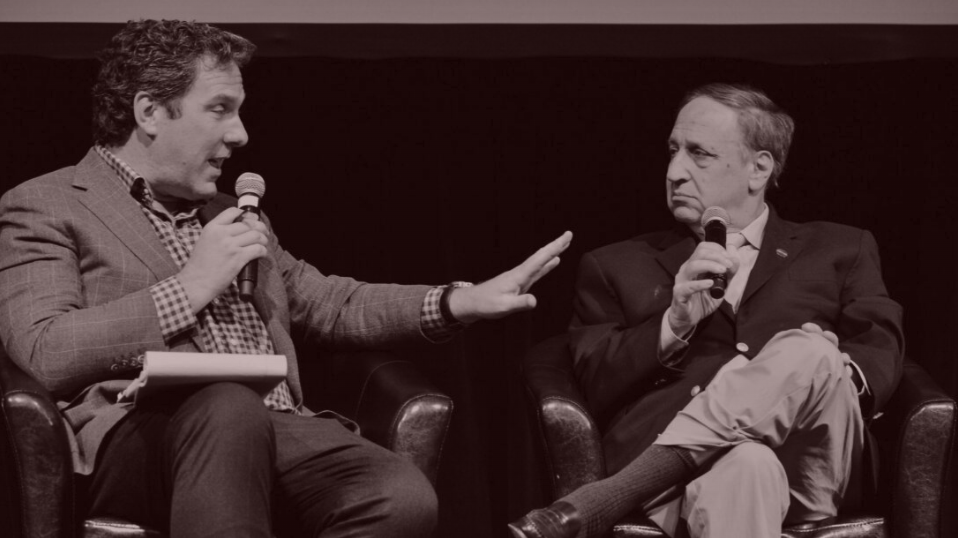
| AMC C.E.O. Adam Aron and I have had many, uh, spirited conversations in private over the past few years, so I was excited when he agreed to join a panel that I moderated in Las Vegas, where we talked candidly about bankruptcy fears, his faith in a 2025 box office rebound, his desires for Apple and Amazon, and all his meme-stock-loving APE buddies. |
|
|
|
| Regular readers of What I’m Hearing are very familiar with Adam Aron, the C.E.O. of AMC Entertainment, the world’s largest movie theater company. Since naming him Villain of the Year in 2021 for his stock sales during the height of the “APEs” meme craziness, I’ve followed the AMC saga through the devastating aftermath of Covid, which shuttered most of his 10,000 theaters globally and 8,200 in the U.S. and Canada. To Aron’s credit, he has so far prevented AMC from going bankrupt, a fate that befell rivals Cineworld (home of Regal) and Alamo Drafthouse. But some believe it’s only a matter of time for AMC, and that Chapter 11 might even be the most prudent path for the company long-term.
But realizing that a bankruptcy would wipe out his retail shareholders (and probably cost him his job), Aron has been defiant. He raised another $865 million in 2023 to keep the company afloat until, he believes, a strong pipeline of movies in 2025 and ’26 will lift the annual domestic box office above $10 billion for the first time since 2019.
Adam and I have had many, uh, spirited conversations in private over the past few years, so I was excited when he agreed to join an “industry trends” panel that I moderated yesterday in front of hundreds of people at the CinemaCon convention in Las Vegas. He was joined onstage by Cathleen Taff, president of distribution, franchise, and audience insights at Walt Disney Studios, and Bill Kramer, C.E.O. of the Motion Picture Academy, both of whom were great. But I thought my back-and-forth with Aron would be of most interest to the WIH community, so an edited version of our portion of the panel is below… |
|
A MESSAGE FROM OUR SPONSOR
|
 |
|
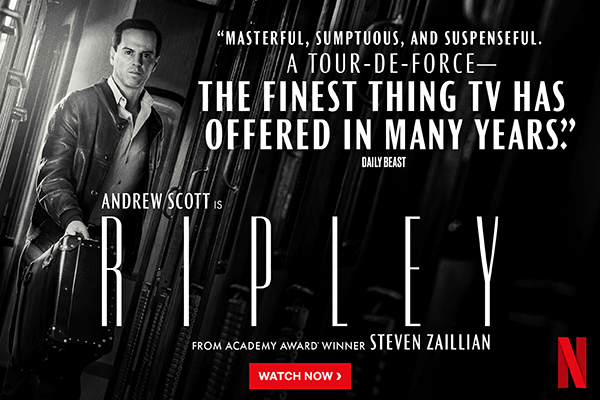
RIPLEY, the new limited series from Academy Award® Winner Steven Zaillian follows Tom Ripley, a grifter scraping by in early 1960s New York who is hired by a wealthy man to travel to Italy to try to convince his vagabond son to return home. Tom's acceptance of the job is the first step into a complex life of deceit, fraud and murder. Based on Patricia Highsmith’s bestselling Tom Ripley novels. Andrew Scott plays Tom Ripley. Dakota Fanning plays Marge Sherwood. Johnny Flynn plays Dickie Greenleaf.
Watch Now on Netflix.
|
|
|
|
|
| Matt Belloni: Adam, thanks for doing this. And thank you for wearing pants.
Adam Aron: And for you, a tie! [I was not wearing a tie.]
You sent a very provocative email to this group of panelists asking, “Is the basic business model broken?” What did you mean by that? And why are we all here if the basic business model is broken?
The business model has been broken for four years now. And I say that because a lot of other industries have come back from Covid much more quickly than the movie industry has. But as I look ahead, this is the first time that I think in the year coming, meaning not ’24 but ’25 and then ’26, our industry is going to be healthy and robust and strong again.
But you were talking about more than Covid. You want to change the economics of the relationship between exhibitors and studios. You want more of the box office splits because of the shorter windows that the studios all instituted during Covid.
That’s not exactly what I said.
Okay. Enlighten me. Because I’ve heard this a couple times this week: Many of the theater chains do have strong profits now and are doing well. And some of them are annoyed that the “narrative” of the exhibition industry is attributable in large part to the public woes of AMC, the APE shareholders, the fact that AMC grew so large over the past 10 to 15 years that it essentially needs the box office to be $10 billion a year in order to survive. And a lot of the smaller chains don’t need that.
What I said was, if the business model were to stay broken, there’s not enough money coming in for the theater system to survive. And something would have to change if things did not improve. There are a lot of things that could happen. One thing that could happen is Hollywood could make more movies. Which would solve the problem by itself.
Maybe.
Lower splits could change things. Theater landlords taking lower theater rent [would help]. Having said that, I don’t know what’s gonna happen.
In What I’m Hearing on Monday, I asked why more movie theaters have not closed post-Covid. You’ve said that your capacity is between 15 to 20 percent of your theater seats. Wouldn’t the more prudent move be to close a bunch of theaters or go bankrupt, which would allow you to break leases? It would wipe out the APEs, which would not be great for them or for you, necessarily, but you could reinvent like Regal is trying to do now, and not just keep raising money and chugging along and hoping for the best?
For four years now, we have avoided bankruptcy. And we’ll continue to avoid bankruptcy. “Bankruptcy” is a terrible word.
You just talked about wanting to lower leases. That’s a good way to break leases.
Right, that’s the advantage of the bankruptcy. The disadvantage is a lot of people get hurt. Shareholders get hurt, debtholders get hurt, employees get hurt, communities get hurt. I have a fiduciary obligation to do everything in my power not to hurt these constituents. And I’m paid a lot of money. (Laughter from the crowd.)
You brought it up, not me!
I’m paid to make sure we don’t hurt my retail shareholders. Having said that, in the last four years, we closed 15 percent of our theaters.
But you opened a lot.
And we opened 60 new ones. And the 60 new ones grossed triple [the old ones]. So, I actually do think that theaters are going to continue to close. And I think you’re right, that that is a natural pruning of the fleet— that older, more tired, less productive theaters close.
This country is over-screened, don’t you agree? Between 36,000 and 38,000 theaters, according to various estimates. The rate of theater growth has far outpaced the population growth for the past three or four decades. That seems like too much, given the trajectory of the box office, attendance, and changing consumer habits.
Over-screened or under-screened is a matter of perception. In the case of AMC, the two most profitable years in our company’s 100-year history were 2018 and 2019. So, we weren’t over-screened for those two years. We were certainly over-screened in 2020 when the box office went from $11 billion to $2 billion. And even now. So, the real question to me is, does this industry stay institutionalized at a $9 billion box office, where it was last year, or will the box office grow again?
As I look at ’25 and ’26, I think the box office is gonna grow a lot. So now, having said that, I spent 11 years in the airline industry. A good load factor in the airline industry is 75 percent. In our industry, we sell 15 to 20 percent of our seats. That’s not a lot. So there clearly are some less productive theaters, which could disappear, and if they could be replaced by shiny new ones in better locations, those new ones would probably outperform the old type. |
|
|
| So, you were just on a tour of the studios in L.A. How did those conversations go?
Meeting after meeting, I really looked at the titles. The slates that are coming in ’25 and ’26 are so radically improved.
There are always going to be big movies. People who say that theaters are going away, that’s nonsense. The question is, is this an $8 billion-a-year domestic business, or is it a $10 billion-a-year business? Because that $2 billion margin is the difference between companies going out of business and companies staying in business.
You are 100 percent correct. I’m pretty sure that this box office will be a lot closer to $10 billion going forward than $8 billion. And just a reminder, domestic box office was over $10 billion 11 years in a row from 2009 to 2019. It was over $11 billion five years in a row, from 2015 to 2019. So, it was no accident that the exhibition industry sized itself up to where it was.
Well, that was largely AMC going on a buying spree.
Look how many theater chains went bankrupt during 2020, 2021, 2022, 2023. They were hurting. We didn’t go bankrupt. We were hurting and we didn’t go bankrupt. I mean, it’s so obvious that if the box office is at $8 billion, which means it would be 27 percent down from what was normal, yeah, that’s gonna put a lot of people under stress. It doesn’t even need to go back all the way to where it was, because a lot of movie theater chains did what we did, which is get more efficient on the cost side, solve more things on the revenue side. If we get anywhere close to where we left before, I think we’re in really good shape. |
|
|
| What were the complaints in those L.A. meetings? Did they bring up your Taylor Swift deal?
The only reference to Taylor Swift was, “Congratulations and job well done.”
How much profit did AMC make on that deal? I heard $80 million.
AMC made a lot of money on the Taylor Swift and Beyoncé movies. And if we could have more of them, we’d love to. Even if we added several more concert movies to the slate, it wouldn’t take one dollar in sales away from Disney movies or Universal movies or Warner movies. The concert film thing is just additive. We have so many empty seats in movie theaters. The seat supply is more than enough to accommodate all the customers.
One thing that’s always fascinated me about the theater business is how frustrating it must be knowing that you don’t control your own destiny—that your success and even your future viability is dependent on the flow of movies increasing from the studios.
If you define a wide release film as one that was released on 3,000 U.S. and Canadian screens or more—in 2019, there were 84 of those movies. In 2024, there will be 64 of those movies. No matter how good you are at marketing a movie, 64 movies are not going to outgross 84 movies, right? So one of the things that we are watching with great interest is, how many will there be in 2025? It may not get to 84, but if it’s more than 64, that’s gravy to the entire system. And remember that for every incremental body who shows up in a movie theater, about 65 percent of their revenue flows to the bottom line of a movie theater company.
Did your L.A. meetings include Apple and Amazon?
Not this trip, but we’ve had other meetings— |
|
|
| Amazon has been giving super-mixed signals about their intentions in theaters. They said 12 to 15 movies a year, then they said five to 10. Now, we’re looking at the calendar, it’s not necessarily even that. What is the messaging you are getting from Amazon and Apple about their theatrical intentions, and do you believe them?
The right answer to your question is that I’m a father of twins and I learned a long time ago that I love my children deeply.
That’s the right answer, but what is your answer? Do you believe them? I don’t.
My answer is: I love my twins deeply.
What would Roadhouse have done at AMC theaters, had it been released theatrically?
We would have sold tickets for it.
Why are you being such a wuss? Do you want Apple to buy you? I don’t understand why you won’t give an assessment of their theatrical ambitions. Because it directly impacts your business.
Okay. Obviously, we would love for Apple and Amazon to release more movies. And both of them are releasing more movies today, theatrically, than they were a few years ago. I’m personally not surprised that their [theatrical releases] would be a ramp and not a straight-up line. But we will all find out together how many movies they release. Was I being diplomatic because I want them to acquire us? The answer to that is, my cell phone number is… (Laughter.)
I hate to say it, but neither Apple nor Amazon is acquiring you. Imax, maybe. Alamo Drafthouse, maybe. No offense. If needed, would you sell off assets, like the overseas theaters?
Within reason, if needed, I’ll do anything that is required.
Well, you really needed it over the past three years and you didn’t do it then. Are there even buyers for theater chains right now?
When you sell things, you shouldn’t sell them at the drop, you should sell them at the peak.
As many chains did to AMC.
In fairness, in 2017, did you know that Covid was coming?
Of course not, no. But I did have Netflix.
Also, the price that [AMC] would have gotten for assets if we had sold in the last year would have been lousy. There’s no real point in it. I’ll do anything that’s required, within reason and within the ethics of the law, to keep our company viable. But there are no asset sales on the horizon at AMC. Period. Our strategy is to run our business right and be confident that this recovery that I’m forecasting is actually gonna happen. Because we know these movies are coming, unless this industry shoots itself in the head again and goes on strike this summer.
They need you as a mediator.
Is anybody in this room old enough to remember Nikita Khrushchev, when he took his shoe off and pounded the table?
I’m not.
Okay, well he did it in the 1950s. I was only like 3 or 4. But I read about it. And if there’s a strike this summer, I’m gonna go to the [negotiating] room and I’m gonna take my shoe, pound the table, and say, “No! Don’t do it again!” |
|
|
See you Monday,
Matt
Got a question, comment, complaint, or a movie that Margot Robbie WON’T attach herself to produce? Email me at Matt@puck.news or call/text me at 310-804-3198. |
|
|
|
| FOUR STORIES WE’RE TALKING ABOUT |
 |
|
 |
| Ronna at Sea |
| Chronicling McDaniel’s nascent journey into media and MAGA exile. |
| TINA NGUYEN |
|
 |
|
 |
|
|
|
|
|
 |
|
|
|
Need help? Review our FAQs
page or contact
us for assistance. For brand partnerships, email ads@puck.news.
|
|
You received this email because you signed up to receive emails from Puck, or as part of your Puck account associated with . To stop receiving this newsletter and/or manage all your email preferences, click here.
|
|
Puck is published by Heat Media LLC. 227 W 17th St New York, NY 10011.
|
|
|
|