 |
| Happy Sunday, and welcome back to Dry Powder. |
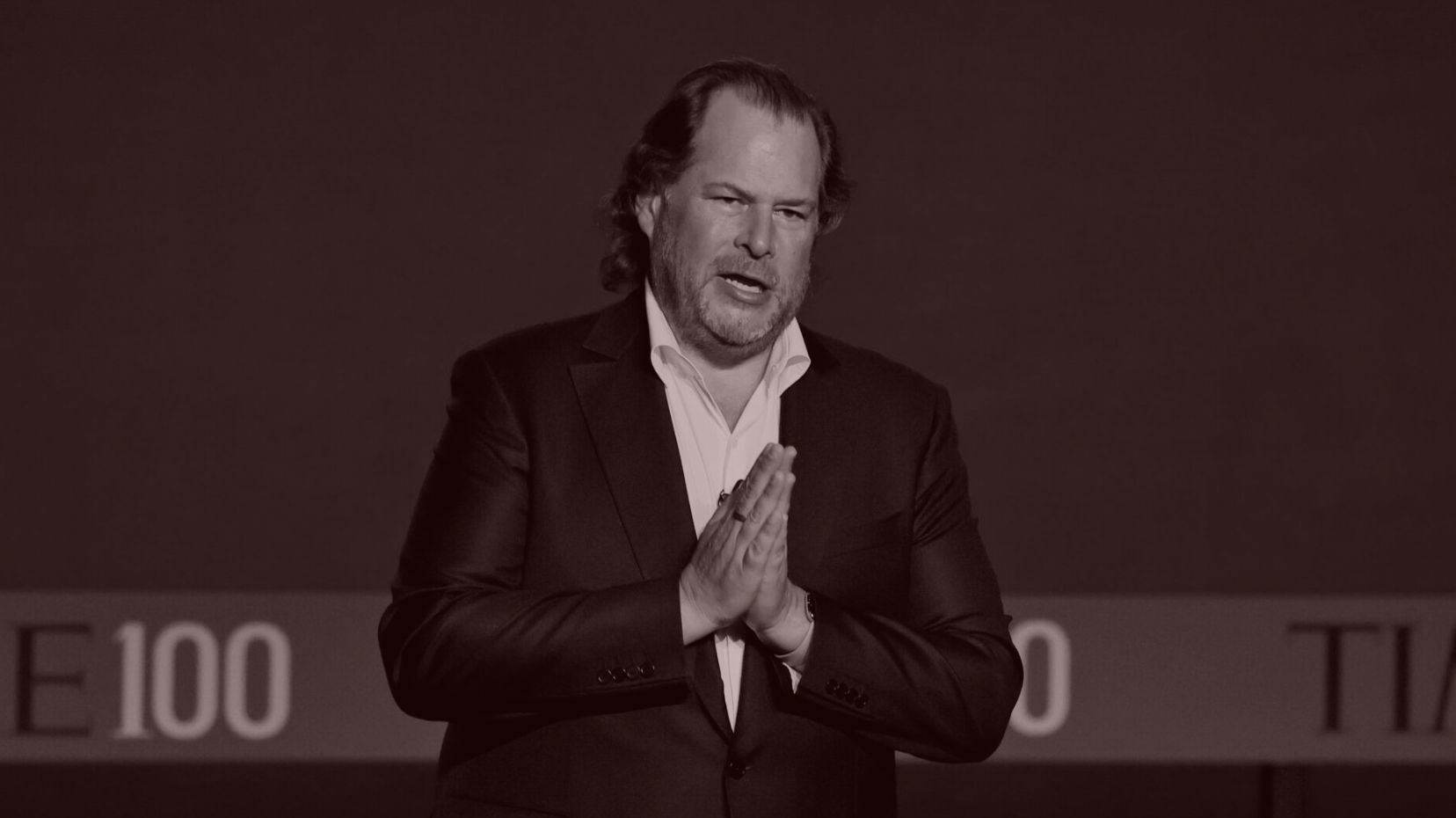
| It’s hunting season for activist investors: Elliot wunderkind Jesse Cohn is leading the firm’s aggressive, multi-billion dollar stake in Marc Benioff’s Salesforce, and so the question becomes, how worried should Benioff be? Today, a look at Cohn’s history for clues. Plus, my thoughts on who might replace Lael Brainard as the Fed’s vice chair, and how Elon’s Twitter folly is really affecting Tesla. |
 |
| Elliot or High Water |
| News and notes about the inside chatter on Wall Street: Can Marc Benioff defang Elliott’s Jesse Cohn? Could Larry Summers be wooed back to Washington? And Elon fundraising fantasies... |
|
|
|
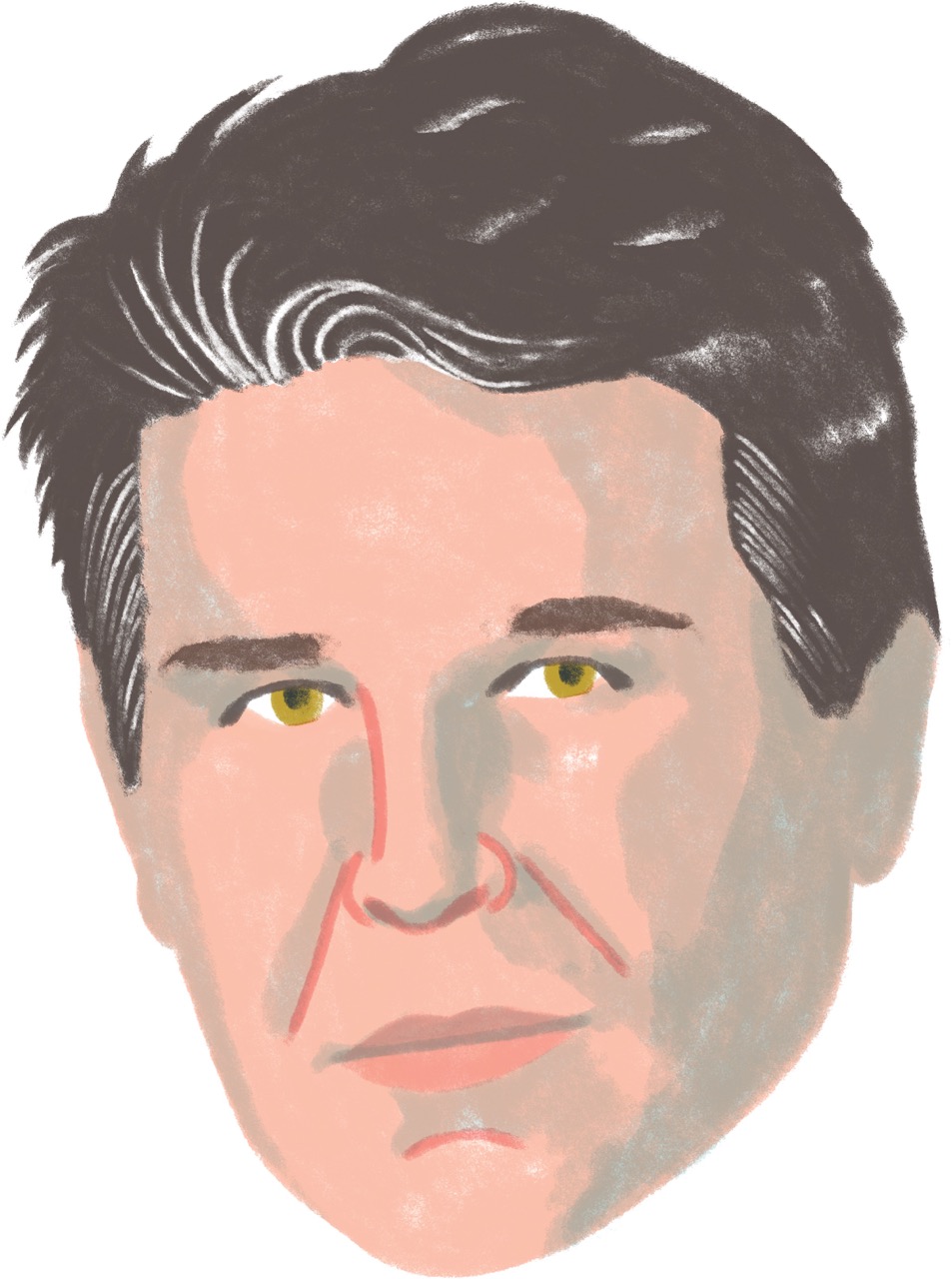
| Last week, the biggest news at the crossroads of Wall Street and Silicon Valley was Elliott Management’s announcement of a multi-billion dollar position in Marc Benioff’s Salesforce, Inc. “Salesforce is one of the preeminent software companies in the world, and having followed the company for nearly two decades, we have developed a deep respect for Marc Benioff and what he has built,” Jesse Cohn, the wunderkind activist at Elliott, said in a dose of marvelous understated grin-fucking.
Benioff deserves much of the respect generally lavished upon him, of course, but he should also be worried. Cohn, 43, grew up in Baldwin, Long Island, the son of a lawyer father and an artist mother. He graduated summa cum laude from Wharton in 2002, with a degree in finance, and then headed to Morgan Stanley as an analyst in the firm’s two-year junior banker program. From there, Cohn joined Elliot in 2004 as a research analyst, focused on investing in distressed securities and undervalued technology companies.
Cohn was pretty much an instant success at Elliott. He cashed in big time on his first deal: An investment in Enterasys Networks, a small computer-networking company that had been spun out of Cabletron Systems, an early competitor to Cisco Systems, that was co-founded by my childhood friend, S. Robert Levine. Cohn had Elliott buy a 10 percent stake in Enterasys and then pushed for its lucrative sale to a financial buyer. Cohn struck paydirt again on another obscure tech company, Metrologic Instruments. After buying an equity stake in Metrologic for Elliott, he convinced the company’s board to sell to Francisco Partners, a buyout firm, for $420 million. Elliott kept a 20 percent stake in the company and then arranged for its sale, a few years later, to Honeywell, for $720 million.
Cohn then moved into aggressive activist investing. He has engineered Elliott’s activist stakes in more than 100 companies, including the likes of AT&T, EMC, the enterprise-computing giant (and then he agitated for both the spinoff of VMware and then EMC’s $67 billion merger with Dell); Cognizant Technology Solutions; SAP, the German enterprise-software developer; and in eBay, urging it to sell StubHub and its classifieds business.
Once upon a time, Cohn could get quite down and dirty until he and Elliott got what they wanted, including pushing existing C.E.O.s out the door and other strategic changes. In 2016, after Elliott took a stake in Arconic, a manufacturer of aluminum, nickel, and titanium that was previously spun out of Alcoa, Elliott wanted to oust the C.E.O., Klaus Kleinfeld. Arconic accused Elliott of hiring private investigators to go through its trash and talk to Kleinfeld’s neighbors in a relentless effort to discredit him. “Elliott is the ugly face of America,” a spokesman for Kleinfeld once said.
After a particularly nasty public dispute with Elliott, including swapping poison pen letters and a soccer ball (look it up), Elliott eventually got its way and Kleinfeld’s head. Cohn also managed to get rid of Jonathan Bush, a relative of two presidents of the United States and the longtime C.E.O. of Athenahealth—another Elliott activist target. Bush fought valiantly but, in the end, he, too, capitulated to Cohn after Elliott dug up 10-year-old divorce files in a Boston courthouse that alleged Bush physically and verbally abused his ex-wife and the mother of their five children. (They’ve since reportedly reconciled, although they remain divorced.) Bush resigned as Athenahealth C.E.O. in June 2018. In an ironic twist, five months later, Elliott announced that it and a partner, Veritas Capital, were buying Athenahealth for $5.7 billion. Elliott sold the company a year ago to buyout firms Hellman & Friedman and Bain Capital for a cool $17 billion.
Needless to say, Cohn has made a ton of money for himself and Elliott Management, which remains run by a group of executives including himself, founder Paul Singer and his son Gordon, as well as Jonathan Pollock. During the pandemic, the firm announced that it was moving its locus of power from Manhattan to West Palm Beach, a growing hotspot of finance. As a result, Cohn put up for sale, for $39.5 million, his downtown Manhattan 6,000 square foot apartment.
In recent years, Cohn has refined and mollified his tactics. So far, his statements about Salesforce have been relatively benign and supportive of Benioff, as the previously cited quotation illustrates, but as Cohn’s career arc suggests, Elliott doesn’t take multi-billion dollar stakes in companies and then sit quietly and hope for the best. And Salesforce is clearly roiling beneath the surface. In the last six months alone, Salesforce has announced that it will lay off some 10 percent of its workforce and will reduce its office space as it grapples with customers’ ongoing decisions to cut back on their use of its B2B products.
Benioff has also lost top management talent, including co-C.E.O. Brett Taylor, who is expected to leave on Tuesday, and the already-departed Stewart Butterfield, the C.E.O. of Slack, a Salesforce wholly-owned subsidiary. (Taylor, of course, was the chairman of the board of Twitter and shepherded the board’s decision to sell the company to Elon Musk for $44 billion.) In the last year, Salesforce’s stock is down 22 percent, not as bad as many of its tech brethren, but nothing to write home about either. (Cohn also once had a seat on the Twitter board and led an effort to get rid of then Twitter C.E.O., Jack Dorsey.)
It’s hunting season for activists as some of our biggest tech conglomerates see their stock fall off precipitously. Benioff is one of the great founders, executives, and philanthropists of our time, and he’s no less immune to this trend than Bob Iger, who is currently facing down Nelson Peltz. Two weeks ago, I argued that Iger would be better off engaging Peltz more constructively and giving him the seat on the Disney board that he covets, allowing him to agitate from inside the Magic Kingdom rather than rattling the cage on the outside. Benioff would also be smart to find a way to defuse Cohn. I know it’s painful for a founder to capitulate to anyone about anything. We always have to look and act tough, right? But the sooner Cohn and Elliott have come and gone from Salesforce, the better. |
| Springtime for Larry Summers? |
|
| According to The Washington Post, Federal Reserve vice chair Lael Brainard is on the shortlist to join the White House as director of the National Economic Council. This would leave a vacancy at the Fed, and for me there is only one obvious contender.
He keeps saying he won’t return to Washington, that he’s enjoying his life in Cambridge and in Cape Cod, but Larry Summers is the obvious candidate to be the vice-chairman of the Federal Reserve if Brainard indeed takes over the N.E.C., a job Summers had in the Obama administration. (He was also the Treasury Secretary in the second Clinton administration.) Larry once thought he would be the Fed Chairman after Ben Bernanke—thought, in fact, he had Obama’s promise that he would get the top Fed job—but that position instead went to Janet Yellen, the current Treasury Secretary.
Lately, though, Larry seems to be smoking the peace pipe with Fed chairman Jerome Powell. Whereas for a few years prior to 2022, Larry was outspoken (and correct) in his criticism of the Fed for being too slow on trying to snuff out the country’s burgeoning inflation by raising interest rates, he’s been much less critical of the Fed these days and seems to be suggesting, as when he was in Davos a week or so ago, that the Fed is on the right track with its inflation-fighting tactics. In other words, it seems to me that now that JayPow decided to listen to Larry on inflation and now that Larry is being less critical of the Fed, the time is ripe for a JayPow-LSum confab. That’s why I think, without any basis for it at all of course, that Larry might be positioning himself to be a candidate to replace Brainerd as vice chairman if she goes to the White House, putting himself in position to be Fed chairman after the end of Powell’s current term in May 2026.
I know Larry would say that he has no interest in any of these jobs anymore—he’s 68 years old now— and I know he’s loving life on the sidelines, but I just can’t help to think, knowing Larry as I do, that if the President of the United States comes a calling and offers him the vice-chair job and a path to the chairman’s office, he will find it very hard to resist, especially since I know he knows it’s a job he’s been preparing for his whole life and believes he has earned and deserves. Larry Summers has always loved the arena and being front and center in it. You’re telling me, Larry, that if Joe Biden calls and offers you the seat a heartbeat away from the Fed Chairman you’re going to turn it down? I think not. |
|
|
| On Wednesday, during Tesla’s quarterly earnings call, the company’s head of investor relations, Martin Viecha, tossed Elon Musk a pre-fabbed version of the question on everyone’s mind: has his three-month-old ownership of Twitter impacted his management of Tesla? There’s no way Tesla’s head of investor relations would have sprung that question on the trigger-happy boss, not if he cared about keeping his job, anyway. And so I think it’s safe to say that Elon’s response, which seemed off the cuff, was not spontaneous.
Musk replied that his 127 million followers on Twitter suggest to him that he’s still reasonably popular with a big chunk of people. He also said he believes that Twitter is an “incredibly powerful tool” for driving demand for Tesla, although how or why he thinks that is beyond my comprehension. He then made a plea for other companies—many of which have abandoned Twitter in droves since Mr. Tweet, as he calls himself now, bought the company—to return to advertising on the social network because “it will help them drive sales just as it has with Tesla.” In conclusion, Elon said, “The net value of Twitter, apart from a few people who are complaining, is gigantic, obviously.”
Maybe. But it certainly isn’t obvious to me that Elon’s ownership of Twitter has been of the slightest benefit to Tesla, or to Elon. Since Elon began his Twitter folly, a year ago, Tesla has lost 50 percent of its market value and Elon has lost something like $100 billion of his personal fortune, at least according to Bloomberg’s calculations. And by the way, that includes the fact that, since the beginning of 2023—a month—Tesla’s stock is up 48 percent. Up 48 percent in a month. Sure seems like the Tesla meme-stock phenomenon is back, and for reasons I have given up trying to fathom (and have to admit that I was wrong about on a recent CNBC appearance—short-term wrong, that is). Tesla is back to being worth more than half a trillion dollars, pretty much more than Toyota, BYD, Porsche, Volkswagen and Mercedes Benz, which has pledged to go all-electric by 2025, combined.
Of course, Musk doesn’t seem to fully buy his own talking points about Twitter’s wonderfulness. The Wall Street Journal reported this week that Elon was hoping to raise a fresh $3 billion in additional equity for Twitter from both his existing investors and new investors to pay down some $3 billion of the expensive $13 billion of debt that has made Twitter nearly impossibly overleveraged. Elon himself has previously suggested that Twitter, for this very reason, could be forced to file for bankruptcy, even though he and his existing investors ponied up some $31 billion of equity to support the wildly expensive $44 billion purchase price.
So what we have here is unprecedented in the long history of big time Wall Street M&A deals: a highly troubled company with an historic equity investment and unparalleled leverage, all ready to explode within the first three months after the deal closed. The debt situation at Twitter is so bad that the Wall Street banks that underwrote the deal three months ago, led by Morgan Stanley and Bank of America, could not syndicate the loan and decided to stash it on their collective balance sheets. According to the Journal, Morgan Stanley, for instance, has $807 million of a Twitter unsecured bridge loan on its balance sheet plus another $500 million or so of other Twitter debt.
On Morgan Stanley’s fourth-quarter earnings call two weeks ago, Mike Mayo, a research analyst at Wells Fargo, asked the bank how it was marking those Twitter loans on its balance sheet. After all, Twitter’s EBITDA has fallen off the cliff since Elon bought the company, and the loans couldn’t be syndicated and interest rates have spiraled upward since the banks committed to the debt back in April 2022. Mayo was told that the firm didn’t “comment on specific marks.” The bank did disclose, however, that it had a $300 million writedown on its commercial loan portfolio in the fourth-quarter of 2022, potentially including leveraged loans like Twitter’s. Could that $300 million all be related to its $1.3 billion exposure to Twitter? Possibly. (The bank isn’t saying, of course.) If so, that’s a 23 percent discount on those loans. And that’s probably a conservative mark. I’m being told these Twitter loans are valued at around 50 cents on the dollar these days—or at least that’s the market moving price for the loans should the Big Banks decide to resume their jobs in the moving business, as opposed to the storage business.
Whether the loans are worth 50 cents on the dollar or 77 cents on the dollar doesn’t change the fact that, as a result, the $31 billion of Twitter equity is pretty much worthless at this point, save for whatever option value there might be in whatever mysterious thing Elon plans to do with the company. Therefore, I can’t imagine how any of the existing shareholders would be interested in throwing good money after bad, and especially not at the original equity purchase price of the $44 billion valuation that Elon is reportedly seeking.
My dear friend Kara Swisher thinks Elon will get his money. I have my doubts (and said as much on her podcast this week). But the Larry Ellison types of the world might consider putting new money in at a new valuation of around $6.5 billion—50 cents on the dollar on the $13 billion of debt. At that valuation, the new $3 billion might actually have some equity value and clout within the organization. But I notice the Journal article isn’t talking about the price at which the new equity would be invested, although there was a passing reference to the “initial purchase price.” That’s a telling omission to me. And also the article has nothing to say about what happened to those discussions or if they are ongoing.
My bottom line on the Twitter fiasco, which is ongoing, is that if we’re talking about raising new equity for Twitter at a $6.5 billion pre-money enterprise value—wiping out the existing equity and half the bank debt—then I agree with Kara. Elon would most likely be able to raise new equity for the struggling company at that valuation, much as it would hurt. Otherwise, I can’t see how new equity gets invested in Twitter anytime soon. He would also have to follow through on his promise to relinquish his role as Twitter’s C.E.O. and find a real operator to run the company, as he pledged he would do after the results of his late 2022 Twitter poll on that very topic. |
|
|
|
| FOUR STORIES WE’RE TALKING ABOUT |
 |
| Ryan & Allbritton |
| On the cobwebs inside one of the most complicated political relationship in D.C. media. |
| DYLAN BYERS |
|
 |
|
 |
| Pompeo’s Hidden Figures |
| Notes on S.B.F.’s PAC donations, Kemp’s growing ambition, and Pompeo’s document drama. |
| TARA PALMERI |
|
 |
| S.B.F. Mama Drama |
| Chronicling the story behind most remarkable victim of FTX’s collapse. |
| TEDDY SCHLEIFER |
|
|
|
|
|
 |
|
|
| Need help? Review our FAQs
page or contact
us for assistance. For brand partnerships, email ads@puck.news. |
|
| Puck is published by Heat Media LLC. 227 W 17th St New York, NY 10011. |
|
|
|